This document discusses properties and testing methods for coal. Key points include:
- Coal can be analyzed through proximate analysis, ultimate analysis, and tests to determine calorific value, density, hardness, and mechanical strength.
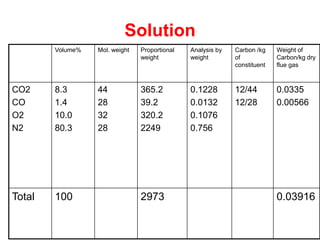
- Ultimate analysis involves determining the carbon, hydrogen, sulfur, and nitrogen content through combustion and chemical reactions.
- Calorific value represents the energy content and can be estimated through the Modified Dulong Formula.
- Density provides information about the coal's structure and degree of coalification. True relative density excludes pores while apparent relative density includes pores.
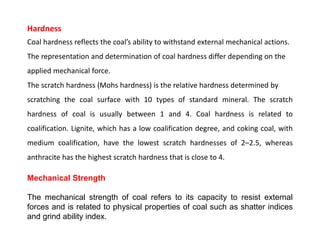
- Hardness is measured by scratch tests and mechanical strength is assessed through shatter indices and grindability tests like the Hard








![Attack surfaces and attack tress[inform]](https://cdn.slidesharecdn.com/ss_thumbnails/lecture03-260108015941-a4dee53b-thumbnail.jpg?width=640&height=640&fit=bounds)


