Solar Thermal Power
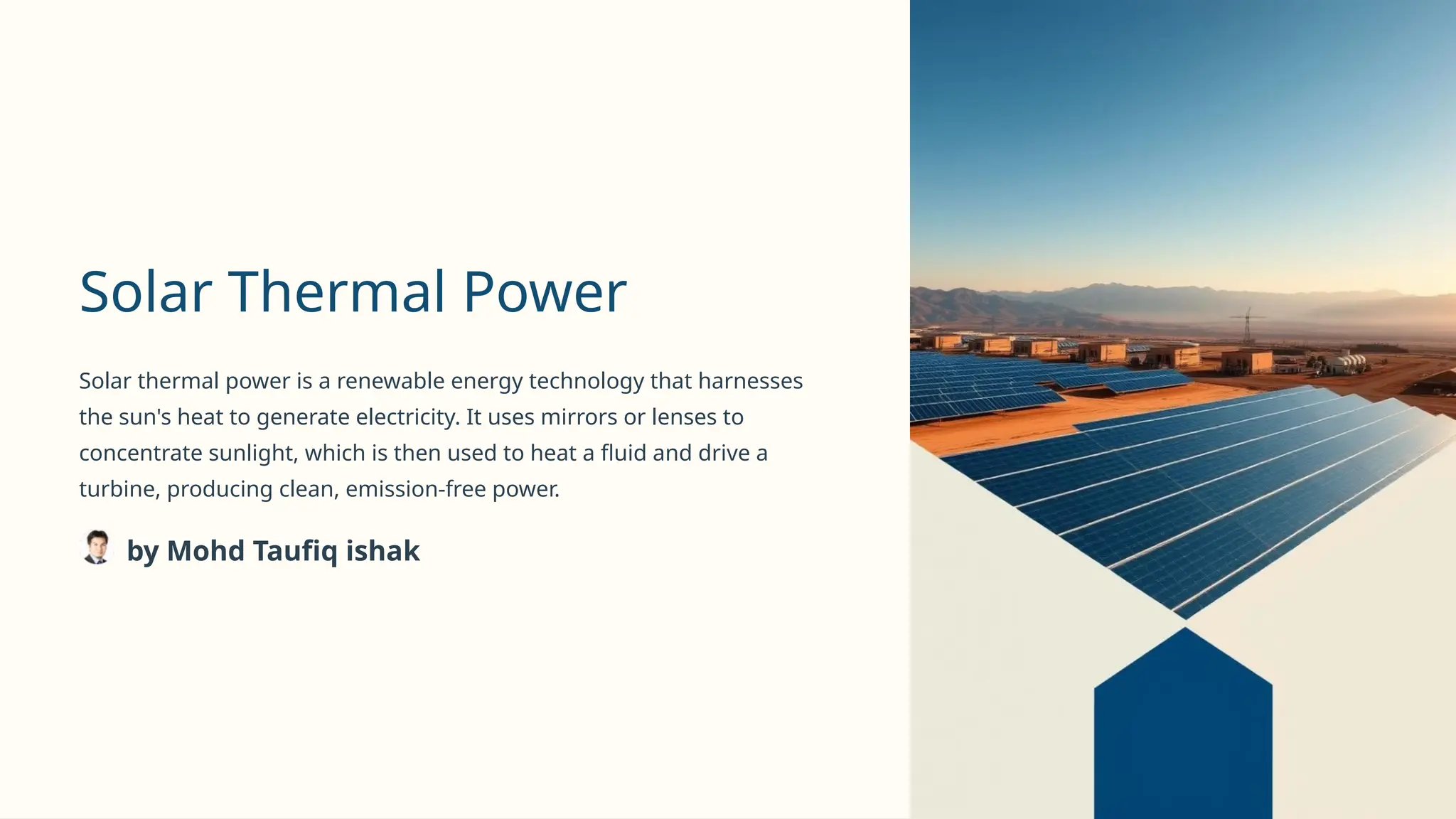
Solar thermal power is a renewable energy technology that harnesses
the sun's heat to generate electricity. It uses mirrors or lenses to
concentrate sunlight, which is then used to heat a fluid and drive a
turbine, producing clean, emission-free power.
by Mohd Taufiq ishak
Introduction to Solar
Thermal Power
Solar thermal power generation systems use mirrors to collect sunlight
and produce steam by solar heat. This steam is then used to drive
turbines for generating electricity, similar to traditional thermal and
nuclear power plants.
These systems are well-suited for large-scale power generation, as they
can efficiently harness the sun's energy and convert it into electricity on
a utility scale.
Ways to Generate Solar Energy
Photovoltaic (PV)
Photovoltaic systems directly convert sunlight into
electricity, harnessing the photovoltaic effect in
semiconductor materials.
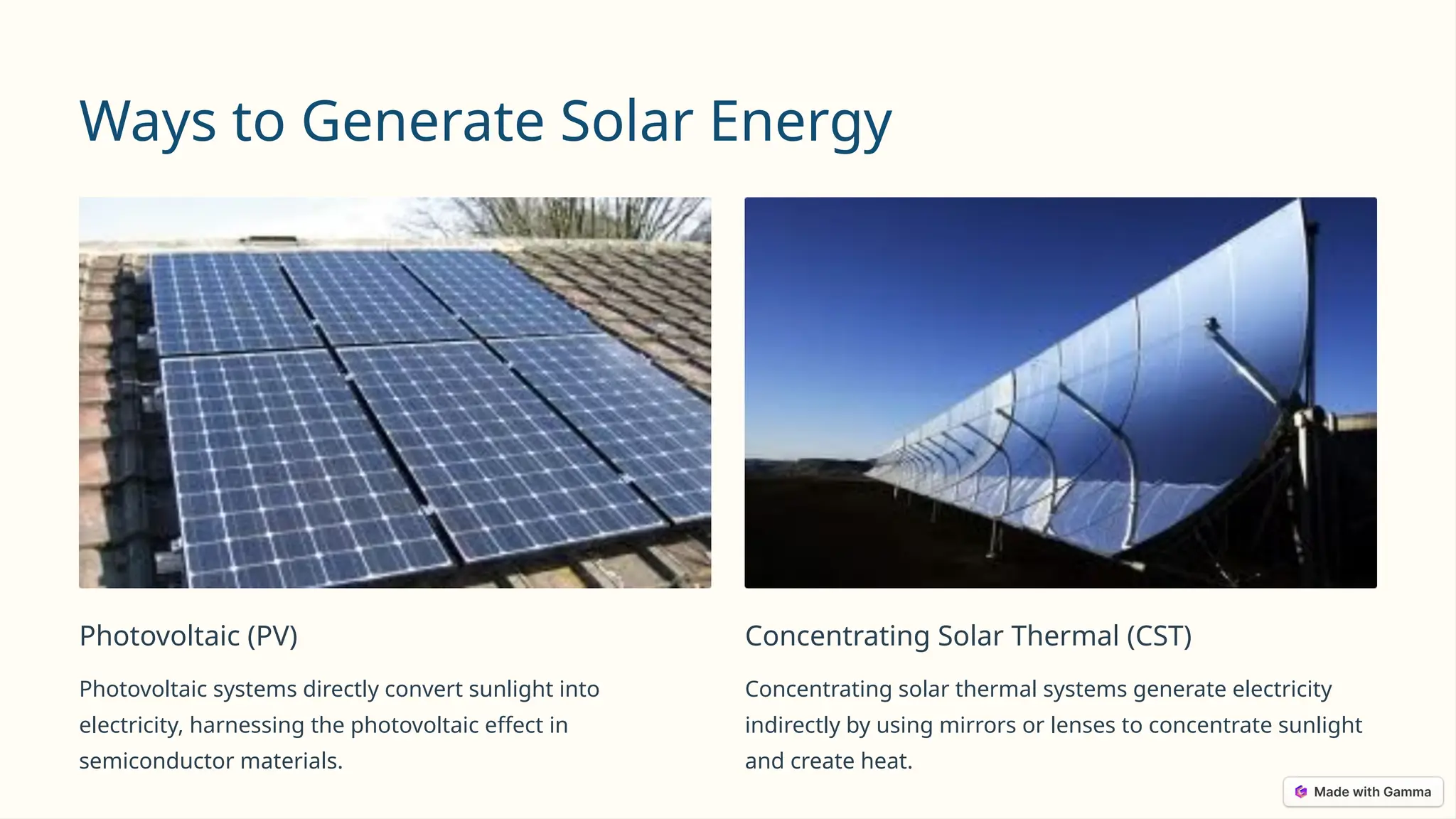
Concentrating Solar Thermal (CST)
Concentrating solar thermal systems generate electricity
indirectly by using mirrors or lenses to concentrate sunlight
and create heat.
History of Solar Thermal Power
Early Developments
In 1866, Auguste Mouchout used a parabolic trough to produce steam for the first solar steam engine.
First Solar Collectors
In 1886, the first patent for a solar collector was obtained by the Italian Alessandro Battaglia in Genoa, Italy.
Milestone Systems
In 1913, Frank Shuman built a 55 HP parabolic solar thermal energy station in Maadi, Egypt for irrigation.
Mirror Dish Innovation
In 1929, American Scientist Dr. R.H. Goddard built the first solar-power system using a mirror dish.
Early Solar Plants
In 1968, the first concentrated-solar plant began operation in Sant'Ilario, near Genoa, Italy.
Advancements in the 1980s
In 1984, the parabolic-trough technology of the SEGS plant began with a combined capacity of 354 MW.
Modern Milestones
In 2014, the world's largest solar thermal plant (392 MW) achieved commercial operation in Ivanpah, California, USA.
Types of Solar Thermal Systems
Solar thermal systems can be classified into two main
types: passive and active.
Passive systems require no equipment and utilize the
natural warming effect of the sun, such as when heat builds
up inside a car parked in the sun. Examples include thermal
chimneys.
Active systems use specialized equipment to absorb,
collect, and store solar radiation. These include solar
thermal power plants, which convert solar energy into
electricity.
Basic Working Principle
1 Sunlight Reflection
Mirrors are used to reflect and concentrate the sun's
energy onto a central receiver.
2 Energy Conversion
The concentrated solar energy is absorbed by the
receiver, converting it into thermal energy.
3 Electricity Generation
The thermal energy is then used to power a generator,
converting it into electricity.
Thermal Energy Storage (TES)
Systems
Two-Tank Direct System
Stores solar thermal energy directly in the same heat-transfer fluid that collected it.
Two-Tank Indirect System
Functions like the direct system but uses different types of heat-transfer fluids.
Single-Tank Thermocline System
Stores thermal energy as a solid, usually in the form of silica sand.
Types of Solar Thermal Power Plants
There are several types of solar thermal power plants, each with unique design and operational characteristics:
1. Parabolic Trough Systems: Use curved, mirror-lined troughs to concentrate sunlight onto a fluid-filled receiver tube.
2. Solar Power Tower Systems: Use a field of sun-tracking mirrors (heliostats) to focus sunlight onto a central receiver tower.
3. Solar Dish/Engine Systems: Use a parabolic dish-shaped mirror to concentrate sunlight onto a receiver at the dish's focal point.
4. Compact Linear Fresnel Reflector (CLFR) Systems: Use flat or slightly curved mirrors to focus sunlight onto elevated receiver tubes.
Parabolic Trough System
Parabolic Reflector
The parabolic trough consists
of a linear parabolic reflector
that concentrates sunlight
onto a receiver tube
positioned along the
reflector's focal line.
Tracking System
The reflector follows the sun's
movement during the day by
tracking along a single axis,
ensuring optimal sun
exposure and energy
absorption.
Heat Transfer Fluid
A working fluid, such as molten salt, is heated to 150-350°C as it
flows through the receiver tube and is then used to generate
electricity.
Visual Representation of Solar Thermal Power
Concentrated Solar Power (CSP) Plants
CSP plants use mirrors or lenses to concentrate sunlight, convert it into heat, and then use that heat to generate electricity.
This image illustrates the key components of a CSP plant, including the solar collectors, thermal energy storage, and turbine
generator.

Solar-Thermal-Power and energy power.pptx

  • 1.
    Solar Thermal Power Solarthermal power is a renewable energy technology that harnesses the sun's heat to generate electricity. It uses mirrors or lenses to concentrate sunlight, which is then used to heat a fluid and drive a turbine, producing clean, emission-free power. by Mohd Taufiq ishak
  • 2.
    Introduction to Solar ThermalPower Solar thermal power generation systems use mirrors to collect sunlight and produce steam by solar heat. This steam is then used to drive turbines for generating electricity, similar to traditional thermal and nuclear power plants. These systems are well-suited for large-scale power generation, as they can efficiently harness the sun's energy and convert it into electricity on a utility scale.
  • 3.
    Ways to GenerateSolar Energy Photovoltaic (PV) Photovoltaic systems directly convert sunlight into electricity, harnessing the photovoltaic effect in semiconductor materials. Concentrating Solar Thermal (CST) Concentrating solar thermal systems generate electricity indirectly by using mirrors or lenses to concentrate sunlight and create heat.
  • 4.
    History of SolarThermal Power Early Developments In 1866, Auguste Mouchout used a parabolic trough to produce steam for the first solar steam engine. First Solar Collectors In 1886, the first patent for a solar collector was obtained by the Italian Alessandro Battaglia in Genoa, Italy. Milestone Systems In 1913, Frank Shuman built a 55 HP parabolic solar thermal energy station in Maadi, Egypt for irrigation. Mirror Dish Innovation In 1929, American Scientist Dr. R.H. Goddard built the first solar-power system using a mirror dish. Early Solar Plants In 1968, the first concentrated-solar plant began operation in Sant'Ilario, near Genoa, Italy. Advancements in the 1980s In 1984, the parabolic-trough technology of the SEGS plant began with a combined capacity of 354 MW. Modern Milestones In 2014, the world's largest solar thermal plant (392 MW) achieved commercial operation in Ivanpah, California, USA.
  • 5.
    Types of SolarThermal Systems Solar thermal systems can be classified into two main types: passive and active. Passive systems require no equipment and utilize the natural warming effect of the sun, such as when heat builds up inside a car parked in the sun. Examples include thermal chimneys. Active systems use specialized equipment to absorb, collect, and store solar radiation. These include solar thermal power plants, which convert solar energy into electricity.
  • 6.
    Basic Working Principle 1Sunlight Reflection Mirrors are used to reflect and concentrate the sun's energy onto a central receiver. 2 Energy Conversion The concentrated solar energy is absorbed by the receiver, converting it into thermal energy. 3 Electricity Generation The thermal energy is then used to power a generator, converting it into electricity.
  • 7.
    Thermal Energy Storage(TES) Systems Two-Tank Direct System Stores solar thermal energy directly in the same heat-transfer fluid that collected it. Two-Tank Indirect System Functions like the direct system but uses different types of heat-transfer fluids. Single-Tank Thermocline System Stores thermal energy as a solid, usually in the form of silica sand.
  • 8.
    Types of SolarThermal Power Plants There are several types of solar thermal power plants, each with unique design and operational characteristics: 1. Parabolic Trough Systems: Use curved, mirror-lined troughs to concentrate sunlight onto a fluid-filled receiver tube. 2. Solar Power Tower Systems: Use a field of sun-tracking mirrors (heliostats) to focus sunlight onto a central receiver tower. 3. Solar Dish/Engine Systems: Use a parabolic dish-shaped mirror to concentrate sunlight onto a receiver at the dish's focal point. 4. Compact Linear Fresnel Reflector (CLFR) Systems: Use flat or slightly curved mirrors to focus sunlight onto elevated receiver tubes.
  • 9.
    Parabolic Trough System ParabolicReflector The parabolic trough consists of a linear parabolic reflector that concentrates sunlight onto a receiver tube positioned along the reflector's focal line. Tracking System The reflector follows the sun's movement during the day by tracking along a single axis, ensuring optimal sun exposure and energy absorption. Heat Transfer Fluid A working fluid, such as molten salt, is heated to 150-350°C as it flows through the receiver tube and is then used to generate electricity.
  • 10.
    Visual Representation ofSolar Thermal Power Concentrated Solar Power (CSP) Plants CSP plants use mirrors or lenses to concentrate sunlight, convert it into heat, and then use that heat to generate electricity. This image illustrates the key components of a CSP plant, including the solar collectors, thermal energy storage, and turbine generator.