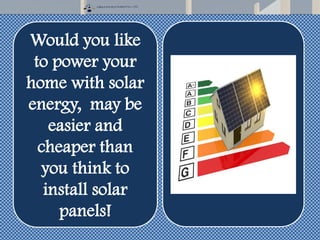
Would you like
to power your
home with solar
energy, may be
easier and
cheaper than
you think to
install solar
panels!
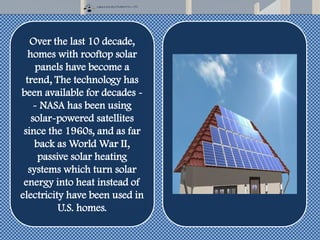
Over the last 10 decade,
homes with rooftop solar
panels have become a
trend, The technology has
been available for decades -
- NASA has been using
solar-powered satellites
since the 1960s, and as far
back as World War II,
passive solar heating
systems which turn solar
energy into heat instead of
electricity have been used in
U.S. homes.
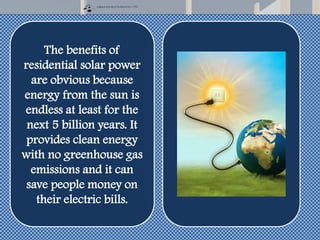
The benefits of
residential solar power
are obvious because
energy from the sun is
endless at least for the
next 5 billion years. It
provides clean energy
with no greenhouse gas
emissions and it can
save people money on
their electric bills.
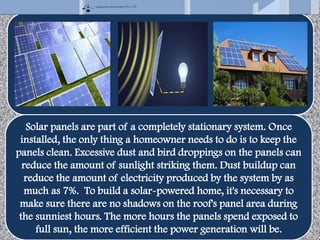
Solar panels are part of a completely stationary system. Once
installed, the only thing a homeowner needs to do is to keep the
panels clean. Excessive dust and bird droppings on the panels can
reduce the amount of sunlight striking them. Dust buildup can
reduce the amount of electricity produced by the system by as
much as 7%. To build a solar-powered home, it's necessary to
make sure there are no shadows on the roof's panel area during
the sunniest hours. The more hours the panels spend exposed to
full sun, the more efficient the power generation will be.
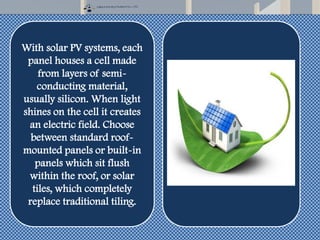
With solar PV systems, each
panel houses a cell made
from layers of semi-
conducting material,
usually silicon. When light
shines on the cell it creates
an electric field. Choose
between standard roof-
mounted panels or built-in
panels which sit flush
within the roof, or solar
tiles, which completely
replace traditional tiling.
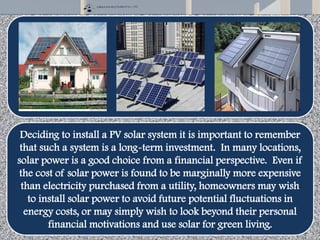
Deciding to install a PV solar system it is important to remember
that such a system is a long-term investment. In many locations,
solar power is a good choice from a financial perspective. Even if
the cost of solar power is found to be marginally more expensive
than electricity purchased from a utility, homeowners may wish
to install solar power to avoid future potential fluctuations in
energy costs, or may simply wish to look beyond their personal
financial motivations and use solar for green living.
Solar power homes

Solar power homes

  • 2.
    Would you like topower your home with solar energy, may be easier and cheaper than you think to install solar panels!
  • 3.
    Over the last10 decade, homes with rooftop solar panels have become a trend, The technology has been available for decades - - NASA has been using solar-powered satellites since the 1960s, and as far back as World War II, passive solar heating systems which turn solar energy into heat instead of electricity have been used in U.S. homes.
  • 4.
    The benefits of residentialsolar power are obvious because energy from the sun is endless at least for the next 5 billion years. It provides clean energy with no greenhouse gas emissions and it can save people money on their electric bills.
  • 5.
    Solar panels arepart of a completely stationary system. Once installed, the only thing a homeowner needs to do is to keep the panels clean. Excessive dust and bird droppings on the panels can reduce the amount of sunlight striking them. Dust buildup can reduce the amount of electricity produced by the system by as much as 7%. To build a solar-powered home, it's necessary to make sure there are no shadows on the roof's panel area during the sunniest hours. The more hours the panels spend exposed to full sun, the more efficient the power generation will be.
  • 6.
    With solar PVsystems, each panel houses a cell made from layers of semi- conducting material, usually silicon. When light shines on the cell it creates an electric field. Choose between standard roof- mounted panels or built-in panels which sit flush within the roof, or solar tiles, which completely replace traditional tiling.
  • 7.
    Deciding to installa PV solar system it is important to remember that such a system is a long-term investment. In many locations, solar power is a good choice from a financial perspective. Even if the cost of solar power is found to be marginally more expensive than electricity purchased from a utility, homeowners may wish to install solar power to avoid future potential fluctuations in energy costs, or may simply wish to look beyond their personal financial motivations and use solar for green living.