How telcos may use and
monetize WebRTC
IMS World Forum 2014 , WebRTC Workshop, 28/April
q  WebRTC is not a service itself
q  WebRTC is not an e2e solution
q  WebRTC is not an anti-telco thing
q  To use WebRTC with IMS is not needed any
kind of IMS additional standardization
Demolishing	
  some	
  WebRTC	
  myths	
  
ü  Making ubiquitous, browse accessible legacy telco
services as Voice and powering Unified
Communications combining Voice, RCS messaging/
video and WebRTC.
ü  Enable a myriad of new services “solving problems”
users and business have. Combine “reachability &
privace”. Telcos are in the best position to do that.
Where	
  WebRTC	
  applies	
  to	
  telco?	
  
ü Forget about new standards and wasting
time activities.
ü Use WebRTC as the UX of virtual
communication clients.
HOW	
  TO	
  DO	
  FAST?	
  
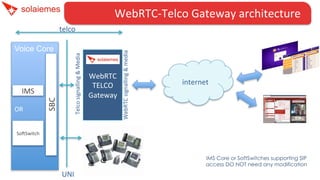
internet	
  
WebRTC	
  
TELCO	
  
Gateway	
  
WebRTC	
  signalling	
  &	
  media	


Voice Core


OR	


IMS	
  
SoESwitch	
  
SBC	
  
UNI	
  
IMS Core or SoftSwitches supporting SIP
access DO NOT need any modification
telco	
  
WebRTC-­‐Telco	
  Gateway	
  architecture	
  
Telco	
  signalling	
  &	
  Media	


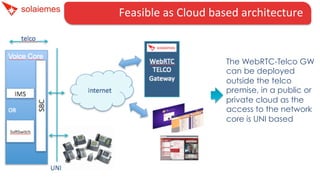
Feasible	
  as	
  Cloud	
  based	
  architecture	


The WebRTC-Telco GW
can be deployed
outside the telco
premise, in a public or
private cloud as the
access to the network
core is UNI based
1st	
  case,	
  making	
  telco	
  assets	
  ubiquitous	
  
q  A PSTN line can be perceived as more
valuable if ubiquitous access is provided and
not only restricted to a connected “wire”.
q  Companies can combine telco assets and
own assets (directories, file systems etc) to
create customized business Unified
Communications.
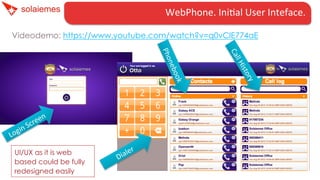
WebPhone.	
  IniQal	
  User	
  Inteface.	
  
Videodemo: https://www.youtube.com/watch?v=q0vClE774aE
UI/UX as it is web
based could be fully
redesigned easily
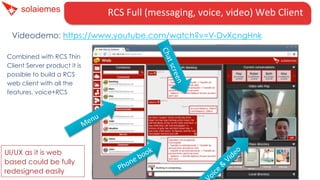
RCS	
  Full	
  (messaging,	
  voice,	
  video)	
  Web	
  Client	


Videodemo: https://www.youtube.com/watch?v=V-DvXcngHnk
UI/UX as it is web
based could be fully
redesigned easily
Combined with RCS Thin
Client Server product it is
possible to build a RCS
web client with all the
features, voice+RCS
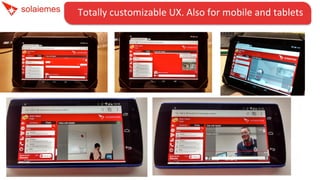
Totally	
  customizable	
  UX.	
  Also	
  for	
  mobile	
  and	
  tablets	
  
RCS	
  vs	
  WebRTC	
  
WebRTC is not a rival service of RCS nor
telco communications, instead it is a great
tool for telcos to extend their end-point
portfolio, and leverage a more ubiquitous
reach of their enablers.
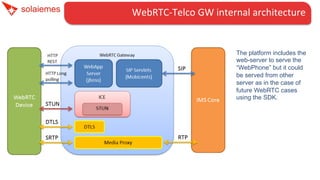
WebRTC-­‐Telco	
  GW	
  internal	
  architecture	
  
The platform includes the
web-server to serve the
“WebPhone” but it could
be served from other
server as in the case of
future WebRTC cases
using the SDK.
The	
  key,	
  the	
  SDK,	
  the	
  new	
  generaQon	
  SDP	
  
SDK	
  to	
  enable	
  a	
  myriad	
  of	
  new	
  use	
  cases	
  
SDK
Telco	
  services	
  deployed	
  in	
  days	
  
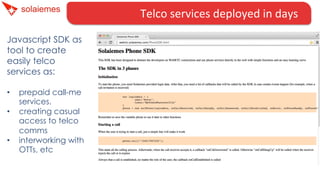
Javascript SDK as
tool to create
easily telco
services as:
•  prepaid call-me
services.
•  creating casual
access to telco
comms
•  interworking with
OTTs, etc
SDK	
  use	
  cases:	
  WebRTC	
  Service	
  Market	
  
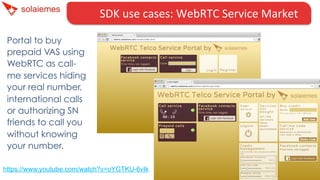
Portal to buy
prepaid VAS using
WebRTC as call-
me services hiding
your real number,
international calls
or authorizing SN
friends to call you
without knowing
your number.
https://www.youtube.com/watch?v=oYGTKU-6vIk
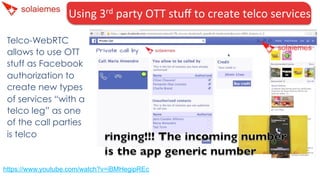
Using	
  3rd	
  party	
  OTT	
  stuff	
  to	
  create	
  telco	
  services	
  
Telco-WebRTC
allows to use OTT
stuff as Facebook
authorization to
create new types
of services “with a
telco leg” as one
of the call parties
is telco
https://www.youtube.com/watch?v=iBMHegipREc
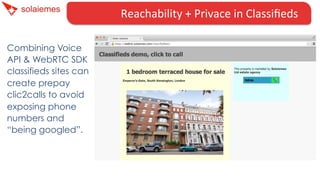
Combining Voice
API & WebRTC SDK
classifieds sites can
create prepay
clic2calls to avoid
exposing phone
numbers and
“being googled”.
Reachability	
  +	
  Privace	
  in	
  Classifieds	
  
The	
  business?	
  
A market of WebRTC services based on
telco capabilities, causal services to
engage the users and extending the
reach of telco driven comms.
Self-service web based market of
premium services based on WebRTC.
Innovation connecting telco and non-
telco identities.
www.solaiemes.com
www.webrtcfortelcos.com
http://blog.solaiemes.com
http://www.youtube.com/solaiemes

Solaiemes IMS WebRTC Workshop

  • 1.
    How telcos mayuse and monetize WebRTC IMS World Forum 2014 , WebRTC Workshop, 28/April
  • 2.
    q  WebRTC isnot a service itself q  WebRTC is not an e2e solution q  WebRTC is not an anti-telco thing q  To use WebRTC with IMS is not needed any kind of IMS additional standardization Demolishing  some  WebRTC  myths  
  • 3.
    ü  Making ubiquitous,browse accessible legacy telco services as Voice and powering Unified Communications combining Voice, RCS messaging/ video and WebRTC. ü  Enable a myriad of new services “solving problems” users and business have. Combine “reachability & privace”. Telcos are in the best position to do that. Where  WebRTC  applies  to  telco?  
  • 4.
    ü Forget about newstandards and wasting time activities. ü Use WebRTC as the UX of virtual communication clients. HOW  TO  DO  FAST?  
  • 5.
    internet   WebRTC   TELCO   Gateway   WebRTC  signalling  &  media     Voice Core             OR                 IMS   SoESwitch   SBC   UNI   IMS Core or SoftSwitches supporting SIP access DO NOT need any modification telco   WebRTC-­‐Telco  Gateway  architecture   Telco  signalling  &  Media    
  • 6.
    Feasible  as  Cloud  based  architecture         The WebRTC-Telco GW can be deployed outside the telco premise, in a public or private cloud as the access to the network core is UNI based
  • 7.
    1st  case,  making  telco  assets  ubiquitous   q  A PSTN line can be perceived as more valuable if ubiquitous access is provided and not only restricted to a connected “wire”. q  Companies can combine telco assets and own assets (directories, file systems etc) to create customized business Unified Communications.
  • 8.
    WebPhone.  IniQal  User  Inteface.   Videodemo: https://www.youtube.com/watch?v=q0vClE774aE UI/UX as it is web based could be fully redesigned easily
  • 9.
    RCS  Full  (messaging,  voice,  video)  Web  Client       Videodemo: https://www.youtube.com/watch?v=V-DvXcngHnk UI/UX as it is web based could be fully redesigned easily Combined with RCS Thin Client Server product it is possible to build a RCS web client with all the features, voice+RCS
  • 10.
    Totally  customizable  UX.  Also  for  mobile  and  tablets  
  • 11.
    RCS  vs  WebRTC   WebRTC is not a rival service of RCS nor telco communications, instead it is a great tool for telcos to extend their end-point portfolio, and leverage a more ubiquitous reach of their enablers.
  • 12.
    WebRTC-­‐Telco  GW  internal  architecture   The platform includes the web-server to serve the “WebPhone” but it could be served from other server as in the case of future WebRTC cases using the SDK.
  • 13.
    The  key,  the  SDK,  the  new  generaQon  SDP  
  • 14.
    SDK  to  enable  a  myriad  of  new  use  cases   SDK
  • 15.
    Telco  services  deployed  in  days   Javascript SDK as tool to create easily telco services as: •  prepaid call-me services. •  creating casual access to telco comms •  interworking with OTTs, etc
  • 16.
    SDK  use  cases:  WebRTC  Service  Market   Portal to buy prepaid VAS using WebRTC as call- me services hiding your real number, international calls or authorizing SN friends to call you without knowing your number. https://www.youtube.com/watch?v=oYGTKU-6vIk
  • 17.
    Using  3rd  party  OTT  stuff  to  create  telco  services   Telco-WebRTC allows to use OTT stuff as Facebook authorization to create new types of services “with a telco leg” as one of the call parties is telco https://www.youtube.com/watch?v=iBMHegipREc
  • 18.
    Combining Voice API &WebRTC SDK classifieds sites can create prepay clic2calls to avoid exposing phone numbers and “being googled”. Reachability  +  Privace  in  Classifieds  
  • 19.
    The  business?   Amarket of WebRTC services based on telco capabilities, causal services to engage the users and extending the reach of telco driven comms. Self-service web based market of premium services based on WebRTC. Innovation connecting telco and non- telco identities.
  • 20.