SafeOperatingLimit(SOL):
SafeOperatingLimit(SOL)Limitsareestablishedforcriticalprocessparameters,suchastemperature,pressure,le
vel,flow,orconcentration,basedonacombinationofequipmentdesignlimitsandthedynamicsoftheprocess.
SOLsaretypicallydocumentedinoperatingproceduresandshouldbewellknownandunderstoodbytheoperatio
nsteam,includinghowtorespondtopreventthepotentialconsequence(theconsequenceofdeviation).SOLvalu
esshouldbefirmlyestablishedtosupportHAZOPanalysisandevaluationofprocesschangesaspartofthemanage
mentofchange(MOC).
Open
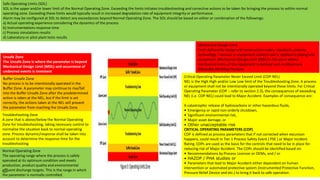
Unsafe Zone
The Unsafe Zone is where the parameter is beyond
Mechanical Design Limit (MDL) and occurrence of
undesired events is imminent
Buffer Unsafe Zone
No process is to be intentionally operated in the
Buffer Zone. A parameter may continue to rise/fall
into the Buffer Unsafe Zone after the predetermined
action is taken at the NEL, but if the limit is set
correctly, the actions taken at the NEL will prevent
the parameter from reaching the Unsafe Zone.
Troubleshooting Zone
A zone that is above/below the Normal Operating
Zone for troubleshooting, taking necessary control to
normalise the situation back to normal operating
zone. Process dynamic/response shall be taken into
account to determine the response time for the
troubleshooting
Normal Operating Zone
The operating range where the process is safely
operated at its optimum condition and meets
production, product quality and environmental
effluent discharge targets. This is the range in which
the parameter is normally controlled.
Mechanical Design Limit
Limit defined by design and construction codes, standards, process
technology / licensor or equipment vendors and is applied to piping and
equipment. Mechanical Design Limit (MDL) is the point where
mechanical limits of the equipment is defined such as Maximum
Allowable Working Pressure
Critical Operating Parameter Never Exceed Limit (COP-NEL)
NEL is the High High and/or Low Low limit of the Troubleshooting Zone. A process
or equipment shall not be intentionally operated beyond these limits. For Critical
Operating Parameter (COP – refer to section 2.3), the consequences of exceeding
NEL (i.e. COP-NEL) could lead to Major Accident. Examples of consequence are:
A catastrophic release of hydrocarbons or other hazardous fluids,
• Emergency or rapid non-orderly shutdown,
• Significant environmental risk,
• Major asset damage, or
• Other unacceptable risk
CRITICAL OPERATING PARAMETERS (COP)
COP is defined as process parameters that if not corrected when excursion
happens, could result in Tier 1 Process Safety Event ( PSE ) or Major Incident
Rating. COPs are used as the basis for the controls that need to be in place for
reducing risk of Major Accident. The COPs should be identified based on:
• Recommendations by Process Licensor or OEMs, and / or
• HAZOP / PHA studies or
• Parameters that lead to Major Accident either dependent on human
intervention or automated protective system (Instrumented Protective Function,
Pressure Relief Device and etc.) to bring it back to safe operation.
Safe Operating Limits (SOL)
SOL is the upper and/or lower limit of the Normal Operating Zone. Exceeding the limits initiates troubleshooting and corrective actions to be taken for bringing the process to within normal
operating zone. Exceeding these limits would typically result in increased degradation rate of equipment integrity or performance.
Alarm may be configured at SOL to detect any exceedances beyond Normal Operating Zone. The SOL should be based on either or combination of the followings:
a) Actual operating experience considering the dynamics of the process
b) Instrumentations response time
c) Process simulations results
d) Laboratory or pilot plant tests results
Open
Open
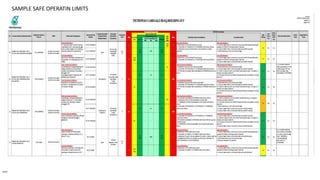
SAMPLE SAFE OPERATIN LIMITS

SOL Overview.pptx

  • 1.
  • 2.
    Unsafe Zone The UnsafeZone is where the parameter is beyond Mechanical Design Limit (MDL) and occurrence of undesired events is imminent Buffer Unsafe Zone No process is to be intentionally operated in the Buffer Zone. A parameter may continue to rise/fall into the Buffer Unsafe Zone after the predetermined action is taken at the NEL, but if the limit is set correctly, the actions taken at the NEL will prevent the parameter from reaching the Unsafe Zone. Troubleshooting Zone A zone that is above/below the Normal Operating Zone for troubleshooting, taking necessary control to normalise the situation back to normal operating zone. Process dynamic/response shall be taken into account to determine the response time for the troubleshooting Normal Operating Zone The operating range where the process is safely operated at its optimum condition and meets production, product quality and environmental effluent discharge targets. This is the range in which the parameter is normally controlled. Mechanical Design Limit Limit defined by design and construction codes, standards, process technology / licensor or equipment vendors and is applied to piping and equipment. Mechanical Design Limit (MDL) is the point where mechanical limits of the equipment is defined such as Maximum Allowable Working Pressure Critical Operating Parameter Never Exceed Limit (COP-NEL) NEL is the High High and/or Low Low limit of the Troubleshooting Zone. A process or equipment shall not be intentionally operated beyond these limits. For Critical Operating Parameter (COP – refer to section 2.3), the consequences of exceeding NEL (i.e. COP-NEL) could lead to Major Accident. Examples of consequence are: A catastrophic release of hydrocarbons or other hazardous fluids, • Emergency or rapid non-orderly shutdown, • Significant environmental risk, • Major asset damage, or • Other unacceptable risk CRITICAL OPERATING PARAMETERS (COP) COP is defined as process parameters that if not corrected when excursion happens, could result in Tier 1 Process Safety Event ( PSE ) or Major Incident Rating. COPs are used as the basis for the controls that need to be in place for reducing risk of Major Accident. The COPs should be identified based on: • Recommendations by Process Licensor or OEMs, and / or • HAZOP / PHA studies or • Parameters that lead to Major Accident either dependent on human intervention or automated protective system (Instrumented Protective Function, Pressure Relief Device and etc.) to bring it back to safe operation. Safe Operating Limits (SOL) SOL is the upper and/or lower limit of the Normal Operating Zone. Exceeding the limits initiates troubleshooting and corrective actions to be taken for bringing the process to within normal operating zone. Exceeding these limits would typically result in increased degradation rate of equipment integrity or performance. Alarm may be configured at SOL to detect any exceedances beyond Normal Operating Zone. The SOL should be based on either or combination of the followings: a) Actual operating experience considering the dynamics of the process b) Instrumentations response time c) Process simulations results d) Laboratory or pilot plant tests results Open
  • 3.