Software Security
Handling Program Output
Software Security Issues:-
TOP Most Dangerous Software Errors
Software Error Category: Insecure Interaction Between Components
• SQL Injection
• OS Command Injection
• Cross-site Scripting (XSS)
• Unrestricted Upload of File with Dangerous Type
• URL Redirection to Untrusted Site (“Open Redirect”)
Software Error Category: Risky Resource
Management
•Buffer Copy without Checking Size of Input (“Classic
Buffer Overflow”)
•Download of Code Without Integrity Check
•Use of Potentially Dangerous Function
•Incorrect Calculation of Buffer Size
Software Error Category: Porous(leaks)
Defences
• Missing Authentication for Critical Function
• Missing Authorization
• Missing Encryption of Sensitive Data
• Reliance on Untrusted Inputs in a Security Decision
• Incorrect Authorization
• Use of a One-Way Hash without a Salt
Handling Program Output
• Output might be stored for future use in files or a database, or be
transmitted over a network connection
• If representing textual information, the data will be encoded using
some character set and possibly representing some structured
output, such as HTML
• If this input contains content that alters the behaviour of the program
or device displaying the data, then an attack on the user is possible
(It happen in case of XSS)
• It includes deleting the user’s files or changing the user’s password
• Programs like a mail client, which displayed data originating from
other users, needed to filter such text to ensure that any escape
sequences included in them were disabled
• only programs run at the user’s command were permitted to access
the user’s display
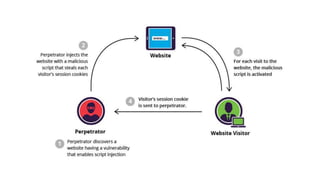
Example- Classic cross-site scripting (XSS) attack
• This attack exploits the assumptions and security models used by
Web browsers when viewing content from a site
• This allows programmable content like JavaScript to access and
manipulate data and metadata at the browser site, such as session
cookies associated with that site
Cross-site Scripting (XSS)
• Cross-site scripting vulnerability may be used by attackers to
bypass access control
• Cross-site scripting attacks use known vulnerabilities in web-
based applications, their servers, or the plug-in systems on
which they rely
• Attacker can gain elevated access-privileges to sensitive
page content, to session cookies
Prevention from Code Injection:-
• Filter user input
• Disable allow_url_fopen or allow_url_include setting in php.ini
Preventing SQL injection
• Manually check each piece of data is of the right type
• Use prepared statements and bind variables
The prepared statements will do filtering automatically
Preventing XSS
• In order to prevent XSS attack, proper filter output to the browser
through htmlentities() in PHP.
Preventing Session capturing and hijacking
• Regenerate IDs
• If using sessions, always uses SSL
• Any programs that gather and rely on third-party data have to be
responsible for ensuring that any subsequent use of such data is safe
and does not violate the user’s assumptions
• Filter any possibly untrusted data to ensure that only valid output is
displayed(use filters)
The simplest filtering alternative is to remove all HTML markup.
• Example- Different character set have diff. encoding of meta
characters which allow to bypass the security check(http and https)
Consequences:-
• The programmer’s reputation will be tarnished, and users may well be
less willing to use the program
• In case of XSS attacks, a number of well-known sites were implicated
in these attacks and suffered adverse publicity

Software security

  • 1.
  • 2.
    Software Security Issues:- TOPMost Dangerous Software Errors Software Error Category: Insecure Interaction Between Components • SQL Injection • OS Command Injection • Cross-site Scripting (XSS) • Unrestricted Upload of File with Dangerous Type • URL Redirection to Untrusted Site (“Open Redirect”)
  • 3.
    Software Error Category:Risky Resource Management •Buffer Copy without Checking Size of Input (“Classic Buffer Overflow”) •Download of Code Without Integrity Check •Use of Potentially Dangerous Function •Incorrect Calculation of Buffer Size
  • 4.
    Software Error Category:Porous(leaks) Defences • Missing Authentication for Critical Function • Missing Authorization • Missing Encryption of Sensitive Data • Reliance on Untrusted Inputs in a Security Decision • Incorrect Authorization • Use of a One-Way Hash without a Salt
  • 5.
    Handling Program Output •Output might be stored for future use in files or a database, or be transmitted over a network connection • If representing textual information, the data will be encoded using some character set and possibly representing some structured output, such as HTML • If this input contains content that alters the behaviour of the program or device displaying the data, then an attack on the user is possible (It happen in case of XSS)
  • 6.
    • It includesdeleting the user’s files or changing the user’s password • Programs like a mail client, which displayed data originating from other users, needed to filter such text to ensure that any escape sequences included in them were disabled • only programs run at the user’s command were permitted to access the user’s display Example- Classic cross-site scripting (XSS) attack • This attack exploits the assumptions and security models used by Web browsers when viewing content from a site • This allows programmable content like JavaScript to access and manipulate data and metadata at the browser site, such as session cookies associated with that site
  • 7.
    Cross-site Scripting (XSS) •Cross-site scripting vulnerability may be used by attackers to bypass access control • Cross-site scripting attacks use known vulnerabilities in web- based applications, their servers, or the plug-in systems on which they rely • Attacker can gain elevated access-privileges to sensitive page content, to session cookies
  • 9.
    Prevention from CodeInjection:- • Filter user input • Disable allow_url_fopen or allow_url_include setting in php.ini Preventing SQL injection • Manually check each piece of data is of the right type • Use prepared statements and bind variables The prepared statements will do filtering automatically Preventing XSS • In order to prevent XSS attack, proper filter output to the browser through htmlentities() in PHP. Preventing Session capturing and hijacking • Regenerate IDs • If using sessions, always uses SSL
  • 10.
    • Any programsthat gather and rely on third-party data have to be responsible for ensuring that any subsequent use of such data is safe and does not violate the user’s assumptions • Filter any possibly untrusted data to ensure that only valid output is displayed(use filters) The simplest filtering alternative is to remove all HTML markup. • Example- Different character set have diff. encoding of meta characters which allow to bypass the security check(http and https) Consequences:- • The programmer’s reputation will be tarnished, and users may well be less willing to use the program • In case of XSS attacks, a number of well-known sites were implicated in these attacks and suffered adverse publicity