Mohammad Hanif Hefaz
Ghazni University
*Software Aging
Ageing means to get old.
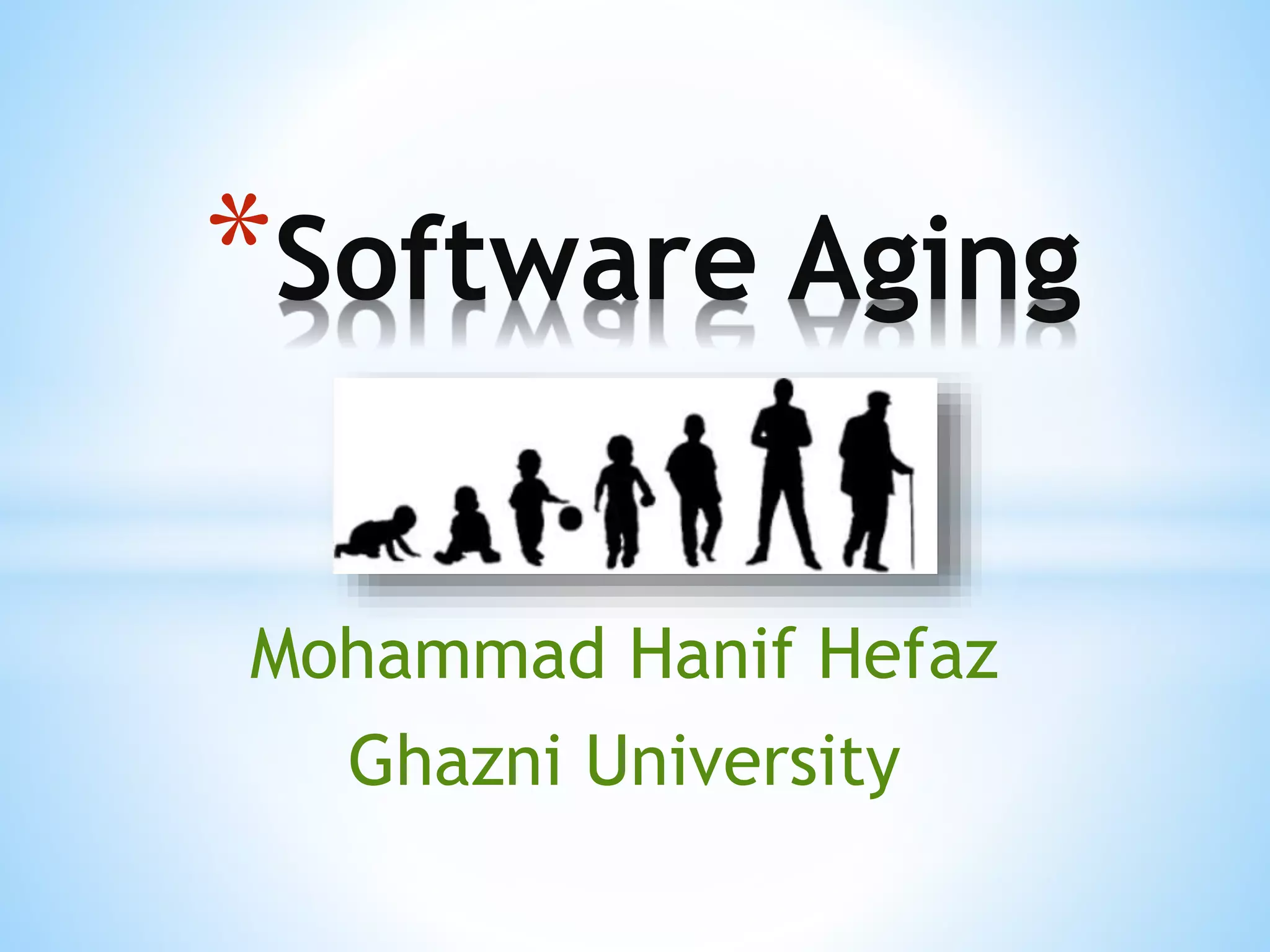
Programs, like people, get old.
In software engineering, software ageing
refers to progressive performance
degradation or the state of the software
degrades with time.
*What is Software Ageing?
Software is a mathematical product;
mathematics doesn’t decay with time. If a
theorem was correct 200 years ago, it will be
correct tomorrow. If a program is correct
today, it will be correct 100 years from now. If
it is wrong 100 years from now, it must have
been wrong when it was written. It makes no
sense to talk about software aging.
*Scientists Opinions
There are two, quite distinct, types of
software aging.
 Lack of Movement: The first is caused by
the failure of the product’s owners to modify it
to meet changing needs;
 Ignorant Surgery: The second is the result of
the changes that are made.
*What causes S.A?
Unless software is frequently updated, its
user’s will become dissatisfied and change to a
new product.
Excellent software developed in the 60’s
would work perfectly well today, but nobody
would use it.
That software has aged even though nobody
has touched it.
Actually, it has aged because nobody
bothered to touch it.
*Lack of Movement
 One must upgrade software to prevent
aging.
 Changing software can cause aging too.
 Changes are made by people who do not
understand the software.
 Changes take longer and introduce new
bugs.
 Inconsistent and inaccurate documentation
makes changing the software harder to do.
*Ignorant Surgery
Dynamic failure of the environment
Technology challenges (Hardware and Software)
Competition
Business compatibility & stability
Requirement evolution
High cost
Degrading quality
Increasing complexity
*Other S.A Factors
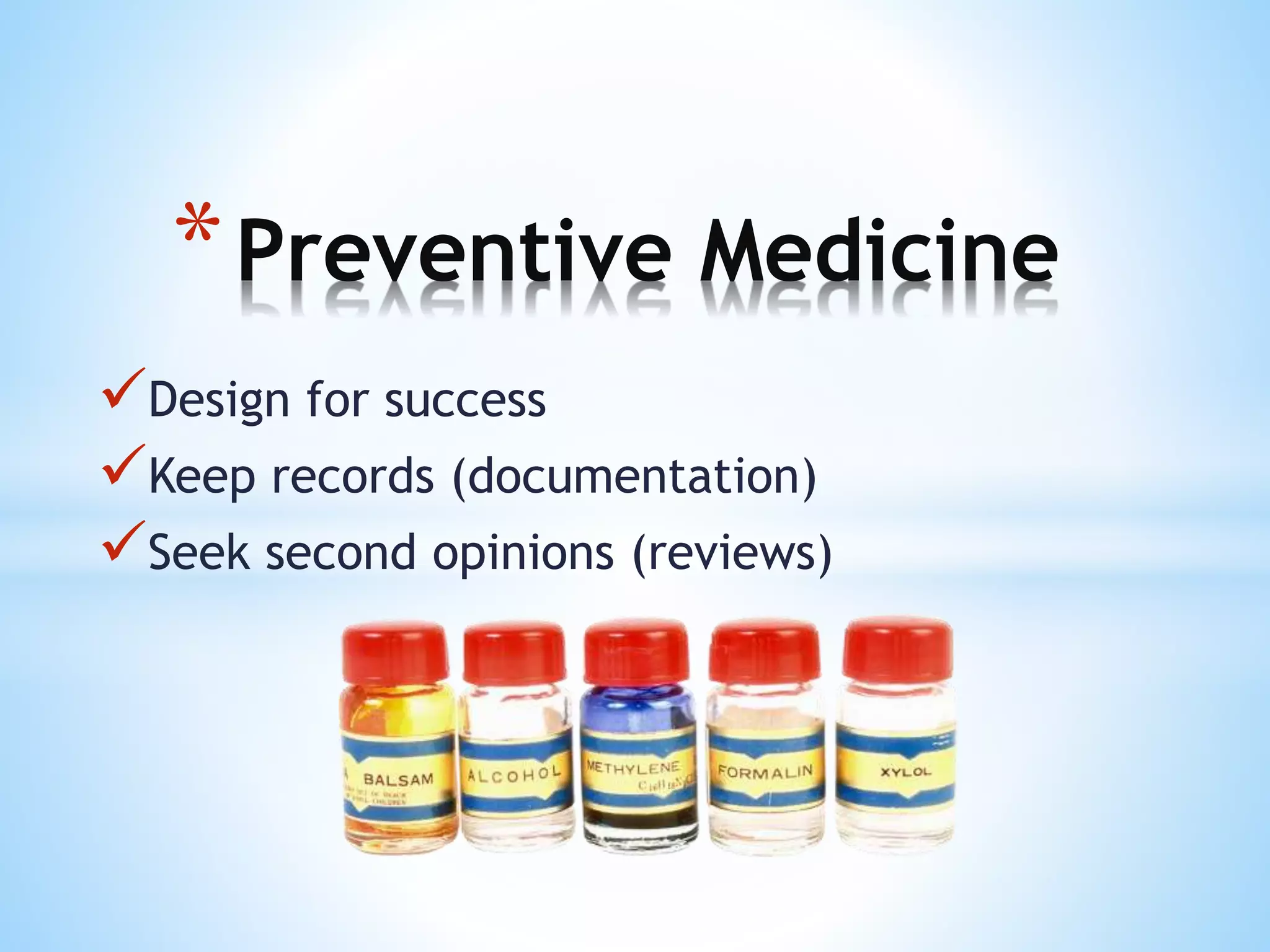
Design for success
Keep records (documentation)
Seek second opinions (reviews)
*Preventive Medicine
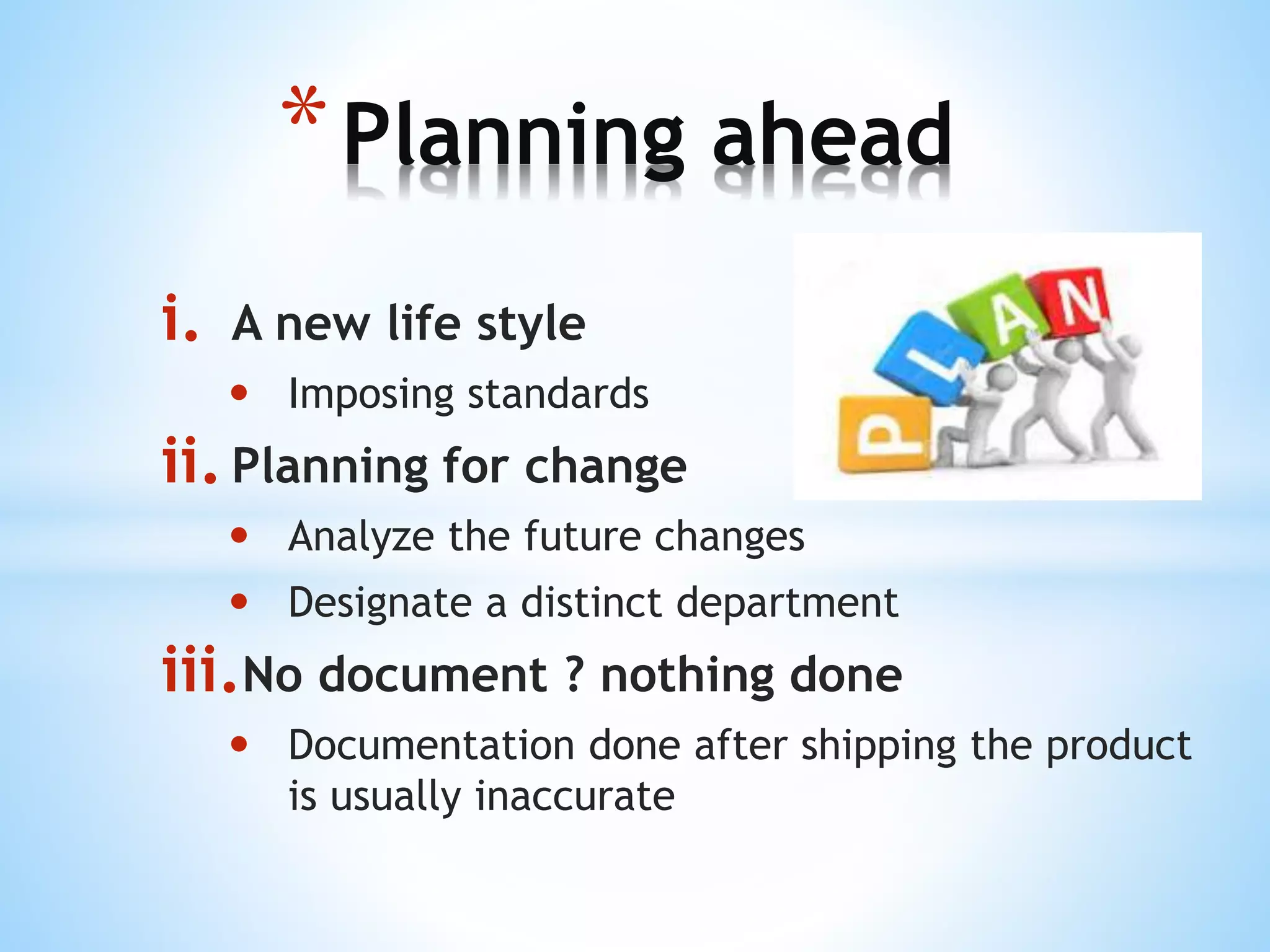
i. A new life style
• Imposing standards
ii.Planning for change
• Analyze the future changes
• Designate a distinct department
iii.No document ? nothing done
• Documentation done after shipping the product
is usually inaccurate
*Planning ahead
 Corrective
 Perfective
 Adaptive
 Restructuring (All versions in one)
 Redesign
 Realignment
 Redeployment
*Preventing Actions

Software aging

  • 1.
    Mohammad Hanif Hefaz GhazniUniversity *Software Aging
  • 2.
    Ageing means toget old. Programs, like people, get old. In software engineering, software ageing refers to progressive performance degradation or the state of the software degrades with time. *What is Software Ageing?
  • 3.
    Software is amathematical product; mathematics doesn’t decay with time. If a theorem was correct 200 years ago, it will be correct tomorrow. If a program is correct today, it will be correct 100 years from now. If it is wrong 100 years from now, it must have been wrong when it was written. It makes no sense to talk about software aging. *Scientists Opinions
  • 4.
    There are two,quite distinct, types of software aging.  Lack of Movement: The first is caused by the failure of the product’s owners to modify it to meet changing needs;  Ignorant Surgery: The second is the result of the changes that are made. *What causes S.A?
  • 5.
    Unless software isfrequently updated, its user’s will become dissatisfied and change to a new product. Excellent software developed in the 60’s would work perfectly well today, but nobody would use it. That software has aged even though nobody has touched it. Actually, it has aged because nobody bothered to touch it. *Lack of Movement
  • 6.
     One mustupgrade software to prevent aging.  Changing software can cause aging too.  Changes are made by people who do not understand the software.  Changes take longer and introduce new bugs.  Inconsistent and inaccurate documentation makes changing the software harder to do. *Ignorant Surgery
  • 7.
    Dynamic failure ofthe environment Technology challenges (Hardware and Software) Competition Business compatibility & stability Requirement evolution High cost Degrading quality Increasing complexity *Other S.A Factors
  • 8.
    Design for success Keeprecords (documentation) Seek second opinions (reviews) *Preventive Medicine
  • 9.
    i. A newlife style • Imposing standards ii.Planning for change • Analyze the future changes • Designate a distinct department iii.No document ? nothing done • Documentation done after shipping the product is usually inaccurate *Planning ahead
  • 10.
     Corrective  Perfective Adaptive  Restructuring (All versions in one)  Redesign  Realignment  Redeployment *Preventing Actions