BRAND REVITALIZATION CASE STUDY
1
BRAND ANALYSIS
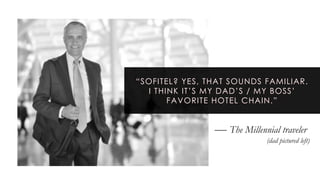
“SOFITEL? YES, THAT SOUNDS FAMILIAR.
I THINK IT’S MY DAD’S / MY BOSS’
FAVORITE HOTEL CHAIN.”
— The Millennial traveler
(dad pictured left)
Sofitel is the only French luxury hotel chain with a presence on all five continents, with
120 addresses in almost 40 countries (more than 30,000 rooms). While the global up-
market hotel industry is dominated by US and UK groups, the French touch is a
distinctive advantage in many markets, including emerging ones.
Q U A L I T Y V S . Q U A N T I T Y
GLOBAL FLAG-BEARER OF FRENCH HOSPITALITY1.
2. UNIQUE EMPHASIS ON CULTURAL EXPERIENCE
Staying at Sofitel means being assured you will experience sophisticated gastronomy,
glamourous parties, designer furniture, and refreshing art. Sofitel’s nightlife offering La
Nuit and the Sofitel Wine Days are two among many examples of Sofitel’s unparalleled
and consistent attachment to culture – this sets the brand apart from its direct
competitors.
3. TRUSTED NAME IN SECOND-TIER DESTINATIONS
Sofitel has a long history of pioneering high-end hoteling in smaller, more peripheral
cities: the very first Sofitel opened in Strasbourg in 1964 as the only 5-star hotel in the
city; Minneapolis of all places welcomed the first American Sofitel in 1975; in 1976
Sofitel was the first 5-star hotel to open in Manilla. To this day, Sofitel is often still the
only recognizable brand in smaller cities.
Strengths
Sofitel suffers from a certain lack of notoriety amongst a new generation of travelers –
as the brand isn’t as present in collective consciousness as more familiar names like
Four Seasons, InterContinental or Shangri-La. This is especially true outside Europe
and in emerging markets.
Q U A L I T Y V S . Q U A N T I T Y
LOW BRAND RECOGNITION1.
2. PERCEPTION OF BRAND AS AVERAGE AND OUTDATED
If prospects know of Sofitel at all, they tend to associate it with business travel and
bland corporate hotel chains. It is perceived as offering a cookie-cutter hotel
experience, miles away from the authenticity and individuality Millennial travelers now
expect from a hotel stay. To Millennials, Sofitel is synonymous with old-school, not
contemporary travel.
3. INCONSISTENT CUSTOMER EXPERIENCE
Many frequent travelers report an inconsistent customer experience across the Sofitel
portfolio : while many Sofitels provide the value they would expect from luxury
hospitality, many properties fail to deliver the brand value proposition. This could tie
in with Sofitel’s business model : no ownership of hotel properties means less control
over local brand experience.
Weaknesses
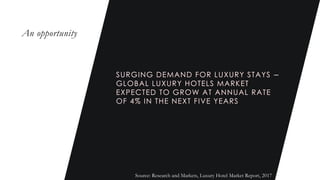
An opportunity
SURGING DEMAND FOR LUXURY STAYS −
GLOBAL LUXURY HOTELS MARKET
EXPECTED TO GROW AT ANNUAL RATE
OF 4% IN THE NEXT FIVE YEARS
Source: Research and Markets, Luxury Hotel Market Report, 2017
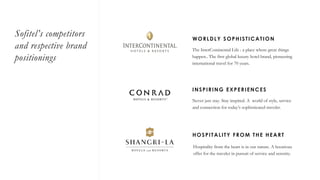
Never just stay. Stay inspired. A world of style, service
and connection for today’s sophisticated traveler.
INSPIRING EXPERIENCES
WORLDLY SOPHISTICATION
The InterContinental Life : a place where great things
happen.. The first global luxury hotel brand, pioneering
international travel for 70 years.
HOSPITALITY FROM THE HEART
Hospitality from the heart is in our nature. A luxurious
offer for the traveler in pursuit of service and serenity.
Sofitel’s competitors
and respective brand
positionings
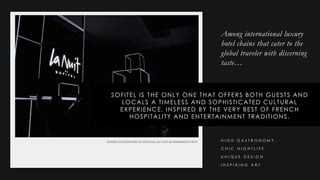
Among international luxury
hotel chains that cater to the
global traveler with discerning
taste…
SOFITEL IS THE ONLY ONE THAT OFFERS BOTH GUESTS AND
LOCALS A TIMELESS AND SOPHISTICATED CULTURAL
EXPERIENCE, INSPIRED BY THE VERY BEST OF FRENCH
HOSPITALITY AND ENTERTAINMENT TRADITIONS.
C H I C N I G H T L I F E
U N I Q U E D E S I G N
H I G H G A S T R O N O M Y
I N S P I R I N G A R T
2
CONSUMER INSIGHTS
AND TRENDS
X
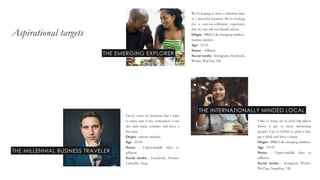
THE MILLENNIAL BUSINESS TRAVELER
I’m in town for business, but I want
to make sure I stay somewhere I can
also kick back, socialize and have a
fun time.
Origin : mature markets
Age : 25-45
Status : Upper-middle class to
affluent
Social media : Facebook, Twitter,
LinkedIn, Xing
OLU
Aspirational targets
THE INTERNATIONALLY MINDED LOCAL
I like to hang out in cool, hip places
where I get to meet interesting
people. I go to Sofitel to grab a bite,
get a drink and have a dance.
Origin : BRICS & emerging markets
Age : 18-45
Status : Upper-middle class to
affluent
Social media : Instagram, Weibo,
WeChat, Snapchat, VK
THE EMERGING EXPLORER
We’re hoping to have a fabulous time
at a beautiful location. We’re looking
for a once-in-a-lifetime experience
that we can tell our friends about.
Origin : BRICS & emerging markets,
mature markets
Age : 25-55
Status : Affluent
Social media : Instagram, Facebook,
Weibo, WeChat, VK
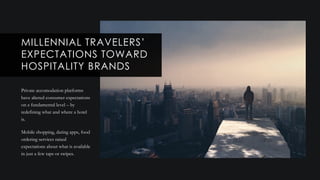
Private accomodation platforms
have altered consumer expectations
on a fundamental level – by
redefining what and where a hotel
is.
Mobile shopping, dating apps, food
ordering services raised
expectations about what is available
in just a few taps or swipes.
MILLENNIAL TRAVELERS’
EXPECTATIONS TOWARD
HOSPITALITY BRANDS
The tourist is dead, long live the explorer. The Millennial traveler looks for genuine,
local experiences, organic, farm-to-table meals and has a propensity to follow
recommendations from locals and opt for off-the-beaten-path locations. The rapid
adoption of Airbnb, but also the explosion of craft beer; rising demand for organic
foods; and popularity of indie music all confirm this trend. This desire for authenticity
requires hotel brands to craft compelling and relevant storytelling.
Authenticity doesn’t mean you can’t be spectacular! While Millennials tend to prefer
luxury that whispers rather than screams, they are attentive to the promise of an
incredible, once-in-a-lifetime experience. « Treat yourself » is not just a pop-culture
catchphrase, it signals that this generation knows that every now and then, it’s
important to indulge.
AND YET
STRIVING FOR AUTHENTICITY1.
ONCE-IN-A-LIFETIME EXPERIENCES
Most travel brands realize that making a guest feel special and appreciated can go a
long way. But Millennials’ expectations with personalization have grown to an
unprecedented degree, thanks to smart, highly flexible services such as Amazon,
Spotify, or Alibaba. With data and digital technologies, providing a travel experience
finely tailored to guests’ individual preferences is becoming a must. This starts with
little things, such as making sure lighting, temperature and entertainment settings
automatically adjust to guest preferences prior to arrival.
Millennial travelers are often described as « tribes » : while they expect personalized
and customized services across all touchpoints, they also value connection, community
experiences and a sense of belonging.
PERSONALIZATION IS A MUST2.
COMMUNITY FEELAND YET
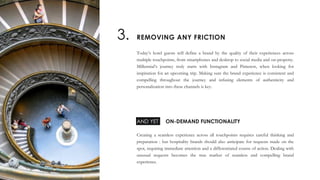
Today’s hotel guests will define a brand by the quality of their experiences across
multiple touchpoints, from smartphones and desktop to social media and on-property.
Millennial’s journey truly starts with Instagram and Pinterest, when looking for
inspiration for an upcoming trip. Making sure the brand experience is consistent and
compelling throughout the journey and infusing elements of authenticity and
personalization into these channels is key.
Creating a seamless experience across all touchpoints requires careful thinking and
preparation : but hospitality brands should also anticipate for requests made on the
spot, requiring immediate attention and a differentiated course of action. Dealing with
unusual requests becomes the true marker of seamless and compelling brand
experience.
REMOVING ANY FRICTION3.
ON-DEMAND FUNCTIONALITYAND YET
3
STRATEGIC
AND CREATIVE
RECOMMENDATION
COMMIT TO GREAT
ENTERTAINMENT
ENGAGE LOCAL
COMMUNITIES & ASSETS
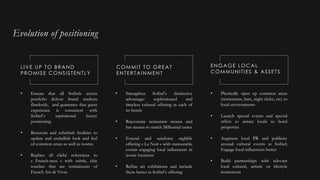
LIVE UP TO BRAND
PROMISE CONSISTENTLY
• Ensure that all Sofitels across
portfolio deliver brand markers
flawlessly, and guarantee that guest
experience is consistent with
Sofitel’s aspirational luxury
positioning
• Renovate and refurbish facilities to
update and embellish look and feel
of common areas as well as rooms
• Replace all cliché references to
« French-ness » with subtle, chic
touches that are reminiscent of
French Art de Vivre
• Strengthen Sofitel’s distinctive
advantage: sophisticated and
timeless cultural offering in each of
its hotels
• Rejuvenate restaurant menus and
bar menus to match Millennial tastes
• Extend and reinforce nighlife
offering « La Nuit » with memorable
events engaging local influencers in
iconic locations
• Refine art exhibitions and include
them better in Sofitel’s offering
• Physically open up common areas
(restaurants, bars, night clubs, etc) to
local environments
• Launch special events and special
offers to attract locals to hotel
properties
• Augment local PR and publicity
around cultural events at Sofitel;
Engage local influencers better
• Build partnerships with relevant
local cultural, artistic or lifestyle
institutions
Evolution of positioning
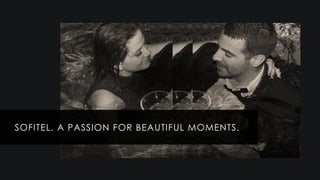
SOFITEL. A PASSION FOR BEAUTIFUL MOMENTS.
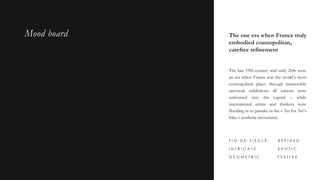
The one era when France truly
embodied cosmopolitan,
carefree refinement
The late 19th century and early 20th were
an era when France was the world’s most
cosmopolitan place: through memorable
universal exhibitions all nations were
welcomed into the capital – while
international artists and thinkers were
flooding in to partake in the « Art for Art’s
Sake » aesthetic movement.
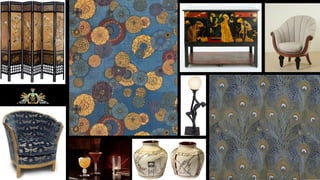
I N T R I C A T E
G E O M E T R I C
R E F I N E D
E X O T I C
F I N - D E - S I E C L E
F E S T I V E
Mood board
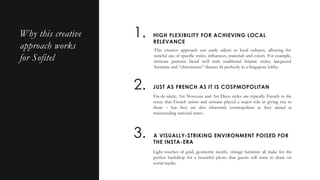
HIGH FLEXIBILITY FOR ACHIEVING LOCAL
RELEVANCE
1.
2. JUST AS FRENCH AS IT IS COSPMOPOLITAN
Fin-de-siècle, Art Nouveau and Art Déco styles are typically French in the
sense that French artists and artisans played a major role in giving rise to
them – but they are also inherently cosmopolitan as they aimed at
transcending national tastes.
3. A VISUALLY-STRIKING ENVIRONMENT POISED FOR
THE INSTA-ERA
Light touches of gold, geometric motifs, vintage furniture all make for the
perfect backdrop for a beautiful photo that guests will want to share on
social media.
Why this creative
approach works
for Sofitel
This creative approach can easily adjust to local cultures, allowing for
tasteful use of specific styles, influences, materials and colors. For example,
intricate patterns blend well with traditional Islamic styles; lacquered
furniture and “chinoiseries” themes fit perfectly in a Singapore lobby.
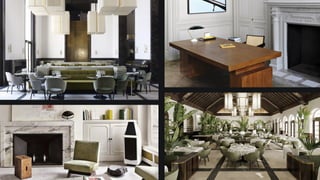
French designer Joseph Dirand is
renowned for his lean, chic, and
timeless aesthetic, mixing
inspiration from Art Deco, Art
Nouveau and Modernism with
local flavors. Some of his most
critically-acclaimed work includes
the renovation of Palais de
Tokyo’s Monsieur Bleu and of
Four Seasons’ Miami outpost.
EXAMPLE OF POTENTIAL
DESIGNER COLLAB:
SOFITEL X JOSEPH DIRAND
P U B L I C A T I O N SSources used for
this case study Deloitte Center for Industry Insights,
2017 travel and hospitality industry
outlook, 2017
Expedia Media Solutions, American
Multi-generational travel trends, 2017
Expedia Media Solutions, European
travel trends, 2017
Nielsen, Young and ready to travel (and
shop): A look at Millennial travelers, 2017
The Guardian, 11 hotel trends for 2017,
January 2017
I N T E R V I E W S
Phone interviews with 2 frequent
travelers (male, 30 y.o. European &
female, 25 y.o., Asian) and 1 businessman
(male, 50 y.o., Middle Eastern)
A L O Ï S K I R N E R
O C T O B E R 2 0 1 7

Sofitel brand revitalization: A case study

  • 1.
  • 2.
  • 3.
    “SOFITEL? YES, THATSOUNDS FAMILIAR. I THINK IT’S MY DAD’S / MY BOSS’ FAVORITE HOTEL CHAIN.” — The Millennial traveler (dad pictured left)
  • 4.
    Sofitel is theonly French luxury hotel chain with a presence on all five continents, with 120 addresses in almost 40 countries (more than 30,000 rooms). While the global up- market hotel industry is dominated by US and UK groups, the French touch is a distinctive advantage in many markets, including emerging ones. Q U A L I T Y V S . Q U A N T I T Y GLOBAL FLAG-BEARER OF FRENCH HOSPITALITY1. 2. UNIQUE EMPHASIS ON CULTURAL EXPERIENCE Staying at Sofitel means being assured you will experience sophisticated gastronomy, glamourous parties, designer furniture, and refreshing art. Sofitel’s nightlife offering La Nuit and the Sofitel Wine Days are two among many examples of Sofitel’s unparalleled and consistent attachment to culture – this sets the brand apart from its direct competitors. 3. TRUSTED NAME IN SECOND-TIER DESTINATIONS Sofitel has a long history of pioneering high-end hoteling in smaller, more peripheral cities: the very first Sofitel opened in Strasbourg in 1964 as the only 5-star hotel in the city; Minneapolis of all places welcomed the first American Sofitel in 1975; in 1976 Sofitel was the first 5-star hotel to open in Manilla. To this day, Sofitel is often still the only recognizable brand in smaller cities. Strengths
  • 5.
    Sofitel suffers froma certain lack of notoriety amongst a new generation of travelers – as the brand isn’t as present in collective consciousness as more familiar names like Four Seasons, InterContinental or Shangri-La. This is especially true outside Europe and in emerging markets. Q U A L I T Y V S . Q U A N T I T Y LOW BRAND RECOGNITION1. 2. PERCEPTION OF BRAND AS AVERAGE AND OUTDATED If prospects know of Sofitel at all, they tend to associate it with business travel and bland corporate hotel chains. It is perceived as offering a cookie-cutter hotel experience, miles away from the authenticity and individuality Millennial travelers now expect from a hotel stay. To Millennials, Sofitel is synonymous with old-school, not contemporary travel. 3. INCONSISTENT CUSTOMER EXPERIENCE Many frequent travelers report an inconsistent customer experience across the Sofitel portfolio : while many Sofitels provide the value they would expect from luxury hospitality, many properties fail to deliver the brand value proposition. This could tie in with Sofitel’s business model : no ownership of hotel properties means less control over local brand experience. Weaknesses
  • 6.
    An opportunity SURGING DEMANDFOR LUXURY STAYS − GLOBAL LUXURY HOTELS MARKET EXPECTED TO GROW AT ANNUAL RATE OF 4% IN THE NEXT FIVE YEARS Source: Research and Markets, Luxury Hotel Market Report, 2017
  • 7.
    Never just stay.Stay inspired. A world of style, service and connection for today’s sophisticated traveler. INSPIRING EXPERIENCES WORLDLY SOPHISTICATION The InterContinental Life : a place where great things happen.. The first global luxury hotel brand, pioneering international travel for 70 years. HOSPITALITY FROM THE HEART Hospitality from the heart is in our nature. A luxurious offer for the traveler in pursuit of service and serenity. Sofitel’s competitors and respective brand positionings
  • 8.
    Among international luxury hotelchains that cater to the global traveler with discerning taste… SOFITEL IS THE ONLY ONE THAT OFFERS BOTH GUESTS AND LOCALS A TIMELESS AND SOPHISTICATED CULTURAL EXPERIENCE, INSPIRED BY THE VERY BEST OF FRENCH HOSPITALITY AND ENTERTAINMENT TRADITIONS. C H I C N I G H T L I F E U N I Q U E D E S I G N H I G H G A S T R O N O M Y I N S P I R I N G A R T
  • 9.
  • 10.
    X THE MILLENNIAL BUSINESSTRAVELER I’m in town for business, but I want to make sure I stay somewhere I can also kick back, socialize and have a fun time. Origin : mature markets Age : 25-45 Status : Upper-middle class to affluent Social media : Facebook, Twitter, LinkedIn, Xing OLU Aspirational targets THE INTERNATIONALLY MINDED LOCAL I like to hang out in cool, hip places where I get to meet interesting people. I go to Sofitel to grab a bite, get a drink and have a dance. Origin : BRICS & emerging markets Age : 18-45 Status : Upper-middle class to affluent Social media : Instagram, Weibo, WeChat, Snapchat, VK THE EMERGING EXPLORER We’re hoping to have a fabulous time at a beautiful location. We’re looking for a once-in-a-lifetime experience that we can tell our friends about. Origin : BRICS & emerging markets, mature markets Age : 25-55 Status : Affluent Social media : Instagram, Facebook, Weibo, WeChat, VK
  • 11.
    Private accomodation platforms havealtered consumer expectations on a fundamental level – by redefining what and where a hotel is. Mobile shopping, dating apps, food ordering services raised expectations about what is available in just a few taps or swipes. MILLENNIAL TRAVELERS’ EXPECTATIONS TOWARD HOSPITALITY BRANDS
  • 12.
    The tourist isdead, long live the explorer. The Millennial traveler looks for genuine, local experiences, organic, farm-to-table meals and has a propensity to follow recommendations from locals and opt for off-the-beaten-path locations. The rapid adoption of Airbnb, but also the explosion of craft beer; rising demand for organic foods; and popularity of indie music all confirm this trend. This desire for authenticity requires hotel brands to craft compelling and relevant storytelling. Authenticity doesn’t mean you can’t be spectacular! While Millennials tend to prefer luxury that whispers rather than screams, they are attentive to the promise of an incredible, once-in-a-lifetime experience. « Treat yourself » is not just a pop-culture catchphrase, it signals that this generation knows that every now and then, it’s important to indulge. AND YET STRIVING FOR AUTHENTICITY1. ONCE-IN-A-LIFETIME EXPERIENCES
  • 13.
    Most travel brandsrealize that making a guest feel special and appreciated can go a long way. But Millennials’ expectations with personalization have grown to an unprecedented degree, thanks to smart, highly flexible services such as Amazon, Spotify, or Alibaba. With data and digital technologies, providing a travel experience finely tailored to guests’ individual preferences is becoming a must. This starts with little things, such as making sure lighting, temperature and entertainment settings automatically adjust to guest preferences prior to arrival. Millennial travelers are often described as « tribes » : while they expect personalized and customized services across all touchpoints, they also value connection, community experiences and a sense of belonging. PERSONALIZATION IS A MUST2. COMMUNITY FEELAND YET
  • 14.
    Today’s hotel guestswill define a brand by the quality of their experiences across multiple touchpoints, from smartphones and desktop to social media and on-property. Millennial’s journey truly starts with Instagram and Pinterest, when looking for inspiration for an upcoming trip. Making sure the brand experience is consistent and compelling throughout the journey and infusing elements of authenticity and personalization into these channels is key. Creating a seamless experience across all touchpoints requires careful thinking and preparation : but hospitality brands should also anticipate for requests made on the spot, requiring immediate attention and a differentiated course of action. Dealing with unusual requests becomes the true marker of seamless and compelling brand experience. REMOVING ANY FRICTION3. ON-DEMAND FUNCTIONALITYAND YET
  • 15.
  • 16.
    COMMIT TO GREAT ENTERTAINMENT ENGAGELOCAL COMMUNITIES & ASSETS LIVE UP TO BRAND PROMISE CONSISTENTLY • Ensure that all Sofitels across portfolio deliver brand markers flawlessly, and guarantee that guest experience is consistent with Sofitel’s aspirational luxury positioning • Renovate and refurbish facilities to update and embellish look and feel of common areas as well as rooms • Replace all cliché references to « French-ness » with subtle, chic touches that are reminiscent of French Art de Vivre • Strengthen Sofitel’s distinctive advantage: sophisticated and timeless cultural offering in each of its hotels • Rejuvenate restaurant menus and bar menus to match Millennial tastes • Extend and reinforce nighlife offering « La Nuit » with memorable events engaging local influencers in iconic locations • Refine art exhibitions and include them better in Sofitel’s offering • Physically open up common areas (restaurants, bars, night clubs, etc) to local environments • Launch special events and special offers to attract locals to hotel properties • Augment local PR and publicity around cultural events at Sofitel; Engage local influencers better • Build partnerships with relevant local cultural, artistic or lifestyle institutions Evolution of positioning
  • 17.
    SOFITEL. A PASSIONFOR BEAUTIFUL MOMENTS.
  • 18.
    The one erawhen France truly embodied cosmopolitan, carefree refinement The late 19th century and early 20th were an era when France was the world’s most cosmopolitan place: through memorable universal exhibitions all nations were welcomed into the capital – while international artists and thinkers were flooding in to partake in the « Art for Art’s Sake » aesthetic movement. I N T R I C A T E G E O M E T R I C R E F I N E D E X O T I C F I N - D E - S I E C L E F E S T I V E Mood board
  • 20.
    HIGH FLEXIBILITY FORACHIEVING LOCAL RELEVANCE 1. 2. JUST AS FRENCH AS IT IS COSPMOPOLITAN Fin-de-siècle, Art Nouveau and Art Déco styles are typically French in the sense that French artists and artisans played a major role in giving rise to them – but they are also inherently cosmopolitan as they aimed at transcending national tastes. 3. A VISUALLY-STRIKING ENVIRONMENT POISED FOR THE INSTA-ERA Light touches of gold, geometric motifs, vintage furniture all make for the perfect backdrop for a beautiful photo that guests will want to share on social media. Why this creative approach works for Sofitel This creative approach can easily adjust to local cultures, allowing for tasteful use of specific styles, influences, materials and colors. For example, intricate patterns blend well with traditional Islamic styles; lacquered furniture and “chinoiseries” themes fit perfectly in a Singapore lobby.
  • 21.
    French designer JosephDirand is renowned for his lean, chic, and timeless aesthetic, mixing inspiration from Art Deco, Art Nouveau and Modernism with local flavors. Some of his most critically-acclaimed work includes the renovation of Palais de Tokyo’s Monsieur Bleu and of Four Seasons’ Miami outpost. EXAMPLE OF POTENTIAL DESIGNER COLLAB: SOFITEL X JOSEPH DIRAND
  • 23.
    P U BL I C A T I O N SSources used for this case study Deloitte Center for Industry Insights, 2017 travel and hospitality industry outlook, 2017 Expedia Media Solutions, American Multi-generational travel trends, 2017 Expedia Media Solutions, European travel trends, 2017 Nielsen, Young and ready to travel (and shop): A look at Millennial travelers, 2017 The Guardian, 11 hotel trends for 2017, January 2017 I N T E R V I E W S Phone interviews with 2 frequent travelers (male, 30 y.o. European & female, 25 y.o., Asian) and 1 businessman (male, 50 y.o., Middle Eastern)
  • 24.
    A L OÏ S K I R N E R O C T O B E R 2 0 1 7