Download to read offline


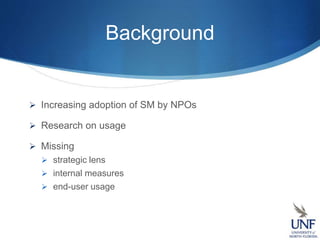
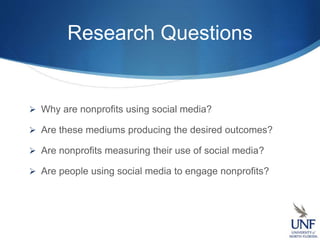
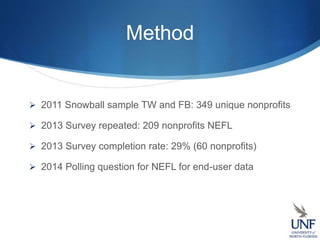
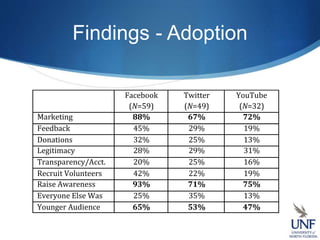
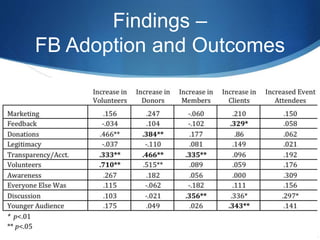
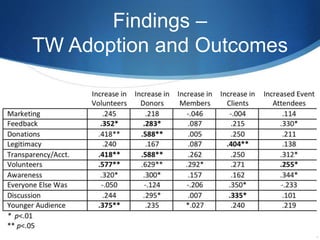
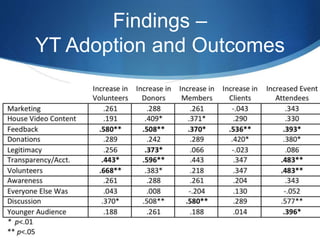
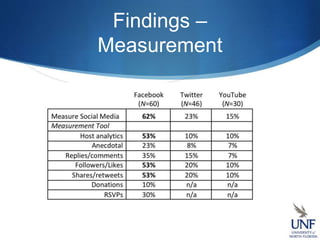
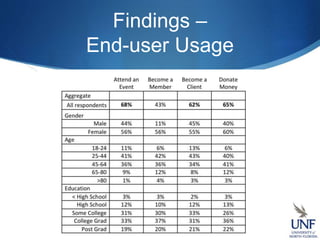
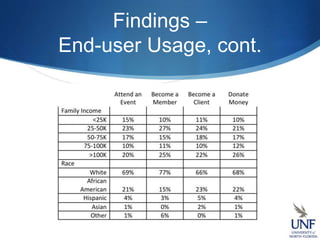
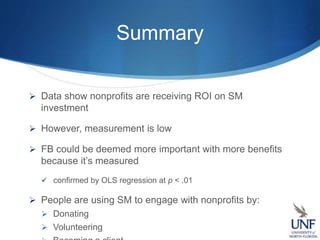


The document summarizes research on nonprofits' use of social media and whether it provides a return on investment. It finds that while nonprofits widely use platforms like Facebook, Twitter and YouTube for purposes like marketing, fundraising and engagement, measurement of outcomes is low. Specifically, it finds that Facebook may be viewed as more important because nonprofits measure its impact more, and regression analysis confirmed this relationship. Additionally, the research found that people do engage with nonprofits on social media through activities like donating and volunteering. The author calls for future research on predictors of viewing social media as important and better analyzing measurement practices.


