Social Media Responsibility
Responsible use of Social Media
With the growing use of technology and rise in its usage
with each passing day, it is crucial that children know how to
use that smartly and responsibly.
When you start on with the right foot digitally, It will
prevent you from making serious social media mistakes that
could cost you their dream school or career opportunity.
Some tips to ensure you are using social media responsibly.
Guidelines to be Safe Smart Social
 Don’t share something that you don’t want your employers, coaches, instructors or
mentors to view.
 Share and view posts which can be seen sitting with your parents/elders
 Follow the rule: I will only post what I want my reputation to be ten years from now.
 Block the groups which spread negativity. ( Question yourself: Are you getting upset, or
impulsive after reading online posts, IfYes Stay away from them )
 Fix your logged In time for a social networking platform ( It should not affect your reading
time, family time, and rest time).
How to be socially responsible
 Never take over another person’s thread to drive home a point
 Don’t go ad hominem when you disagree with someone; always remain respectful and
calm
 Thank and tag people when you share something they shared first
 If you don’t have something nice to say, best not to say it
 Vet friend requests carefully – if you can’t see enough information to make an informed
decision, best to decline the request and mark it as spam
 Don’t share anything you wouldn’t want your mom to see and don’t overshare
Be Accountable
 There will be consequences right away if there are any social media mishaps.Your
parents/school can stop internet access if they notice negligence in following through with the
rules that were agreed upon.
 Question your content
 Once you hit send, post, etc… the message is no longer yours and the receiver can do anything
can do anything they want with the message. –Johnna Ithier
 Ask yourself before you post
 Is the postTRUE or a rumor
 Is the post HELPFUL or harmful
 Is the post INFORMATIONAL or gossip
 Is the post NEEDED or irrelevant
 Is the post KIND or harsh
Use technology meaningfully
 Text, tweet, and post information you learn during your class.
 Remember, Nothing is private online
 First and foremost, never put anything online you don’t want your educators, future
employers, peers, and parents to see. Deleted items can still live on servers. People can
take screenshots of posts. Private accounts can be hacked. Nothing is 100% private
online.
Grow and nurture on Social media.
 Create a LinkedIn page that is interactive and show pictures and videos of your
accomplishments, interests, and passions. Include the LinkedIn profile URL with the
college application.
 As simple as it sounds, if you wouldn’t say it in person, you shouldn’t type it.
 You should not count on a veil of anonymity onTwitter or any other social network. If
someone wants to find out who you are, they will.
 You should schedule your tweets using an app like HootSuite or Buffer.
 So you can type out whatever you want to say, then schedule it to send in an hour or two.
That way, you have plenty of time to reconsider your posts before they go public.
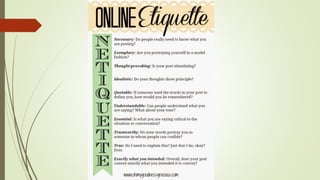
 T – is it truthful
h – does it help?
i – does it inspire?
n – is it nice or necessary?
k – Key Club related or kind?
Do not count on anonymity
 You can either post an infinite number of selfies, gossip messages or worse hate
messages which drains the viewer.
 Conversely, you can post pictures of achievement (sports or hobbies) or news you can use
articles from websites, broadcast or print media, which are sources of information for the
viewer.
 Being a source is better for the poster and the person viewing the post.
Become a source of useful information
Manage what is posted Online
 Perform a search on yourself to see what your online brand looks like. Start by googling
your name and where you’re from.
 Go back and clean up what you can, making sure to remove any inappropriate posts and
pictures from you or about you.
 Keep head shots as professional as possible, especially on sites like LinkedIn, which can
be easily found by future employers.
 Create an alert to see what is posted about you online and on social media in the future.
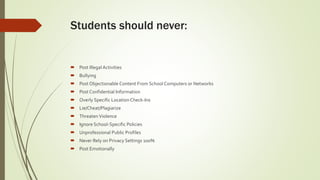
 Post Illegal Activities
 Bullying
 Post Objectionable Content From School Computers or Networks
 Post Confidential Information
 Overly Specific Location Check-Ins
 Lie/Cheat/Plagiarize
 ThreatenViolence
 Ignore School-Specific Policies
 Unprofessional Public Profiles
 Never Rely on Privacy Settings 100%
 Post Emotionally
Students should never:
Social media responsibility

Social media responsibility

  • 1.
  • 3.
    Responsible use ofSocial Media With the growing use of technology and rise in its usage with each passing day, it is crucial that children know how to use that smartly and responsibly. When you start on with the right foot digitally, It will prevent you from making serious social media mistakes that could cost you their dream school or career opportunity. Some tips to ensure you are using social media responsibly.
  • 4.
    Guidelines to beSafe Smart Social  Don’t share something that you don’t want your employers, coaches, instructors or mentors to view.  Share and view posts which can be seen sitting with your parents/elders  Follow the rule: I will only post what I want my reputation to be ten years from now.  Block the groups which spread negativity. ( Question yourself: Are you getting upset, or impulsive after reading online posts, IfYes Stay away from them )  Fix your logged In time for a social networking platform ( It should not affect your reading time, family time, and rest time).
  • 5.
    How to besocially responsible  Never take over another person’s thread to drive home a point  Don’t go ad hominem when you disagree with someone; always remain respectful and calm  Thank and tag people when you share something they shared first  If you don’t have something nice to say, best not to say it  Vet friend requests carefully – if you can’t see enough information to make an informed decision, best to decline the request and mark it as spam  Don’t share anything you wouldn’t want your mom to see and don’t overshare
  • 6.
    Be Accountable  Therewill be consequences right away if there are any social media mishaps.Your parents/school can stop internet access if they notice negligence in following through with the rules that were agreed upon.  Question your content  Once you hit send, post, etc… the message is no longer yours and the receiver can do anything can do anything they want with the message. –Johnna Ithier  Ask yourself before you post  Is the postTRUE or a rumor  Is the post HELPFUL or harmful  Is the post INFORMATIONAL or gossip  Is the post NEEDED or irrelevant  Is the post KIND or harsh
  • 7.
    Use technology meaningfully Text, tweet, and post information you learn during your class.  Remember, Nothing is private online  First and foremost, never put anything online you don’t want your educators, future employers, peers, and parents to see. Deleted items can still live on servers. People can take screenshots of posts. Private accounts can be hacked. Nothing is 100% private online.
  • 8.
    Grow and nurtureon Social media.  Create a LinkedIn page that is interactive and show pictures and videos of your accomplishments, interests, and passions. Include the LinkedIn profile URL with the college application.
  • 9.
     As simpleas it sounds, if you wouldn’t say it in person, you shouldn’t type it.  You should not count on a veil of anonymity onTwitter or any other social network. If someone wants to find out who you are, they will.  You should schedule your tweets using an app like HootSuite or Buffer.  So you can type out whatever you want to say, then schedule it to send in an hour or two. That way, you have plenty of time to reconsider your posts before they go public.  T – is it truthful h – does it help? i – does it inspire? n – is it nice or necessary? k – Key Club related or kind? Do not count on anonymity
  • 10.
     You caneither post an infinite number of selfies, gossip messages or worse hate messages which drains the viewer.  Conversely, you can post pictures of achievement (sports or hobbies) or news you can use articles from websites, broadcast or print media, which are sources of information for the viewer.  Being a source is better for the poster and the person viewing the post. Become a source of useful information
  • 11.
    Manage what isposted Online  Perform a search on yourself to see what your online brand looks like. Start by googling your name and where you’re from.  Go back and clean up what you can, making sure to remove any inappropriate posts and pictures from you or about you.  Keep head shots as professional as possible, especially on sites like LinkedIn, which can be easily found by future employers.  Create an alert to see what is posted about you online and on social media in the future.
  • 12.
     Post IllegalActivities  Bullying  Post Objectionable Content From School Computers or Networks  Post Confidential Information  Overly Specific Location Check-Ins  Lie/Cheat/Plagiarize  ThreatenViolence  Ignore School-Specific Policies  Unprofessional Public Profiles  Never Rely on Privacy Settings 100%  Post Emotionally Students should never:

Editor's Notes

  • #2 Some pros and cons of social media . Pros are us usually connecting with friends, sharing happiness, do projects together even when they are not in the same place etc. The cons are cyber bullying, lower school grades, harassment etc.
  • #3 Feel like it is hard to keep up with all this social media? You are not alone!  Often the social media our children use change daily as new sites and applications are created and come in and out of fashion. Sometimes it feels like our kids are way more advanced with today's technology than we are; however, that means they need us to monitor and be aware now more than ever.
  • #10 Students have more control over their future than they think when it comes to using social media. It’s important to understand how social media could make or break future educational or professional opportunities. Each student should complete a series of exercises that allow them to define who they are, who they are not, and what their biggest fear is when it comes to being misunderstood or misinterpreted. Analyzing past posts against their answers should put things into perspective for the student. Understanding the pros and cons to being socially responsible on social media will be very clear.