Hanging Out, Messing Around and
Geeking Out (Boyd)
Morgan Brownlee
July 24, 2012
Friendship
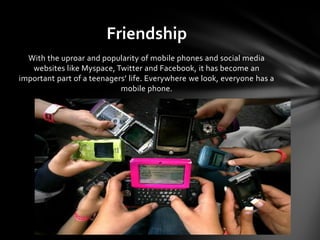
  With the uproar and popularity of mobile phones and social media
   websites like Myspace, Twitter and Facebook, it has become an
important part of a teenagers’ life. Everywhere we look, everyone has a
                            mobile phone.
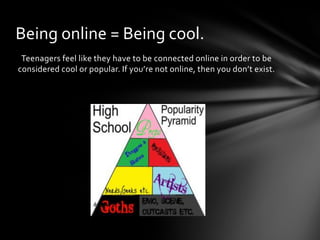
Being online = Being cool.
 Teenagers feel like they have to be connected online in order to be
considered cool or popular. If you’re not online, then you don’t exist.
Social Media Craze
  Teens have become addicted to the social media world. They feel
 like they don’t exist unless they are sharing their private lives with
    the public which can hinder their identity if too much is shared
                                online.
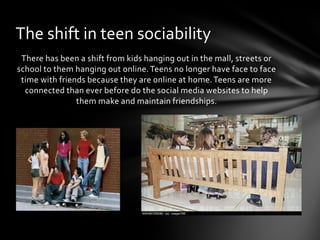
The shift in teen sociability
 There has been a shift from kids hanging out in the mall, streets or
school to them hanging out online. Teens no longer have face to face
 time with friends because they are online at home. Teens are more
  connected than ever before do the social media websites to help
                them make and maintain friendships.
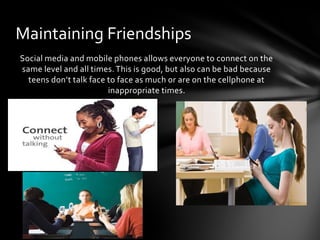
Maintaining Friendships
Social media and mobile phones allows everyone to connect on the
same level and all times. This is good, but also can be bad because
  teens don’t talk face to face as much or are on the cellphone at
                        inappropriate times.
Peers and Friendship
  Media sites have allowed kids to interact outside of the typical
  physical space. These sites have heightened youth culture and
 identity and have allowed intergenerational interest groups and
             blurred the line of intimacy among peers.
Peers and Friendship cont.
  Teenagers use online sites and social media for more reasons than
just communication. It allows them to share information, videos, and
  pictures. I think this can be a good source to give more intimacy to
                  people you don’t always see in person.
Peers and Friendship cont.
Online social networking sites have almost replaced the face to face
    interaction and socializing with teens like gossiping, sharing
                  information and finding identity.
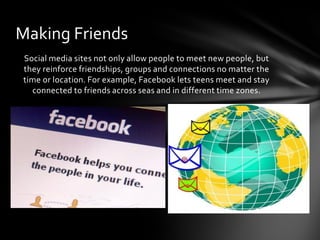
Making Friends
Social media sites not only allow people to meet new people, but
they reinforce friendships, groups and connections no matter the
time or location. For example, Facebook lets teens meet and stay
  connected to friends across seas and in different time zones.
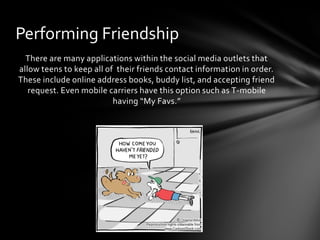
Performing Friendship
  There are many applications within the social media outlets that
allow teens to keep all of their friends contact information in order.
These include online address books, buddy list, and accepting friend
   request. Even mobile carriers have this option such as T-mobile
                          having “My Favs.”
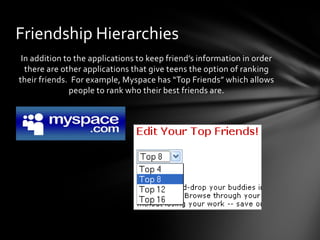
Friendship Hierarchies
 In addition to the applications to keep friend’s information in order
  there are other applications that give teens the option of ranking
their friends. For example, Myspace has “Top Friends” which allows
              people to rank who their best friends are.
Friendship Hierarchies cont.
  In Facebook, the friend request allows one to accept or reject the other’s
friendship on Facebook. By rejecting the request, that person cannot access
your wall and information. Many teens accept most friend requests to avoid
   offending peers who may think they have a strong friendship and just to
              accept them to have as many friends as possible.
                      Which brings in the question...
Status, Attention and Drama
 Teens tend to struggle of status among their peers and sometimes
the social media outlets can have a negative affect on them because
    most teens have insecurities with friendship and popularity.
Status, Attention, and Drama cont.
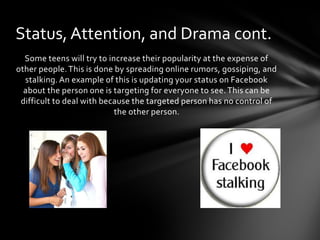
  Some teens will try to increase their popularity at the expense of
other people. This is done by spreading online rumors, gossiping, and
  stalking. An example of this is updating your status on Facebook
  about the person one is targeting for everyone to see. This can be
 difficult to deal with because the targeted person has no control of
                           the other person.
Status, Attention, and Drama cont.
 With all the social media comes the up and coming cyber bullying. It
 has become easy for teens to bully each other online than in person.
It is simple to get someone’s phone number and send a mean text or
to find them on Facebook and post something negative on their wall.
Conclusion
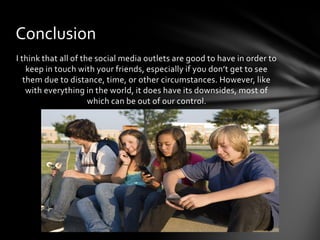
I think that all of the social media outlets are good to have in order to
    keep in touch with your friends, especially if you don’t get to see
   them due to distance, time, or other circumstances. However, like
    with everything in the world, it does have its downsides, most of
                      which can be out of our control.
Conclusion cont.
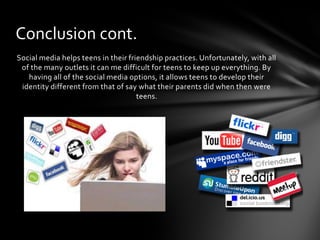
Social media helps teens in their friendship practices. Unfortunately, with all
 of the many outlets it can me difficult for teens to keep up everything. By
   having all of the social media options, it allows teens to develop their
 identity different from that of say what their parents did when then were
                                     teens.
Conclusion
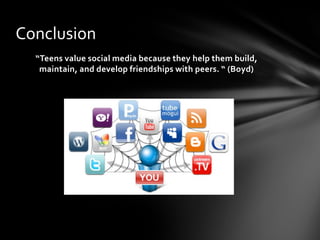
  “Teens value social media because they help them build,
   maintain, and develop friendships with peers. “ (Boyd)

Social media presentation

  • 1.
    Hanging Out, MessingAround and Geeking Out (Boyd) Morgan Brownlee July 24, 2012
  • 2.
    Friendship Withthe uproar and popularity of mobile phones and social media websites like Myspace, Twitter and Facebook, it has become an important part of a teenagers’ life. Everywhere we look, everyone has a mobile phone.
  • 3.
    Being online =Being cool. Teenagers feel like they have to be connected online in order to be considered cool or popular. If you’re not online, then you don’t exist.
  • 4.
    Social Media Craze Teens have become addicted to the social media world. They feel like they don’t exist unless they are sharing their private lives with the public which can hinder their identity if too much is shared online.
  • 5.
    The shift inteen sociability There has been a shift from kids hanging out in the mall, streets or school to them hanging out online. Teens no longer have face to face time with friends because they are online at home. Teens are more connected than ever before do the social media websites to help them make and maintain friendships.
  • 6.
    Maintaining Friendships Social mediaand mobile phones allows everyone to connect on the same level and all times. This is good, but also can be bad because teens don’t talk face to face as much or are on the cellphone at inappropriate times.
  • 7.
    Peers and Friendship Media sites have allowed kids to interact outside of the typical physical space. These sites have heightened youth culture and identity and have allowed intergenerational interest groups and blurred the line of intimacy among peers.
  • 8.
    Peers and Friendshipcont. Teenagers use online sites and social media for more reasons than just communication. It allows them to share information, videos, and pictures. I think this can be a good source to give more intimacy to people you don’t always see in person.
  • 9.
    Peers and Friendshipcont. Online social networking sites have almost replaced the face to face interaction and socializing with teens like gossiping, sharing information and finding identity.
  • 10.
    Making Friends Social mediasites not only allow people to meet new people, but they reinforce friendships, groups and connections no matter the time or location. For example, Facebook lets teens meet and stay connected to friends across seas and in different time zones.
  • 11.
    Performing Friendship There are many applications within the social media outlets that allow teens to keep all of their friends contact information in order. These include online address books, buddy list, and accepting friend request. Even mobile carriers have this option such as T-mobile having “My Favs.”
  • 12.
    Friendship Hierarchies Inaddition to the applications to keep friend’s information in order there are other applications that give teens the option of ranking their friends. For example, Myspace has “Top Friends” which allows people to rank who their best friends are.
  • 13.
    Friendship Hierarchies cont. In Facebook, the friend request allows one to accept or reject the other’s friendship on Facebook. By rejecting the request, that person cannot access your wall and information. Many teens accept most friend requests to avoid offending peers who may think they have a strong friendship and just to accept them to have as many friends as possible. Which brings in the question...
  • 14.
    Status, Attention andDrama Teens tend to struggle of status among their peers and sometimes the social media outlets can have a negative affect on them because most teens have insecurities with friendship and popularity.
  • 15.
    Status, Attention, andDrama cont. Some teens will try to increase their popularity at the expense of other people. This is done by spreading online rumors, gossiping, and stalking. An example of this is updating your status on Facebook about the person one is targeting for everyone to see. This can be difficult to deal with because the targeted person has no control of the other person.
  • 16.
    Status, Attention, andDrama cont. With all the social media comes the up and coming cyber bullying. It has become easy for teens to bully each other online than in person. It is simple to get someone’s phone number and send a mean text or to find them on Facebook and post something negative on their wall.
  • 17.
    Conclusion I think thatall of the social media outlets are good to have in order to keep in touch with your friends, especially if you don’t get to see them due to distance, time, or other circumstances. However, like with everything in the world, it does have its downsides, most of which can be out of our control.
  • 18.
    Conclusion cont. Social mediahelps teens in their friendship practices. Unfortunately, with all of the many outlets it can me difficult for teens to keep up everything. By having all of the social media options, it allows teens to develop their identity different from that of say what their parents did when then were teens.
  • 19.
    Conclusion “Teensvalue social media because they help them build, maintain, and develop friendships with peers. “ (Boyd)