



Jim Harris
               Blogger‐in‐Chief
             www.ocdqblog.com
Jim Harris
              Digitally signed by Jim Harris
              DN: cn=Jim Harris, o=Obsessive-Compulsive Data Quality (OCDQ), ou, email=jim.harris@ocdqblog.
              com, c=US
              Date: 2010.03.09 16:41:12 -06'00'
Jim Harris
       Blogger‐in‐Chief
      www.ocdqblog.com


     E‐mail
     jim.harris@ocdqblog.com

     Twitter
     twitter.com/ocdqblog

     LinkedIn
     linkedin.com/in/jimharris


Social Karma                     Copyright © 2010, Jim Harris. All rights reserved.   2
Overview
       Presentation (3o minutes): 
       Myths vs. Facts
       Conversation Medium
       Time Commitment
       Listening Stations
       Home Base with Outposts
       Blogging Best Practices
       Measuring ROI
       The Wizard of Oz
       Social Karma
       Q & A (30 minutes)
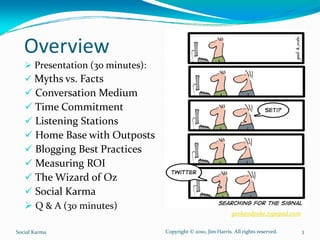
                                                                  geekandpoke.typepad.com

Social Karma                         Copyright © 2010, Jim Harris. All rights reserved.     3
Social Media: Myths vs. Facts
               Myths                                 Facts
     Social Media is a MUST        Social Media is a MAYBE

     Broadcast Medium              Conversation Medium

     New Marketing Channels        New Listening Stations

     Business Correspondence       Human Communication

     All about you                 All about the community

           Short‐term Sales         Long‐term Investment
Social Karma                   Copyright © 2010, Jim Harris. All rights reserved.   4
Conversation Medium
   • Do you really want a 
   conversation?
     With employees?
     With customers?
     With partners?
     With competitors?

   • Are you prepared for a 
   conversation?
     Internally?
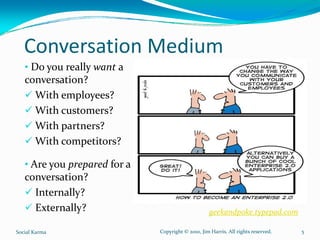
     Externally?                                    geekandpoke.typepad.com

Social Karma                   Copyright © 2010, Jim Harris. All rights reserved.   5
Social Media
                Do

               You

               Have

               The

               Time?
                       http://www.flickr.com/photos/lwr/60496147/

Social Karma                 Copyright © 2010, Jim Harris. All rights reserved.   6
How will you use Social Media?
             Listening                                           Broadcasting


http://www.flickr.com/photos/abletoven/3223086466/         http://www.flickr.com/photos/pollas/56034986/


  Social Karma                                       Copyright © 2010, Jim Harris. All rights reserved.   7
Listening Stations


Social Karma    Copyright © 2010, Jim Harris. All rights reserved.   8
Home Base with Outposts


Social Karma   Copyright © 2010, Jim Harris. All rights reserved.   9
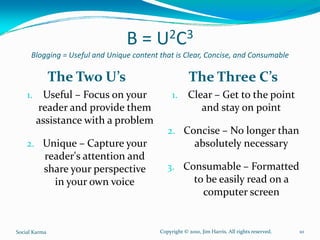
B = U2C3
      Blogging = Useful and Unique content that is Clear, Concise, and Consumable

               The Two U’s                             The Three C’s
    1.    Useful – Focus on your                1.     Clear – Get to the point 
         reader and provide them                          and stay on point
         assistance with a problem
                                              2. Concise – No longer than 
    2. Unique – Capture your                              absolutely necessary
           reader's attention and 
           share your perspective             3. Consumable – Formatted 
             in your own voice                            to be easily read on a 
                                                            computer screen  


Social Karma                               Copyright © 2010, Jim Harris. All rights reserved.   10
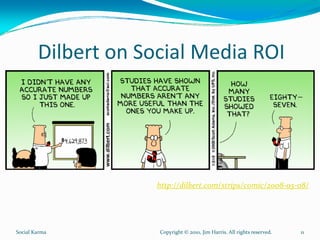
Dilbert on Social Media ROI


                     http://dilbert.com/strips/comic/2008‐05‐08/


Social Karma         Copyright © 2010, Jim Harris. All rights reserved.   11
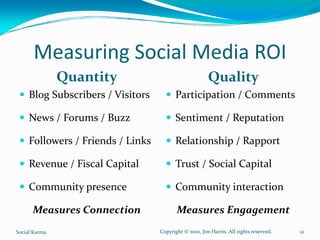
Measuring Social Media ROI
               Quantity                                  Quality
     Blog Subscribers / Visitors          Participation / Comments

     News / Forums / Buzz                 Sentiment / Reputation

     Followers / Friends / Links          Relationship / Rapport

     Revenue / Fiscal Capital             Trust / Social Capital

     Community presence                   Community interaction

      Measures Connection                  Measures Engagement
Social Karma                        Copyright © 2010, Jim Harris. All rights reserved.   12
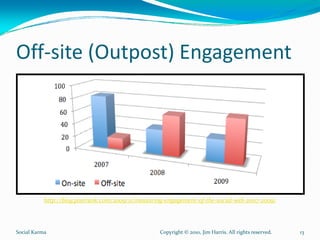
Off‐site (Outpost) Engagement


           http://blog.postrank.com/2009/11/measuring‐engagement‐of‐the‐social‐web‐2007‐2009/


Social Karma                                        Copyright © 2010, Jim Harris. All rights reserved.   13
http://thewizardofoz.warnerbros.com/


Social Karma   Copyright © 2010, Jim Harris. All rights reserved.        14
http://thewizardofoz.warnerbros.com/


Social Karma   Copyright © 2010, Jim Harris. All rights reserved.        15
http://thewizardofoz.warnerbros.com/


Social Karma   Copyright © 2010, Jim Harris. All rights reserved.        16
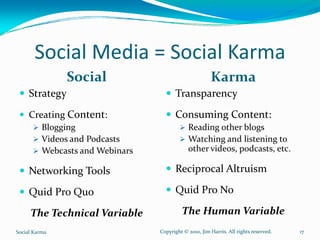
Social Media = Social Karma 
                Social                                  Karma
     Strategy                           Transparency
     Creating Content:                  Consuming Content:
          Blogging                            Reading other blogs
          Videos and Podcasts                 Watching and listening to 
          Webcasts and Webinars               other videos, podcasts, etc.

     Networking Tools                   Reciprocal Altruism

     Quid Pro Quo                       Quid Pro No

     The Technical Variable                The Human Variable
Social Karma                      Copyright © 2010, Jim Harris. All rights reserved.   17
Social Karma on the OCDQ Blog
     A multimedia library of supporting material for this 
     presentation can be found on the OCDQ Blog:

               http://www.ocdqblog.com/social‐karma/

     Presentation slides
     Ongoing series of blog posts
     Research links, diagrams, podcasts, videos, and more
     All content is freely available, no registration required
Social Karma                      Copyright © 2010, Jim Harris. All rights reserved.   18

Social Karma

  • 1.
    Jim Harris Blogger‐in‐Chief www.ocdqblog.com Jim Harris Digitally signed by Jim Harris DN: cn=Jim Harris, o=Obsessive-Compulsive Data Quality (OCDQ), ou, email=jim.harris@ocdqblog. com, c=US Date: 2010.03.09 16:41:12 -06'00'
  • 2.
    Jim Harris Blogger‐in‐Chief www.ocdqblog.com E‐mail jim.harris@ocdqblog.com Twitter twitter.com/ocdqblog LinkedIn linkedin.com/in/jimharris Social Karma Copyright © 2010, Jim Harris. All rights reserved. 2
  • 3.
    Overview Presentation (3o minutes):  Myths vs. Facts Conversation Medium Time Commitment Listening Stations Home Base with Outposts Blogging Best Practices Measuring ROI The Wizard of Oz Social Karma Q & A (30 minutes) geekandpoke.typepad.com Social Karma Copyright © 2010, Jim Harris. All rights reserved. 3
  • 4.
    Social Media: Myths vs. Facts Myths Facts Social Media is a MUST Social Media is a MAYBE Broadcast Medium Conversation Medium New Marketing Channels New Listening Stations Business Correspondence Human Communication All about you All about the community Short‐term Sales Long‐term Investment Social Karma Copyright © 2010, Jim Harris. All rights reserved. 4
  • 5.
    Conversation Medium • Do you really want a  conversation? With employees? With customers? With partners? With competitors? • Are you prepared for a  conversation? Internally? Externally? geekandpoke.typepad.com Social Karma Copyright © 2010, Jim Harris. All rights reserved. 5
  • 6.
    Social Media Do You Have The Time? http://www.flickr.com/photos/lwr/60496147/ Social Karma Copyright © 2010, Jim Harris. All rights reserved. 6
  • 7.
    How will you use Social Media? Listening Broadcasting http://www.flickr.com/photos/abletoven/3223086466/ http://www.flickr.com/photos/pollas/56034986/ Social Karma Copyright © 2010, Jim Harris. All rights reserved. 7
  • 8.
    Listening Stations Social Karma Copyright © 2010, Jim Harris. All rights reserved. 8
  • 9.
    Home Base with Outposts Social Karma Copyright © 2010, Jim Harris. All rights reserved. 9
  • 10.
    B = U2C3 Blogging = Useful and Unique content that is Clear, Concise, and Consumable The Two U’s The Three C’s 1. Useful – Focus on your  1. Clear – Get to the point  reader and provide them  and stay on point assistance with a problem 2. Concise – No longer than  2. Unique – Capture your  absolutely necessary reader's attention and  share your perspective     3. Consumable – Formatted  in your own voice to be easily read on a  computer screen   Social Karma Copyright © 2010, Jim Harris. All rights reserved. 10
  • 11.
    Dilbert on Social Media ROI http://dilbert.com/strips/comic/2008‐05‐08/ Social Karma Copyright © 2010, Jim Harris. All rights reserved. 11
  • 12.
    Measuring Social Media ROI Quantity Quality Blog Subscribers / Visitors Participation / Comments News / Forums / Buzz Sentiment / Reputation Followers / Friends / Links  Relationship / Rapport Revenue / Fiscal Capital Trust / Social Capital Community presence Community interaction Measures Connection Measures Engagement Social Karma Copyright © 2010, Jim Harris. All rights reserved. 12
  • 13.
    Off‐site (Outpost) Engagement http://blog.postrank.com/2009/11/measuring‐engagement‐of‐the‐social‐web‐2007‐2009/ Social Karma Copyright © 2010, Jim Harris. All rights reserved. 13
  • 14.
    http://thewizardofoz.warnerbros.com/ Social Karma Copyright © 2010, Jim Harris. All rights reserved. 14
  • 15.
    http://thewizardofoz.warnerbros.com/ Social Karma Copyright © 2010, Jim Harris. All rights reserved. 15
  • 16.
    http://thewizardofoz.warnerbros.com/ Social Karma Copyright © 2010, Jim Harris. All rights reserved. 16
  • 17.
    Social Media = Social Karma  Social Karma Strategy Transparency Creating Content: Consuming Content: Blogging Reading other blogs Videos and Podcasts Watching and listening to  Webcasts and Webinars other videos, podcasts, etc. Networking Tools Reciprocal Altruism Quid Pro Quo Quid Pro No The Technical Variable The Human Variable Social Karma Copyright © 2010, Jim Harris. All rights reserved. 17
  • 18.
    Social Karma on the OCDQ Blog A multimedia library of supporting material for this  presentation can be found on the OCDQ Blog: http://www.ocdqblog.com/social‐karma/ Presentation slides Ongoing series of blog posts Research links, diagrams, podcasts, videos, and more All content is freely available, no registration required Social Karma Copyright © 2010, Jim Harris. All rights reserved. 18

Editor's Notes

  • #3 Jim Harris is the Blogger-in-Chief at Obsessive-Compulsive Data Quality, which is an independent blog offering a vendor-neutral perspective on data quality. Jim is an independent consultant, speaker, writer, and blogger with over 15 years of professional services and application development experience in data quality, data integration, data warehousing, business intelligence, and master data management.Jim is a 2009-2010 IBM Information Champion:http://www-01.ibm.com/software/data/champion/profiles/harris.htmlJim is a regular contributor to the DataFlux Community of Experts: http://www.dataflux.com/dfblog/?author=15Jim is a Contributing Editor to Data Quality Pro:http://www.dataqualitypro.com/
  • #5 As with everything in the business world, you should seek first to understand what social media can offer and what it requires, before making any type of professional commitment.Just like with any professional endeavor, honestly evaluate both your expectations and your readinessbeforeyou and your company get actively involved with social media in a business context.Diligent research and proper preparation are standard best practices—and there is absolutely no reason that these sound business principles should not also apply to social media.
  • #6 Only you can determine if you or your corporate culture is willing and able to properly participate in these conversations.  Many rightfully argue that you may soon simply not have a choice.  Therefore, if you are currently unwilling or unable, now is the time for you and your company to properly prepare—once you are, you will be positioned to turn this challenge into a true competitive advantage.
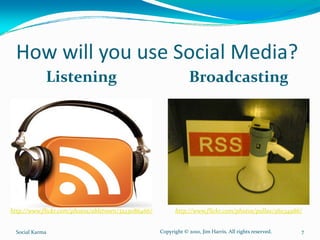
  • #7 Using social media effectively, more than anything else, requires a commitment—mostly measured in time.  As bad as many claim it is to not get actively involved in social media, believe me—doing it poorly does a lot more harm than not doing it all.
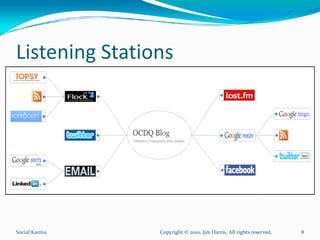
  • #9 Before committing to active involvement in social media, perform some due diligence by actively listening.Dedicate time to reading the blogs within your specific industry or other areas of your professional interest. Pay close attention to the most frequent topics of discussion—especially in the comments section. Your goal is to learn as much as possible about the online community within which you are considering active participation. As you begin your social media engagement, your “listening stations” must always remain active in order to maintain true community participation.
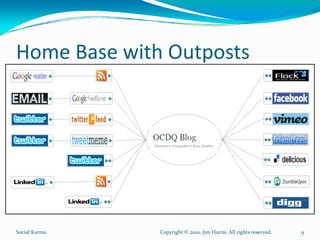
  • #10 Chris Brogan (http://www.chrisbrogan.com/) describes a social media strategy using the metaphor of a Home Base with Outposts.A home base is a place online that you own.This is your social media base of operations for effective online community participation.For example, your home base could be your blog or your company's website. Outposts are places you have an online presence out in other parts of the web that you might not own.For example, your outposts could be your LinkedIn, Twitter, and Facebook accounts.
  • #11 The Two U'sBlogging truly has to be all about the reader. If you write only for yourself, then you will also be your only reader.Effective blogging often provides “infotainment” – a combination of information and entertainment that, when it's done well, can turn readers into raving fans. Just don't forget—your blog content has to be informative and entertaining to your readers.One important aspect of being unique is writing effective titles. Most potential readers scan titles to determine if they will click and read more. There is a delicate balance between effective titles and “baiting” – which will only alienate potential readers.If you write a compelling title that makes your readers click through to an interesting post, then “You Rock!” However, if you write a “Shock and Awe” title followed by “Aw Shucks” content, then “You Suck!”Therefore, your blog content also has to be unique—your topic, position, voice, or a combination of all three.The Three C'sClear blog posts typically have a single theme or one primary topic to communicate. Don't run off on tangents, especially ones not related to the point you are trying to make. If you have several legitimate sub-topics to cover, then consider creating a series.Concise doesn't necessarily mean “write really short blog posts.” There is no specific word count to target. Being concise simply means taking out anything that doesn't need to be included. Editing is the hardest part of writing, but also the most important. Consumable content is extremely essential when people are reading off of a computer screen. Densely packed text attacks the eyes, which doesn't encourage anyone to keep reading. As a general rule, the longer (although still both clear and concise) the blog post, the more consumable you need to make it.
  • #12 Without question, the “opportunity cost” of social media is high, so you are right to question your return on investment (ROI). This presentation is about using social media in a business context. Therefore, ROI is about far more than simply measuring the quality of your experience. However,I am not going to lie to you—measuring the ROI of social media is very challenging.
  • #13 Quantitativeanalysis is useful and its associated metrics are meaningful, but it is important to realize that this only measuresconnection.Qualitative analysis is more challenging because it attempts to measure your engagement with the online community.Although both are essential to forming a complete measurement of your social media ROI, quality is more important than quantity, because engagement is more important than connection.Engagement is about going beyond simply establishing a presence and achieving active participation. Are you adding value to the community by creating useful content and contributing something meaningful to the collective conversations?Engagement is measured by the quality of the relationships you are able to form and maintain—and not the quantity of connections you are able to collect and count. Social media is a long-term investment in the community. Therefore, the truth is you must be patient—your true social media ROI may take a long time to materialize.
  • #14 An additional challenge to measuring social media ROI is the continuing shift from on-site (home base) to off-site (outpost) engagement.I believe true community engagement has always occurred off-site, but what has changed in recent years is social networking sites (outposts) have rapidly evolved into truly effective services. On-site (home base) connection is important and will continue to be—and true engagement can occur on your home base.  However, because you are in control, it can sometimes seem like it's all about you—despite even your best intentions. Therefore, effectively using social media requires that you go to where the conversations are occurring—your outposts—and participate without always trying to invite everyone back to your home base.
  • #15 Your blog (or website) = “The Emerald City”The Internet = “The Yellow Brick Road”You have left signs along The Yellow Brick Road pointing the way to The Emerald City.Some examples of signs include your presence on social networking services like Twitter, Facebook, and LinkedIn, as well as comments you have left on other blogs.What will people find when they arrive at The Emerald City?
  • #16 Will you proclaim to all who visit The Emerald City that you are:“The Great and Powerful Oz!”In other words, will you project an image so concerned with being professional that it is cold and impersonal?
  • #17 Will you tell your visitors to “Ignore the Man (or the Woman) Behind the Curtain” ?Social media is about human communication—even when it is being used for business purposes.It’s okay to have “The Curtain” because there will always be times where maintaining a professional distance is necessary. However, you can be professional and human at the same time—after all you are a human professional—and not “The Great and Powerful Oz!”
  • #18 An effective social media strategy is essential for both businesses and professionals.Using social media effectively, including blogging and social networking sites (e.g., Twitter, Facebook, LinkedIn), can definitely help promote you, your expertise, your company, and its products and services. However, too many businesses and professionals have a selfish social media strategy.You should not use social media to exclusively promote only yourself or your business. You need to view social media as Social Karma. If you can focus on helping others, then you will get much more back than just a blog reader, a LinkedIn connection, a Facebook friend, a Twitter follower, or even a potential customer.The most important variable in the social media equation is the human variable.