SEXUAL ABUSE
NATION’S SOCIAL ISSUE BEING POTRYED BY MEDIA
What is Sexual Abuse???
The forcing of undesired sexual behaviour
by one person upon another. When that
force is immediate, of short duration, or
infrequent, it is called sexual assault.
Sexual Violence is primarily a crime of
power and control. It can impact all
people, regardless of age, ethnicity, race
or economic status. Although younger
women represent the majority of
victims, not all young women are at
equal risk for sexual violence.
• Child sexual abuse is a form of child abuse in which an adult or
older adolescent uses a child for sexual stimulation.
• The effects of child sexual abuse can include depression, posttraumatic stress disorder, anxiety, propensity to
further victimization in adulthood, and physical injury to the child,
among other problems. Sexual abuse by a family member is a
form of incest, and can result in more serious and longterm psychological trauma, especially in the case of parental
incest.
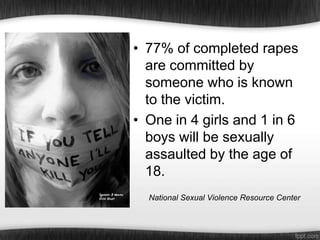
• 77% of completed rapes
are committed by
someone who is known
to the victim.
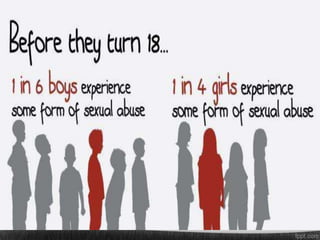
• One in 4 girls and 1 in 6
boys will be sexually
assaulted by the age of
18.
National Sexual Violence Resource Center
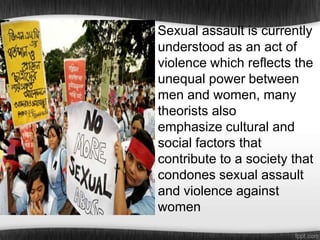
Sexual assault is currently
understood as an act of
violence which reflects the
unequal power between
men and women, many
theorists also
emphasize cultural and
social factors that
contribute to a society that
condones sexual assault
and violence against
women
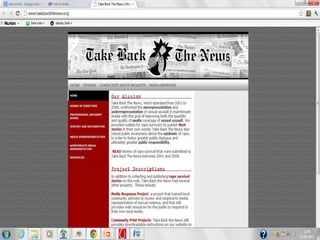
• In 2006, a website entitled Take Back the
News was launched to work to raise public
awareness about sexual assault, in order
to foster greater public dialogue
and greater public responsibility. The
website includes the formation of a Media
Response Project, a streamlined system
to track and archive media articles
regarding rape and to contact editors and
reporters regarding concerns on how rape
is misrepresented or underrepresented in
the media.
.
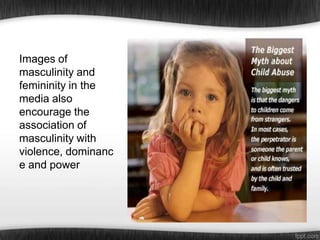
Images of
masculinity and
femininity in the
media also
encourage the
association of
masculinity with
violence, dominanc
e and power
• Nineteen percent of the world's children live in
India, which constitutes 42 percent of India’s total
population.
• In 2007 the Ministry of Women and Child
Development published the "Study on Child Abuse: India
2007.“ It sampled 12447 children, 2324 young adults and
2449 stakeholders across 13 states. It looked at different
forms of child abuse: physical abuse, sexual
abuse and emotional abuse and girl child neglect in five
evidence groups, namely, children in a family
environment, children in school, children at
work, children on the street and children in institutions
• The study's main findings included: 53.22% of children
reported having faced sexual abuse. Among them
52.94% were boys and 47.06% girls.
• Andhra Pradesh, Assam, Bihar and Delhi reported the
highest percentage of sexual abuse among both boys
and girls, as well as the highest incidence of sexual
assaults. 21.90% of child respondents faced severe
forms of sexual abuse, 5.69% had been sexually
assaulted and 50.76% reported other forms of sexual
abuse.
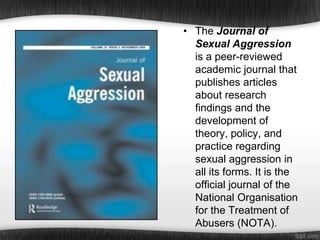
• The Journal of
Sexual Aggression
is a peer-reviewed
academic journal that
publishes articles
about research
findings and the
development of
theory, policy, and
practice regarding
sexual aggression in
all its forms. It is the
official journal of the
National Organisation
for the Treatment of
Abusers (NOTA).
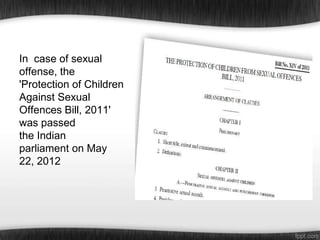
In case of sexual
offense, the
'Protection of Children
Against Sexual
Offences Bill, 2011'
was passed
the Indian
parliament on May
22, 2012
•The language used to describe the abuse was often vague and inconsistent. Many articles contained ambig

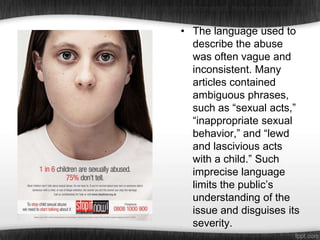
• The language used to
describe the abuse
was often vague and
inconsistent. Many
articles contained
ambiguous phrases,
such as “sexual acts,”
“inappropriate sexual
behavior,” and “lewd
and lascivious acts
with a child.” Such
imprecise language
limits the public’s
understanding of the
issue and disguises its
severity.
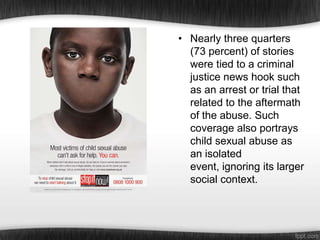
• Nearly three quarters
(73 percent) of stories
were tied to a criminal
justice news hook such
as an arrest or trial that
related to the aftermath
of the abuse. Such
coverage also portrays
child sexual abuse as
an isolated
event, ignoring its larger
social context.
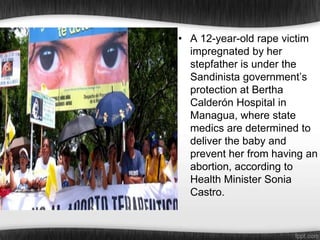
• A 12-year-old rape victim
impregnated by her
stepfather is under the
Sandinista government’s
protection at Bertha
Calderón Hospital in
Managua, where state
medics are determined to
deliver the baby and
prevent her from having an
abortion, according to
Health Minister Sonia
Castro.
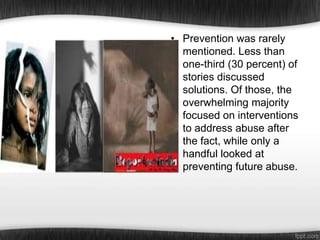
• Prevention was rarely
mentioned. Less than
one-third (30 percent) of
stories discussed
solutions. Of those, the
overwhelming majority
focused on interventions
to address abuse after
the fact, while only a
handful looked at
preventing future abuse.
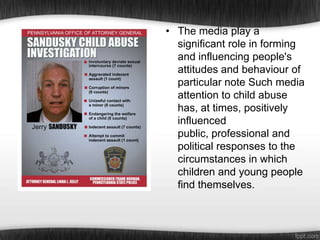
• The media play a
significant role in forming
and influencing people's
attitudes and behaviour of
particular note Such media
attention to child abuse
has, at times, positively
influenced
public, professional and
political responses to the
circumstances in which
children and young people
find themselves.
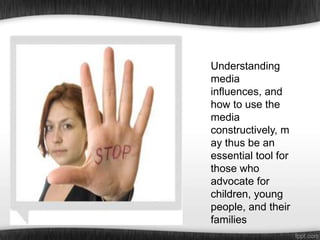
Understanding
media
influences, and
how to use the
media
constructively, m
ay thus be an
essential tool for
those who
advocate for
children, young
people, and their
families
Social issue - Sexual abuse

Social issue - Sexual abuse

  • 1.
    SEXUAL ABUSE NATION’S SOCIALISSUE BEING POTRYED BY MEDIA
  • 2.
    What is SexualAbuse??? The forcing of undesired sexual behaviour by one person upon another. When that force is immediate, of short duration, or infrequent, it is called sexual assault.
  • 3.
    Sexual Violence isprimarily a crime of power and control. It can impact all people, regardless of age, ethnicity, race or economic status. Although younger women represent the majority of victims, not all young women are at equal risk for sexual violence.
  • 4.
    • Child sexualabuse is a form of child abuse in which an adult or older adolescent uses a child for sexual stimulation. • The effects of child sexual abuse can include depression, posttraumatic stress disorder, anxiety, propensity to further victimization in adulthood, and physical injury to the child, among other problems. Sexual abuse by a family member is a form of incest, and can result in more serious and longterm psychological trauma, especially in the case of parental incest.
  • 5.
    • 77% ofcompleted rapes are committed by someone who is known to the victim. • One in 4 girls and 1 in 6 boys will be sexually assaulted by the age of 18. National Sexual Violence Resource Center
  • 6.
    Sexual assault iscurrently understood as an act of violence which reflects the unequal power between men and women, many theorists also emphasize cultural and social factors that contribute to a society that condones sexual assault and violence against women
  • 8.
    • In 2006,a website entitled Take Back the News was launched to work to raise public awareness about sexual assault, in order to foster greater public dialogue and greater public responsibility. The website includes the formation of a Media Response Project, a streamlined system to track and archive media articles regarding rape and to contact editors and reporters regarding concerns on how rape is misrepresented or underrepresented in the media.
  • 9.
    . Images of masculinity and femininityin the media also encourage the association of masculinity with violence, dominanc e and power
  • 10.
    • Nineteen percentof the world's children live in India, which constitutes 42 percent of India’s total population. • In 2007 the Ministry of Women and Child Development published the "Study on Child Abuse: India 2007.“ It sampled 12447 children, 2324 young adults and 2449 stakeholders across 13 states. It looked at different forms of child abuse: physical abuse, sexual abuse and emotional abuse and girl child neglect in five evidence groups, namely, children in a family environment, children in school, children at work, children on the street and children in institutions
  • 12.
    • The study'smain findings included: 53.22% of children reported having faced sexual abuse. Among them 52.94% were boys and 47.06% girls. • Andhra Pradesh, Assam, Bihar and Delhi reported the highest percentage of sexual abuse among both boys and girls, as well as the highest incidence of sexual assaults. 21.90% of child respondents faced severe forms of sexual abuse, 5.69% had been sexually assaulted and 50.76% reported other forms of sexual abuse.
  • 13.
    • The Journalof Sexual Aggression is a peer-reviewed academic journal that publishes articles about research findings and the development of theory, policy, and practice regarding sexual aggression in all its forms. It is the official journal of the National Organisation for the Treatment of Abusers (NOTA).
  • 14.
    In case ofsexual offense, the 'Protection of Children Against Sexual Offences Bill, 2011' was passed the Indian parliament on May 22, 2012
  • 15.
    •The language usedto describe the abuse was often vague and inconsistent. Many articles contained ambig • The language used to describe the abuse was often vague and inconsistent. Many articles contained ambiguous phrases, such as “sexual acts,” “inappropriate sexual behavior,” and “lewd and lascivious acts with a child.” Such imprecise language limits the public’s understanding of the issue and disguises its severity.
  • 16.
    • Nearly threequarters (73 percent) of stories were tied to a criminal justice news hook such as an arrest or trial that related to the aftermath of the abuse. Such coverage also portrays child sexual abuse as an isolated event, ignoring its larger social context.
  • 17.
    • A 12-year-oldrape victim impregnated by her stepfather is under the Sandinista government’s protection at Bertha Calderón Hospital in Managua, where state medics are determined to deliver the baby and prevent her from having an abortion, according to Health Minister Sonia Castro.
  • 18.
    • Prevention wasrarely mentioned. Less than one-third (30 percent) of stories discussed solutions. Of those, the overwhelming majority focused on interventions to address abuse after the fact, while only a handful looked at preventing future abuse.
  • 19.
    • The mediaplay a significant role in forming and influencing people's attitudes and behaviour of particular note Such media attention to child abuse has, at times, positively influenced public, professional and political responses to the circumstances in which children and young people find themselves.
  • 20.
    Understanding media influences, and how touse the media constructively, m ay thus be an essential tool for those who advocate for children, young people, and their families