CHILD SEXUAL ABUSE
 Child sexual abuse is when a more
powerful person uses a less
powerful person for sexual
gratification.
 A sexual act between two minors,
where one exerts power over the
other, is also considered sexual
abuse.
2 CATEGORIES OF SEXUAL
ABUSE
 1. NON-TOUCHINGABUSES
Exhibitionism, exposure to pornography, taking
photographs of children in a sexualized manner, such
as through telephone or the internet, and letting down
the walls of privacy so that the child watches or hears
sexual acts.
 2. TOUCHINGABUSES
Kissing, fondling, oral sex, vaginal or anal
intercourse, or attempted intercourse.
 Most abusers of child sexual abuse are
known to victims. They may be a male
relative or an acquaintance.
 In Bangladesh, more than 70% children
are sexually abused by their close
relatives and caregivers, 47% by
neighbors, friends, community figures
and 32% by their house tutor.
 In many cases, it is the father who
violates his own child.
GROOMING PROCESS
 Abusers may groom children for
weeks, months, or even years
before any sexual abuse actually
takes place.
 Befriending a child and gaining his or her
trust.
 Testing a child’s boundaries through
telling inappropriate jokes, backrubs,
tickling, or sexual games.
 Manipulating the child to not tell anyone
about what is happening.
 Confusing the child into feeling
responsible for the abuse.
 Moving from non-sexual touching to
“accidental” sexual touching. This
typically happens during play so the child
may not even identify it as purposeful,
inappropriate touching.
The prevalence of silence among
children is explained by the
following reasons:
 Children are physically less powerful than
adults;
 Children are obliged to obey adults;
 Children are provided limited information on
matters regarding sex and sexuality;
 Children’s questions pertaining to sex and
sexuality are frowned upon;
 The importance placed on keeping the family intact, or
preserving the family reputation, keeps children from
speaking about the abuse.
 All children are
vulnerable to sexual
abuse, especially girls.
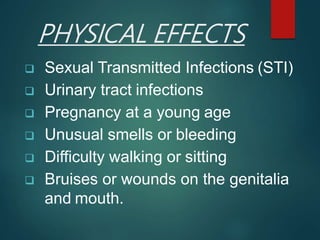
PHYSICAL EFFECTS
 Sexual Transmitted Infections (STI)
 Urinary tract infections
 Pregnancy at a young age
 Unusual smells or bleeding
 Difficulty walking or sitting
 Bruises or wounds on the genitalia
and mouth.
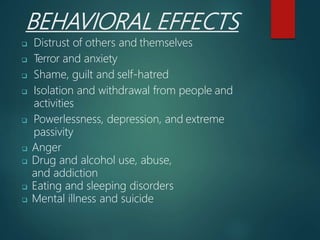
BEHAVIORAL EFFECTS
 Distrust of others and themselves
 Terror and anxiety
 Shame, guilt and self-hatred
 Isolation and withdrawal from people and
activities
 Powerlessness, depression, and extreme
passivity
 Anger
 Drug and alcohol use, abuse,
and addiction
 Eating and sleeping disorders
 Mental illness and suicide
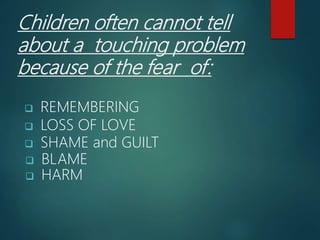
Children often cannot tell
about a touching problem
because of the fear of:
 REMEMBERING
 LOSS OF LOVE
 SHAME and GUILT
 BLAME
 HARM
 The best way to protect children and
youth against sexual abuse is to give
them the knowledge and skills necessary
for their safety and well being, and by
creating in our families and communities
an atmosphere where they feel safe
enough to come forward if they are being
mistreated or abused.
Child Abuse By Dr.Rinaz Rahman

Child Abuse By Dr.Rinaz Rahman

  • 1.
  • 3.
     Child sexualabuse is when a more powerful person uses a less powerful person for sexual gratification.  A sexual act between two minors, where one exerts power over the other, is also considered sexual abuse.
  • 4.
    2 CATEGORIES OFSEXUAL ABUSE  1. NON-TOUCHINGABUSES Exhibitionism, exposure to pornography, taking photographs of children in a sexualized manner, such as through telephone or the internet, and letting down the walls of privacy so that the child watches or hears sexual acts.  2. TOUCHINGABUSES Kissing, fondling, oral sex, vaginal or anal intercourse, or attempted intercourse.
  • 6.
     Most abusersof child sexual abuse are known to victims. They may be a male relative or an acquaintance.  In Bangladesh, more than 70% children are sexually abused by their close relatives and caregivers, 47% by neighbors, friends, community figures and 32% by their house tutor.  In many cases, it is the father who violates his own child.
  • 8.
    GROOMING PROCESS  Abusersmay groom children for weeks, months, or even years before any sexual abuse actually takes place.  Befriending a child and gaining his or her trust.  Testing a child’s boundaries through telling inappropriate jokes, backrubs, tickling, or sexual games.
  • 9.
     Manipulating thechild to not tell anyone about what is happening.  Confusing the child into feeling responsible for the abuse.  Moving from non-sexual touching to “accidental” sexual touching. This typically happens during play so the child may not even identify it as purposeful, inappropriate touching.
  • 10.
    The prevalence ofsilence among children is explained by the following reasons:  Children are physically less powerful than adults;  Children are obliged to obey adults;  Children are provided limited information on matters regarding sex and sexuality;  Children’s questions pertaining to sex and sexuality are frowned upon;  The importance placed on keeping the family intact, or preserving the family reputation, keeps children from speaking about the abuse.
  • 12.
     All childrenare vulnerable to sexual abuse, especially girls.
  • 14.
    PHYSICAL EFFECTS  SexualTransmitted Infections (STI)  Urinary tract infections  Pregnancy at a young age  Unusual smells or bleeding  Difficulty walking or sitting  Bruises or wounds on the genitalia and mouth.
  • 15.
    BEHAVIORAL EFFECTS  Distrustof others and themselves  Terror and anxiety  Shame, guilt and self-hatred  Isolation and withdrawal from people and activities  Powerlessness, depression, and extreme passivity  Anger  Drug and alcohol use, abuse, and addiction  Eating and sleeping disorders  Mental illness and suicide
  • 16.
    Children often cannottell about a touching problem because of the fear of:  REMEMBERING  LOSS OF LOVE  SHAME and GUILT  BLAME  HARM
  • 18.
     The bestway to protect children and youth against sexual abuse is to give them the knowledge and skills necessary for their safety and well being, and by creating in our families and communities an atmosphere where they feel safe enough to come forward if they are being mistreated or abused.