Protecting Your Digital Assets: An
Introduction to Security Operation
Center (SOC) and Security Incident
and Event Management (SIEM)
How SOC and SIEM Systems Can Help You Detect and Respond to Security Incidents and Events
Introduction to
Security Operation
Center (SOC) and
Security
Incident and Event
Management (SIEM)
Security Operation
Center (SOC)
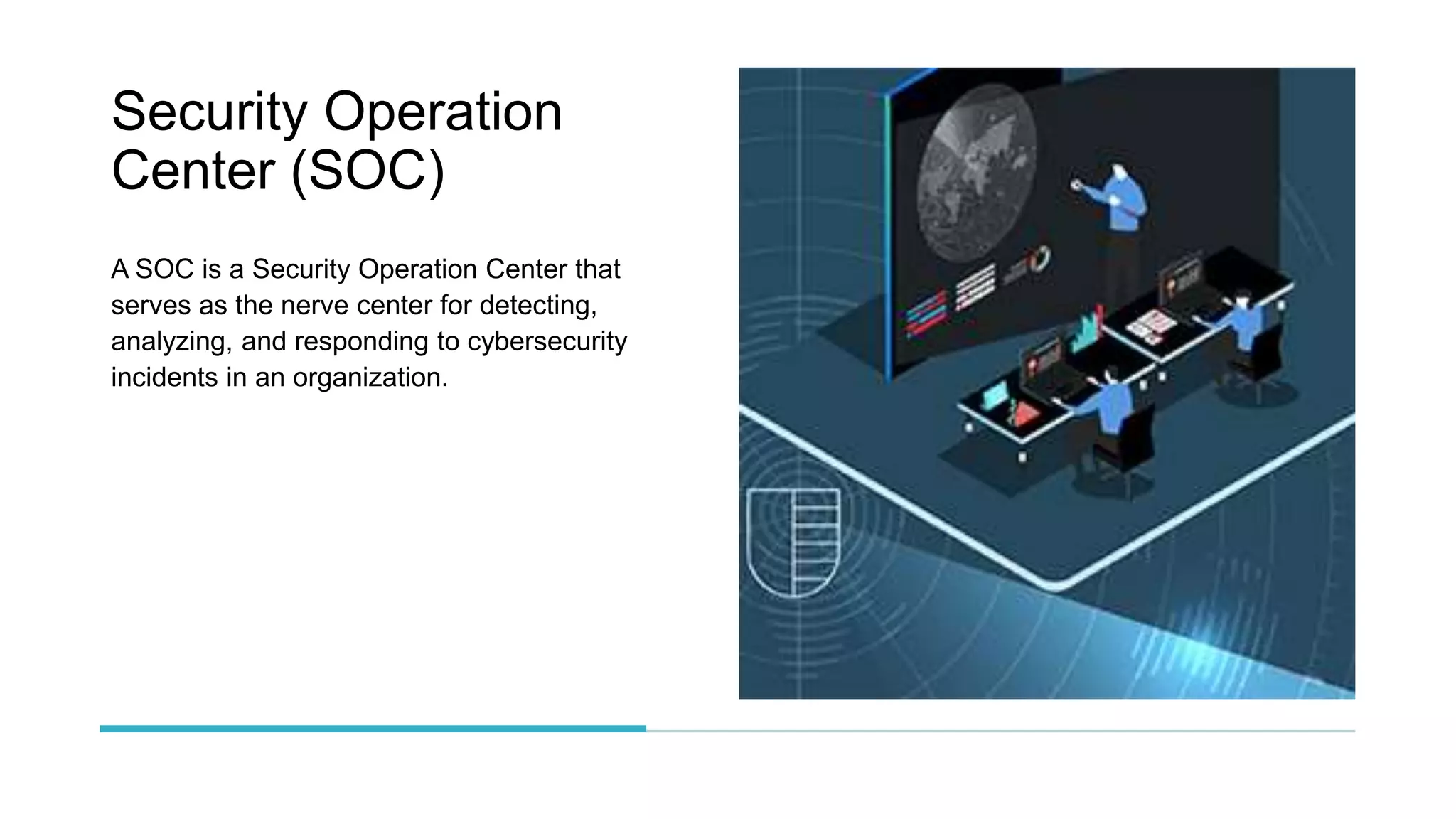
A SOC is a Security Operation Center that
serves as the nerve center for detecting,
analyzing, and responding to cybersecurity
incidents in an organization.
Why does an
organisation
need SOC
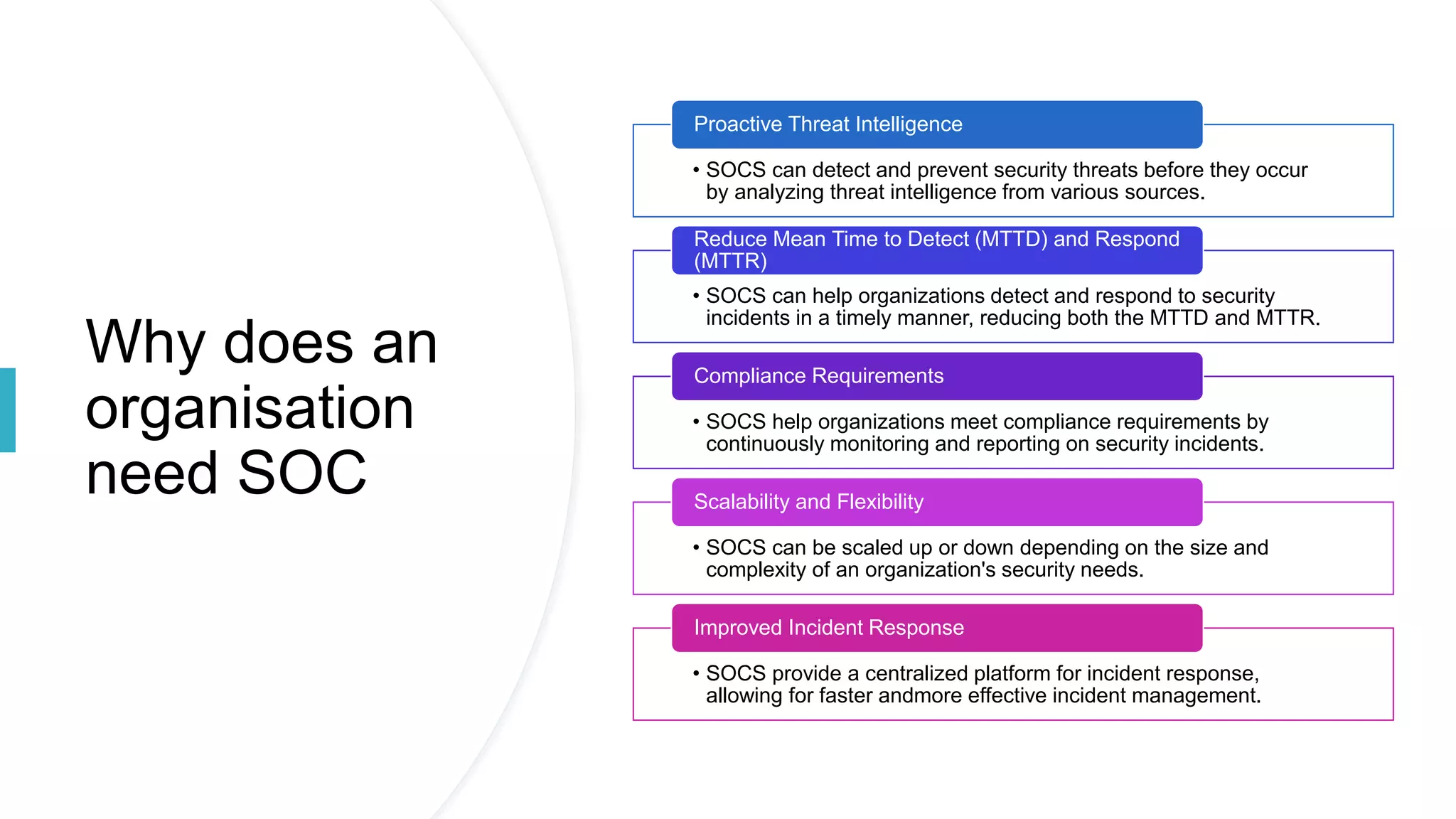
• SOCS can detect and prevent security threats before they occur
by analyzing threat intelligence from various sources.
Proactive Threat Intelligence
• SOCS can help organizations detect and respond to security
incidents in a timely manner, reducing both the MTTD and MTTR.
Reduce Mean Time to Detect (MTTD) and Respond
(MTTR)
• SOCS help organizations meet compliance requirements by
continuously monitoring and reporting on security incidents.
Compliance Requirements
• SOCS can be scaled up or down depending on the size and
complexity of an organization's security needs.
Scalability and Flexibility
• SOCS provide a centralized platform for incident response,
allowing for faster andmore effective incident management.
Improved Incident Response
Benefits of having SOC
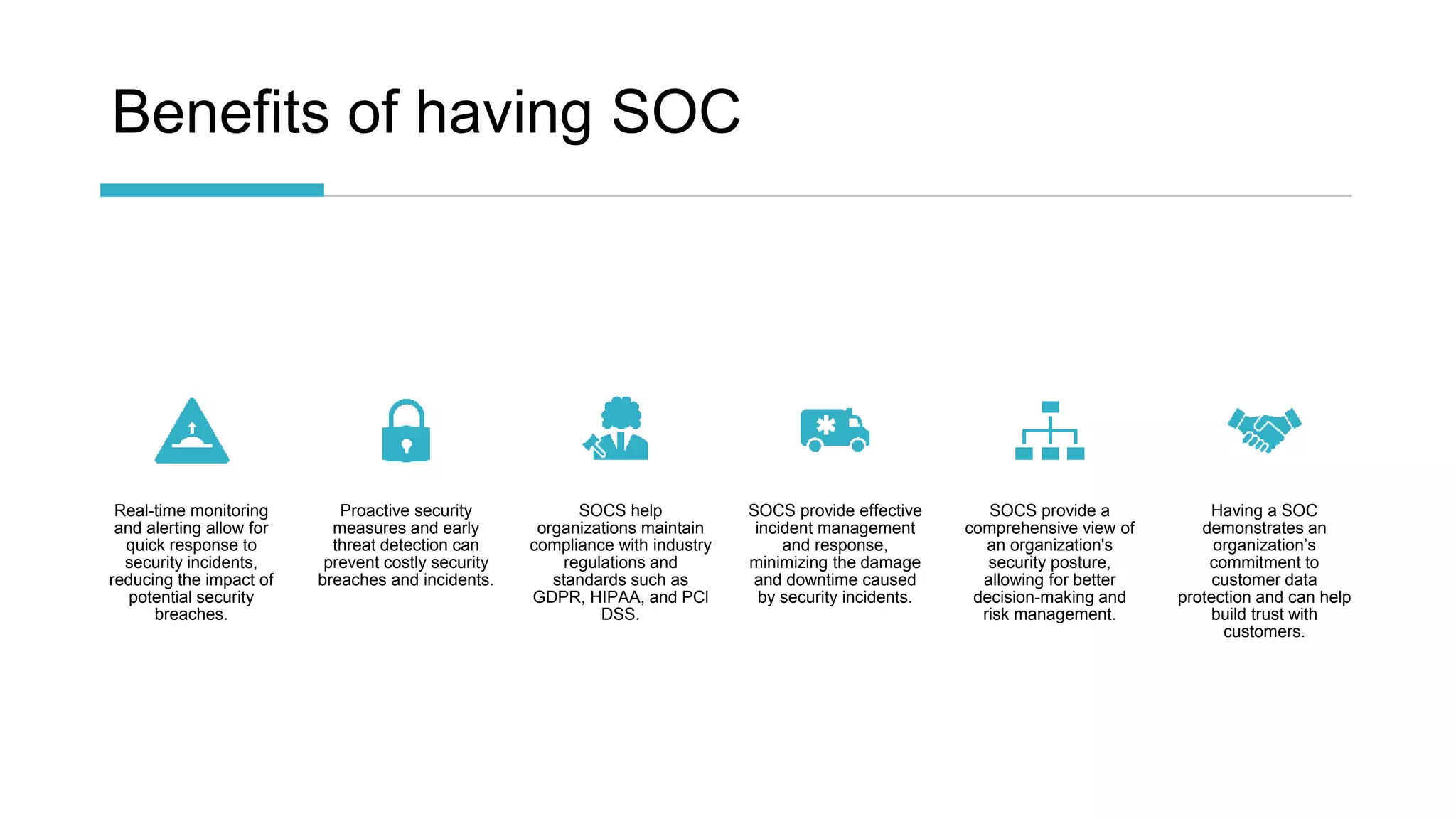
Real-time monitoring
and alerting allow for
quick response to
security incidents,
reducing the impact of
potential security
breaches.
Proactive security
measures and early
threat detection can
prevent costly security
breaches and incidents.
SOCS help
organizations maintain
compliance with industry
regulations and
standards such as
GDPR, HIPAA, and PCl
DSS.
SOCS provide effective
incident management
and response,
minimizing the damage
and downtime caused
by security incidents.
SOCS provide a
comprehensive view of
an organization's
security posture,
allowing for better
decision-making and
risk management.
Having a SOC
demonstrates an
organization’s
commitment to
customer data
protection and can help
build trust with
customers.
Security Incident and Event
Management (SIEM)
SIEM is a security solution that provides real-time analysis
of security alerts and events generated by network
hardware and applications, helping to identify potential
security threats and breaches before they cause damage.
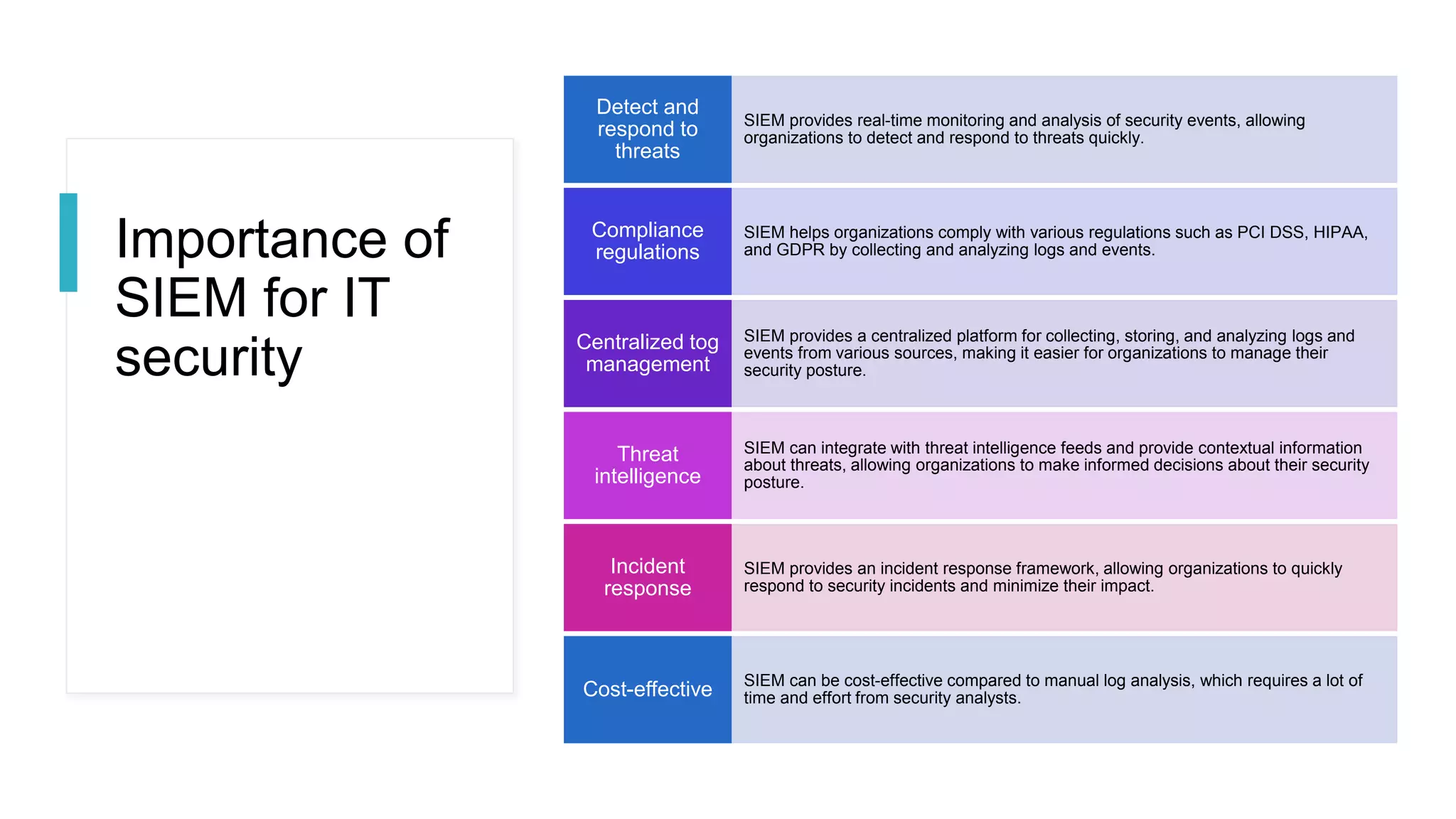
Importance of
SIEM for IT
security
SIEM provides real-time monitoring and analysis of security events, allowing
organizations to detect and respond to threats quickly.
Detect and
respond to
threats
SIEM helps organizations comply with various regulations such as PCI DSS, HIPAA,
and GDPR by collecting and analyzing logs and events.
Compliance
regulations
SIEM provides a centralized platform for collecting, storing, and analyzing logs and
events from various sources, making it easier for organizations to manage their
security posture.
Centralized tog
management
SIEM can integrate with threat intelligence feeds and provide contextual information
about threats, allowing organizations to make informed decisions about their security
posture.
Threat
intelligence
SIEM provides an incident response framework, allowing organizations to quickly
respond to security incidents and minimize their impact.
Incident
response
SIEM can be cost-effective compared to manual log analysis, which requires a lot of
time and effort from security analysts.
Cost-effective
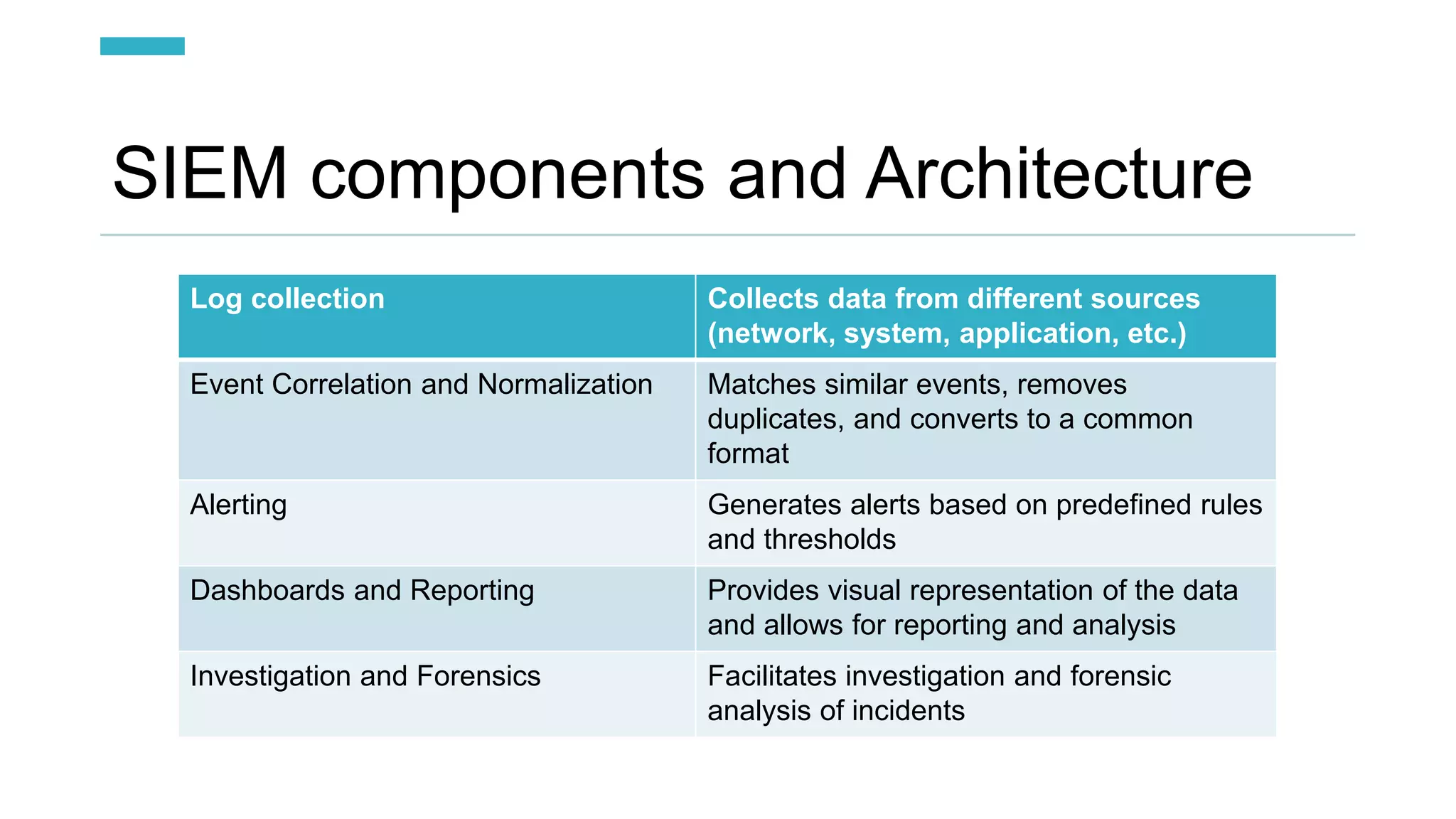
SIEM components and Architecture
Log collection Collects data from different sources
(network, system, application, etc.)
Event Correlation and Normalization Matches similar events, removes
duplicates, and converts to a common
format
Alerting Generates alerts based on predefined rules
and thresholds
Dashboards and Reporting Provides visual representation of the data
and allows for reporting and analysis
Investigation and Forensics Facilitates investigation and forensic
analysis of incidents
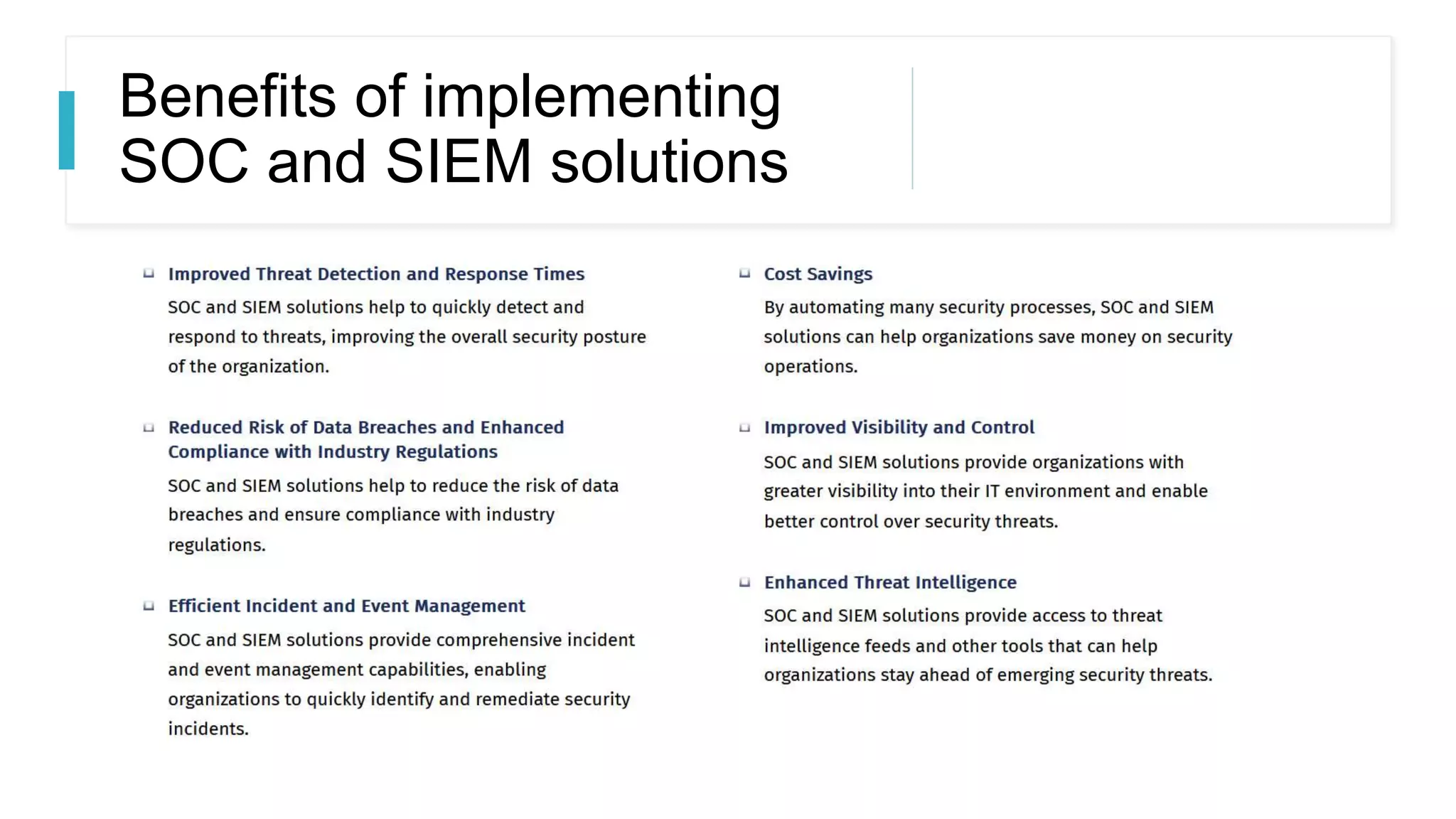
Benefits of implementing
SOC and SIEM solutions
Timely detection and response
to security incidents and events
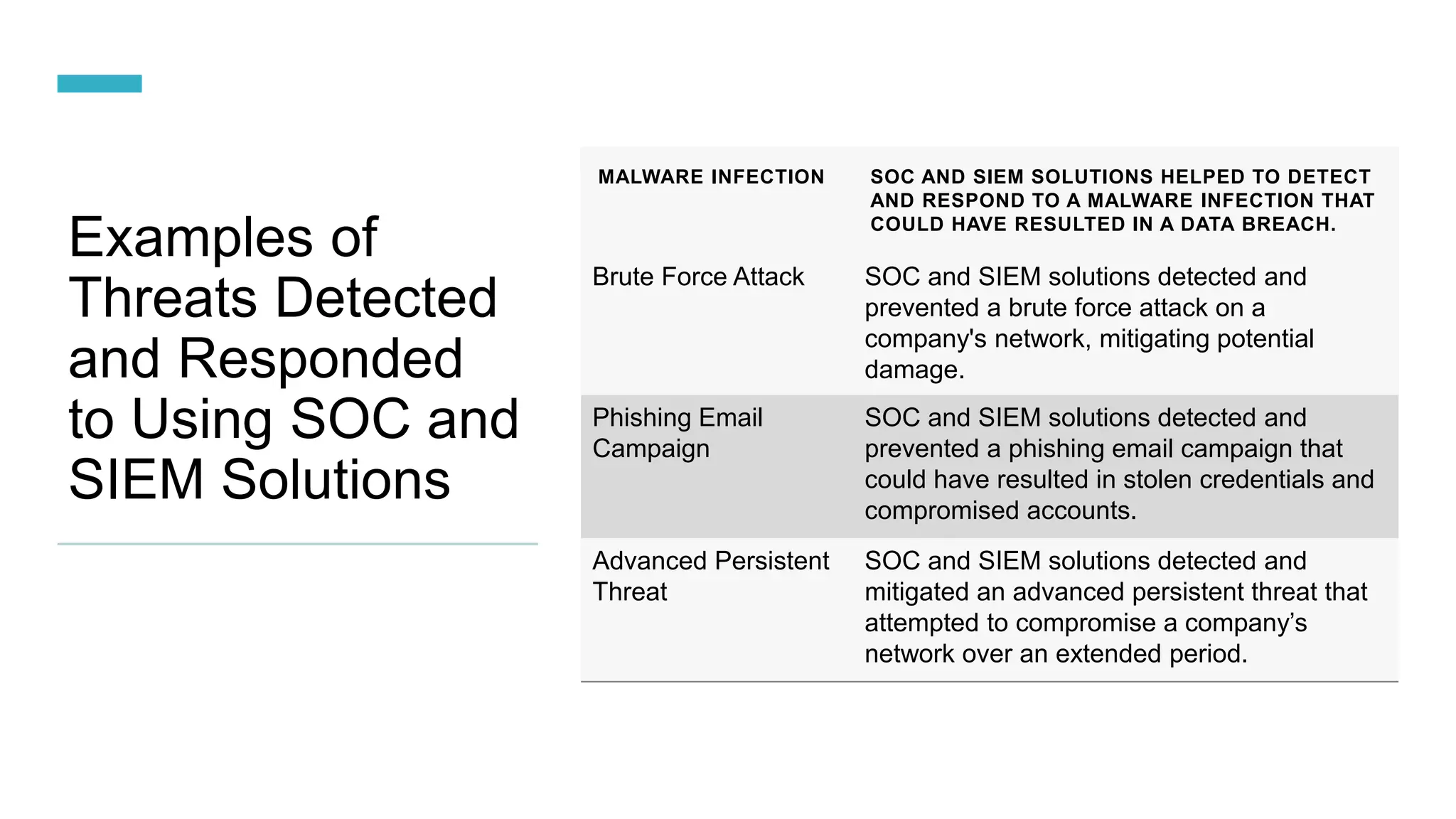
Examples of
Threats Detected
and Responded
to Using SOC and
SIEM Solutions
MALWARE INFECTION SOC AND SIEM SOLUTIONS HELPED TO DETECT
AND RESPOND TO A MALWARE INFECTION THAT
COULD HAVE RESULTED IN A DATA BREACH.
Brute Force Attack SOC and SIEM solutions detected and
prevented a brute force attack on a
company's network, mitigating potential
damage.
Phishing Email
Campaign
SOC and SIEM solutions detected and
prevented a phishing email campaign that
could have resulted in stolen credentials and
compromised accounts.
Advanced Persistent
Threat
SOC and SIEM solutions detected and
mitigated an advanced persistent threat that
attempted to compromise a company’s
network over an extended period.
Improved compliance and
risk management
Recommendations for
Implementing SOC and SIEM
Solutions
Implementing SOC and SIEM solutions can greatly improve
threat detection and response times, reduce the risk of data
breaches, and enhance compliance with industry
regulations. When considering implementation, it is
important to carefully evaluate your organization's unique
needs, create a detailed plan, and work with experienced
partners to ensure successful deployment and ongoing
support.

SOC and SIEM.pptx

  • 1.
    Protecting Your DigitalAssets: An Introduction to Security Operation Center (SOC) and Security Incident and Event Management (SIEM) How SOC and SIEM Systems Can Help You Detect and Respond to Security Incidents and Events
  • 2.
    Introduction to Security Operation Center(SOC) and Security Incident and Event Management (SIEM)
  • 3.
    Security Operation Center (SOC) ASOC is a Security Operation Center that serves as the nerve center for detecting, analyzing, and responding to cybersecurity incidents in an organization.
  • 4.
    Why does an organisation needSOC • SOCS can detect and prevent security threats before they occur by analyzing threat intelligence from various sources. Proactive Threat Intelligence • SOCS can help organizations detect and respond to security incidents in a timely manner, reducing both the MTTD and MTTR. Reduce Mean Time to Detect (MTTD) and Respond (MTTR) • SOCS help organizations meet compliance requirements by continuously monitoring and reporting on security incidents. Compliance Requirements • SOCS can be scaled up or down depending on the size and complexity of an organization's security needs. Scalability and Flexibility • SOCS provide a centralized platform for incident response, allowing for faster andmore effective incident management. Improved Incident Response
  • 5.
    Benefits of havingSOC Real-time monitoring and alerting allow for quick response to security incidents, reducing the impact of potential security breaches. Proactive security measures and early threat detection can prevent costly security breaches and incidents. SOCS help organizations maintain compliance with industry regulations and standards such as GDPR, HIPAA, and PCl DSS. SOCS provide effective incident management and response, minimizing the damage and downtime caused by security incidents. SOCS provide a comprehensive view of an organization's security posture, allowing for better decision-making and risk management. Having a SOC demonstrates an organization’s commitment to customer data protection and can help build trust with customers.
  • 6.
    Security Incident andEvent Management (SIEM) SIEM is a security solution that provides real-time analysis of security alerts and events generated by network hardware and applications, helping to identify potential security threats and breaches before they cause damage.
  • 7.
    Importance of SIEM forIT security SIEM provides real-time monitoring and analysis of security events, allowing organizations to detect and respond to threats quickly. Detect and respond to threats SIEM helps organizations comply with various regulations such as PCI DSS, HIPAA, and GDPR by collecting and analyzing logs and events. Compliance regulations SIEM provides a centralized platform for collecting, storing, and analyzing logs and events from various sources, making it easier for organizations to manage their security posture. Centralized tog management SIEM can integrate with threat intelligence feeds and provide contextual information about threats, allowing organizations to make informed decisions about their security posture. Threat intelligence SIEM provides an incident response framework, allowing organizations to quickly respond to security incidents and minimize their impact. Incident response SIEM can be cost-effective compared to manual log analysis, which requires a lot of time and effort from security analysts. Cost-effective
  • 8.
    SIEM components andArchitecture Log collection Collects data from different sources (network, system, application, etc.) Event Correlation and Normalization Matches similar events, removes duplicates, and converts to a common format Alerting Generates alerts based on predefined rules and thresholds Dashboards and Reporting Provides visual representation of the data and allows for reporting and analysis Investigation and Forensics Facilitates investigation and forensic analysis of incidents
  • 9.
    Benefits of implementing SOCand SIEM solutions
  • 10.
    Timely detection andresponse to security incidents and events
  • 11.
    Examples of Threats Detected andResponded to Using SOC and SIEM Solutions MALWARE INFECTION SOC AND SIEM SOLUTIONS HELPED TO DETECT AND RESPOND TO A MALWARE INFECTION THAT COULD HAVE RESULTED IN A DATA BREACH. Brute Force Attack SOC and SIEM solutions detected and prevented a brute force attack on a company's network, mitigating potential damage. Phishing Email Campaign SOC and SIEM solutions detected and prevented a phishing email campaign that could have resulted in stolen credentials and compromised accounts. Advanced Persistent Threat SOC and SIEM solutions detected and mitigated an advanced persistent threat that attempted to compromise a company’s network over an extended period.
  • 12.
  • 13.
    Recommendations for Implementing SOCand SIEM Solutions Implementing SOC and SIEM solutions can greatly improve threat detection and response times, reduce the risk of data breaches, and enhance compliance with industry regulations. When considering implementation, it is important to carefully evaluate your organization's unique needs, create a detailed plan, and work with experienced partners to ensure successful deployment and ongoing support.