A SOC: Building Blocks of
Digital Defense
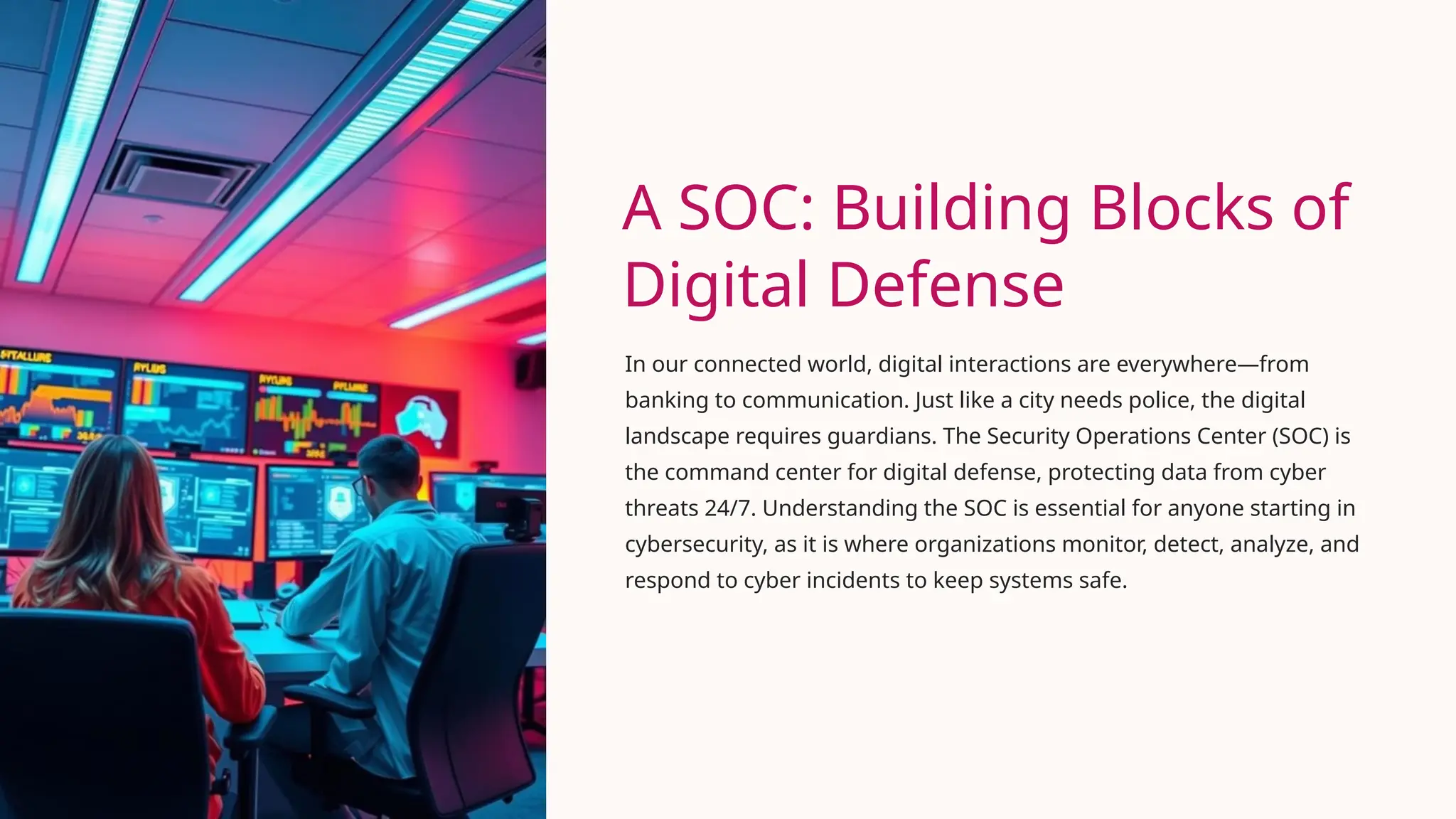
In our connected world, digital interactions are everywhere—from
banking to communication. Just like a city needs police, the digital
landscape requires guardians. The Security Operations Center (SOC) is
the command center for digital defense, protecting data from cyber
threats 24/7. Understanding the SOC is essential for anyone starting in
cybersecurity, as it is where organizations monitor, detect, analyze, and
respond to cyber incidents to keep systems safe.
What Is a Security
Operations Center (SOC)?
Centralized Monitoring
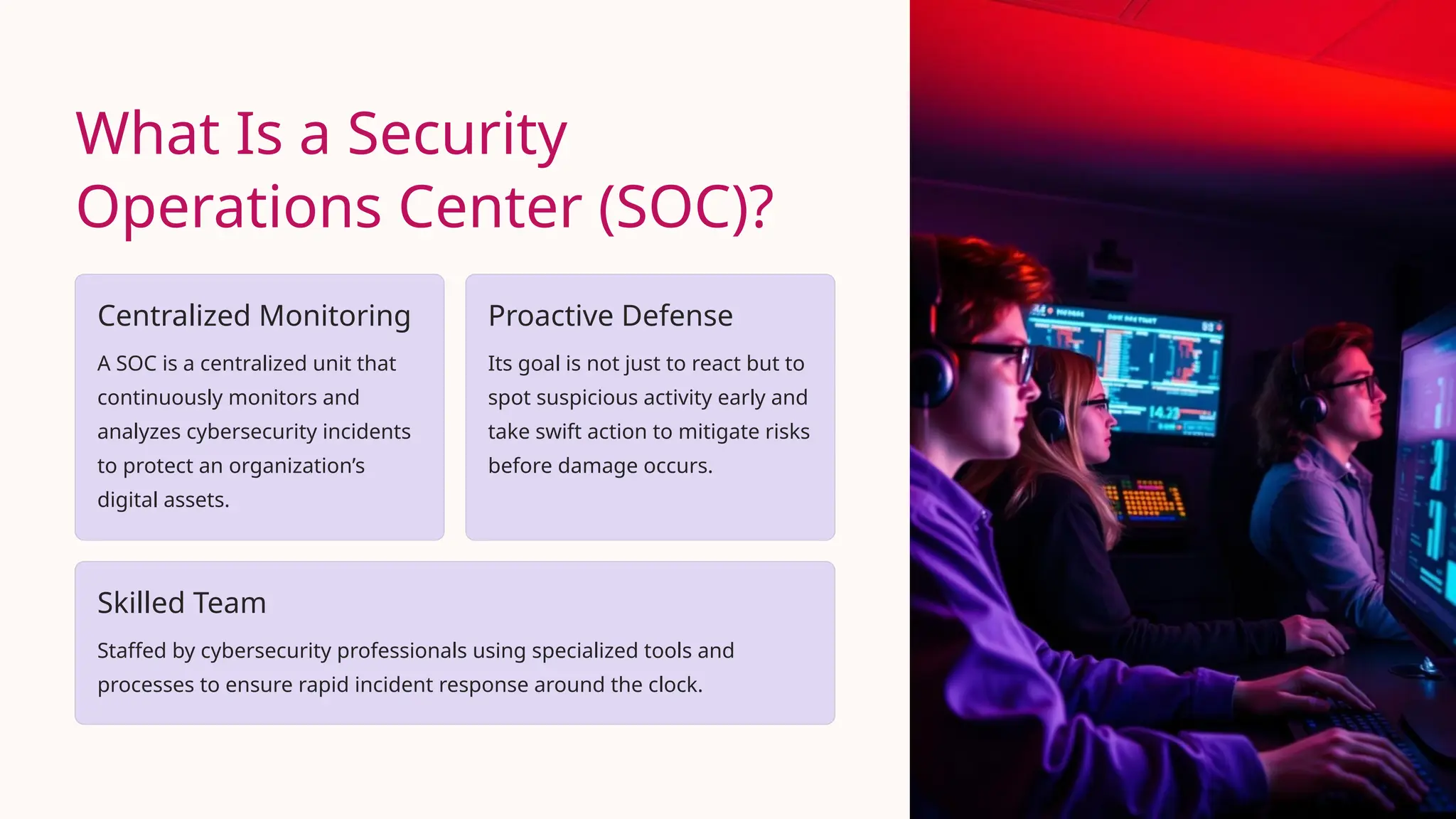
A SOC is a centralized unit that
continuously monitors and
analyzes cybersecurity incidents
to protect an organization’s
digital assets.
Proactive Defense
Its goal is not just to react but to
spot suspicious activity early and
take swift action to mitigate risks
before damage occurs.
Skilled Team
Staffed by cybersecurity professionals using specialized tools and
processes to ensure rapid incident response around the clock.
Networking Fundamentals:
TCP/IP & OSI
Understanding Data
Flow
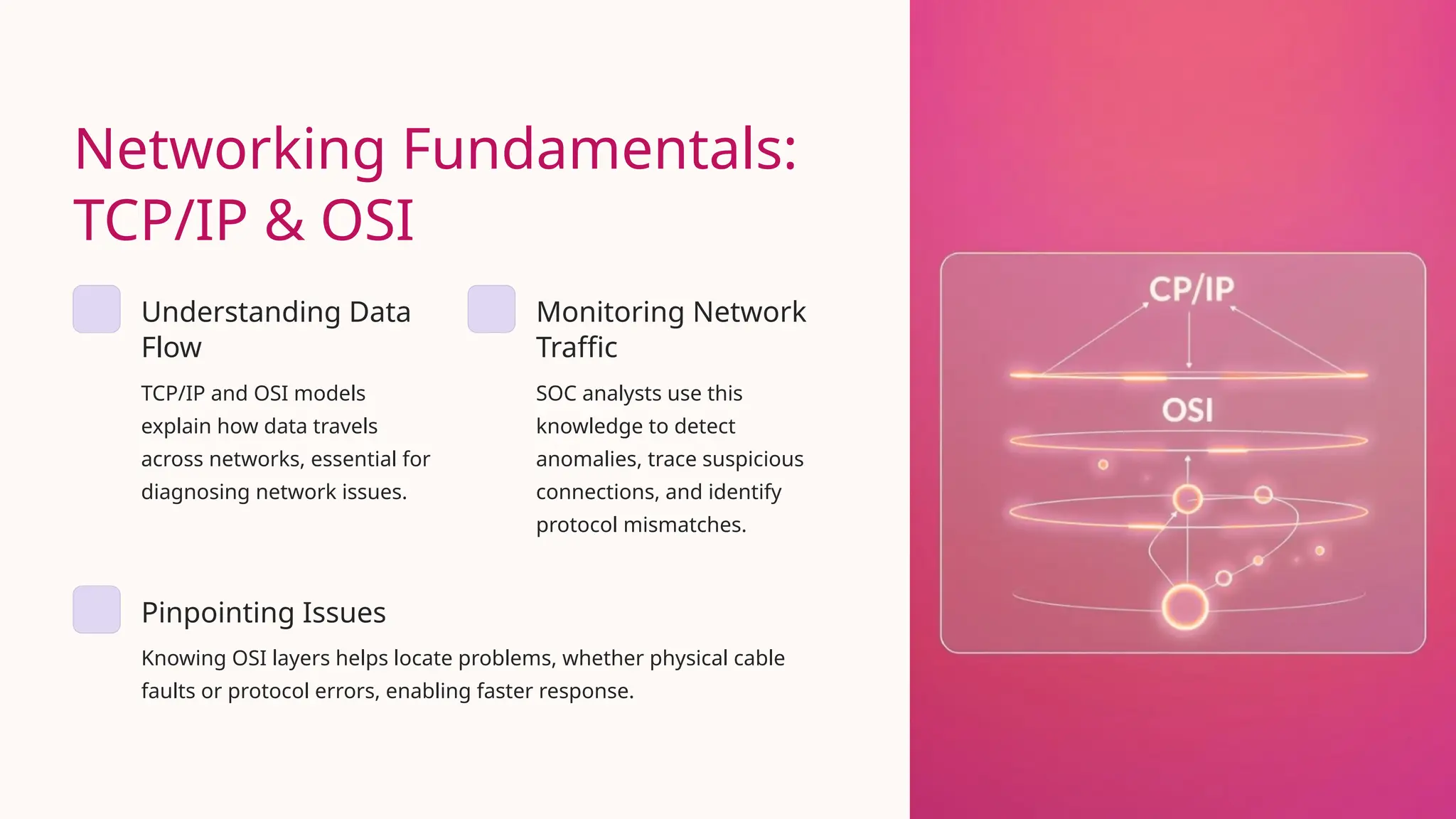
TCP/IP and OSI models
explain how data travels
across networks, essential for
diagnosing network issues.
Monitoring Network
Traffic
SOC analysts use this
knowledge to detect
anomalies, trace suspicious
connections, and identify
protocol mismatches.
Pinpointing Issues
Knowing OSI layers helps locate problems, whether physical cable
faults or protocol errors, enabling faster response.
Operating Systems: Linux & Windows in
SOC
Windows Environment
• Analyzing Windows Event Logs for security and system
issues
• Monitoring endpoint security and user behavior
• Identifying vulnerabilities and misconfigurations
Linux Environment
• Reviewing syslog and audit logs for intrusion detection
• Securing servers and cloud infrastructure
• Managing vulnerabilities specific to Linux systems
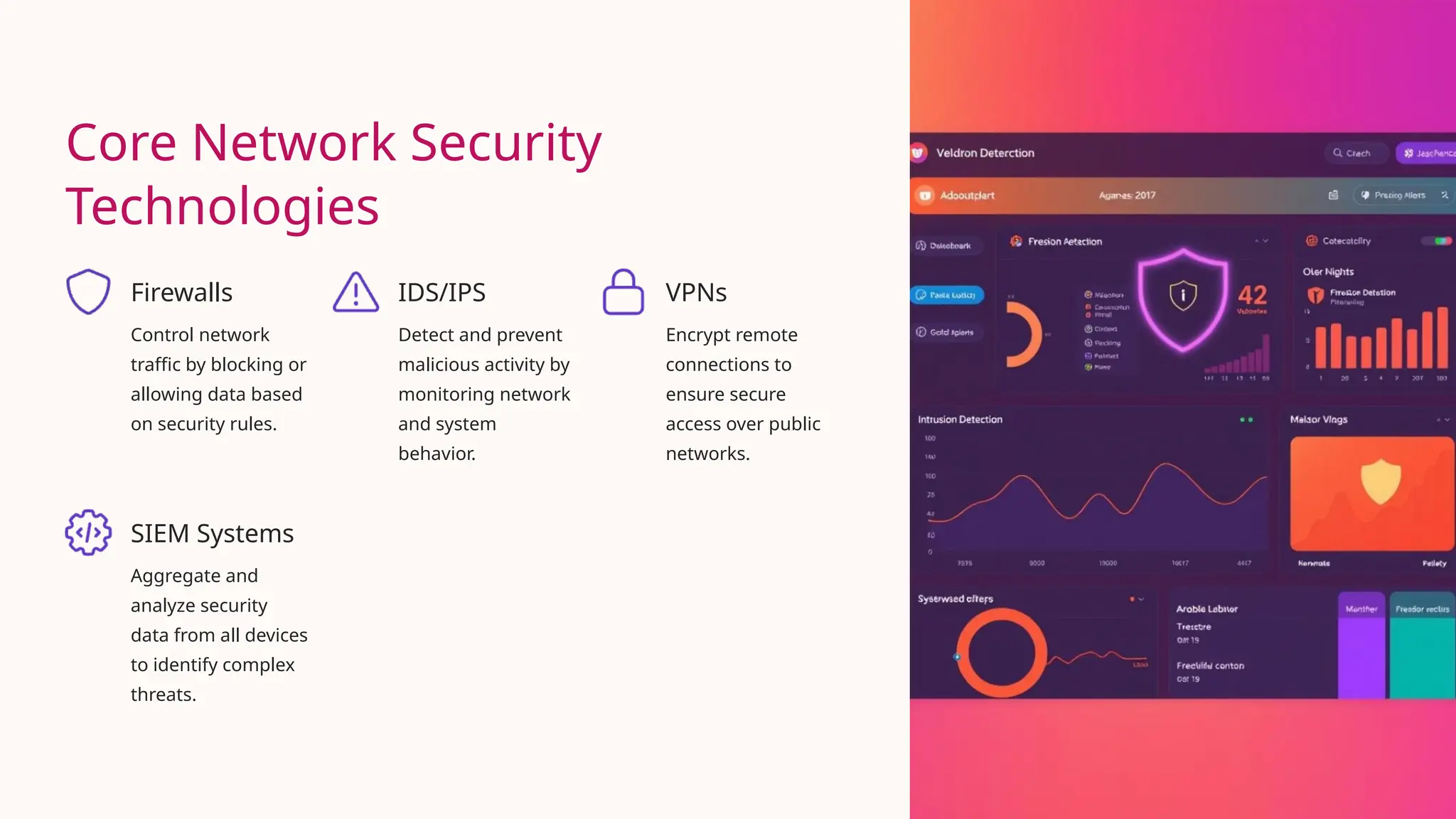
Core Network Security
Technologies
Firewalls
Control network
traffic by blocking or
allowing data based
on security rules.
IDS/IPS
Detect and prevent
malicious activity by
monitoring network
and system
behavior.
VPNs
Encrypt remote
connections to
ensure secure
access over public
networks.
SIEM Systems
Aggregate and
analyze security
data from all devices
to identify complex
threats.
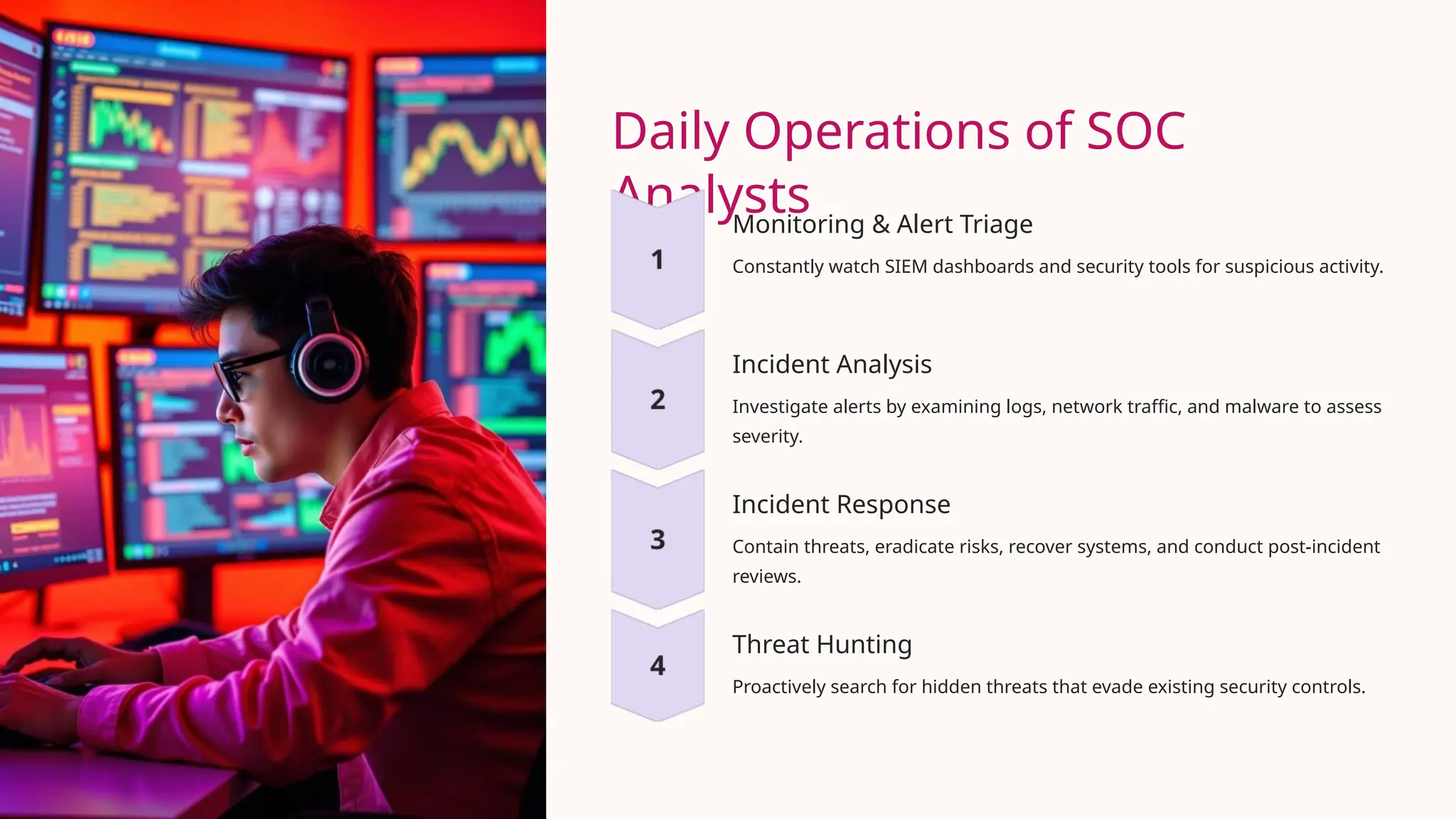
Daily Operations of SOC
Analysts
Monitoring & Alert Triage
Constantly watch SIEM dashboards and security tools for suspicious activity.
Incident Analysis
Investigate alerts by examining logs, network traffic, and malware to assess
severity.
Incident Response
Contain threats, eradicate risks, recover systems, and conduct post-incident
reviews.
Threat Hunting
Proactively search for hidden threats that evade existing security controls.
Why SOCs Are
Essential
Data Breaches
Protect sensitive customer and
organizational information from theft.
1
Financial Loss
Prevent ransomware, fraud, and theft
that can cause costly damage.
2
Reputational
Damage
Maintain trust with customers and
stakeholders through strong security.
3
Operational
Disruption
Ensure business continuity despite
cyberattacks and threats.
4
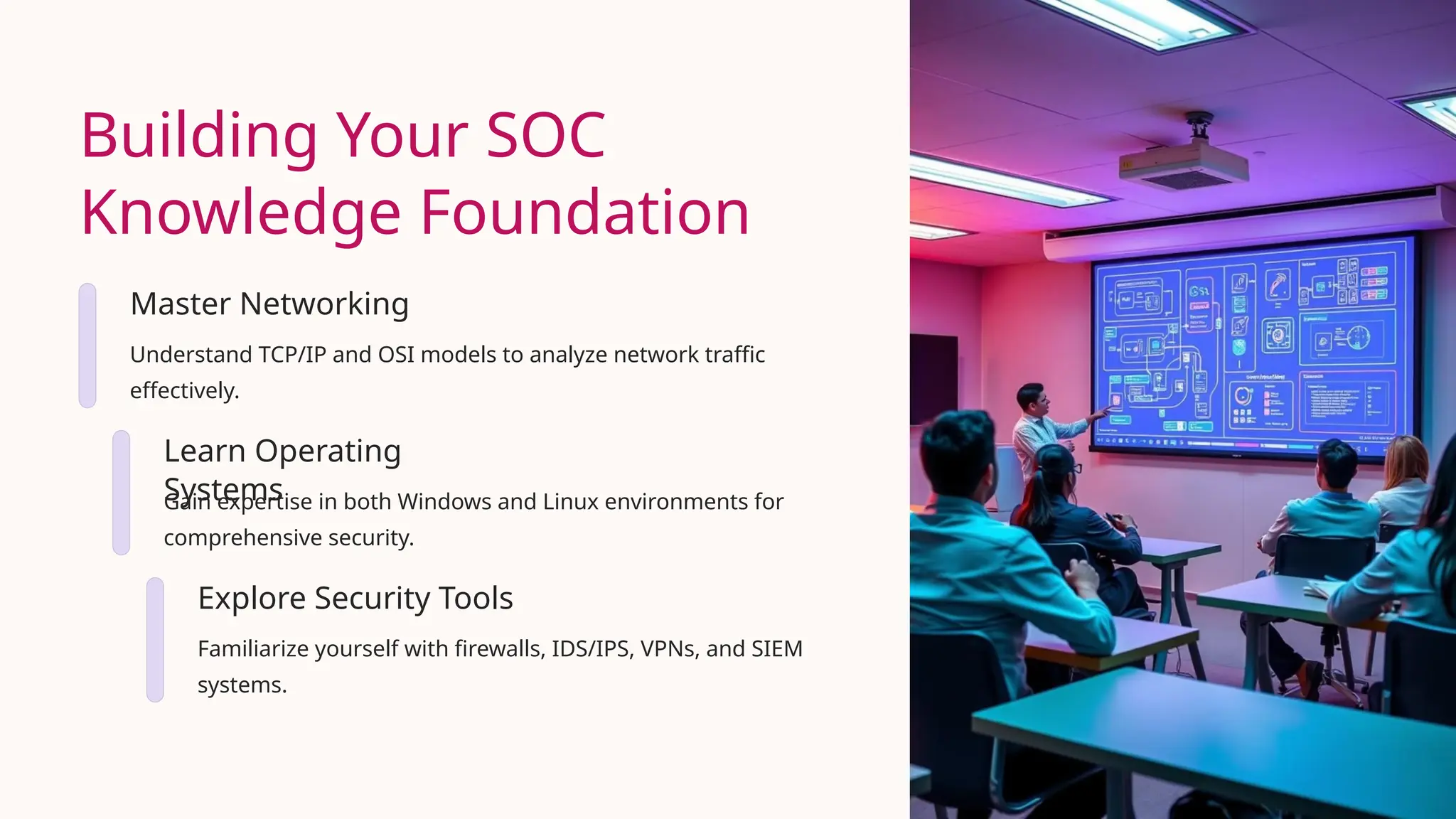
Building Your SOC
Knowledge Foundation
Master Networking
Understand TCP/IP and OSI models to analyze network traffic
effectively.
Learn Operating
Systems
Gain expertise in both Windows and Linux environments for
comprehensive security.
Explore Security Tools
Familiarize yourself with firewalls, IDS/IPS, VPNs, and SIEM
systems.
Conclusion: The SOC
Awaits You
The SOC is a dynamic, challenging, and rewarding field where
foundational knowledge empowers analysts to defend our digital world.
Understanding networks, operating systems, and security technologies
is key to protecting organizations from evolving threats. If you are
passionate about digital defense and eager to make an impact, the
Security Operations Center offers a vital career path ready for you to
build upon these essential building blocks.
wininlifeacademy.com

A SOC: Building Blocks of Digital Defense

  • 1.
    A SOC: BuildingBlocks of Digital Defense In our connected world, digital interactions are everywhere—from banking to communication. Just like a city needs police, the digital landscape requires guardians. The Security Operations Center (SOC) is the command center for digital defense, protecting data from cyber threats 24/7. Understanding the SOC is essential for anyone starting in cybersecurity, as it is where organizations monitor, detect, analyze, and respond to cyber incidents to keep systems safe.
  • 2.
    What Is aSecurity Operations Center (SOC)? Centralized Monitoring A SOC is a centralized unit that continuously monitors and analyzes cybersecurity incidents to protect an organization’s digital assets. Proactive Defense Its goal is not just to react but to spot suspicious activity early and take swift action to mitigate risks before damage occurs. Skilled Team Staffed by cybersecurity professionals using specialized tools and processes to ensure rapid incident response around the clock.
  • 3.
    Networking Fundamentals: TCP/IP &OSI Understanding Data Flow TCP/IP and OSI models explain how data travels across networks, essential for diagnosing network issues. Monitoring Network Traffic SOC analysts use this knowledge to detect anomalies, trace suspicious connections, and identify protocol mismatches. Pinpointing Issues Knowing OSI layers helps locate problems, whether physical cable faults or protocol errors, enabling faster response.
  • 4.
    Operating Systems: Linux& Windows in SOC Windows Environment • Analyzing Windows Event Logs for security and system issues • Monitoring endpoint security and user behavior • Identifying vulnerabilities and misconfigurations Linux Environment • Reviewing syslog and audit logs for intrusion detection • Securing servers and cloud infrastructure • Managing vulnerabilities specific to Linux systems
  • 5.
    Core Network Security Technologies Firewalls Controlnetwork traffic by blocking or allowing data based on security rules. IDS/IPS Detect and prevent malicious activity by monitoring network and system behavior. VPNs Encrypt remote connections to ensure secure access over public networks. SIEM Systems Aggregate and analyze security data from all devices to identify complex threats.
  • 6.
    Daily Operations ofSOC Analysts Monitoring & Alert Triage Constantly watch SIEM dashboards and security tools for suspicious activity. Incident Analysis Investigate alerts by examining logs, network traffic, and malware to assess severity. Incident Response Contain threats, eradicate risks, recover systems, and conduct post-incident reviews. Threat Hunting Proactively search for hidden threats that evade existing security controls.
  • 7.
    Why SOCs Are Essential DataBreaches Protect sensitive customer and organizational information from theft. 1 Financial Loss Prevent ransomware, fraud, and theft that can cause costly damage. 2 Reputational Damage Maintain trust with customers and stakeholders through strong security. 3 Operational Disruption Ensure business continuity despite cyberattacks and threats. 4
  • 8.
    Building Your SOC KnowledgeFoundation Master Networking Understand TCP/IP and OSI models to analyze network traffic effectively. Learn Operating Systems Gain expertise in both Windows and Linux environments for comprehensive security. Explore Security Tools Familiarize yourself with firewalls, IDS/IPS, VPNs, and SIEM systems.
  • 9.
    Conclusion: The SOC AwaitsYou The SOC is a dynamic, challenging, and rewarding field where foundational knowledge empowers analysts to defend our digital world. Understanding networks, operating systems, and security technologies is key to protecting organizations from evolving threats. If you are passionate about digital defense and eager to make an impact, the Security Operations Center offers a vital career path ready for you to build upon these essential building blocks.
  • 10.