New Energy Horizons
                                             Opportunities and Challenges


Communications – a mission critical enabler for the
         smart distribution network

                   Wim D’Hondt
                    Accenture
             Wim.dhondt@accenture.com
Focus of Talk                                                                  New Energy Horizons
                                                                            Opportunities and Challenges


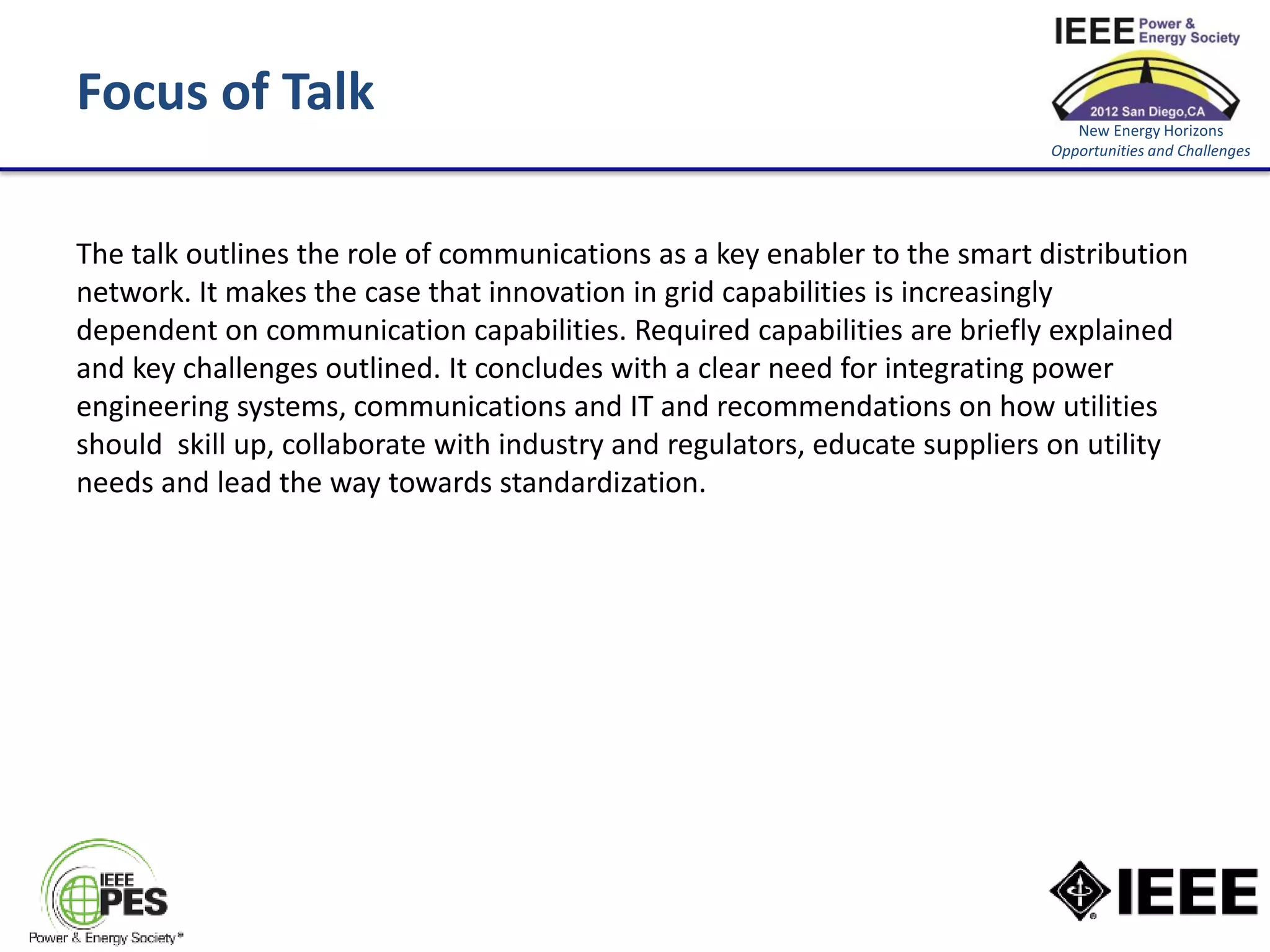
The talk outlines the role of communications as a key enabler to the smart distribution
network. It makes the case that innovation in grid capabilities is increasingly
dependent on communication capabilities. Required capabilities are briefly explained
and key challenges outlined. It concludes with a clear need for integrating power
engineering systems, communications and IT and recommendations on how utilities
should skill up, collaborate with industry and regulators, educate suppliers on utility
needs and lead the way towards standardization.
Power Engineering innovation requires
increasingly more cost-effective and capable
Communications                                             New Energy Horizons
                                                        Opportunities and Challenges


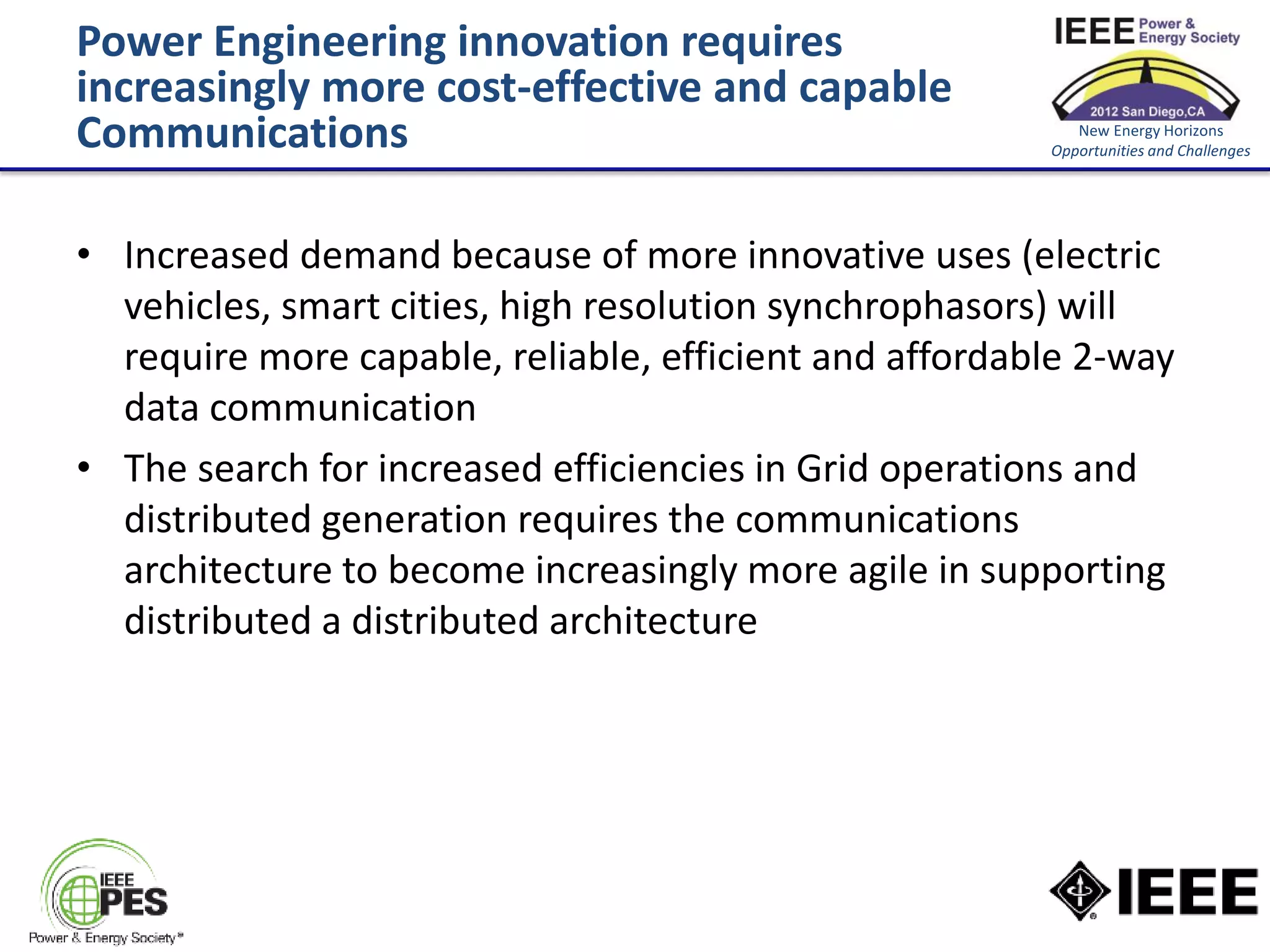
• Increased demand because of more innovative uses (electric
  vehicles, smart cities, high resolution synchrophasors) will
  require more capable, reliable, efficient and affordable 2-way
  data communication
• The search for increased efficiencies in Grid operations and
  distributed generation requires the communications
  architecture to become increasingly more agile in supporting
  distributed a distributed architecture
Challenges with existing
communications paradigm                                                        New Energy Horizons
                                                                            Opportunities and Challenges


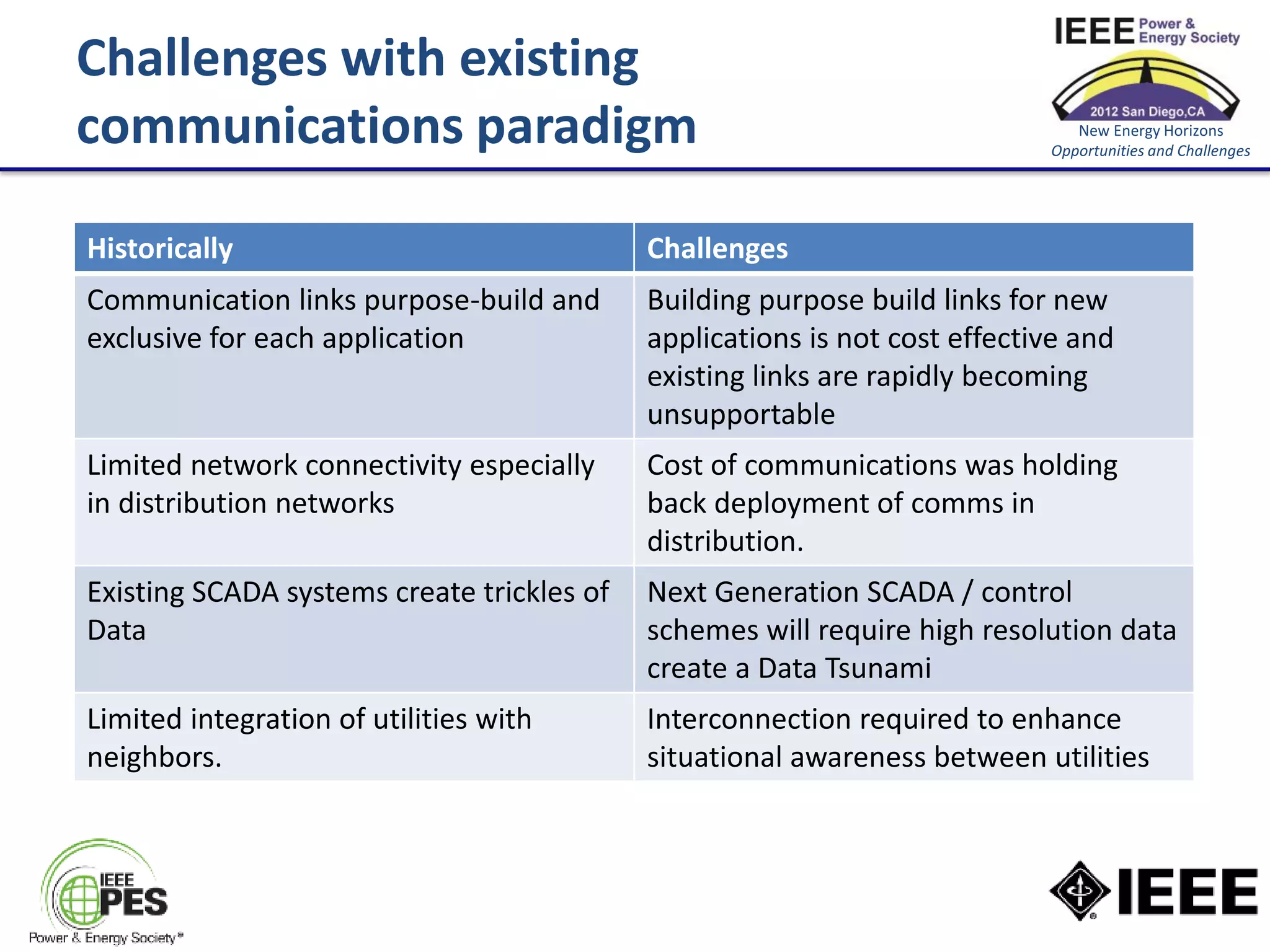
Historically                                Challenges
Communication links purpose-build and       Building purpose build links for new
exclusive for each application              applications is not cost effective and
                                            existing links are rapidly becoming
                                            unsupportable
Limited network connectivity especially     Cost of communications was holding
in distribution networks                    back deployment of comms in
                                            distribution.
Existing SCADA systems create trickles of   Next Generation SCADA / control
Data                                        schemes will require high resolution data
                                            create a Data Tsunami
Limited integration of utilities with       Interconnection required to enhance
neighbors.                                  situational awareness between utilities
Key Challenges that need to be
addressed                                                                  New Energy Horizons
                                                                        Opportunities and Challenges


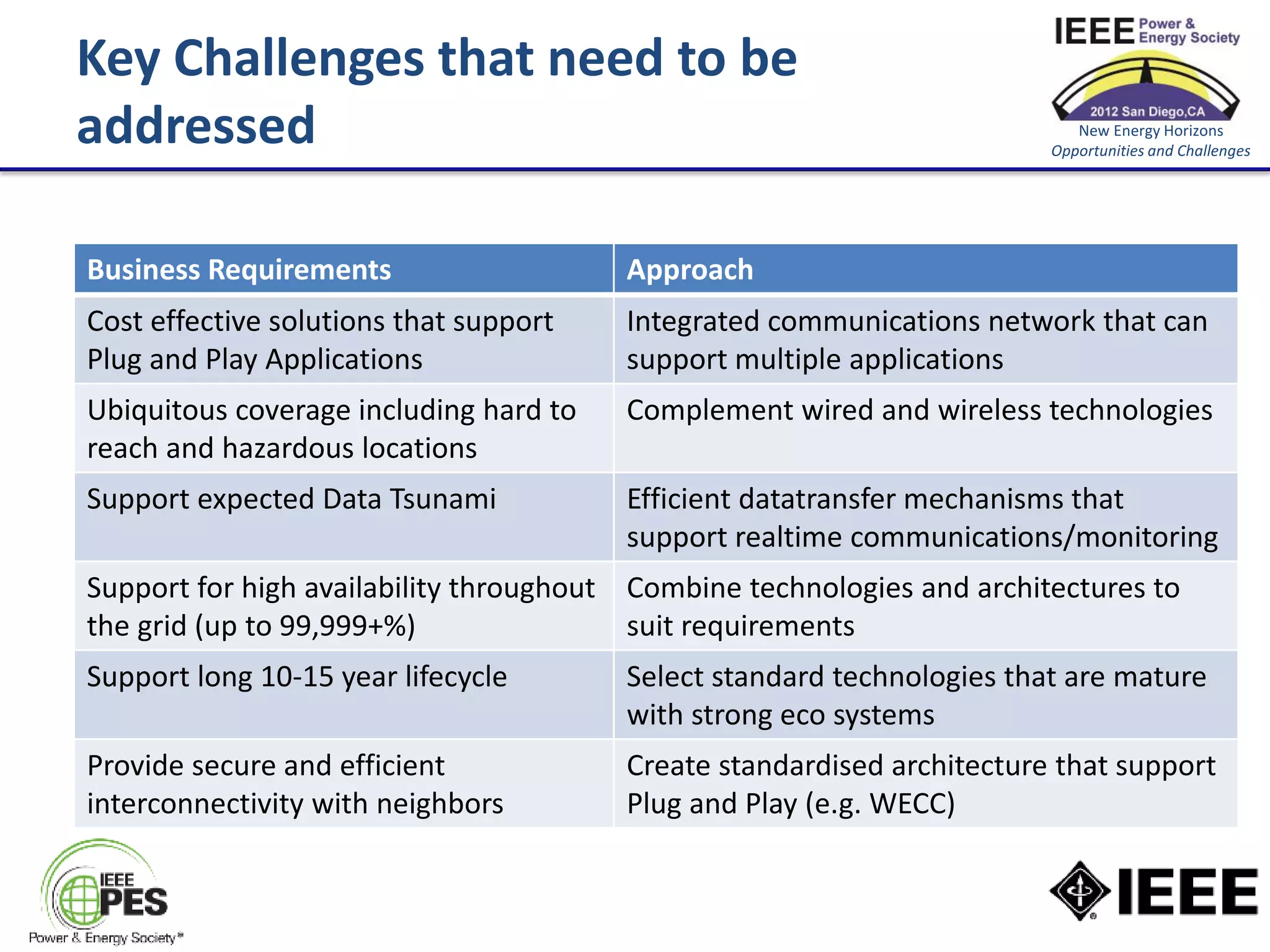
Business Requirements                   Approach
Cost effective solutions that support   Integrated communications network that can
Plug and Play Applications              support multiple applications
Ubiquitous coverage including hard to   Complement wired and wireless technologies
reach and hazardous locations
Support expected Data Tsunami           Efficient datatransfer mechanisms that
                                        support realtime communications/monitoring
Support for high availability throughout Combine technologies and architectures to
the grid (up to 99,999+%)                suit requirements
Support long 10-15 year lifecycle       Select standard technologies that are mature
                                        with strong eco systems
Provide secure and efficient            Create standardised architecture that support
interconnectivity with neighbors        Plug and Play (e.g. WECC)
Actors to Address the challenge                            New Energy Horizons
                                                        Opportunities and Challenges


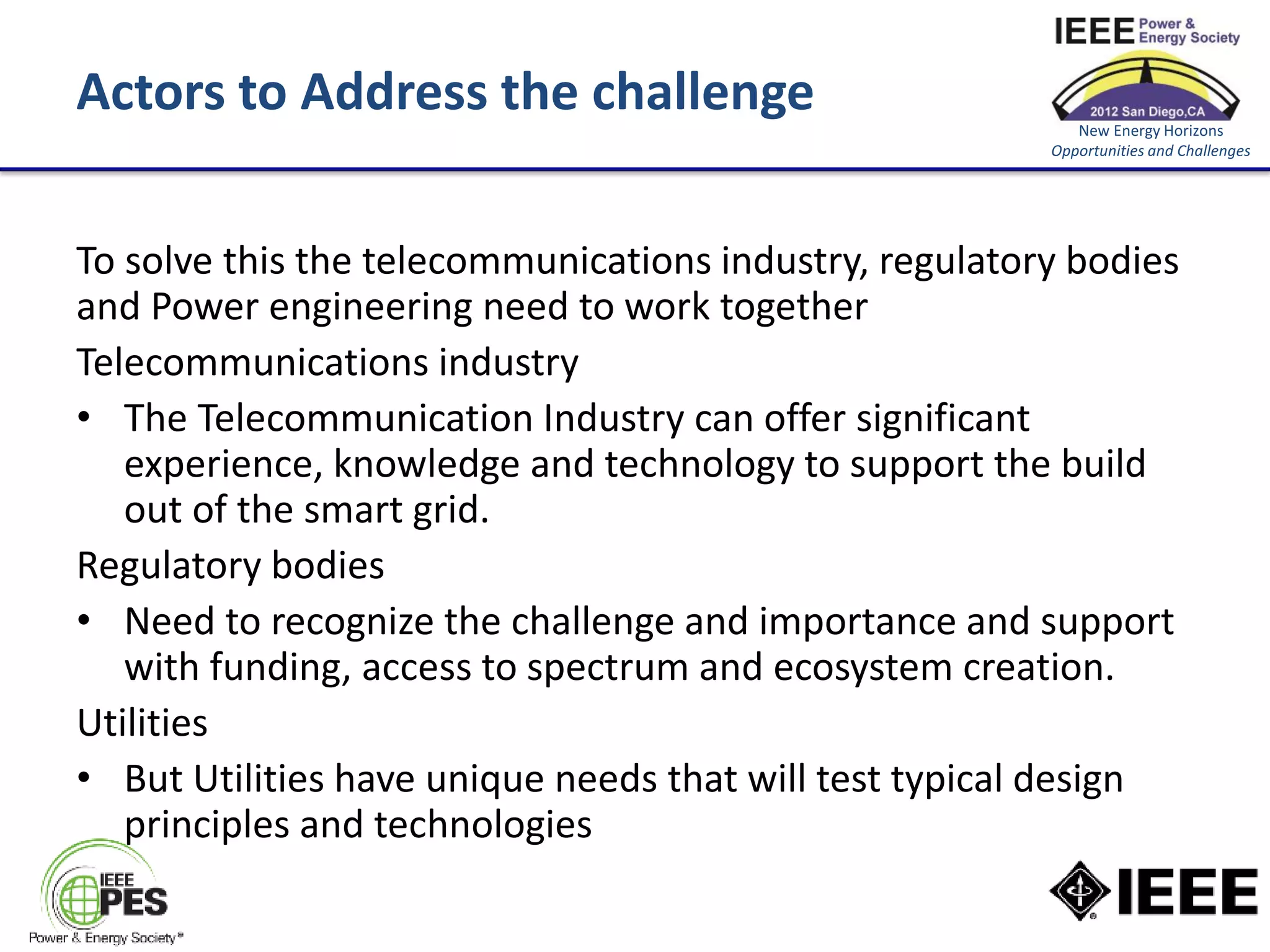
To solve this the telecommunications industry, regulatory bodies
and Power engineering need to work together
Telecommunications industry
• The Telecommunication Industry can offer significant
   experience, knowledge and technology to support the build
   out of the smart grid.
Regulatory bodies
• Need to recognize the challenge and importance and support
   with funding, access to spectrum and ecosystem creation.
Utilities
• But Utilities have unique needs that will test typical design
   principles and technologies
But each actor is wrestling with
concrete challenges                                                  New Energy Horizons
                                                                  Opportunities and Challenges


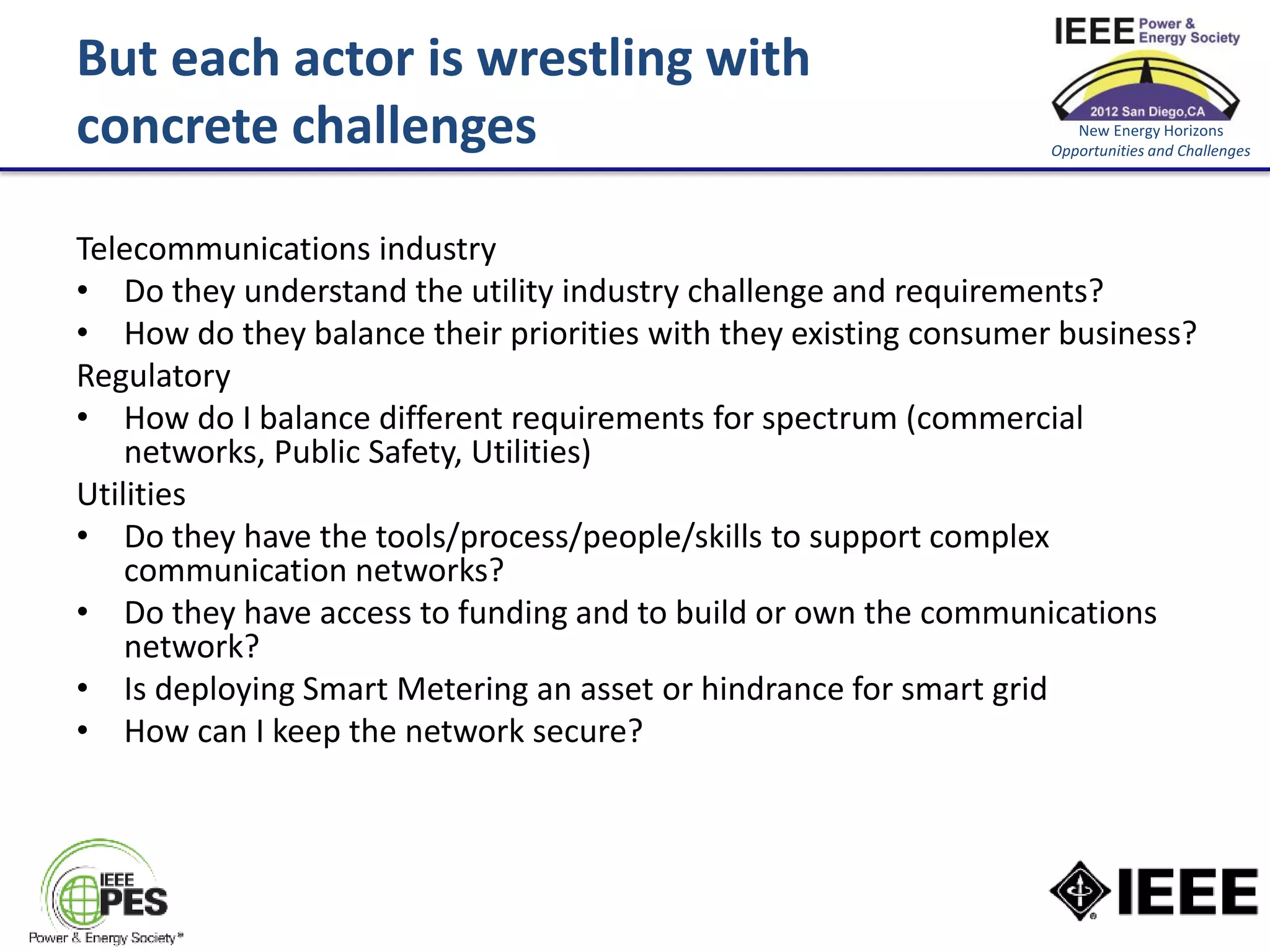
Telecommunications industry
• Do they understand the utility industry challenge and requirements?
• How do they balance their priorities with they existing consumer business?
Regulatory
• How do I balance different requirements for spectrum (commercial
    networks, Public Safety, Utilities)
Utilities
• Do they have the tools/process/people/skills to support complex
    communication networks?
• Do they have access to funding and to build or own the communications
    network?
• Is deploying Smart Metering an asset or hindrance for smart grid
• How can I keep the network secure?
Need for integrated vision, blueprint, strategy
and Plan                                                                           New Energy Horizons
                                                                                Opportunities and Challenges


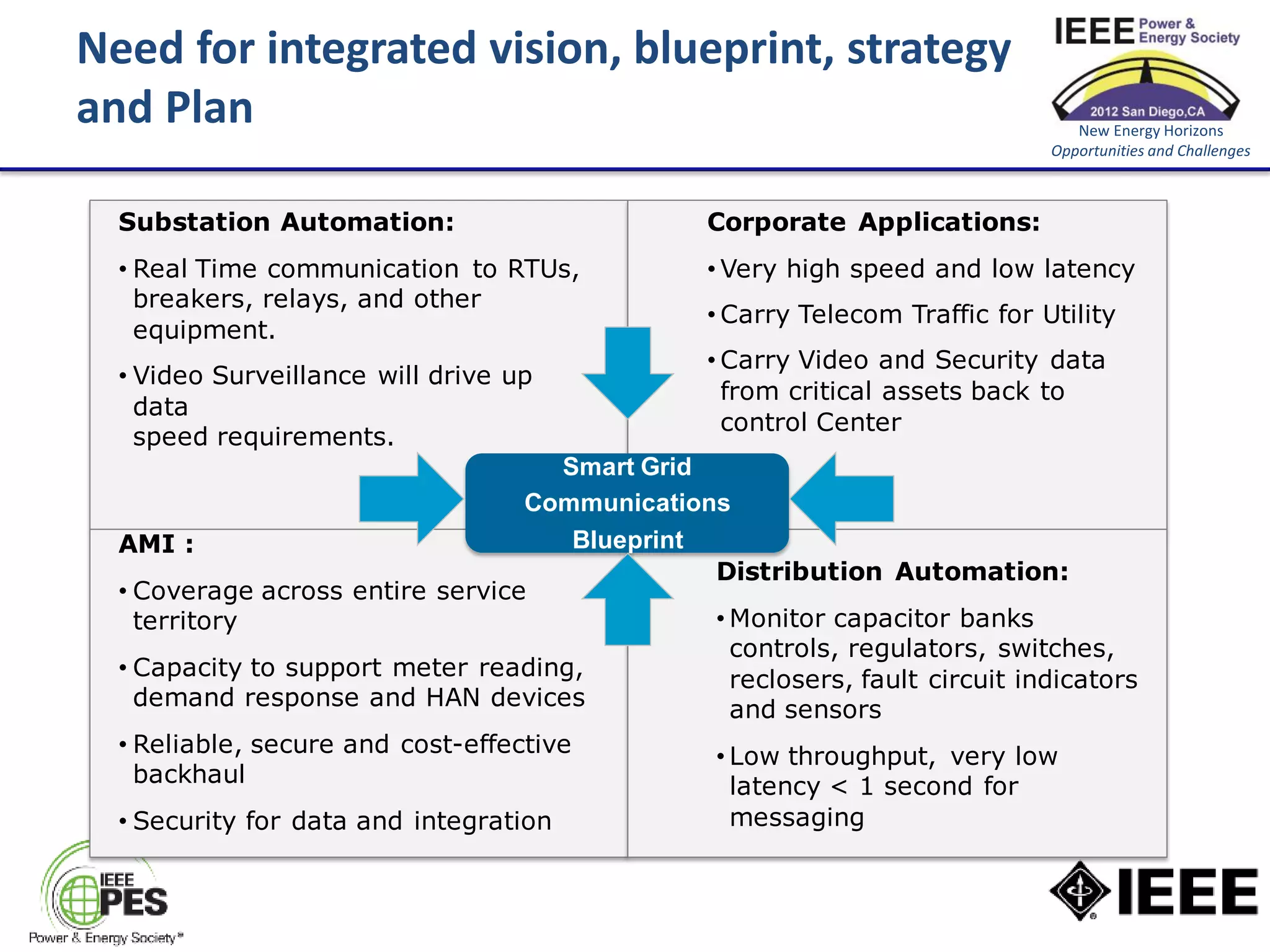
  Substation Automation:                           Corporate Applications:
  • Real Time communication to RTUs,               • Very high speed and low latency
    breakers, relays, and other
                                                   • Carry Telecom Traffic for Utility
    equipment.
                                                   • Carry Video and Security data
  • Video Surveillance will drive up
                                                     from critical assets back to
    data
                                                     control Center
    speed requirements.
                                      Smart Grid
                                   Communications
  AMI :                                 Blueprint
                                                  Distribution Automation:
  • Coverage across entire service
    territory                                     • Monitor capacitor banks
                                                    controls, regulators, switches,
  • Capacity to support meter reading,              reclosers, fault circuit indicators
    demand response and HAN devices                 and sensors
  • Reliable, secure and cost-effective           • Low throughput, very low
   7backhaul                                        latency < 1 second for
  • Security for data and integration               messaging
Key focus areas
                                                              New Energy Horizons
                                                           Opportunities and Challenges


Key Areas of innovation required
• Need for cost effective communications that can be deployed fast,
   secure and efficient.
• Suitability of IP to support integrated networks and power
   engineering applications (teleprotection, monitoring etc…)
• Adapted distributed control mechanisms to increase survivability and
   restoration
• Wireless technologies that support white space, unlicensed, semi-
   licensed spectrum bands
• Security policies and mechanisms that provide multiple layers of
   protection
• Control mechanisms to reliable support engineering applications over
   commercial and public safety networks

Smart Grid Telecommunication Challenges

  • 1.
    New Energy Horizons Opportunities and Challenges Communications – a mission critical enabler for the smart distribution network Wim D’Hondt Accenture Wim.dhondt@accenture.com
  • 2.
    Focus of Talk New Energy Horizons Opportunities and Challenges The talk outlines the role of communications as a key enabler to the smart distribution network. It makes the case that innovation in grid capabilities is increasingly dependent on communication capabilities. Required capabilities are briefly explained and key challenges outlined. It concludes with a clear need for integrating power engineering systems, communications and IT and recommendations on how utilities should skill up, collaborate with industry and regulators, educate suppliers on utility needs and lead the way towards standardization.
  • 3.
    Power Engineering innovationrequires increasingly more cost-effective and capable Communications New Energy Horizons Opportunities and Challenges • Increased demand because of more innovative uses (electric vehicles, smart cities, high resolution synchrophasors) will require more capable, reliable, efficient and affordable 2-way data communication • The search for increased efficiencies in Grid operations and distributed generation requires the communications architecture to become increasingly more agile in supporting distributed a distributed architecture
  • 4.
    Challenges with existing communicationsparadigm New Energy Horizons Opportunities and Challenges Historically Challenges Communication links purpose-build and Building purpose build links for new exclusive for each application applications is not cost effective and existing links are rapidly becoming unsupportable Limited network connectivity especially Cost of communications was holding in distribution networks back deployment of comms in distribution. Existing SCADA systems create trickles of Next Generation SCADA / control Data schemes will require high resolution data create a Data Tsunami Limited integration of utilities with Interconnection required to enhance neighbors. situational awareness between utilities
  • 5.
    Key Challenges thatneed to be addressed New Energy Horizons Opportunities and Challenges Business Requirements Approach Cost effective solutions that support Integrated communications network that can Plug and Play Applications support multiple applications Ubiquitous coverage including hard to Complement wired and wireless technologies reach and hazardous locations Support expected Data Tsunami Efficient datatransfer mechanisms that support realtime communications/monitoring Support for high availability throughout Combine technologies and architectures to the grid (up to 99,999+%) suit requirements Support long 10-15 year lifecycle Select standard technologies that are mature with strong eco systems Provide secure and efficient Create standardised architecture that support interconnectivity with neighbors Plug and Play (e.g. WECC)
  • 6.
    Actors to Addressthe challenge New Energy Horizons Opportunities and Challenges To solve this the telecommunications industry, regulatory bodies and Power engineering need to work together Telecommunications industry • The Telecommunication Industry can offer significant experience, knowledge and technology to support the build out of the smart grid. Regulatory bodies • Need to recognize the challenge and importance and support with funding, access to spectrum and ecosystem creation. Utilities • But Utilities have unique needs that will test typical design principles and technologies
  • 7.
    But each actoris wrestling with concrete challenges New Energy Horizons Opportunities and Challenges Telecommunications industry • Do they understand the utility industry challenge and requirements? • How do they balance their priorities with they existing consumer business? Regulatory • How do I balance different requirements for spectrum (commercial networks, Public Safety, Utilities) Utilities • Do they have the tools/process/people/skills to support complex communication networks? • Do they have access to funding and to build or own the communications network? • Is deploying Smart Metering an asset or hindrance for smart grid • How can I keep the network secure?
  • 8.
    Need for integratedvision, blueprint, strategy and Plan New Energy Horizons Opportunities and Challenges Substation Automation: Corporate Applications: • Real Time communication to RTUs, • Very high speed and low latency breakers, relays, and other • Carry Telecom Traffic for Utility equipment. • Carry Video and Security data • Video Surveillance will drive up from critical assets back to data control Center speed requirements. Smart Grid Communications AMI : Blueprint Distribution Automation: • Coverage across entire service territory • Monitor capacitor banks controls, regulators, switches, • Capacity to support meter reading, reclosers, fault circuit indicators demand response and HAN devices and sensors • Reliable, secure and cost-effective • Low throughput, very low 7backhaul latency < 1 second for • Security for data and integration messaging
  • 9.
    Key focus areas New Energy Horizons Opportunities and Challenges Key Areas of innovation required • Need for cost effective communications that can be deployed fast, secure and efficient. • Suitability of IP to support integrated networks and power engineering applications (teleprotection, monitoring etc…) • Adapted distributed control mechanisms to increase survivability and restoration • Wireless technologies that support white space, unlicensed, semi- licensed spectrum bands • Security policies and mechanisms that provide multiple layers of protection • Control mechanisms to reliable support engineering applications over commercial and public safety networks