S= Specific
For agoal to be specific your goal should be clear otherwise you won't be able to focus
your efforts or feel truly motivated to achieve it. When creating your goal, try to answer the
"W" questions:
● What do I want to accomplish?
● What is the purpose of achieving this goal?
● Why is this goal important?
● What do I need to do to meet the objective?
● Who is involved?
● Where is it located?
● When do I want to accomplish this goal?
● Which requirements and constraints are involved?
● Are there any obstacles I have to overcome?
For example, instead of setting a goal to get better grades this year, you should define which grades you’d like to achieve in which subjects.
3.
Measurable
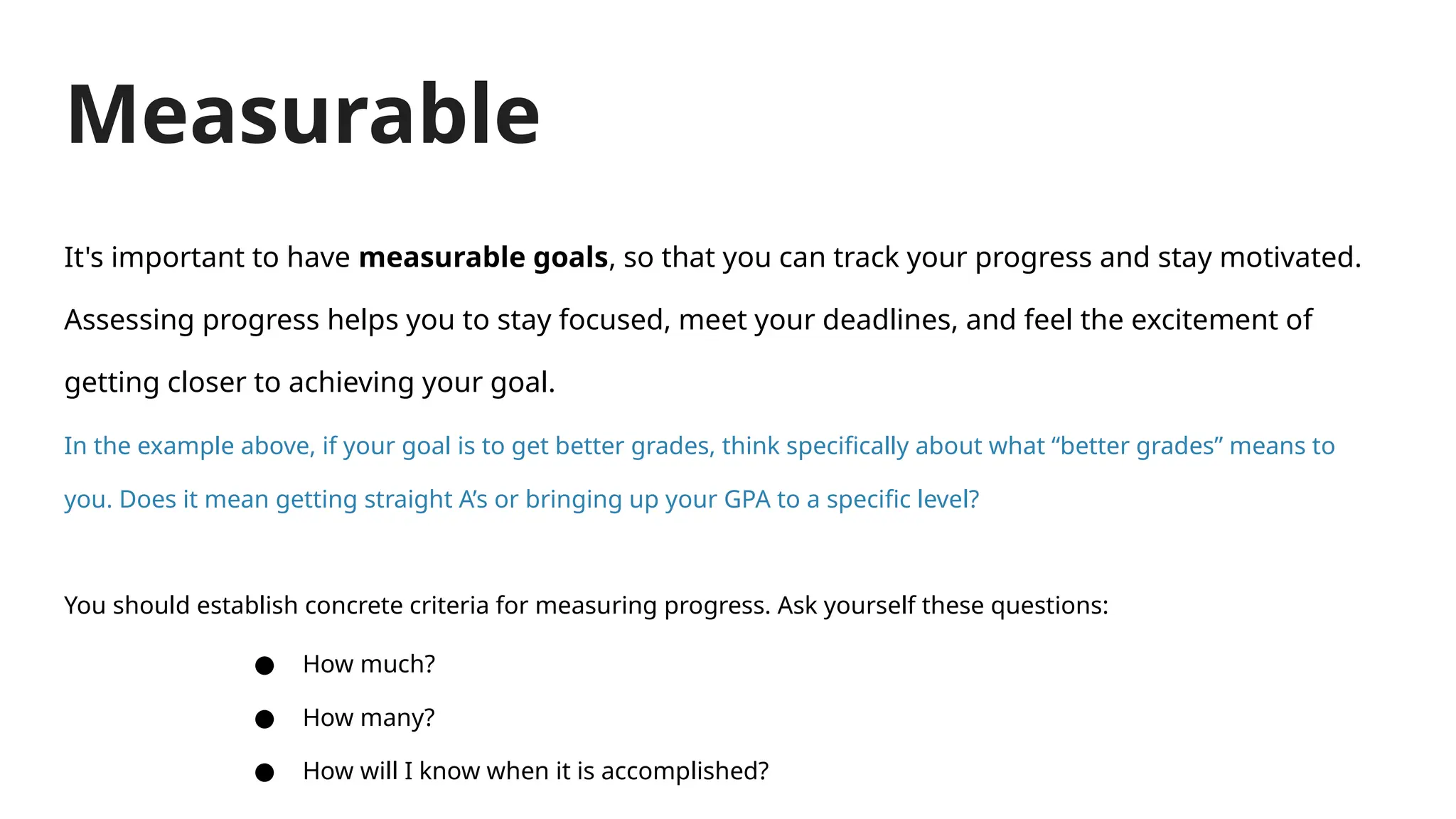
It's important tohave measurable goals, so that you can track your progress and stay motivated.
Assessing progress helps you to stay focused, meet your deadlines, and feel the excitement of
getting closer to achieving your goal.
In the example above, if your goal is to get better grades, think specifically about what “better grades” means to
you. Does it mean getting straight A’s or bringing up your GPA to a specific level?
You should establish concrete criteria for measuring progress. Ask yourself these questions:
● How much?
● How many?
● How will I know when it is accomplished?
4.
Achievable/Attainable
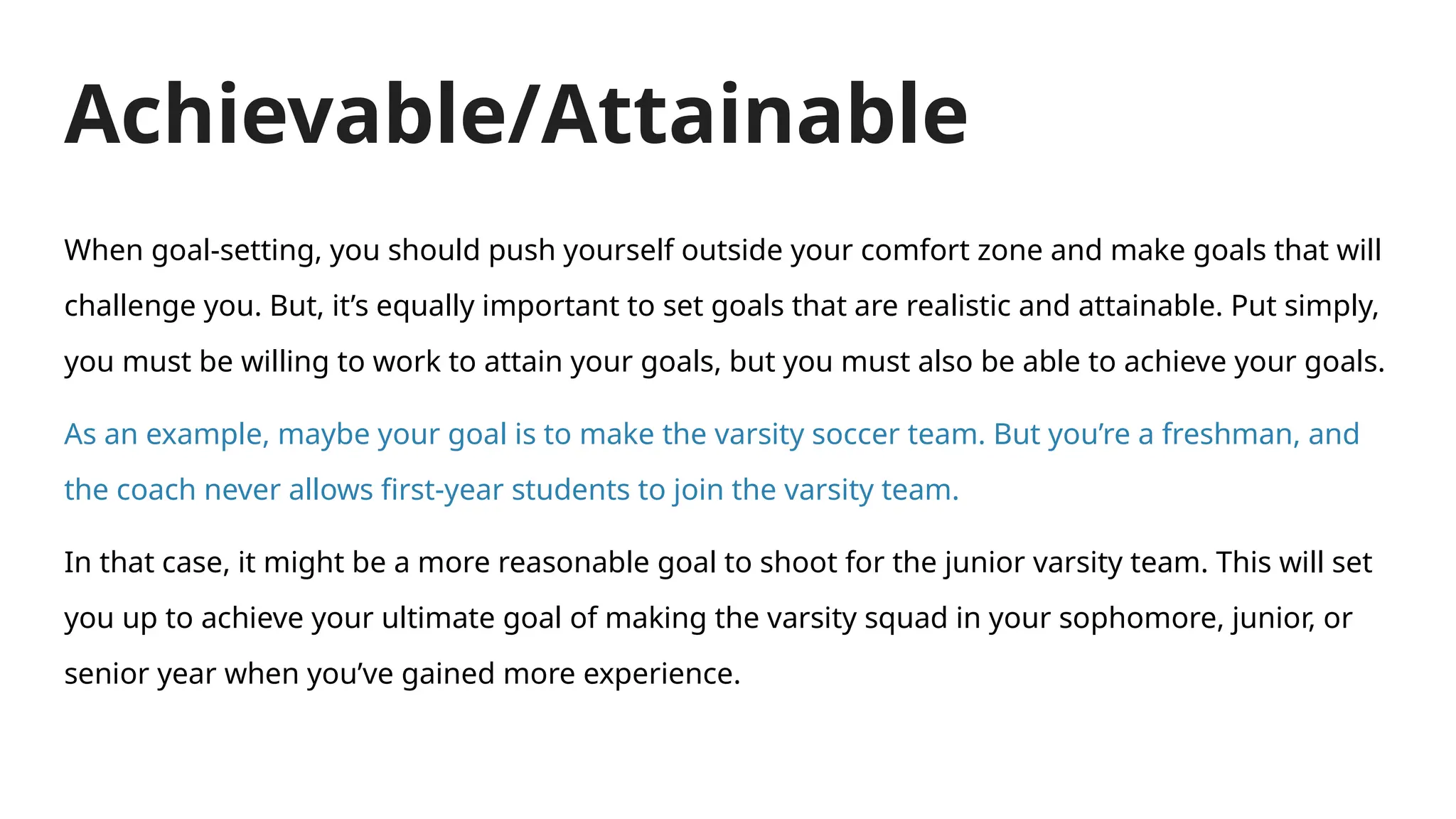
When goal-setting, youshould push yourself outside your comfort zone and make goals that will
challenge you. But, it’s equally important to set goals that are realistic and attainable. Put simply,
you must be willing to work to attain your goals, but you must also be able to achieve your goals.
As an example, maybe your goal is to make the varsity soccer team. But you’re a freshman, and
the coach never allows first-year students to join the varsity team.
In that case, it might be a more reasonable goal to shoot for the junior varsity team. This will set
you up to achieve your ultimate goal of making the varsity squad in your sophomore, junior, or
senior year when you’ve gained more experience.
5.
relevant/realistic
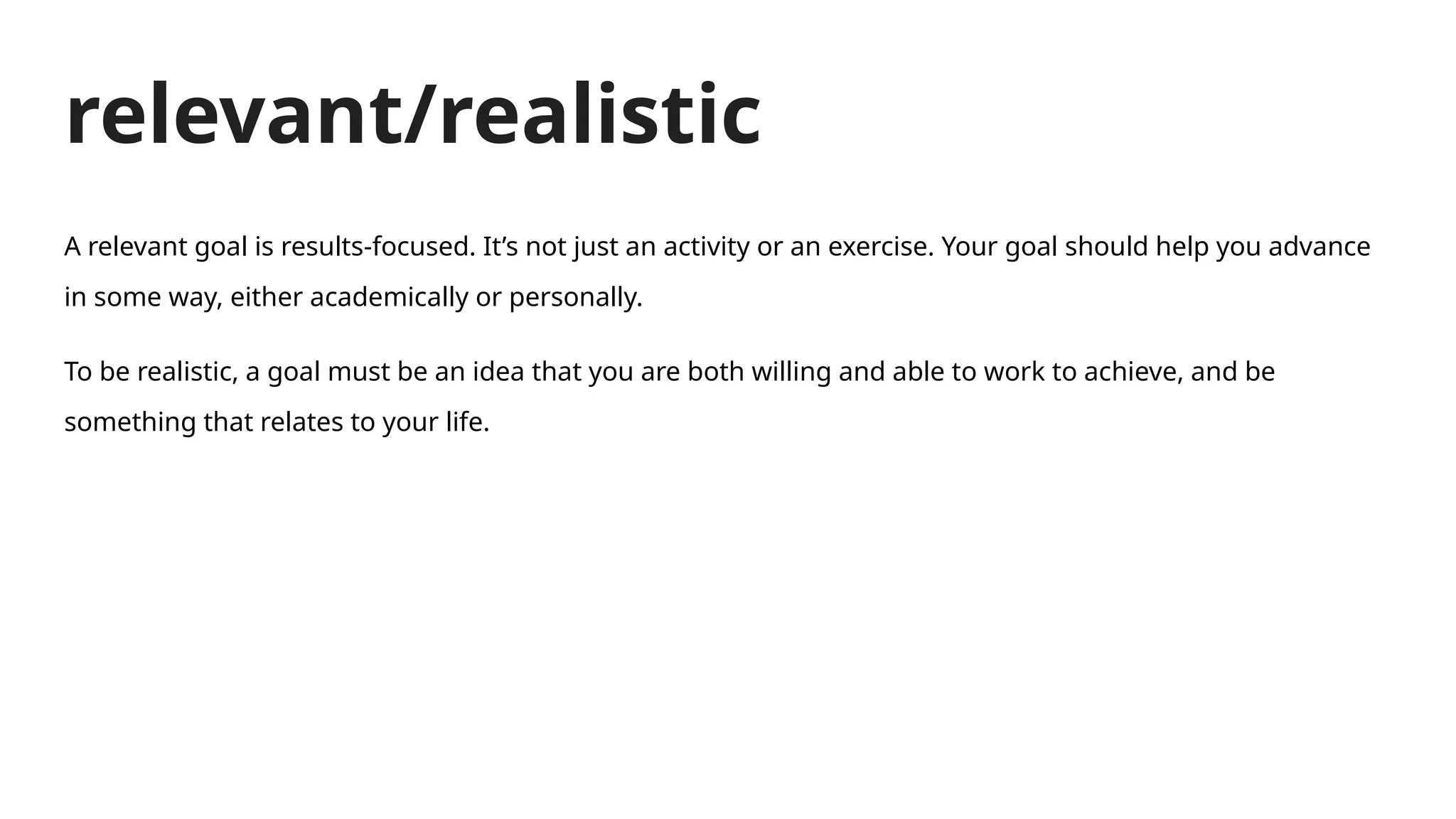
A relevant goalis results-focused. It’s not just an activity or an exercise. Your goal should help you advance
in some way, either academically or personally.
To be realistic, a goal must be an idea that you are both willing and able to work to achieve, and be
something that relates to your life.
6.
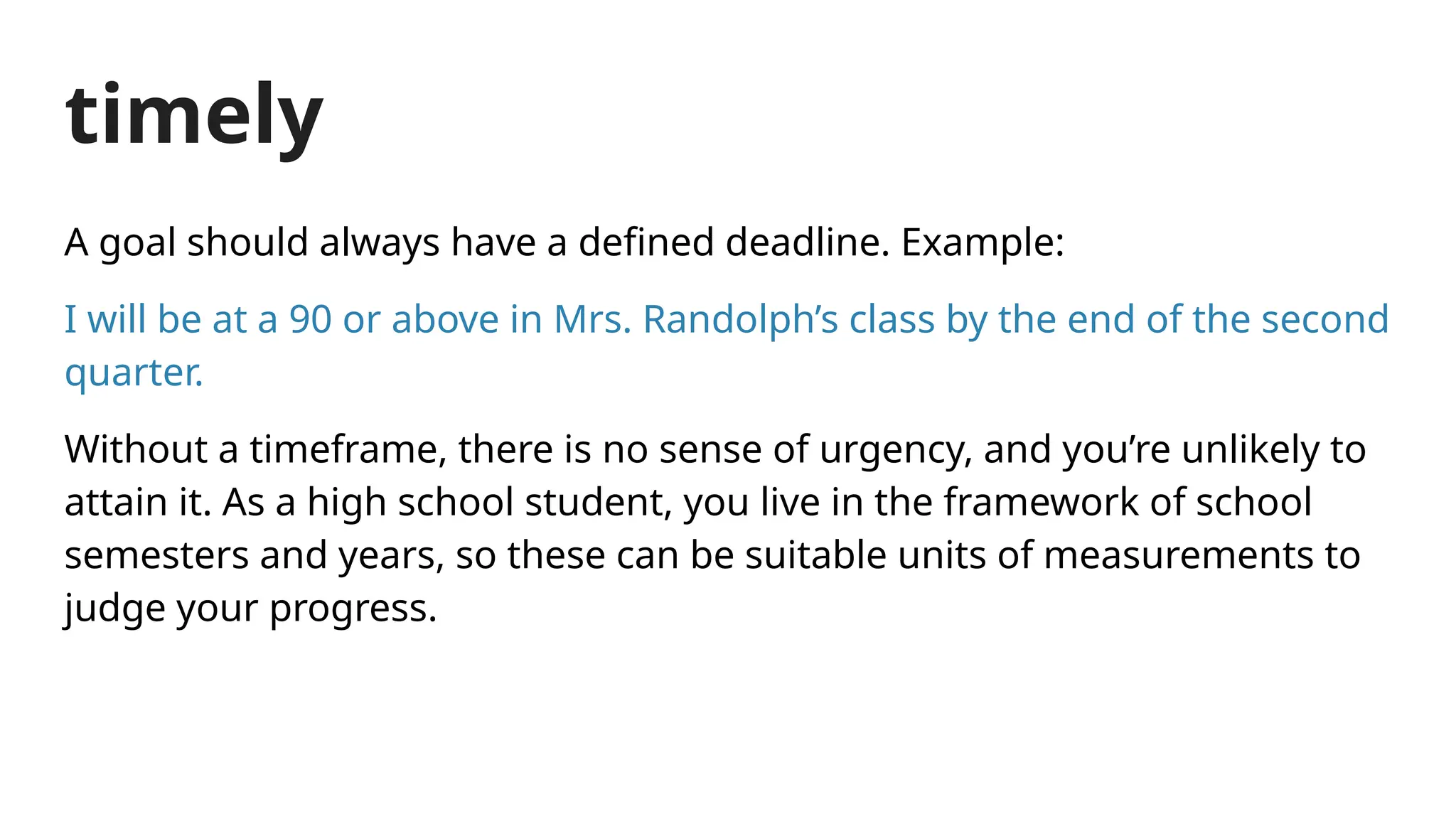
timely
A goal shouldalways have a defined deadline. Example:
I will be at a 90 or above in Mrs. Randolph’s class by the end of the second
quarter.
Without a timeframe, there is no sense of urgency, and you’re unlikely to
attain it. As a high school student, you live in the framework of school
semesters and years, so these can be suitable units of measurements to
judge your progress.
7.
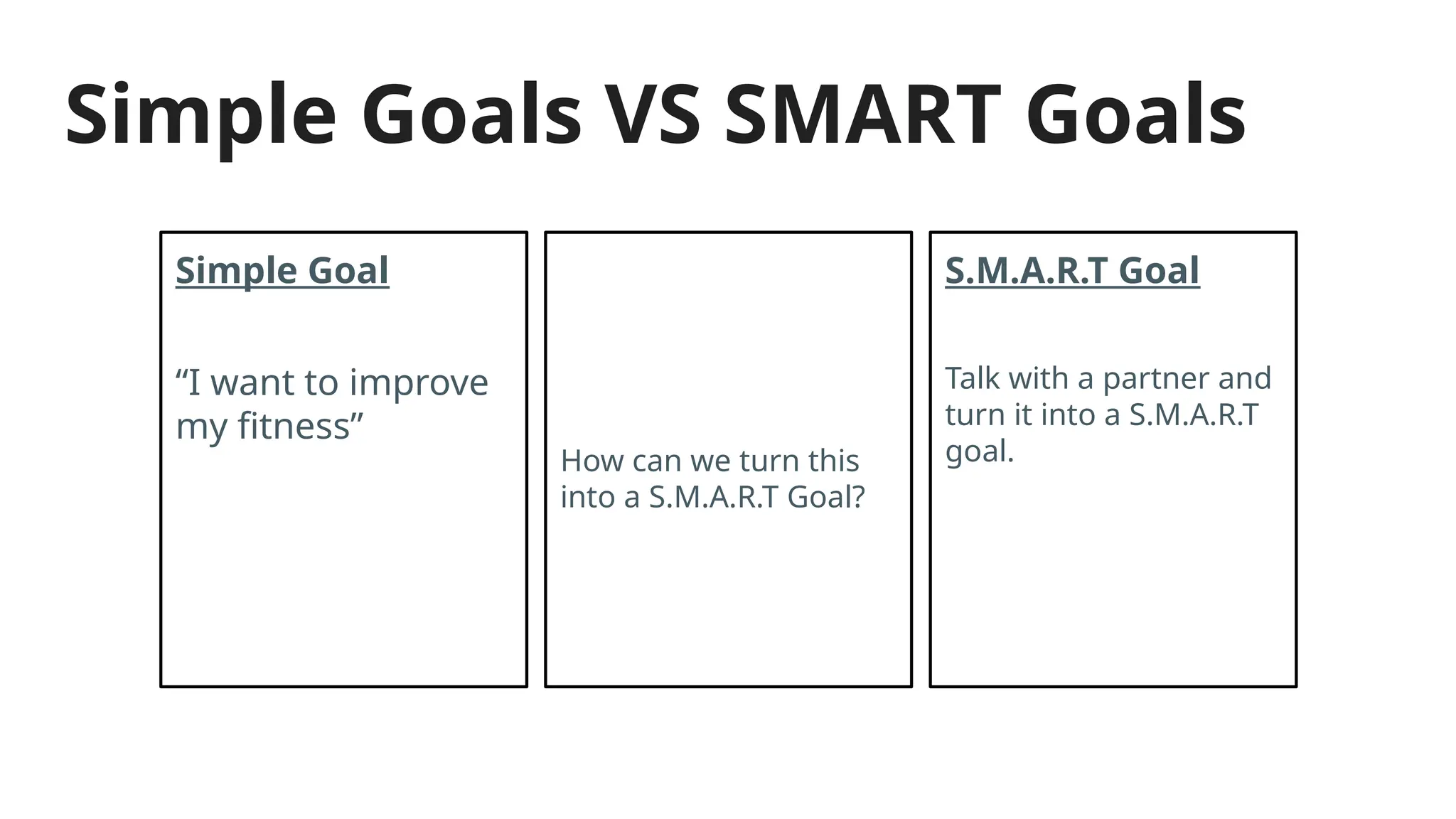
Simple Goals VSSMART Goals
Simple Goal
“I want to improve
my fitness”
How can we turn this
into a S.M.A.R.T Goal?
S.M.A.R.T Goal
Talk with a partner and
turn it into a S.M.A.R.T
goal.
8.
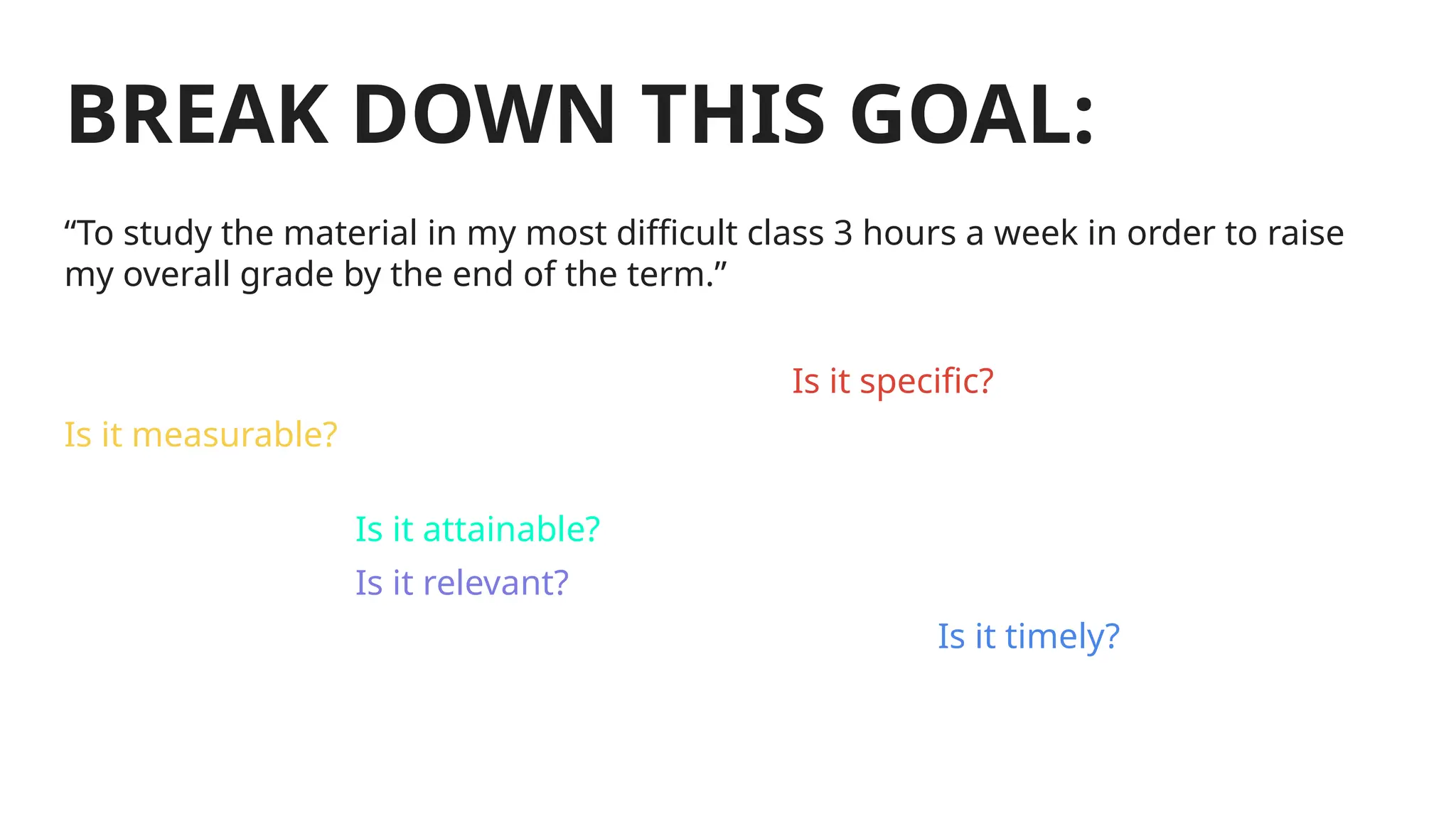
BREAK DOWN THISGOAL:
“To study the material in my most difficult class 3 hours a week in order to raise
my overall grade by the end of the term.”
Is it specific?
Is it measurable?
Is it attainable?
Is it relevant?
Is it timely?