+
Multicore
Computers
Chapter 18
Objectives
 A multicore computer, also known as a chip multiprocessor, combines
two or more processors (called cores) on a single piece of silicon (called a
die- khuôn mẫu). Typically, each core consists of all of the components of
an independent processor, such as registers, ALU, pipeline hardware, and
control unit, plus L1 instruction and data caches. In addition to the multiple
cores, contemporary multicore chips also include L2 cache and, increasingly,
L3 cache.
 Your computer is a multicore computer. Do you want to know about it?
 After studying this chapter, you should be able to:
 Understand the hardware performance issues that have driven the move
to multicore computers.
 Understand the software performance issues posed by the use of
multithreaded multicore computers.
 Have an appreciation of the use of multicore organization on embedded
systems, PCs and servers, and mainframes.
Contents
18.1 Hardware Performance Issues
18.2 Software Performance Issues
18.3 Multicore Organization
18.4- Introduction to Intel x86 Multicore
Organization
+
18.1- Hardware Performance Issues
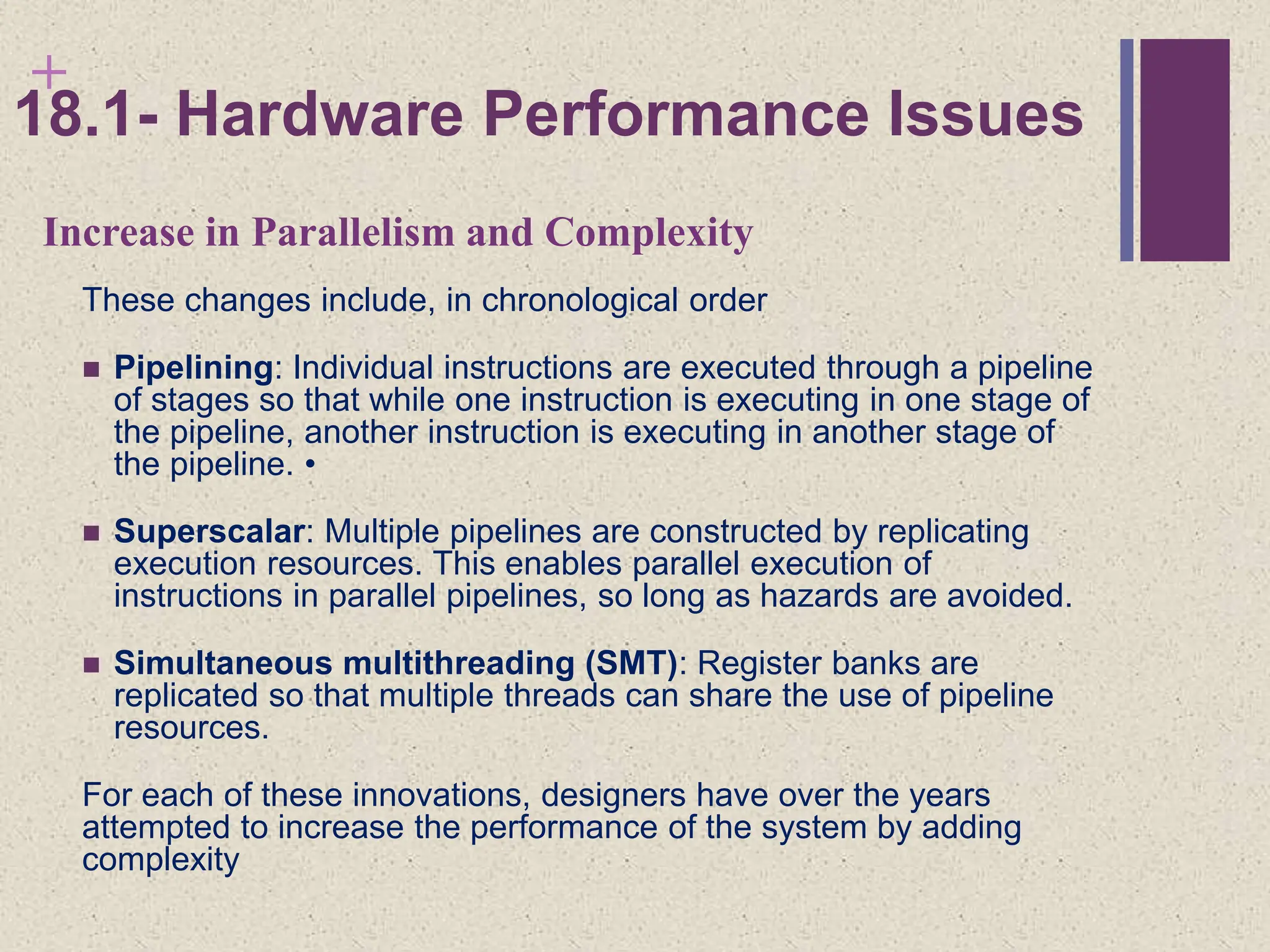
These changes include, in chronological order
 Pipelining: Individual instructions are executed through a pipeline
of stages so that while one instruction is executing in one stage of
the pipeline, another instruction is executing in another stage of
the pipeline. •
 Superscalar: Multiple pipelines are constructed by replicating
execution resources. This enables parallel execution of
instructions in parallel pipelines, so long as hazards are avoided.
 Simultaneous multithreading (SMT): Register banks are
replicated so that multiple threads can share the use of pipeline
resources.
For each of these innovations, designers have over the years
attempted to increase the performance of the system by adding
complexity
Increase in Parallelism and Complexity
+
Alternative Chip
Organization
SMT: Simultaneous multithreading
There is a practical limit to how
far this trend can be taken,
because with more stages, there
is the need for more logic, more
interconnections, and more
control signals
+
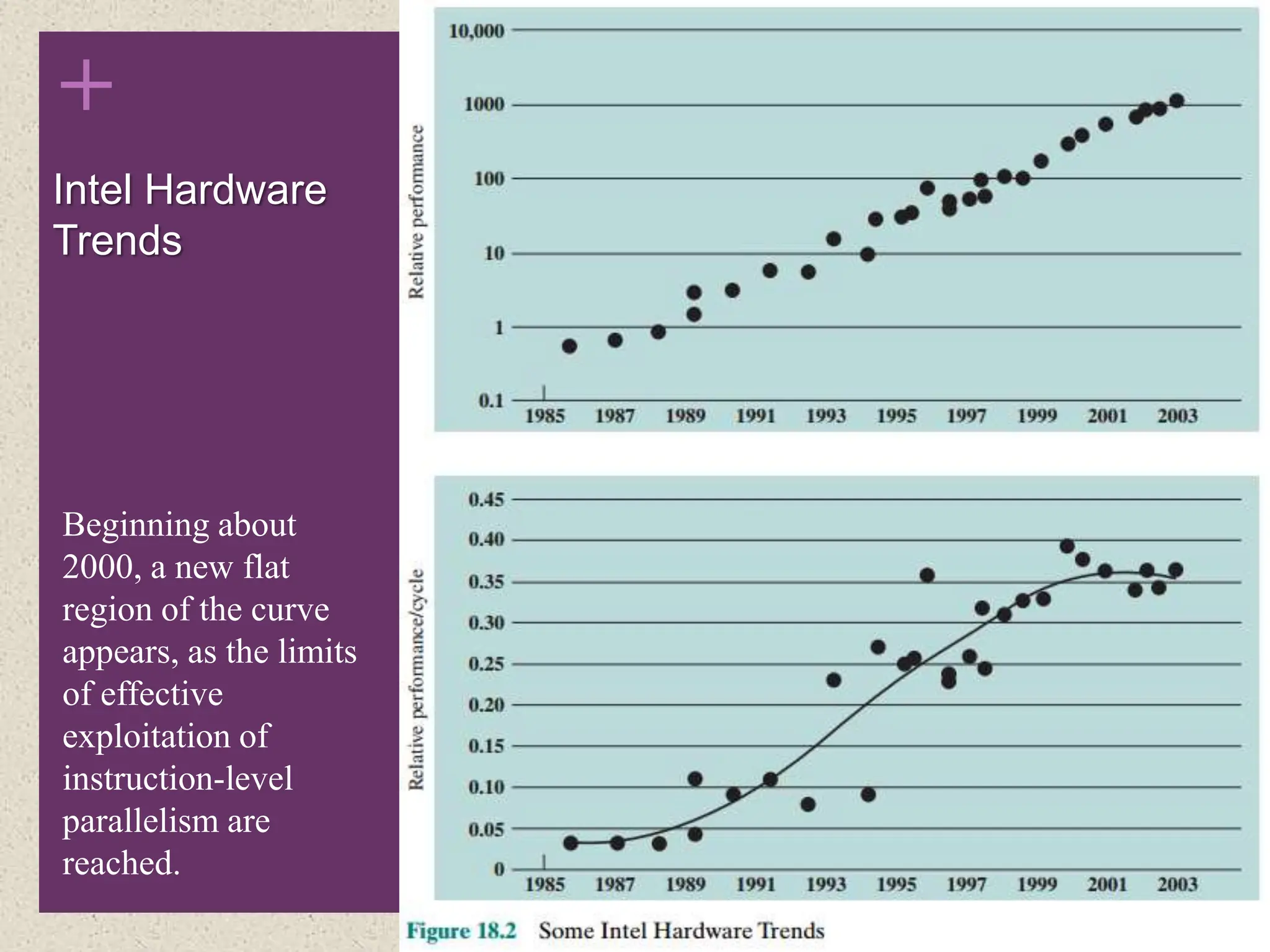
Intel Hardware
Trends
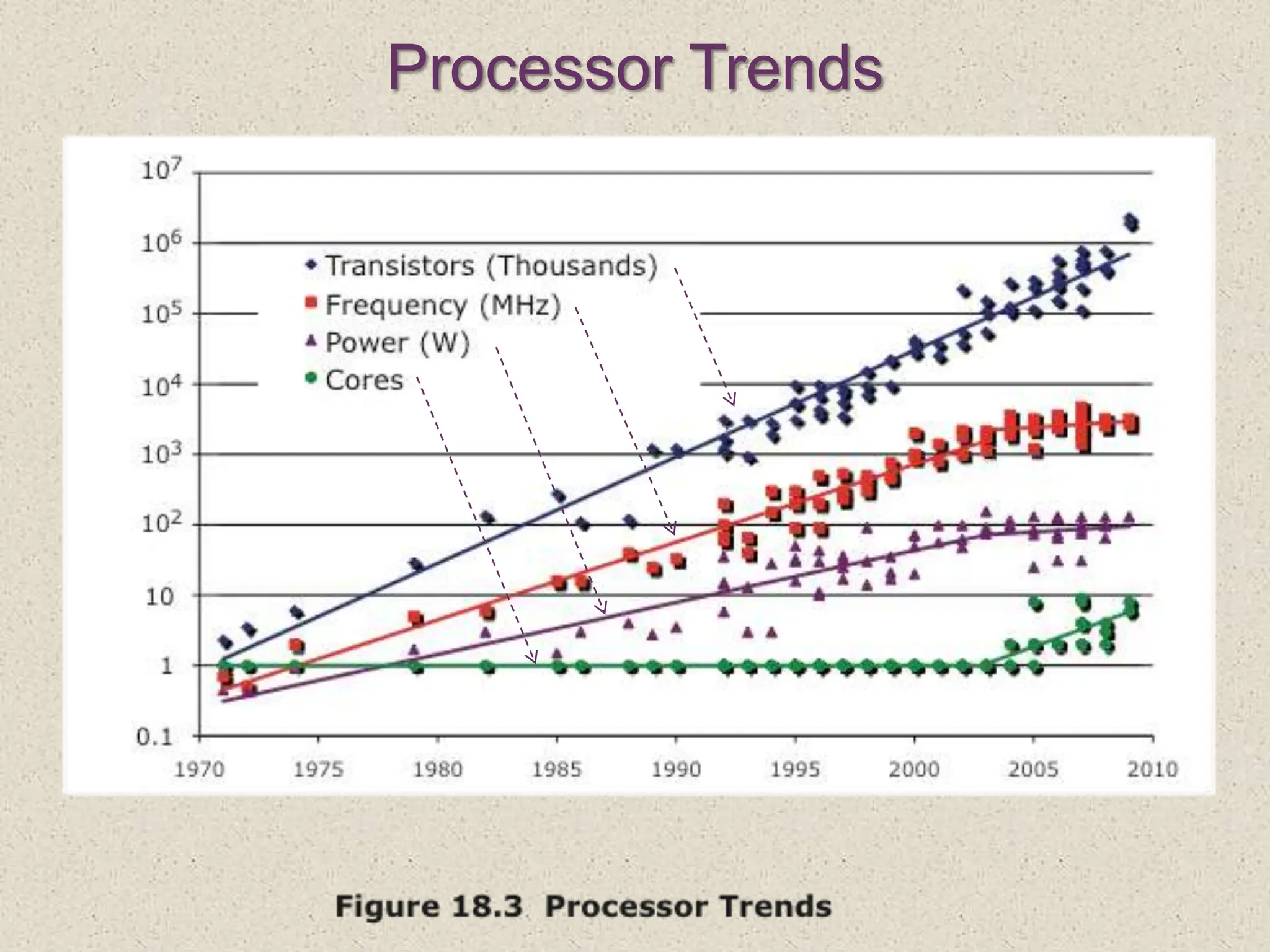
Beginning about
2000, a new flat
region of the curve
appears, as the limits
of effective
exploitation of
instruction-level
parallelism are
reached.
Processor Trends
+
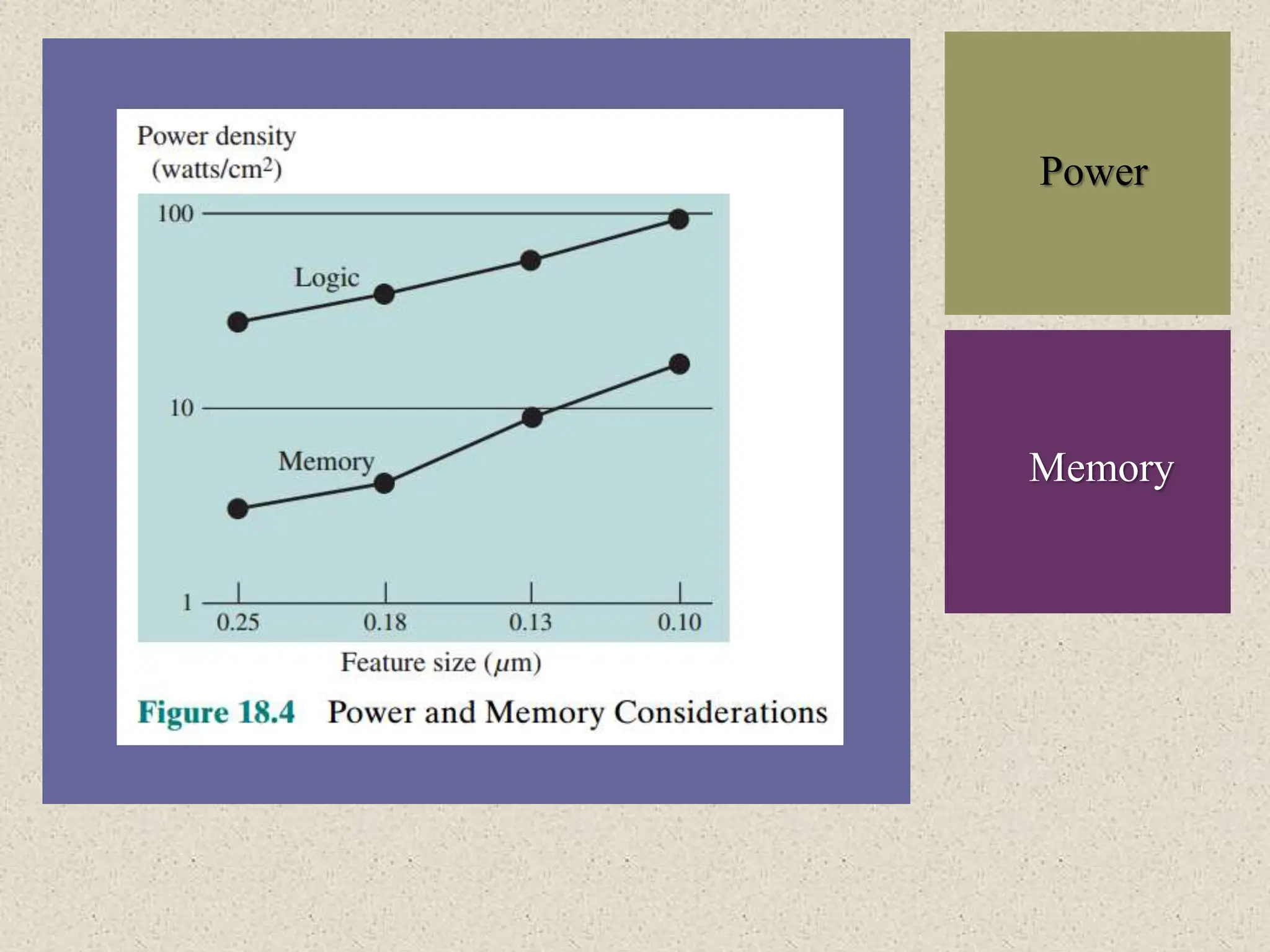
Power
Memory
+ Power Consumption
 By 2015 we can expect to see microprocessor chips
with about 100 billion transistors on a 300 mm2 die
(base)
 Assuming that about 50-60% of the chip area is
devoted to memory, the chip will support cache
memory of about 100 MB and leave over 1 billion
transistors available for logic
 How to use all those logic transistors is a key design
issue
 Pollack’s Rule
 States that performance increase is roughly proportional to
square root of increase in complexity
+
18.2- Software
Performance
Issues
Performance
Effect of
Multiple Cores
Amdahl’s law
f: frequency, N: number of CPU
f
f
Scaling of Database Workloads on Multiple-Processor hardware
Database management
systems and database
applications are one area in
which multicore systems can
be used effectively. Many
kinds of servers can also
effectively use the parallel
multicore organization,
because servers typically
handle numerous relatively
independent transactions in
parallel.
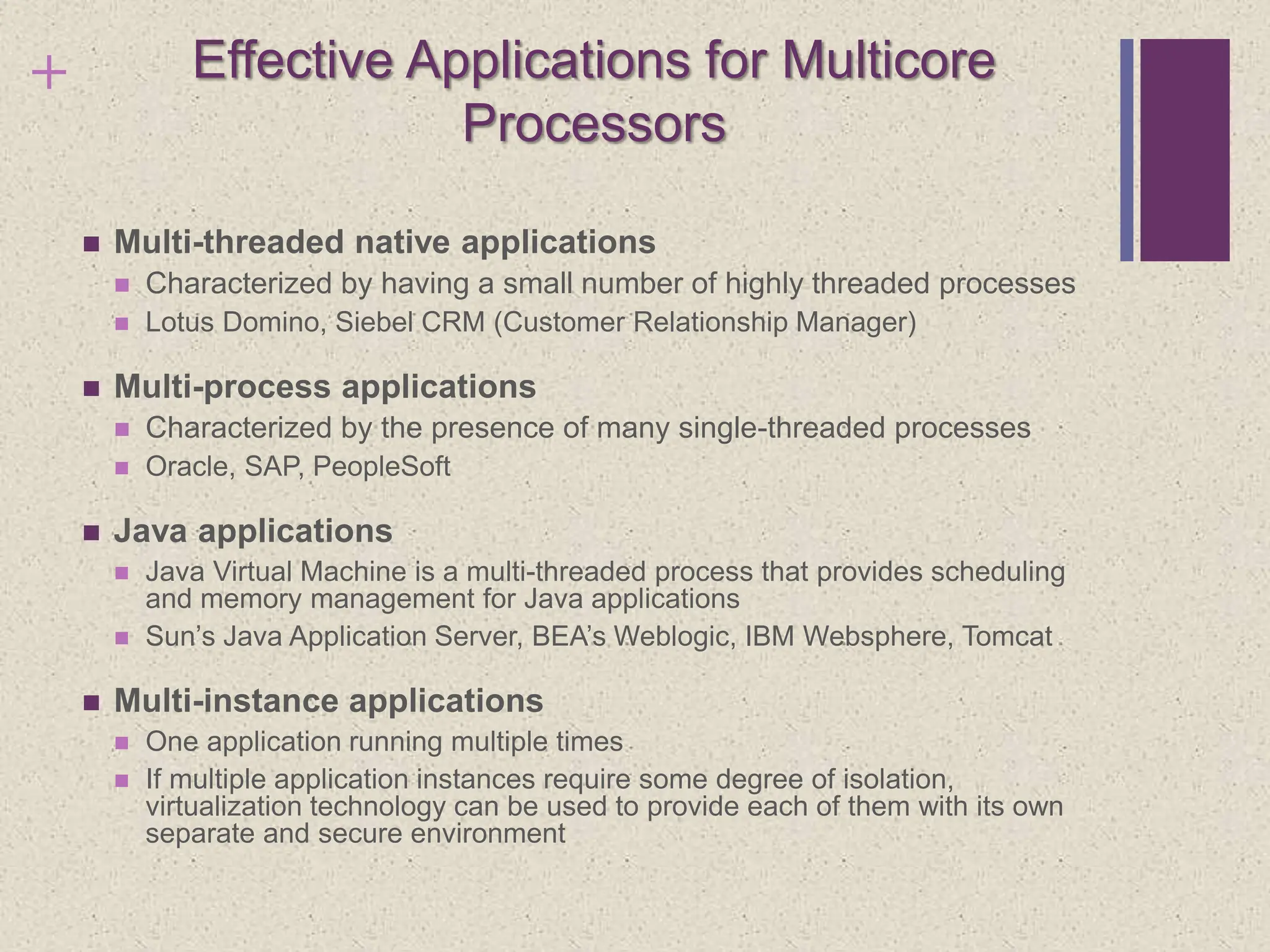
+ Effective Applications for Multicore
Processors
 Multi-threaded native applications
 Characterized by having a small number of highly threaded processes
 Lotus Domino, Siebel CRM (Customer Relationship Manager)
 Multi-process applications
 Characterized by the presence of many single-threaded processes
 Oracle, SAP, PeopleSoft
 Java applications
 Java Virtual Machine is a multi-threaded process that provides scheduling
and memory management for Java applications
 Sun’s Java Application Server, BEA’s Weblogic, IBM Websphere, Tomcat
 Multi-instance applications
 One application running multiple times
 If multiple application instances require some degree of isolation,
virtualization technology can be used to provide each of them with its own
separate and secure environment
+
18.3- Multicore Organization
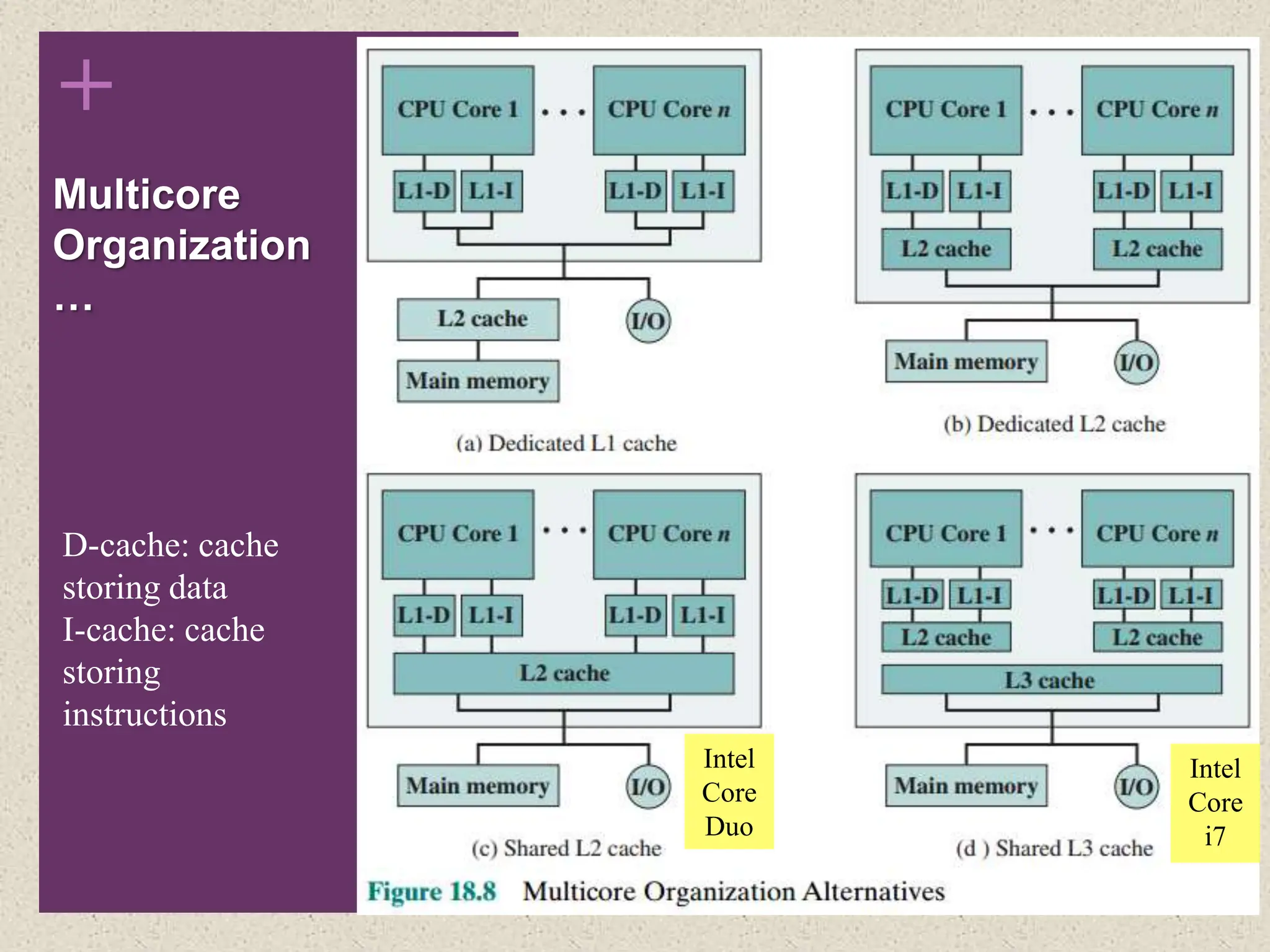
At a top level of description, the main variables in a
multicore organization are as follows:
 The number of core processors on the chip
 The number of levels of cache memory
 The amount of cache memory that is shared
+
Multicore
Organization
…
Intel
Core
Duo
Intel
Core
i7
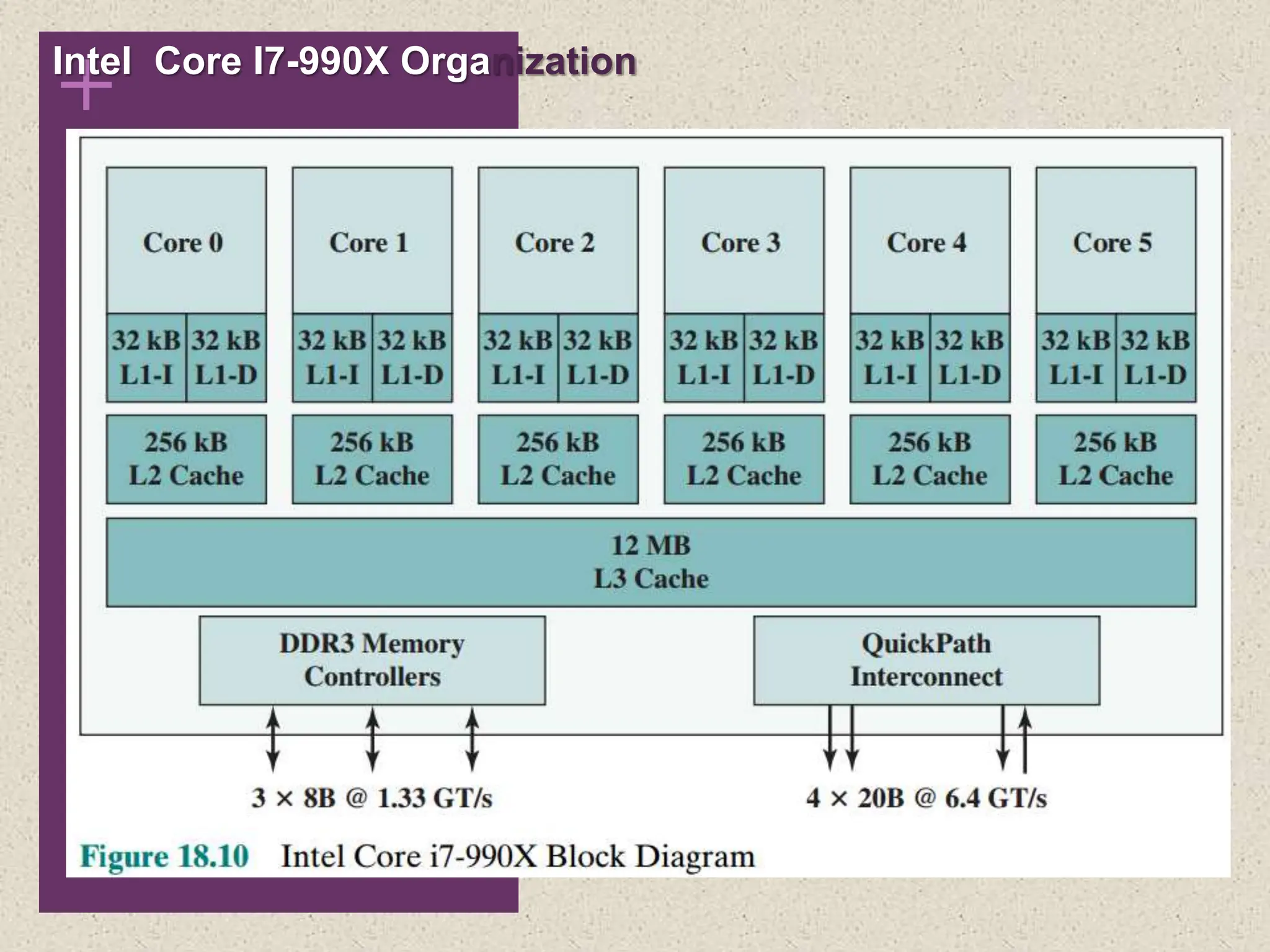
D-cache: cache
storing data
I-cache: cache
storing
instructions
+
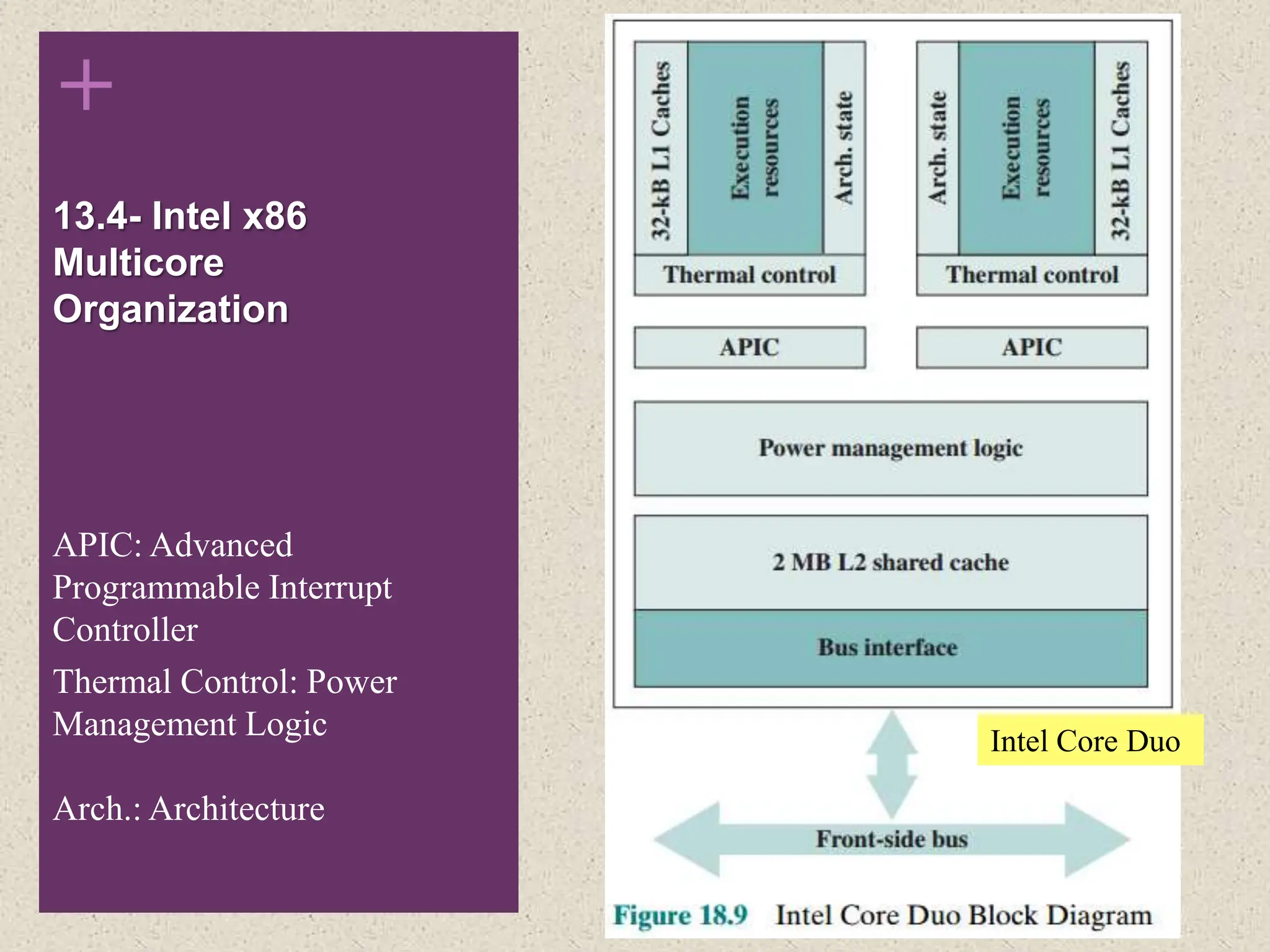
13.4- Intel x86
Multicore
Organization
APIC: Advanced
Programmable Interrupt
Controller
Thermal Control: Power
Management Logic
Arch.: Architecture
Intel Core Duo
+
Intel Core I7-990X Organization
+
Exercises
 18.1 Summarize the differences among simple instruction
pipelining, superscalar, and simultaneous multithreading.
 18.2 Give several reasons for the choice by designers to move
to a multicore organization rather than increase parallelism
within a single processor.
 18.3 Why is there a trend toward giving an increasing fraction
of chip area to cache memory?
 18.5 At a top level, what are the main design variables in a
multicore organization?
 18.6 List some advantages of a shared L2 cache among cores
compared to separate dedicated L2 caches for each core.
+ Summary
 Hardware performance issues
 Increase in parallelism and
complexity
 Power consumption
 Software performance issues
 Software on multicore
 Multicore organization
 Intel x86 multicore organization
 Intel Core Duo
 Intel Core i7-990X
Chapter 18
Multicore
Computers

Slot29-CH18-MultiCoreComputers-18-slides (1).pptx

  • 1.
  • 2.
    Objectives  A multicorecomputer, also known as a chip multiprocessor, combines two or more processors (called cores) on a single piece of silicon (called a die- khuôn mẫu). Typically, each core consists of all of the components of an independent processor, such as registers, ALU, pipeline hardware, and control unit, plus L1 instruction and data caches. In addition to the multiple cores, contemporary multicore chips also include L2 cache and, increasingly, L3 cache.  Your computer is a multicore computer. Do you want to know about it?  After studying this chapter, you should be able to:  Understand the hardware performance issues that have driven the move to multicore computers.  Understand the software performance issues posed by the use of multithreaded multicore computers.  Have an appreciation of the use of multicore organization on embedded systems, PCs and servers, and mainframes.
  • 3.
    Contents 18.1 Hardware PerformanceIssues 18.2 Software Performance Issues 18.3 Multicore Organization 18.4- Introduction to Intel x86 Multicore Organization
  • 4.
    + 18.1- Hardware PerformanceIssues These changes include, in chronological order  Pipelining: Individual instructions are executed through a pipeline of stages so that while one instruction is executing in one stage of the pipeline, another instruction is executing in another stage of the pipeline. •  Superscalar: Multiple pipelines are constructed by replicating execution resources. This enables parallel execution of instructions in parallel pipelines, so long as hazards are avoided.  Simultaneous multithreading (SMT): Register banks are replicated so that multiple threads can share the use of pipeline resources. For each of these innovations, designers have over the years attempted to increase the performance of the system by adding complexity Increase in Parallelism and Complexity
  • 5.
    + Alternative Chip Organization SMT: Simultaneousmultithreading There is a practical limit to how far this trend can be taken, because with more stages, there is the need for more logic, more interconnections, and more control signals
  • 6.
    + Intel Hardware Trends Beginning about 2000,a new flat region of the curve appears, as the limits of effective exploitation of instruction-level parallelism are reached.
  • 7.
  • 8.
  • 9.
    + Power Consumption By 2015 we can expect to see microprocessor chips with about 100 billion transistors on a 300 mm2 die (base)  Assuming that about 50-60% of the chip area is devoted to memory, the chip will support cache memory of about 100 MB and leave over 1 billion transistors available for logic  How to use all those logic transistors is a key design issue  Pollack’s Rule  States that performance increase is roughly proportional to square root of increase in complexity
  • 10.
    + 18.2- Software Performance Issues Performance Effect of MultipleCores Amdahl’s law f: frequency, N: number of CPU f f
  • 11.
    Scaling of DatabaseWorkloads on Multiple-Processor hardware Database management systems and database applications are one area in which multicore systems can be used effectively. Many kinds of servers can also effectively use the parallel multicore organization, because servers typically handle numerous relatively independent transactions in parallel.
  • 12.
    + Effective Applicationsfor Multicore Processors  Multi-threaded native applications  Characterized by having a small number of highly threaded processes  Lotus Domino, Siebel CRM (Customer Relationship Manager)  Multi-process applications  Characterized by the presence of many single-threaded processes  Oracle, SAP, PeopleSoft  Java applications  Java Virtual Machine is a multi-threaded process that provides scheduling and memory management for Java applications  Sun’s Java Application Server, BEA’s Weblogic, IBM Websphere, Tomcat  Multi-instance applications  One application running multiple times  If multiple application instances require some degree of isolation, virtualization technology can be used to provide each of them with its own separate and secure environment
  • 13.
    + 18.3- Multicore Organization Ata top level of description, the main variables in a multicore organization are as follows:  The number of core processors on the chip  The number of levels of cache memory  The amount of cache memory that is shared
  • 14.
  • 15.
    + 13.4- Intel x86 Multicore Organization APIC:Advanced Programmable Interrupt Controller Thermal Control: Power Management Logic Arch.: Architecture Intel Core Duo
  • 16.
  • 17.
    + Exercises  18.1 Summarizethe differences among simple instruction pipelining, superscalar, and simultaneous multithreading.  18.2 Give several reasons for the choice by designers to move to a multicore organization rather than increase parallelism within a single processor.  18.3 Why is there a trend toward giving an increasing fraction of chip area to cache memory?  18.5 At a top level, what are the main design variables in a multicore organization?  18.6 List some advantages of a shared L2 cache among cores compared to separate dedicated L2 caches for each core.
  • 18.
    + Summary  Hardwareperformance issues  Increase in parallelism and complexity  Power consumption  Software performance issues  Software on multicore  Multicore organization  Intel x86 multicore organization  Intel Core Duo  Intel Core i7-990X Chapter 18 Multicore Computers