APPENDICULAR SKELETON
Boon college
THE PECTORAL GIRDLE
• The pectoral girdle, or
shoulder girdle, consists of a
1. clavicle anteriorly and
2. a scapula posteriorly
Clavicles
• Also known as collar bone
Scapulae
• The scapulae, or shoulder blades, are thin, triangular flat bones
located on the dorsal surface of the ribcage,
THE UPPER LIMB
• They are grouped into bones of the :
1. Arm: between the shoulder and elbow only
2. Forearm: between the elbow and the wrist
3. hand:
ARM
• humerus is the only bone
of the arm.
Forearm
• are two parallel long
bones, the radius and
ulna. Ulna is longer
than the radius
Hand
• The skeleton of the hand includes:
1. the bones of the carpus, or wrist;
2. the bones of the metacarpus, or palm; and
3. the phalanges, or bones of the fingers
Carpus
• The carpus contains eight short bones.
• In the proximal row, from lateral (thumb side) to medial, are:
• scaphoid
• lunate
• triquetrum
• pisiform
• the distal row, from lateral to medial, are:
• the trapezium
• trapezoid ,
• capitate
• and hamate.
• Sally Left The Party To Take Carmen Home.
Metacarpus
• There are Five metacarpals bones
• are numbered I to V, from thumb to little finger.
Phalanges of the Fingers
• The digits, or fingers, are numbered I to V beginning with the thumb.
• With the exception of the thumb, each finger has three phalanges:
• proximal, middle, and distal
• The thumb has no middle phalanx.
THE PELVIC GIRDLE
• The pelvic girdle attaches the lower limbs to the spine and supports
the visceral organs of the pelvis.
• The pelvic girdle consists:
1. paired hip bones and the
2. sacrum (part of the axial skeleton).
• During childhood, it consists of three separate bones:
1. ilium,
2. ischium, and
3. Pubis
• In adults, these bones are fused.
THE LOWER LIMB
• The lower limbs carry the entire weight of the erect body and
experience strong forces when we jump or run.
• The three segments of the lower limb are the
1. thigh,
2. the leg, and
3. the foot
Thigh
• The femur is the single
bone of the thigh.
• It is the largest, longest,
strongest bone in the
body.
Leg
• part of the lower limb between the knee and the ankle.
• Two parallel bones, the tibia and fibula, form the skeleton of the leg
• The tibia, located medially, is more massive than fibula.
• The tibia articulates with the femur to form the knee joint,
• and with the talus bone of the foot at the ankle joint.
• The fibula does not contribute to the knee joint and merely helps
stabilize the ankle joint.
Foot
• The skeleton of the foot includes the
1. bones of the tarsus,
2. the bones of the metatarsus,
3. and the phalanges, or toe bones
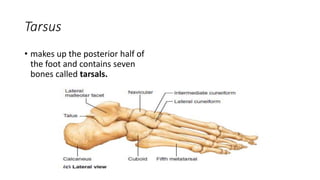
Tarsus
• makes up the posterior half of
the foot and contains seven
bones called tarsals.
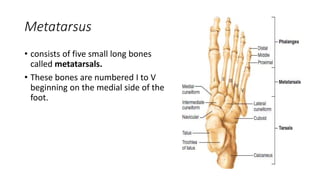
Metatarsus
• consists of five small long bones
called metatarsals.
• These bones are numbered I to V
beginning on the medial side of the
foot.
Phalanges of the Toes
• There are 14 phalanges of the toes.
• There are three phalanges in each digit except the great toe , which
has only two phalanges.
• named
1. proximal,
2. middle,
3. distal phalanges.
Joints
• where two or more bones meet to allow movement.
• Most common joints are:
• Glenohumeral joint(shoulder).
• Elbow joint.
• Wrist joint.
• Hip joint.
• Knee joint.
• Ankle joint
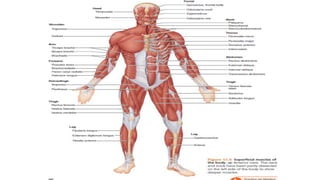
Muscle tissue
• composed of cells that have the special ability to shorten or contract
in order to produce movement of the body parts
• Types of Muscle Tissue
1. Skeletal Muscle Tissue
2. Cardiac Muscle Tissue
3. Smooth Muscle Tissue
Functions of Muscle Tissue
• Produce movement.
• Maintain posture and stabilize joints.
• Generate heat.
THANKS….

skeletel system part 2.pptx

  • 1.
  • 2.
    THE PECTORAL GIRDLE •The pectoral girdle, or shoulder girdle, consists of a 1. clavicle anteriorly and 2. a scapula posteriorly
  • 3.
  • 4.
    Scapulae • The scapulae,or shoulder blades, are thin, triangular flat bones located on the dorsal surface of the ribcage,
  • 5.
    THE UPPER LIMB •They are grouped into bones of the : 1. Arm: between the shoulder and elbow only 2. Forearm: between the elbow and the wrist 3. hand:
  • 6.
    ARM • humerus isthe only bone of the arm.
  • 7.
    Forearm • are twoparallel long bones, the radius and ulna. Ulna is longer than the radius
  • 8.
    Hand • The skeletonof the hand includes: 1. the bones of the carpus, or wrist; 2. the bones of the metacarpus, or palm; and 3. the phalanges, or bones of the fingers
  • 10.
    Carpus • The carpuscontains eight short bones. • In the proximal row, from lateral (thumb side) to medial, are: • scaphoid • lunate • triquetrum • pisiform
  • 11.
    • the distalrow, from lateral to medial, are: • the trapezium • trapezoid , • capitate • and hamate. • Sally Left The Party To Take Carmen Home.
  • 12.
    Metacarpus • There areFive metacarpals bones • are numbered I to V, from thumb to little finger. Phalanges of the Fingers • The digits, or fingers, are numbered I to V beginning with the thumb. • With the exception of the thumb, each finger has three phalanges: • proximal, middle, and distal • The thumb has no middle phalanx.
  • 13.
    THE PELVIC GIRDLE •The pelvic girdle attaches the lower limbs to the spine and supports the visceral organs of the pelvis. • The pelvic girdle consists: 1. paired hip bones and the 2. sacrum (part of the axial skeleton).
  • 14.
    • During childhood,it consists of three separate bones: 1. ilium, 2. ischium, and 3. Pubis • In adults, these bones are fused.
  • 17.
    THE LOWER LIMB •The lower limbs carry the entire weight of the erect body and experience strong forces when we jump or run. • The three segments of the lower limb are the 1. thigh, 2. the leg, and 3. the foot
  • 18.
    Thigh • The femuris the single bone of the thigh. • It is the largest, longest, strongest bone in the body.
  • 19.
    Leg • part ofthe lower limb between the knee and the ankle. • Two parallel bones, the tibia and fibula, form the skeleton of the leg • The tibia, located medially, is more massive than fibula. • The tibia articulates with the femur to form the knee joint, • and with the talus bone of the foot at the ankle joint. • The fibula does not contribute to the knee joint and merely helps stabilize the ankle joint.
  • 21.
    Foot • The skeletonof the foot includes the 1. bones of the tarsus, 2. the bones of the metatarsus, 3. and the phalanges, or toe bones
  • 22.
    Tarsus • makes upthe posterior half of the foot and contains seven bones called tarsals.
  • 23.
    Metatarsus • consists offive small long bones called metatarsals. • These bones are numbered I to V beginning on the medial side of the foot.
  • 24.
    Phalanges of theToes • There are 14 phalanges of the toes. • There are three phalanges in each digit except the great toe , which has only two phalanges. • named 1. proximal, 2. middle, 3. distal phalanges.
  • 25.
    Joints • where twoor more bones meet to allow movement. • Most common joints are: • Glenohumeral joint(shoulder). • Elbow joint. • Wrist joint. • Hip joint. • Knee joint. • Ankle joint
  • 26.
    Muscle tissue • composedof cells that have the special ability to shorten or contract in order to produce movement of the body parts • Types of Muscle Tissue 1. Skeletal Muscle Tissue 2. Cardiac Muscle Tissue 3. Smooth Muscle Tissue
  • 27.
    Functions of MuscleTissue • Produce movement. • Maintain posture and stabilize joints. • Generate heat.
  • 29.