SITUATIONALAND
PARTICIPATION
THEORY
VINAYAK KALLIMANI
ACHYUT HEGDE
GANAVI K Y
KARTHIK MOHAN
AGNEYA SHETTY
SAHANA. B. SHETTY 1
Presentation by
Introduction
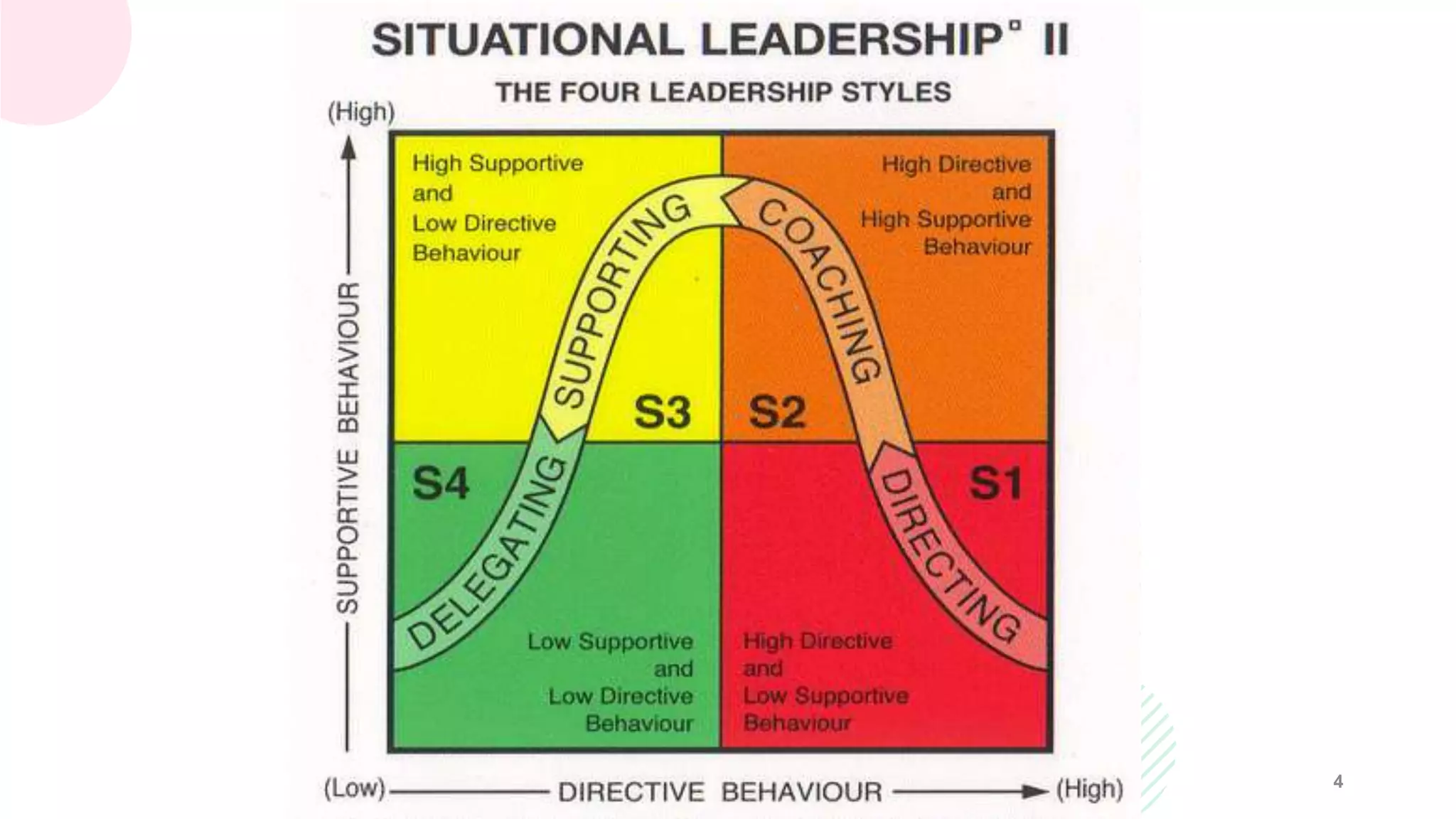
The situational theory of leadership suggests that no
single leadership style is best. Instead, it depends on which
type of leadership and strategies are best-suited to the task.
According to this theory, the most effective leaders are those
that are able to adapt their style to the situation and look at
cues such as the type of task, the nature of the group, and other
factors that might contribute to getting the job done.
2
SITUATIONAL LEADERSHIP THEORY
3
4
5
STRENGTHS OF SITUATIONAL LEADERSHIP
 Trainingleaders
 Practicalapproach
 Leadershipeffectiveness
 Flexible leadership
 Will also make the leader more respected & the
subordinatemorecommitted
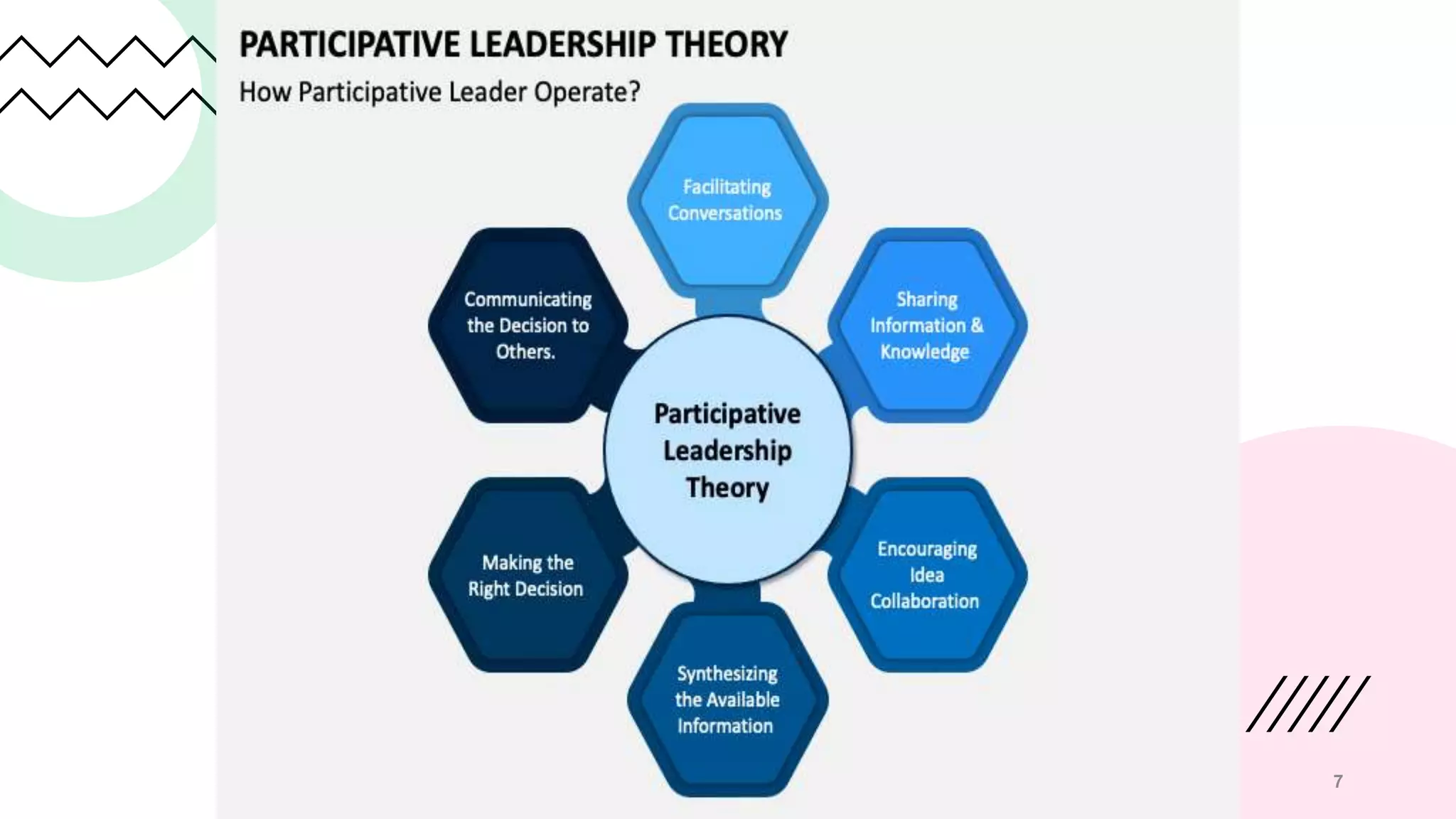
PARTICIPATIVE LEADERSHIP THEORY
6
Participative leadership theory is a leadership style that seeks input from every member of
the organization. Generally, the leader asks for thoughts and ideas from their team
members before makingdecisionsor establishing newprocesses andprocedures.
Participativeleadershipfollowsthisprocess
1.Theleaderfacilitates ameeting withtheteam.
2.The leader shares any necessary information and knowledge about the project or problem
tosolve.
3.Teammemberssharetheirideasandthoughts withthe group.
4.Thegroupprocesses allthe ideasandinformation.
5.Thegroupor groupleader makesadecision.
7
8
PROS AND CONS OF PARTICIPATIVE LEADERSHIP
Pros
• People feel valued
• Increased group morale
• Decreased
competitiveness
• People perform well even
leaders are absent
Cons
• Decision making
may take time
• High costs
• Inefficiency
• indecisiveness
2/1/20XX PRESENTATION TITLE 9
Conclusion
Today’s society is all about equality and this type of leadership
can appeal to the millennial as they do not want to be told
what to do all the time.
If used right, can be very effective. I believe a mix of the four
decision making types depending on the task at hand can be
most effective because participative leadership is not always
the most efficient.
T H A N K
Y O U
2/1/20XX PRESENTATION TITLE 10

SITUATIONAL AND PARTICIPATION THEORY.pptx

  • 1.
    SITUATIONALAND PARTICIPATION THEORY VINAYAK KALLIMANI ACHYUT HEGDE GANAVIK Y KARTHIK MOHAN AGNEYA SHETTY SAHANA. B. SHETTY 1 Presentation by
  • 2.
    Introduction The situational theoryof leadership suggests that no single leadership style is best. Instead, it depends on which type of leadership and strategies are best-suited to the task. According to this theory, the most effective leaders are those that are able to adapt their style to the situation and look at cues such as the type of task, the nature of the group, and other factors that might contribute to getting the job done. 2 SITUATIONAL LEADERSHIP THEORY
  • 3.
  • 4.
  • 5.
    5 STRENGTHS OF SITUATIONALLEADERSHIP  Trainingleaders  Practicalapproach  Leadershipeffectiveness  Flexible leadership  Will also make the leader more respected & the subordinatemorecommitted
  • 6.
    PARTICIPATIVE LEADERSHIP THEORY 6 Participativeleadership theory is a leadership style that seeks input from every member of the organization. Generally, the leader asks for thoughts and ideas from their team members before makingdecisionsor establishing newprocesses andprocedures. Participativeleadershipfollowsthisprocess 1.Theleaderfacilitates ameeting withtheteam. 2.The leader shares any necessary information and knowledge about the project or problem tosolve. 3.Teammemberssharetheirideasandthoughts withthe group. 4.Thegroupprocesses allthe ideasandinformation. 5.Thegroupor groupleader makesadecision.
  • 7.
  • 8.
    8 PROS AND CONSOF PARTICIPATIVE LEADERSHIP Pros • People feel valued • Increased group morale • Decreased competitiveness • People perform well even leaders are absent Cons • Decision making may take time • High costs • Inefficiency • indecisiveness
  • 9.
    2/1/20XX PRESENTATION TITLE9 Conclusion Today’s society is all about equality and this type of leadership can appeal to the millennial as they do not want to be told what to do all the time. If used right, can be very effective. I believe a mix of the four decision making types depending on the task at hand can be most effective because participative leadership is not always the most efficient.
  • 10.
    T H AN K Y O U 2/1/20XX PRESENTATION TITLE 10