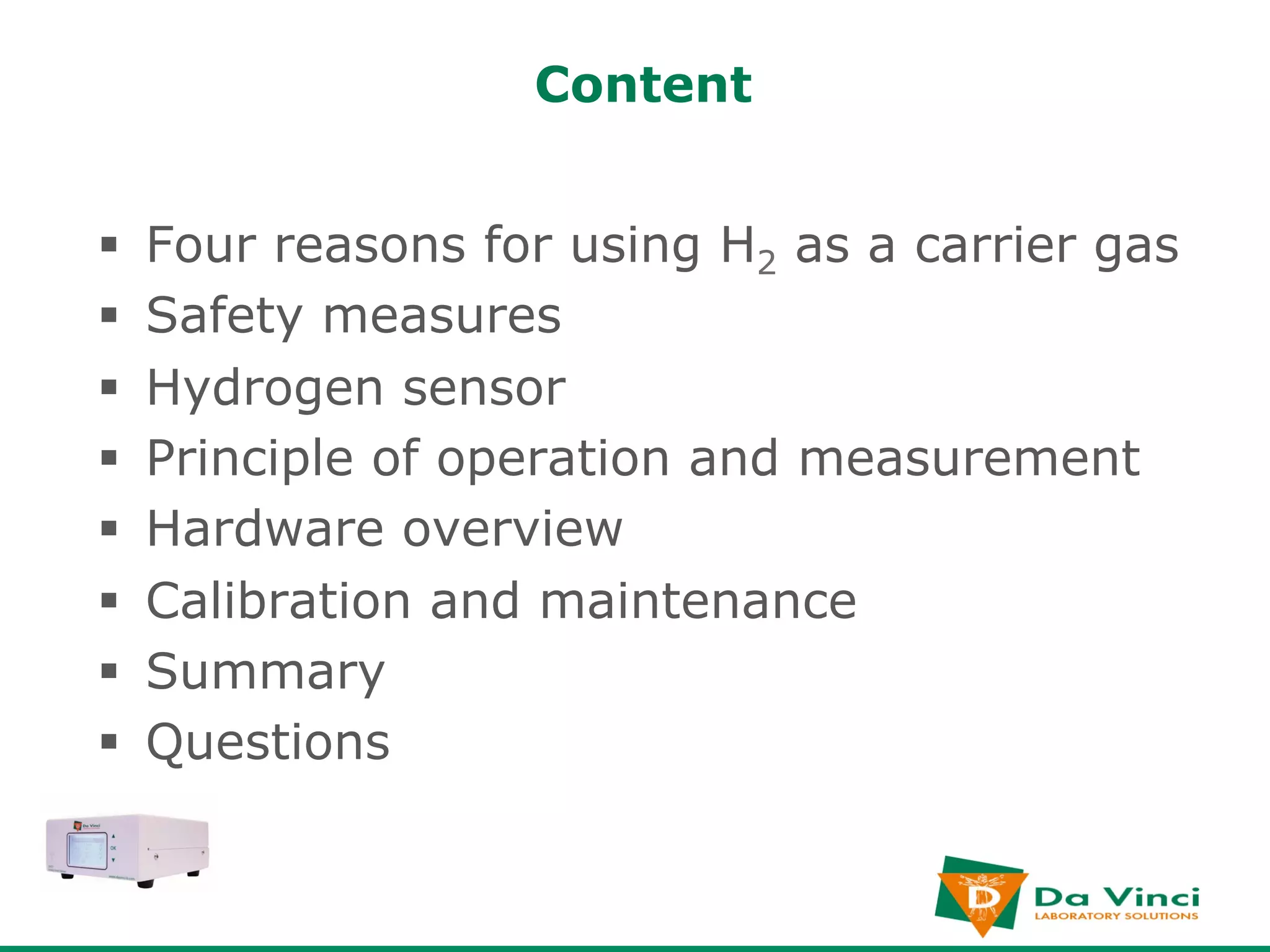
Simply Smart: The Hydrogen Sensor for
      Chromatographic Systems


   The DVLS3 Simply Smart Hydrogen Sensor

                                  www.davinci-ls.com
Content


§    Four reasons for using H2 as a carrier gas
§    Safety measures
§    Hydrogen sensor
§    Principle of operation and measurement
§    Hardware overview
§    Calibration and maintenance
§    Summary
§    Questions
Reasons for using H2 as a Carrier Gas


1.       Fast Analysis:
      §  Fast diffusion rate; 4 times
          faster than N2
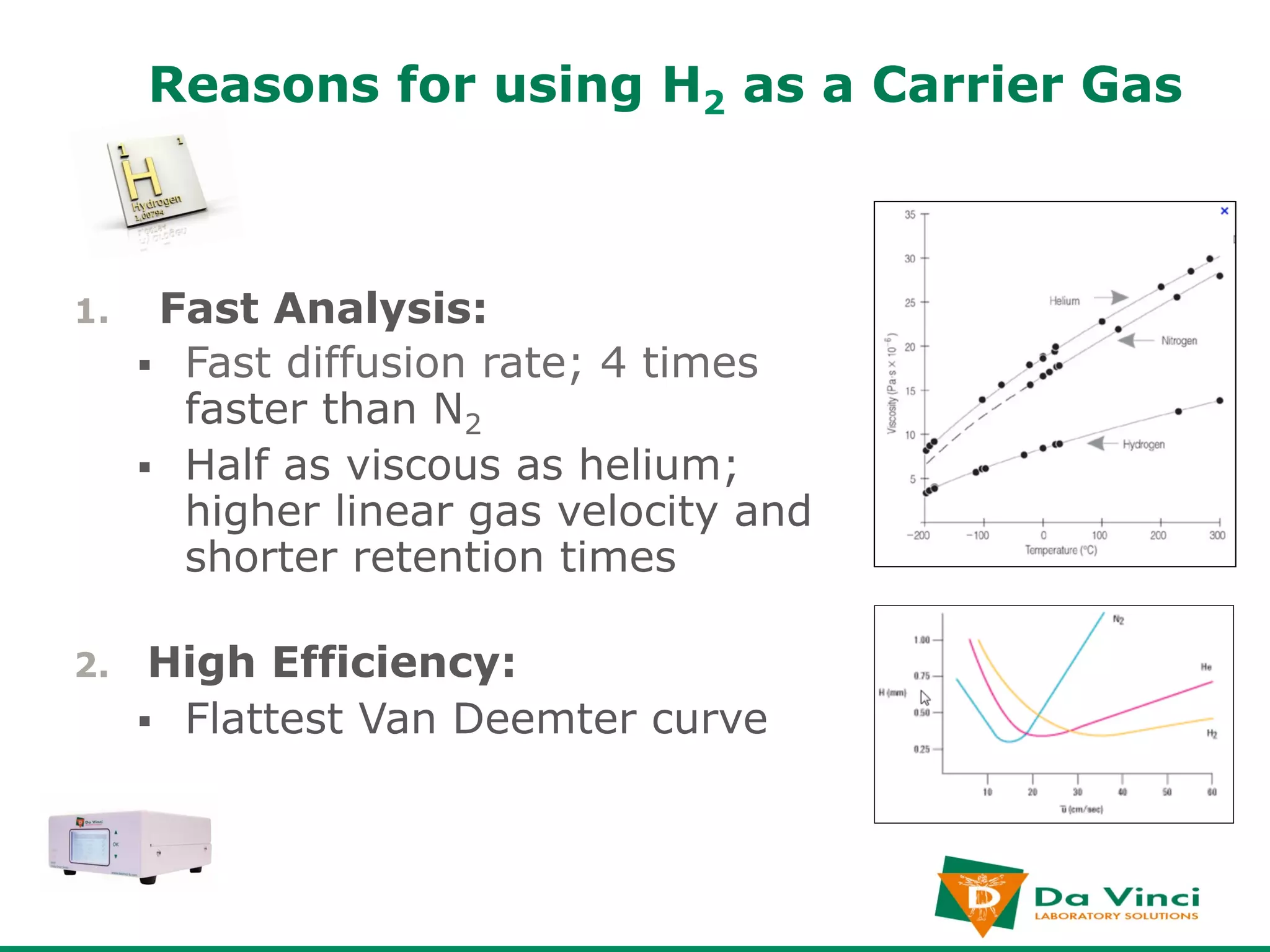
      §  Half as viscous as helium;
          higher linear gas velocity and
          shorter retention times

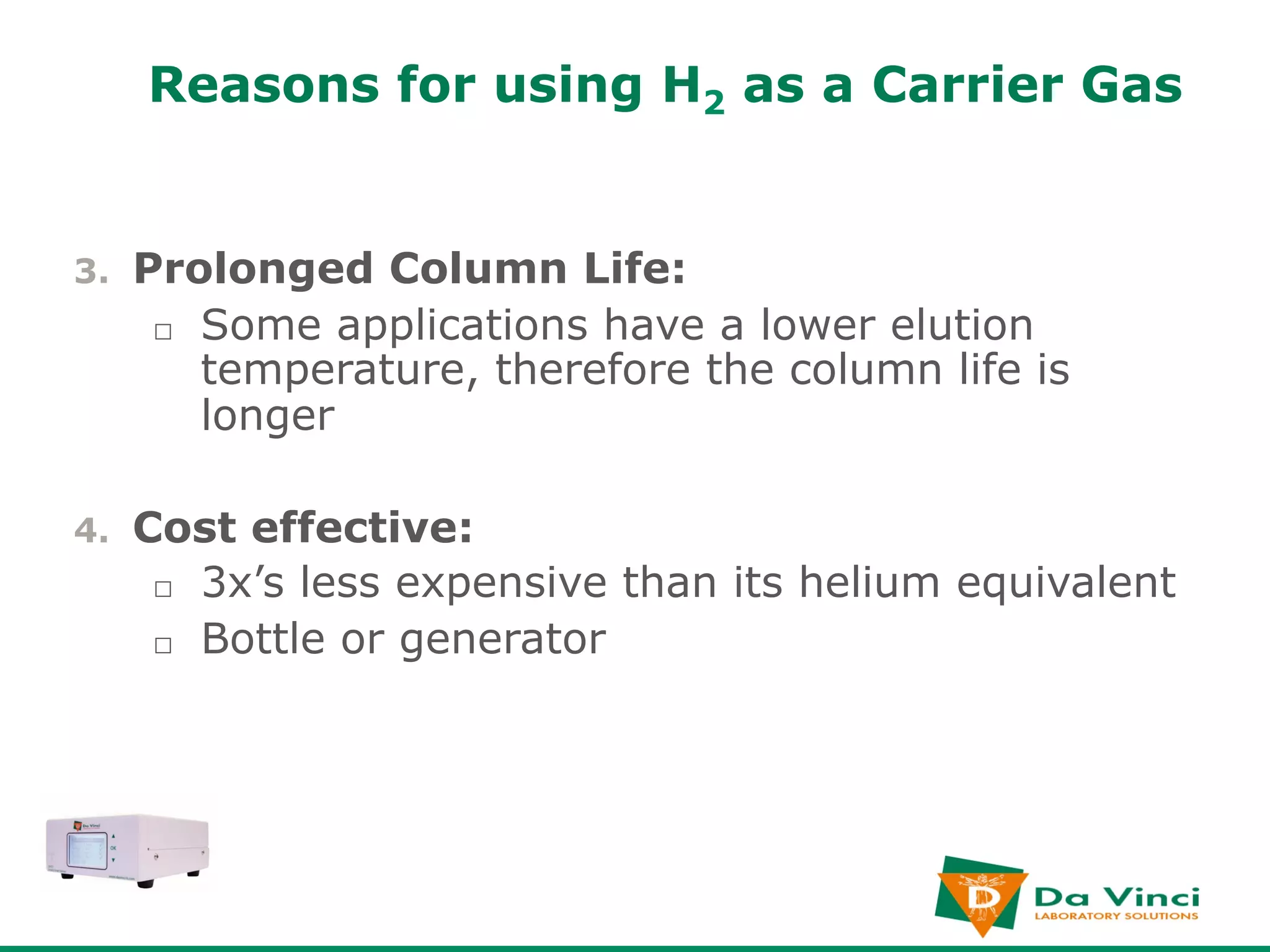
2.     High Efficiency:
      §  Flattest Van Deemter curve
Reasons for using H2 as a Carrier Gas


3.    Prolonged Column Life:
       □  Some applications have a lower elution
          temperature, therefore the column life is
          longer

4.    Cost effective:
       □  3x’s less expensive than its helium equivalent
       □  Bottle or generator
Reluctant to use H2 as a Carrier Gas?


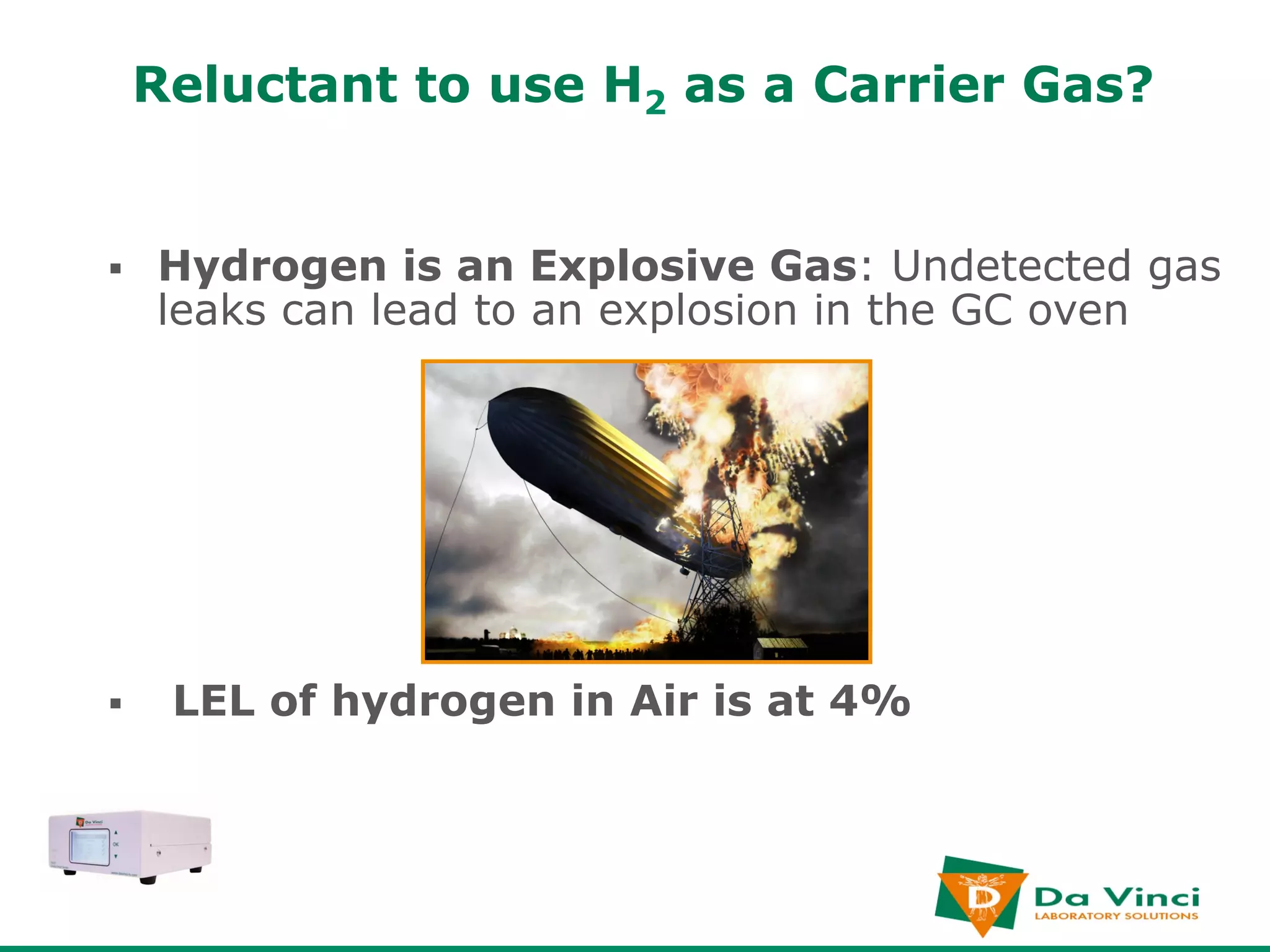
§    Hydrogen is an Explosive Gas: Undetected gas
      leaks can lead to an explosion in the GC oven


§     LEL of hydrogen in Air is at 4%
Safety measures
§  Monitor hydrogen usage
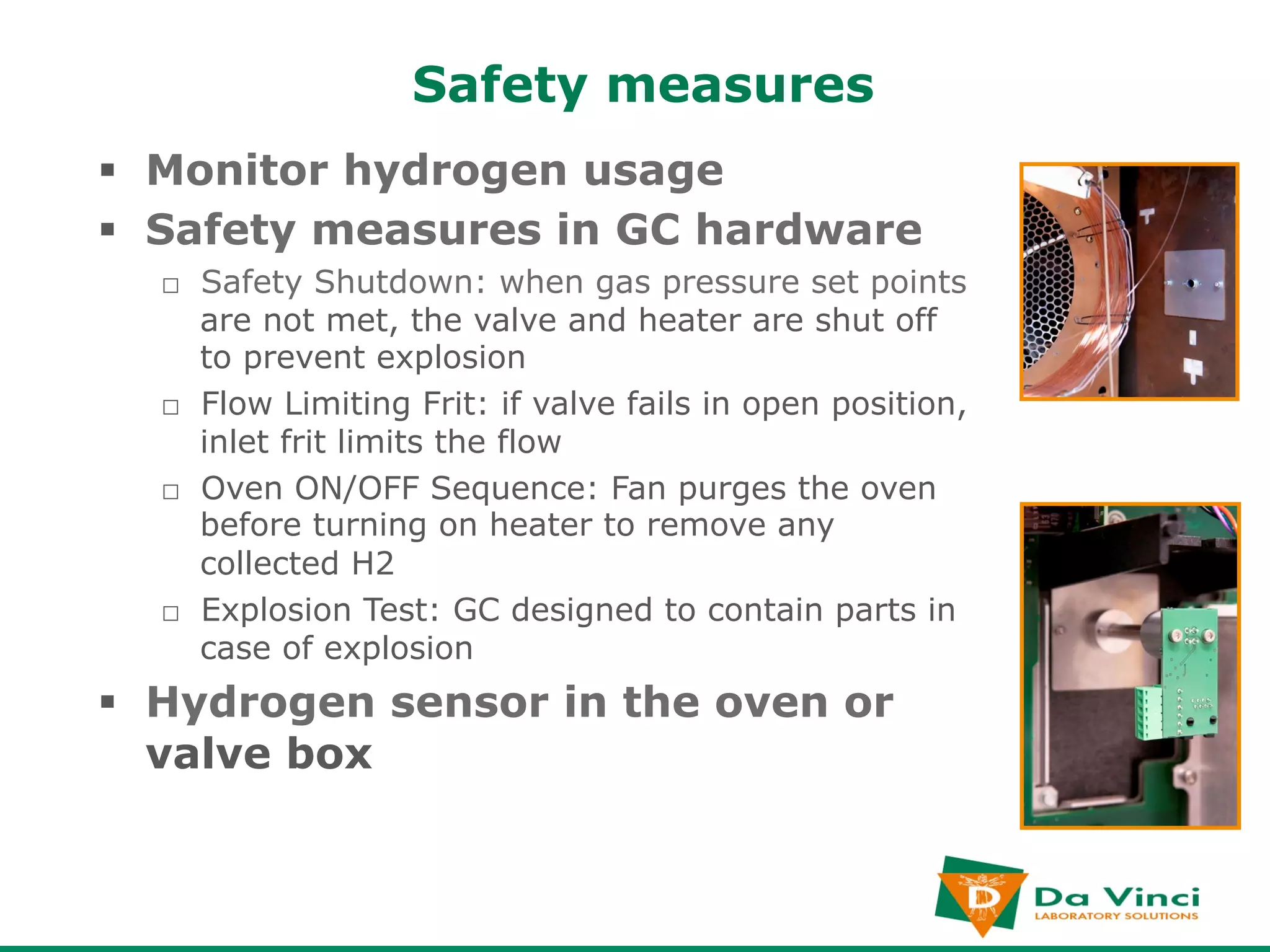
§  Safety measures in GC hardware
  □  Safety Shutdown: when gas pressure set points
     are not met, the valve and heater are shut off
     to prevent explosion
  □  Flow Limiting Frit: if valve fails in open position,
     inlet frit limits the flow
  □  Oven ON/OFF Sequence: Fan purges the oven
     before turning on heater to remove any
     collected H2
  □  Explosion Test: GC designed to contain parts in
     case of explosion
§  Hydrogen sensor in the oven or
    valve box
Principle of Operation
               Hydrogen Sensor

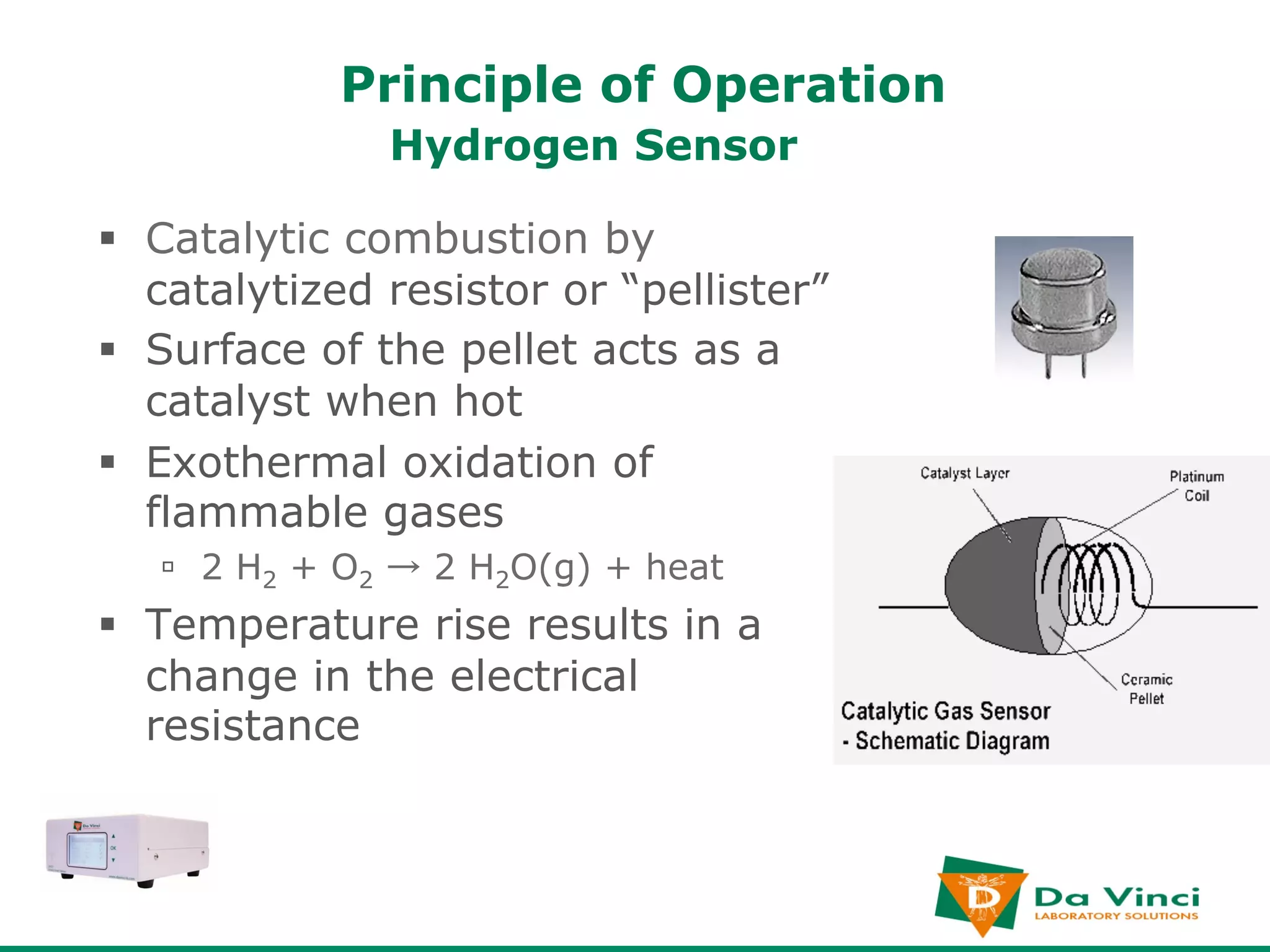
§  Catalytic combustion by
    catalytized resistor or “pellister”
§  Surface of the pellet acts as a
    catalyst when hot
§  Exothermal oxidation of
    flammable gases
   ú  2 H2 + O2 → 2 H2O(g) + heat
§  Temperature rise results in a
    change in the electrical
    resistance
Principle of Measurement
                         Hydrogen Sensor
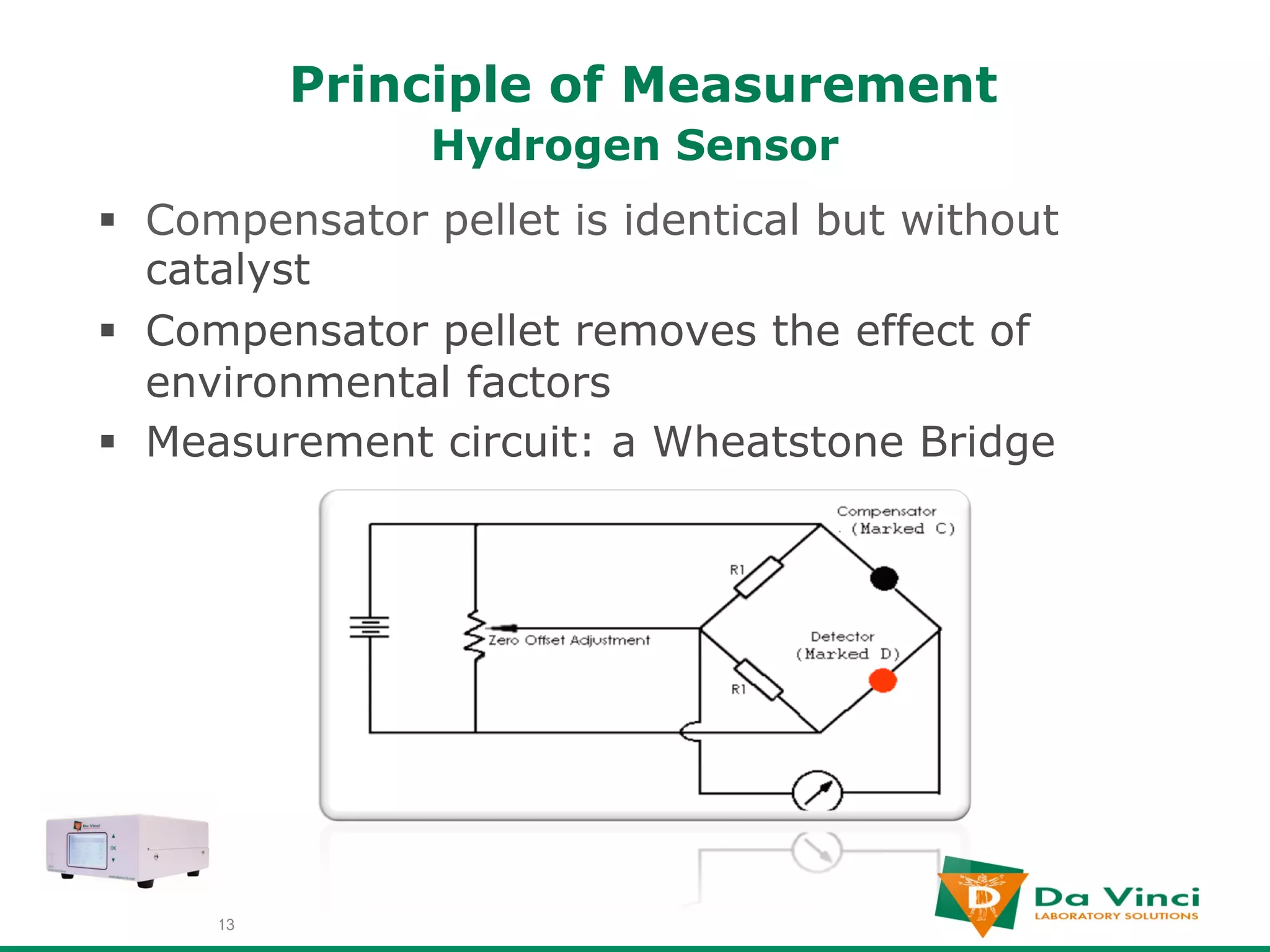
    §  Compensator pellet is identical but without
        catalyst
    §  Compensator pellet removes the effect of
        environmental factors
    §  Measurement circuit: a Wheatstone Bridge


8    13 March 2013
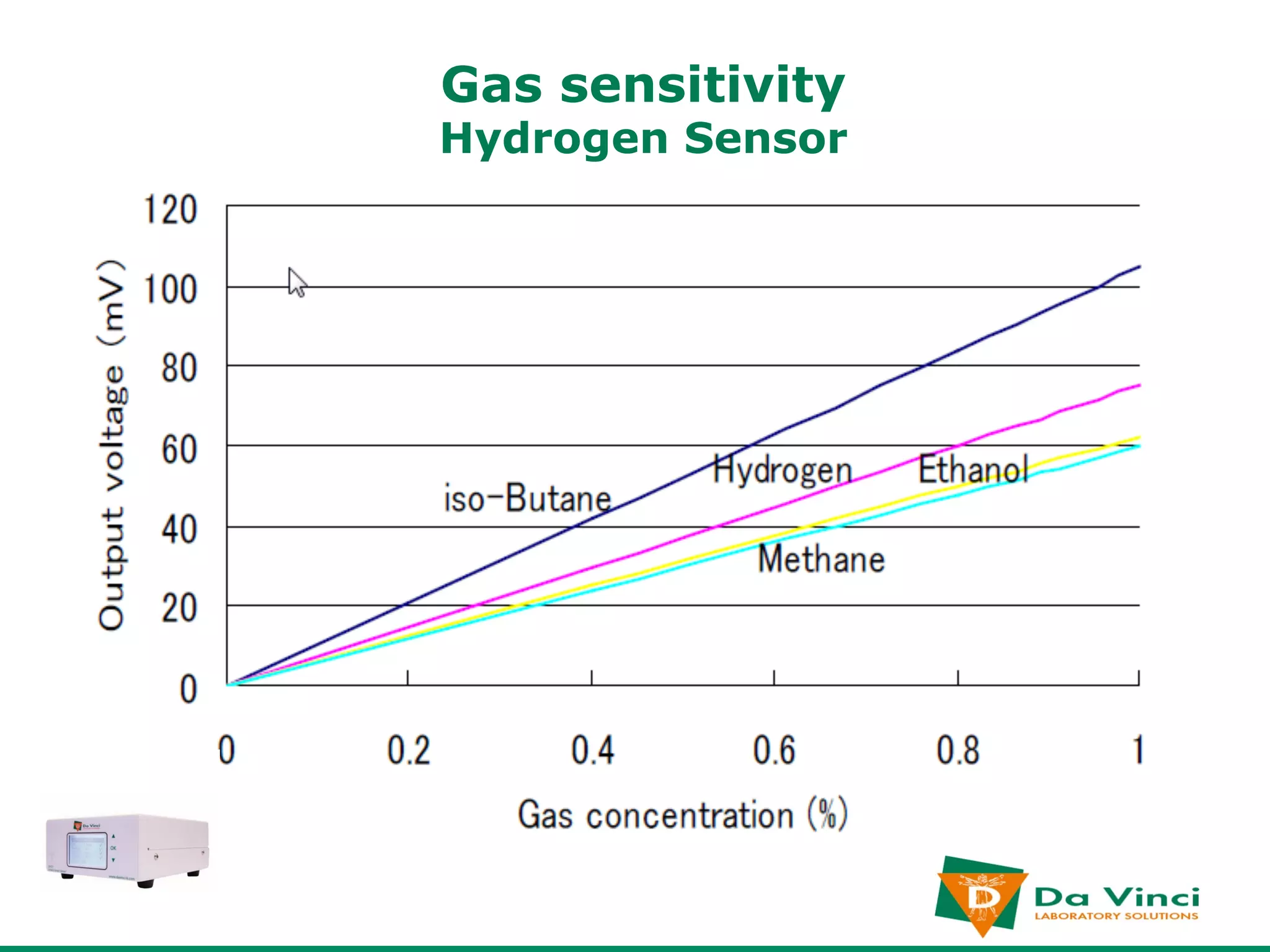
Gas sensitivity
Hydrogen Sensor
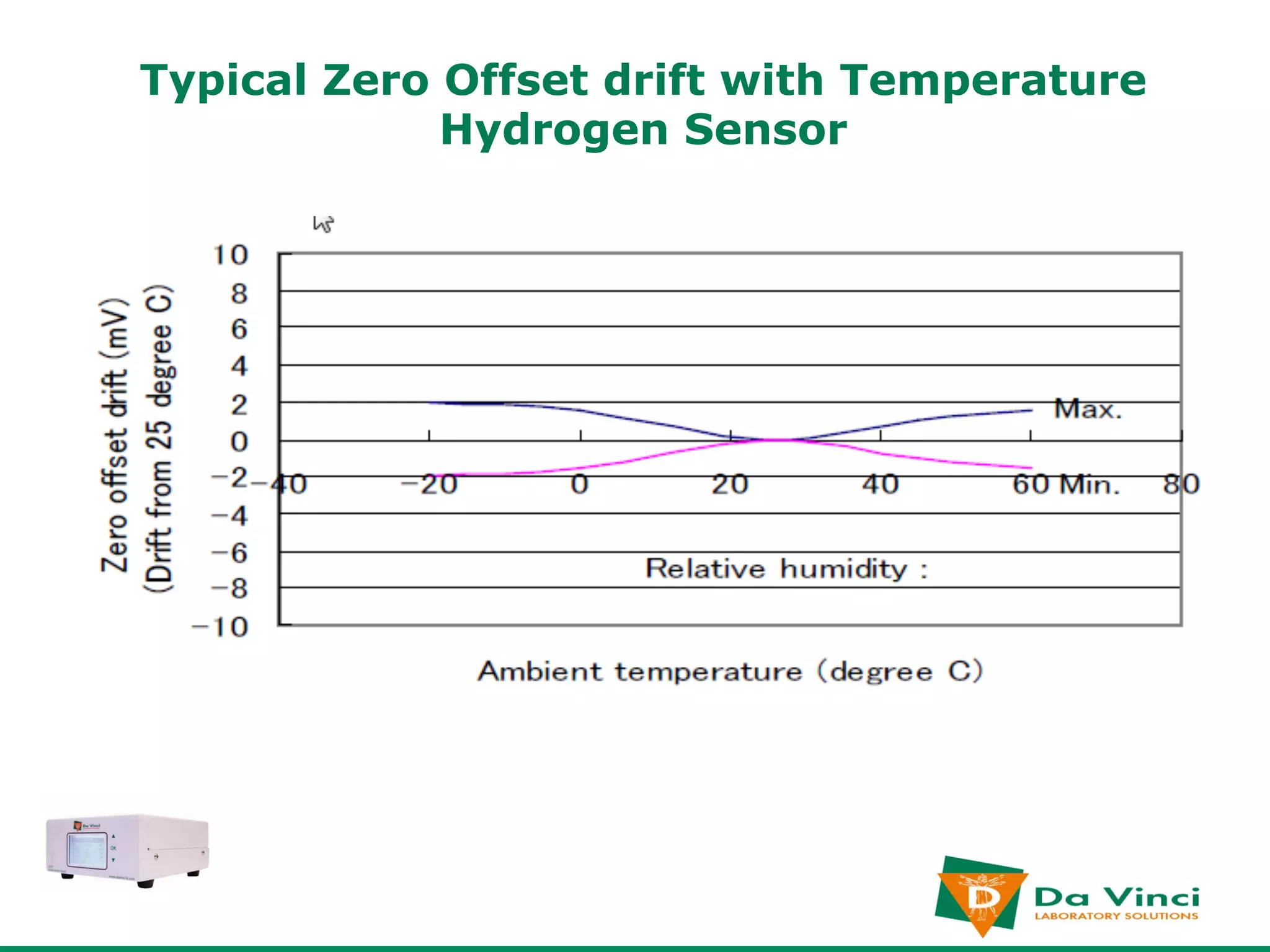
Typical Zero Offset drift with Temperature
             Hydrogen Sensor
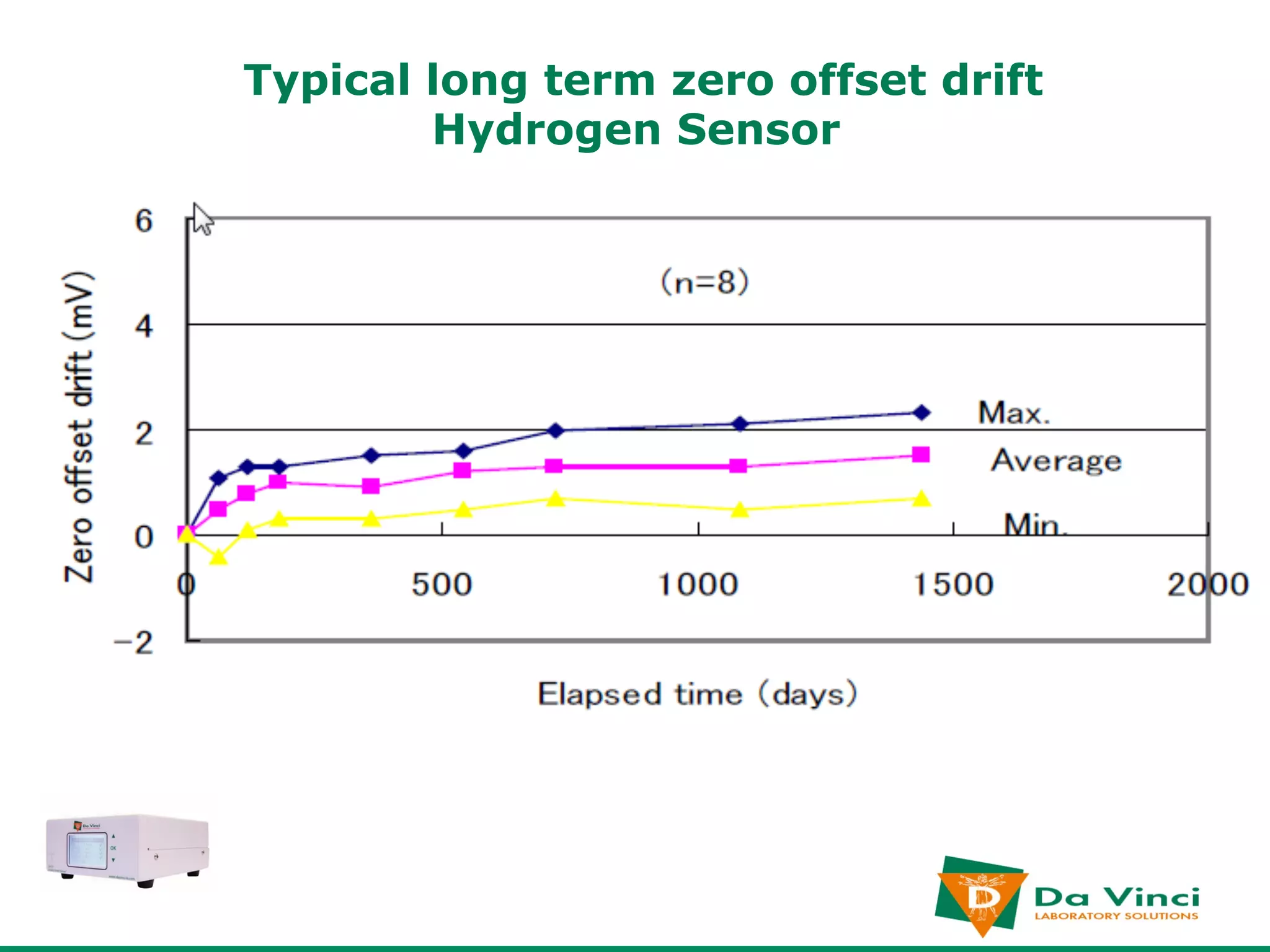
Typical long term zero offset drift
        Hydrogen Sensor
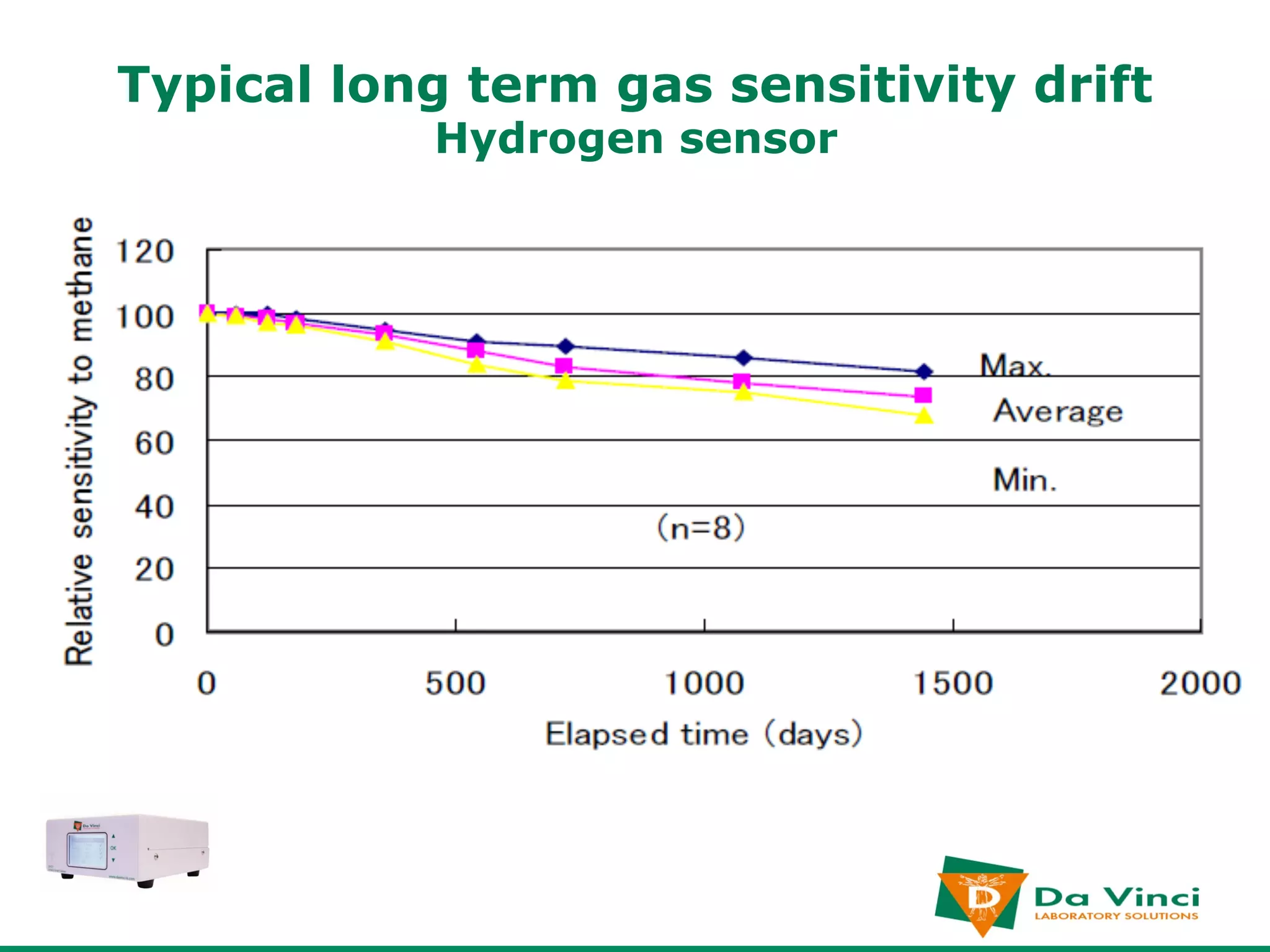
Typical long term gas sensitivity drift
           Hydrogen sensor
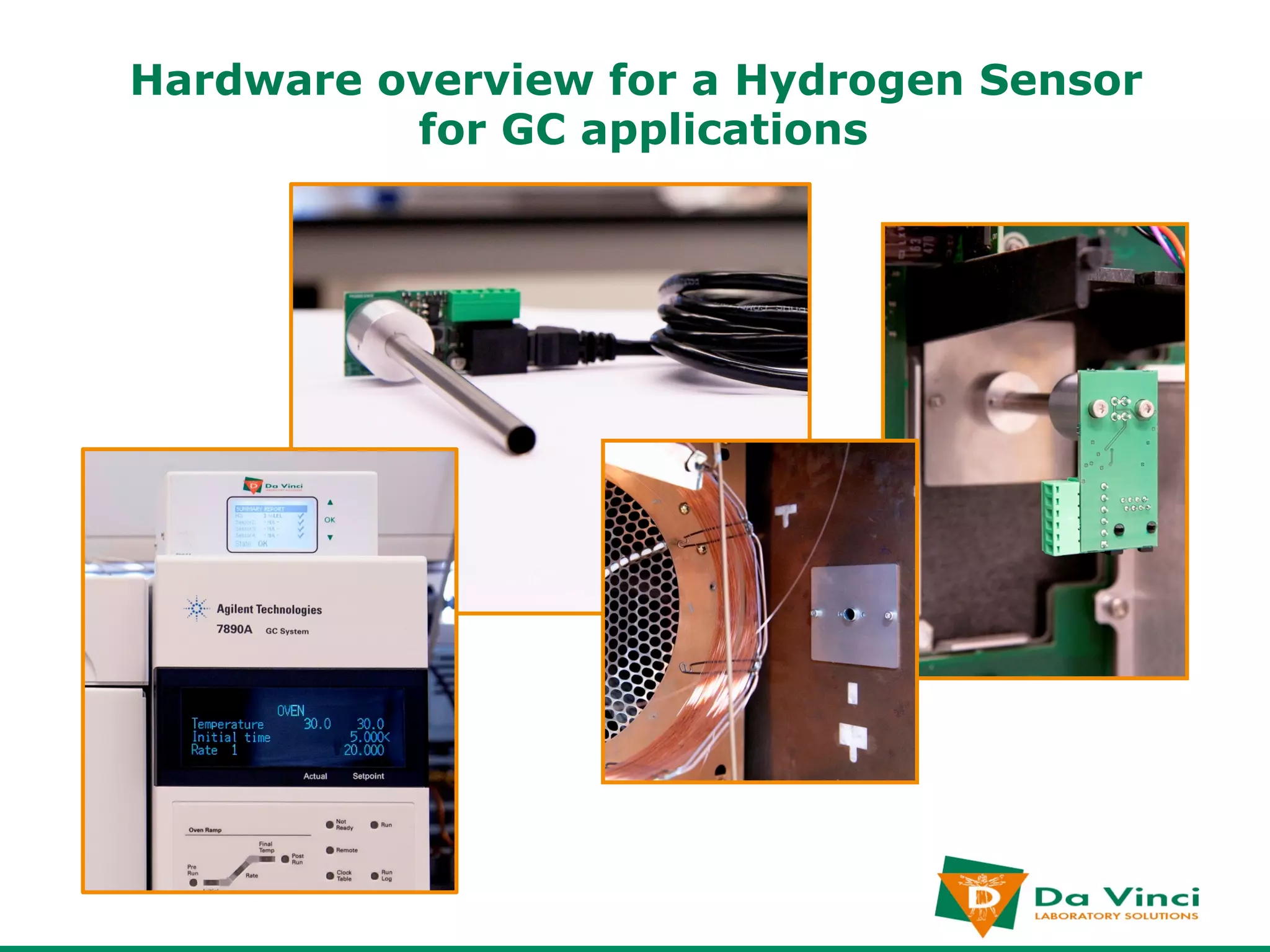
Hardware overview for a Hydrogen Sensor
          for GC applications
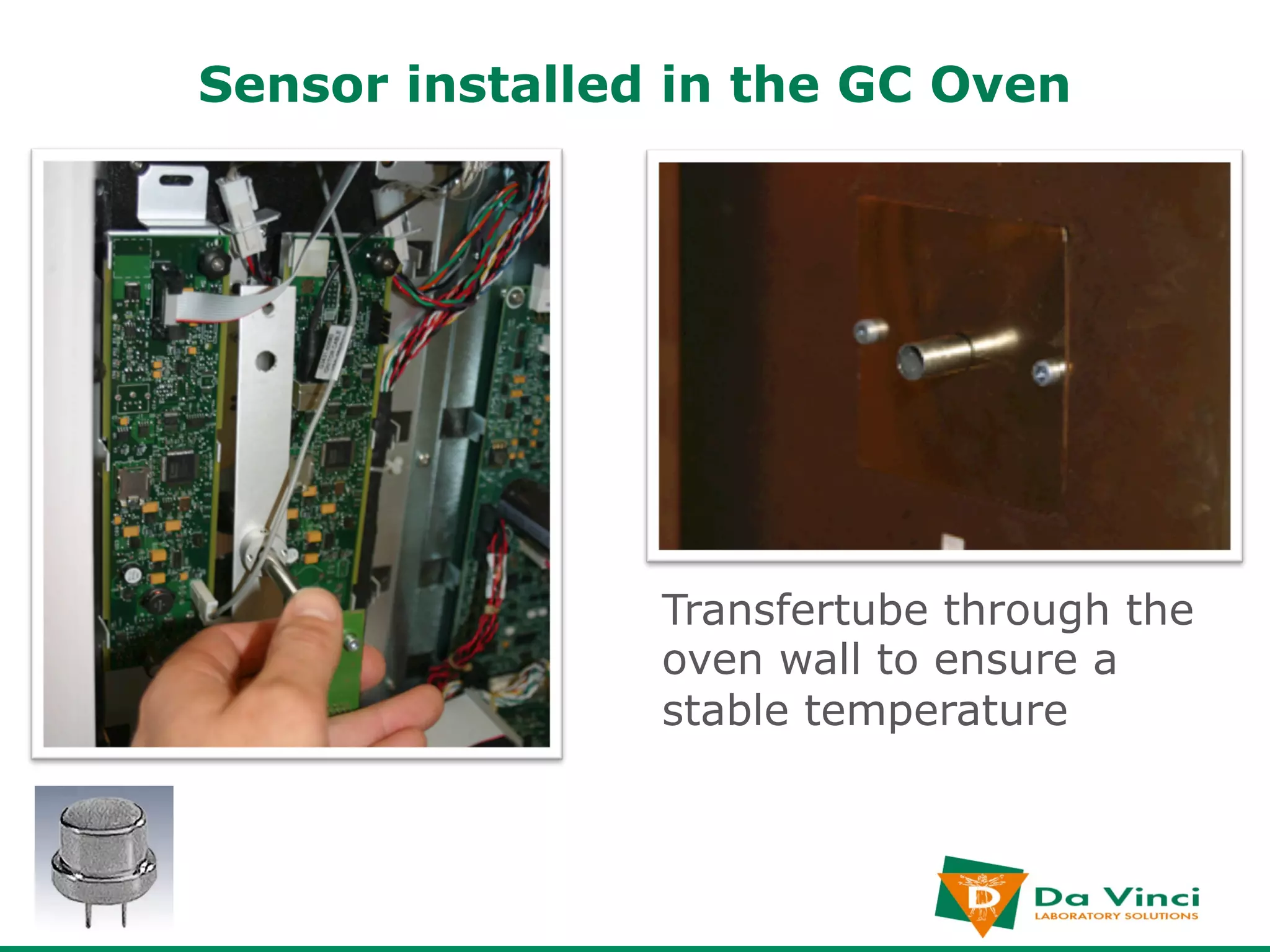
Sensor installed in the GC Oven


                Transfertube through the
                oven wall to ensure a
                stable temperature
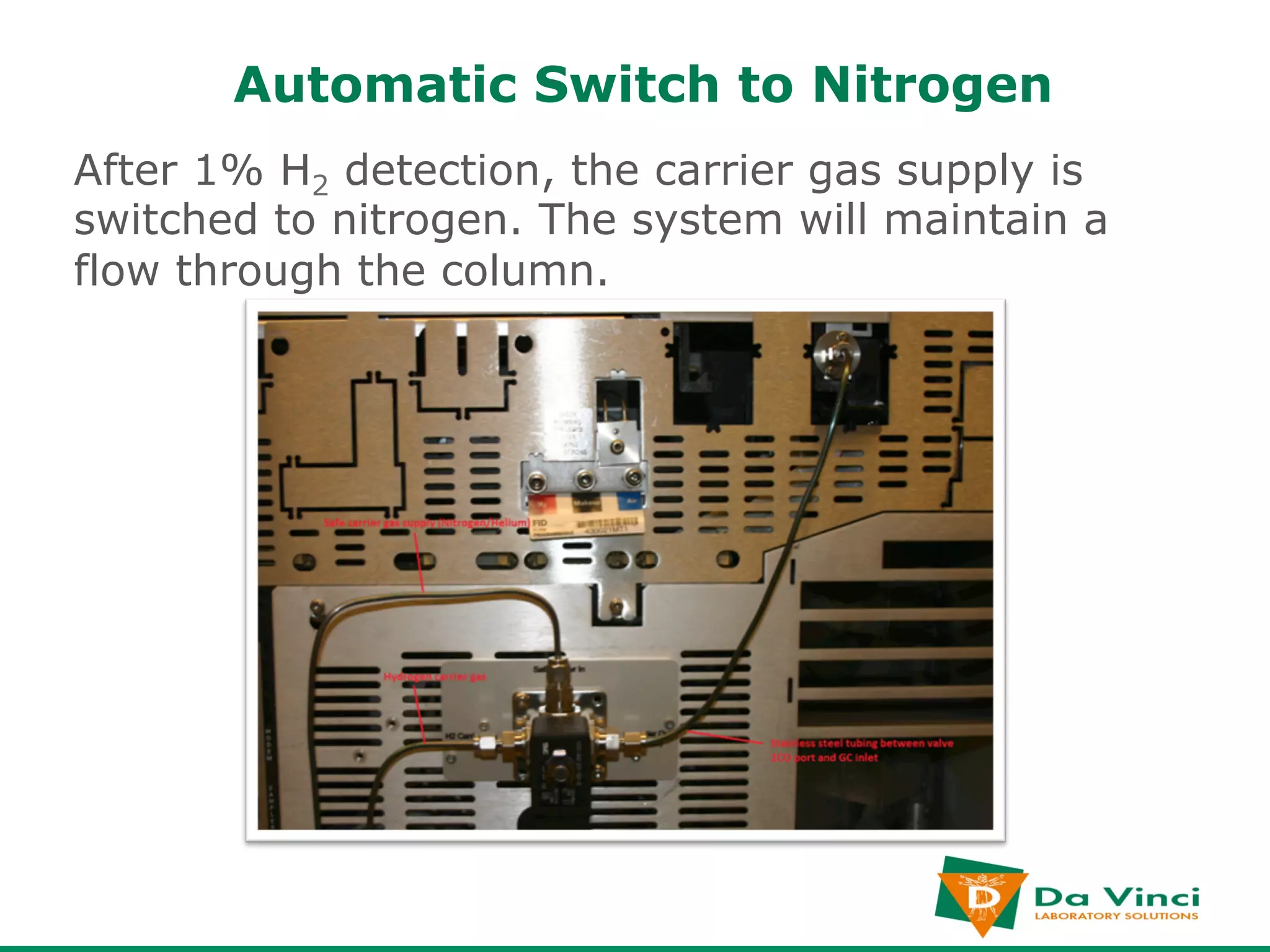
Automatic Switch to Nitrogen
After 1% H2 detection, the carrier gas supply is
switched to nitrogen. The system will maintain a
flow through the column.
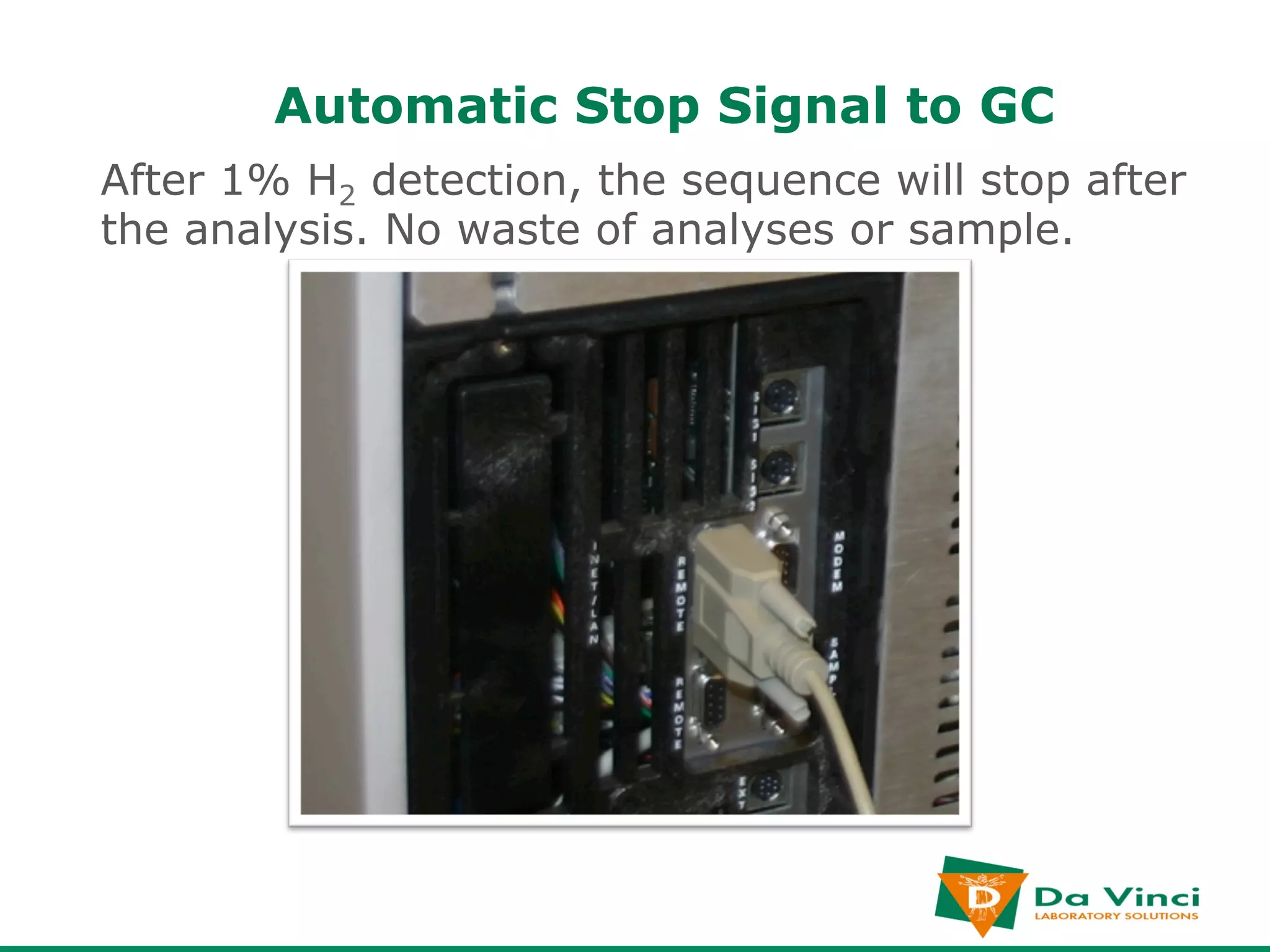
Automatic Stop Signal to GC
After 1% H2 detection, the sequence will stop after
the analysis. No waste of analyses or sample.
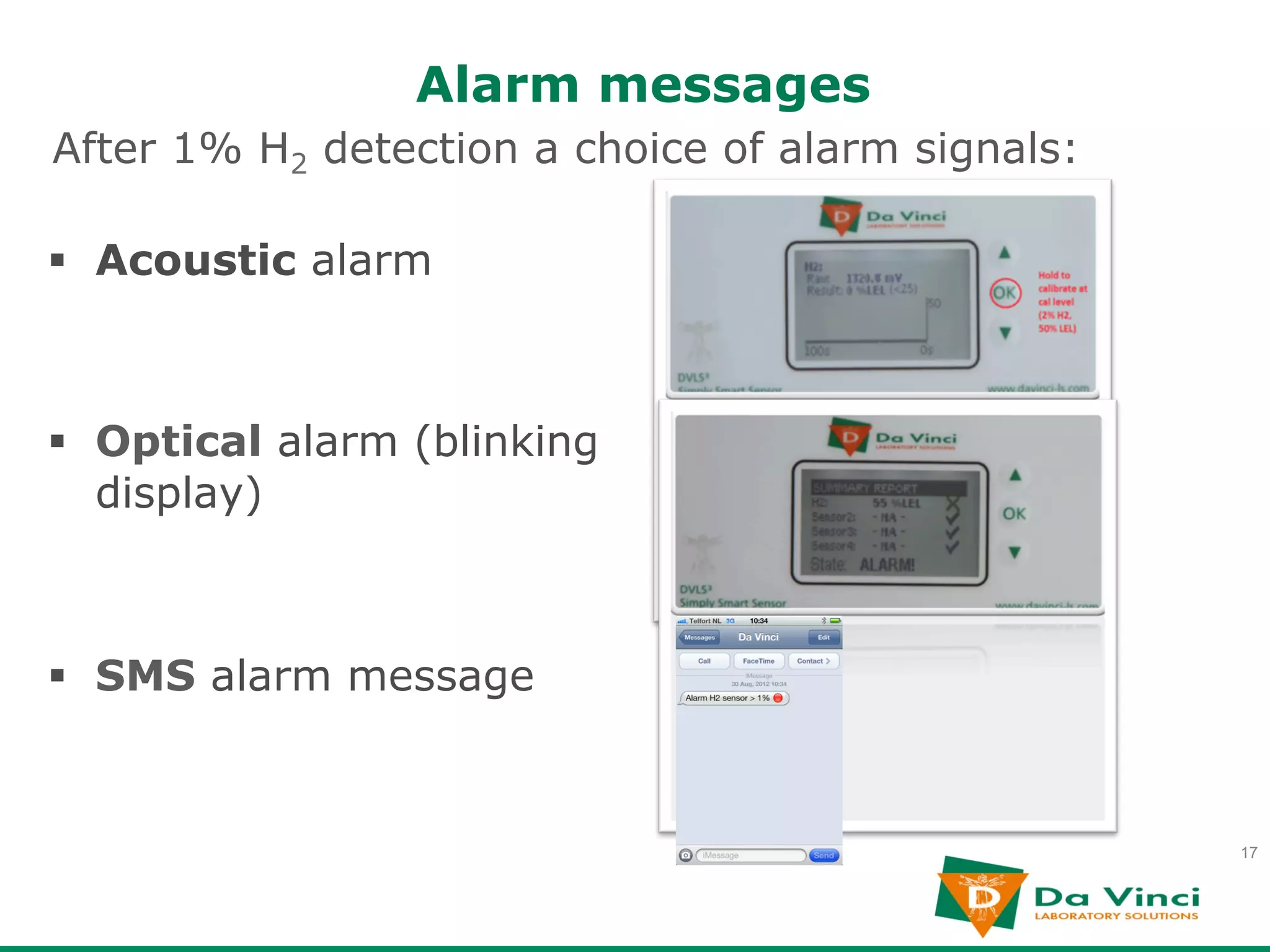
Alarm messages
After 1% H2 detection a choice of alarm signals:

§  Acoustic alarm


§  Optical alarm (blinking
    display)


§  SMS alarm message


                                                   17
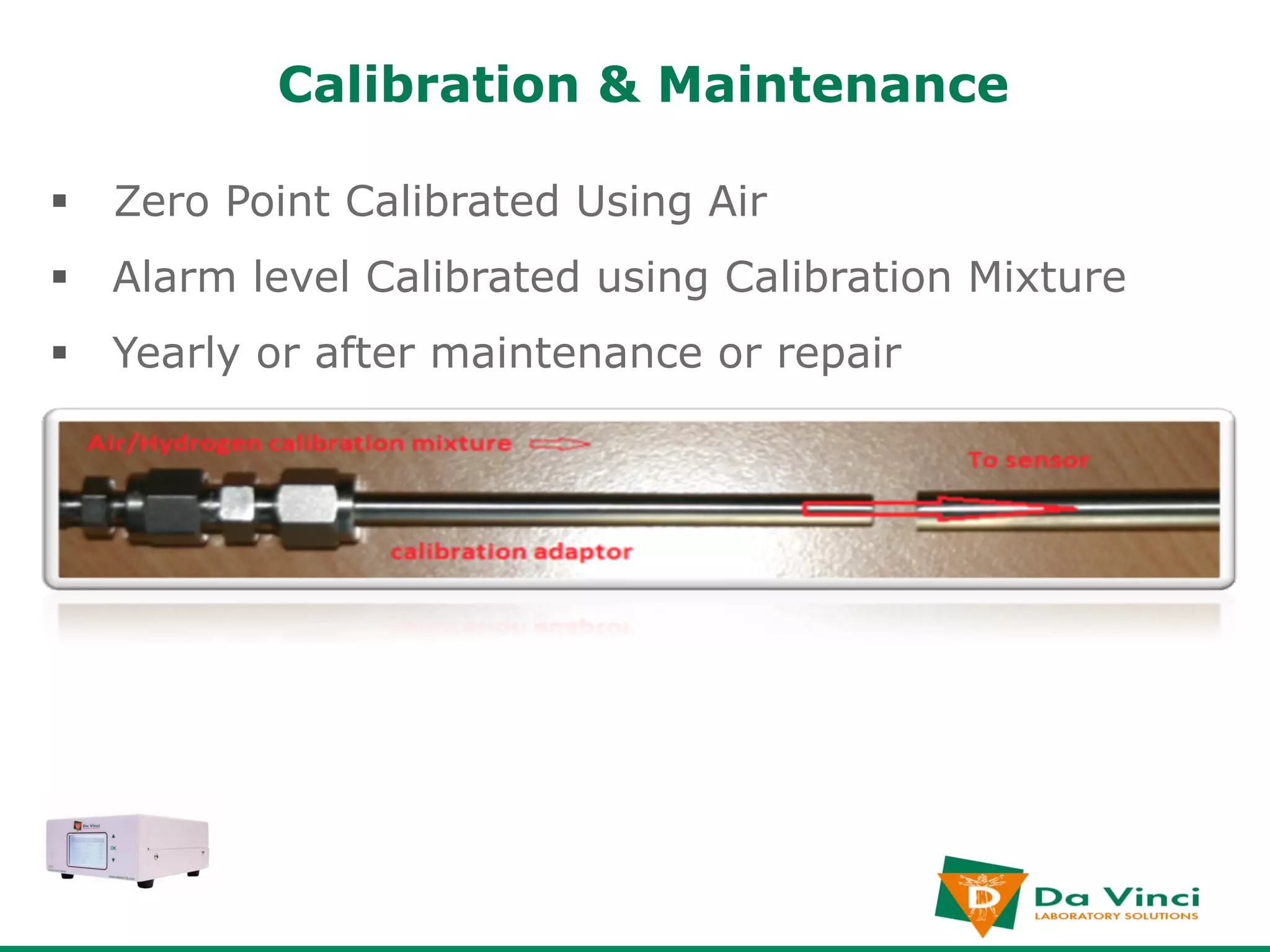
Calibration & Maintenance

§  Zero Point Calibrated Using Air
§  Alarm level Calibrated using Calibration Mixture
§  Yearly or after maintenance or repair
Summary (1)

§  Catalytic Pellistor gas specific sensor, linear range
  of 0-2% H2 (0-50% LEL)
§  Unaffected by humidity, stable output for long
  periods, more resistant to shocks and vibrations.
§  Expected lifetime: over five years
§  Long term stability drift sensitivity: less than 2mV
§  User defined alarm: optical, acoustic and/or SMS
  up to 50% LEL
Summary (2)

§  Instrument readings: provide real time sensor
  readings with alarm levels, channel states

§  Valve : High pressure 3 way solenoid valve

§  Oven operating temperature: up to 450◦C

§  Multiple Sensors: Max 4 sensors individually
  controlled

§  Sensor options: temperature, barometer, level,
  oxygen or hydrogen as a leakdetector.

Simply Smart: The Hydrogen Sensor for Chromatographic Systems

  • 1.
    Simply Smart: TheHydrogen Sensor for Chromatographic Systems The DVLS3 Simply Smart Hydrogen Sensor www.davinci-ls.com
  • 2.
    Content §  Four reasons for using H2 as a carrier gas §  Safety measures §  Hydrogen sensor §  Principle of operation and measurement §  Hardware overview §  Calibration and maintenance §  Summary §  Questions
  • 3.
    Reasons for usingH2 as a Carrier Gas 1.  Fast Analysis: §  Fast diffusion rate; 4 times faster than N2 §  Half as viscous as helium; higher linear gas velocity and shorter retention times 2.  High Efficiency: §  Flattest Van Deemter curve
  • 4.
    Reasons for usingH2 as a Carrier Gas 3.  Prolonged Column Life: □  Some applications have a lower elution temperature, therefore the column life is longer 4.  Cost effective: □  3x’s less expensive than its helium equivalent □  Bottle or generator
  • 5.
    Reluctant to useH2 as a Carrier Gas? §  Hydrogen is an Explosive Gas: Undetected gas leaks can lead to an explosion in the GC oven §  LEL of hydrogen in Air is at 4%
  • 6.
    Safety measures §  Monitorhydrogen usage §  Safety measures in GC hardware □  Safety Shutdown: when gas pressure set points are not met, the valve and heater are shut off to prevent explosion □  Flow Limiting Frit: if valve fails in open position, inlet frit limits the flow □  Oven ON/OFF Sequence: Fan purges the oven before turning on heater to remove any collected H2 □  Explosion Test: GC designed to contain parts in case of explosion §  Hydrogen sensor in the oven or valve box
  • 7.
    Principle of Operation Hydrogen Sensor §  Catalytic combustion by catalytized resistor or “pellister” §  Surface of the pellet acts as a catalyst when hot §  Exothermal oxidation of flammable gases ú  2 H2 + O2 → 2 H2O(g) + heat §  Temperature rise results in a change in the electrical resistance
  • 8.
    Principle of Measurement Hydrogen Sensor §  Compensator pellet is identical but without catalyst §  Compensator pellet removes the effect of environmental factors §  Measurement circuit: a Wheatstone Bridge 8 13 March 2013
  • 9.
  • 10.
    Typical Zero Offsetdrift with Temperature Hydrogen Sensor
  • 11.
    Typical long termzero offset drift Hydrogen Sensor
  • 12.
    Typical long termgas sensitivity drift Hydrogen sensor
  • 13.
    Hardware overview fora Hydrogen Sensor for GC applications
  • 14.
    Sensor installed inthe GC Oven Transfertube through the oven wall to ensure a stable temperature
  • 15.
    Automatic Switch toNitrogen After 1% H2 detection, the carrier gas supply is switched to nitrogen. The system will maintain a flow through the column.
  • 16.
    Automatic Stop Signalto GC After 1% H2 detection, the sequence will stop after the analysis. No waste of analyses or sample.
  • 17.
    Alarm messages After 1%H2 detection a choice of alarm signals: §  Acoustic alarm §  Optical alarm (blinking display) §  SMS alarm message 17
  • 18.
    Calibration & Maintenance § Zero Point Calibrated Using Air §  Alarm level Calibrated using Calibration Mixture §  Yearly or after maintenance or repair
  • 19.
    Summary (1) §  CatalyticPellistor gas specific sensor, linear range of 0-2% H2 (0-50% LEL) §  Unaffected by humidity, stable output for long periods, more resistant to shocks and vibrations. §  Expected lifetime: over five years §  Long term stability drift sensitivity: less than 2mV §  User defined alarm: optical, acoustic and/or SMS up to 50% LEL
  • 20.
    Summary (2) §  Instrumentreadings: provide real time sensor readings with alarm levels, channel states §  Valve : High pressure 3 way solenoid valve §  Oven operating temperature: up to 450◦C §  Multiple Sensors: Max 4 sensors individually controlled §  Sensor options: temperature, barometer, level, oxygen or hydrogen as a leakdetector.