1
IGSHPA Technical / Research Conference and Expo 2017
Denver, Colorado
March 15th, 2017
jasmin.raymond@inrs.ca
New Methods to Spatially Extend Thermal
Response Test Assessments
Jasmin Raymond, Michel Malo, Louis Lamarche, Lorenzo
Perozzi, Erwan Gloaguen & Carl Bégin
2
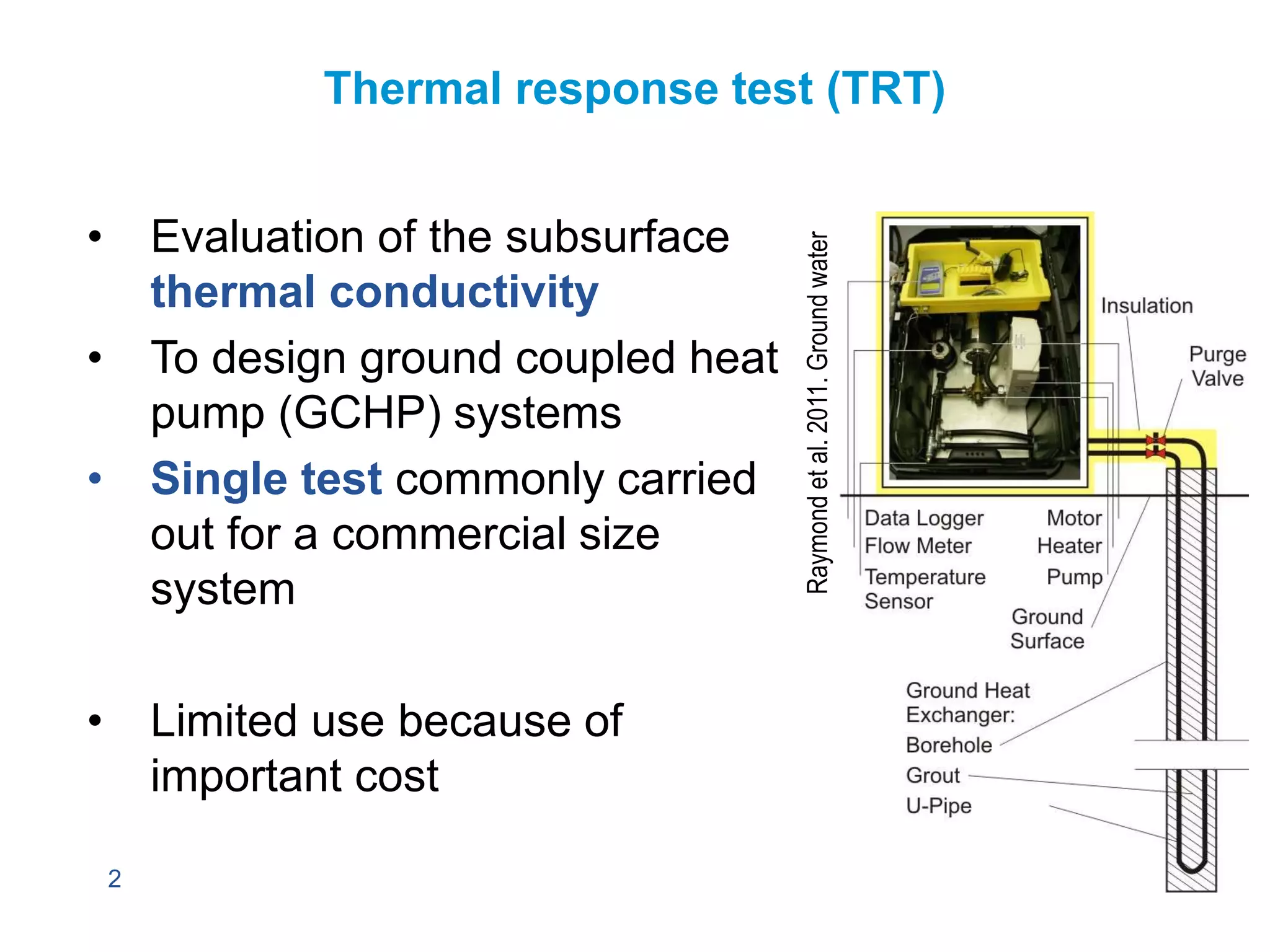
Thermal response test (TRT)
Raymondetal.2011.Groundwater
• Evaluation of the subsurface
thermal conductivity
• To design ground coupled heat
pump (GCHP) systems
• Single test commonly carried
out for a commercial size
system
• Limited use because of
important cost
3
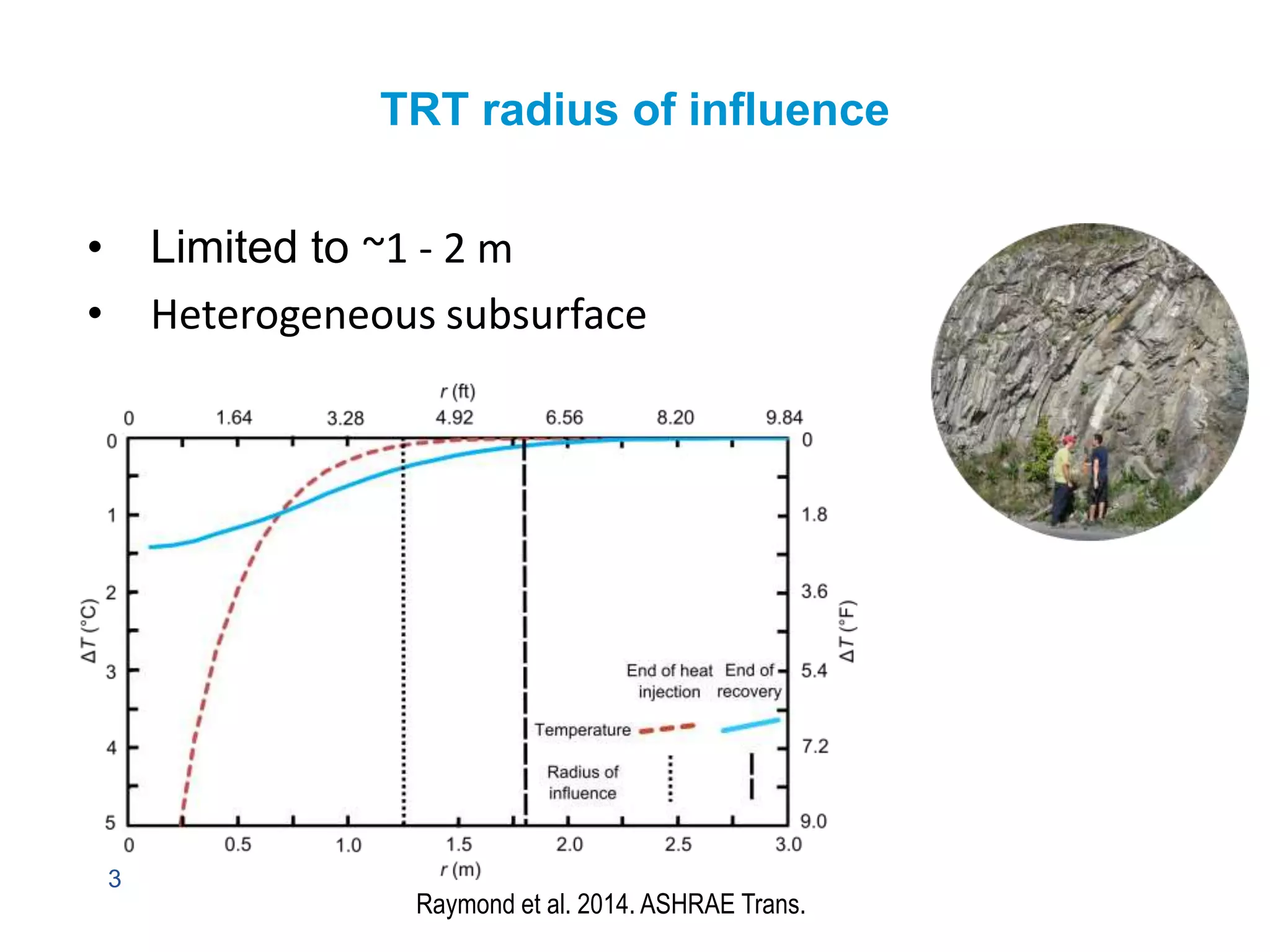
TRT radius of influence
Raymond et al. 2014. ASHRAE Trans.
• Limited to ~1 - 2 m
• Heterogeneous subsurface
4
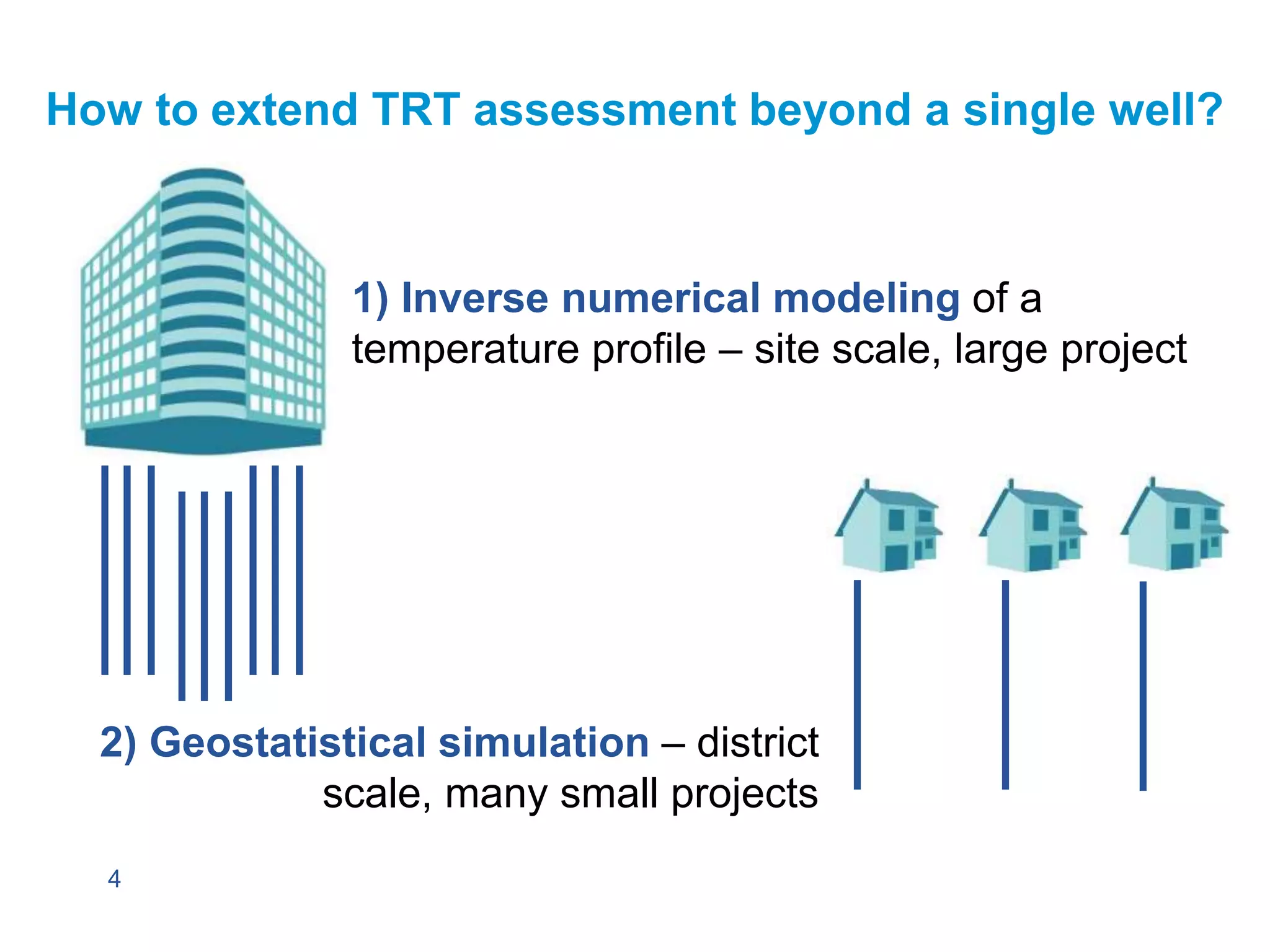
How to extend TRT assessment beyond a single well?
1) Inverse numerical modeling of a
temperature profile – site scale, large project
2) Geostatistical simulation – district
scale, many small projects
5
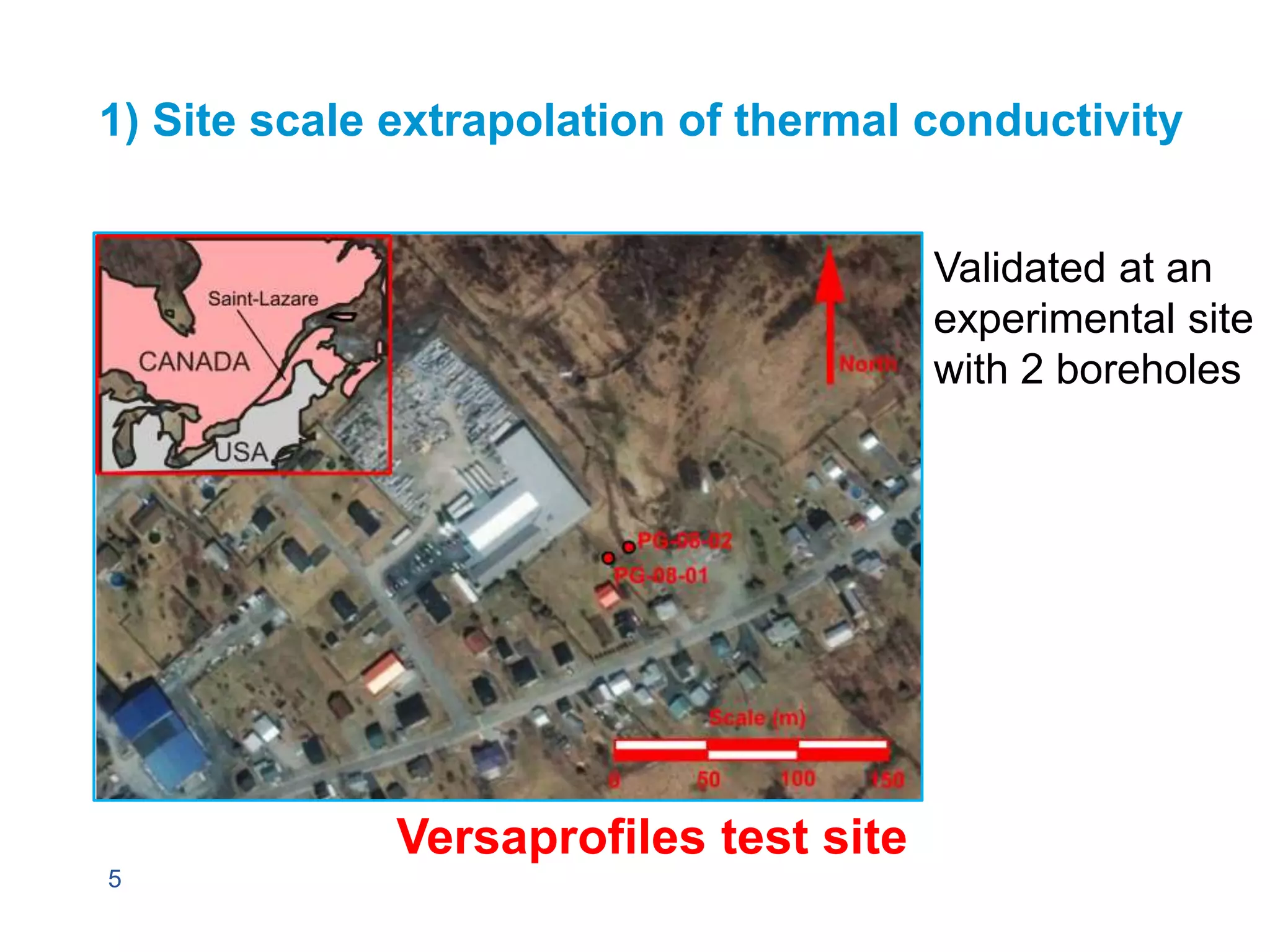
1) Site scale extrapolation of thermal conductivity
Validated at an
experimental site
with 2 boreholes
Versaprofiles test site
6
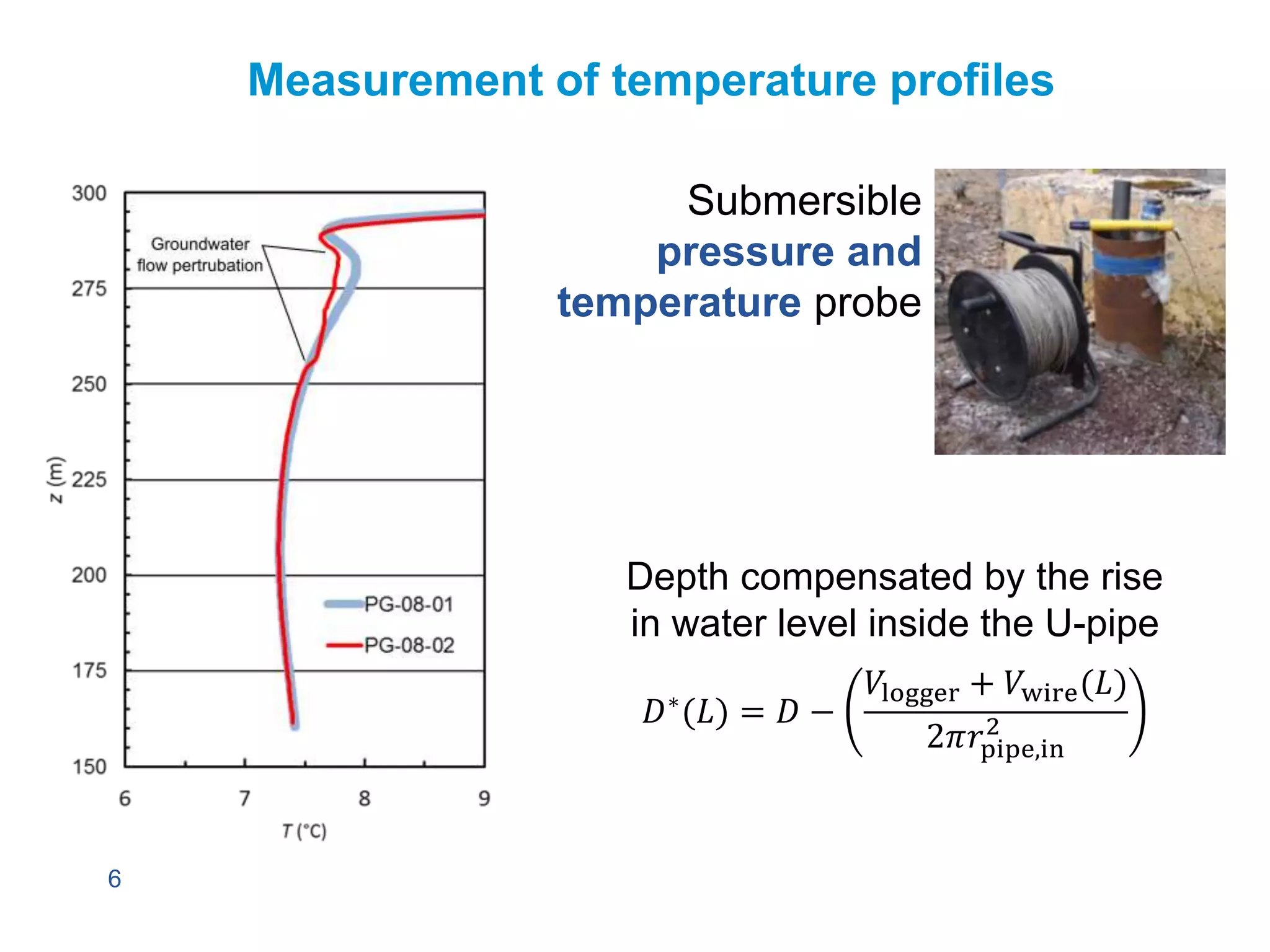
Measurement of temperature profiles
Submersible
pressure and
temperature probe
Depth compensated by the rise
in water level inside the U-pipe
𝐷∗
(𝐿) = 𝐷 −
𝑉logger + 𝑉wire(𝐿)
2𝜋𝑟pipe,in
2
7
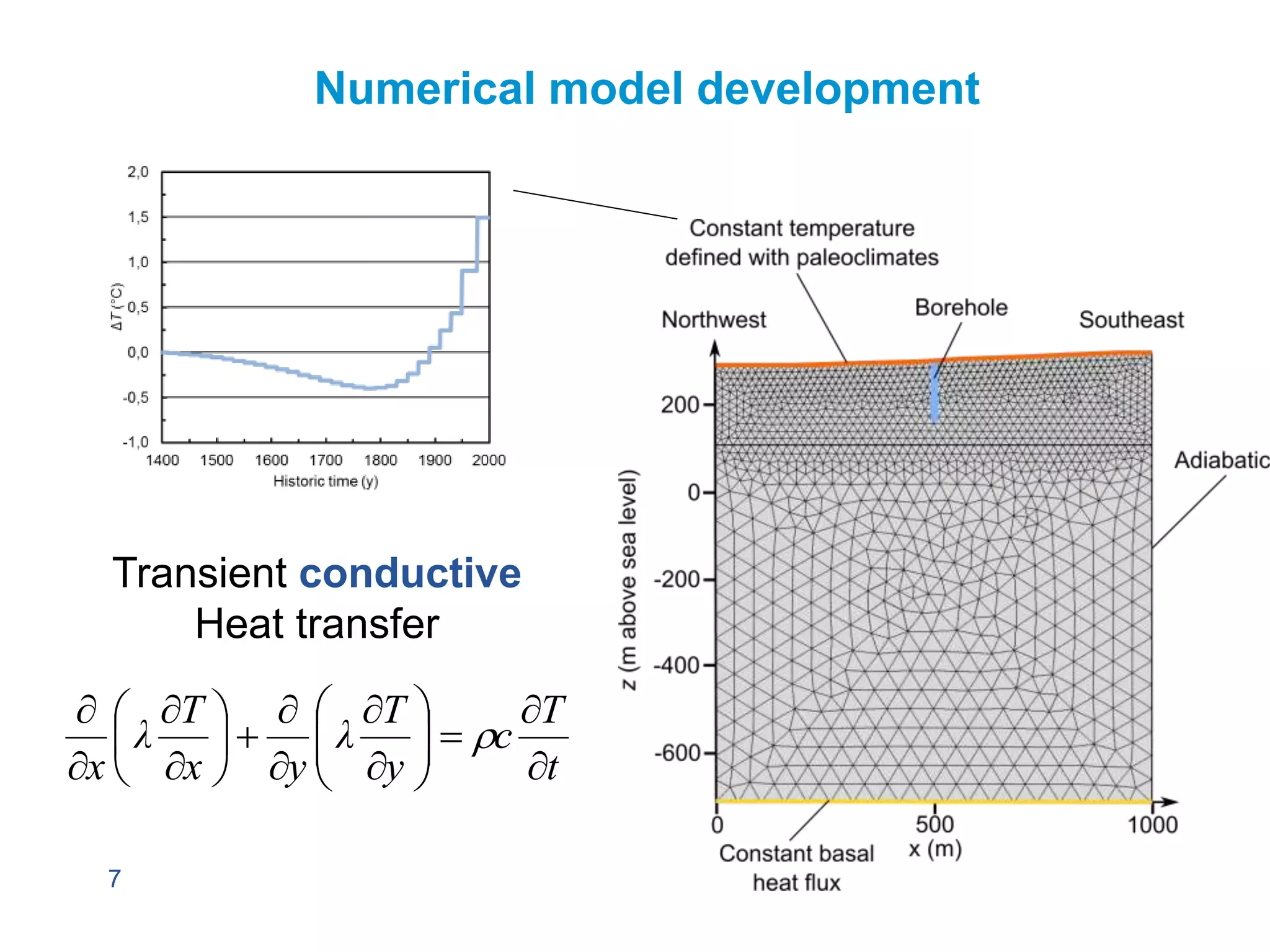
Numerical model development
Transient conductive
Heat transfer
t
T
c
y
T
λ
yx
T
λ
x 






















8
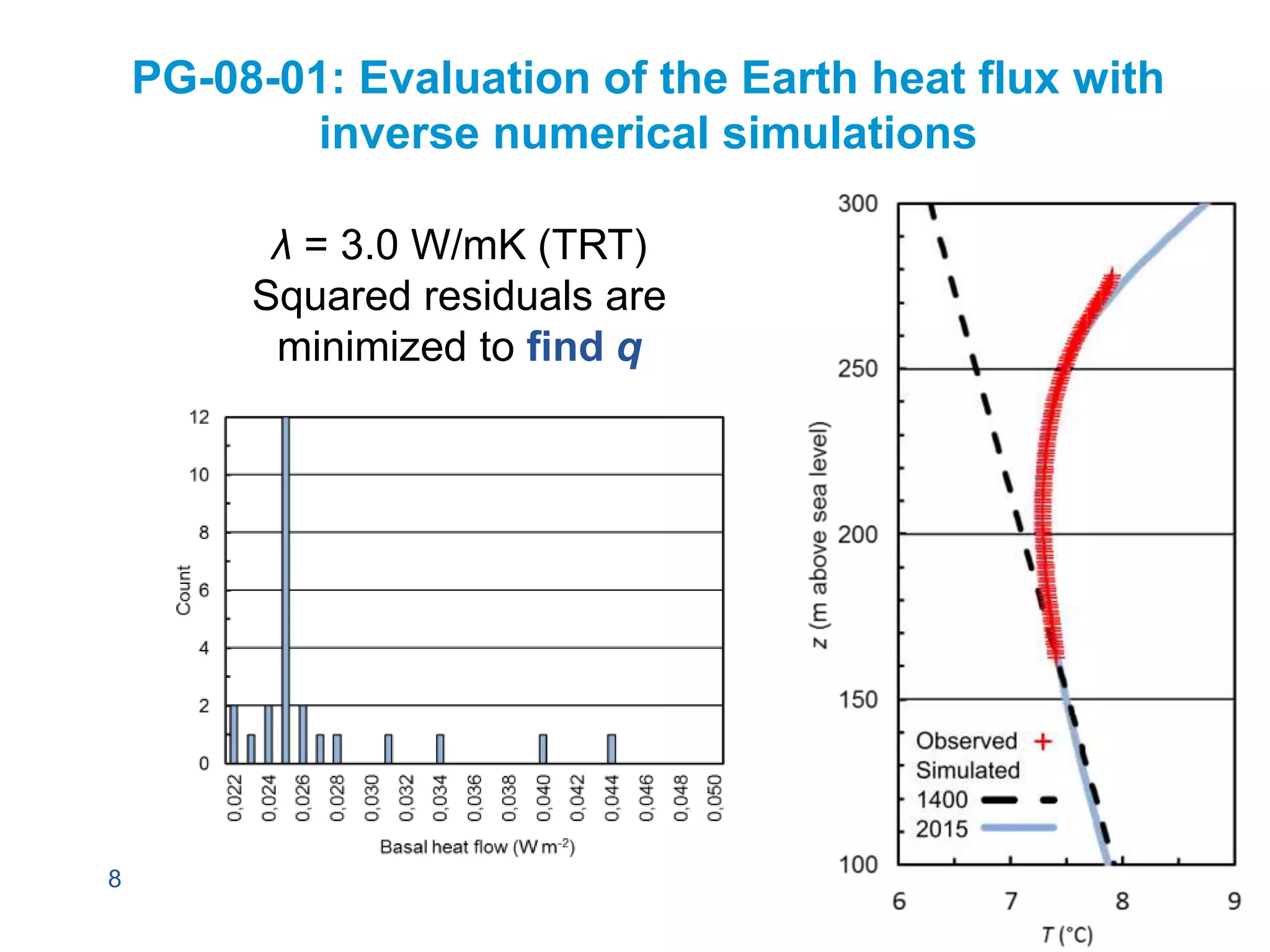
PG-08-01: Evaluation of the Earth heat flux with
inverse numerical simulations
λ = 3.0 W/mK (TRT)
Squared residuals are
minimized to find q
9
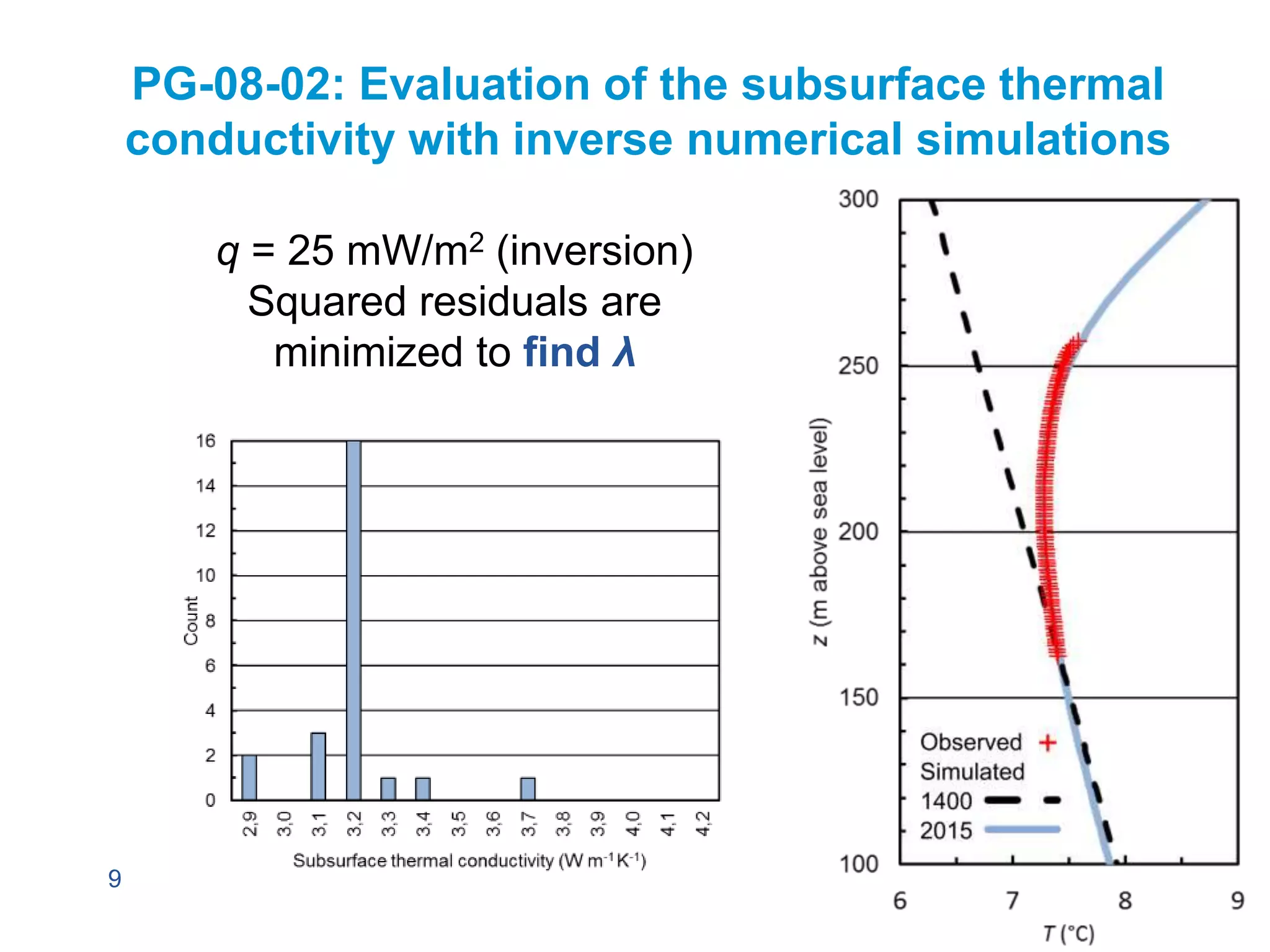
PG-08-02: Evaluation of the subsurface thermal
conductivity with inverse numerical simulations
q = 25 mW/m2 (inversion)
Squared residuals are
minimized to find λ
10
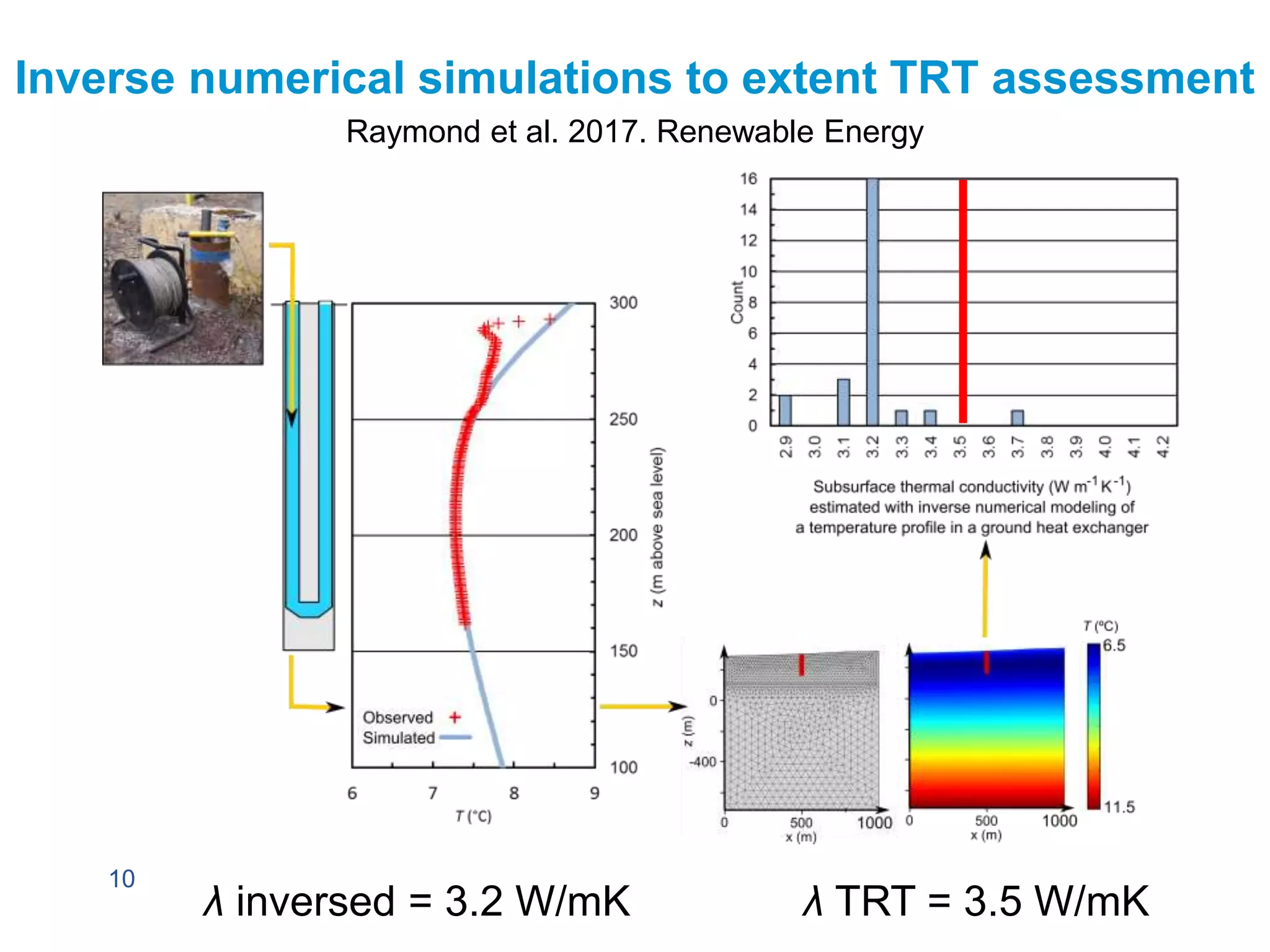
Inverse numerical simulations to extent TRT assessment
Raymond et al. 2017. Renewable Energy
λ inversed = 3.2 W/mK λ TRT = 3.5 W/mK
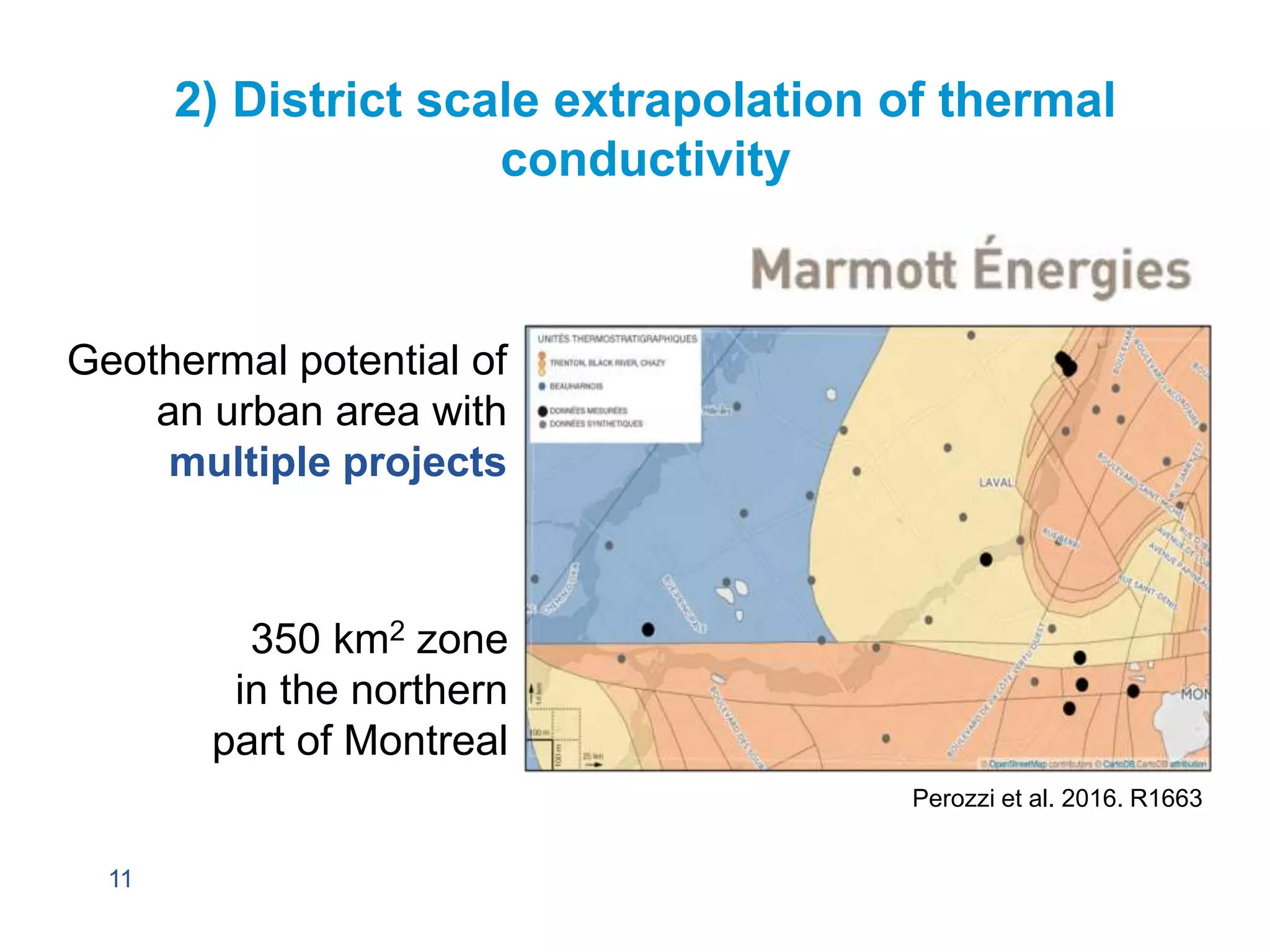
2) District scale extrapolation of thermal
conductivity
Geothermal potential of
an urban area with
multiple projects
11
350 km2 zone
in the northern
part of Montreal
Perozzi et al. 2016. R1663
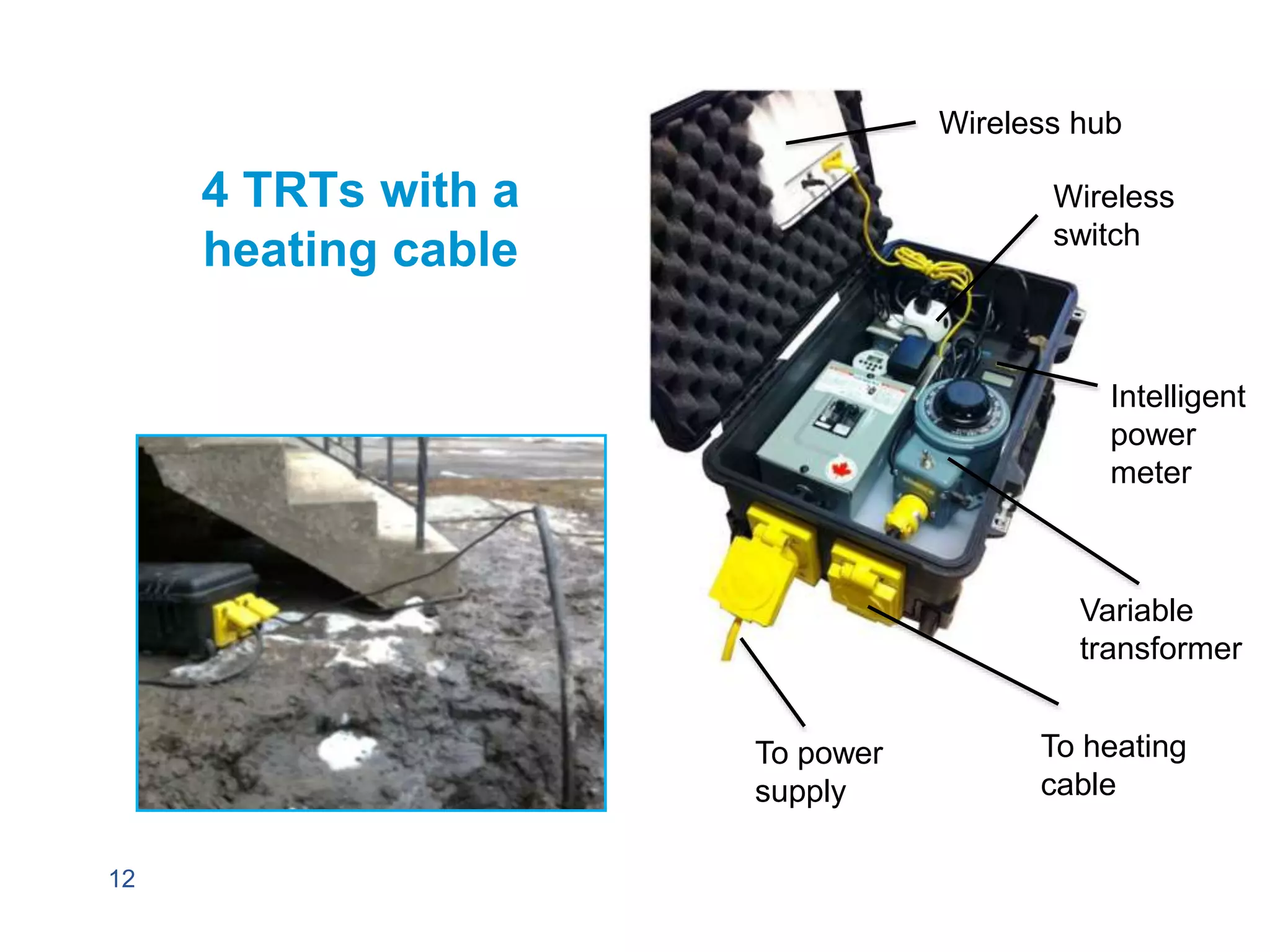
4 TRTs with a
heating cable
12
Wireless hub
Wireless
switch
Variable
transformer
Intelligent
power
meter
To power
supply
To heating
cable
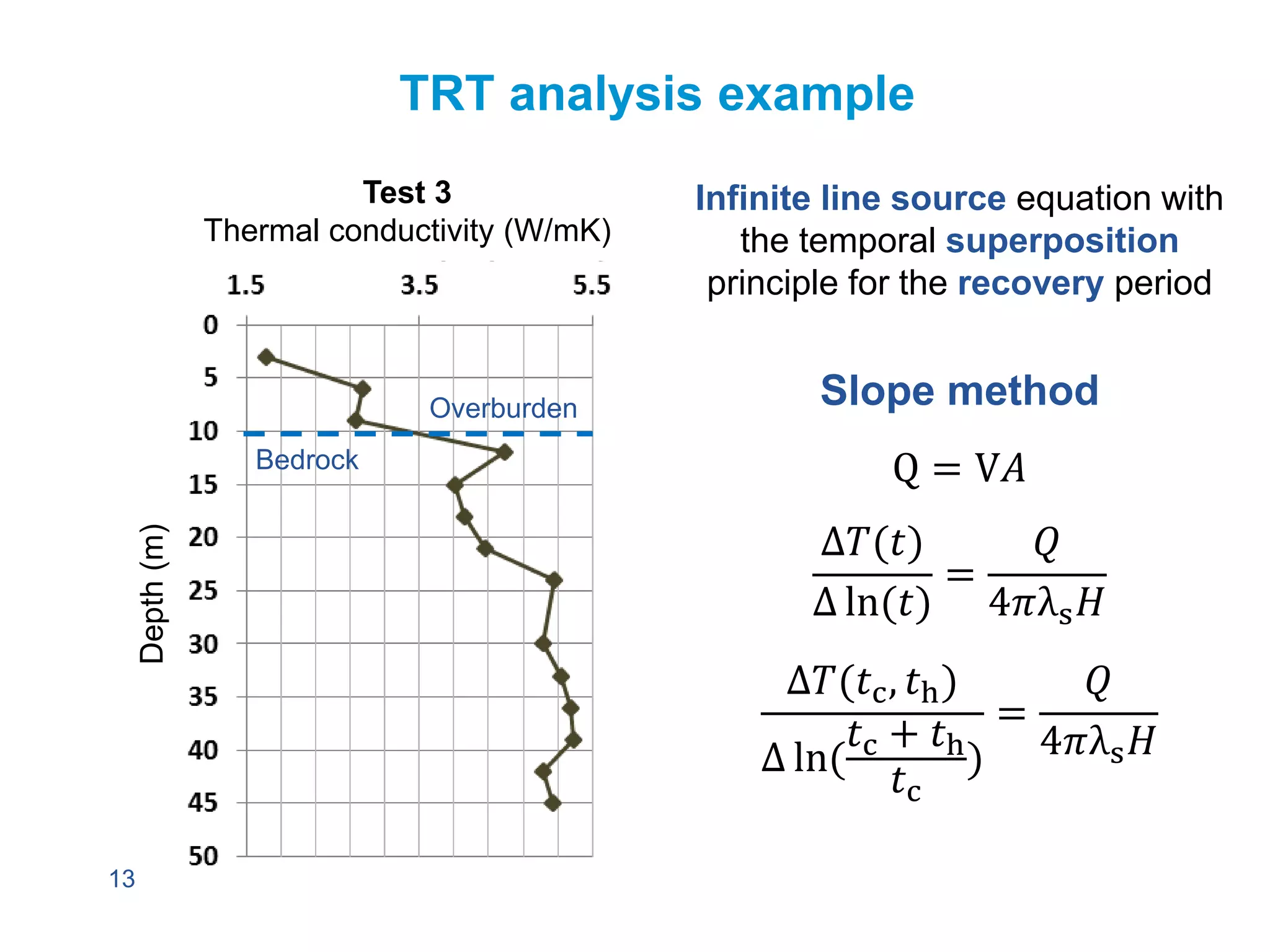
TRT analysis example
13
∆𝑇(𝑡)
∆ ln(𝑡)
=
𝑄
4𝜋λs 𝐻
Q = V𝐴
Infinite line source equation with
the temporal superposition
principle for the recovery period
Slope method
∆𝑇(𝑡c, 𝑡h)
∆ ln(
𝑡c + 𝑡h
𝑡c
)
=
𝑄
4𝜋λs 𝐻
Test 3
Thermal conductivity (W/mK)
Depth(m)
Overburden
Bedrock
14
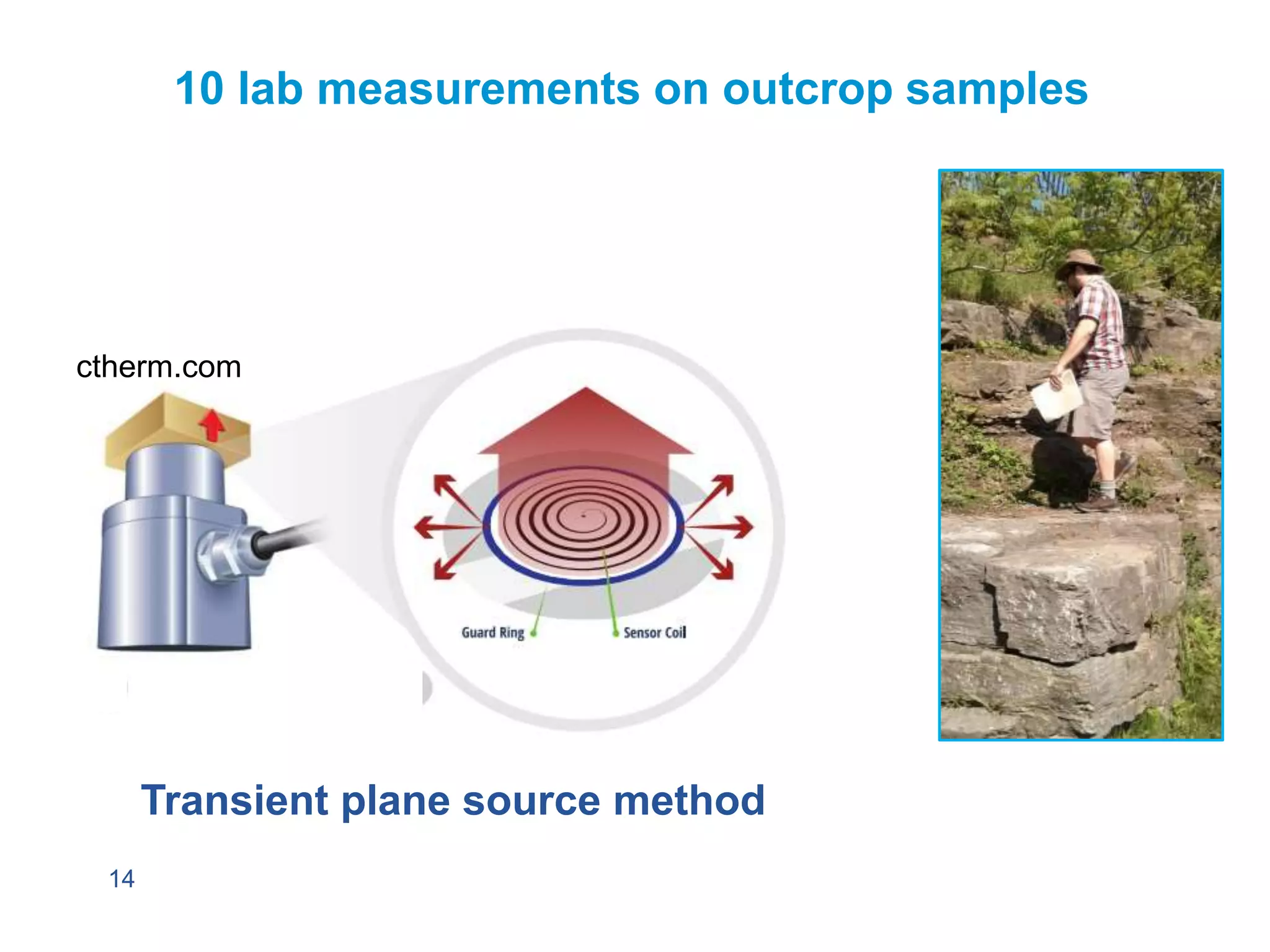
10 lab measurements on outcrop samples
Transient plane source method
ctherm.com
15
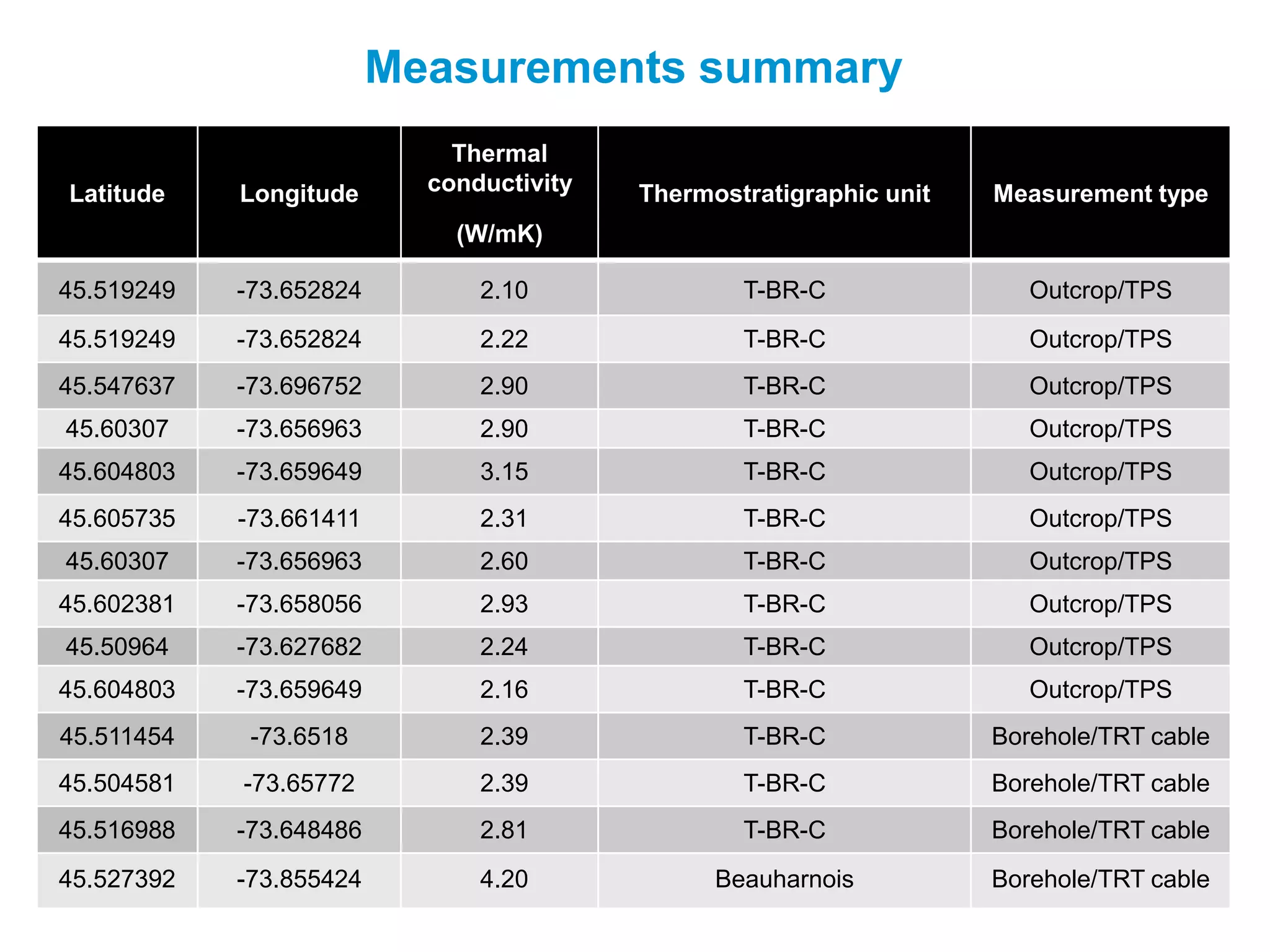
Measurements summary
Latitude Longitude
Thermal
conductivity
(W/mK)
Thermostratigraphic unit Measurement type
45.519249 -73.652824 2.10 T-BR-C Outcrop/TPS
45.519249 -73.652824 2.22 T-BR-C Outcrop/TPS
45.547637 -73.696752 2.90 T-BR-C Outcrop/TPS
45.60307 -73.656963 2.90 T-BR-C Outcrop/TPS
45.604803 -73.659649 3.15 T-BR-C Outcrop/TPS
45.605735 -73.661411 2.31 T-BR-C Outcrop/TPS
45.60307 -73.656963 2.60 T-BR-C Outcrop/TPS
45.602381 -73.658056 2.93 T-BR-C Outcrop/TPS
45.50964 -73.627682 2.24 T-BR-C Outcrop/TPS
45.604803 -73.659649 2.16 T-BR-C Outcrop/TPS
45.511454 -73.6518 2.39 T-BR-C Borehole/TRT cable
45.504581 -73.65772 2.39 T-BR-C Borehole/TRT cable
45.516988 -73.648486 2.81 T-BR-C Borehole/TRT cable
45.527392 -73.855424 4.20 Beauharnois Borehole/TRT cable
16
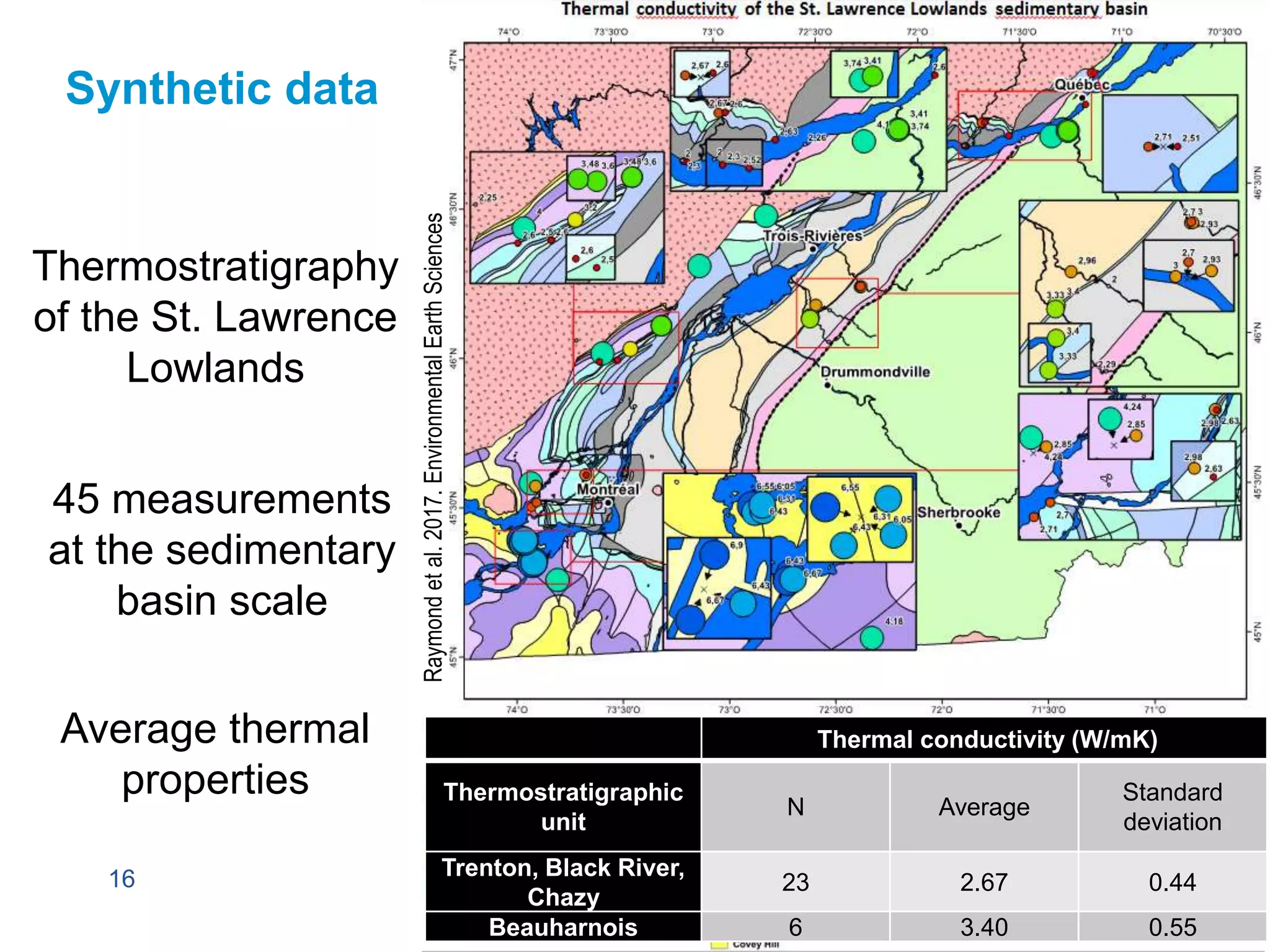
Synthetic data
45 measurements
at the sedimentary
basin scale
Thermostratigraphy
of the St. Lawrence
Lowlands
Average thermal
properties
Thermal conductivity (W/mK)
Thermostratigraphic
unit
N Average
Standard
deviation
Trenton, Black River,
Chazy
23 2.67 0.44
Beauharnois 6 3.40 0.55
Raymondetal.2017.EnvironmentalEarthSciences
17
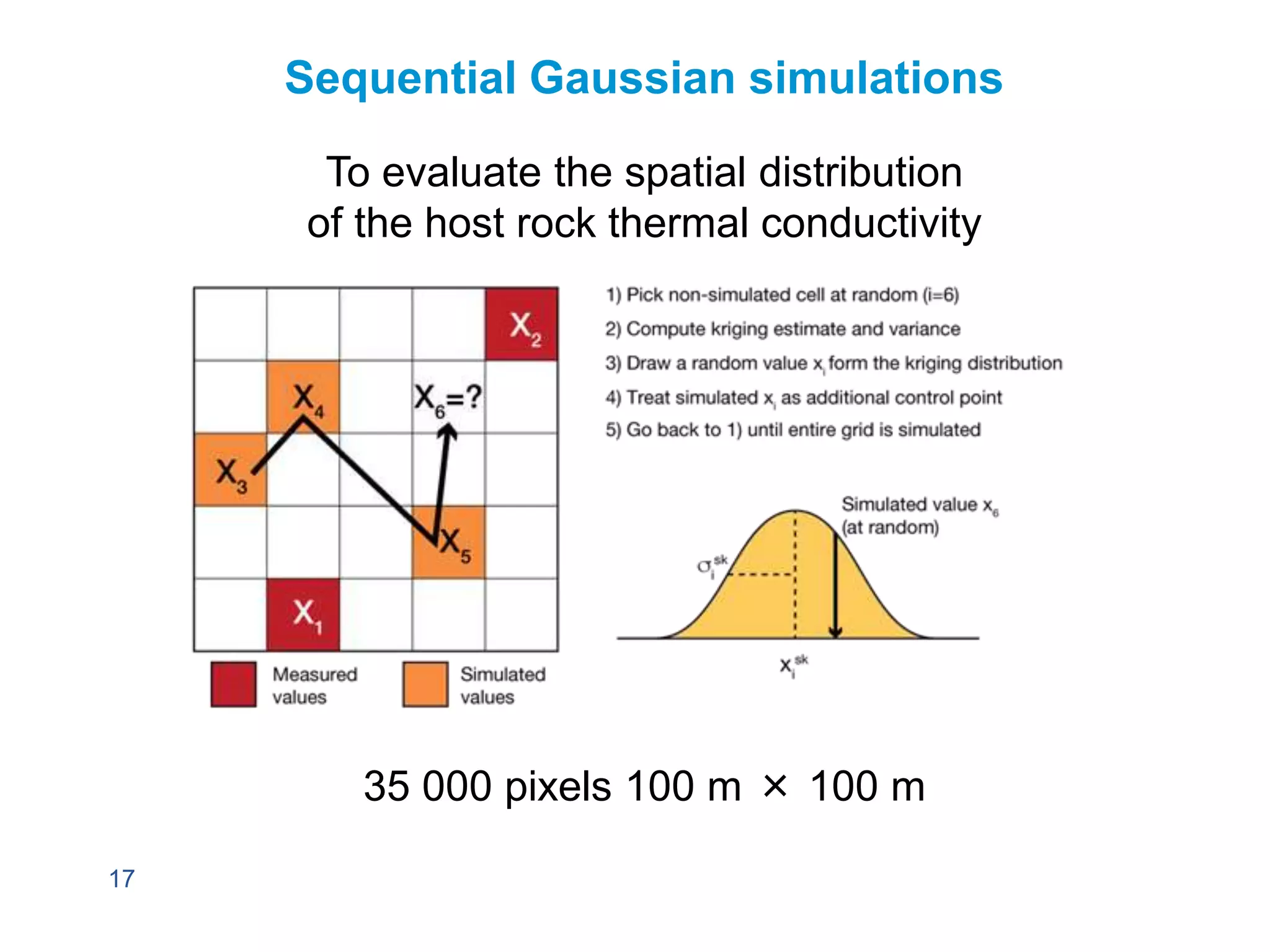
Sequential Gaussian simulations
To evaluate the spatial distribution
of the host rock thermal conductivity
35 000 pixels 100 m × 100 m
18
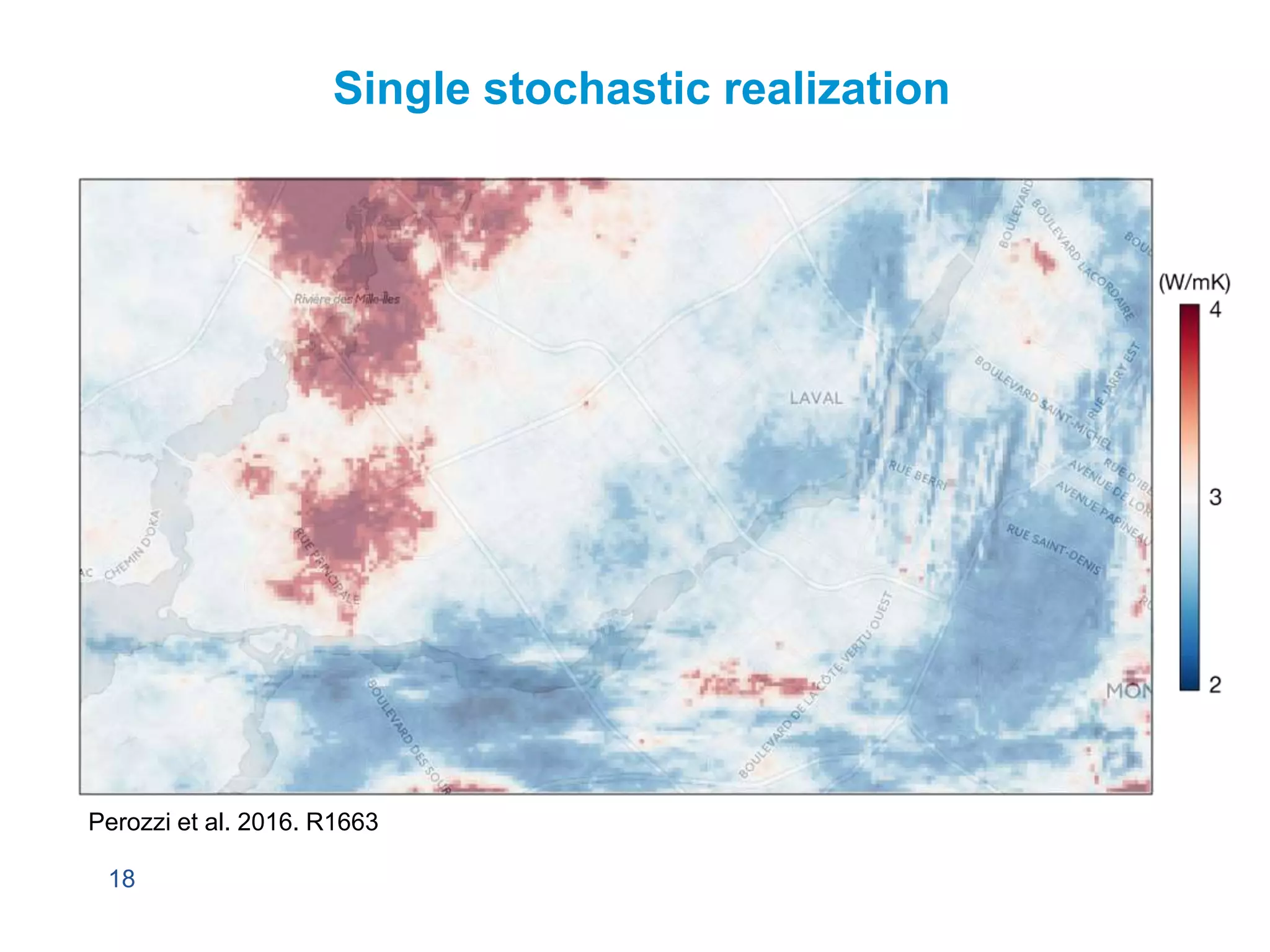
Single stochastic realization
Perozzi et al. 2016. R1663
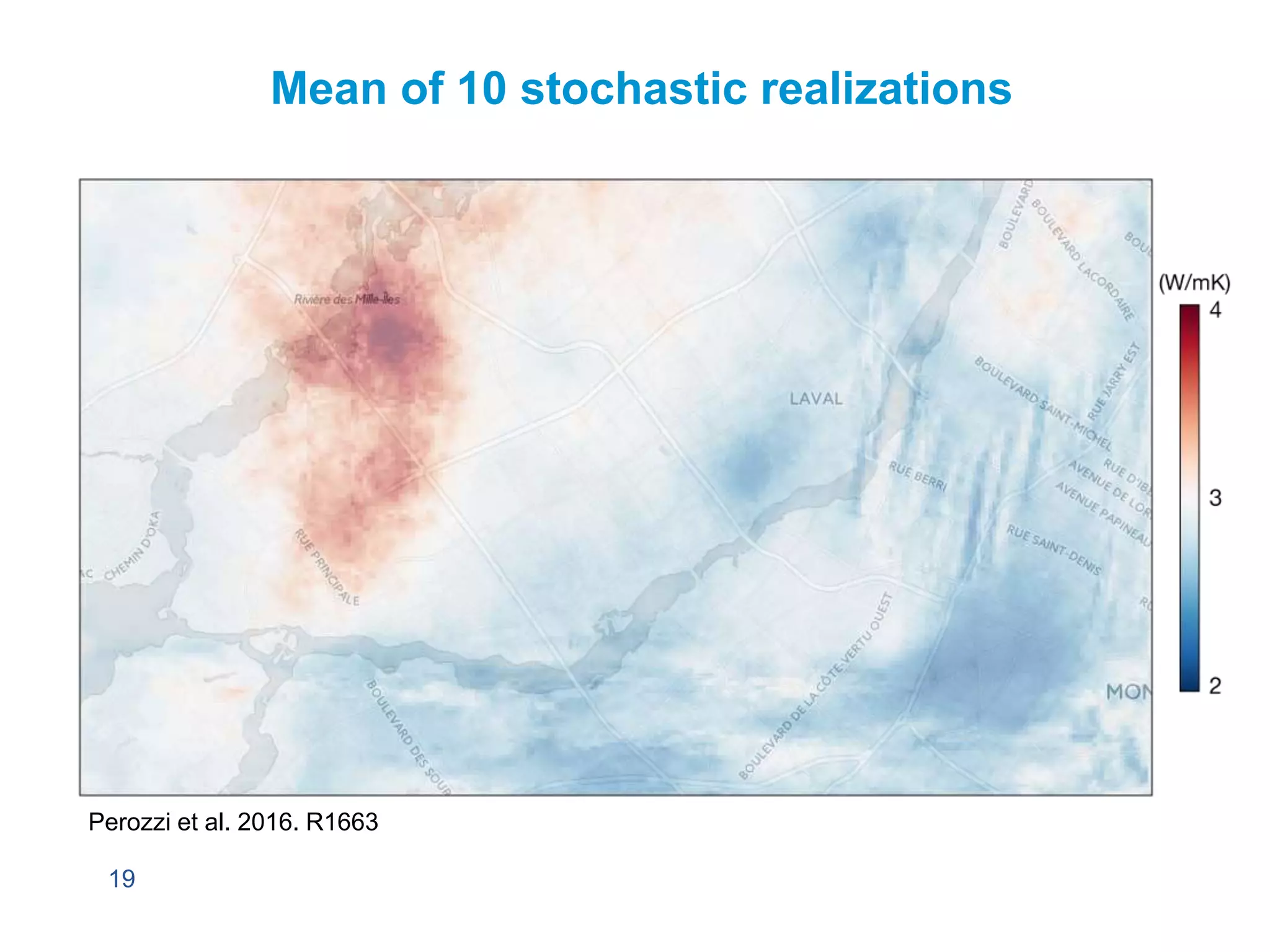
19
Mean of 10 stochastic realizations
Perozzi et al. 2016. R1663
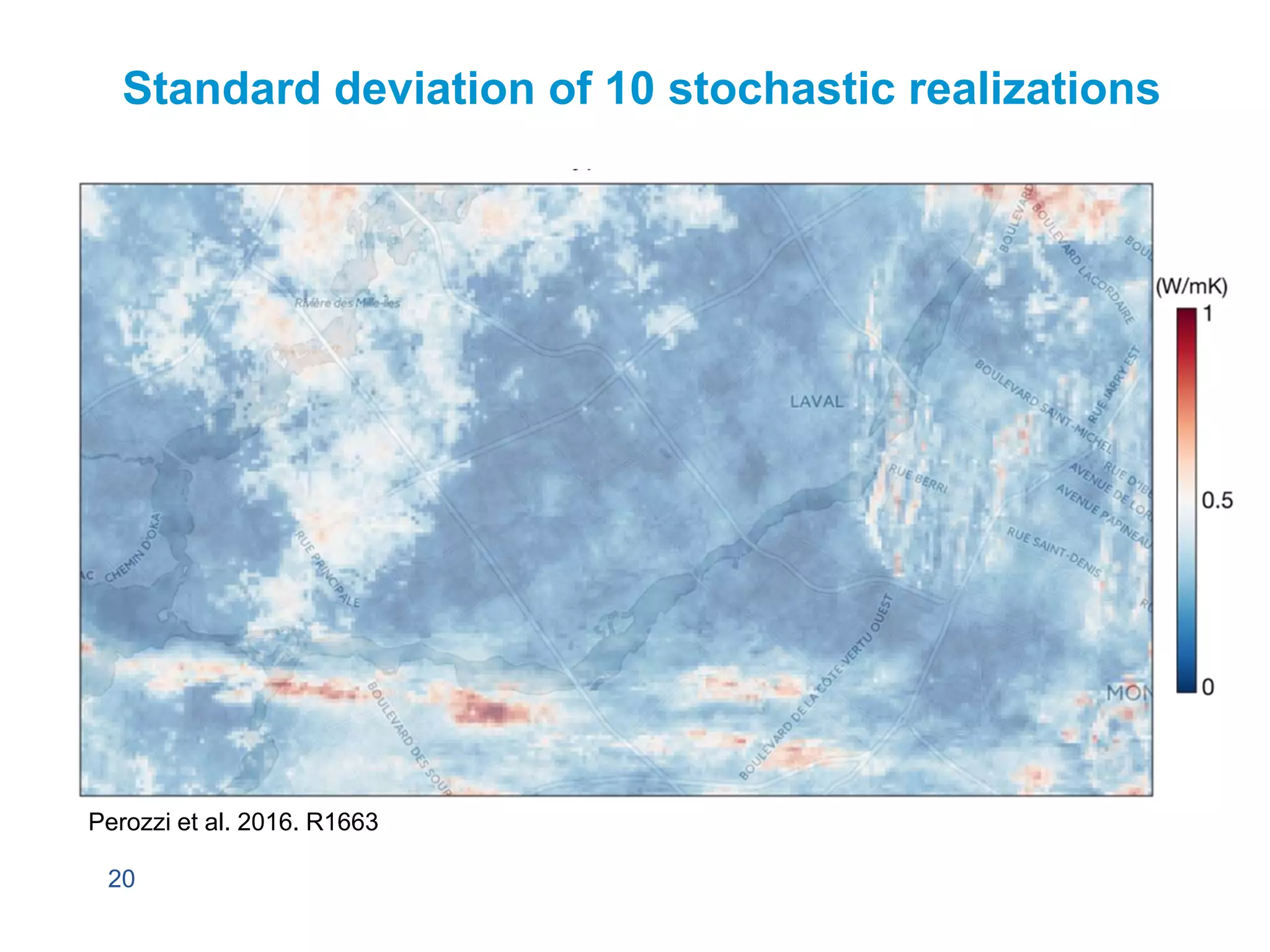
20
Perozzi et al. 2016. R1663
Standard deviation of 10 stochastic realizations
21
Conclusions
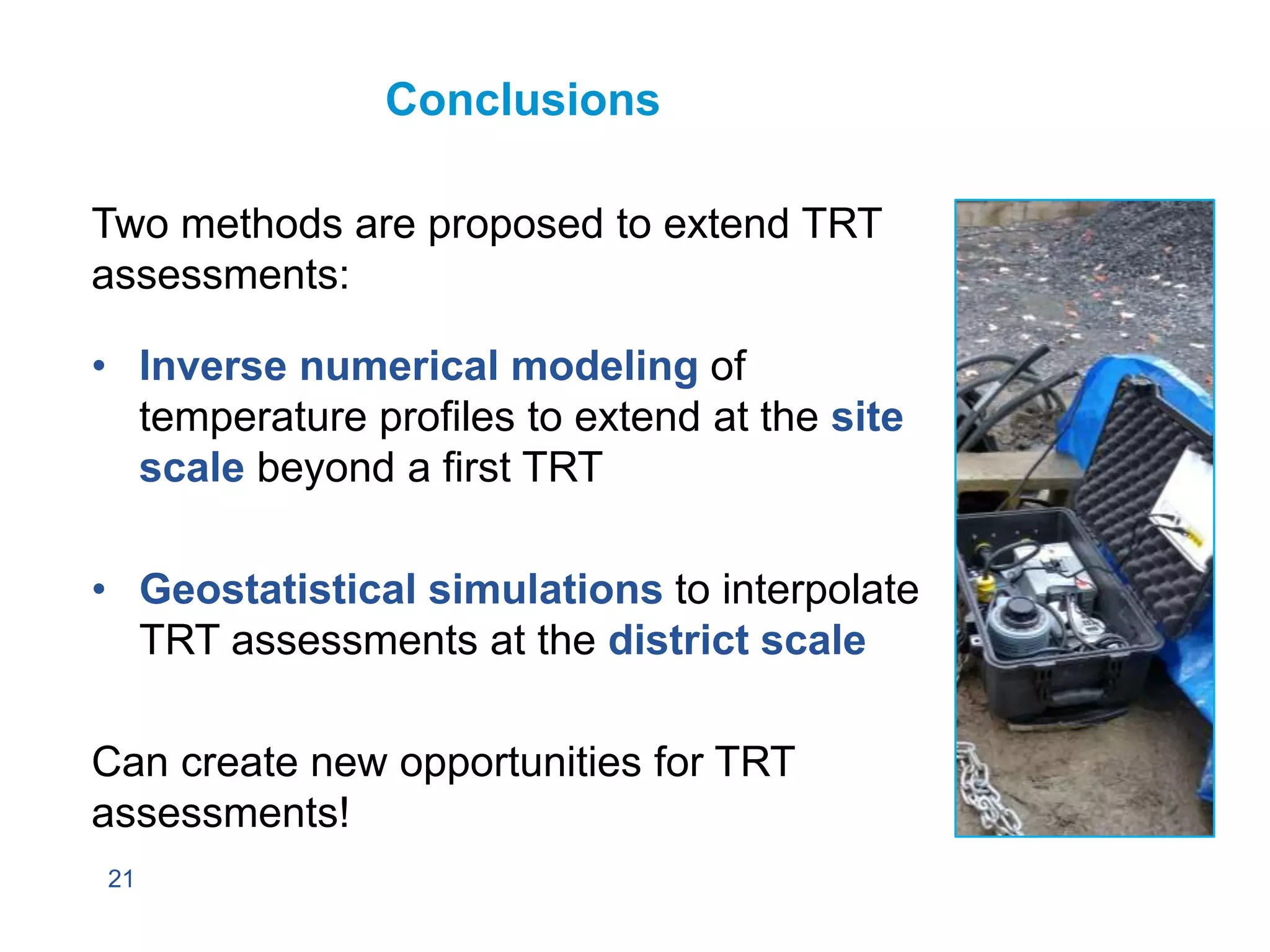
Two methods are proposed to extend TRT
assessments:
• Inverse numerical modeling of
temperature profiles to extend at the site
scale beyond a first TRT
• Geostatistical simulations to interpolate
TRT assessments at the district scale
Can create new opportunities for TRT
assessments!
22
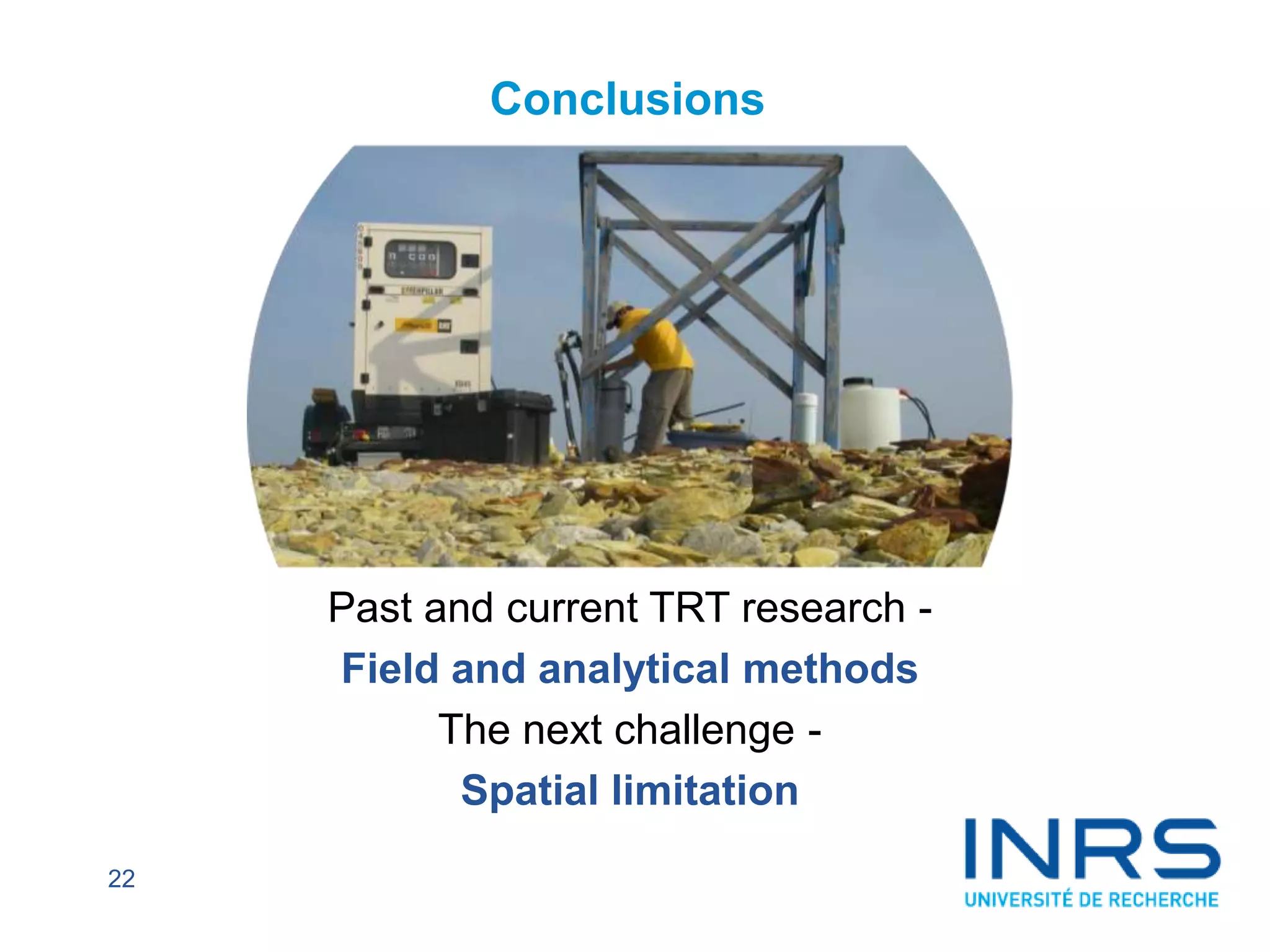
Past and current TRT research -
Field and analytical methods
The next challenge -
Spatial limitation
Conclusions

New Methods to Spatially Extend Thermal Response Test Assessments

  • 1.
    1 IGSHPA Technical /Research Conference and Expo 2017 Denver, Colorado March 15th, 2017 jasmin.raymond@inrs.ca New Methods to Spatially Extend Thermal Response Test Assessments Jasmin Raymond, Michel Malo, Louis Lamarche, Lorenzo Perozzi, Erwan Gloaguen & Carl Bégin
  • 2.
    2 Thermal response test(TRT) Raymondetal.2011.Groundwater • Evaluation of the subsurface thermal conductivity • To design ground coupled heat pump (GCHP) systems • Single test commonly carried out for a commercial size system • Limited use because of important cost
  • 3.
    3 TRT radius ofinfluence Raymond et al. 2014. ASHRAE Trans. • Limited to ~1 - 2 m • Heterogeneous subsurface
  • 4.
    4 How to extendTRT assessment beyond a single well? 1) Inverse numerical modeling of a temperature profile – site scale, large project 2) Geostatistical simulation – district scale, many small projects
  • 5.
    5 1) Site scaleextrapolation of thermal conductivity Validated at an experimental site with 2 boreholes Versaprofiles test site
  • 6.
    6 Measurement of temperatureprofiles Submersible pressure and temperature probe Depth compensated by the rise in water level inside the U-pipe 𝐷∗ (𝐿) = 𝐷 − 𝑉logger + 𝑉wire(𝐿) 2𝜋𝑟pipe,in 2
  • 7.
    7 Numerical model development Transientconductive Heat transfer t T c y T λ yx T λ x                       
  • 8.
    8 PG-08-01: Evaluation ofthe Earth heat flux with inverse numerical simulations λ = 3.0 W/mK (TRT) Squared residuals are minimized to find q
  • 9.
    9 PG-08-02: Evaluation ofthe subsurface thermal conductivity with inverse numerical simulations q = 25 mW/m2 (inversion) Squared residuals are minimized to find λ
  • 10.
    10 Inverse numerical simulationsto extent TRT assessment Raymond et al. 2017. Renewable Energy λ inversed = 3.2 W/mK λ TRT = 3.5 W/mK
  • 11.
    2) District scaleextrapolation of thermal conductivity Geothermal potential of an urban area with multiple projects 11 350 km2 zone in the northern part of Montreal Perozzi et al. 2016. R1663
  • 12.
    4 TRTs witha heating cable 12 Wireless hub Wireless switch Variable transformer Intelligent power meter To power supply To heating cable
  • 13.
    TRT analysis example 13 ∆𝑇(𝑡) ∆ln(𝑡) = 𝑄 4𝜋λs 𝐻 Q = V𝐴 Infinite line source equation with the temporal superposition principle for the recovery period Slope method ∆𝑇(𝑡c, 𝑡h) ∆ ln( 𝑡c + 𝑡h 𝑡c ) = 𝑄 4𝜋λs 𝐻 Test 3 Thermal conductivity (W/mK) Depth(m) Overburden Bedrock
  • 14.
    14 10 lab measurementson outcrop samples Transient plane source method ctherm.com
  • 15.
    15 Measurements summary Latitude Longitude Thermal conductivity (W/mK) Thermostratigraphicunit Measurement type 45.519249 -73.652824 2.10 T-BR-C Outcrop/TPS 45.519249 -73.652824 2.22 T-BR-C Outcrop/TPS 45.547637 -73.696752 2.90 T-BR-C Outcrop/TPS 45.60307 -73.656963 2.90 T-BR-C Outcrop/TPS 45.604803 -73.659649 3.15 T-BR-C Outcrop/TPS 45.605735 -73.661411 2.31 T-BR-C Outcrop/TPS 45.60307 -73.656963 2.60 T-BR-C Outcrop/TPS 45.602381 -73.658056 2.93 T-BR-C Outcrop/TPS 45.50964 -73.627682 2.24 T-BR-C Outcrop/TPS 45.604803 -73.659649 2.16 T-BR-C Outcrop/TPS 45.511454 -73.6518 2.39 T-BR-C Borehole/TRT cable 45.504581 -73.65772 2.39 T-BR-C Borehole/TRT cable 45.516988 -73.648486 2.81 T-BR-C Borehole/TRT cable 45.527392 -73.855424 4.20 Beauharnois Borehole/TRT cable
  • 16.
    16 Synthetic data 45 measurements atthe sedimentary basin scale Thermostratigraphy of the St. Lawrence Lowlands Average thermal properties Thermal conductivity (W/mK) Thermostratigraphic unit N Average Standard deviation Trenton, Black River, Chazy 23 2.67 0.44 Beauharnois 6 3.40 0.55 Raymondetal.2017.EnvironmentalEarthSciences
  • 17.
    17 Sequential Gaussian simulations Toevaluate the spatial distribution of the host rock thermal conductivity 35 000 pixels 100 m × 100 m
  • 18.
  • 19.
    19 Mean of 10stochastic realizations Perozzi et al. 2016. R1663
  • 20.
    20 Perozzi et al.2016. R1663 Standard deviation of 10 stochastic realizations
  • 21.
    21 Conclusions Two methods areproposed to extend TRT assessments: • Inverse numerical modeling of temperature profiles to extend at the site scale beyond a first TRT • Geostatistical simulations to interpolate TRT assessments at the district scale Can create new opportunities for TRT assessments!
  • 22.
    22 Past and currentTRT research - Field and analytical methods The next challenge - Spatial limitation Conclusions