Simple Presentations 
A forgotten art 
Naga Chokkanathan 
November 2014 
PMU Thanjavur
Agenda 
• Why write simple Presentations? 
• Pen and paper 
• Software 
• Text, layout, colors 
• Pictures 
• Presenting, sharing
Disclaimer 
• These are not rules, but some simple 
commonsense guidances 
• This is not the only way to make Presentations 
• And this doesn't focus on great presentation 
techniques 
• You may skip some of these tips once you 
master the art of writing presentations 
• But as of now, these would help you to start
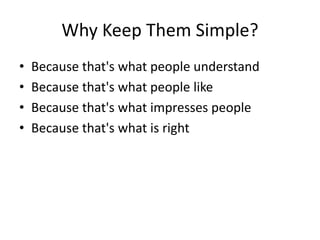
Why Keep Them Simple? 
• Because that's what people understand 
• Because that's what people like 
• Because that's what impresses people 
• Because that's what is right
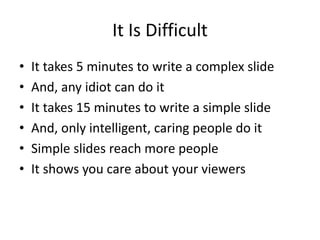
It Is Difficult 
• It takes 5 minutes to write a complex slide 
• And, any idiot can do it 
• It takes 15 minutes to write a simple slide 
• And, only intelligent, caring people do it 
• Simple slides reach more people 
• It shows you care about your viewers
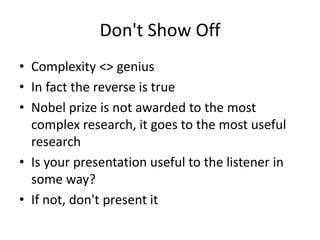
Don't Show Off 
• Complexity <> genius 
• In fact the reverse is true 
• Nobel prize is not awarded to the most 
complex research, it goes to the most useful 
research 
• Is your presentation useful to the listener in 
some way? 
• If not, don't present it
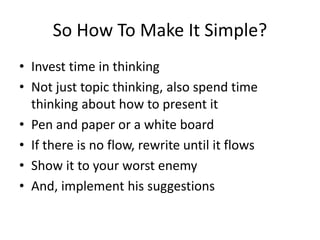
So How To Make It Simple? 
• Invest time in thinking 
• Not just topic thinking, also spend time 
thinking about how to present it 
• Pen and paper or a white board 
• If there is no flow, rewrite until it flows 
• Show it to your worst enemy 
• And, implement his suggestions
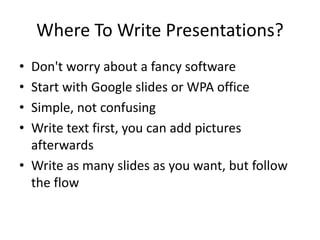
Where To Write Presentations? 
• Don't worry about a fancy software 
• Start with Google slides or WPA office 
• Simple, not confusing 
• Write text first, you can add pictures 
afterwards 
• Write as many slides as you want, but follow 
the flow
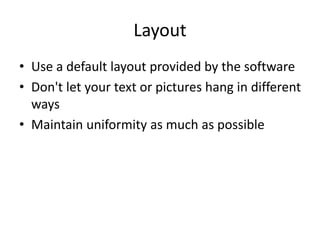
Layout 
• Use a default layout provided by the software 
• Don't let your text or pictures hang in different 
ways 
• Maintain uniformity as much as possible
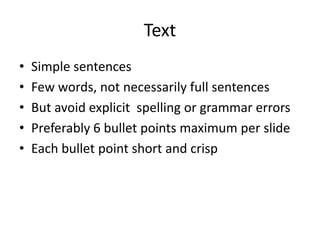
Text 
• Simple sentences 
• Few words, not necessarily full sentences 
• But avoid explicit spelling or grammar errors 
• Preferably 6 bullet points maximum per slide 
• Each bullet point short and crisp
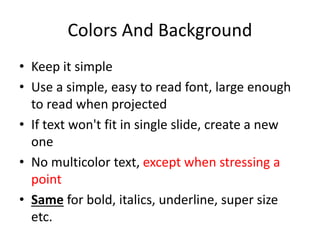
Colors And Background 
• Keep it simple 
• Use a simple, easy to read font, large enough 
to read when projected 
• If text won't fit in single slide, create a new 
one 
• No multicolor text, except when stressing a 
point 
• Same for bold, italics, underline, super size 
etc.
What To Write In Bullets? 
• Don't give away everything 
• Just Provide most important keywords from 
what you are going to discuss 
• Presentation <> document 
• Add audio, video as links, if required
Pictures 
• Use when necessary 
• Picture rich slides = few (or zero) words 
• Choose pictures carefully to match your 
presentation theme 
• Try to present things visually (for example, 
graphs, flow diagrams, logos, maps etc.)
Where Are The Pictures? 
• Use your own photos, diagrams when possible 
• Clipart may not be appropriate in all cases 
• Don't stretch images too much, it's ugly
Respect Copyright 
• When adding images from Internet, add a 
slide giving proper image credits with URLs 
• Be aware that this may still be illegal 
• Don't use watermarked images, it's stealing 
and it's ugly 
• Thousands of free photos and paintings 
available at search.creativecommons.org 
• They may not be very professional, but they 
are legally free to use
Title 
• Add a simple title to each slide 
• It should convey theme of that slide 
• Presentation = novel, titles = chapters 
• You can ignore this rule for slides with only 
pictures
Notes 
• Add speaker notes to slides 
• This can be very descriptive 
• Will come handy when you are presenting
After Completing The Slides 
• Review 
• Rework 
• Repeat until perfect 
• Make sure flow is maintained and enhanced
Finally 
• Add the title slide 
• Simple title please 
• You can add a descriptive subtitle 
• Add your name, month, year and venue of 
presentation 
• Add an agenda slide, a contact me slide
Before Presenting 
• Send a PDF version of the presentation to 
organizers, yourself by email 
• Carry a version in an USB drive 
• Keep an editable version on cloud (Example: 
Google drive) 
• Check how it plays on the meeting venue at 
least 15 minutes before the presentation 
• Inform them if you need audio (speakers), test 
that as well
Beginning Your Presentation 
• Introduce yourself: elevator pitch 
• Introduce your topic 
• Explain the agenda 
• Also mention what won't be covered in this 
• Can the audience ask questions in between or 
you will take questions after the slides?
During Presentation 
• Don't read from slides 
• Explain in the level appropriate for your 
audience 
• Use body language 
• Tell stories 
• Use whiteboard
After Presentation 
• Thank your audience 
• Answer their questions, or tell them you will 
check and get back 
• Provide your email ID 
• Publish the presentation in an online service 
like slideshare, tell the world (except 
confidential presentations) 
• Ask for feedback and keep learning
What Next 
• Watch / view best presentations 
• Look at how they are designed, presented 
• It's an art, learn how you would learn any 
other art!
Thank You 
• Naga Chokkanathan 
• nchokkan@gmail.com

Simple Presentations: A forgotten art

  • 1.
    Simple Presentations Aforgotten art Naga Chokkanathan November 2014 PMU Thanjavur
  • 2.
    Agenda • Whywrite simple Presentations? • Pen and paper • Software • Text, layout, colors • Pictures • Presenting, sharing
  • 3.
    Disclaimer • Theseare not rules, but some simple commonsense guidances • This is not the only way to make Presentations • And this doesn't focus on great presentation techniques • You may skip some of these tips once you master the art of writing presentations • But as of now, these would help you to start
  • 4.
    Why Keep ThemSimple? • Because that's what people understand • Because that's what people like • Because that's what impresses people • Because that's what is right
  • 5.
    It Is Difficult • It takes 5 minutes to write a complex slide • And, any idiot can do it • It takes 15 minutes to write a simple slide • And, only intelligent, caring people do it • Simple slides reach more people • It shows you care about your viewers
  • 6.
    Don't Show Off • Complexity <> genius • In fact the reverse is true • Nobel prize is not awarded to the most complex research, it goes to the most useful research • Is your presentation useful to the listener in some way? • If not, don't present it
  • 7.
    So How ToMake It Simple? • Invest time in thinking • Not just topic thinking, also spend time thinking about how to present it • Pen and paper or a white board • If there is no flow, rewrite until it flows • Show it to your worst enemy • And, implement his suggestions
  • 8.
    Where To WritePresentations? • Don't worry about a fancy software • Start with Google slides or WPA office • Simple, not confusing • Write text first, you can add pictures afterwards • Write as many slides as you want, but follow the flow
  • 9.
    Layout • Usea default layout provided by the software • Don't let your text or pictures hang in different ways • Maintain uniformity as much as possible
  • 10.
    Text • Simplesentences • Few words, not necessarily full sentences • But avoid explicit spelling or grammar errors • Preferably 6 bullet points maximum per slide • Each bullet point short and crisp
  • 11.
    Colors And Background • Keep it simple • Use a simple, easy to read font, large enough to read when projected • If text won't fit in single slide, create a new one • No multicolor text, except when stressing a point • Same for bold, italics, underline, super size etc.
  • 12.
    What To WriteIn Bullets? • Don't give away everything • Just Provide most important keywords from what you are going to discuss • Presentation <> document • Add audio, video as links, if required
  • 13.
    Pictures • Usewhen necessary • Picture rich slides = few (or zero) words • Choose pictures carefully to match your presentation theme • Try to present things visually (for example, graphs, flow diagrams, logos, maps etc.)
  • 14.
    Where Are ThePictures? • Use your own photos, diagrams when possible • Clipart may not be appropriate in all cases • Don't stretch images too much, it's ugly
  • 15.
    Respect Copyright •When adding images from Internet, add a slide giving proper image credits with URLs • Be aware that this may still be illegal • Don't use watermarked images, it's stealing and it's ugly • Thousands of free photos and paintings available at search.creativecommons.org • They may not be very professional, but they are legally free to use
  • 16.
    Title • Adda simple title to each slide • It should convey theme of that slide • Presentation = novel, titles = chapters • You can ignore this rule for slides with only pictures
  • 17.
    Notes • Addspeaker notes to slides • This can be very descriptive • Will come handy when you are presenting
  • 18.
    After Completing TheSlides • Review • Rework • Repeat until perfect • Make sure flow is maintained and enhanced
  • 19.
    Finally • Addthe title slide • Simple title please • You can add a descriptive subtitle • Add your name, month, year and venue of presentation • Add an agenda slide, a contact me slide
  • 20.
    Before Presenting •Send a PDF version of the presentation to organizers, yourself by email • Carry a version in an USB drive • Keep an editable version on cloud (Example: Google drive) • Check how it plays on the meeting venue at least 15 minutes before the presentation • Inform them if you need audio (speakers), test that as well
  • 21.
    Beginning Your Presentation • Introduce yourself: elevator pitch • Introduce your topic • Explain the agenda • Also mention what won't be covered in this • Can the audience ask questions in between or you will take questions after the slides?
  • 22.
    During Presentation •Don't read from slides • Explain in the level appropriate for your audience • Use body language • Tell stories • Use whiteboard
  • 23.
    After Presentation •Thank your audience • Answer their questions, or tell them you will check and get back • Provide your email ID • Publish the presentation in an online service like slideshare, tell the world (except confidential presentations) • Ask for feedback and keep learning
  • 24.
    What Next •Watch / view best presentations • Look at how they are designed, presented • It's an art, learn how you would learn any other art!
  • 25.
    Thank You •Naga Chokkanathan • nchokkan@gmail.com