INTRODUCTION
• SIDRA AYUB
• F23-BS-BBIT-1036
• BBIT 3RD
SEMESTER MORNING
DEPARTMENT OF
MANAGEMENT SCIENCES
UNIVERSITY OF OKARA
• INSTRUCTOR:
PROF. NAFEES AHMAD
SYNCHRONIZATION
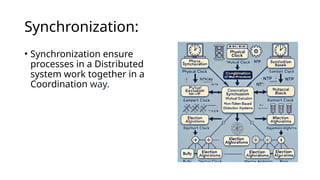
Synchronization:
• Synchronization ensure
processes in a Distributed
system work together in a
Coordination way.
WHAT IS CLOCK SYNCHRONIZATION?
Clock synchronization requires processes to bring their
clocks close together by using communication between
them
• It has four ways
1. Physical clock
2. Logical clock
3. Mutual exclusion
4. Election algorithm
Physical clock:
• Real hardware clock used for synchronization .
• It use Algorithm
1. Berkeley algorithm
2. Ntp(network time protocol)
1. Berkeley algorithm:
• Synchronization clock by averaging time .
1. Ntp:
• Ensure accurate time synchronization over a network.
Logical clock:
• Focuses on the order of events rather
ThaT actual time.
• It uses algorithm
1. Lamport clock
2. Vector clock
1.Lamport clock:
• Orders events using a single logical clock.
1. Vector clock:
• Tracks casual relationship between events using multiple
clocks.
Mutual exclusion:
• Mutual exclusion ensure only one process
Access a critical resource at a
Time.
• It uses algorithm
1. Non taken based
2. Token based
1. Non token based:
• Coordination is achieved without a
Physical token.
• It uses algorithm
1. Suzuki – kasami algorithm
2. Raymond’s algorithm
1.Suzuki- kasami algorithm:
• Uses message ( request/reply) for mutual exclusion.
1. Raymond’s algorithm:
• Uses a hierarchical structure to grant access
2. Token based:
• A token is passed among processe to
Grant access to resources.
Examples
1. Ricart- algorithm
2. Maekawas algorithm
1. Ricart-algorithm:
• Uses message passing with a token
For mutual exclusion.
Maekawas algorithm:
• Divides processes into smaller
• Groups to reduce communication
• Overhead.
Election algorithm
• Select a leader or coordinator in
• A distributed system.
• It uses algorithm
1. Bully algorithm
2. Ring algorithm
1.Bully algorithm:
• The process with the highest priority become the leader.
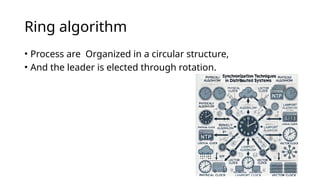
Ring algorithm
• Process are Organized in a circular structure,
• And the leader is elected through rotation.
Clock synchronization
Clock synchronization is the process of ensuring that
the clock of different devices or systems are consistent
with each other.
This is important for coordination operating in distributed
Systems and is achieved using methods
Like
1. Ntp
2. Berkeley algorithm
3. Gps
THANK YOU

sidra_ayoub[1] .pptx

  • 1.
    INTRODUCTION • SIDRA AYUB •F23-BS-BBIT-1036 • BBIT 3RD SEMESTER MORNING DEPARTMENT OF MANAGEMENT SCIENCES UNIVERSITY OF OKARA • INSTRUCTOR: PROF. NAFEES AHMAD
  • 2.
  • 3.
    Synchronization: • Synchronization ensure processesin a Distributed system work together in a Coordination way.
  • 4.
    WHAT IS CLOCKSYNCHRONIZATION? Clock synchronization requires processes to bring their clocks close together by using communication between them • It has four ways 1. Physical clock 2. Logical clock 3. Mutual exclusion 4. Election algorithm
  • 5.
    Physical clock: • Realhardware clock used for synchronization . • It use Algorithm 1. Berkeley algorithm 2. Ntp(network time protocol) 1. Berkeley algorithm: • Synchronization clock by averaging time . 1. Ntp: • Ensure accurate time synchronization over a network.
  • 6.
    Logical clock: • Focuseson the order of events rather ThaT actual time. • It uses algorithm 1. Lamport clock 2. Vector clock 1.Lamport clock: • Orders events using a single logical clock. 1. Vector clock: • Tracks casual relationship between events using multiple clocks.
  • 7.
    Mutual exclusion: • Mutualexclusion ensure only one process Access a critical resource at a Time. • It uses algorithm 1. Non taken based 2. Token based
  • 8.
    1. Non tokenbased: • Coordination is achieved without a Physical token. • It uses algorithm 1. Suzuki – kasami algorithm 2. Raymond’s algorithm 1.Suzuki- kasami algorithm: • Uses message ( request/reply) for mutual exclusion. 1. Raymond’s algorithm: • Uses a hierarchical structure to grant access
  • 9.
    2. Token based: •A token is passed among processe to Grant access to resources. Examples 1. Ricart- algorithm 2. Maekawas algorithm 1. Ricart-algorithm: • Uses message passing with a token For mutual exclusion.
  • 10.
    Maekawas algorithm: • Dividesprocesses into smaller • Groups to reduce communication • Overhead.
  • 11.
    Election algorithm • Selecta leader or coordinator in • A distributed system. • It uses algorithm 1. Bully algorithm 2. Ring algorithm 1.Bully algorithm: • The process with the highest priority become the leader.
  • 12.
    Ring algorithm • Processare Organized in a circular structure, • And the leader is elected through rotation.
  • 13.
  • 14.
    Clock synchronization Clock synchronizationis the process of ensuring that the clock of different devices or systems are consistent with each other. This is important for coordination operating in distributed Systems and is achieved using methods Like 1. Ntp 2. Berkeley algorithm 3. Gps
  • 15.