Shouting into
the Void?
Social Media and
the Construction of
Cultural Heritage
Knowledge Online
S Graham, Carleton U
@electricarchaeo
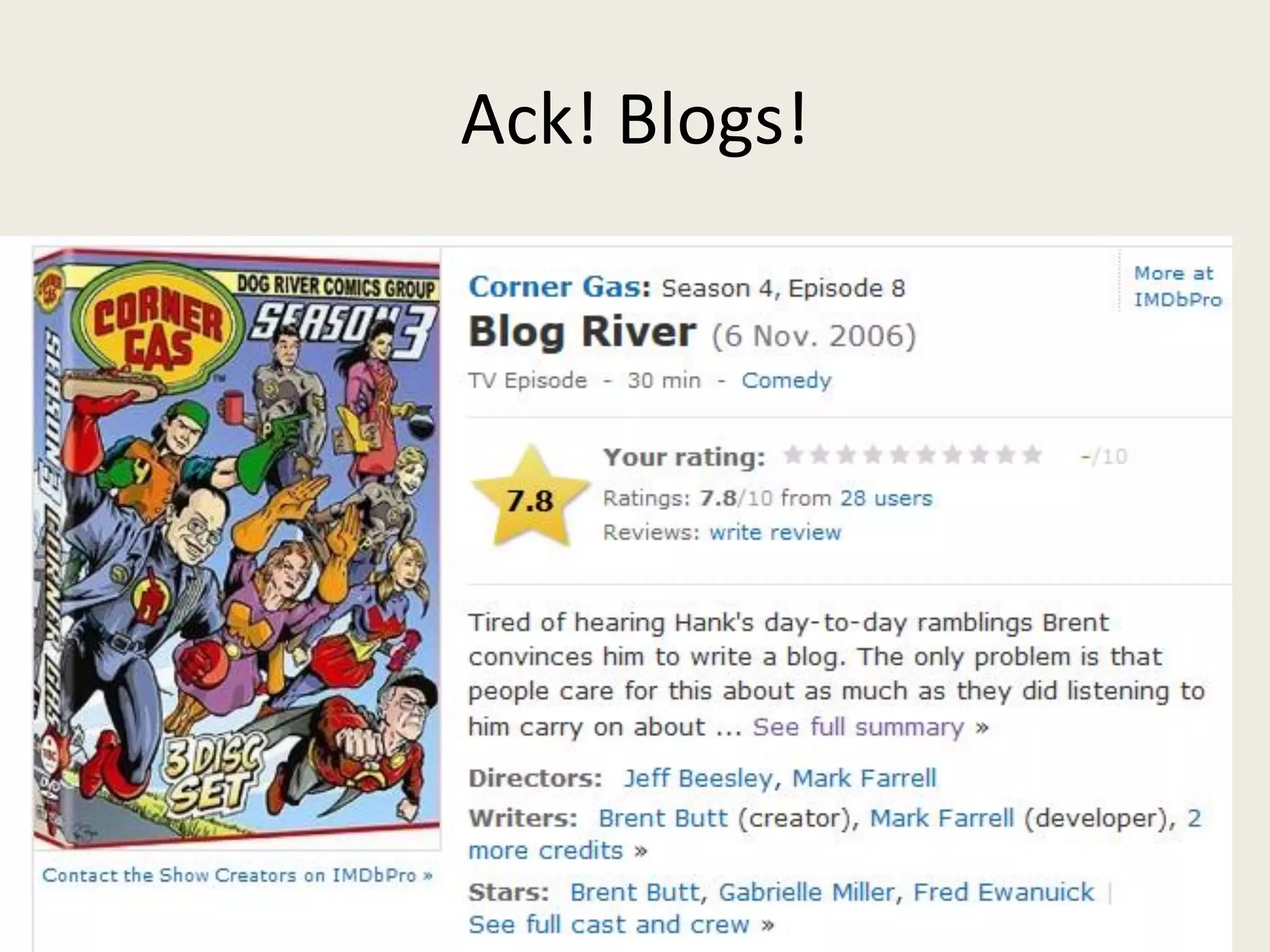
Ack! Blogs!
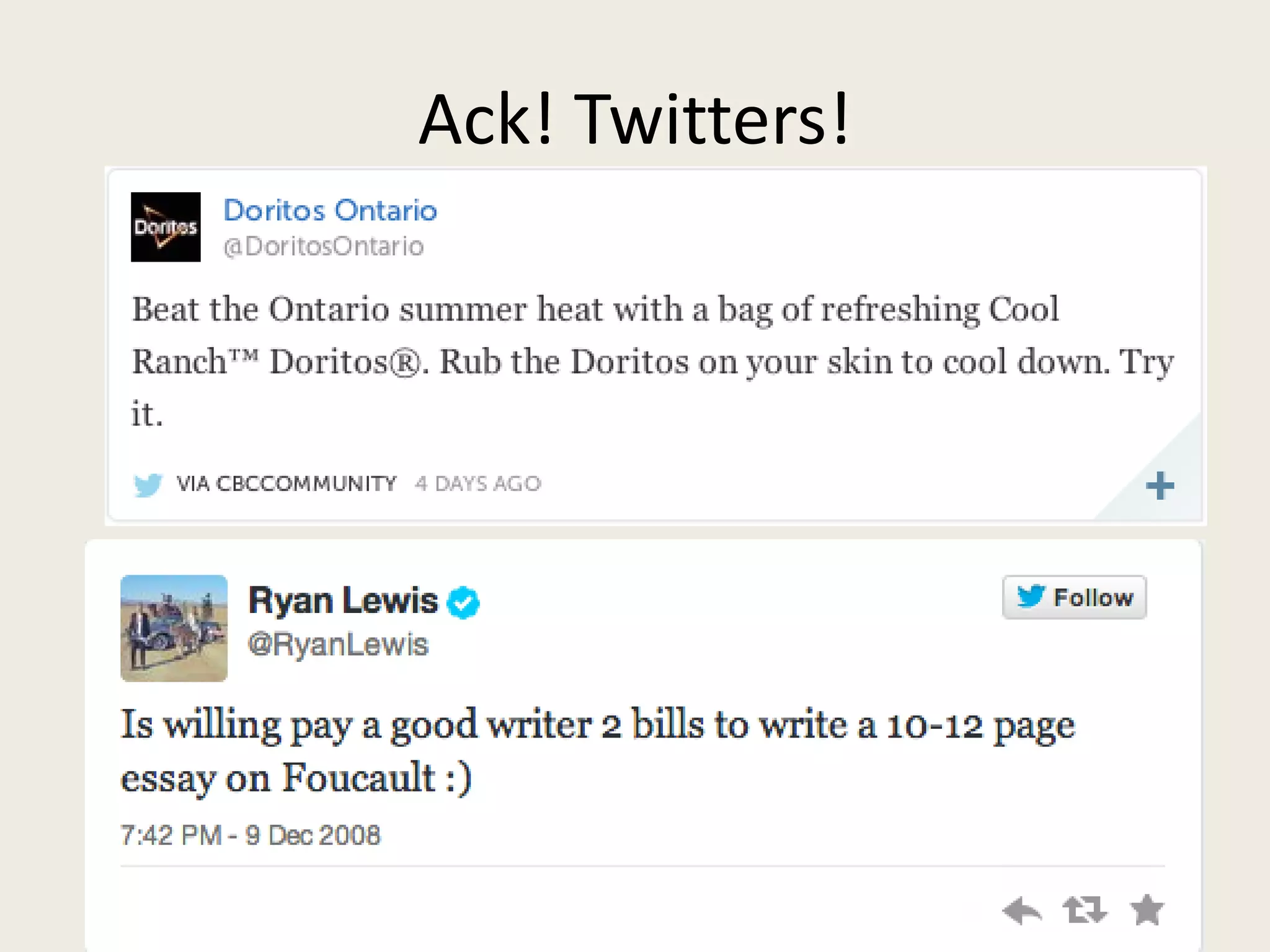
Ack! Twitters!
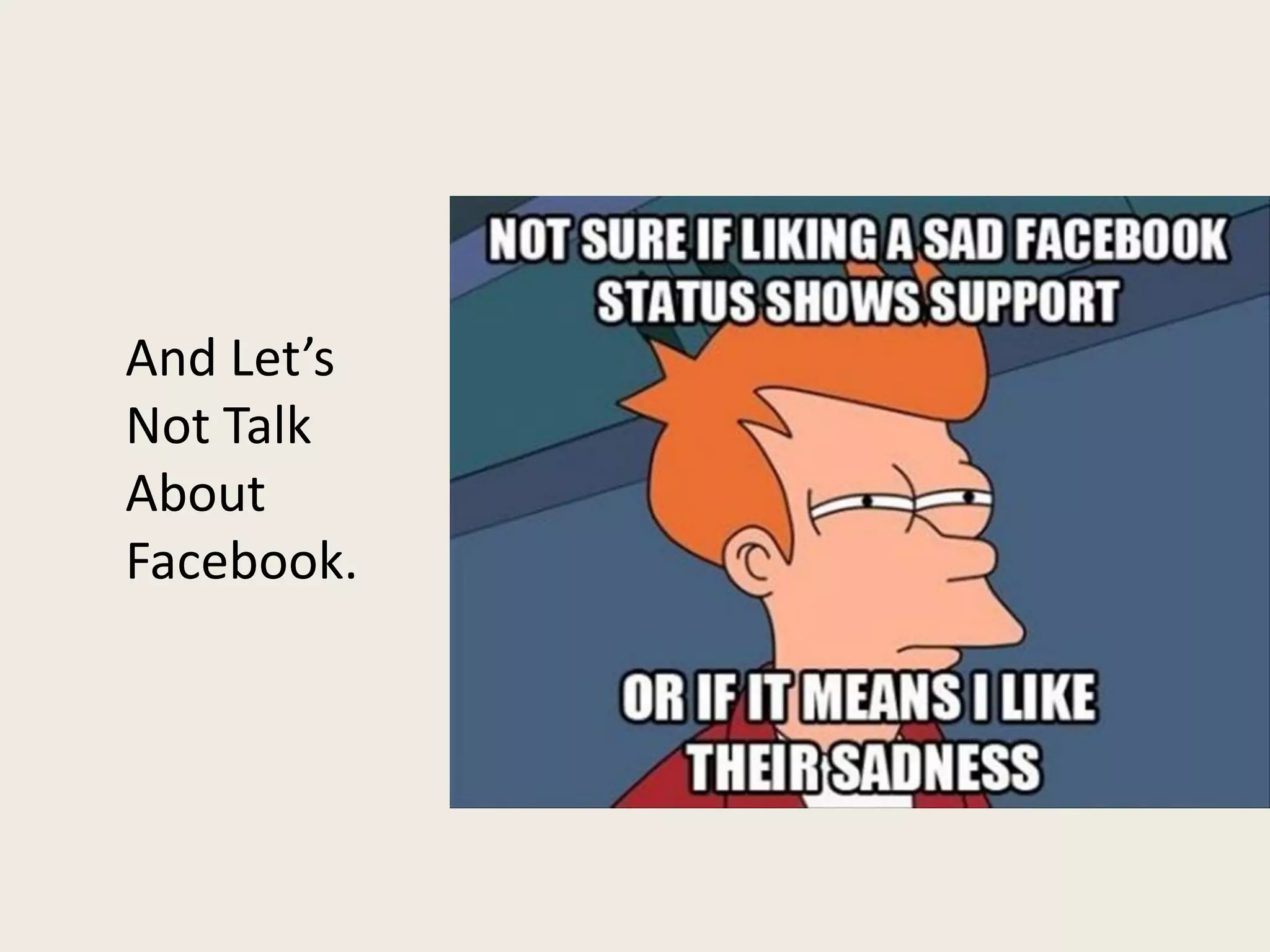
And Let’s
Not Talk
About
Facebook.
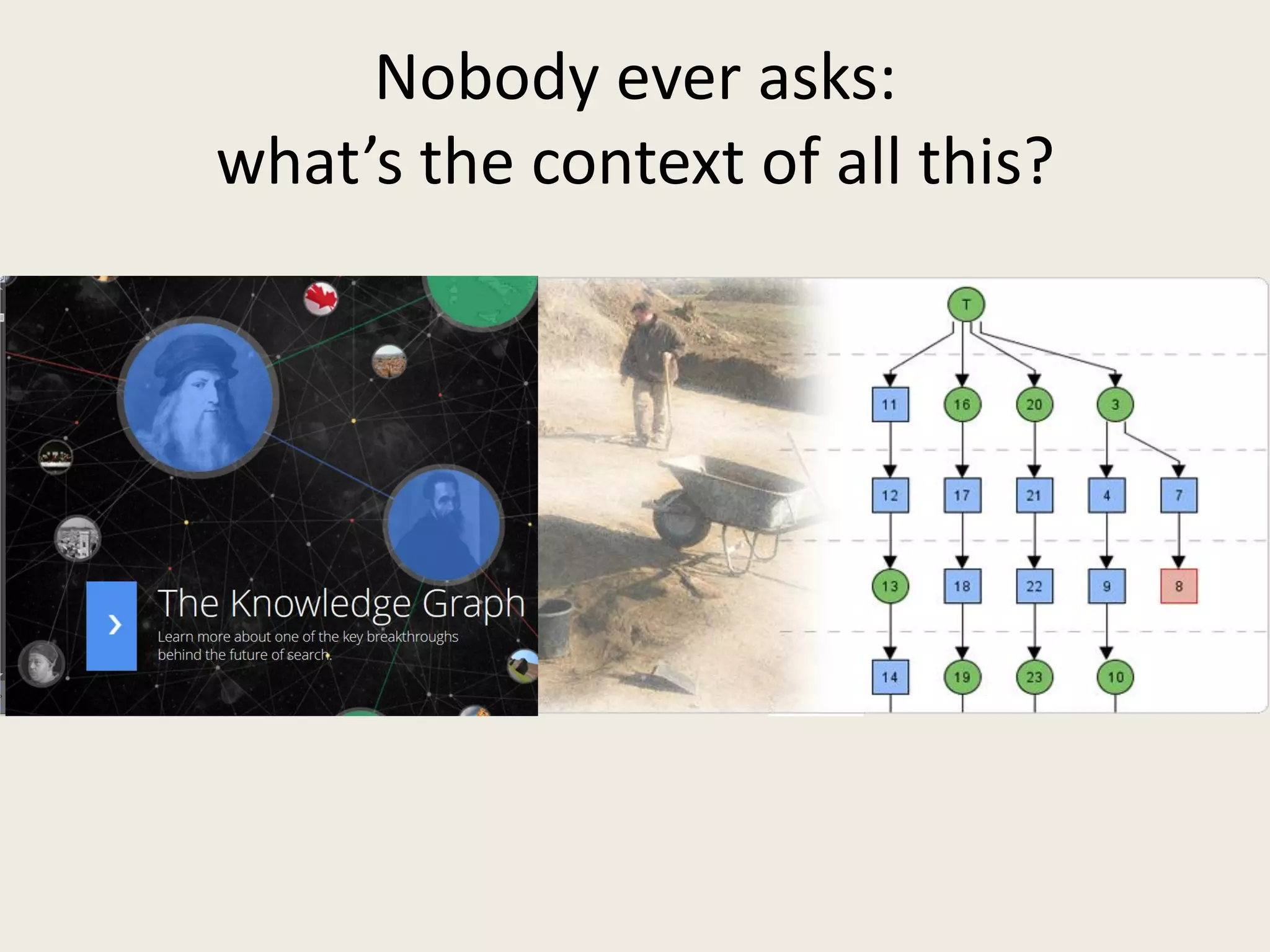
Nobody ever asks:
what’s the context of all this?
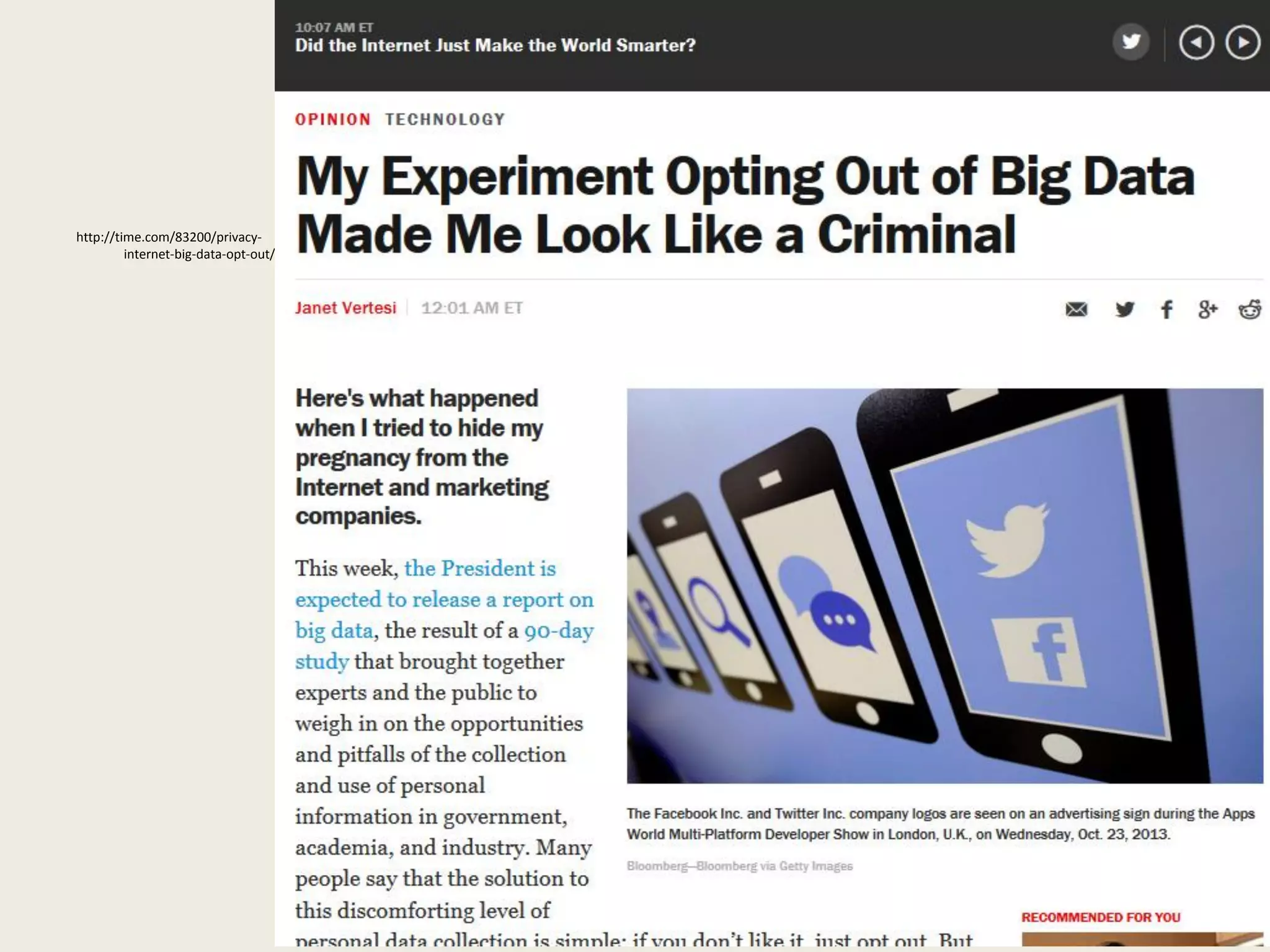
http://time.com/83200/privacy-
internet-big-data-opt-out/
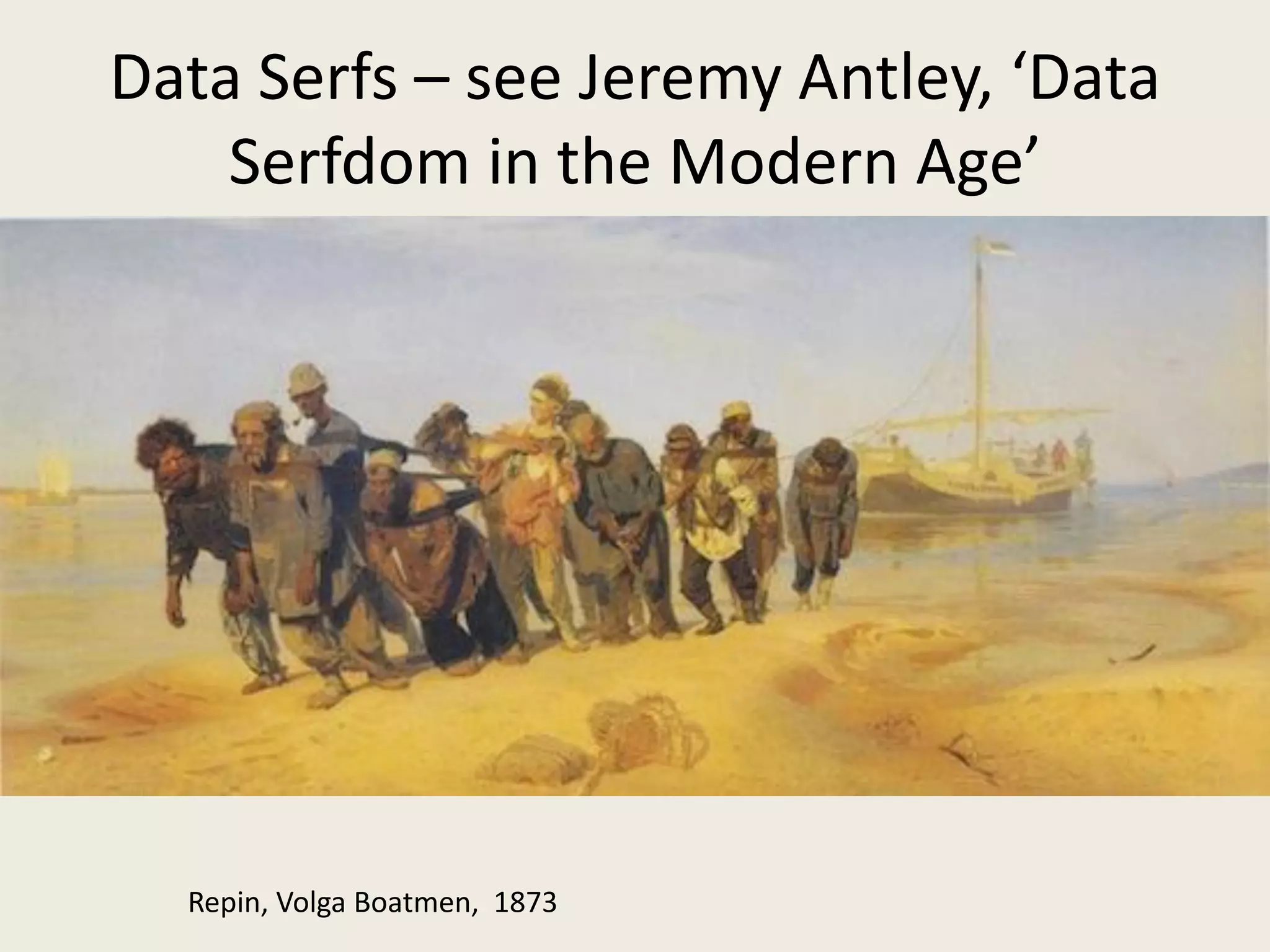
Data Serfs – see Jeremy Antley, ‘Data
Serfdom in the Modern Age’
Repin, Volga Boatmen, 1873
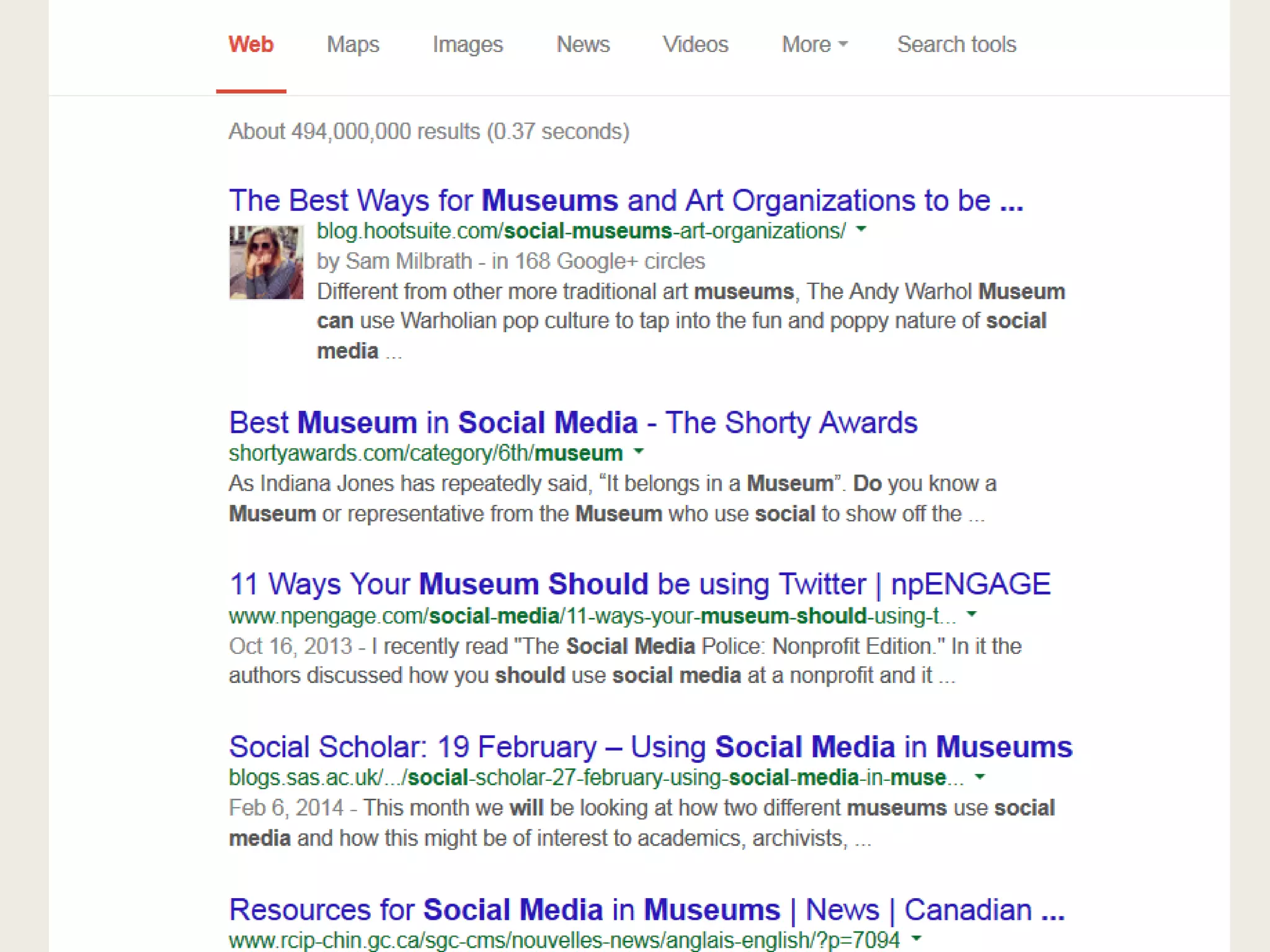
So. Let’s look at the context of some
cultural heritage on the web
• Archaeologists who blog.
• Folks who’d be interested in finding out about
archaeology.
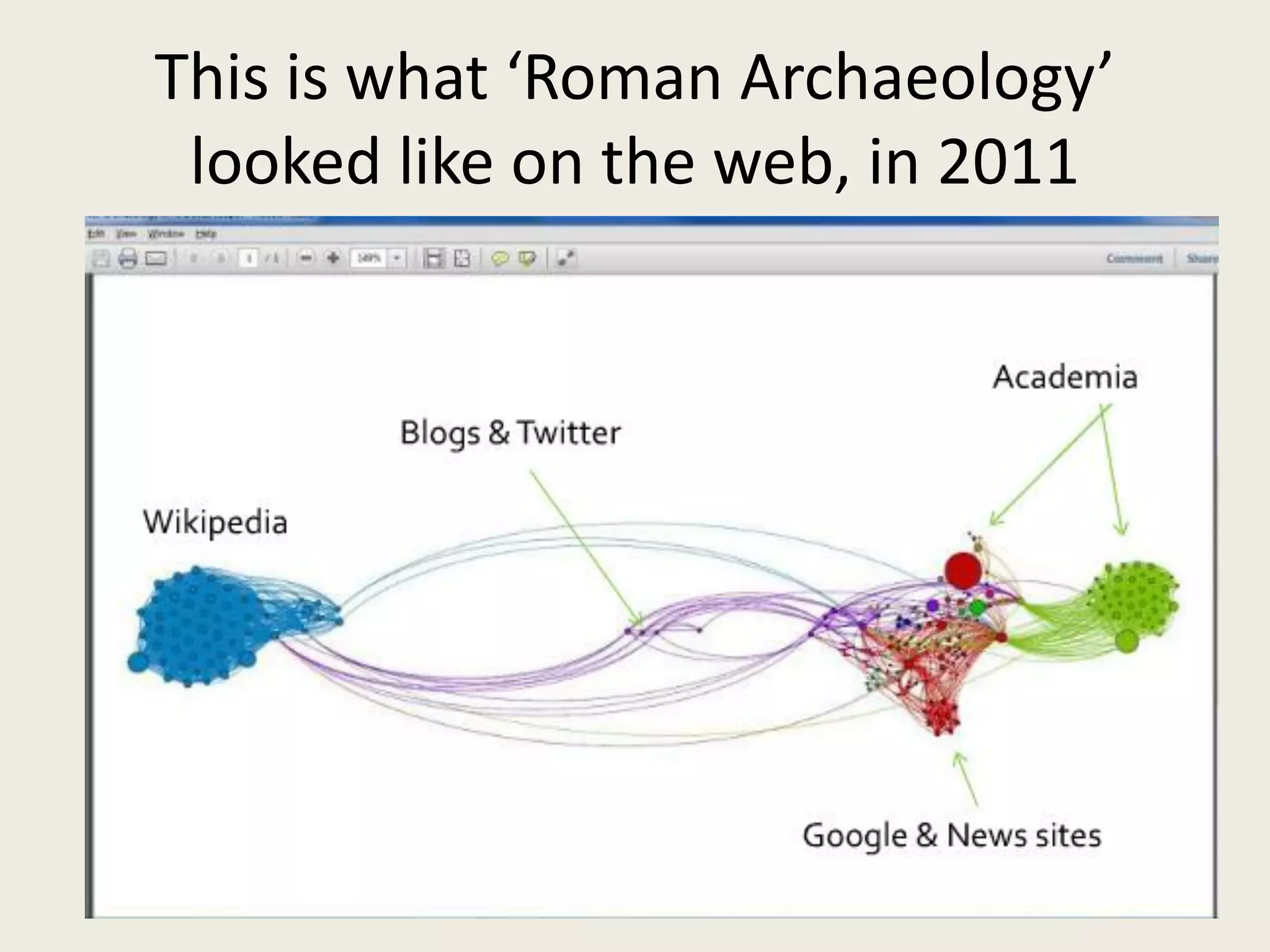
This is what ‘Roman Archaeology’
looked like on the web, in 2011
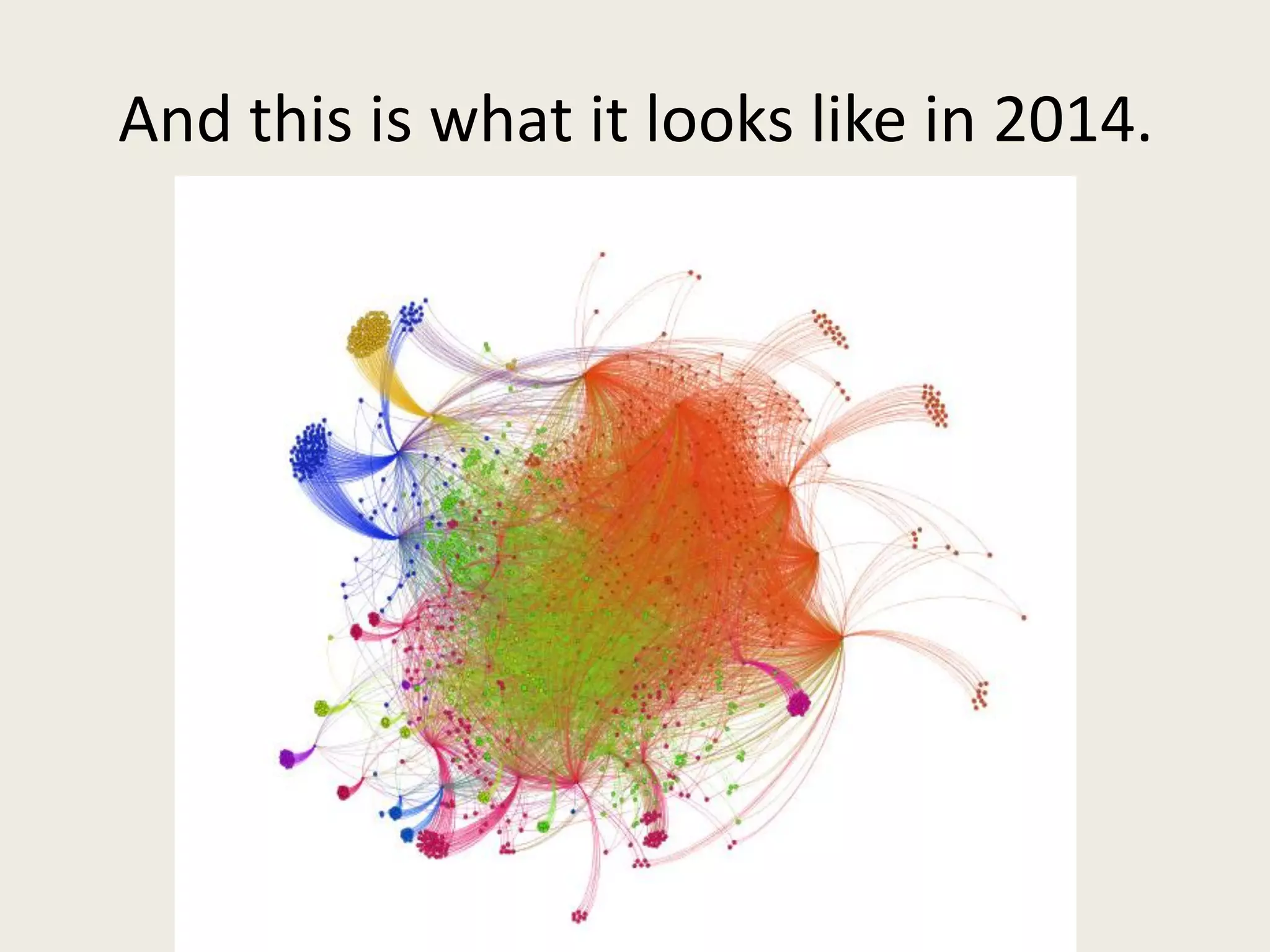
And this is what it looks like in 2014.
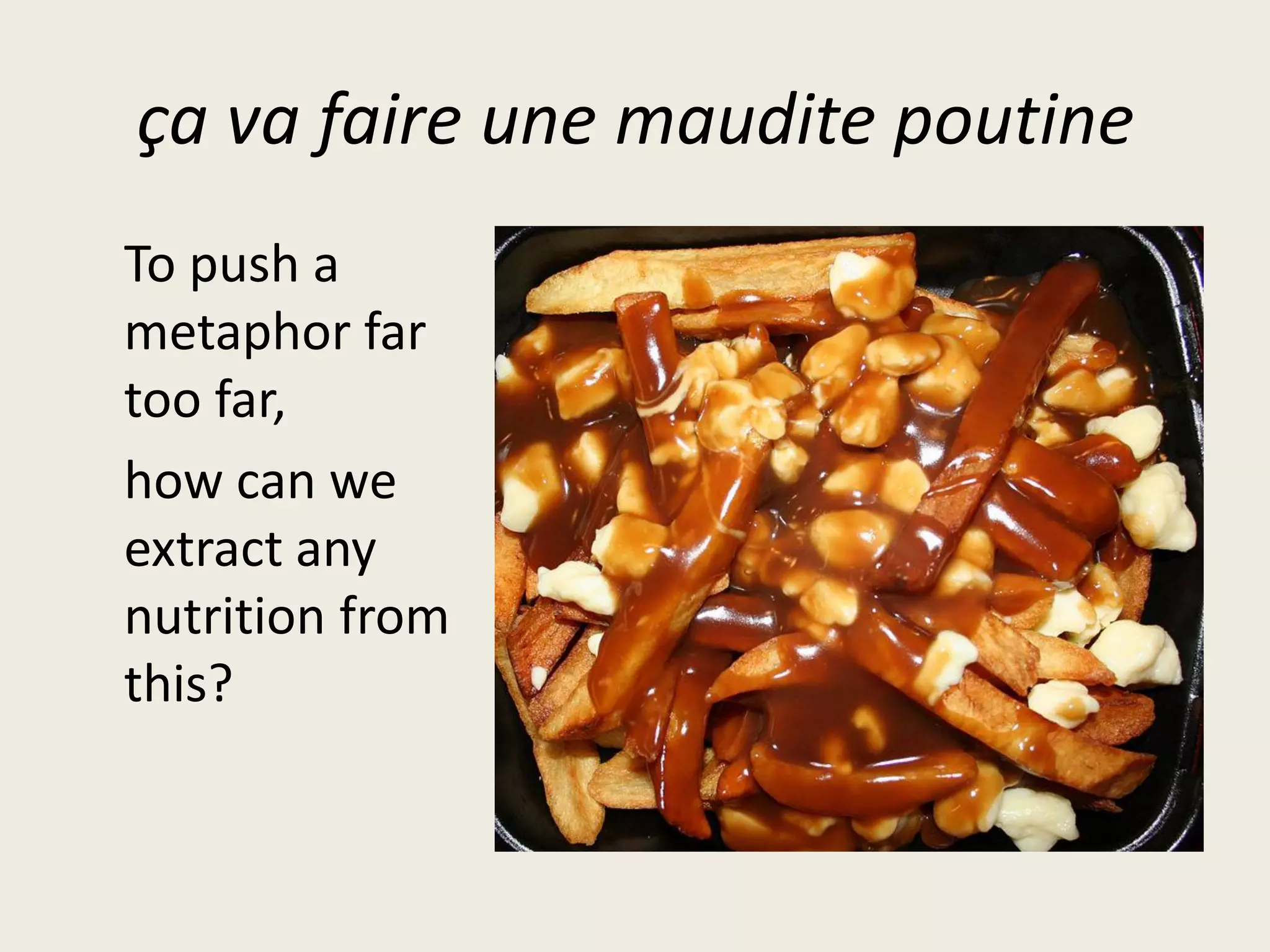
ça va faire une maudite poutine
To push a
metaphor far
too far,
how can we
extract any
nutrition from
this?
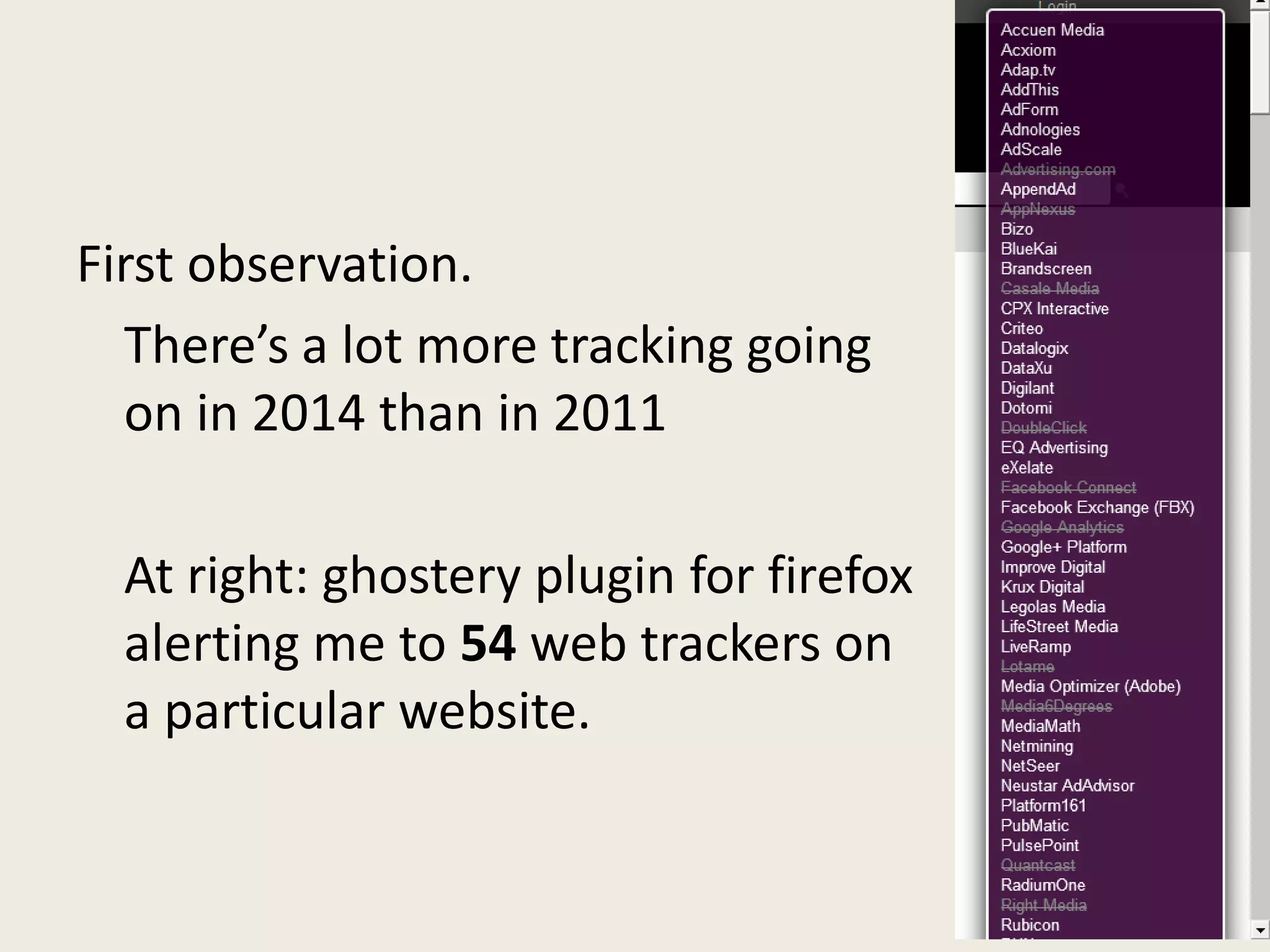
First observation.
There’s a lot more tracking going
on in 2014 than in 2011
At right: ghostery plugin for firefox
alerting me to 54 web trackers on
a particular website.
Network analysis
• Filter that cruft out
• Find communities
• Find pages that an ideal user might browse to,
given this structure
• Find pages that most users will traverse during
that browse
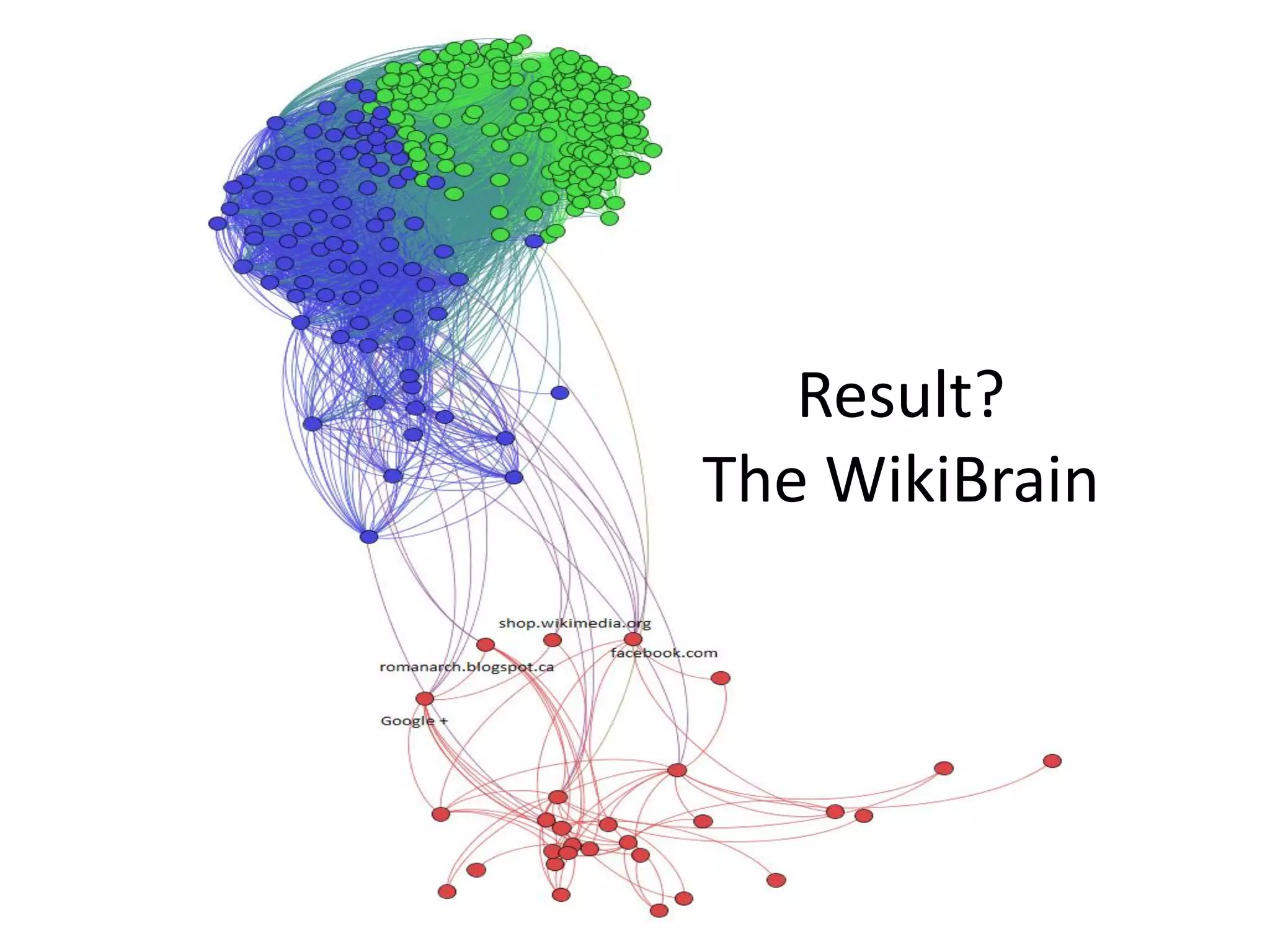
Result?
The WikiBrain
Zoom in on the way Wikipedia
constructs cultural heritage knowledge
Betweeness centrality (a measure of the pages one
might most often click through), we find
• ‘anthropology’,
• ‘evolution’,
• ‘ethnomusicology’,
• ‘list_of_archaeologists’,
• ‘post-structuralism’ as the top five.
• The article on the Colosseum turns up at rank 11.
Overall Structure: Eigenvector
Centrality
Top five:
• ‘Iron_Age’,
• ‘Margaret_Conkey’,
• ‘Marija_Gimbutas’,
• ‘Janet_D.Spector’,
‘Nautical_Archaeology_Society’,
• Amazon product page for ‘Cross-Cultural
Scientific Exchanges in the Eastern
Mediterranean, 1560-1660’ by Avner Ben-Zaken
(2010).
PageRank: most likely destination?
• Top nineteen pages are all category pages
– Eg,
• category:history_books_about_ancient_Rome
• category_talk pages (indicating that there a number of
articles where the content is being actively debated)
• and pages that flag the quality of the article like
‘Wikipedia:Stub’ and ‘help:Disambiguation’.
– In twentieth spot we have ‘Cambirdge_University’,
and in twenty-first,
‘Ure_Museum_of_Greek_Archaeology’ at Reading
University
So what?
1. Blogging is platform, not content
2. Academic bloggers talk with other academic bloggers
3. Academic content of blogs has impact on citations
4. Tracking, advertising ecosystems, walled gardens mean that the
wider world will never discover us, for the most part
5. The wider world off-loads ‘factual’ knowledge to Wikipedia
6. As far as ‘roman archaeology’ goes, the Wikipedia pages are
problematic (as the structure itself demonstrates)
7. We should use this to our advantage.
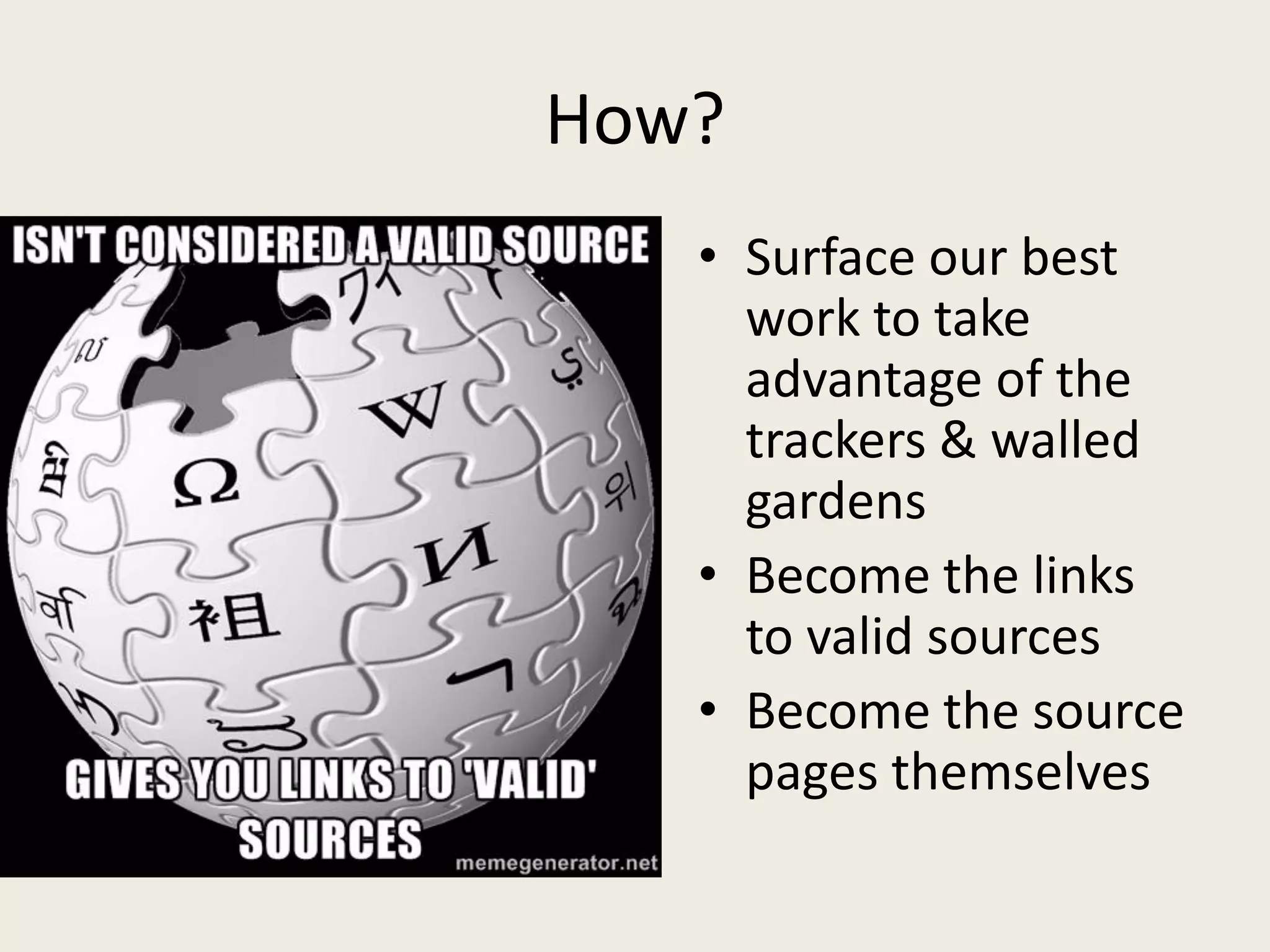
How?
• Surface our best
work to take
advantage of the
trackers & walled
gardens
• Become the links
to valid sources
• Become the source
pages themselves
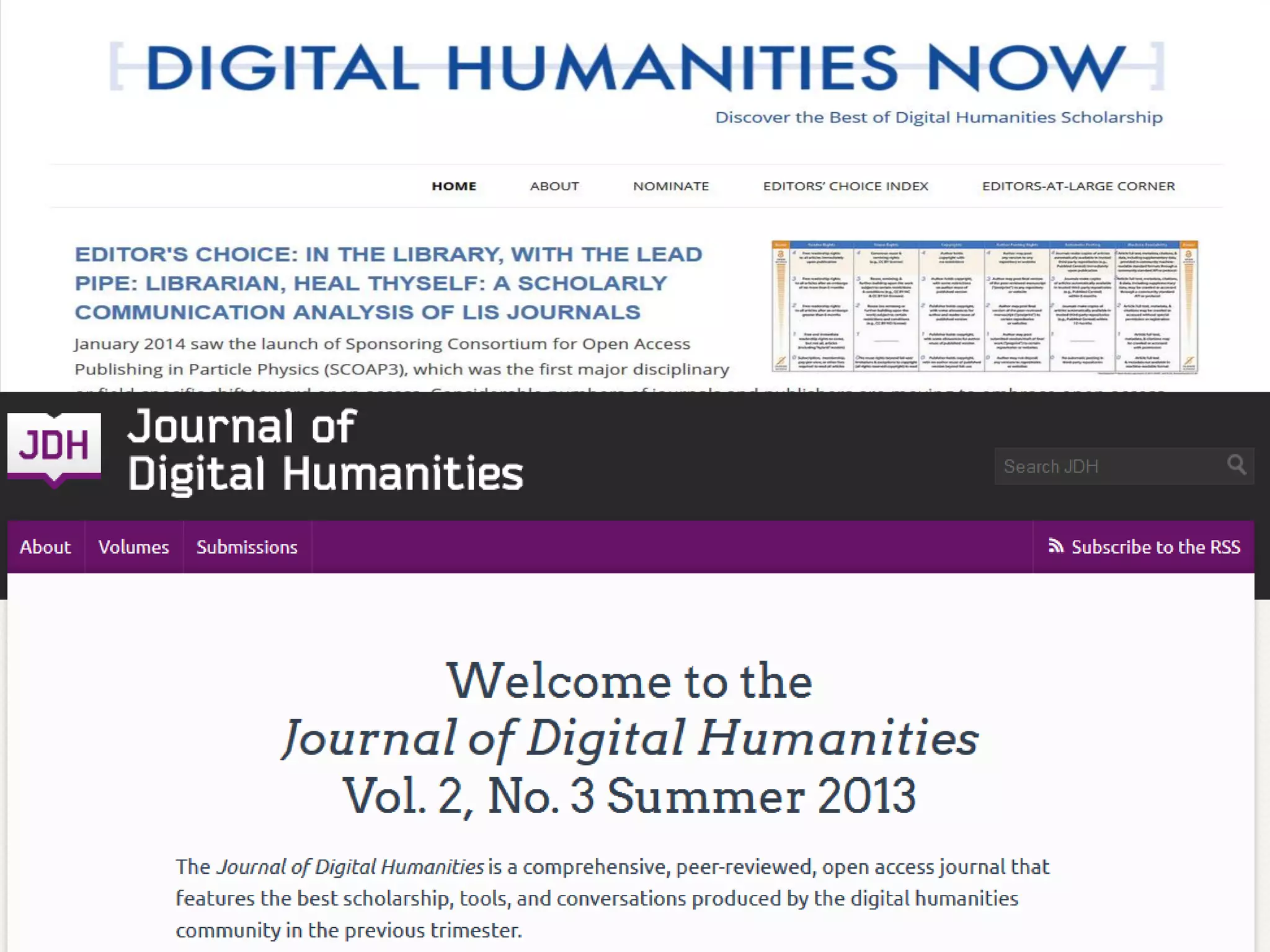
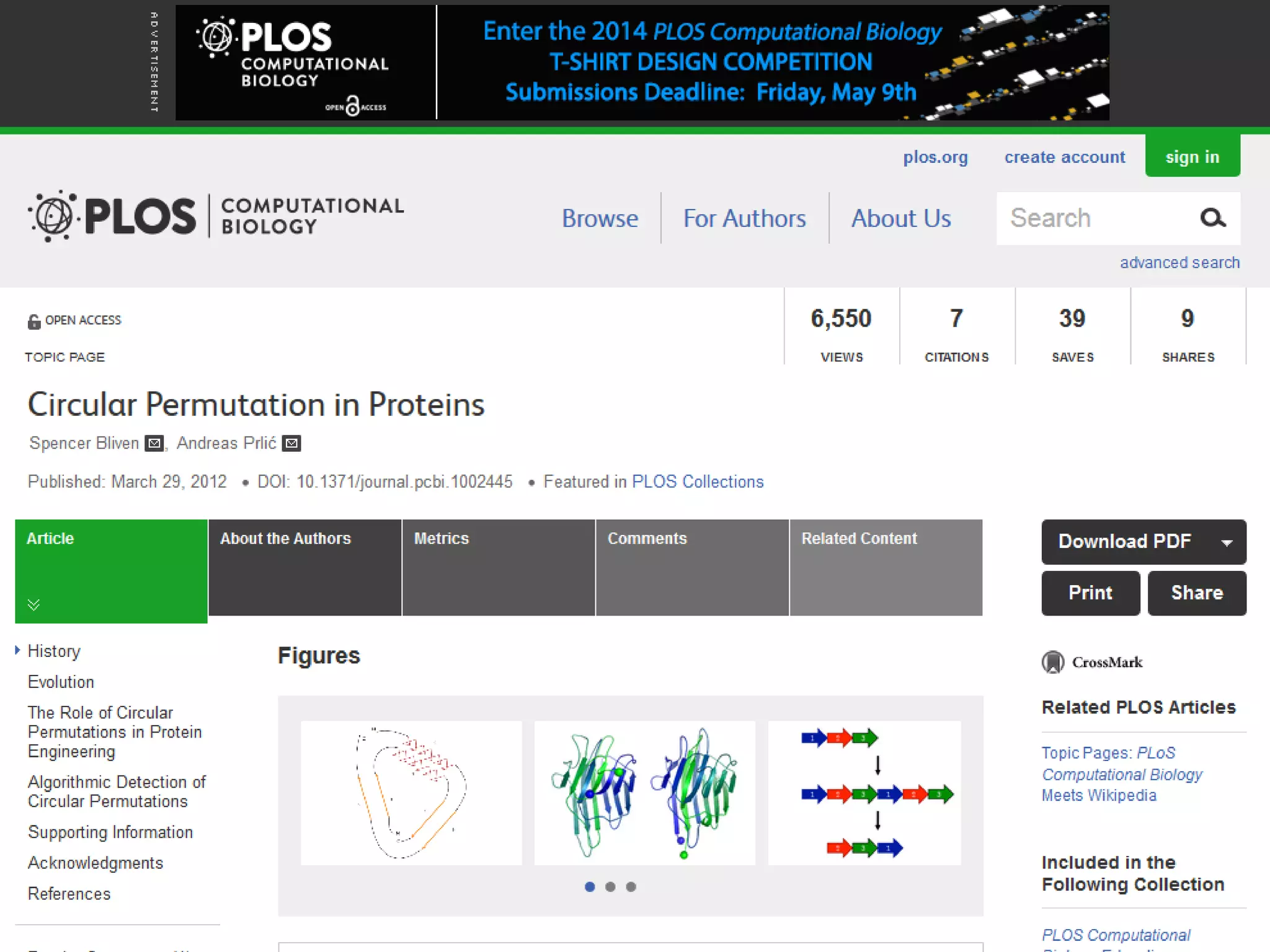
DHNow & JDH
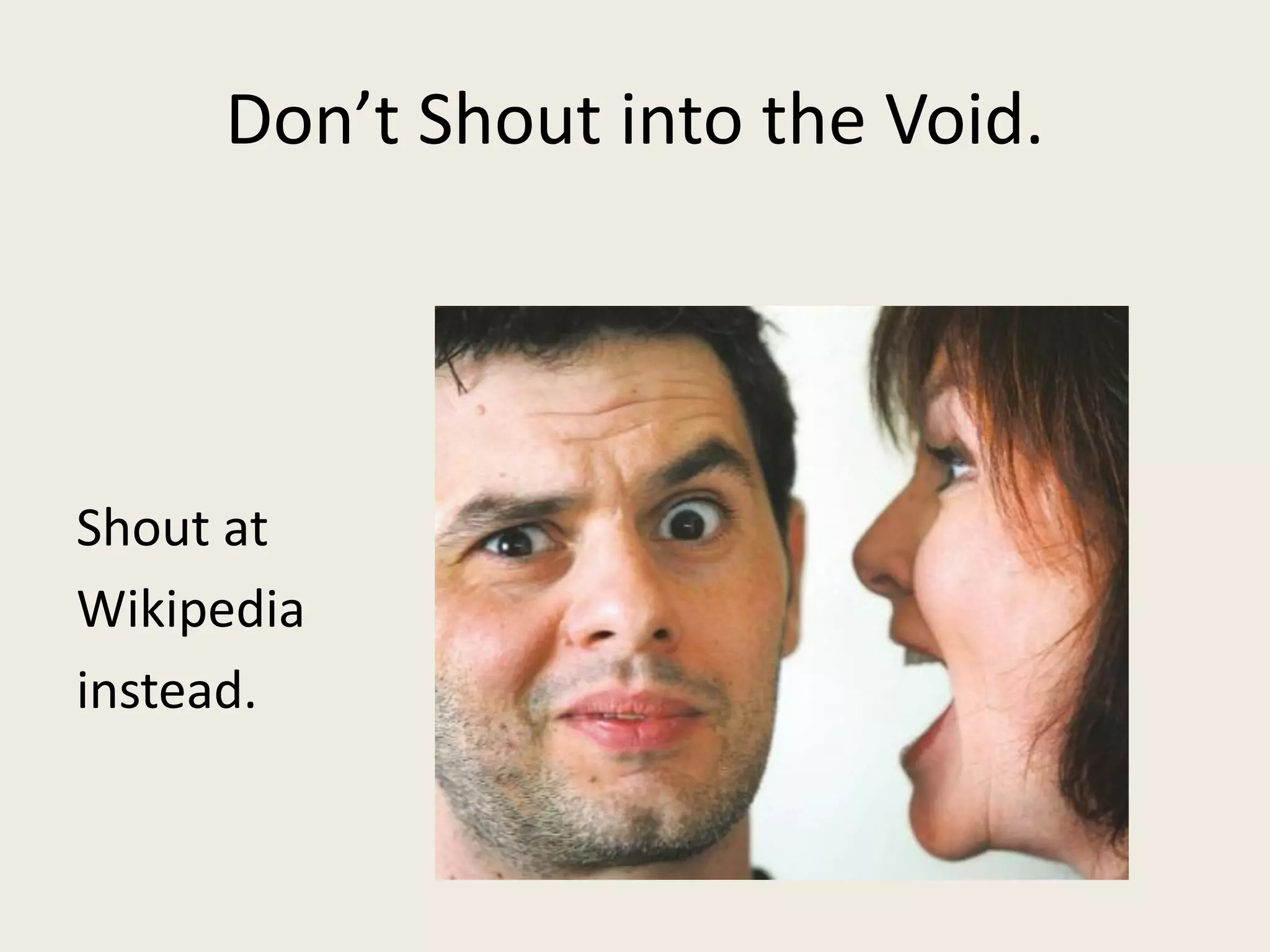
Don’t Shout into the Void.
Shout at
Wikipedia
instead.
Tim Etchells the future will be confusing Mousonturm,
Frankfurt cc
http://en.wikipedia.org/wiki/File:Etchells_Mousonturm.jpg
Crosa, man’s face screaming/shouting cc
http://commons.wikimedia.org/wiki/File:Scream_crosathor
ian.jpg
Harris Matrix Composer, screen grab from
http://www.harrismatrixcomposer.com/
Jonathunder, poutine cc
http://commons.wikimedia.org/wiki/File:Poutine.JPG
Fred Ewanuick, Mary Walsh
http://www.geocities.ws/fredewanuickfan/youngtriffie.htm

Shouting into the void

  • 1.
    Shouting into the Void? SocialMedia and the Construction of Cultural Heritage Knowledge Online S Graham, Carleton U @electricarchaeo
  • 3.
  • 4.
  • 5.
  • 7.
    Nobody ever asks: what’sthe context of all this?
  • 8.
  • 9.
    Data Serfs –see Jeremy Antley, ‘Data Serfdom in the Modern Age’ Repin, Volga Boatmen, 1873
  • 10.
    So. Let’s lookat the context of some cultural heritage on the web • Archaeologists who blog. • Folks who’d be interested in finding out about archaeology.
  • 11.
    This is what‘Roman Archaeology’ looked like on the web, in 2011
  • 12.
    And this iswhat it looks like in 2014.
  • 13.
    ça va faireune maudite poutine To push a metaphor far too far, how can we extract any nutrition from this?
  • 14.
    First observation. There’s alot more tracking going on in 2014 than in 2011 At right: ghostery plugin for firefox alerting me to 54 web trackers on a particular website.
  • 15.
    Network analysis • Filterthat cruft out • Find communities • Find pages that an ideal user might browse to, given this structure • Find pages that most users will traverse during that browse
  • 16.
  • 17.
    Zoom in onthe way Wikipedia constructs cultural heritage knowledge Betweeness centrality (a measure of the pages one might most often click through), we find • ‘anthropology’, • ‘evolution’, • ‘ethnomusicology’, • ‘list_of_archaeologists’, • ‘post-structuralism’ as the top five. • The article on the Colosseum turns up at rank 11.
  • 18.
    Overall Structure: Eigenvector Centrality Topfive: • ‘Iron_Age’, • ‘Margaret_Conkey’, • ‘Marija_Gimbutas’, • ‘Janet_D.Spector’, ‘Nautical_Archaeology_Society’, • Amazon product page for ‘Cross-Cultural Scientific Exchanges in the Eastern Mediterranean, 1560-1660’ by Avner Ben-Zaken (2010).
  • 19.
    PageRank: most likelydestination? • Top nineteen pages are all category pages – Eg, • category:history_books_about_ancient_Rome • category_talk pages (indicating that there a number of articles where the content is being actively debated) • and pages that flag the quality of the article like ‘Wikipedia:Stub’ and ‘help:Disambiguation’. – In twentieth spot we have ‘Cambirdge_University’, and in twenty-first, ‘Ure_Museum_of_Greek_Archaeology’ at Reading University
  • 20.
    So what? 1. Bloggingis platform, not content 2. Academic bloggers talk with other academic bloggers 3. Academic content of blogs has impact on citations 4. Tracking, advertising ecosystems, walled gardens mean that the wider world will never discover us, for the most part 5. The wider world off-loads ‘factual’ knowledge to Wikipedia 6. As far as ‘roman archaeology’ goes, the Wikipedia pages are problematic (as the structure itself demonstrates) 7. We should use this to our advantage.
  • 21.
    How? • Surface ourbest work to take advantage of the trackers & walled gardens • Become the links to valid sources • Become the source pages themselves
  • 22.
  • 24.
    Don’t Shout intothe Void. Shout at Wikipedia instead.
  • 25.
    Tim Etchells thefuture will be confusing Mousonturm, Frankfurt cc http://en.wikipedia.org/wiki/File:Etchells_Mousonturm.jpg Crosa, man’s face screaming/shouting cc http://commons.wikimedia.org/wiki/File:Scream_crosathor ian.jpg Harris Matrix Composer, screen grab from http://www.harrismatrixcomposer.com/ Jonathunder, poutine cc http://commons.wikimedia.org/wiki/File:Poutine.JPG Fred Ewanuick, Mary Walsh http://www.geocities.ws/fredewanuickfan/youngtriffie.htm