Shot Types
Establishing Shot
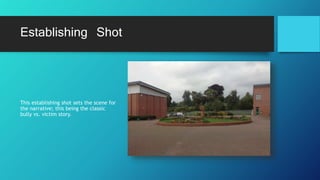
This establishing shot sets the scene for
the narrative; this being the classic
bully vs. victim story.
Low Shot
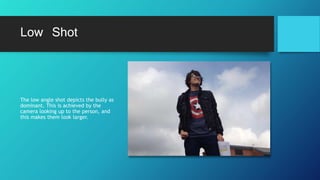
The low angle shot depicts the bully as
dominant. This is achieved by the
camera looking up to the person, and
this makes them look larger.
Extreme Close Up
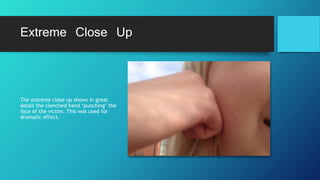
The extreme close up shows in great
detail the clenched hand ‘punching’ the
face of the victim. This was used for
dramatic effect.
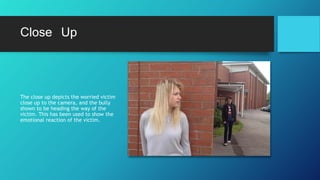
Close Up
The close up depicts the worried victim
close up to the camera, and the bully
shown to be heading the way of the
victim. This has been used to show the
emotional reaction of the victim.
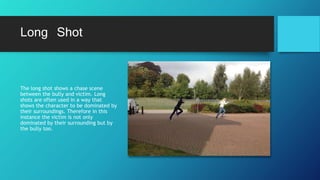
Long Shot
The long shot shows a chase scene
between the bully and victim. Long
shots are often used in a way that
shows the character to be dominated by
their surroundings. Therefore in this
instance the victim is not only
dominated by their surrounding but by
the bully too.
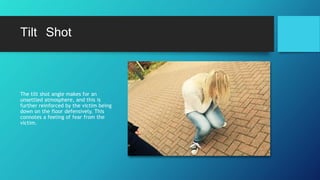
Tilt Shot
The tilt shot angle makes for an
unsettled atmosphere, and this is
further reinforced by the victim being
down on the floor defensively. This
connotes a feeling of fear from the
victim.
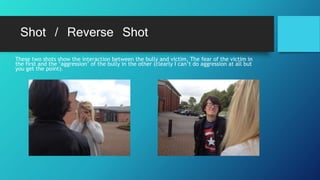
Shot / Reverse Shot
These two shots show the interaction between the bully and victim. The fear of the victim in
the first and the ‘aggression’ of the bully in the other (clearly I can’t do aggression at all but
you get the point).

Shot types

  • 1.
  • 2.
    Establishing Shot This establishingshot sets the scene for the narrative; this being the classic bully vs. victim story.
  • 3.
    Low Shot The lowangle shot depicts the bully as dominant. This is achieved by the camera looking up to the person, and this makes them look larger.
  • 4.
    Extreme Close Up Theextreme close up shows in great detail the clenched hand ‘punching’ the face of the victim. This was used for dramatic effect.
  • 5.
    Close Up The closeup depicts the worried victim close up to the camera, and the bully shown to be heading the way of the victim. This has been used to show the emotional reaction of the victim.
  • 6.
    Long Shot The longshot shows a chase scene between the bully and victim. Long shots are often used in a way that shows the character to be dominated by their surroundings. Therefore in this instance the victim is not only dominated by their surrounding but by the bully too.
  • 7.
    Tilt Shot The tiltshot angle makes for an unsettled atmosphere, and this is further reinforced by the victim being down on the floor defensively. This connotes a feeling of fear from the victim.
  • 8.
    Shot / ReverseShot These two shots show the interaction between the bully and victim. The fear of the victim in the first and the ‘aggression’ of the bully in the other (clearly I can’t do aggression at all but you get the point).