SHORT BOWEL SYNDROME
DEFINITION
 Short bowel syndrome is a results of surgical
resection, congenital defect, or loss of absorption.
 Malabsorption is characterized by inability to
maintain protein-energy, fluid, electrolyte, or
micronutrient balance on diet.
DEFINITION
 Presence of less than 200 cm of remaining small
intestine
 Functional or anatomical loss of extensive
segments that results in loss or absorptive surface
area.
Beginning of the food broken
down
Water, Electrolytes and
Short Chain Fatty acids
Iron and Folate
Carbohydrate, Fats,
Protein, Vitamins,
Calcium and Trace
Elements
Same as jejunum,
but distal ileum is
specific for vitamin
B12 and bile salts
CAUSES
Vomiting
Poor appetite
Weight loss/ weight gain
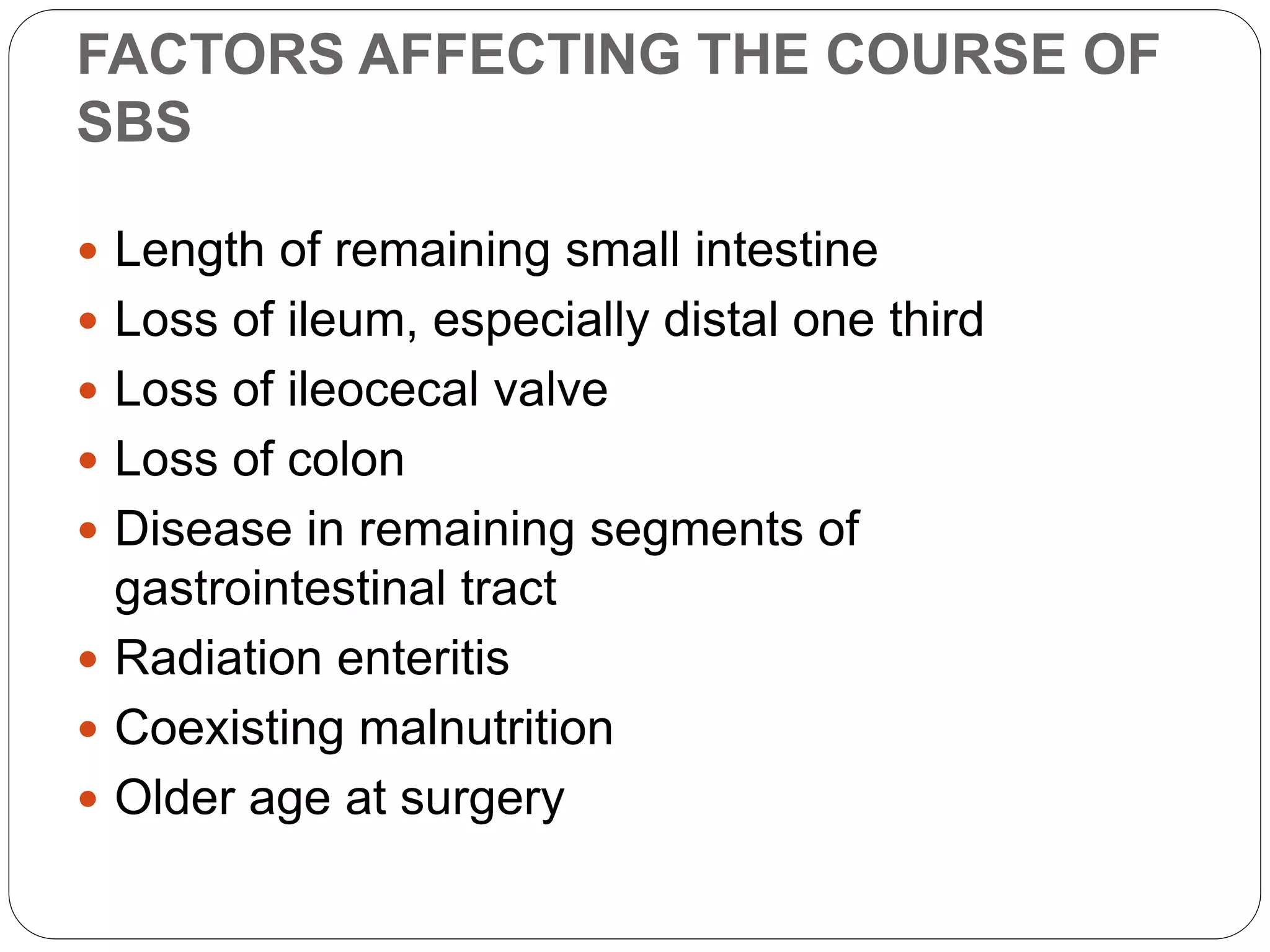
FACTORS AFFECTING THE COURSE OF
SBS
 Length of remaining small intestine
 Loss of ileum, especially distal one third
 Loss of ileocecal valve
 Loss of colon
 Disease in remaining segments of
gastrointestinal tract
 Radiation enteritis
 Coexisting malnutrition
 Older age at surgery
INTESTINAL ADAPTATION
ORAL DIET MODFICATION
 Take small bites when eating and chew thoroughly before swallowing
to help facilitate full digestion by the altered GI Tract.
 Avoid simple or concentrated sugars, which may exacerbate
diarrhea, in both food and beverages.
 Avoid foods that increase bloating through swallowed air, such as
chewing gum, drinking through straw, carbonated beverages,
tobacco, smoking, or eating meals too quickly.
•Increase consumption of food that decrease odor, like
buttermilk, crane berry juice, kefir, yoghurt, etc.
•Increase consumption of food that help thicken stool,
including banana, cheese, pasta, pectin, potatoes, ice,
etc.
•Avoid food that can cause gas formation and /or odor:
alcohol, Brussels sprouts, cabbage, cauliflower, egg, fish,
etc.
THANK YOU

SHORT BOWEL SYNDROME

  • 1.
  • 2.
    DEFINITION  Short bowelsyndrome is a results of surgical resection, congenital defect, or loss of absorption.  Malabsorption is characterized by inability to maintain protein-energy, fluid, electrolyte, or micronutrient balance on diet.
  • 3.
    DEFINITION  Presence ofless than 200 cm of remaining small intestine  Functional or anatomical loss of extensive segments that results in loss or absorptive surface area.
  • 4.
    Beginning of thefood broken down Water, Electrolytes and Short Chain Fatty acids Iron and Folate Carbohydrate, Fats, Protein, Vitamins, Calcium and Trace Elements Same as jejunum, but distal ileum is specific for vitamin B12 and bile salts
  • 5.
  • 6.
  • 7.
    FACTORS AFFECTING THECOURSE OF SBS  Length of remaining small intestine  Loss of ileum, especially distal one third  Loss of ileocecal valve  Loss of colon  Disease in remaining segments of gastrointestinal tract  Radiation enteritis  Coexisting malnutrition  Older age at surgery
  • 8.
  • 9.
    ORAL DIET MODFICATION Take small bites when eating and chew thoroughly before swallowing to help facilitate full digestion by the altered GI Tract.  Avoid simple or concentrated sugars, which may exacerbate diarrhea, in both food and beverages.  Avoid foods that increase bloating through swallowed air, such as chewing gum, drinking through straw, carbonated beverages, tobacco, smoking, or eating meals too quickly.
  • 10.
    •Increase consumption offood that decrease odor, like buttermilk, crane berry juice, kefir, yoghurt, etc. •Increase consumption of food that help thicken stool, including banana, cheese, pasta, pectin, potatoes, ice, etc. •Avoid food that can cause gas formation and /or odor: alcohol, Brussels sprouts, cabbage, cauliflower, egg, fish, etc.
  • 11.

Editor's Notes