
SELLING YOUR
BUSINESS:
Part 3: Preparing for a Sale


         Presentation Series by Schwartz
         Heslin Group, INC. (SHG)
The SYB Series
 Part 1: Introduction and First Steps
 Part 2: What is Your Company Worth

 Part 3: Preparing for a Sale

 Part 4: Your Role in the Transaction
Once you have an idea about the
value of your business, begin
planning for the transaction…
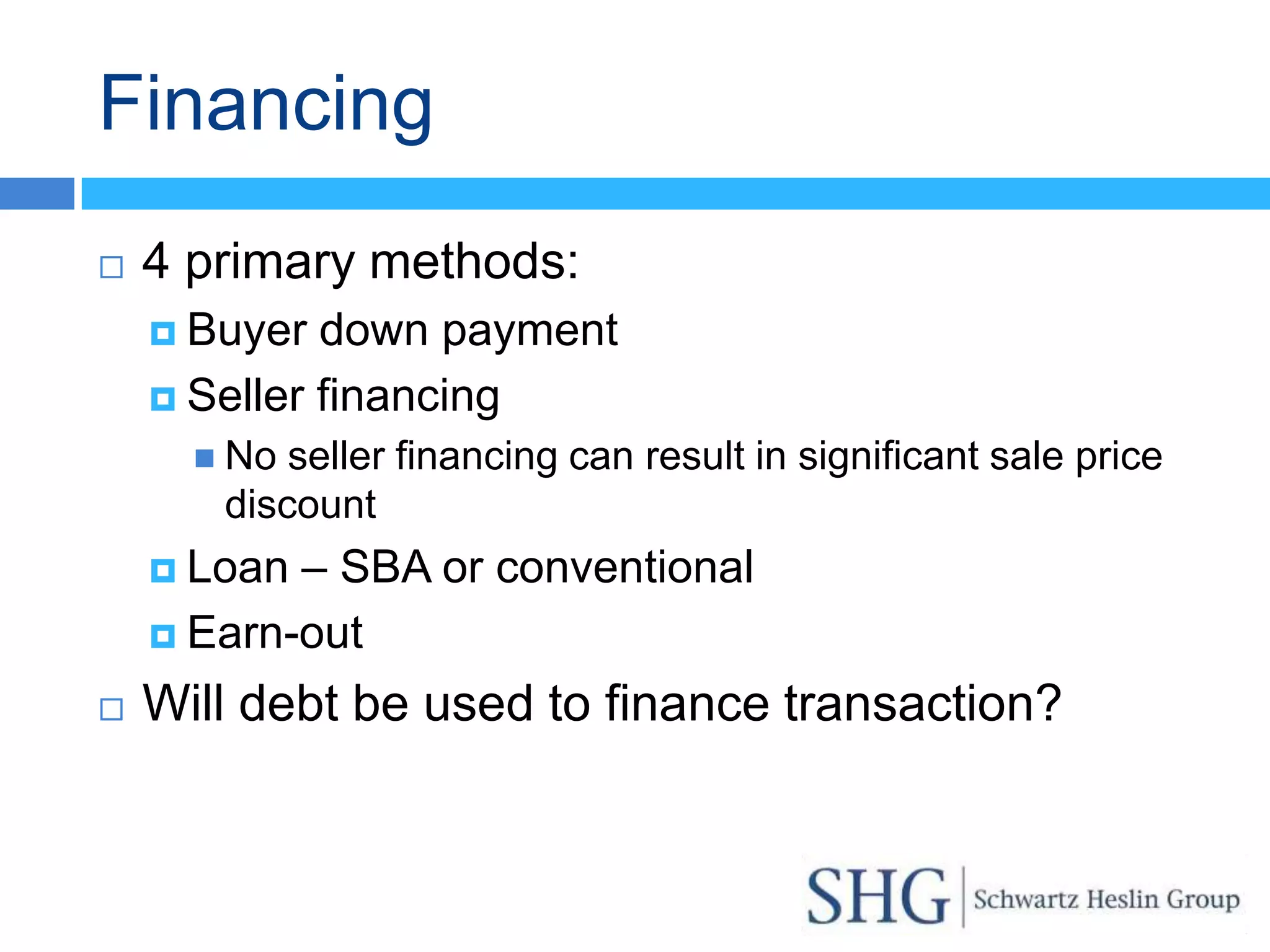
Financing
   4 primary methods:
     Buyer  down payment
     Seller financing
       No seller financing can result in significant sale price
       discount
     Loan – SBA or conventional
     Earn-out

   Will debt be used to finance transaction?
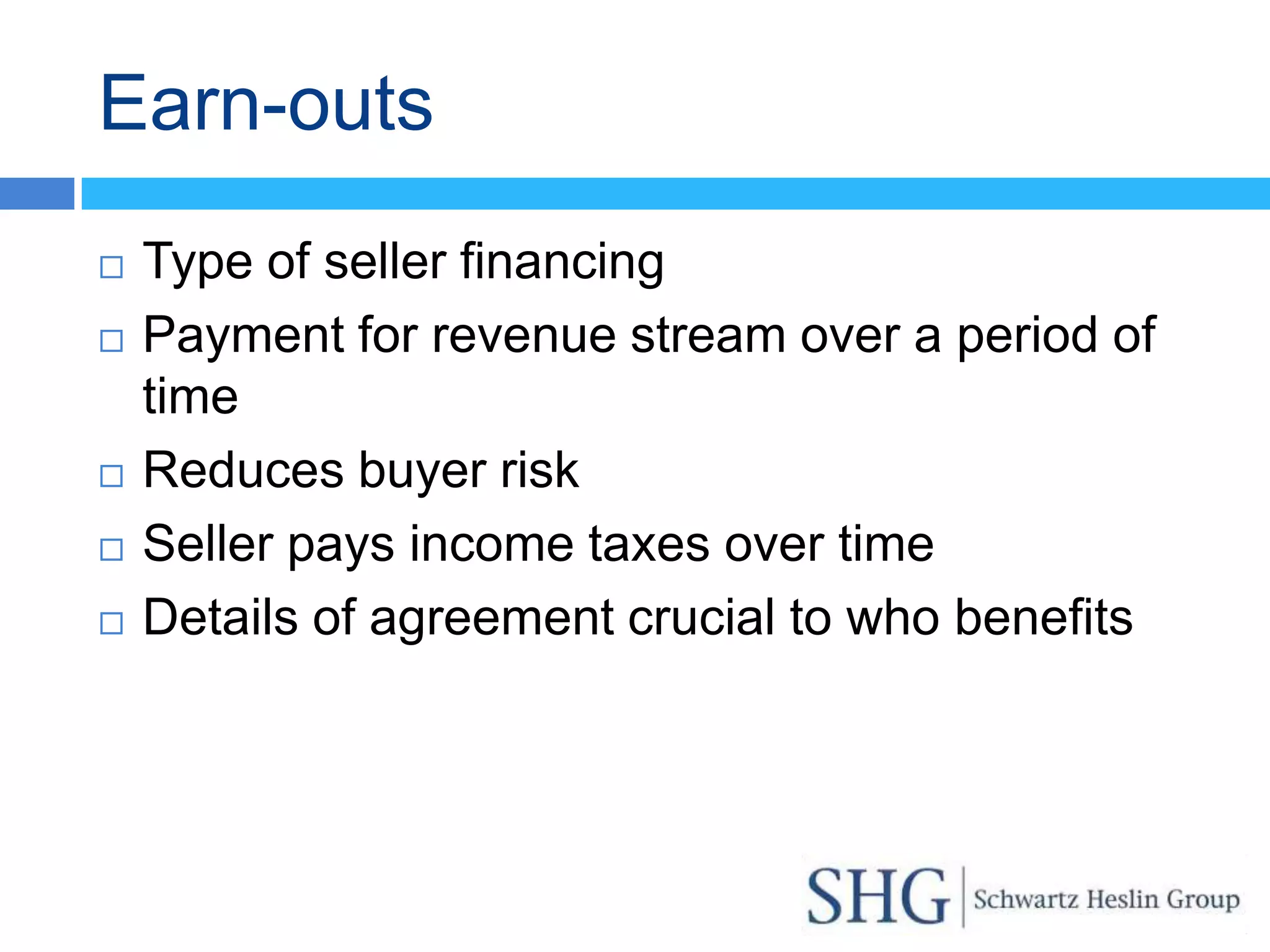
Earn-outs
   Type of seller financing
   Payment for revenue stream over a period of
    time
   Reduces buyer risk
   Seller pays income taxes over time
   Details of agreement crucial to who benefits
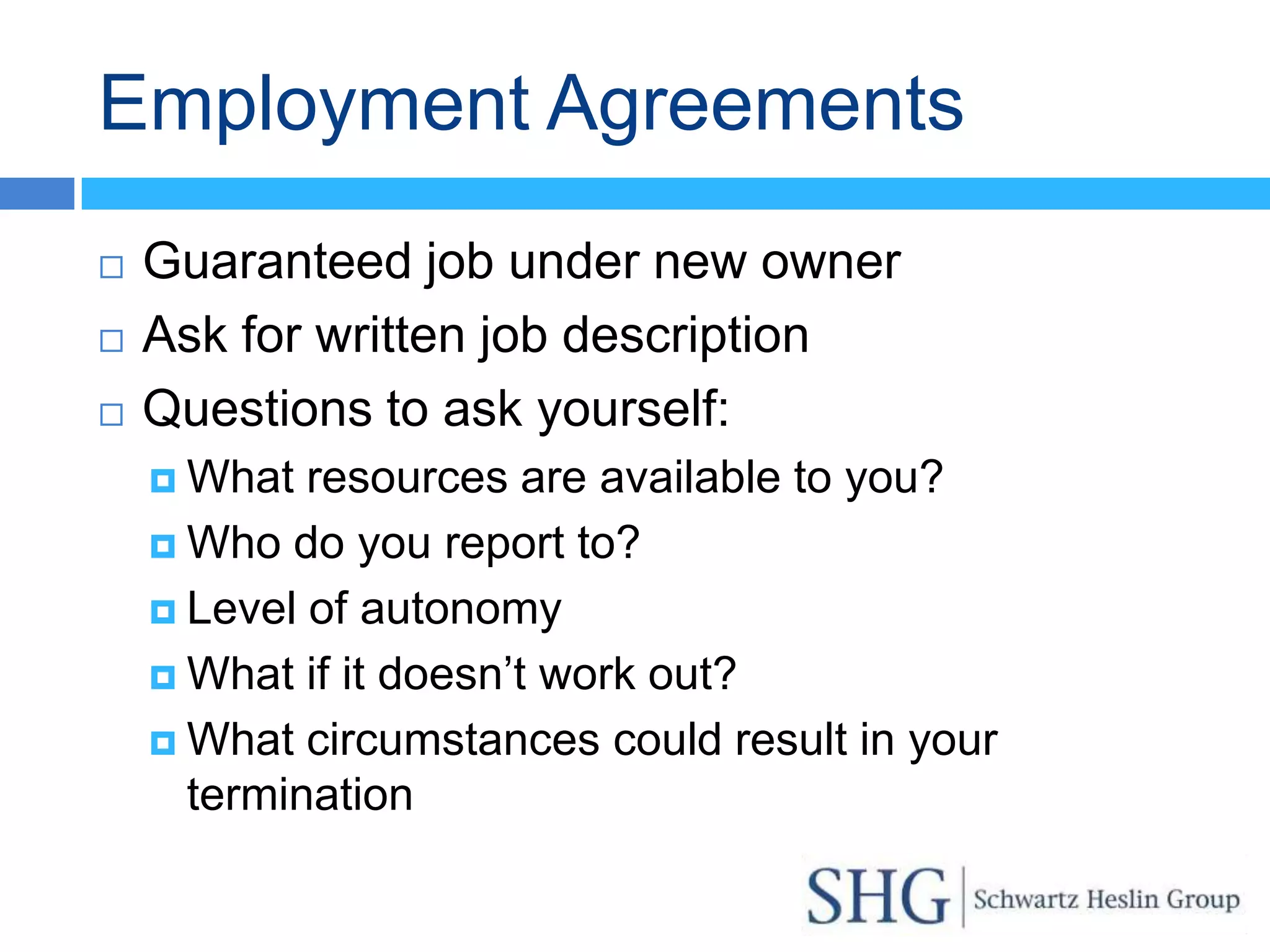
Employment Agreements
   Guaranteed job under new owner
   Ask for written job description
   Questions to ask yourself:
     What  resources are available to you?
     Who do you report to?

     Level of autonomy

     What if it doesn’t work out?

     What circumstances could result in your
      termination
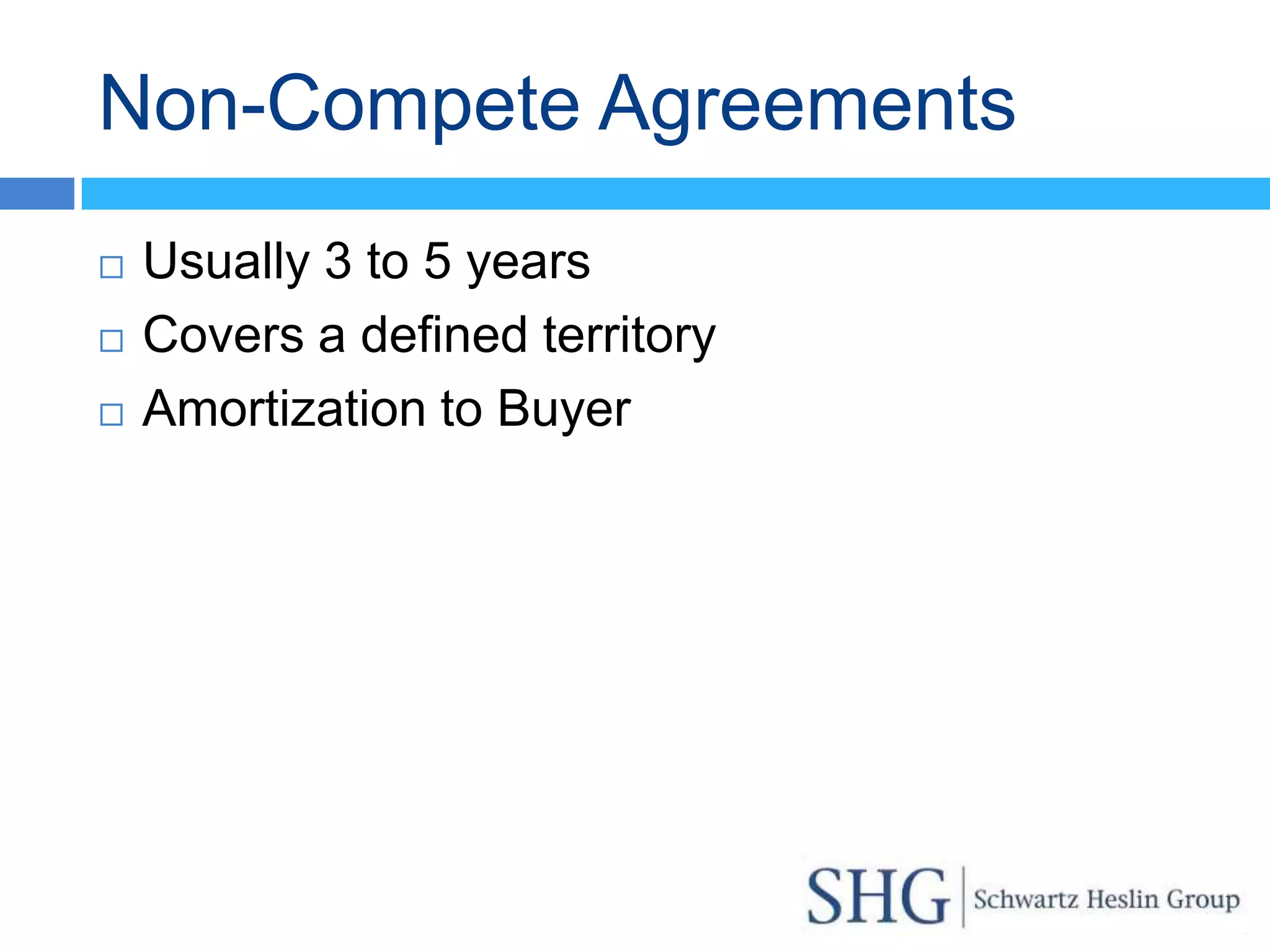
Non-Compete Agreements
   Usually 3 to 5 years
   Covers a defined territory
   Amortization to Buyer
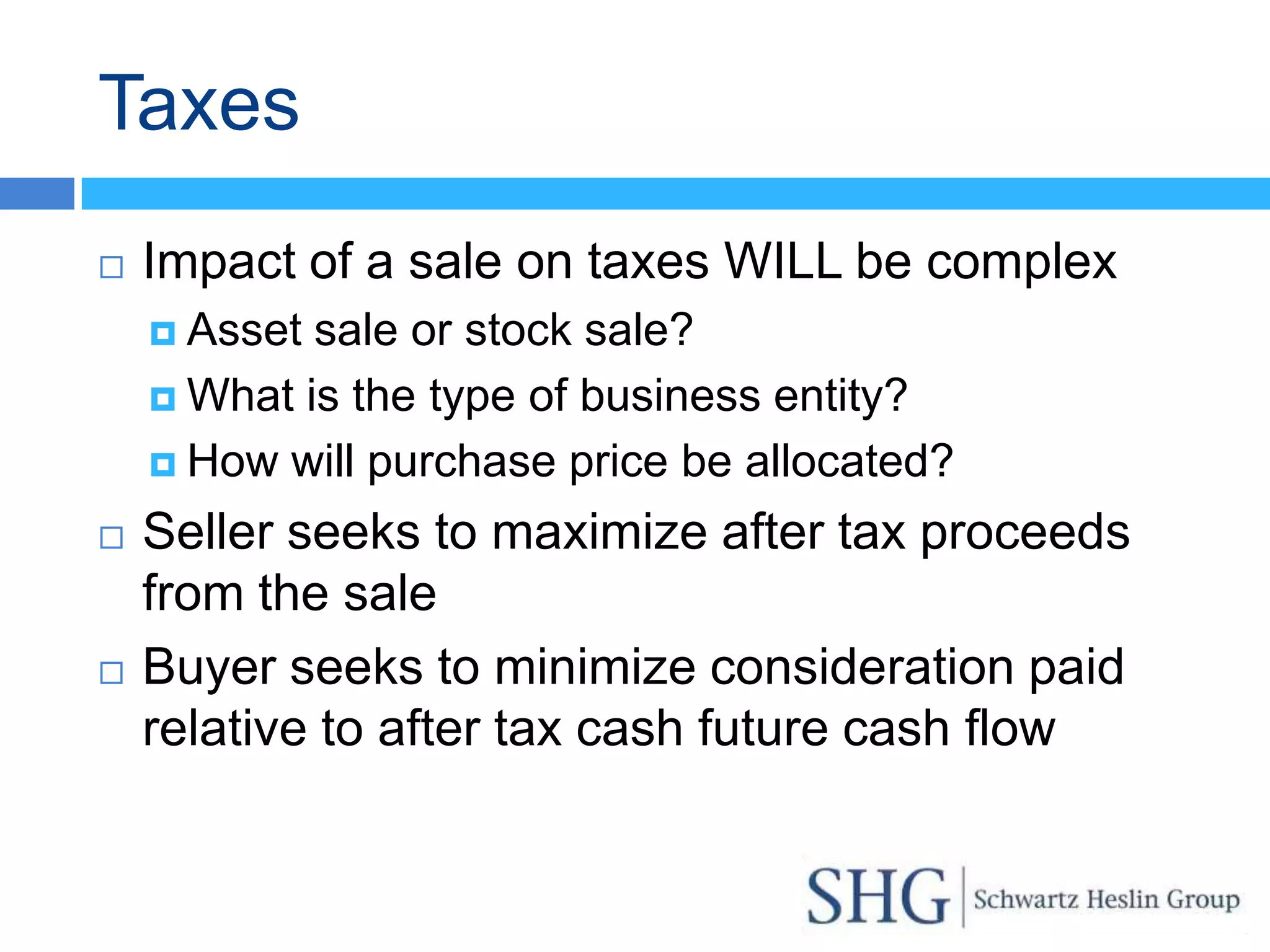
Taxes
   Impact of a sale on taxes WILL be complex
     Asset sale or stock sale?
     What is the type of business entity?

     How will purchase price be allocated?

   Seller seeks to maximize after tax proceeds
    from the sale
   Buyer seeks to minimize consideration paid
    relative to after tax cash future cash flow
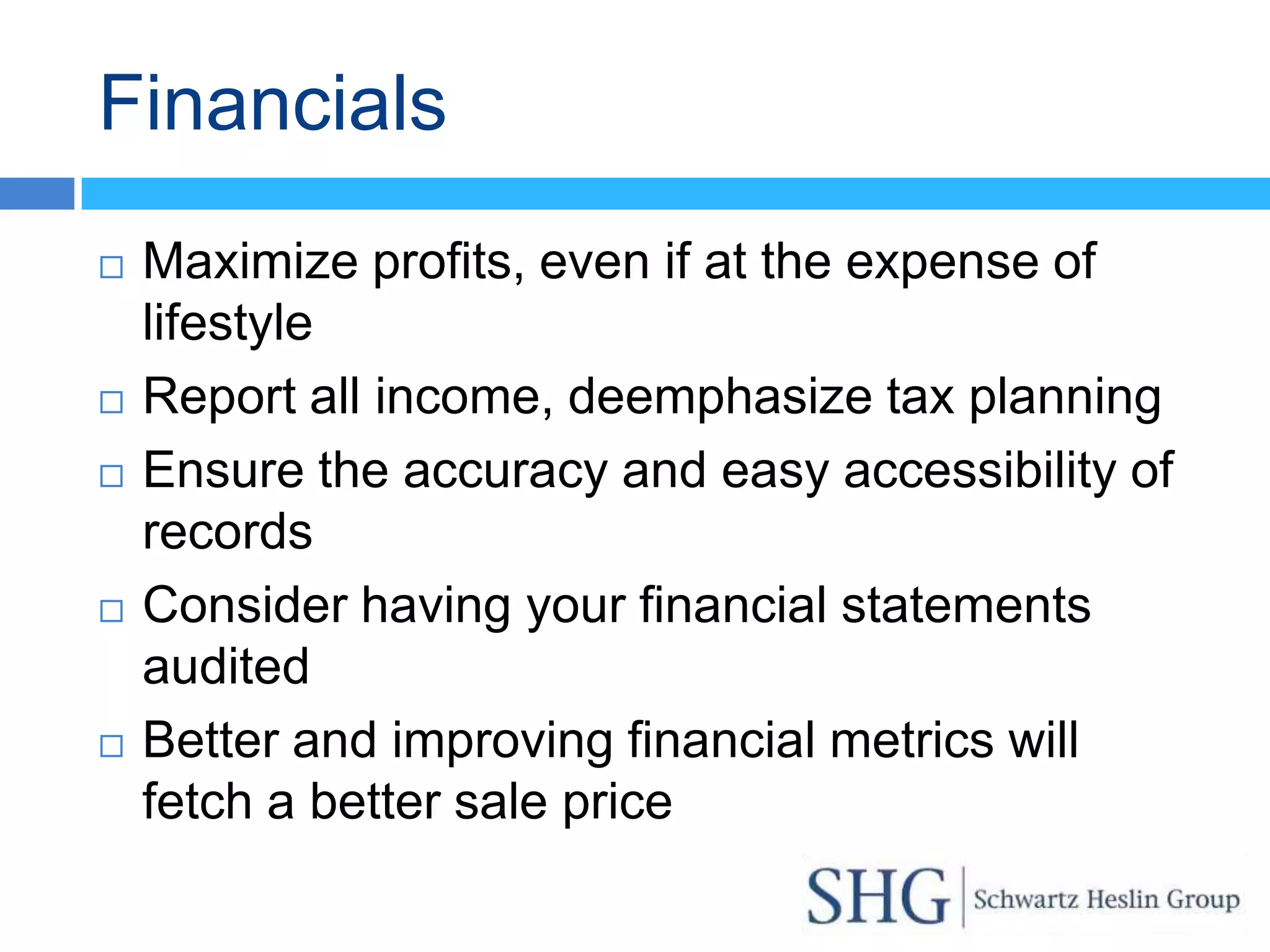
Financials
   Maximize profits, even if at the expense of
    lifestyle
   Report all income, deemphasize tax planning
   Ensure the accuracy and easy accessibility of
    records
   Consider having your financial statements
    audited
   Better and improving financial metrics will
    fetch a better sale price
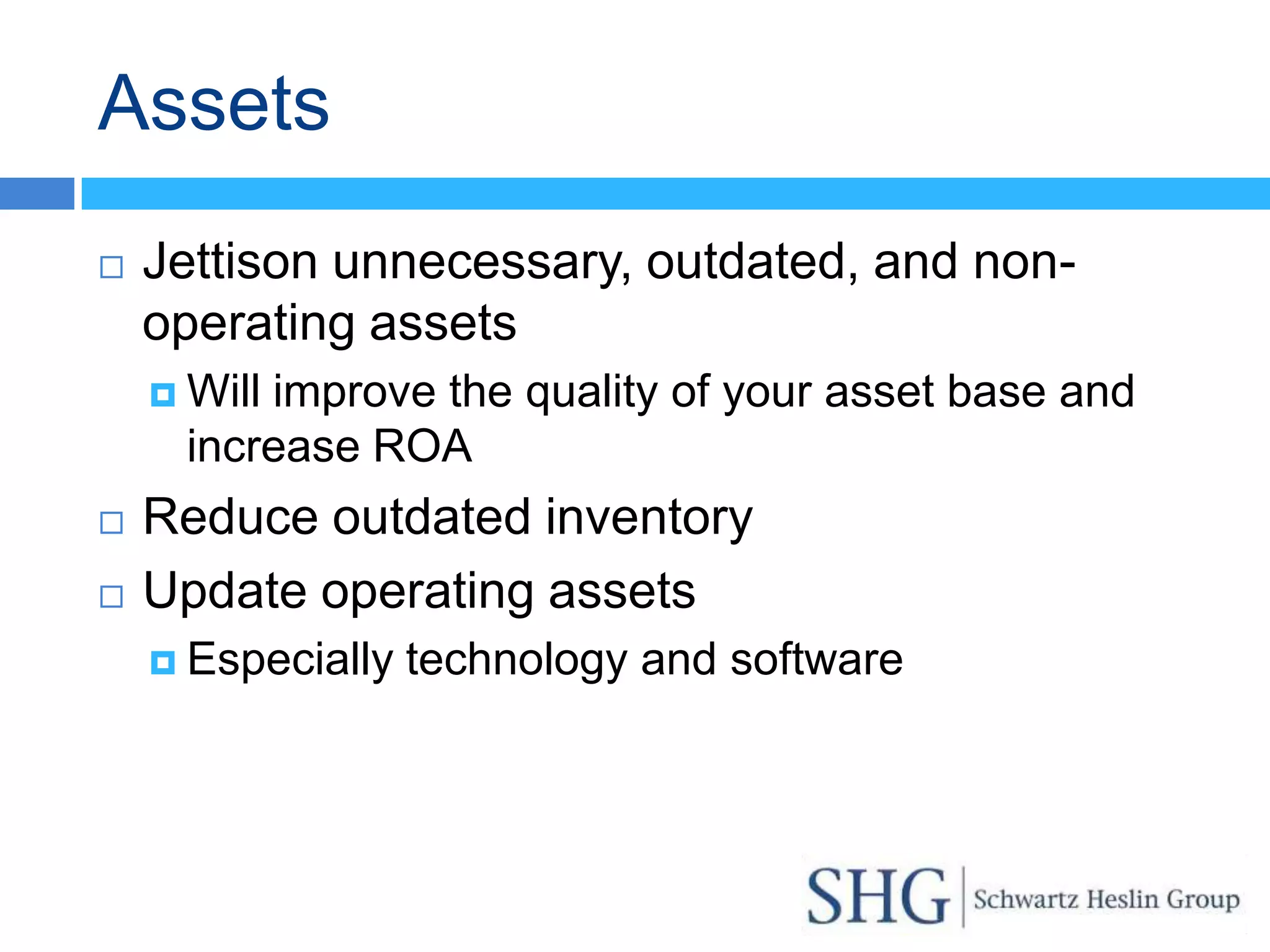
Assets
   Jettison unnecessary, outdated, and non-
    operating assets
     Willimprove the quality of your asset base and
      increase ROA
   Reduce outdated inventory
   Update operating assets
     Especially   technology and software
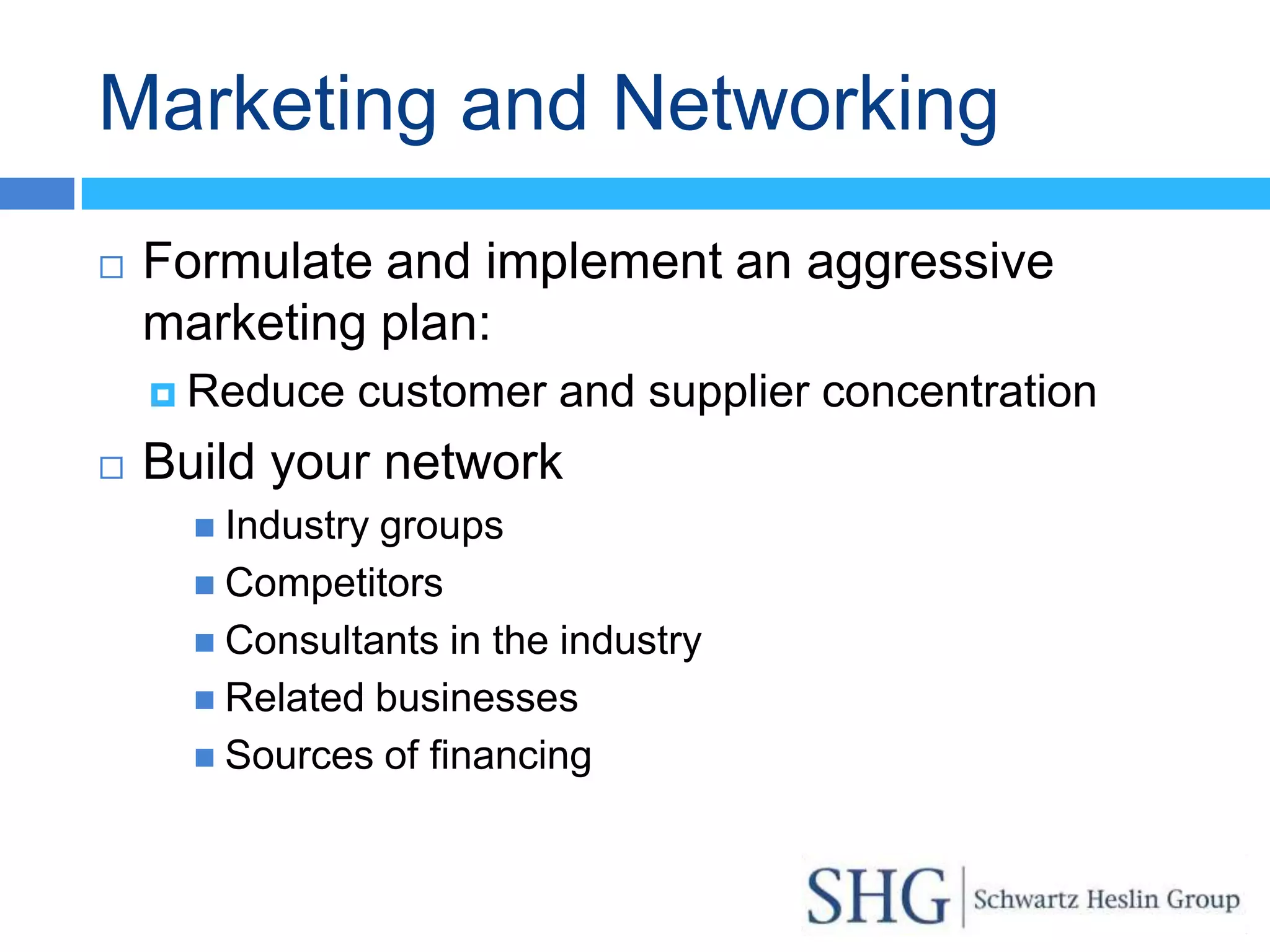
Marketing and Networking
   Formulate and implement an aggressive
    marketing plan:
     Reduce   customer and supplier concentration
   Build your network
       Industrygroups
       Competitors
       Consultants in the industry
       Related businesses
       Sources of financing
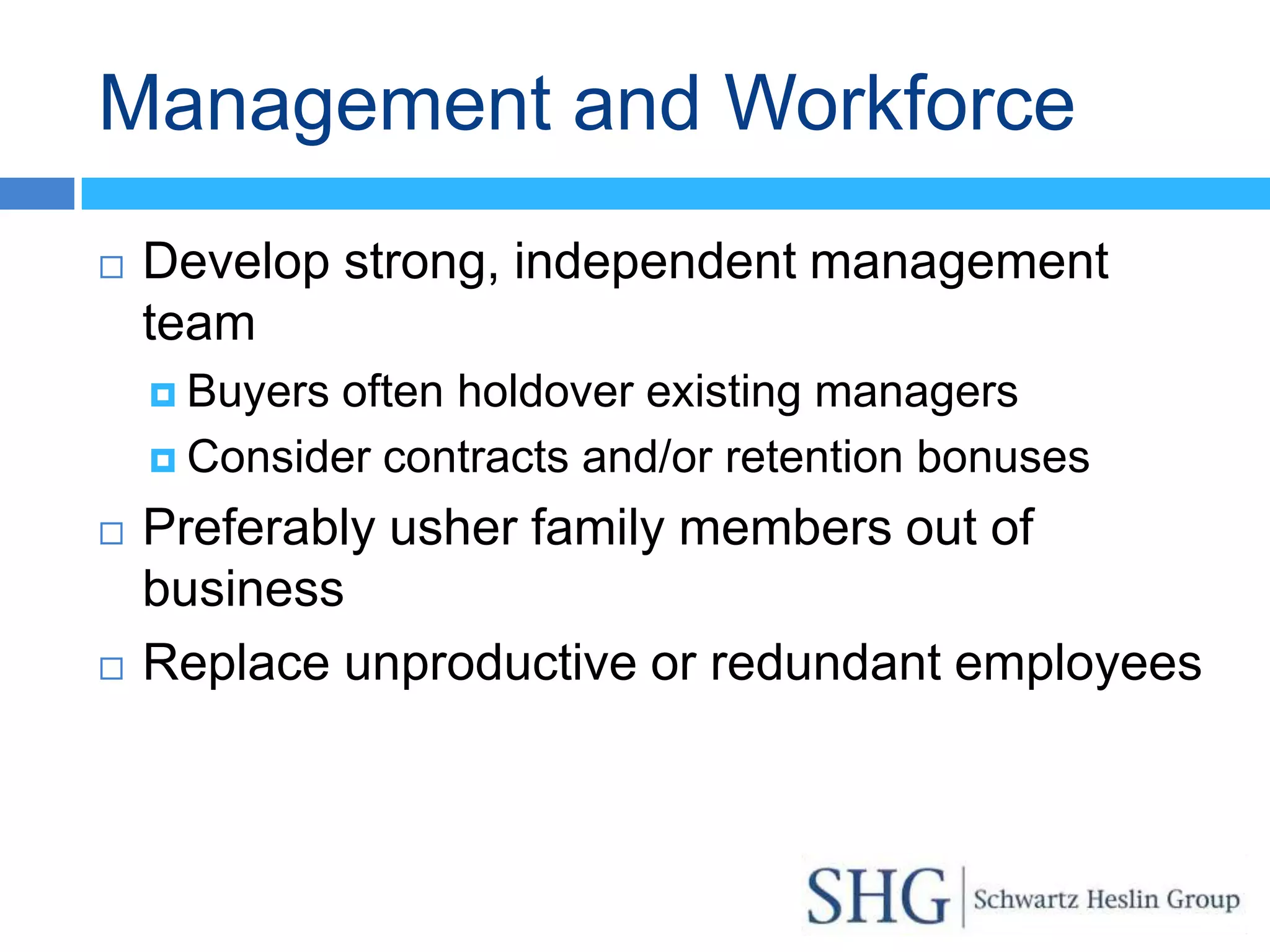
Management and Workforce
   Develop strong, independent management
    team
     Buyersoften holdover existing managers
     Consider contracts and/or retention bonuses

   Preferably usher family members out of
    business
   Replace unproductive or redundant employees
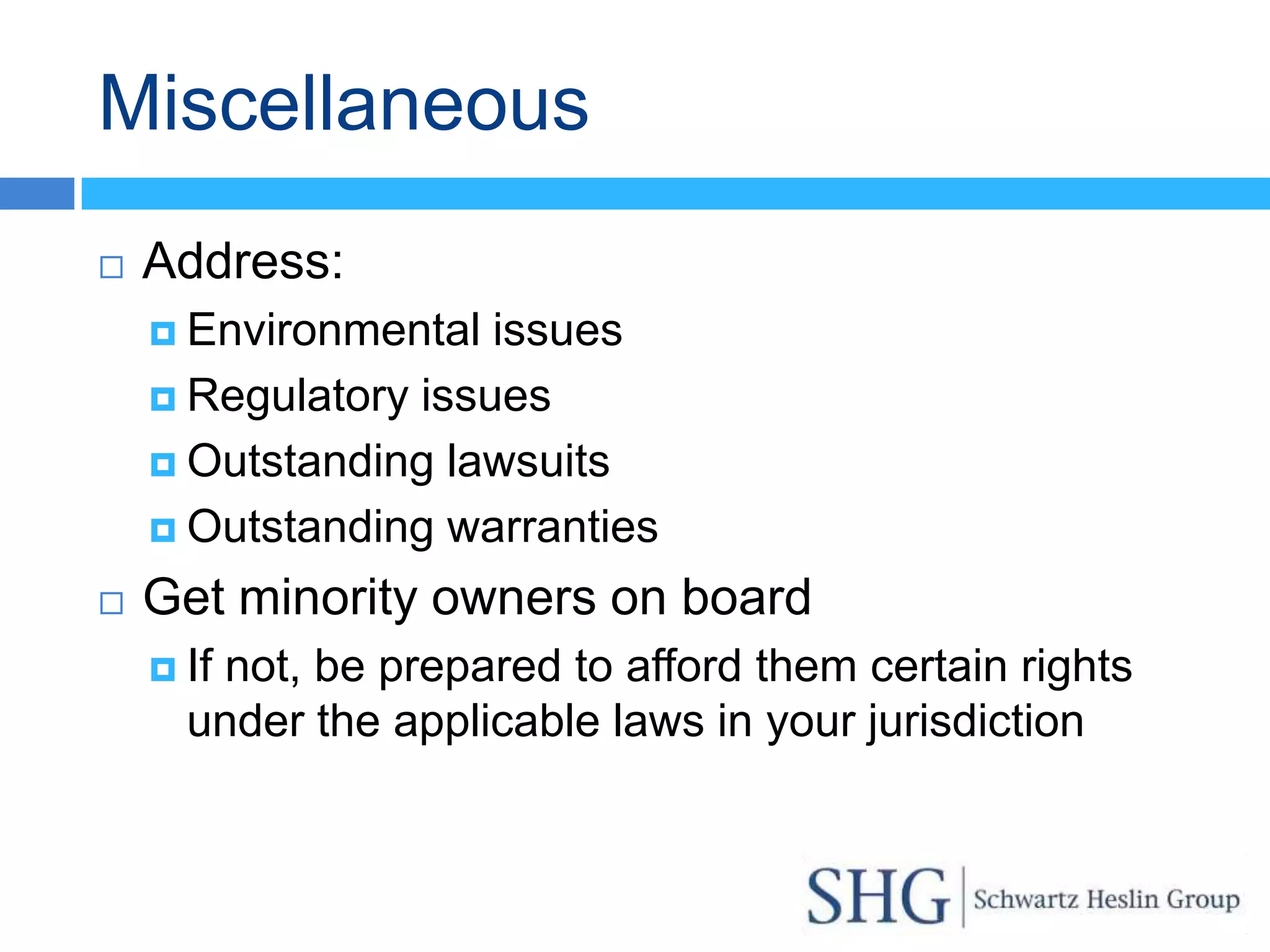
Miscellaneous
   Address:
     Environmental  issues
     Regulatory issues

     Outstanding lawsuits

     Outstanding warranties

   Get minority owners on board
     If
       not, be prepared to afford them certain rights
      under the applicable laws in your jurisdiction
Update and Streamline
Operations
   Update and back-up all databases
   Maintain accurate information on revenues by
    line of business and by customer
   Trademark and copyright all logos, brands,
    and systems
Now that your preparations are
complete and you have
streamlined operations, we can
address the actual transaction
Next in the SYB Series:
Part 4: The Transaction

SHG: Selling Your Business, Part 3

  • 1.
    SELLING YOUR BUSINESS: Part 3:Preparing for a Sale Presentation Series by Schwartz Heslin Group, INC. (SHG)
  • 2.
    The SYB Series Part 1: Introduction and First Steps  Part 2: What is Your Company Worth  Part 3: Preparing for a Sale  Part 4: Your Role in the Transaction
  • 3.
    Once you havean idea about the value of your business, begin planning for the transaction…
  • 4.
    Financing  4 primary methods:  Buyer down payment  Seller financing  No seller financing can result in significant sale price discount  Loan – SBA or conventional  Earn-out  Will debt be used to finance transaction?
  • 5.
    Earn-outs  Type of seller financing  Payment for revenue stream over a period of time  Reduces buyer risk  Seller pays income taxes over time  Details of agreement crucial to who benefits
  • 6.
    Employment Agreements  Guaranteed job under new owner  Ask for written job description  Questions to ask yourself:  What resources are available to you?  Who do you report to?  Level of autonomy  What if it doesn’t work out?  What circumstances could result in your termination
  • 7.
    Non-Compete Agreements  Usually 3 to 5 years  Covers a defined territory  Amortization to Buyer
  • 8.
    Taxes  Impact of a sale on taxes WILL be complex  Asset sale or stock sale?  What is the type of business entity?  How will purchase price be allocated?  Seller seeks to maximize after tax proceeds from the sale  Buyer seeks to minimize consideration paid relative to after tax cash future cash flow
  • 9.
    Financials  Maximize profits, even if at the expense of lifestyle  Report all income, deemphasize tax planning  Ensure the accuracy and easy accessibility of records  Consider having your financial statements audited  Better and improving financial metrics will fetch a better sale price
  • 10.
    Assets  Jettison unnecessary, outdated, and non- operating assets  Willimprove the quality of your asset base and increase ROA  Reduce outdated inventory  Update operating assets  Especially technology and software
  • 11.
    Marketing and Networking  Formulate and implement an aggressive marketing plan:  Reduce customer and supplier concentration  Build your network  Industrygroups  Competitors  Consultants in the industry  Related businesses  Sources of financing
  • 12.
    Management and Workforce  Develop strong, independent management team  Buyersoften holdover existing managers  Consider contracts and/or retention bonuses  Preferably usher family members out of business  Replace unproductive or redundant employees
  • 13.
    Miscellaneous  Address:  Environmental issues  Regulatory issues  Outstanding lawsuits  Outstanding warranties  Get minority owners on board  If not, be prepared to afford them certain rights under the applicable laws in your jurisdiction
  • 14.
    Update and Streamline Operations  Update and back-up all databases  Maintain accurate information on revenues by line of business and by customer  Trademark and copyright all logos, brands, and systems
  • 15.
    Now that yourpreparations are complete and you have streamlined operations, we can address the actual transaction
  • 16.
    Next in theSYB Series: Part 4: The Transaction