Sustainable Talent
Management
Shereen Al Shorbagy
Agenda
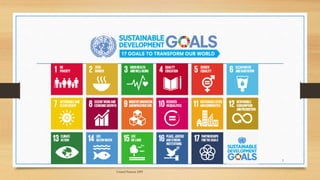
• Sustainability
• Talent management
• Purpose of talent management
• The QUAD Model
• Planning and positioning
United Nations DPI
3
TALENT MANAGEMENT
• A conscious, deliberate approach undertaken to attract, develop and retain
people with the aptitude and abilities to meet current and future
organizational needs.
TALENT= COMPETENCE + COMMITMENT + CONTRIBUTION
PURPOSE OF TM
• To compete effectively in a complex and dynamic environment to achieve
sustainable growth
• To develop leaders for tomorrow from within an organization
• To maximize employee performance as a unique source of competitive
advantage
• To empower employees:
Cut down on high turnover rates
Reduce the cost of constantly hiring new people to train
An organization would follow it in three main steps:
1. Finding the right talent
2. Hiring that particular talent
3. Making sure that hired talent stays for a longer period of time
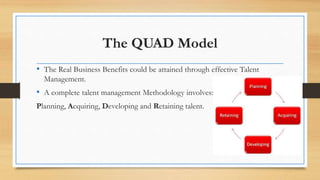
The QUAD Model
• The Real Business Benefits could be attained through effective Talent
Management.
• A complete talent management Methodology involves:
Planning, Acquiring, Developing and Retaining talent.
Planning and positioning
• Multiple intelligence theory Theorized by Howard Gardner in 1983
• Personality Matrix by Dr. Eileen Russo
• MBTI: Myers Brigges Type Indicator

Shereen cortex sustainable talent management

  • 1.
  • 2.
    Agenda • Sustainability • Talentmanagement • Purpose of talent management • The QUAD Model • Planning and positioning
  • 3.
  • 4.
    TALENT MANAGEMENT • Aconscious, deliberate approach undertaken to attract, develop and retain people with the aptitude and abilities to meet current and future organizational needs. TALENT= COMPETENCE + COMMITMENT + CONTRIBUTION
  • 5.
    PURPOSE OF TM •To compete effectively in a complex and dynamic environment to achieve sustainable growth • To develop leaders for tomorrow from within an organization • To maximize employee performance as a unique source of competitive advantage • To empower employees: Cut down on high turnover rates Reduce the cost of constantly hiring new people to train
  • 6.
    An organization wouldfollow it in three main steps: 1. Finding the right talent 2. Hiring that particular talent 3. Making sure that hired talent stays for a longer period of time
  • 7.
    The QUAD Model •The Real Business Benefits could be attained through effective Talent Management. • A complete talent management Methodology involves: Planning, Acquiring, Developing and Retaining talent.
  • 8.
    Planning and positioning •Multiple intelligence theory Theorized by Howard Gardner in 1983 • Personality Matrix by Dr. Eileen Russo • MBTI: Myers Brigges Type Indicator

Editor's Notes

  • #4 On 1 January, 2016, the 17 Sustainable Development Goals (SDGs) of the 2030 Agenda for Sustainable Development—adopted by world leaders in September 2015 at an historic UN Summit — officially came into force. Over the next fifteen years, with these new Goals that universally apply to all, countries will mobilize efforts to end all forms of poverty, fight inequalities and tackle climate change, while ensuring that no one is left behind. The SDGs build on the success of the Millennium Development Goals (MDGs) and aim to go further to end all forms of poverty. The new Goals are unique in that they call for action by all countries, poor, rich and middle-income to promote prosperity while protecting the planet. They recognize that ending poverty must go hand-in-hand with strategies that build economic growth and addresses a range of social needs including education, health, social protection, and job opportunities, while tackling climate change and environmental protection.