Stop Sea
Massacre
- Velkumaran A P(17PW38)
SEASPIRACY!
Seaspiracy features human impacts on marine life such as
plastic marine debris, ghost nets and overfishing around the
world. •
Seaspiracy argues that commercial fisheries are the main driver
of marine ecosystem destruction.
Seaspiracy rejects the concept of sustainable fishing and
criticizes several marine conservation organizations, including
the Earth Island Institute and its dolphin safe label and the
sustainable seafood certifications of the Marine Stewardship
Council.
Sharks kill 12 people a year. But humans kill 11,000 to 30,000 sharks per hour
There’s a persisting myth that sharks are
universally dangerous to human beings.
But in reality, it’s the other way around.
Indeed, 50 million sharks are killed every
year through bycatch alone, meaning that
they’re scooped up from the ocean
accidentally while hunting for other fish.
The documentary says that without sharks,
and the other fish governing the top of the
food chain, the ocean’s ecosystem wouldn’t
be able to cope.
And yet, in total, 100 million sharks are
killed every year.
Fishing nets make up 46% of the plastic in the Great Pacific Garbage Patch
The Great Pacific Garbage Patch, 3X the size of France, is the most
polluted patch of water on the planet. Located between Hawaii and
California, it’s filled with all kinds of plastic — especially all the leftovers
from fishing activities.
If we continue as we are, oceans will be empty by 2048.
Overall, it’s more about the direction than the destination
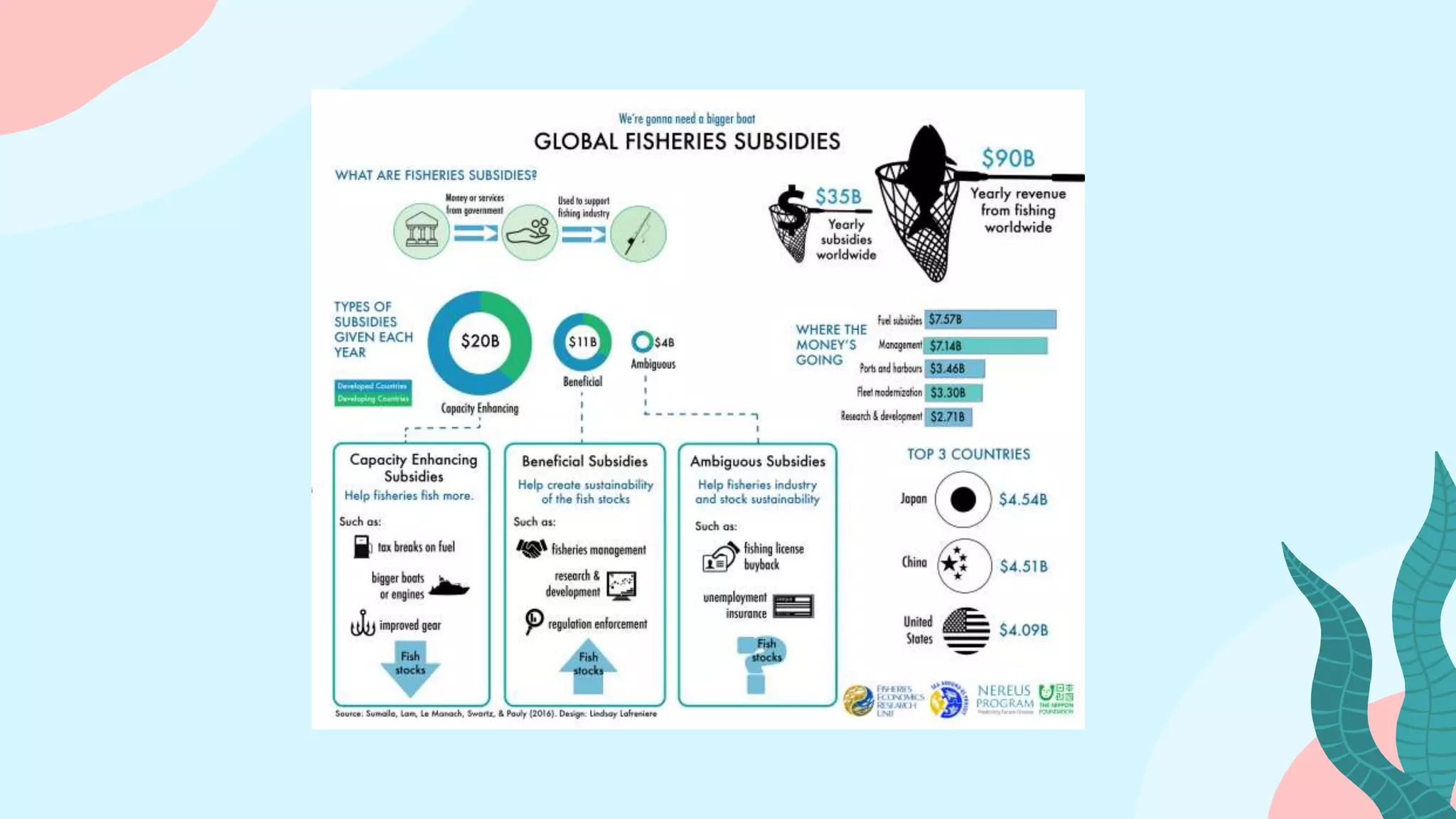
The fishing industry gets $35 billion in subsidies a year
The Seaspiracy documentary frames this alongside another fact: that it would only cost
$20 billion a year to end world hunger.
Most of the subsidies come from the US, the EU, Korea, Japan, and China, totaling
$35.4 billion in 2018, according to one study.
The UN has previously said that for every $5 of fish products exported, $1 is
subsidized
Commercial Fishing is a Global Problem
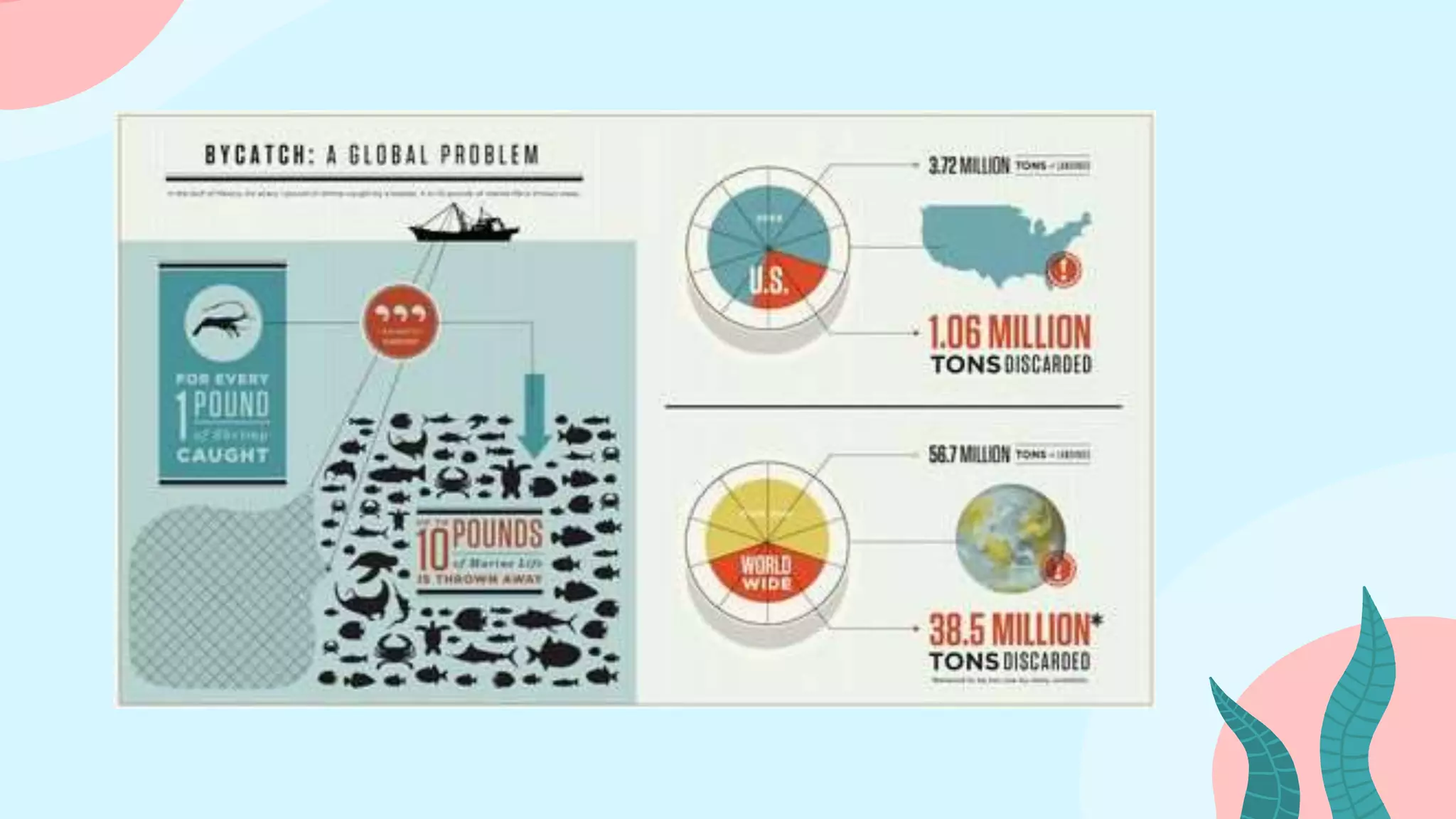
About 40% of fish catch worldwide is unintentionally caught and is partly thrown
back into the sea, either dead or dying.
The fish that ends up on our plates often has a disturbing past.
Often, it’s not just the desired species that are caught but also many other
undesired animals – so-called bycatch.
Global bycatch statistic: killed accidentally each year 300,000 small whales and
dolphins 250,000 endangered turtles and 300,000 seabirds, 38 million tonnes of
sea creatures are unintentionally caught.
That is 40% of fish catch worldwide. A large amount of
this is either thrown back into the sea as ‘rubbish’, dead,
dying or seriously injured, or disposed of on land.
For some species, it is even more: for 1 kilo of shrimp,
5-20 kilos of bycatch can be found in the nets.
Globally, between 8 and 14 million metric tons of
unreported catches are potentially traded illicitly yearly,
suggesting gross revenues of US $9 - $17 billion
associated with these catches.
In 2019, Sweden exceeded its
TAC by 52.4 percent - equating
to 17,369 tonnes.
The United Kingdom and
Ireland join Sweden at the top
of the list of the worst offenders
for overfishing, exceeding their
quotas by 24.3 and 21.7
percent, respectively.
Even when regarding fish that would have been commercially
viable, many times they are caught and discarded due because
they are too young and too small.
As a result, they typically do not survive either.
The culprit behind this is often non-selective fishing gear.
Certified Sustainable Seafood (MSC) a
Marketing Scam?
THANK YOU !!

Shark massacre

  • 1.
  • 2.
  • 3.
    Seaspiracy features humanimpacts on marine life such as plastic marine debris, ghost nets and overfishing around the world. • Seaspiracy argues that commercial fisheries are the main driver of marine ecosystem destruction. Seaspiracy rejects the concept of sustainable fishing and criticizes several marine conservation organizations, including the Earth Island Institute and its dolphin safe label and the sustainable seafood certifications of the Marine Stewardship Council.
  • 4.
    Sharks kill 12people a year. But humans kill 11,000 to 30,000 sharks per hour There’s a persisting myth that sharks are universally dangerous to human beings. But in reality, it’s the other way around. Indeed, 50 million sharks are killed every year through bycatch alone, meaning that they’re scooped up from the ocean accidentally while hunting for other fish. The documentary says that without sharks, and the other fish governing the top of the food chain, the ocean’s ecosystem wouldn’t be able to cope. And yet, in total, 100 million sharks are killed every year.
  • 5.
    Fishing nets makeup 46% of the plastic in the Great Pacific Garbage Patch The Great Pacific Garbage Patch, 3X the size of France, is the most polluted patch of water on the planet. Located between Hawaii and California, it’s filled with all kinds of plastic — especially all the leftovers from fishing activities.
  • 6.
    If we continueas we are, oceans will be empty by 2048. Overall, it’s more about the direction than the destination The fishing industry gets $35 billion in subsidies a year The Seaspiracy documentary frames this alongside another fact: that it would only cost $20 billion a year to end world hunger. Most of the subsidies come from the US, the EU, Korea, Japan, and China, totaling $35.4 billion in 2018, according to one study. The UN has previously said that for every $5 of fish products exported, $1 is subsidized
  • 8.
    Commercial Fishing isa Global Problem About 40% of fish catch worldwide is unintentionally caught and is partly thrown back into the sea, either dead or dying. The fish that ends up on our plates often has a disturbing past. Often, it’s not just the desired species that are caught but also many other undesired animals – so-called bycatch. Global bycatch statistic: killed accidentally each year 300,000 small whales and dolphins 250,000 endangered turtles and 300,000 seabirds, 38 million tonnes of sea creatures are unintentionally caught.
  • 9.
    That is 40%of fish catch worldwide. A large amount of this is either thrown back into the sea as ‘rubbish’, dead, dying or seriously injured, or disposed of on land. For some species, it is even more: for 1 kilo of shrimp, 5-20 kilos of bycatch can be found in the nets. Globally, between 8 and 14 million metric tons of unreported catches are potentially traded illicitly yearly, suggesting gross revenues of US $9 - $17 billion associated with these catches.
  • 11.
    In 2019, Swedenexceeded its TAC by 52.4 percent - equating to 17,369 tonnes. The United Kingdom and Ireland join Sweden at the top of the list of the worst offenders for overfishing, exceeding their quotas by 24.3 and 21.7 percent, respectively.
  • 13.
    Even when regardingfish that would have been commercially viable, many times they are caught and discarded due because they are too young and too small. As a result, they typically do not survive either. The culprit behind this is often non-selective fishing gear.
  • 14.
    Certified Sustainable Seafood(MSC) a Marketing Scam?
  • 15.