SHANNON AND WEAVER
MODEL OF COMMUNICATION

Vishnu Durga.K
The Shannon and Weaver
Model
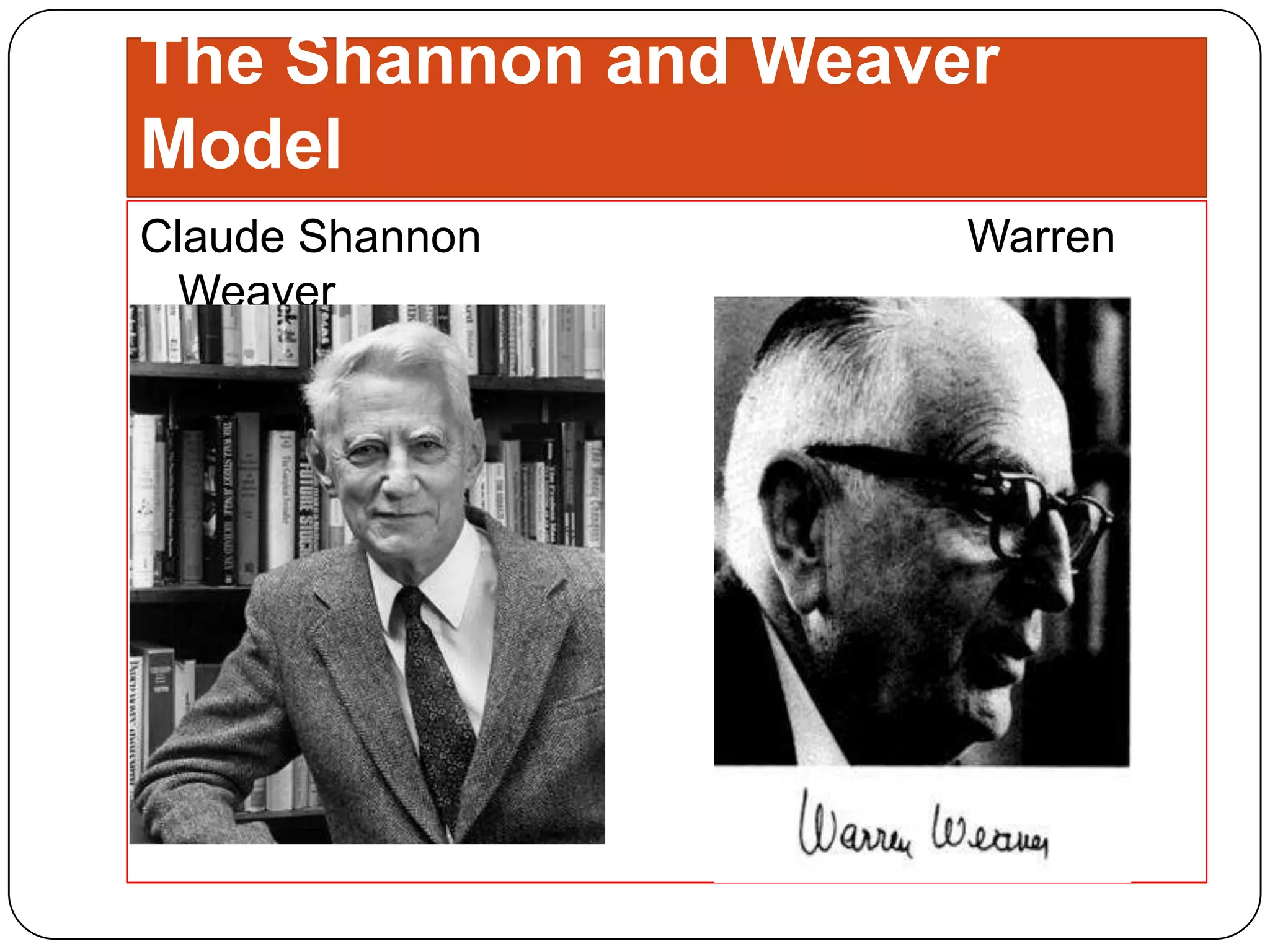
Claude Shannon
Weaver

Warren
Biography
 Claude Shannon and Warren Weaver were




•

•

engineers working for Bell Telephone Labs in the
United States , both of them joined together to
write an article in “Bell System Technical Journal”
called “ Shannon and weaver model of
communication”
Their goal was to ensure the maximum efficiency
of telephone cables and radio waves.
They developed a model of communication which
was intended to assist in developing a
mathematical theory of communication.
Claude Shannon (1916-2001) is considered one
of the founding fathers of the communications
age.
Shannon and Weaver model of communication
has been called the “mother of all the models”
Shannon and Weaver model
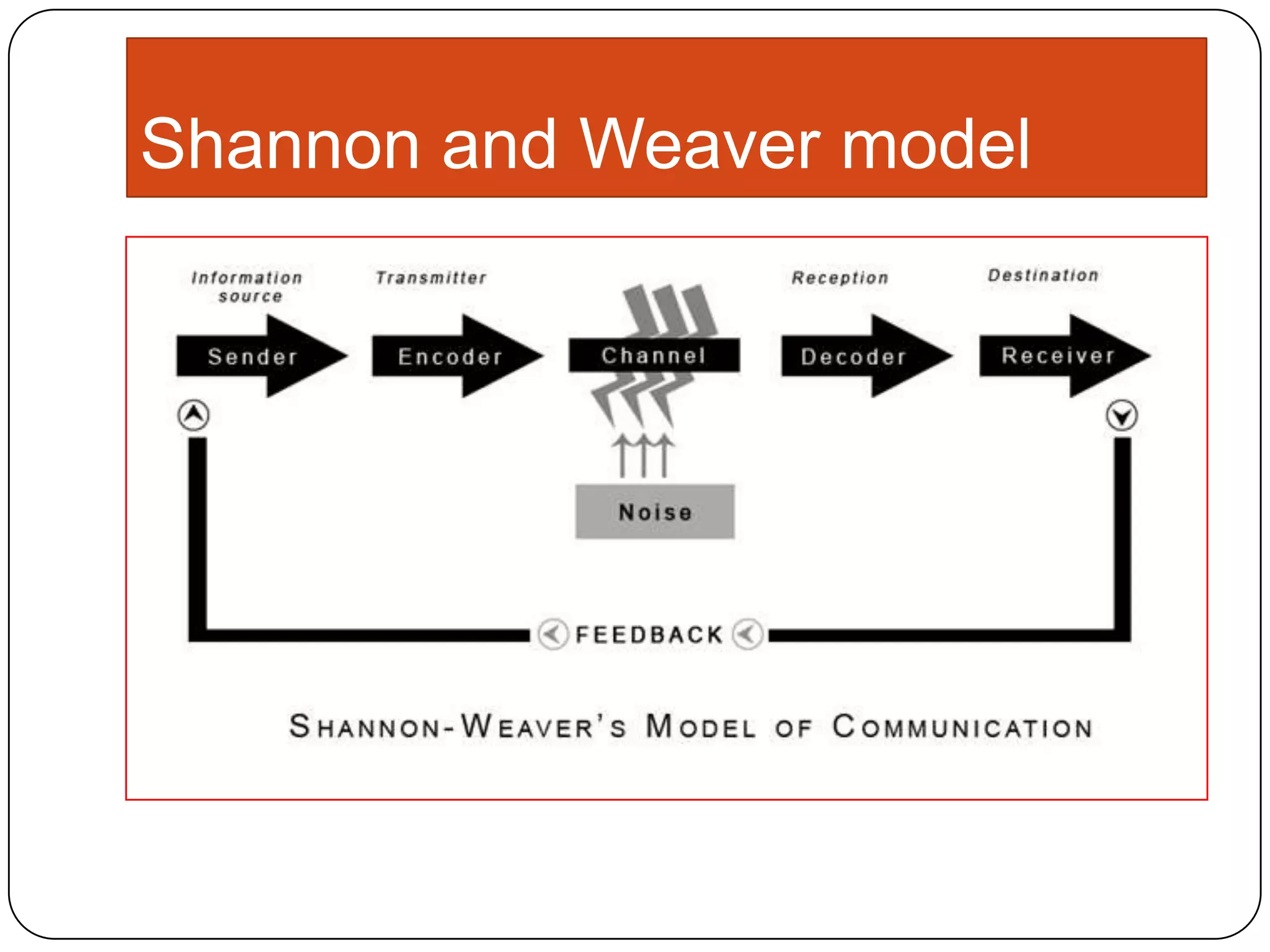
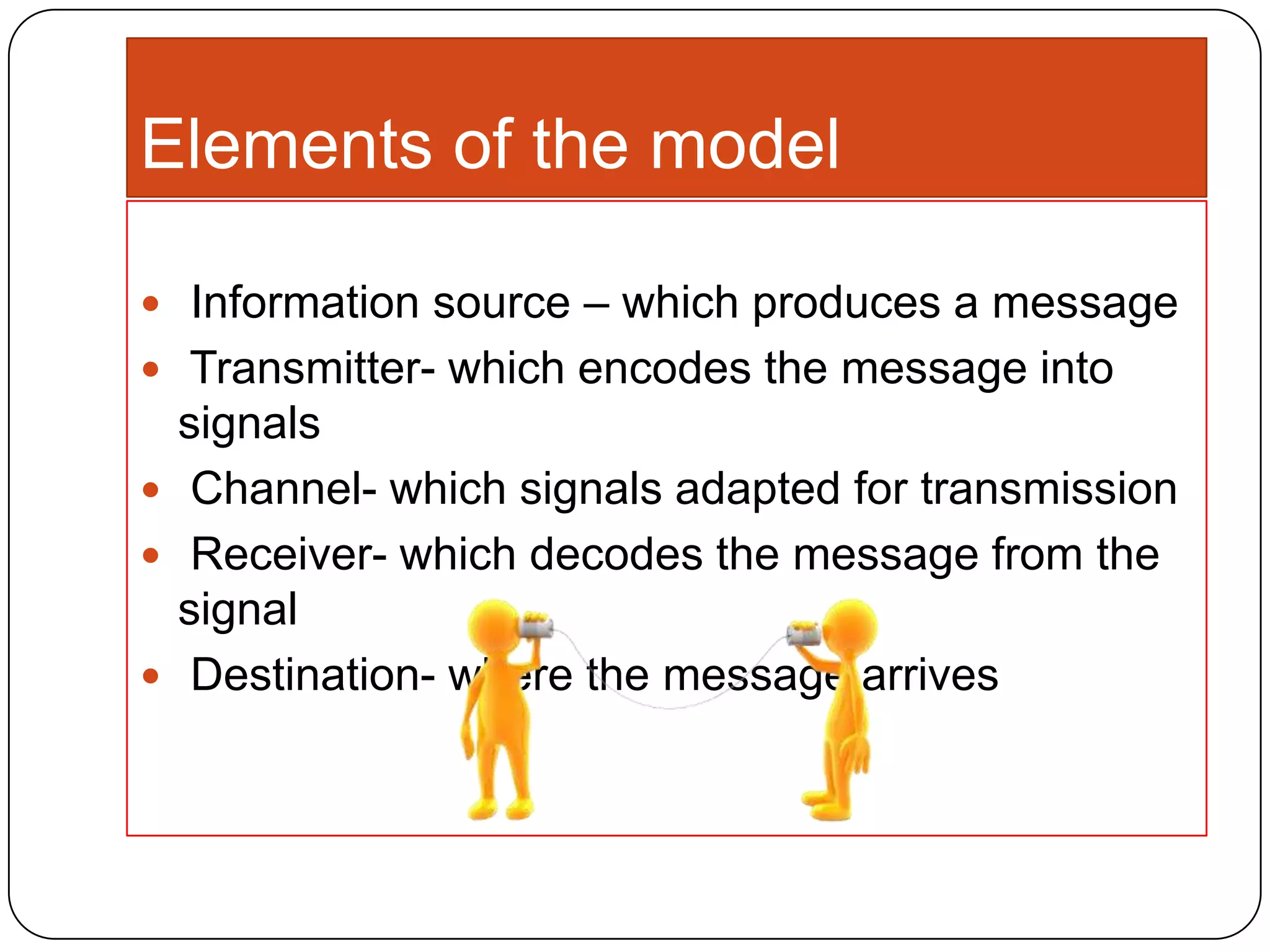
Elements of the model
 Information source – which produces a message
 Transmitter- which encodes the message into

signals
 Channel- which signals adapted for transmission
 Receiver- which decodes the message from the
signal
 Destination- where the message arrives
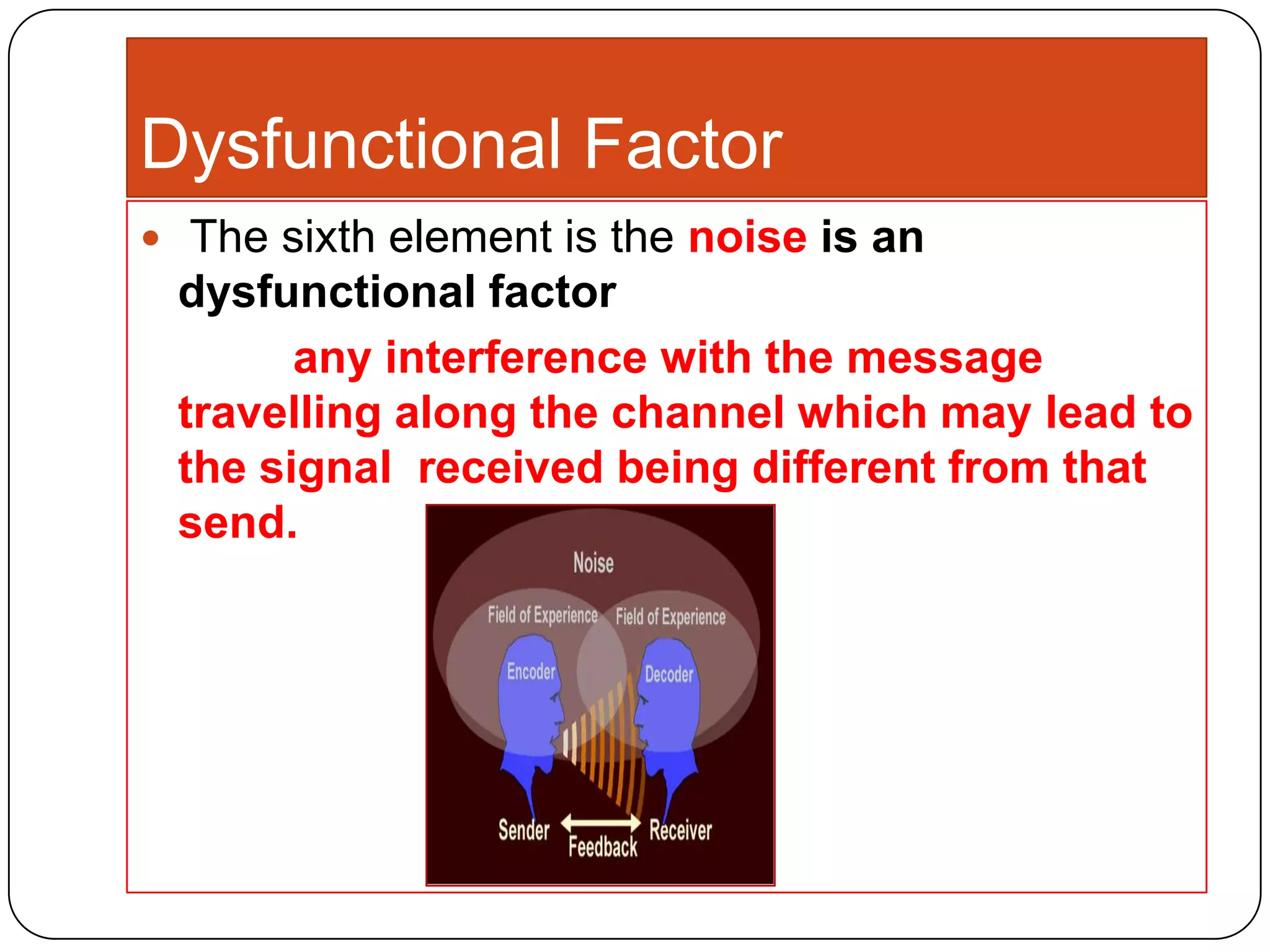
Dysfunctional Factor
 The sixth element is the noise is an

dysfunctional factor
any interference with the message
travelling along the channel which may lead to
the signal received being different from that
send.
Three other factors that afffecting
while communicating
 Physical noise/ Channel noise
 Semantic noise
 Feedback

Noise also interferes with „FIDELITY‟
Levels of problems in the analysis of
communication
 Technical Problem
 Semantic Problem
 Effectiveness Problem
Examples








For the telephone;
the channel is a wire,
the signal is an electrical current in it, and
the transmitter and receiver are the telephone
handsets.
Noise would include crackling from the wire.
In conversation, my mouth is the
transmitter, the signal is the sound
waves, and your ear is the receiver. Noise
would include any distraction you might
experience as I speak.

Shannon and Weaver model

  • 1.
    SHANNON AND WEAVER MODELOF COMMUNICATION Vishnu Durga.K
  • 2.
    The Shannon andWeaver Model Claude Shannon Weaver Warren
  • 3.
    Biography  Claude Shannonand Warren Weaver were   • • engineers working for Bell Telephone Labs in the United States , both of them joined together to write an article in “Bell System Technical Journal” called “ Shannon and weaver model of communication” Their goal was to ensure the maximum efficiency of telephone cables and radio waves. They developed a model of communication which was intended to assist in developing a mathematical theory of communication. Claude Shannon (1916-2001) is considered one of the founding fathers of the communications age. Shannon and Weaver model of communication has been called the “mother of all the models”
  • 4.
  • 5.
    Elements of themodel  Information source – which produces a message  Transmitter- which encodes the message into signals  Channel- which signals adapted for transmission  Receiver- which decodes the message from the signal  Destination- where the message arrives
  • 6.
    Dysfunctional Factor  Thesixth element is the noise is an dysfunctional factor any interference with the message travelling along the channel which may lead to the signal received being different from that send.
  • 7.
    Three other factorsthat afffecting while communicating  Physical noise/ Channel noise  Semantic noise  Feedback Noise also interferes with „FIDELITY‟
  • 8.
    Levels of problemsin the analysis of communication  Technical Problem  Semantic Problem  Effectiveness Problem
  • 9.
    Examples       For the telephone; thechannel is a wire, the signal is an electrical current in it, and the transmitter and receiver are the telephone handsets. Noise would include crackling from the wire. In conversation, my mouth is the transmitter, the signal is the sound waves, and your ear is the receiver. Noise would include any distraction you might experience as I speak.