© D.S.A. S.r.l. SFSCONF 14-11-2019
Open Source Digital Forensics
Open Source digital investigations
Alessandro Farina
What is digital forensics
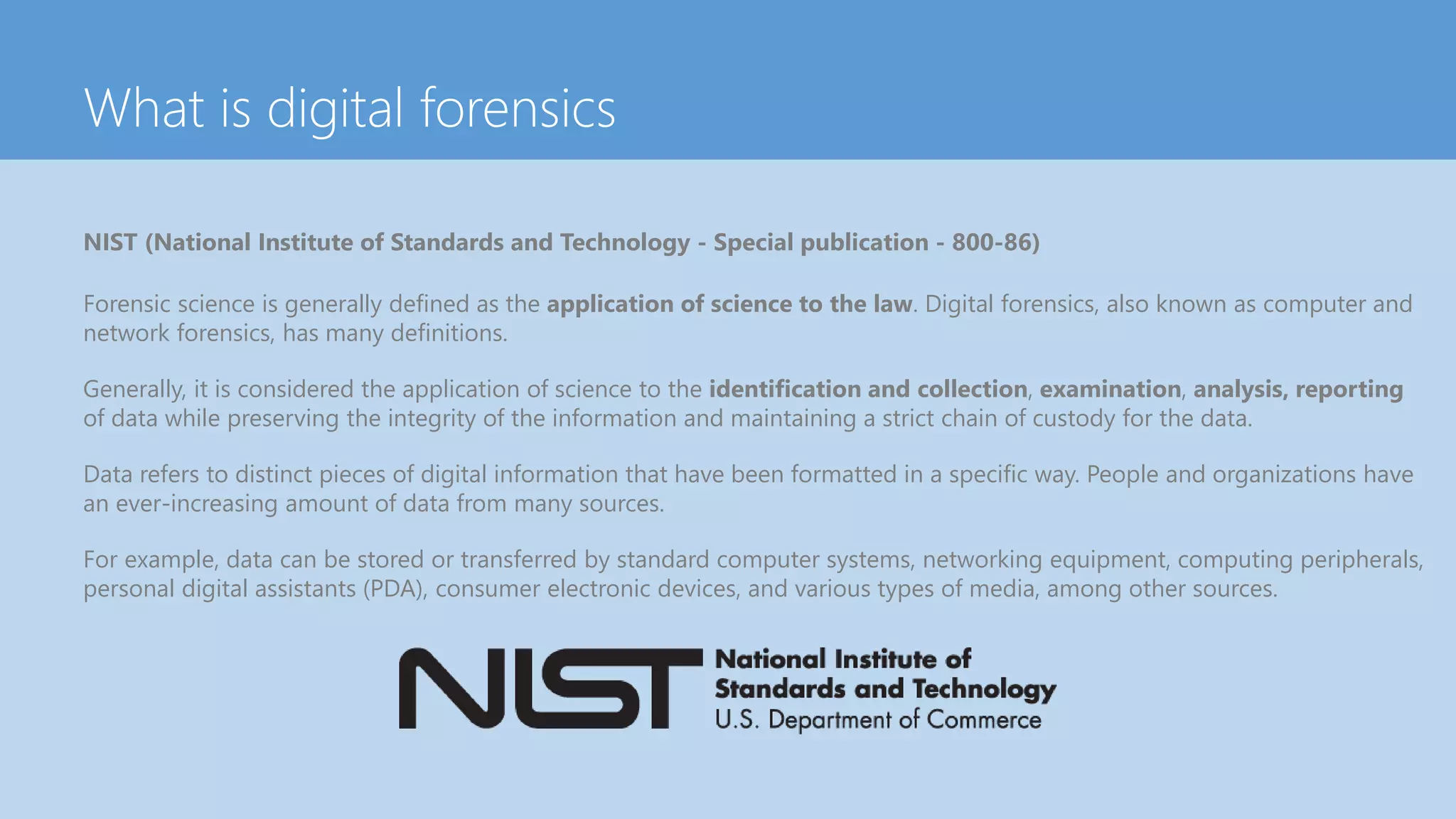
NIST (National Institute of Standards and Technology - Special publication - 800-86)
Forensic science is generally defined as the application of science to the law. Digital forensics, also known as computer and
network forensics, has many definitions.
Generally, it is considered the application of science to the identification and collection, examination, analysis, reporting
of data while preserving the integrity of the information and maintaining a strict chain of custody for the data.
Data refers to distinct pieces of digital information that have been formatted in a specific way. People and organizations have
an ever-increasing amount of data from many sources.
For example, data can be stored or transferred by standard computer systems, networking equipment, computing peripherals,
personal digital assistants (PDA), consumer electronic devices, and various types of media, among other sources.
What is digital forensics
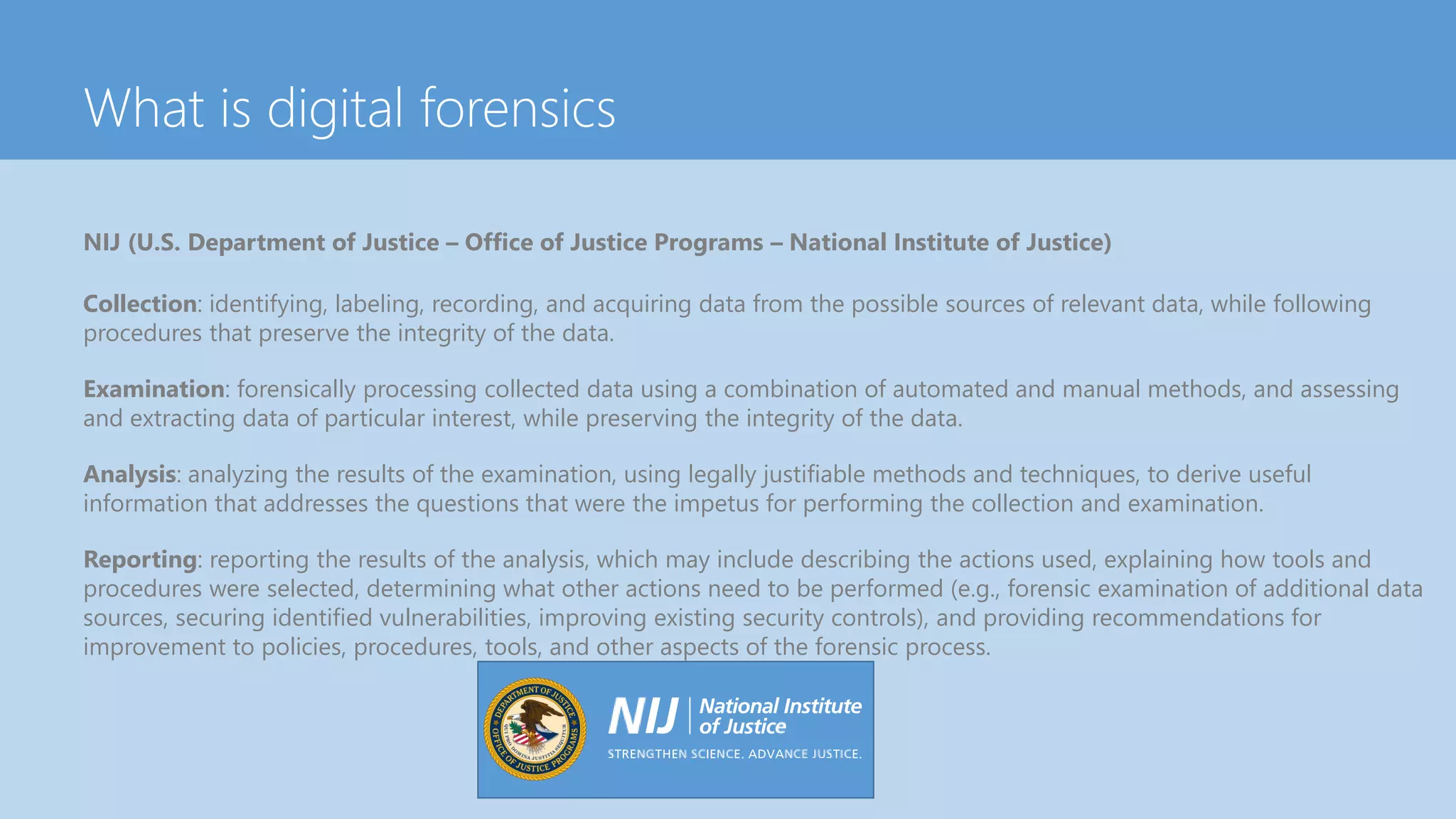
NIJ (U.S. Department of Justice – Office of Justice Programs – National Institute of Justice)
Collection: identifying, labeling, recording, and acquiring data from the possible sources of relevant data, while following
procedures that preserve the integrity of the data.
Examination: forensically processing collected data using a combination of automated and manual methods, and assessing
and extracting data of particular interest, while preserving the integrity of the data.
Analysis: analyzing the results of the examination, using legally justifiable methods and techniques, to derive useful
information that addresses the questions that were the impetus for performing the collection and examination.
Reporting: reporting the results of the analysis, which may include describing the actions used, explaining how tools and
procedures were selected, determining what other actions need to be performed (e.g., forensic examination of additional data
sources, securing identified vulnerabilities, improving existing security controls), and providing recommendations for
improvement to policies, procedures, tools, and other aspects of the forensic process.
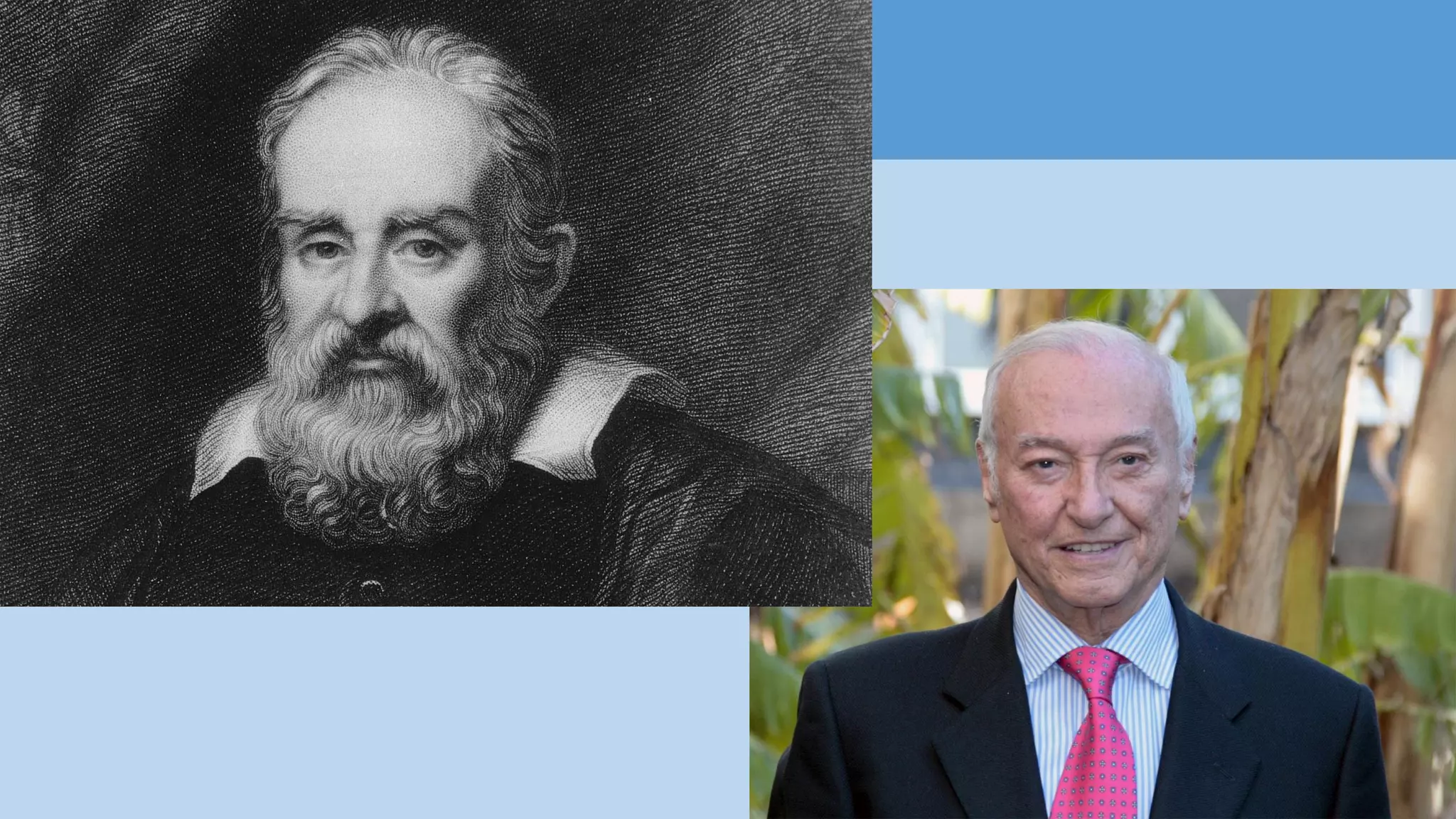
Galileo and Open Source
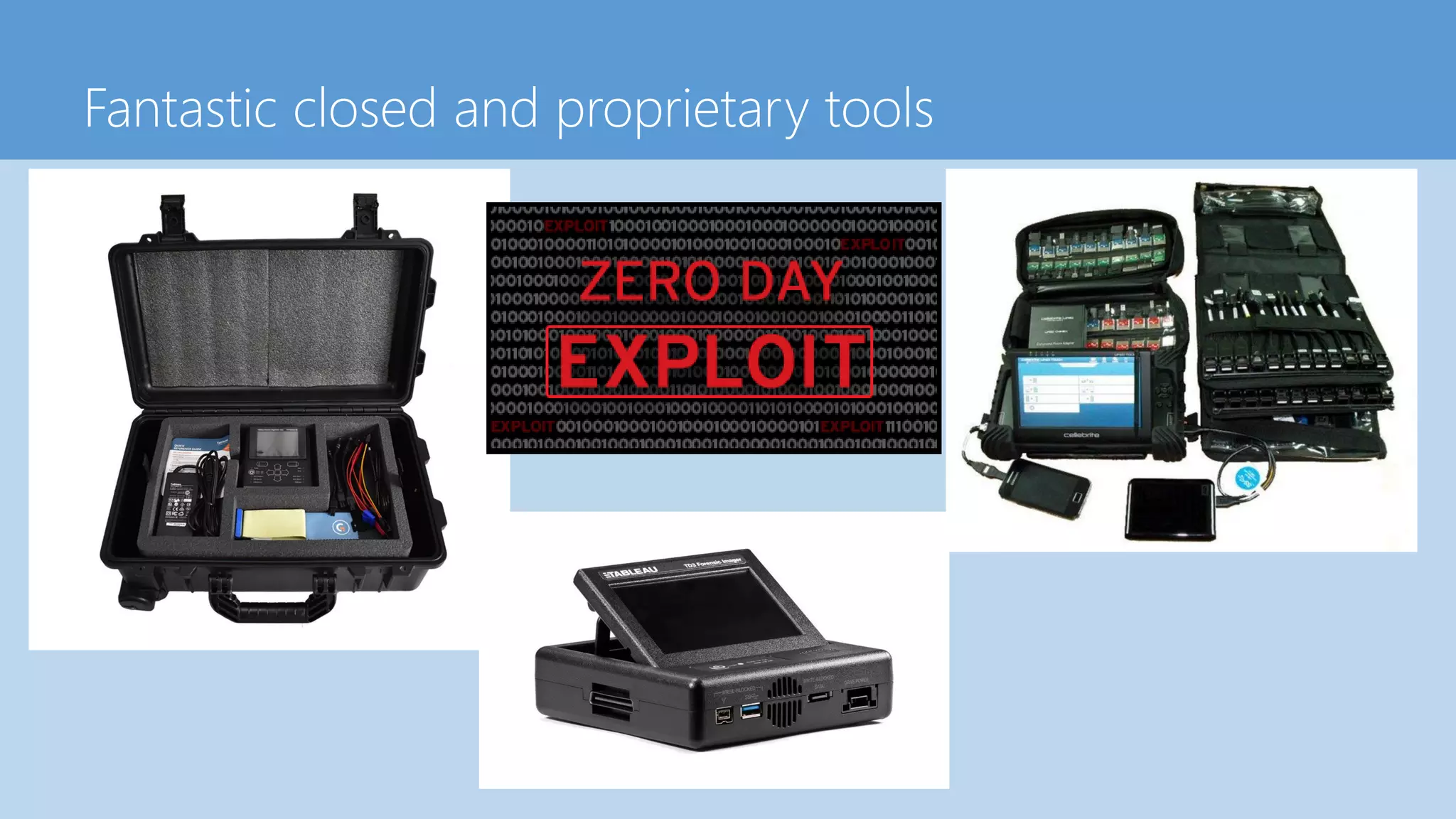
Fantastic closed and proprietary tools
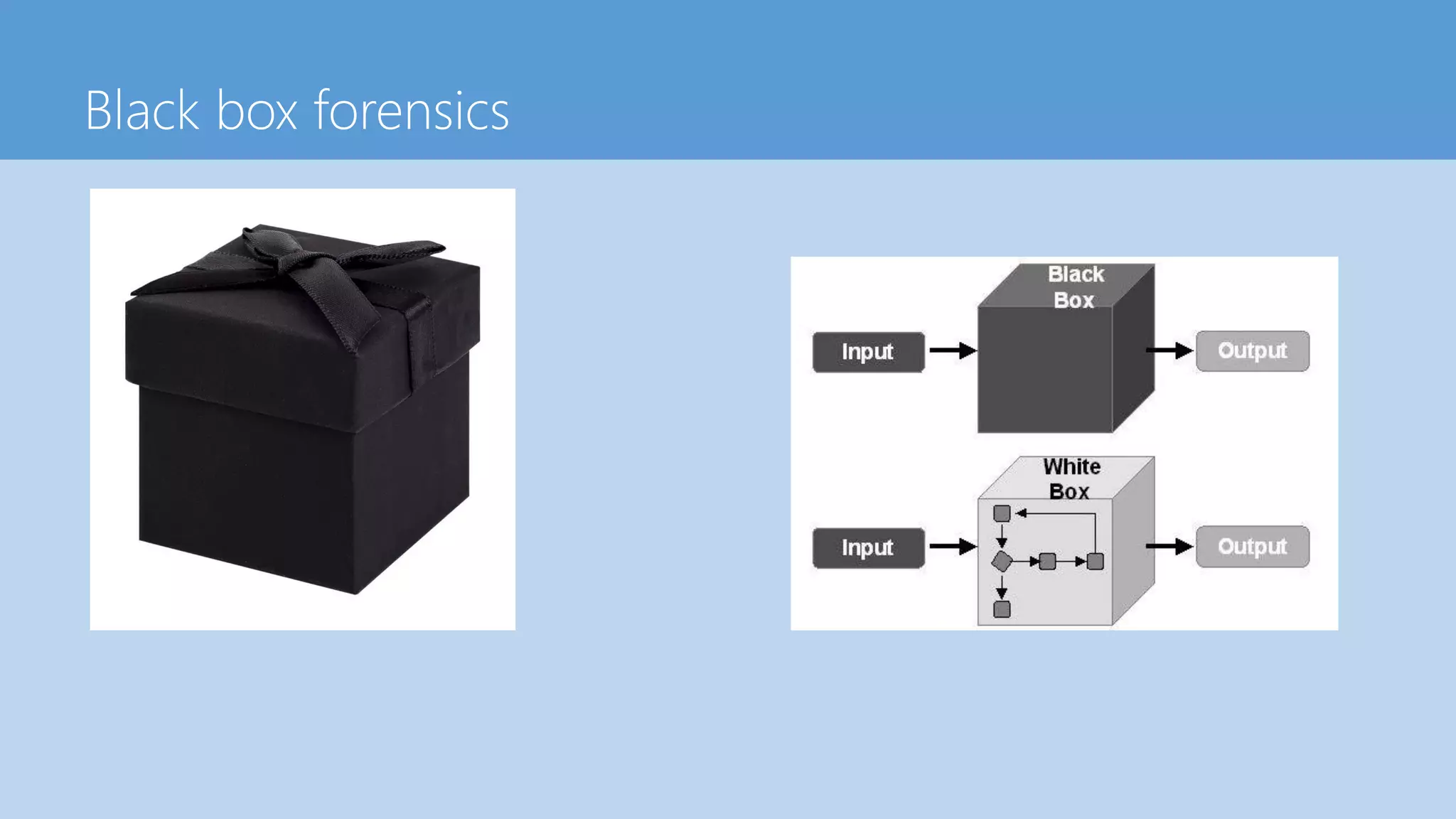
Black box forensics
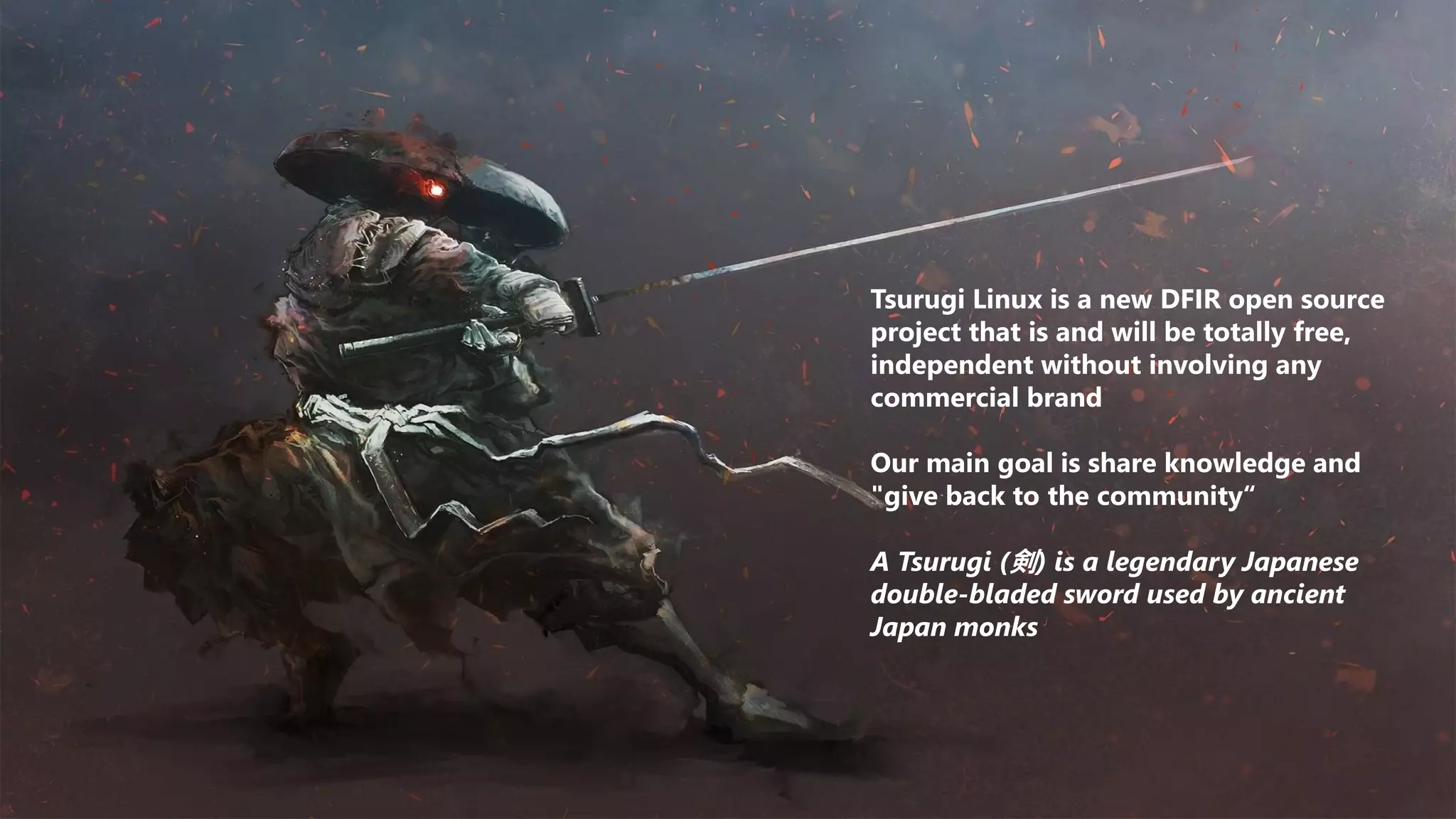
Tsurugi Linux is a new DFIR open source
project that is and will be totally free,
independent without involving any
commercial brand
Our main goal is share knowledge and
"give back to the community“
A Tsurugi (剣) is a legendary Japanese
double-bladed sword used by ancient
Japan monks
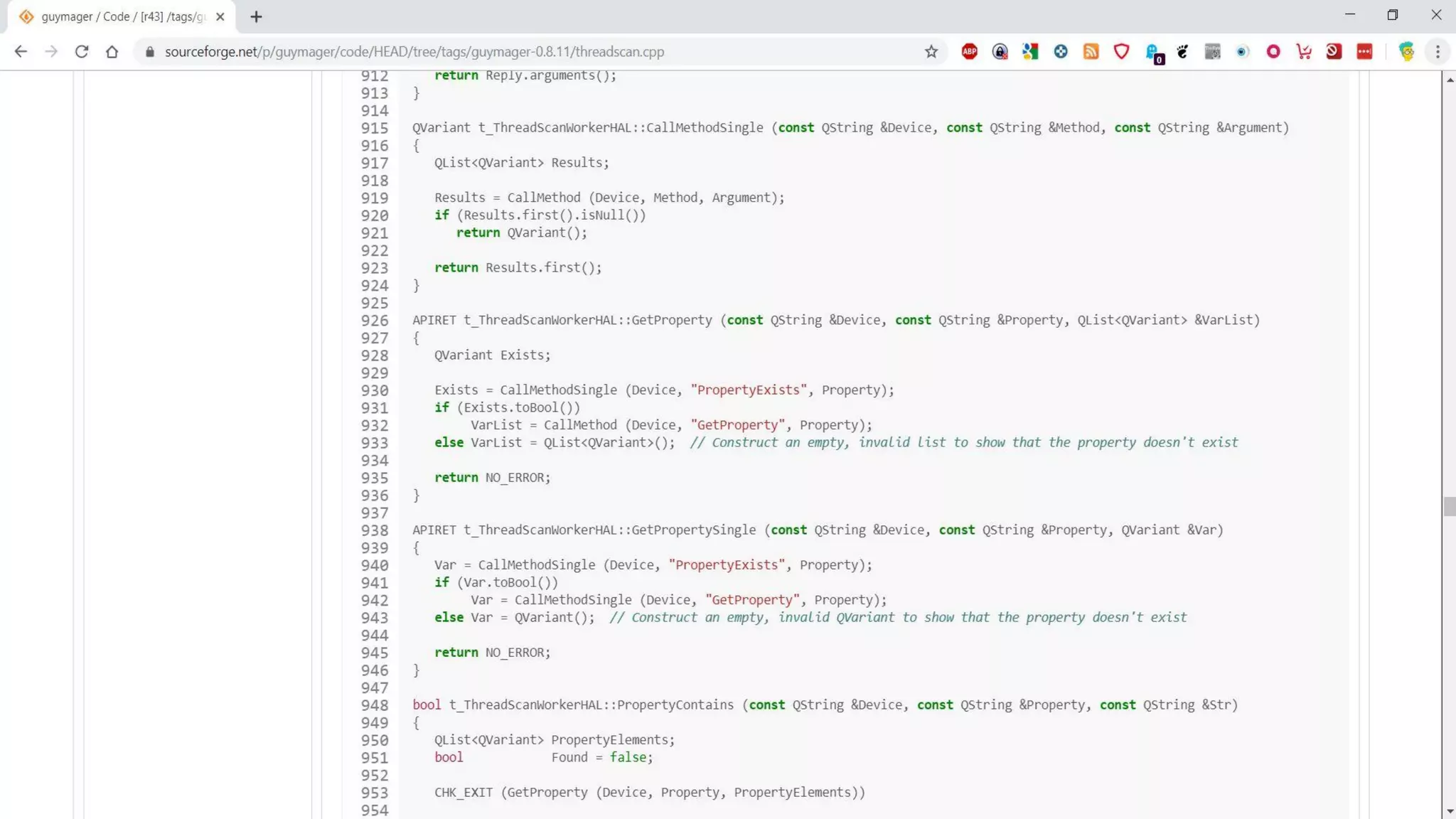
Guymager
Guymager
Bitstream imaging with open source tools
HANDS ON
GUYMAGER
Non religious approach
Thanks
http://www.linuxleo.com/
(very good introduction to DF)
Alessandro Farina
forensics@dsa.it

SFScon19 - Alessandro Farina - Open Source Forensics

  • 1.
    © D.S.A. S.r.l.SFSCONF 14-11-2019 Open Source Digital Forensics Open Source digital investigations Alessandro Farina
  • 3.
    What is digitalforensics NIST (National Institute of Standards and Technology - Special publication - 800-86) Forensic science is generally defined as the application of science to the law. Digital forensics, also known as computer and network forensics, has many definitions. Generally, it is considered the application of science to the identification and collection, examination, analysis, reporting of data while preserving the integrity of the information and maintaining a strict chain of custody for the data. Data refers to distinct pieces of digital information that have been formatted in a specific way. People and organizations have an ever-increasing amount of data from many sources. For example, data can be stored or transferred by standard computer systems, networking equipment, computing peripherals, personal digital assistants (PDA), consumer electronic devices, and various types of media, among other sources.
  • 4.
    What is digitalforensics NIJ (U.S. Department of Justice – Office of Justice Programs – National Institute of Justice) Collection: identifying, labeling, recording, and acquiring data from the possible sources of relevant data, while following procedures that preserve the integrity of the data. Examination: forensically processing collected data using a combination of automated and manual methods, and assessing and extracting data of particular interest, while preserving the integrity of the data. Analysis: analyzing the results of the examination, using legally justifiable methods and techniques, to derive useful information that addresses the questions that were the impetus for performing the collection and examination. Reporting: reporting the results of the analysis, which may include describing the actions used, explaining how tools and procedures were selected, determining what other actions need to be performed (e.g., forensic examination of additional data sources, securing identified vulnerabilities, improving existing security controls), and providing recommendations for improvement to policies, procedures, tools, and other aspects of the forensic process.
  • 5.
  • 7.
    Fantastic closed andproprietary tools
  • 8.
  • 10.
    Tsurugi Linux isa new DFIR open source project that is and will be totally free, independent without involving any commercial brand Our main goal is share knowledge and "give back to the community“ A Tsurugi (剣) is a legendary Japanese double-bladed sword used by ancient Japan monks
  • 12.
  • 13.
  • 15.
    Bitstream imaging withopen source tools HANDS ON GUYMAGER
  • 16.
  • 18.
    Thanks http://www.linuxleo.com/ (very good introductionto DF) Alessandro Farina forensics@dsa.it