Adoption Determinants of Open
Hardware Across Industries
Seckin Celik
Department of Economics and Management
University of Trento
Davide Serpico
Department of Philosophy
University of Milan
Introduction
Open-Source Software (OSS)
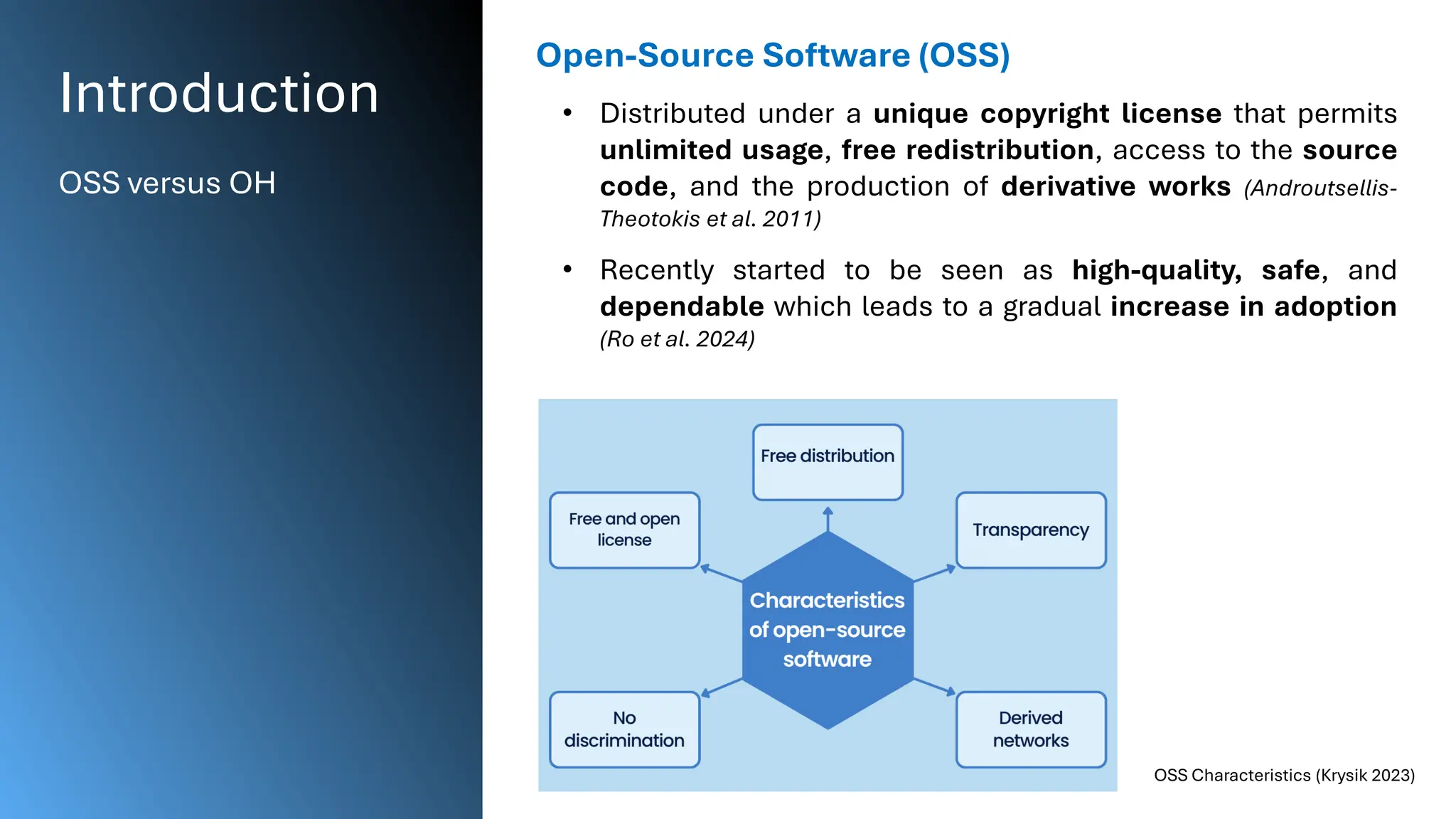
• Distributed under a unique copyright license that permits
unlimited usage, free redistribution, access to the source
code, and the production of derivative works (Androutsellis-
Theotokis et al. 2011)
• Recently started to be seen as high-quality, safe, and
dependable which leads to a gradual increase in adoption
(Ro et al. 2024)
OSS Characteristics (Krysik 2023)
OSS versus OH
Introduction
Open Hardware (OH)
• A “hardware whose design is made publicly available so
that anyone can study, modify, distribute, make and sell
the design or hardware based on that design"(Open-Source
Hardware Association, 2020)
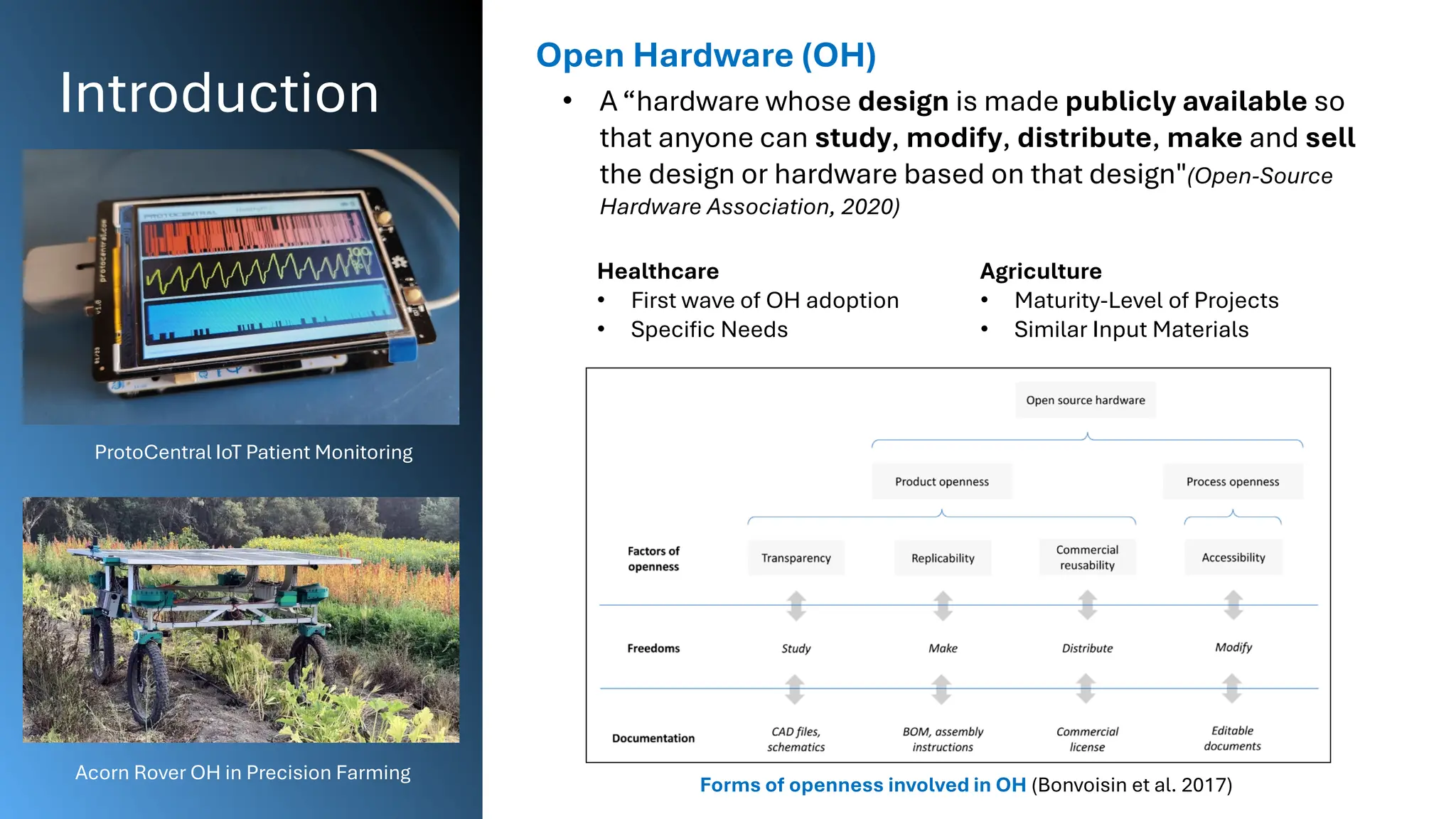
Forms of openness involved in OH (Bonvoisin et al. 2017)
Acorn Rover OH in Precision Farming
ProtoCentral IoT Patient Monitoring
Healthcare
• First wave of OH adoption
• Specific Needs
Agriculture
• Maturity-Level of Projects
• Similar Input Materials
Research Questions
RQ1: What are the primary challenges and motivations that
influence the adoption of OH technologies across
different sectors, particularly agriculture and healthcare?
RQ2: Do real-world applications of OH reflect the principles
highlighted in the scientific literature, and what factors
drive their successful implementation and diffusion?
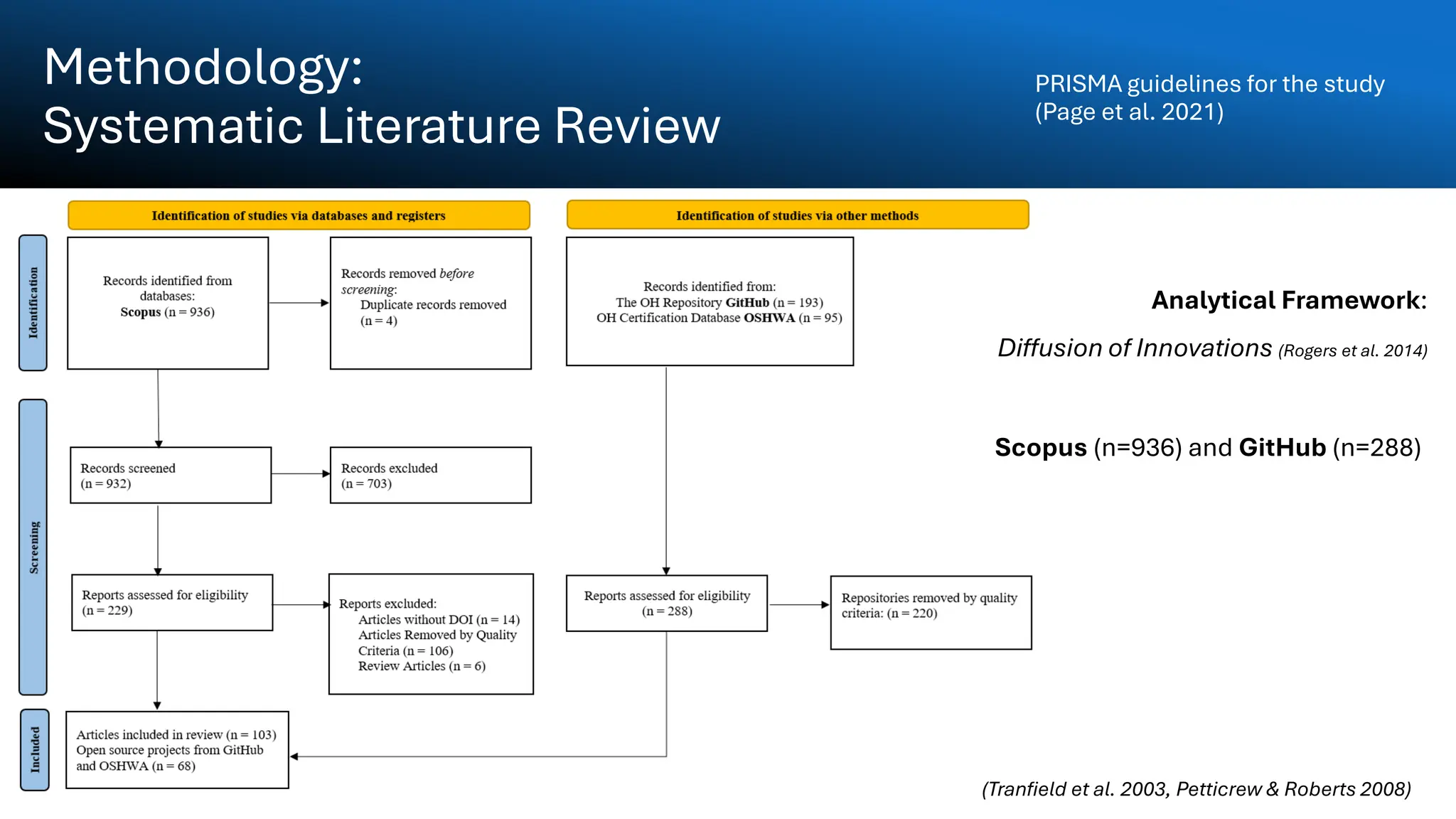
Methodology:
Systematic Literature Review
PRISMA guidelines for the study
(Page et al. 2021)
Analytical Framework:
Diffusion of Innovations (Rogers et al. 2014)
Scopus (n=936) and GitHub (n=288)
(Tranfield et al. 2003, Petticrew & Roberts 2008)
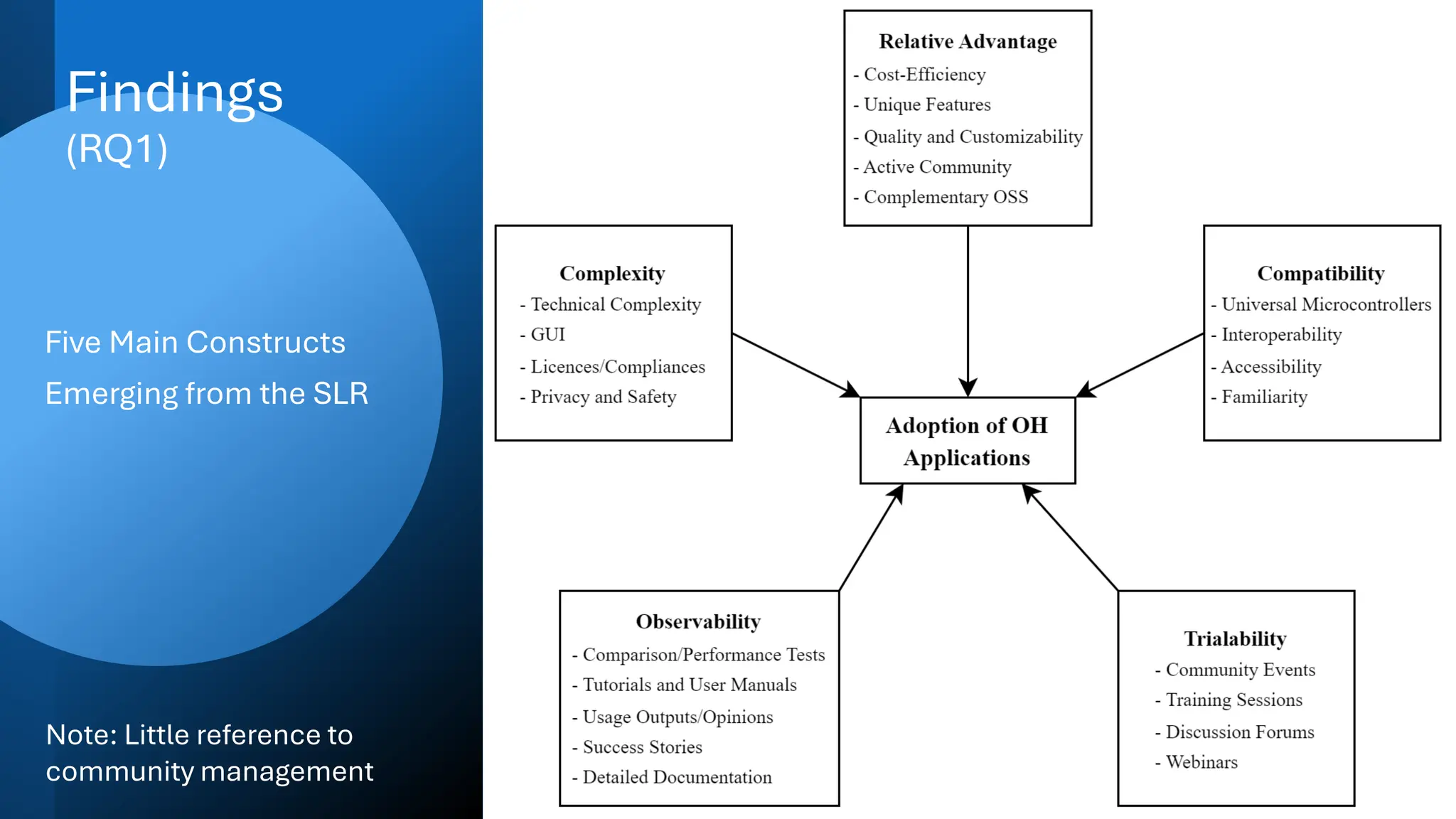
Findings
(RQ1)
Five Main Constructs
Emerging from the SLR
Note: Little reference to
community management
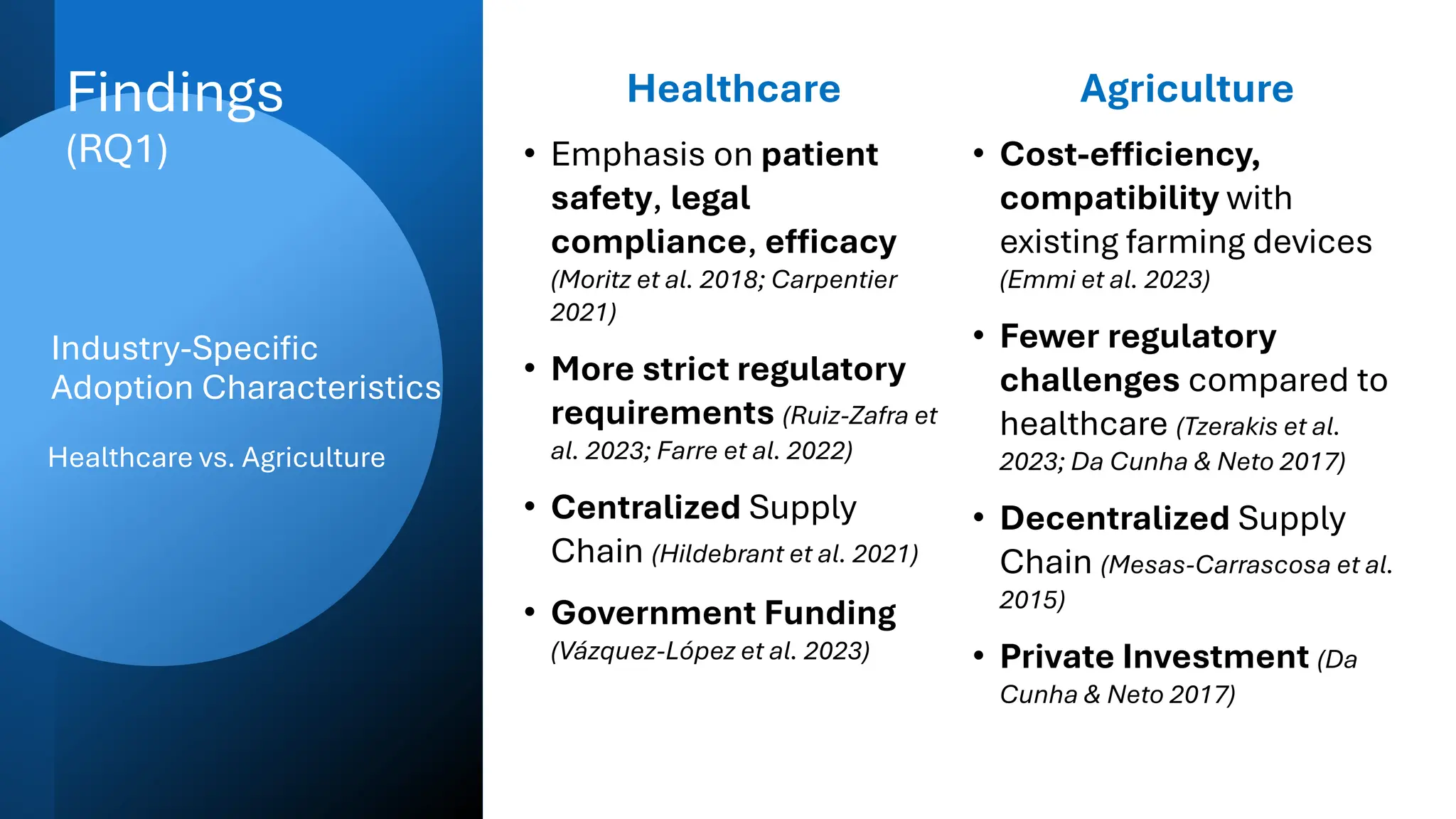
Industry-Specific
Adoption Characteristics
Healthcare
• Emphasis on patient
safety, legal
compliance, efficacy
(Moritz et al. 2018; Carpentier
2021)
• More strict regulatory
requirements (Ruiz-Zafra et
al. 2023; Farre et al. 2022)
• Centralized Supply
Chain (Hildebrant et al. 2021)
• Government Funding
(Vázquez-López et al. 2023)
Agriculture
• Cost-efficiency,
compatibility with
existing farming devices
(Emmi et al. 2023)
• Fewer regulatory
challenges compared to
healthcare (Tzerakis et al.
2023; Da Cunha & Neto 2017)
• Decentralized Supply
Chain (Mesas-Carrascosa et al.
2015)
• Private Investment (Da
Cunha & Neto 2017)
Healthcare vs. Agriculture
Findings
(RQ1)
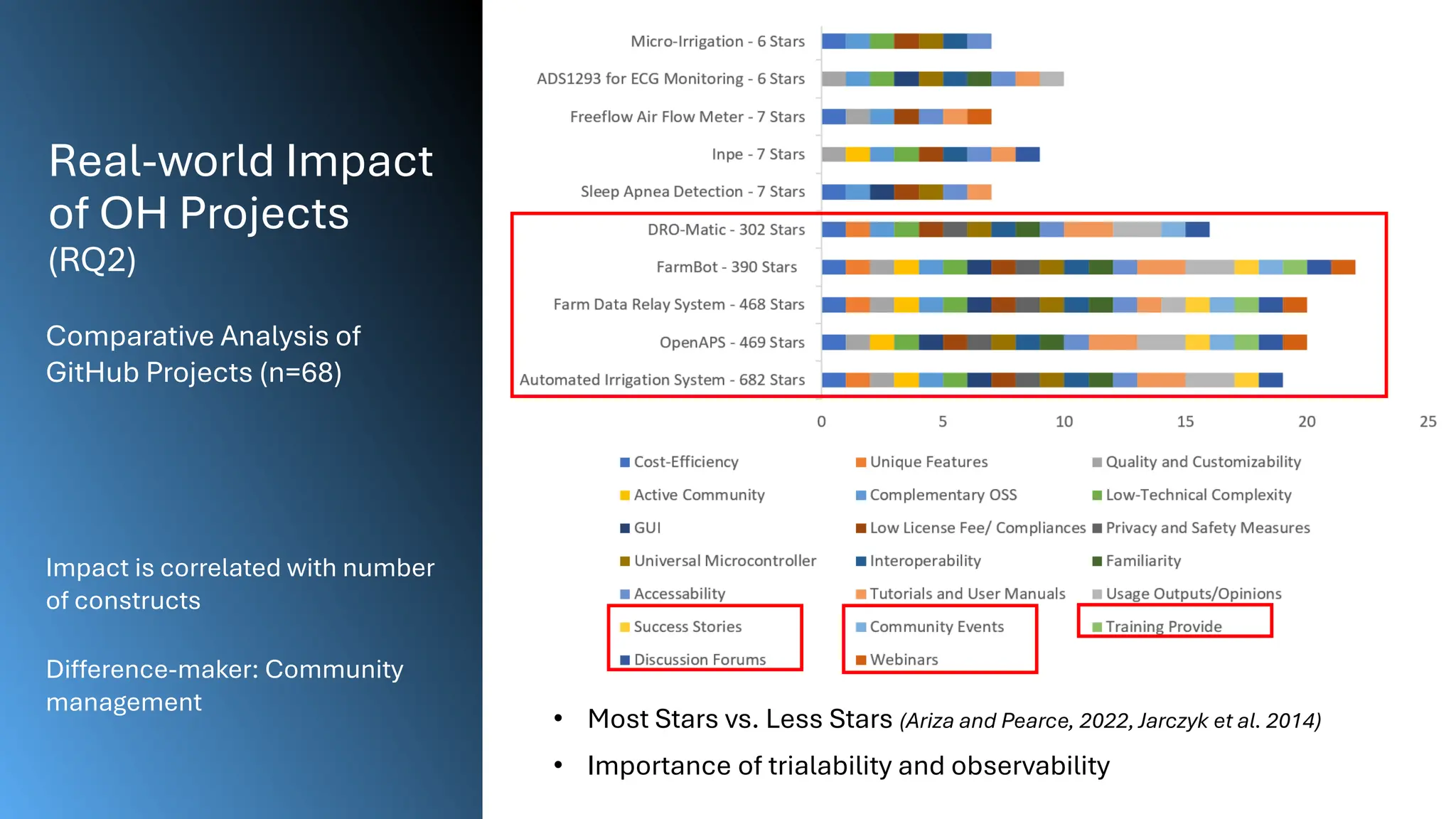
Real-world Impact
of OH Projects
(RQ2)
• Most Stars vs. Less Stars (Ariza and Pearce, 2022, Jarczyk et al. 2014)
• Importance of trialability and observability
Comparative Analysis of
GitHub Projects (n=68)
Impact is correlated with number
of constructs
Difference-maker: Community
management
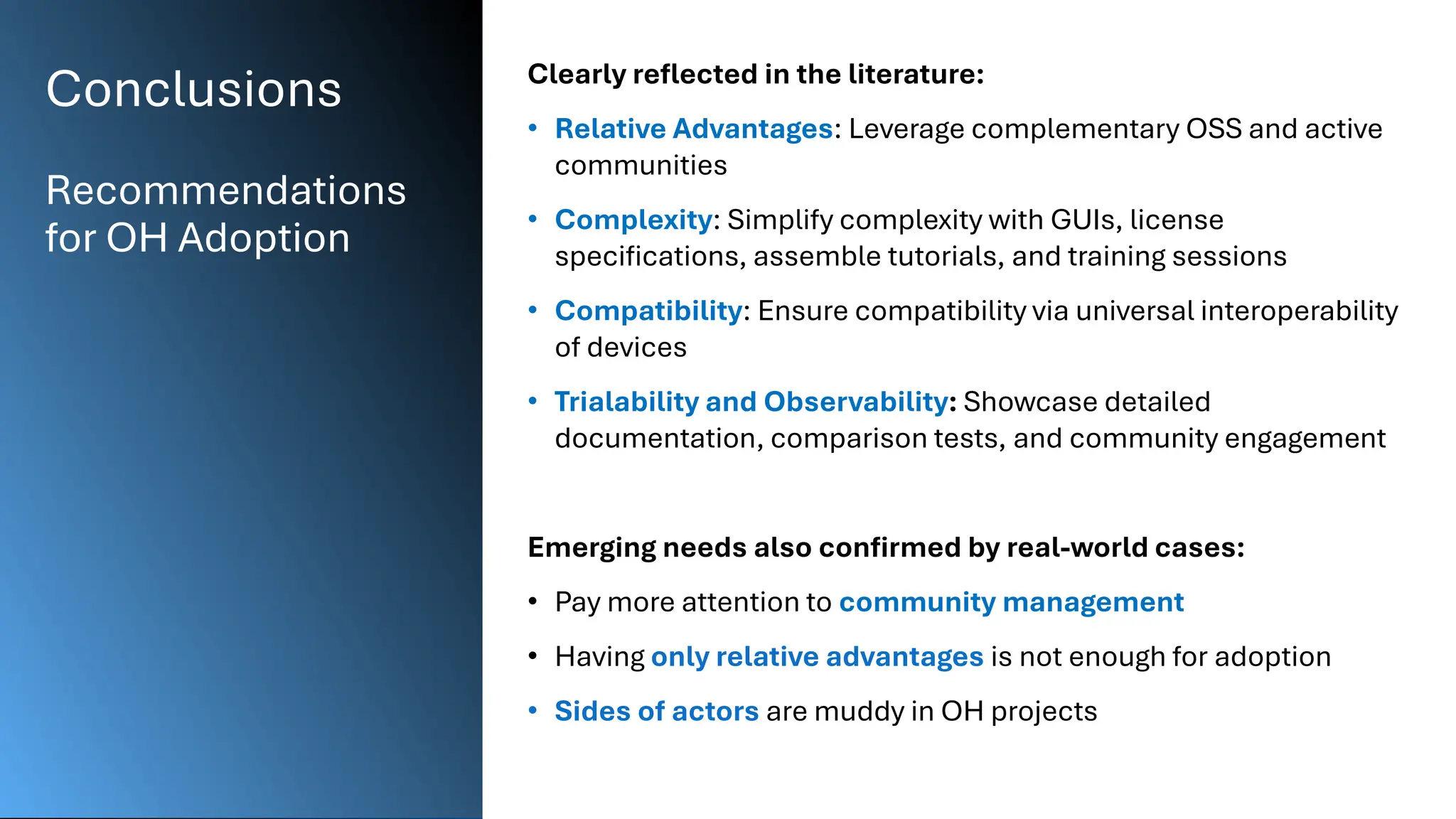
Conclusions
Recommendations
for OH Adoption
Clearly reflected in the literature:
• Relative Advantages: Leverage complementary OSS and active
communities
• Complexity: Simplify complexity with GUIs, license
specifications, assemble tutorials, and training sessions
• Compatibility: Ensure compatibility via universal interoperability
of devices
• Trialability and Observability: Showcase detailed
documentation, comparison tests, and community engagement
Emerging needs also confirmed by real-world cases:
• Pay more attention to community management
• Having only relative advantages is not enough for adoption
• Sides of actors are muddy in OH projects
Thank you for listening!
Seckin Celik
seckin.celik@unitn.it
Davide Serpico
davide.serpico1@unimi.it

SFSCON24 - Seckin Celik & Davide Serpico - Adoption Determinants of Open Hardware Across Industries

  • 1.
    Adoption Determinants ofOpen Hardware Across Industries Seckin Celik Department of Economics and Management University of Trento Davide Serpico Department of Philosophy University of Milan
  • 2.
    Introduction Open-Source Software (OSS) •Distributed under a unique copyright license that permits unlimited usage, free redistribution, access to the source code, and the production of derivative works (Androutsellis- Theotokis et al. 2011) • Recently started to be seen as high-quality, safe, and dependable which leads to a gradual increase in adoption (Ro et al. 2024) OSS Characteristics (Krysik 2023) OSS versus OH
  • 3.
    Introduction Open Hardware (OH) •A “hardware whose design is made publicly available so that anyone can study, modify, distribute, make and sell the design or hardware based on that design"(Open-Source Hardware Association, 2020) Forms of openness involved in OH (Bonvoisin et al. 2017) Acorn Rover OH in Precision Farming ProtoCentral IoT Patient Monitoring Healthcare • First wave of OH adoption • Specific Needs Agriculture • Maturity-Level of Projects • Similar Input Materials
  • 4.
    Research Questions RQ1: Whatare the primary challenges and motivations that influence the adoption of OH technologies across different sectors, particularly agriculture and healthcare? RQ2: Do real-world applications of OH reflect the principles highlighted in the scientific literature, and what factors drive their successful implementation and diffusion?
  • 5.
    Methodology: Systematic Literature Review PRISMAguidelines for the study (Page et al. 2021) Analytical Framework: Diffusion of Innovations (Rogers et al. 2014) Scopus (n=936) and GitHub (n=288) (Tranfield et al. 2003, Petticrew & Roberts 2008)
  • 6.
    Findings (RQ1) Five Main Constructs Emergingfrom the SLR Note: Little reference to community management
  • 7.
    Industry-Specific Adoption Characteristics Healthcare • Emphasison patient safety, legal compliance, efficacy (Moritz et al. 2018; Carpentier 2021) • More strict regulatory requirements (Ruiz-Zafra et al. 2023; Farre et al. 2022) • Centralized Supply Chain (Hildebrant et al. 2021) • Government Funding (Vázquez-López et al. 2023) Agriculture • Cost-efficiency, compatibility with existing farming devices (Emmi et al. 2023) • Fewer regulatory challenges compared to healthcare (Tzerakis et al. 2023; Da Cunha & Neto 2017) • Decentralized Supply Chain (Mesas-Carrascosa et al. 2015) • Private Investment (Da Cunha & Neto 2017) Healthcare vs. Agriculture Findings (RQ1)
  • 8.
    Real-world Impact of OHProjects (RQ2) • Most Stars vs. Less Stars (Ariza and Pearce, 2022, Jarczyk et al. 2014) • Importance of trialability and observability Comparative Analysis of GitHub Projects (n=68) Impact is correlated with number of constructs Difference-maker: Community management
  • 9.
    Conclusions Recommendations for OH Adoption Clearlyreflected in the literature: • Relative Advantages: Leverage complementary OSS and active communities • Complexity: Simplify complexity with GUIs, license specifications, assemble tutorials, and training sessions • Compatibility: Ensure compatibility via universal interoperability of devices • Trialability and Observability: Showcase detailed documentation, comparison tests, and community engagement Emerging needs also confirmed by real-world cases: • Pay more attention to community management • Having only relative advantages is not enough for adoption • Sides of actors are muddy in OH projects
  • 10.
    Thank you forlistening! Seckin Celik seckin.celik@unitn.it Davide Serpico davide.serpico1@unimi.it