Download to read offline
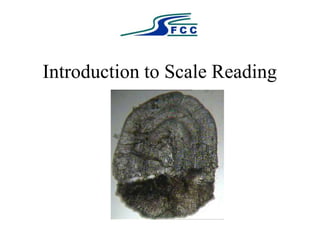
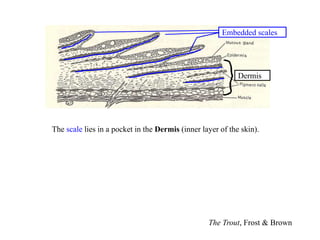
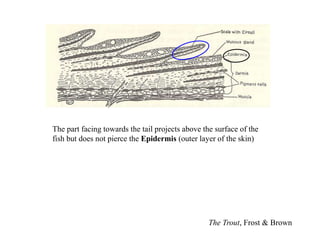
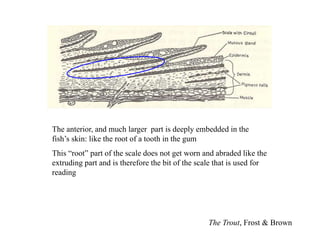
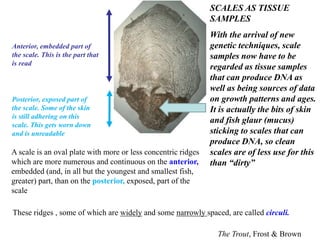
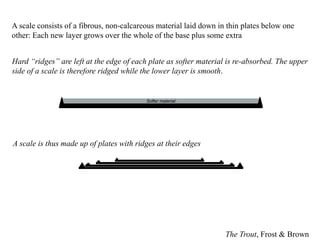
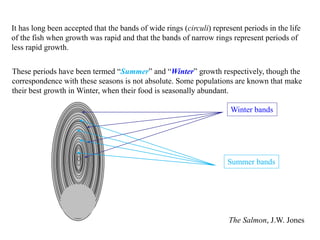
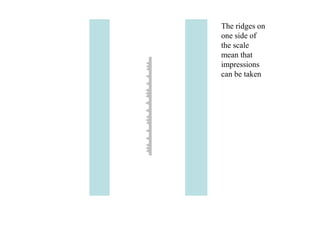
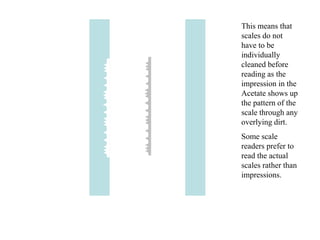
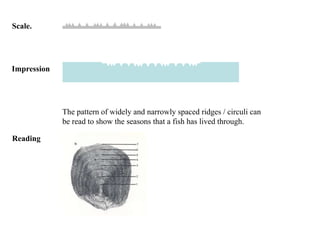
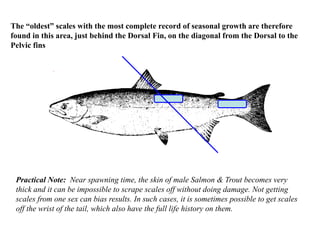
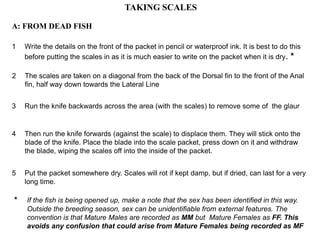
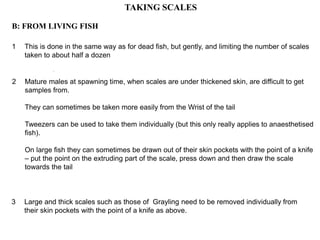
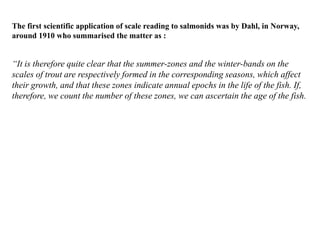



1. Scales provide information about a fish's growth patterns and age. The embedded part of the scale contains ridges called circuli that represent periods of rapid and slow growth. 2. Scale samples can now be used as tissue samples to extract DNA information in addition to growth and age data. Clean scales provide less DNA information than scales still attached to skin and mucus. 3. Reading scales involves examining the pattern of widely and narrowly spaced circuli to determine the seasons and years represented in a fish's life. Impressions can also be taken of scales.


![Structure and Types of Scales in Fishes[1].pptx](https://cdn.slidesharecdn.com/ss_thumbnails/structureandtypesofscalesinfishes1-250325121125-2f63aca3-thumbnail.jpg?width=640&height=640&fit=bounds)


