What are STI’s?A sexually transmitted disease
 It is passed from one person to another by oral, anal or vaginal sex.
 HIV is the most common transmitted diseaseHow are STI’s transmitted?STI’s are transmitted from one person to another through blood, semen, vaginal discharge or discharges from sores caused by the STI’s. Most common way to get an STI is by unprotected anal, vaginal or oral sexual intercourse. You can also get infected lesions on the body by sharing needles, razors or anything that can make an incision in your skin or by using sex toys if other body fluids are still on it from someone elseYou can not get an STI from toilets or towels.
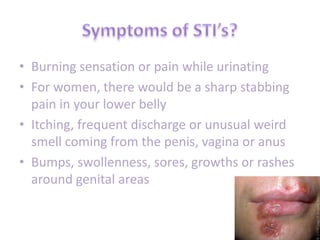
Symptoms of STI’s?Burning sensation or pain while urinatingFor women, there would be a sharp stabbing pain in your lower bellyItching, frequent discharge or unusual weird smell coming from the penis, vagina or anusBumps, swollenness, sores, growths or rashes around genital areas
Can STI’s be cured?Many STI’s can be treated but only some can be cured.STI’s caused by bacteria, microorganisms or protozoa can be treated by antibodies, topical creams or lotionsCurable means that the infection organism can be killed by treatment and stop the spread of the infectionAlthough, damage already done to the body can not be undone
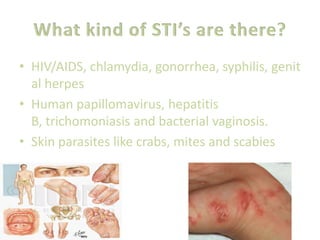
What kind of STI’s are there?HIV/AIDS, chlamydia, gonorrhea, syphilis, genital herpesHuman papillomavirus, hepatitis B, trichomoniasis and bacterial vaginosis.Skin parasites like crabs, mites and scabies
How likely are you to get an STI?STI’s are very contagious in the U.S today. 65 million + individuals in this country have incurable, untreatable STIMore than 18 million each year will suffer a this infection More than half of all new STI’s will occur between the ages of 15-24 years old.
Some STI’s don’t have symptoms * Chlamydia has no symptoms so many woman don’t think anything is wrong*Gonorrhea sometimes has no symptoms either sometimes both might have unusual dischargeIf neither of these STI’s are treated it could turn into an infection in the reproductive tract called Pelvic inflammatory disease.
Although, these are curable  If you have symptomsGo to a doctor to see what’s causing these symptomsInflammation of the vagina and vulva can be triggered by many things like changes in your pH balance, where semen can affect your balanceDouching, menstruation or other kinds of infection may also lower your pH balanceCont…….
UTI (urinary tract infection) including cystitis may also cause STI symptom like problemsUTI’s are common in woman and can occur either with or without sexual intercourseYou get a UTI by cleaning yourself by wiping from back to forward causing germ to travel from your anus to your bladderAlways check yourself if you think that you have any of these symptoms, DO NOT IGNORE THEM

Sexually Transmitted Diseases

  • 1.
    What are STI’s?Asexually transmitted disease
  • 2.
    It ispassed from one person to another by oral, anal or vaginal sex.
  • 3.
    HIV isthe most common transmitted diseaseHow are STI’s transmitted?STI’s are transmitted from one person to another through blood, semen, vaginal discharge or discharges from sores caused by the STI’s. Most common way to get an STI is by unprotected anal, vaginal or oral sexual intercourse. You can also get infected lesions on the body by sharing needles, razors or anything that can make an incision in your skin or by using sex toys if other body fluids are still on it from someone elseYou can not get an STI from toilets or towels.
  • 4.
    Symptoms of STI’s?Burningsensation or pain while urinatingFor women, there would be a sharp stabbing pain in your lower bellyItching, frequent discharge or unusual weird smell coming from the penis, vagina or anusBumps, swollenness, sores, growths or rashes around genital areas
  • 5.
    Can STI’s becured?Many STI’s can be treated but only some can be cured.STI’s caused by bacteria, microorganisms or protozoa can be treated by antibodies, topical creams or lotionsCurable means that the infection organism can be killed by treatment and stop the spread of the infectionAlthough, damage already done to the body can not be undone
  • 6.
    What kind ofSTI’s are there?HIV/AIDS, chlamydia, gonorrhea, syphilis, genital herpesHuman papillomavirus, hepatitis B, trichomoniasis and bacterial vaginosis.Skin parasites like crabs, mites and scabies
  • 7.
    How likely areyou to get an STI?STI’s are very contagious in the U.S today. 65 million + individuals in this country have incurable, untreatable STIMore than 18 million each year will suffer a this infection More than half of all new STI’s will occur between the ages of 15-24 years old.
  • 8.
    Some STI’s don’thave symptoms * Chlamydia has no symptoms so many woman don’t think anything is wrong*Gonorrhea sometimes has no symptoms either sometimes both might have unusual dischargeIf neither of these STI’s are treated it could turn into an infection in the reproductive tract called Pelvic inflammatory disease.
  • 9.
    Although, these arecurable If you have symptomsGo to a doctor to see what’s causing these symptomsInflammation of the vagina and vulva can be triggered by many things like changes in your pH balance, where semen can affect your balanceDouching, menstruation or other kinds of infection may also lower your pH balanceCont…….
  • 10.
    UTI (urinary tractinfection) including cystitis may also cause STI symptom like problemsUTI’s are common in woman and can occur either with or without sexual intercourseYou get a UTI by cleaning yourself by wiping from back to forward causing germ to travel from your anus to your bladderAlways check yourself if you think that you have any of these symptoms, DO NOT IGNORE THEM