Project management with a human face

 Part 6: Do not inform, communicate!

          Aaro Ollikainen, Claro Leaders Oy


                          1                   18.5.2012
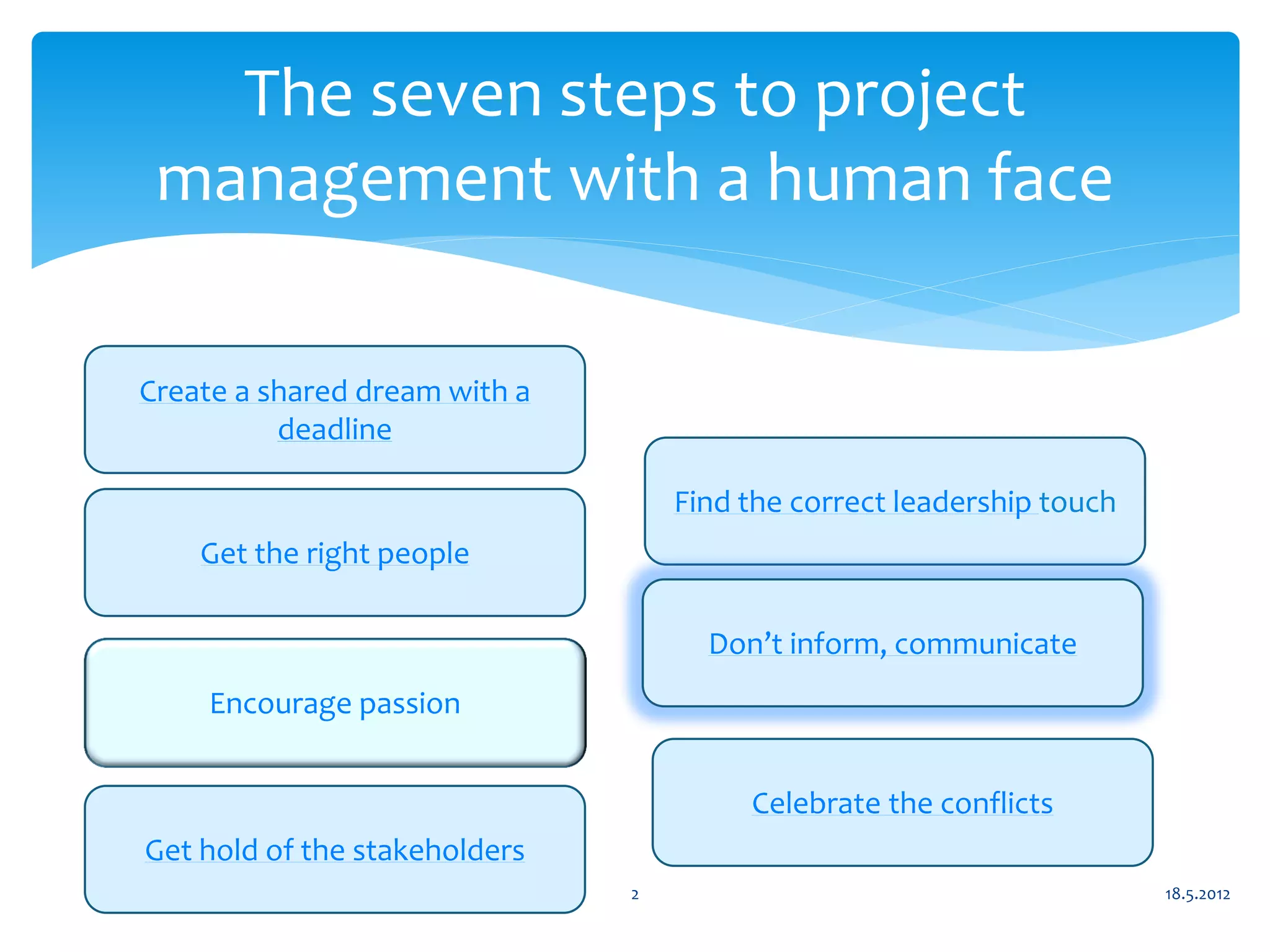
The seven steps to project
 management with a human face

Create a shared dream with a
          deadline

                                   Find the correct leadership touch
    Get the right people

                                     Don’t inform, communicate
    Encourage passion


                                        Celebrate the conflicts
Get hold of the stakeholders
                               2                                       18.5.2012
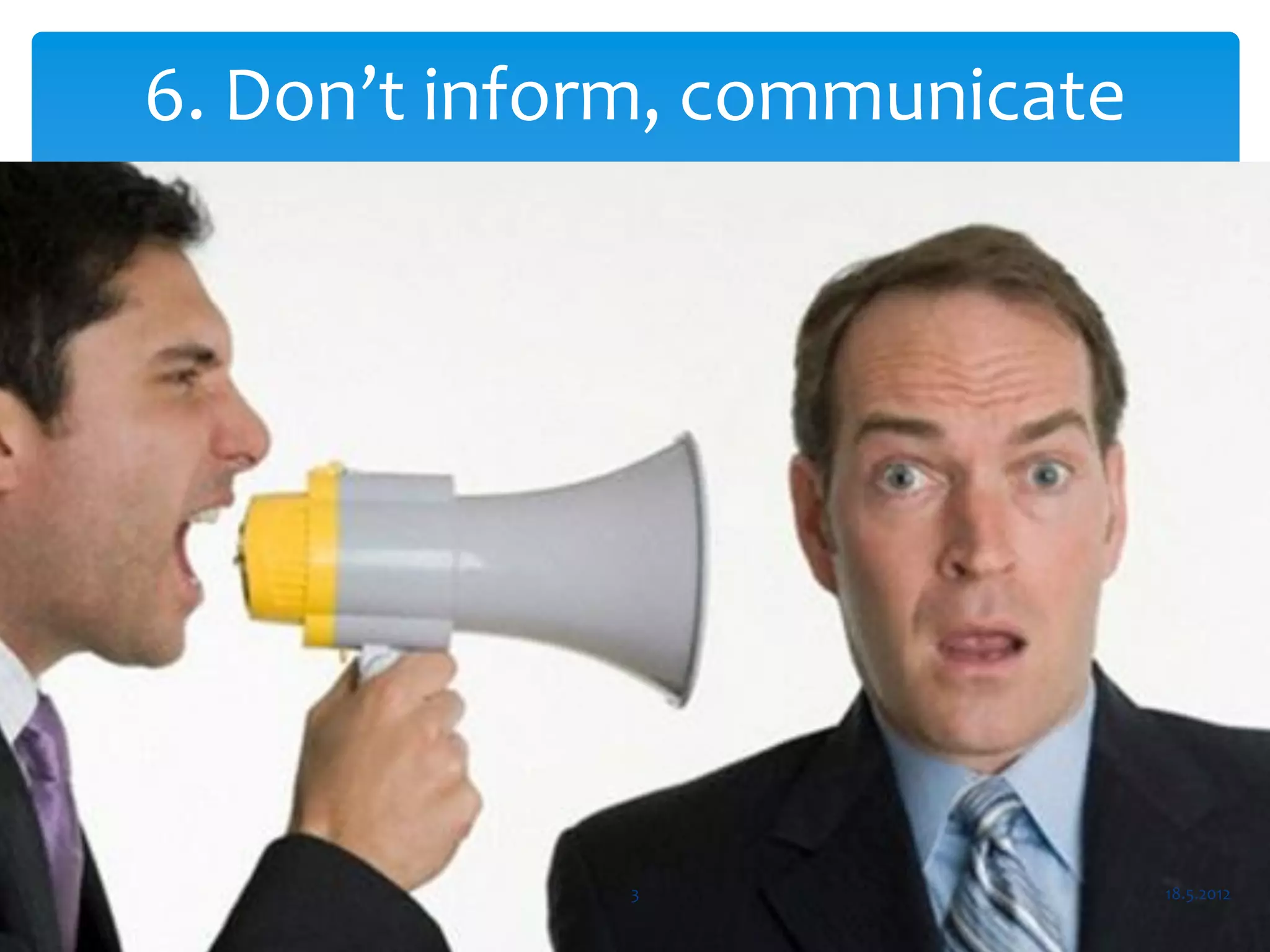
6. Don’t inform, communicate


             3                 18.5.2012
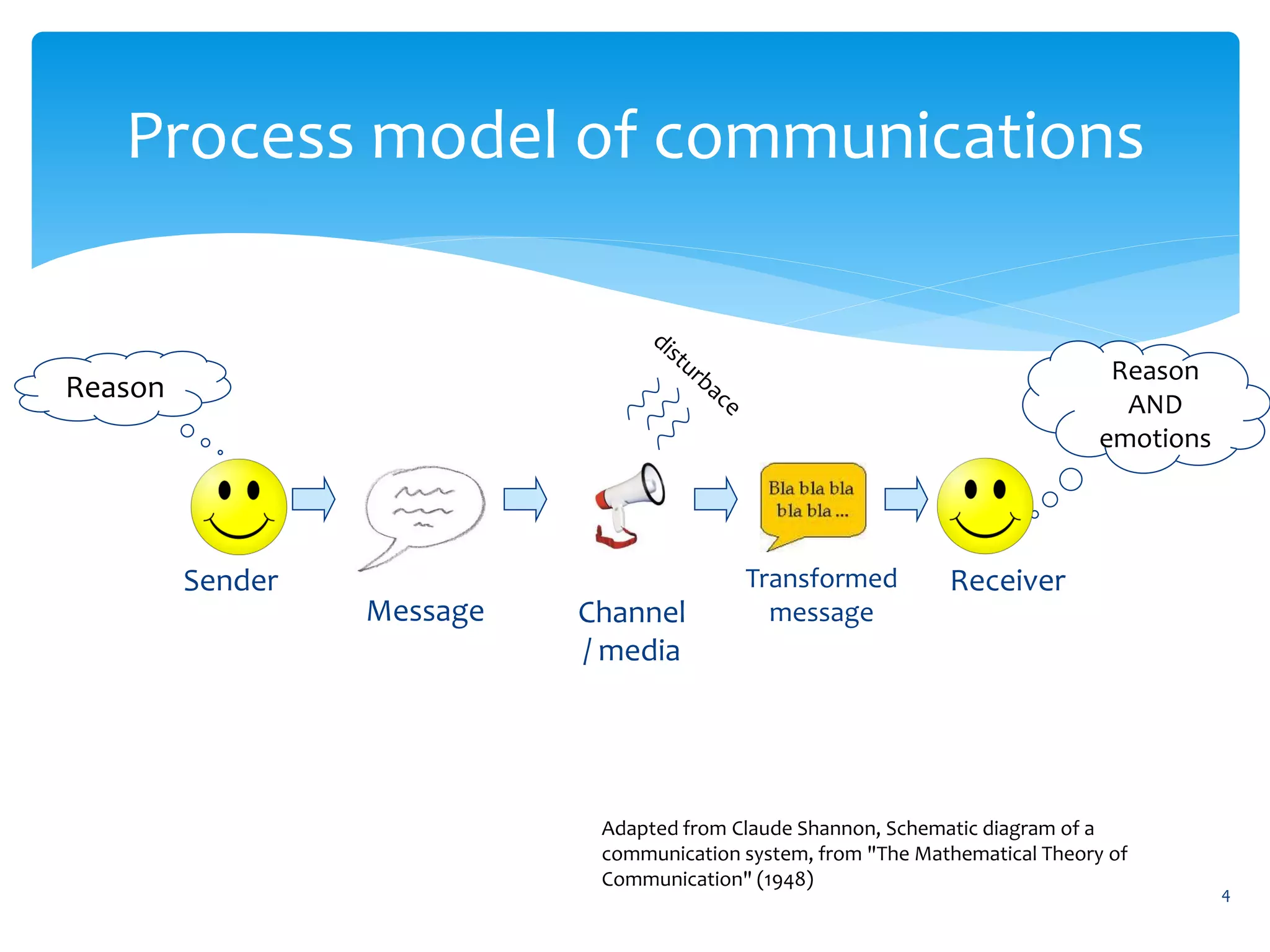
Process model of communications


                                                                                 Reason
Reason
                                                                                  AND
                                                                                emotions


         Sender                            Transformed          Receiver
                  Message   Channel          message
                            / media


                             Adapted from Claude Shannon, Schematic diagram of a
                             communication system, from "The Mathematical Theory of
                             Communication" (1948)
                                                                                           4
Having trouble getting heard? What can (and typically does)
           go wrong in project communications


     YOU:                                THE RECIPIENT:
       Too many simultaneous               No interest
        messages; your voice gets lost      No background information
        in information overload.              given
       Messages conflict one another       No time
       Difficult / alien words or          Mind already made up about
        concepts                              the subject
       No repetition / reinforcement       Mind already made up about
       Wrong communication media             YOU
       Wrong tone
       Wrong timing
       Technical communication
        problems (connectivity,
        distortions…)
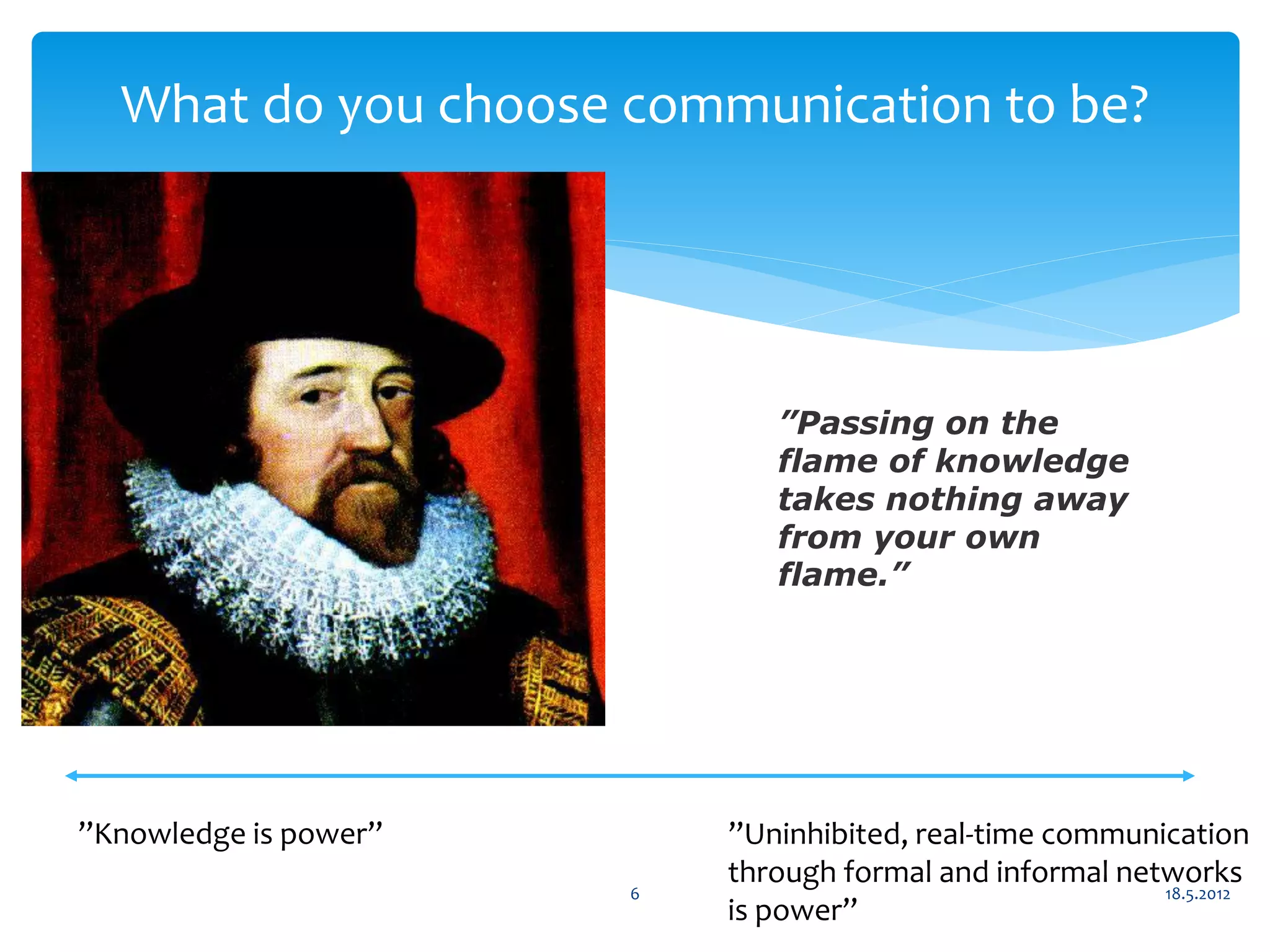
What do you choose communication to be?


                              ”Passing on the
                              flame of knowledge
                              takes nothing away
                              from your own
                              flame.”


”Knowledge is power”       ”Uninhibited, real-time communication
                           through formal and informal networks
                       6                                  18.5.2012
                           is power”
The dimensions of a message


 Each message has at least three components, which should support each other
  and not be in contradiction with each other:

   1.   Content of words or communication

   2. Way of communicating (method, tone, timing, situation / context)

   3. Relationship between the parties


 What you are shouts so loudly in my ear, that I cannot hear what you say

    Ralph Waldo Emerson
Communication is continuity


 Do not let the people wonder in the night. Stay in
  touch with people also during ”quiet times”.

 Your team may get your idea at once, but do not
  count on it. Re-communicate the project objective
  and critical factors time after time.

 Catch people doing things right.

                            8                          18.5.2012
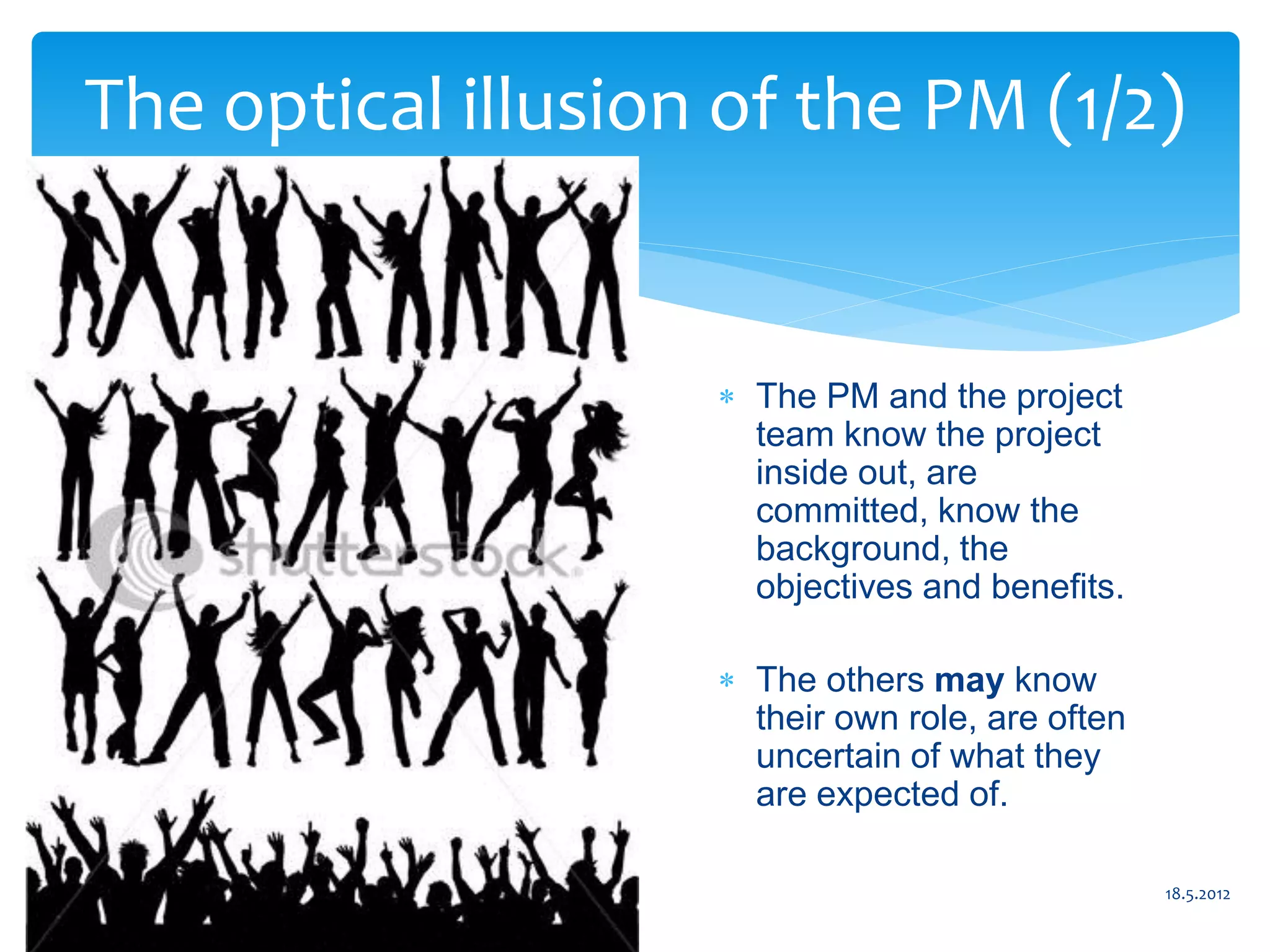
The optical illusion of the PM (1/2)


                      The PM and the project
                       team know the project
                       inside out, are
                       committed, know the
                       background, the
                       objectives and benefits.

                      The others may know
                       their own role, are often
                       uncertain of what they
                       are expected of.

                 9                                 18.5.2012
The optical illusion of the PM (2/2)

 The project team knows the project
  ”too well”
    Understands the objectives and
     schedule
    Knows the background and
     business case
    Knows who is involved, how and
     in which phases

 The others gather their
  understanding of the project from
  isolated ”episodes”
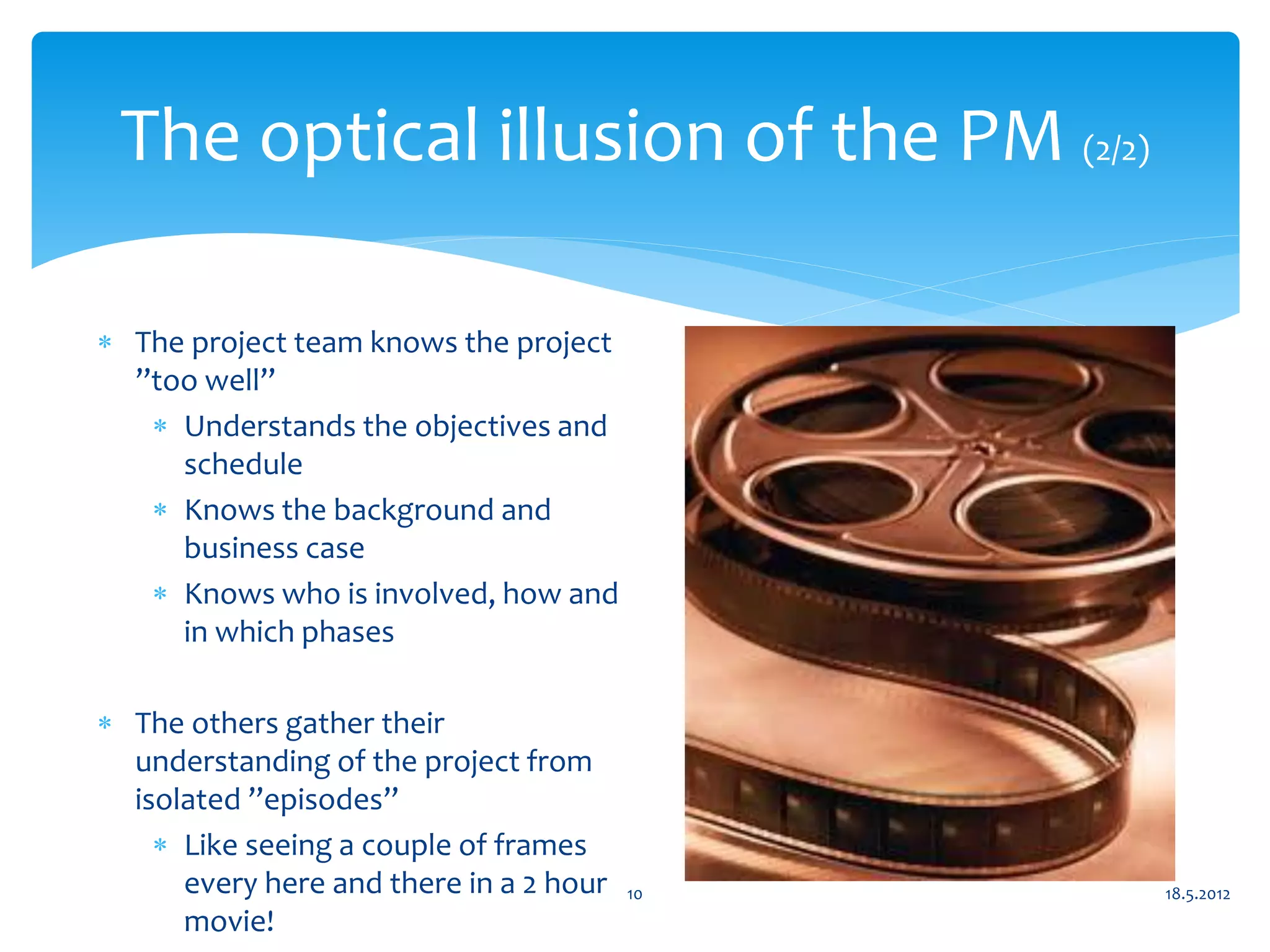
     Like seeing a couple of frames
      every here and there in a 2 hour   10   18.5.2012
      movie!
Understanding change
               communications

 People are automatically driven to receive messages which reinforce or fit in
  with their attitudes and preconceptions.

 New information, which contradicts earlier knowledge and attitudes is likely
  to be rejected or transformed.

 Supporting and reinforcing existing attitudes and conceptions is always
  easier and faster than changing them.

 Just telling ”the facts” is not likely to change attitudes and opinions – an
  emotional component is needed.

 Getting the stakeholders involved and actively participating as soon as
  possible increases the efficiency of communications.

                                                                                  11
6 C’s of good communication


   Clear
   Concise
   Correct
   Complete
   Courteous
   Concrete
Thank You!
     Aaro Ollikainen
Aaro.ollikainen@claro.fi
Tel. + 358 (0)40 775 1134


           13               18.5.2012

Seven steps to project management with a human face part 6 do not inform, communicate

  • 1.
    Project management witha human face Part 6: Do not inform, communicate! Aaro Ollikainen, Claro Leaders Oy 1 18.5.2012
  • 2.
    The seven stepsto project management with a human face Create a shared dream with a deadline Find the correct leadership touch Get the right people Don’t inform, communicate Encourage passion Celebrate the conflicts Get hold of the stakeholders 2 18.5.2012
  • 3.
    6. Don’t inform,communicate 3 18.5.2012
  • 4.
    Process model ofcommunications Reason Reason AND emotions Sender Transformed Receiver Message Channel message / media Adapted from Claude Shannon, Schematic diagram of a communication system, from "The Mathematical Theory of Communication" (1948) 4
  • 5.
    Having trouble gettingheard? What can (and typically does) go wrong in project communications  YOU:  THE RECIPIENT:  Too many simultaneous  No interest messages; your voice gets lost  No background information in information overload. given  Messages conflict one another  No time  Difficult / alien words or  Mind already made up about concepts the subject  No repetition / reinforcement  Mind already made up about  Wrong communication media YOU  Wrong tone  Wrong timing  Technical communication problems (connectivity, distortions…)
  • 6.
    What do youchoose communication to be? ”Passing on the flame of knowledge takes nothing away from your own flame.” ”Knowledge is power” ”Uninhibited, real-time communication through formal and informal networks 6 18.5.2012 is power”
  • 7.
    The dimensions ofa message  Each message has at least three components, which should support each other and not be in contradiction with each other: 1. Content of words or communication 2. Way of communicating (method, tone, timing, situation / context) 3. Relationship between the parties  What you are shouts so loudly in my ear, that I cannot hear what you say  Ralph Waldo Emerson
  • 8.
    Communication is continuity Do not let the people wonder in the night. Stay in touch with people also during ”quiet times”.  Your team may get your idea at once, but do not count on it. Re-communicate the project objective and critical factors time after time.  Catch people doing things right. 8 18.5.2012
  • 9.
    The optical illusionof the PM (1/2)  The PM and the project team know the project inside out, are committed, know the background, the objectives and benefits.  The others may know their own role, are often uncertain of what they are expected of. 9 18.5.2012
  • 10.
    The optical illusionof the PM (2/2)  The project team knows the project ”too well”  Understands the objectives and schedule  Knows the background and business case  Knows who is involved, how and in which phases  The others gather their understanding of the project from isolated ”episodes”  Like seeing a couple of frames every here and there in a 2 hour 10 18.5.2012 movie!
  • 11.
    Understanding change communications  People are automatically driven to receive messages which reinforce or fit in with their attitudes and preconceptions.  New information, which contradicts earlier knowledge and attitudes is likely to be rejected or transformed.  Supporting and reinforcing existing attitudes and conceptions is always easier and faster than changing them.  Just telling ”the facts” is not likely to change attitudes and opinions – an emotional component is needed.  Getting the stakeholders involved and actively participating as soon as possible increases the efficiency of communications. 11
  • 12.
    6 C’s ofgood communication  Clear  Concise  Correct  Complete  Courteous  Concrete
  • 13.
    Thank You! Aaro Ollikainen Aaro.ollikainen@claro.fi Tel. + 358 (0)40 775 1134 13 18.5.2012