SETTING GOALS FOR
SUCCESS
UNDERSTANDING THE SELF THROUGH EFFECTIVE GOAL SETTING
WHAT IS GOAL SETTING?
• Goal setting is the process of
identifying specific objectives and
creating a plan to achieve them.
• It plays a crucial role in personal
development, motivation, and
success.
• In the context of "Understanding the
Self," setting goals allows
individuals to align their actions with
their self-identity and aspirations.
WHY ARE GOALS IMPORTANT?
•Provides Direction: Goals give individuals a clear sense of
purpose and guide their actions.
•Motivation: Working towards a goal creates enthusiasm and
drives sustained effort.
•Focus: Goals help in filtering distractions and focusing on what’s
important.
•Measuring Progress: Goals allow individuals to track
achievements and make adjustments along the way.
•Personal Growth: Achieving goals fosters self-esteem and self-
efficacy.
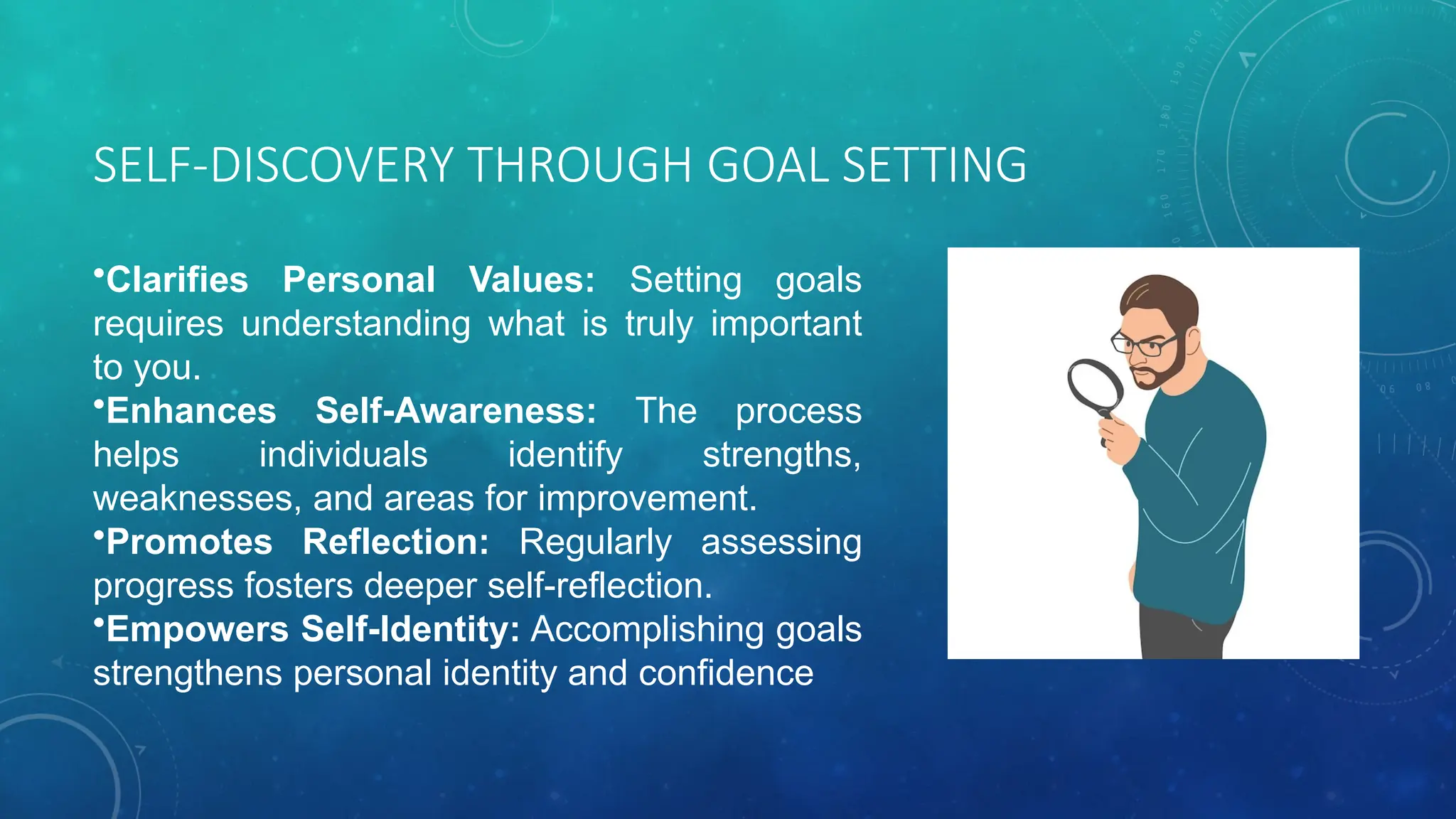
SELF-DISCOVERY THROUGH GOAL SETTING
•Clarifies Personal Values: Setting goals
requires understanding what is truly important
to you.
•Enhances Self-Awareness: The process
helps individuals identify strengths,
weaknesses, and areas for improvement.
•Promotes Reflection: Regularly assessing
progress fosters deeper self-reflection.
•Empowers Self-Identity: Accomplishing goals
strengthens personal identity and confidence
WHAT IS LOCKE’S GOAL SETTING THEORY?
• Developed by Edwin Locke in
the 1960s.
• Proposes that clear, specific,
and challenging goals lead to
higher performance.
• Emphasizes the importance of
commitment to the goal and
feedback during the process.
• Aligns with motivation theory,
where goals act as intrinsic
motivators.
WHY FEEDBACK MATTERS IN GOAL SETTING
•Monitors Progress: Feedback
lets individuals know if they are
on track.
•Adjusts Strategies: Helps to
refine methods or approaches
when necessary.
•Boosts Motivation: Positive
feedback reinforces effort and
builds confidence.
•Reflects on Self-
Performance: Provides an
opportunity for self-assessment
and learning
USING LOCKE’S THEORY TO IMPROVE THE SELF
• Set clear, challenging, and meaningful goals that reflect
your personal aspirations.
• Ensure commitment by aligning goals with your self-identity
and personal values.
• Seek and use feedback from mentors, peers, or self-
reflection to track progress.
• Break down complex goals into smaller, achievable steps,
making sure they are realistic and time-bound.
• Stay persistent and motivated by constantly revisiting the
significance of your goals.
PRACTICAL EXAMPLES OF GOAL SETTING IN
UNDERSTANDING THE SELF
•Academic Goal: Achieve a Distinction in the subject by dedicating
2 hours daily to studying.
•Personal Growth Goal: Practice mindfulness every morning to
improve emotional regulation.
•Social Goal: Improve communication skills by attending two
networking events each semester.
•Career Goal: Secure an internship by the end of the year by
sending out applications and preparing for interviews.
SELF- REFLECTION
• 1. What are my core values, and how do they relate to my
goals?
• 2. What are my stengths and weaknesses, and how can I
leverage them in achievening my goals?
• 3. What motivates me, and how can I use that motivation
to drive my goal- achievement?
• 4. What self- care practices can I adopt to support my
personal growth and goal- pursuit?
• 5. What are the most significant obstacles I face in
achieveing my goals, and how can I overcome them?

Setting Goals for Success- Understanding the Self.pptx

  • 1.
    SETTING GOALS FOR SUCCESS UNDERSTANDINGTHE SELF THROUGH EFFECTIVE GOAL SETTING
  • 2.
    WHAT IS GOALSETTING? • Goal setting is the process of identifying specific objectives and creating a plan to achieve them. • It plays a crucial role in personal development, motivation, and success. • In the context of "Understanding the Self," setting goals allows individuals to align their actions with their self-identity and aspirations.
  • 3.
    WHY ARE GOALSIMPORTANT? •Provides Direction: Goals give individuals a clear sense of purpose and guide their actions. •Motivation: Working towards a goal creates enthusiasm and drives sustained effort. •Focus: Goals help in filtering distractions and focusing on what’s important. •Measuring Progress: Goals allow individuals to track achievements and make adjustments along the way. •Personal Growth: Achieving goals fosters self-esteem and self- efficacy.
  • 4.
    SELF-DISCOVERY THROUGH GOALSETTING •Clarifies Personal Values: Setting goals requires understanding what is truly important to you. •Enhances Self-Awareness: The process helps individuals identify strengths, weaknesses, and areas for improvement. •Promotes Reflection: Regularly assessing progress fosters deeper self-reflection. •Empowers Self-Identity: Accomplishing goals strengthens personal identity and confidence
  • 5.
    WHAT IS LOCKE’SGOAL SETTING THEORY? • Developed by Edwin Locke in the 1960s. • Proposes that clear, specific, and challenging goals lead to higher performance. • Emphasizes the importance of commitment to the goal and feedback during the process. • Aligns with motivation theory, where goals act as intrinsic motivators.
  • 7.
    WHY FEEDBACK MATTERSIN GOAL SETTING •Monitors Progress: Feedback lets individuals know if they are on track. •Adjusts Strategies: Helps to refine methods or approaches when necessary. •Boosts Motivation: Positive feedback reinforces effort and builds confidence. •Reflects on Self- Performance: Provides an opportunity for self-assessment and learning
  • 8.
    USING LOCKE’S THEORYTO IMPROVE THE SELF • Set clear, challenging, and meaningful goals that reflect your personal aspirations. • Ensure commitment by aligning goals with your self-identity and personal values. • Seek and use feedback from mentors, peers, or self- reflection to track progress. • Break down complex goals into smaller, achievable steps, making sure they are realistic and time-bound. • Stay persistent and motivated by constantly revisiting the significance of your goals.
  • 9.
    PRACTICAL EXAMPLES OFGOAL SETTING IN UNDERSTANDING THE SELF •Academic Goal: Achieve a Distinction in the subject by dedicating 2 hours daily to studying. •Personal Growth Goal: Practice mindfulness every morning to improve emotional regulation. •Social Goal: Improve communication skills by attending two networking events each semester. •Career Goal: Secure an internship by the end of the year by sending out applications and preparing for interviews.
  • 10.
    SELF- REFLECTION • 1.What are my core values, and how do they relate to my goals? • 2. What are my stengths and weaknesses, and how can I leverage them in achievening my goals? • 3. What motivates me, and how can I use that motivation to drive my goal- achievement? • 4. What self- care practices can I adopt to support my personal growth and goal- pursuit? • 5. What are the most significant obstacles I face in achieveing my goals, and how can I overcome them?