Using SOCMON as a Tool to Involve Islanders in Develop-
ing Community Based Tourism and provide need
based training to foster product Enhancement
• Vineeta Hoon
• Centre for Action Research on
Environment Science & Society
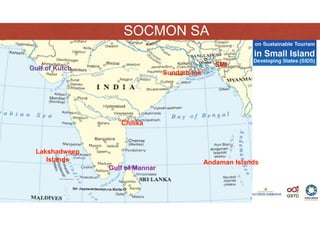
SOCMON SASOCMON SA
SMI
Sundarbans
Gulf of Mannar
Gulf of Kutch
Chilika
Andaman Islands
Lakshadweep
Islands
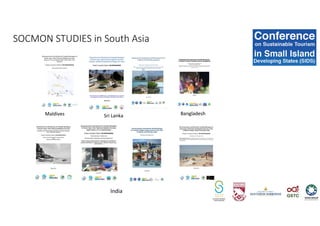
India
Maldives Sri Lanka Bangladesh
SOCMON STUDIES in South Asia
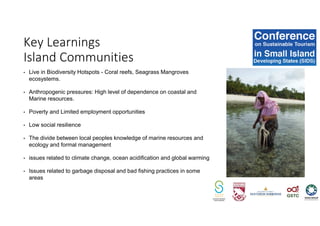
• Live in Biodiversity Hotspots - Coral reefs, Seagrass Mangroves
ecosystems.
• Anthropogenic pressures: High level of dependence on coastal and
Marine resources.
• Poverty and Limited employment opportunities
• Low social resilience
• The divide between local peoples knowledge of marine resources and
ecology and formal management
• issues related to climate change, ocean acidification and global warming
• Issues related to garbage disposal and bad fishing practices in some
areas
Key Learnings
Island Communities
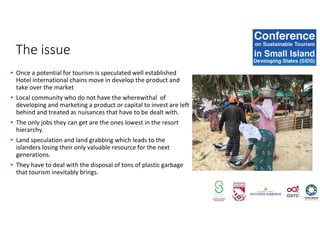
• Once a potential for tourism is speculated well established
Hotel international chains move in develop the product and
take over the market
• Local community who do not have the wherewithal of
developing and marketing a product or capital to invest are left
behind and treated as nuisances that have to be dealt with.
• The only jobs they can get are the ones lowest in the resort
hierarchy.
• Land speculation and land grabbing which leads to the
islanders losing their only valuable resource for the next
generations.
• They have to deal with the disposal of tons of plastic garbage
that tourism inevitably brings.
The issue
The issue
• The resort owners hoteliers usually from outside do not understand or care
about the needs of the local community.
• For tourism to flourish equitably and sustainably an interface is needed to
provide a level playing field where both parties that are needed to develop
tourism can complement and work with each other
• SocMon is a set of guidelines for establishing a socioeconomic monitoring
programme at a coastal management site Level.
• The guidelines provide a prioritized list of socioeconomic variables useful to coastal
managers and other developers
• They are not rigid and can be tailored to each sites needs and purposes.
SOCMON as the interface
How SOCMON is used to Involve
community
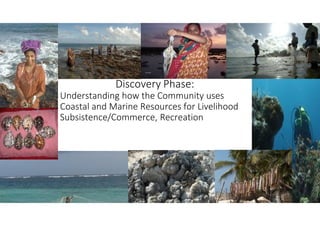
Discovery Phase:
Understanding how the Community uses
Coastal and Marine Resources for Livelihood
Subsistence/Commerce, Recreation
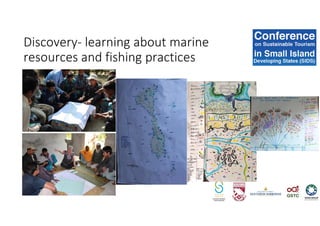
Discovery- learning about marine
resources and fishing practices
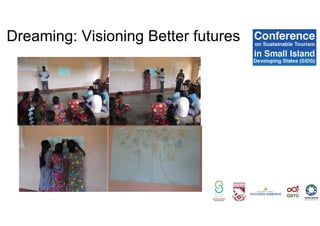
Dreaming: Visioning Better futures
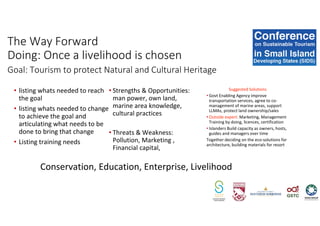
• listing whats needed to reach
the goal
• listing whats needed to change
to achieve the goal and
articulating what needs to be
done to bring that change
• Listing training needs
The Way Forward
Doing: Once a livelihood is chosen
Goal: Tourism to protect Natural and Cultural Heritage
• Strengths & Opportunities:
man power, own land,
marine area knowledge,
cultural practices
• Threats & Weakness:
Pollution, Marketing ,
Financial capital,
Conservation, Education, Enterprise, Livelihood
Suggested Solutions
• Govt Enabling Agency improve
transportation services, agree to co-
management of marine areas, support
LLMAs, protect land ownership/sales
• Outside expert: Marketing, Management
Training by doing, licences, certification
• Islanders Build capacity as owners, hosts,
guides and managers over time
Together deciding on the eco-solutions for
architecture, building materials for resort
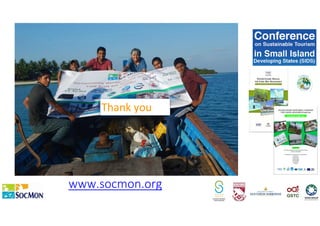
www.socmon.org
Thank you

Session8 02 Vineeta Hoon

  • 1.
    Using SOCMON asa Tool to Involve Islanders in Develop- ing Community Based Tourism and provide need based training to foster product Enhancement • Vineeta Hoon • Centre for Action Research on Environment Science & Society
  • 2.
    SOCMON SASOCMON SA SMI Sundarbans Gulfof Mannar Gulf of Kutch Chilika Andaman Islands Lakshadweep Islands
  • 3.
    India Maldives Sri LankaBangladesh SOCMON STUDIES in South Asia
  • 4.
    • Live inBiodiversity Hotspots - Coral reefs, Seagrass Mangroves ecosystems. • Anthropogenic pressures: High level of dependence on coastal and Marine resources. • Poverty and Limited employment opportunities • Low social resilience • The divide between local peoples knowledge of marine resources and ecology and formal management • issues related to climate change, ocean acidification and global warming • Issues related to garbage disposal and bad fishing practices in some areas Key Learnings Island Communities
  • 5.
    • Once apotential for tourism is speculated well established Hotel international chains move in develop the product and take over the market • Local community who do not have the wherewithal of developing and marketing a product or capital to invest are left behind and treated as nuisances that have to be dealt with. • The only jobs they can get are the ones lowest in the resort hierarchy. • Land speculation and land grabbing which leads to the islanders losing their only valuable resource for the next generations. • They have to deal with the disposal of tons of plastic garbage that tourism inevitably brings. The issue
  • 6.
    The issue • Theresort owners hoteliers usually from outside do not understand or care about the needs of the local community. • For tourism to flourish equitably and sustainably an interface is needed to provide a level playing field where both parties that are needed to develop tourism can complement and work with each other
  • 7.
    • SocMon isa set of guidelines for establishing a socioeconomic monitoring programme at a coastal management site Level. • The guidelines provide a prioritized list of socioeconomic variables useful to coastal managers and other developers • They are not rigid and can be tailored to each sites needs and purposes. SOCMON as the interface
  • 8.
    How SOCMON isused to Involve community
  • 9.
    Discovery Phase: Understanding howthe Community uses Coastal and Marine Resources for Livelihood Subsistence/Commerce, Recreation
  • 10.
    Discovery- learning aboutmarine resources and fishing practices
  • 11.
  • 12.
    • listing whatsneeded to reach the goal • listing whats needed to change to achieve the goal and articulating what needs to be done to bring that change • Listing training needs The Way Forward Doing: Once a livelihood is chosen Goal: Tourism to protect Natural and Cultural Heritage • Strengths & Opportunities: man power, own land, marine area knowledge, cultural practices • Threats & Weakness: Pollution, Marketing , Financial capital, Conservation, Education, Enterprise, Livelihood Suggested Solutions • Govt Enabling Agency improve transportation services, agree to co- management of marine areas, support LLMAs, protect land ownership/sales • Outside expert: Marketing, Management Training by doing, licences, certification • Islanders Build capacity as owners, hosts, guides and managers over time Together deciding on the eco-solutions for architecture, building materials for resort
  • 13.