A Public Private Partnership Model for Ecotourism
Development in Wadi el Gemal National Park in Egypt
Mahmoud Sarhan
Project Manager
Financial Sustainability of
Protected Areas Project
UNDP Egypt
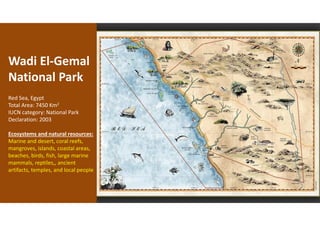
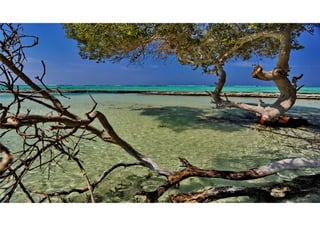
Wadi El-Gemal
National Park
Red Sea, Egypt
Total Area: 7450 Km2
IUCN category: National Park
Declaration: 2003
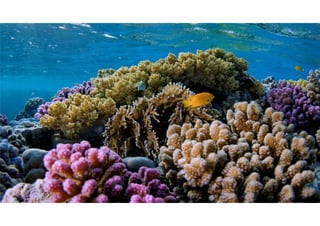
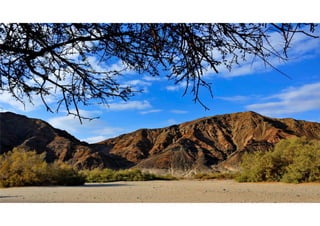
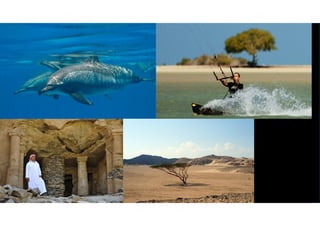
Ecosystems and natural resources:
Marine and desert, coral reefs,
mangroves, islands, coastal areas,
beaches, birds, fish, large marine
mammals, reptiles,, ancient
artifacts, temples, and local people
8www.gorgoniabeach.com
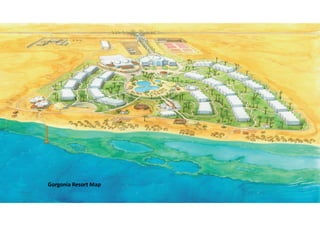
RESORT MAP
Gorgonia Resort Map
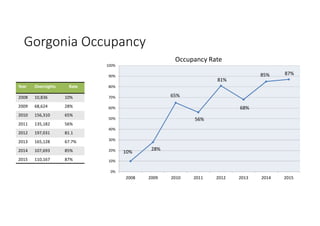
Gorgonia Occupancy
9
Year Overnights Rate
2008 10,836 10%
2009 68,624 28%
2010 156,310 65%
2011 135,182 56%
2012 197,031 81.1
2013 165,128 67.7%
2014 107,693 85%
2015 110,167 87%
10%
28%
65%
56%
81%
68%
85% 87%
0%
10%
20%
30%
40%
50%
60%
70%
80%
90%
100%
2008 2009 2010 2011 2012 2013 2014 2015
Occupancy Rate
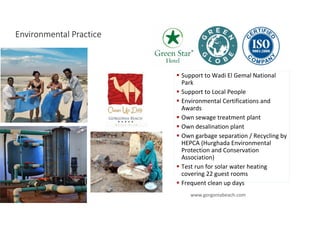
Environmental Practice
10
Support to Wadi El Gemal National
Park
Support to Local People
Environmental Certifications and
Awards
Own sewage treatment plant
Own desalination plant
Own garbage separation / Recycling by
HEPCA (Hurghada Environmental
Protection and Conservation
Association)
Test run for solar water heating
covering 22 guest rooms
Frequent clean up days
www.gorgoniabeach.com
Opportunities
1. Designated National Park since 2003
2. Location close to Europe
3. Outstanding desert, coastal and marine environment
(coral reefs, islands, desert areas, mangrove, dolphins,
beaches,…)
4. Unique ecotourism selling point
5. Tourism infrastructure (hotels, lodges, roads, airport,
nearby city)
Key issues /Problems
1. Local people marginalized from tourism sector
2. The mainstream business is mass tourism
3. The Park is singly managed by government with very little
consultation/involvement of local people or key stakeholders
4. No organized ecotourism business in place just random tours
and activities
5. Only few companies build their marketing plans on the Park
6. No/minor direct returns for the Park or local people
7. Park and ecotourism underfinanced and in some cases funds
being misused
Challenges
• No system/models in place for cooperation between government (the
Park), local people and private sector
• Current governmental institutional frameworks do not allow for
official co-management or benefit sharing
• Concessions system at Egypt’s National Parks System needs reform to
be able to attract and manage qualified concessionaires
• Large tour operators prefer to sell (cheaper) large scale tourism
packages rather than ecotourism
• Most players in the sector don’t use local people
• Lack of trust, capacities, willingness to co-operate, legal frameworks
• Communications/consultations with potential partners/field visits
• Assistance from international sustainable tourism expert (Barabara Fritz) who
helped in preparing a proposal for a 2-years PPP project to develop ecotourism in
the park.
• Funds became available for the project, Euro 500,000 (2014-2016)
• 65% from Gorgonia Beach Resort (Johannes Girardi, the Project Manager)
• 35% from DEG-KFW
• Park contribution is in-kind
The Intervention
Project Goals
• Develop the framework conditions for the commercial and sustainable development of
ecotourism services in the Park.
• Sustainable ecotourism services shall be developed based on the ecological and socio-
cultural resources of WGNP.
• The Park will have established a public-private run visitor center, a signage system,
ecotourism activities, educational and awareness raising programs
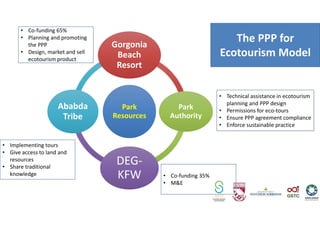
Park
Resources
Gorgonia
Beach
Resort
Park
Authority
DEG-
KFW
Ababda
Tribe
• Co-funding 65%
• Planning and promoting
the PPP
• Design, market and sell
ecotourism product
• Technical assistance in ecotourism
planning and PPP design
• Permissions for eco-tours
• Ensure PPP agreement compliance
• Enforce sustainable practice
• Implementing tours
• Give access to land and
resources
• Share traditional
knowledge • Co-funding 35%
• M&E
The PPP for
Ecotourism Model
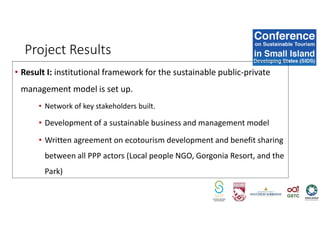
Project Results
• Result I: institutional framework for the sustainable public-private
management model is set up.
• Network of key stakeholders built.
• Development of a sustainable business and management model
• Written agreement on ecotourism development and benefit sharing
between all PPP actors (Local people NGO, Gorgonia Resort, and the
Park)
Project Results
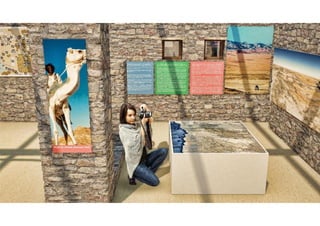
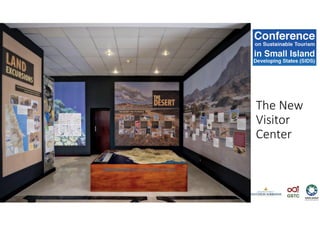
• Result II: Wadi El Gamal NP Visitor Centre is developed and installed as info
point, selling point of ecotourism services and centre for awareness raising and
education on cultural and biological heritage of the national park.
• The Company applied to take the concession. The concession process stopped because of
bureaucracy.
• New VC established within Gorgonia. It promotes ecotourism in the Park and local people
given permanent place to offer their products/traditional cooking in the resort.
• Gorgonia is one the largest hotels in the area and receives thousands of visitors each year.
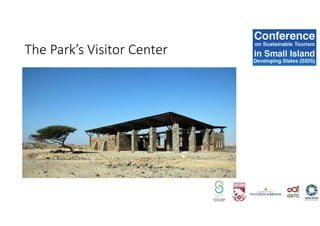
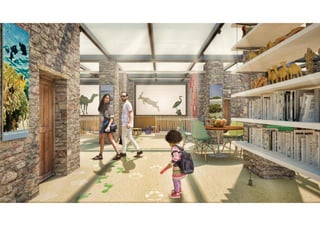
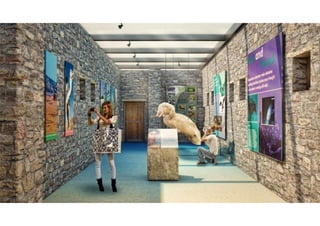
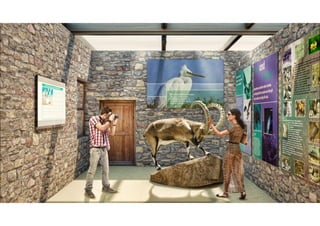
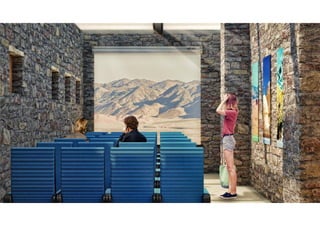
The Park’s Visitor Center
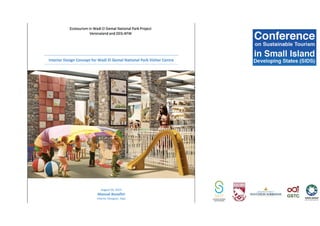
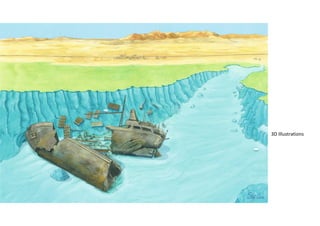
3D Illustrations
The New
Visitor
Center
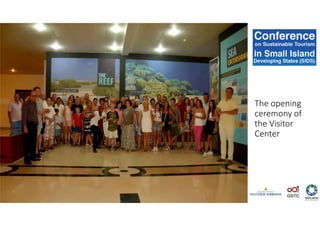
The opening
ceremony of
the Visitor
Center
Project Results
Result III: The “ecotourism product Wadi El Gamal National Park” is
developed and in place and all related services offered by the Park
• Several evaluation trips and site visits of experts (e.g. bird watching, star gazing,
desert safari) and network partners (e.g. trekking and mountain biking)
• Participatory workshops with the relevant cooperation partners and local
stakeholders to propose and discuss the feasible ecotourism products
• Development of a “strategic ecotourism development plan” as a common vision
• Implementation of one pilot ecotourism product e.g. guided desert safari, star
gazing, mounting biking or camel hiking tours (proposal ready pending on
availability of funds)
• Locally guided desert safari tours
• Made in Egypt Shop
• Star gazing tours
• Local people traditional cooking at Gorgonia Resort (weekly)
• Mountain Bike tour with local guide (in the pipeline)
Eco-tourism Product
Project Results
• Result IV: Marketing, promotion and information material on the Wadi El
Gamal Visitor center and the offered services in the park area are
developed and in place.
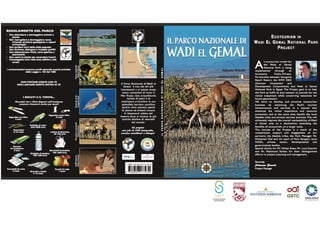
• A corporate design and “brand (logo and slogan)” for the park
• Ecotourism marketing and promotion plan
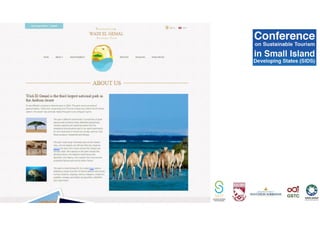
• Visitor information materials (website for the Park, Field Guides, Ecotourism Map,
Short Documentary)
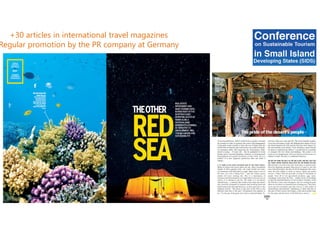
• Promotion of the ecotourism product of the Park at international tourism magazines
(i.e. Nat Geo) and nature fairs (i.e. ITB – Berlin, Road-show Thomas Cook –
Neckermann, Vakantiebeurs – Utrecht (Nl) 2015)
• Contracting PR company at Germany to promote the Park in Europe.
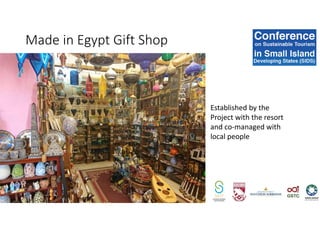
Made in Egypt Gift Shop
Established by the
Project with the resort
and co-managed with
local people
Made in Egypt Gift Shop
+30 articles in international travel magazines
Regular promotion by the PR company at Germany
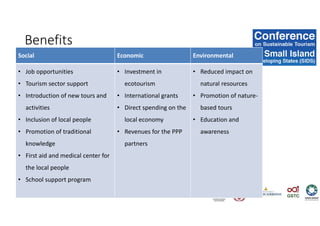
Benefits
Social Economic Environmental
• Job opportunities
• Tourism sector support
• Introduction of new tours and
activities
• Inclusion of local people
• Promotion of traditional
knowledge
• First aid and medical center for
the local people
• School support program
• Investment in
ecotourism
• International grants
• Direct spending on the
local economy
• Revenues for the PPP
partners
• Reduced impact on
natural resources
• Promotion of nature-
based tours
• Education and
awareness
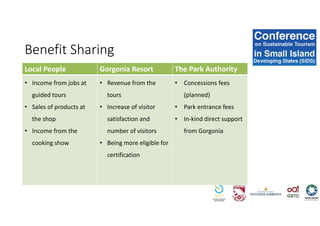
Benefit Sharing
Local People Gorgonia Resort The Park Authority
• Income from jobs at
guided tours
• Sales of products at
the shop
• Income from the
cooking show
• Revenue from the
tours
• Increase of visitor
satisfaction and
number of visitors
• Being more eligible for
certification
• Concessions fees
(planned)
• Park entrance fees
• In-kind direct support
from Gorgonia
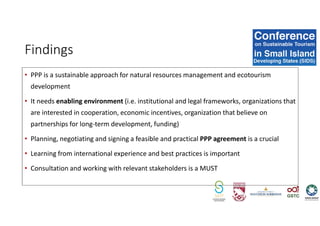
• PPP is a sustainable approach for natural resources management and ecotourism
development
• It needs enabling environment (i.e. institutional and legal frameworks, organizations that
are interested in cooperation, economic incentives, organization that believe on
partnerships for long-term development, funding)
• Planning, negotiating and signing a feasible and practical PPP agreement is a crucial
• Learning from international experience and best practices is important
• Consultation and working with relevant stakeholders is a MUST
Findings
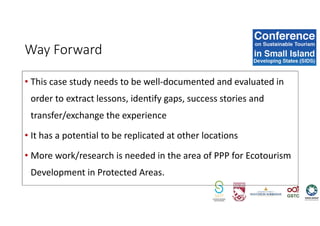
• This case study needs to be well-documented and evaluated in
order to extract lessons, identify gaps, success stories and
transfer/exchange the experience
• It has a potential to be replicated at other locations
• More work/research is needed in the area of PPP for Ecotourism
Development in Protected Areas.
Way Forward
Thanks to
Johannes Girardi
Luca Scarsini
Amany Nakhla
Barabra Fritz
Niklas Esser
Mohamed Gad
Nady Hassan
Abada Tribe People
Gorgonia Beach Resort Team
Wadi El Gemal National Park Team
DEG-KFW Germany
UNDP – GEF
The Financial Sustainability of
Protected Areas Project
•@iucntourism
Twitter

Session5 03 Mahmoud Sarhan

  • 1.
    A Public PrivatePartnership Model for Ecotourism Development in Wadi el Gemal National Park in Egypt Mahmoud Sarhan Project Manager Financial Sustainability of Protected Areas Project UNDP Egypt
  • 2.
    Wadi El-Gemal National Park RedSea, Egypt Total Area: 7450 Km2 IUCN category: National Park Declaration: 2003 Ecosystems and natural resources: Marine and desert, coral reefs, mangroves, islands, coastal areas, beaches, birds, fish, large marine mammals, reptiles,, ancient artifacts, temples, and local people
  • 8.
  • 9.
    Gorgonia Occupancy 9 Year OvernightsRate 2008 10,836 10% 2009 68,624 28% 2010 156,310 65% 2011 135,182 56% 2012 197,031 81.1 2013 165,128 67.7% 2014 107,693 85% 2015 110,167 87% 10% 28% 65% 56% 81% 68% 85% 87% 0% 10% 20% 30% 40% 50% 60% 70% 80% 90% 100% 2008 2009 2010 2011 2012 2013 2014 2015 Occupancy Rate
  • 10.
    Environmental Practice 10 Support toWadi El Gemal National Park Support to Local People Environmental Certifications and Awards Own sewage treatment plant Own desalination plant Own garbage separation / Recycling by HEPCA (Hurghada Environmental Protection and Conservation Association) Test run for solar water heating covering 22 guest rooms Frequent clean up days www.gorgoniabeach.com
  • 11.
    Opportunities 1. Designated NationalPark since 2003 2. Location close to Europe 3. Outstanding desert, coastal and marine environment (coral reefs, islands, desert areas, mangrove, dolphins, beaches,…) 4. Unique ecotourism selling point 5. Tourism infrastructure (hotels, lodges, roads, airport, nearby city)
  • 12.
    Key issues /Problems 1.Local people marginalized from tourism sector 2. The mainstream business is mass tourism 3. The Park is singly managed by government with very little consultation/involvement of local people or key stakeholders 4. No organized ecotourism business in place just random tours and activities 5. Only few companies build their marketing plans on the Park 6. No/minor direct returns for the Park or local people 7. Park and ecotourism underfinanced and in some cases funds being misused
  • 13.
    Challenges • No system/modelsin place for cooperation between government (the Park), local people and private sector • Current governmental institutional frameworks do not allow for official co-management or benefit sharing • Concessions system at Egypt’s National Parks System needs reform to be able to attract and manage qualified concessionaires • Large tour operators prefer to sell (cheaper) large scale tourism packages rather than ecotourism • Most players in the sector don’t use local people • Lack of trust, capacities, willingness to co-operate, legal frameworks
  • 14.
    • Communications/consultations withpotential partners/field visits • Assistance from international sustainable tourism expert (Barabara Fritz) who helped in preparing a proposal for a 2-years PPP project to develop ecotourism in the park. • Funds became available for the project, Euro 500,000 (2014-2016) • 65% from Gorgonia Beach Resort (Johannes Girardi, the Project Manager) • 35% from DEG-KFW • Park contribution is in-kind The Intervention
  • 15.
    Project Goals • Developthe framework conditions for the commercial and sustainable development of ecotourism services in the Park. • Sustainable ecotourism services shall be developed based on the ecological and socio- cultural resources of WGNP. • The Park will have established a public-private run visitor center, a signage system, ecotourism activities, educational and awareness raising programs
  • 16.
    Park Resources Gorgonia Beach Resort Park Authority DEG- KFW Ababda Tribe • Co-funding 65% •Planning and promoting the PPP • Design, market and sell ecotourism product • Technical assistance in ecotourism planning and PPP design • Permissions for eco-tours • Ensure PPP agreement compliance • Enforce sustainable practice • Implementing tours • Give access to land and resources • Share traditional knowledge • Co-funding 35% • M&E The PPP for Ecotourism Model
  • 17.
    Project Results • ResultI: institutional framework for the sustainable public-private management model is set up. • Network of key stakeholders built. • Development of a sustainable business and management model • Written agreement on ecotourism development and benefit sharing between all PPP actors (Local people NGO, Gorgonia Resort, and the Park)
  • 20.
    Project Results • ResultII: Wadi El Gamal NP Visitor Centre is developed and installed as info point, selling point of ecotourism services and centre for awareness raising and education on cultural and biological heritage of the national park. • The Company applied to take the concession. The concession process stopped because of bureaucracy. • New VC established within Gorgonia. It promotes ecotourism in the Park and local people given permanent place to offer their products/traditional cooking in the resort. • Gorgonia is one the largest hotels in the area and receives thousands of visitors each year.
  • 21.
  • 29.
  • 30.
  • 31.
  • 32.
    Project Results Result III:The “ecotourism product Wadi El Gamal National Park” is developed and in place and all related services offered by the Park • Several evaluation trips and site visits of experts (e.g. bird watching, star gazing, desert safari) and network partners (e.g. trekking and mountain biking) • Participatory workshops with the relevant cooperation partners and local stakeholders to propose and discuss the feasible ecotourism products • Development of a “strategic ecotourism development plan” as a common vision • Implementation of one pilot ecotourism product e.g. guided desert safari, star gazing, mounting biking or camel hiking tours (proposal ready pending on availability of funds)
  • 33.
    • Locally guideddesert safari tours • Made in Egypt Shop • Star gazing tours • Local people traditional cooking at Gorgonia Resort (weekly) • Mountain Bike tour with local guide (in the pipeline) Eco-tourism Product
  • 34.
    Project Results • ResultIV: Marketing, promotion and information material on the Wadi El Gamal Visitor center and the offered services in the park area are developed and in place. • A corporate design and “brand (logo and slogan)” for the park • Ecotourism marketing and promotion plan • Visitor information materials (website for the Park, Field Guides, Ecotourism Map, Short Documentary) • Promotion of the ecotourism product of the Park at international tourism magazines (i.e. Nat Geo) and nature fairs (i.e. ITB – Berlin, Road-show Thomas Cook – Neckermann, Vakantiebeurs – Utrecht (Nl) 2015) • Contracting PR company at Germany to promote the Park in Europe.
  • 35.
    Made in EgyptGift Shop Established by the Project with the resort and co-managed with local people
  • 36.
    Made in EgyptGift Shop
  • 37.
    +30 articles ininternational travel magazines Regular promotion by the PR company at Germany
  • 39.
    Benefits Social Economic Environmental •Job opportunities • Tourism sector support • Introduction of new tours and activities • Inclusion of local people • Promotion of traditional knowledge • First aid and medical center for the local people • School support program • Investment in ecotourism • International grants • Direct spending on the local economy • Revenues for the PPP partners • Reduced impact on natural resources • Promotion of nature- based tours • Education and awareness
  • 40.
    Benefit Sharing Local PeopleGorgonia Resort The Park Authority • Income from jobs at guided tours • Sales of products at the shop • Income from the cooking show • Revenue from the tours • Increase of visitor satisfaction and number of visitors • Being more eligible for certification • Concessions fees (planned) • Park entrance fees • In-kind direct support from Gorgonia
  • 41.
    • PPP isa sustainable approach for natural resources management and ecotourism development • It needs enabling environment (i.e. institutional and legal frameworks, organizations that are interested in cooperation, economic incentives, organization that believe on partnerships for long-term development, funding) • Planning, negotiating and signing a feasible and practical PPP agreement is a crucial • Learning from international experience and best practices is important • Consultation and working with relevant stakeholders is a MUST Findings
  • 42.
    • This casestudy needs to be well-documented and evaluated in order to extract lessons, identify gaps, success stories and transfer/exchange the experience • It has a potential to be replicated at other locations • More work/research is needed in the area of PPP for Ecotourism Development in Protected Areas. Way Forward
  • 43.
    Thanks to Johannes Girardi LucaScarsini Amany Nakhla Barabra Fritz Niklas Esser Mohamed Gad Nady Hassan Abada Tribe People Gorgonia Beach Resort Team Wadi El Gemal National Park Team DEG-KFW Germany UNDP – GEF The Financial Sustainability of Protected Areas Project
  • 44.