IEA Evaluation of Gender in CGIAR
Research and in the CGIAR Workplace
Introduction to the Overall Evaluation and
Headline Findings
Rachel Sauvinet-Bedouin,
CGIAR-IEA
2 February 2017
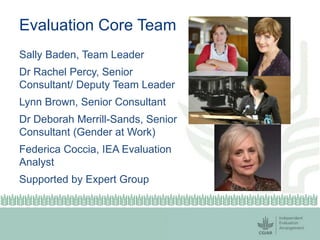
Evaluation Core Team
Sally Baden, Team Leader
Dr Rachel Percy, Senior
Consultant/ Deputy Team Leader
Lynn Brown, Senior Consultant
Dr Deborah Merrill-Sands, Senior
Consultant (Gender at Work)
Federica Coccia, IEA Evaluation
Analyst
Supported by Expert Group
Evaluation Purpose
Accountability to CGIAR on progress at System, Center,
and CRP levels in:
– Developing appropriate gender strategies in pursuit of
SRF objectives;
– Integrating gender analysis in research and engaging in
appropriate gender research;
– Achieving gender equity in the workplace.
Identification of lessons learnt and recommendations to:
‒ Make research more gender-sensitive, promote
gender equity and enhance research effectiveness;
‒ Make the CGIAR a gender-responsive workplace.
Evaluation Scope
• Gender strategies and system level
accountability
• Gender mainstreaming in research
• Gender-specific research
• Gender capacity and expertise
• Gender in the workplace (separate Volume)
Evaluation Methodology
• 2 ‘Issue Papers’ on Gender Mainstreaming and Gender
Research in A4RD
• Case Studies: 4 CRPs analyzed to identify success areas
and draw lessons
• 71 interviews, 3 field visits, 4 surveys, Annual meeting
in Cali
• Extensive document review and analysis (CRP Gender
Strategies, GB minutes, CRP annual reports, etc.)
• Bibliometric analysis of gender publications across all
CRPs & qualitative review of selected outputs (for case
study CRPs)
HEADLINE FINDINGS
Headline Findings (1)
• CGIAR system level commitment to gender equity has
moved forward significantly since 2010 – albeit slowly
and in a piecemeal fashion.
• The Consortium Level Gender Strategy (CGLS), despite
limitations, played a catalytic role in embedding gender
in CGIAR research
• Institutional measures and investments to support
gender mainstreaming have provided clear incentives –
particularly requirement to allocate budget to gender
related research
Headline Findings (2)
• Gender mainstreaming has advanced in most CRPs since
the beginning of the evaluation period, following the
CLGS.
• Gender has come out of its “silo” – and is now considered
more widely than previously in CGIAR research, among
senior managers, plant breeders, and other social
scientists.
• In addition to the gender strategies, and specialists hired
to support these (e.g. GRCs), leadership at CRP level, and
donor interest in gender mainstreaming are major driving
factors in integrating gender in CGIAR research
Headline Findings (3)
Clear gains in the last 4-5 years are:
- A growing body of highly relevant gender research that is
demonstrably contributing to mainstreaming
- A significant increase in CGIAR published gender specific
research
- A qualitative advance in the integration of gender in CRP2s
and promising ‘impact pathways’ emerging
- Some CRPs systematically monitoring gender mainstreaming
- Progress in integrating gender into baseline and impact
assessment tools across a number of programmes and sites
- Significant cross-learning and collaboration on gender
research and practice, enabled by “Gender Network”
Headline findings (4)
Current changes in the system provide opportunities to further
embed gender in CGIAR research but gains are partial and fragile
and there are risks, if a clear framework is not in place:
- Action has stalled on gender in the workplace
- Gender equity is not well embedded in 2016-30 SRF and its
framing of gender alongside youth is problematic
- A significant heterogeneity in commitment and capacity
remains –reflected in variable quality of gender research
- There is no clear common understanding of what constitutes
gender capacity and expertise
- Excessive and conflicting demands on some gender staff may
continue to impact on recruitment and retention
RECOMMENDATIONS
Draft Recommendations
11 Recommendations on
• System Level Framework and Accountability (3)
• Institutional capacity and resources for gender
mainstreaming (2)
• Gender capacity and expertise (2)
• Monitoring and evaluation (3)
• Cross learning and collaboration (1)
Next StepsDRAFT REPORTS
• Volume I – Gender in Research: draft being finalized,
will be sent to CGIAR stakeholders and expert
reviewers by Friday 3 February
• Volume II – Gender at work: sent for comments to
stakeholders on 25/01
FINALIZATION OF REPORTS
• Reports finalized by mid-march and submitted to
SMB who will coordinate management responses
• Submitted to SC in mid-April for consideration at its
May meeting
Thank You

Session 6.1 CGIAR gender evaluation introduction by Rachel Bedouin

  • 1.
    IEA Evaluation ofGender in CGIAR Research and in the CGIAR Workplace Introduction to the Overall Evaluation and Headline Findings Rachel Sauvinet-Bedouin, CGIAR-IEA 2 February 2017
  • 2.
    Evaluation Core Team SallyBaden, Team Leader Dr Rachel Percy, Senior Consultant/ Deputy Team Leader Lynn Brown, Senior Consultant Dr Deborah Merrill-Sands, Senior Consultant (Gender at Work) Federica Coccia, IEA Evaluation Analyst Supported by Expert Group
  • 3.
    Evaluation Purpose Accountability toCGIAR on progress at System, Center, and CRP levels in: – Developing appropriate gender strategies in pursuit of SRF objectives; – Integrating gender analysis in research and engaging in appropriate gender research; – Achieving gender equity in the workplace. Identification of lessons learnt and recommendations to: ‒ Make research more gender-sensitive, promote gender equity and enhance research effectiveness; ‒ Make the CGIAR a gender-responsive workplace.
  • 4.
    Evaluation Scope • Genderstrategies and system level accountability • Gender mainstreaming in research • Gender-specific research • Gender capacity and expertise • Gender in the workplace (separate Volume)
  • 5.
    Evaluation Methodology • 2‘Issue Papers’ on Gender Mainstreaming and Gender Research in A4RD • Case Studies: 4 CRPs analyzed to identify success areas and draw lessons • 71 interviews, 3 field visits, 4 surveys, Annual meeting in Cali • Extensive document review and analysis (CRP Gender Strategies, GB minutes, CRP annual reports, etc.) • Bibliometric analysis of gender publications across all CRPs & qualitative review of selected outputs (for case study CRPs)
  • 6.
  • 7.
    Headline Findings (1) •CGIAR system level commitment to gender equity has moved forward significantly since 2010 – albeit slowly and in a piecemeal fashion. • The Consortium Level Gender Strategy (CGLS), despite limitations, played a catalytic role in embedding gender in CGIAR research • Institutional measures and investments to support gender mainstreaming have provided clear incentives – particularly requirement to allocate budget to gender related research
  • 8.
    Headline Findings (2) •Gender mainstreaming has advanced in most CRPs since the beginning of the evaluation period, following the CLGS. • Gender has come out of its “silo” – and is now considered more widely than previously in CGIAR research, among senior managers, plant breeders, and other social scientists. • In addition to the gender strategies, and specialists hired to support these (e.g. GRCs), leadership at CRP level, and donor interest in gender mainstreaming are major driving factors in integrating gender in CGIAR research
  • 9.
    Headline Findings (3) Cleargains in the last 4-5 years are: - A growing body of highly relevant gender research that is demonstrably contributing to mainstreaming - A significant increase in CGIAR published gender specific research - A qualitative advance in the integration of gender in CRP2s and promising ‘impact pathways’ emerging - Some CRPs systematically monitoring gender mainstreaming - Progress in integrating gender into baseline and impact assessment tools across a number of programmes and sites - Significant cross-learning and collaboration on gender research and practice, enabled by “Gender Network”
  • 10.
    Headline findings (4) Currentchanges in the system provide opportunities to further embed gender in CGIAR research but gains are partial and fragile and there are risks, if a clear framework is not in place: - Action has stalled on gender in the workplace - Gender equity is not well embedded in 2016-30 SRF and its framing of gender alongside youth is problematic - A significant heterogeneity in commitment and capacity remains –reflected in variable quality of gender research - There is no clear common understanding of what constitutes gender capacity and expertise - Excessive and conflicting demands on some gender staff may continue to impact on recruitment and retention
  • 11.
  • 12.
    Draft Recommendations 11 Recommendationson • System Level Framework and Accountability (3) • Institutional capacity and resources for gender mainstreaming (2) • Gender capacity and expertise (2) • Monitoring and evaluation (3) • Cross learning and collaboration (1)
  • 13.
    Next StepsDRAFT REPORTS •Volume I – Gender in Research: draft being finalized, will be sent to CGIAR stakeholders and expert reviewers by Friday 3 February • Volume II – Gender at work: sent for comments to stakeholders on 25/01 FINALIZATION OF REPORTS • Reports finalized by mid-march and submitted to SMB who will coordinate management responses • Submitted to SC in mid-April for consideration at its May meeting
  • 14.