Service discovery and
configuration provisioning
mariuszgil srcministry
Mariusz Gil
What is an application? Source code?
Is it a complete solution for client?
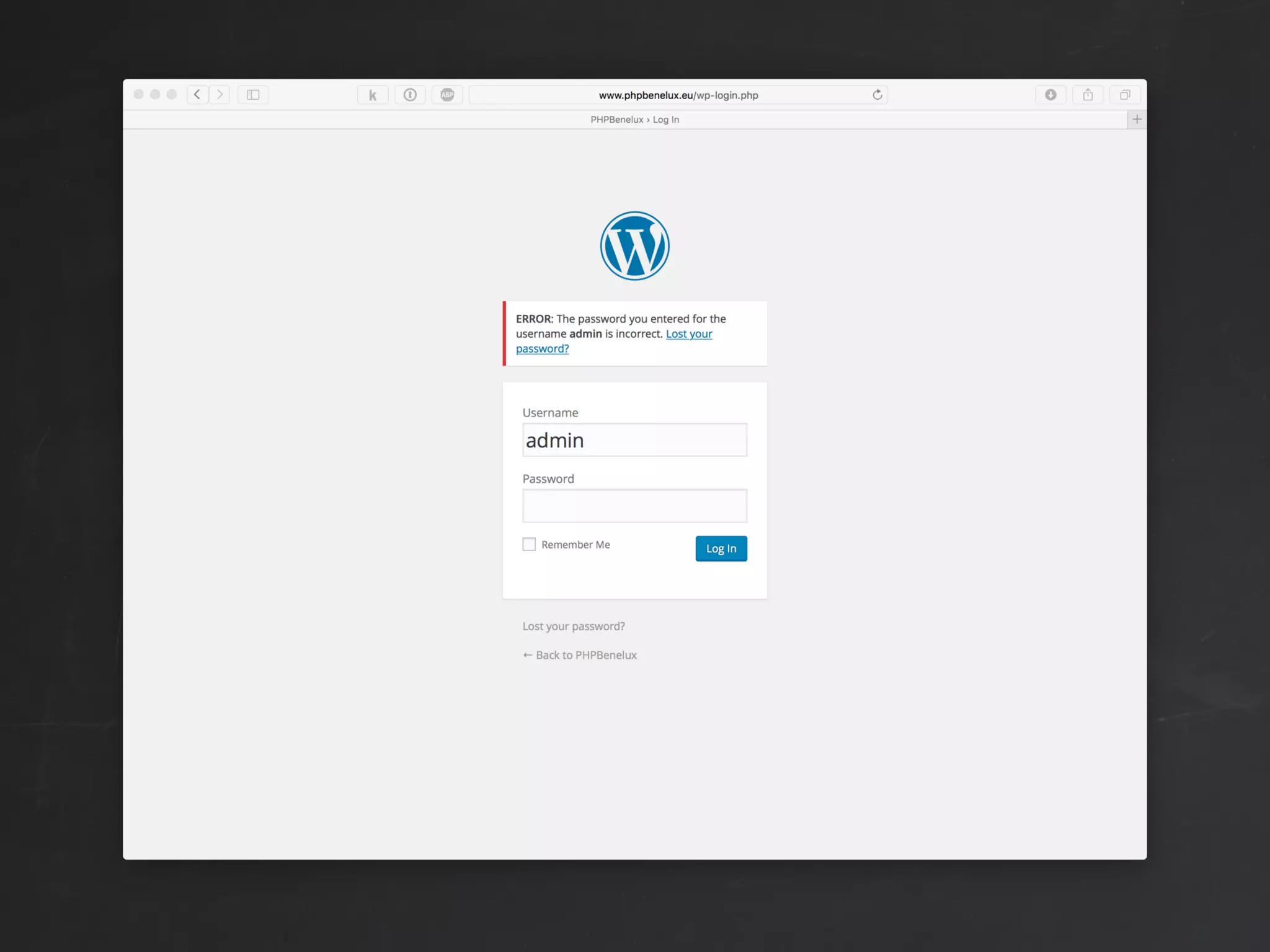
How to manage the configuration?
Old school approach…
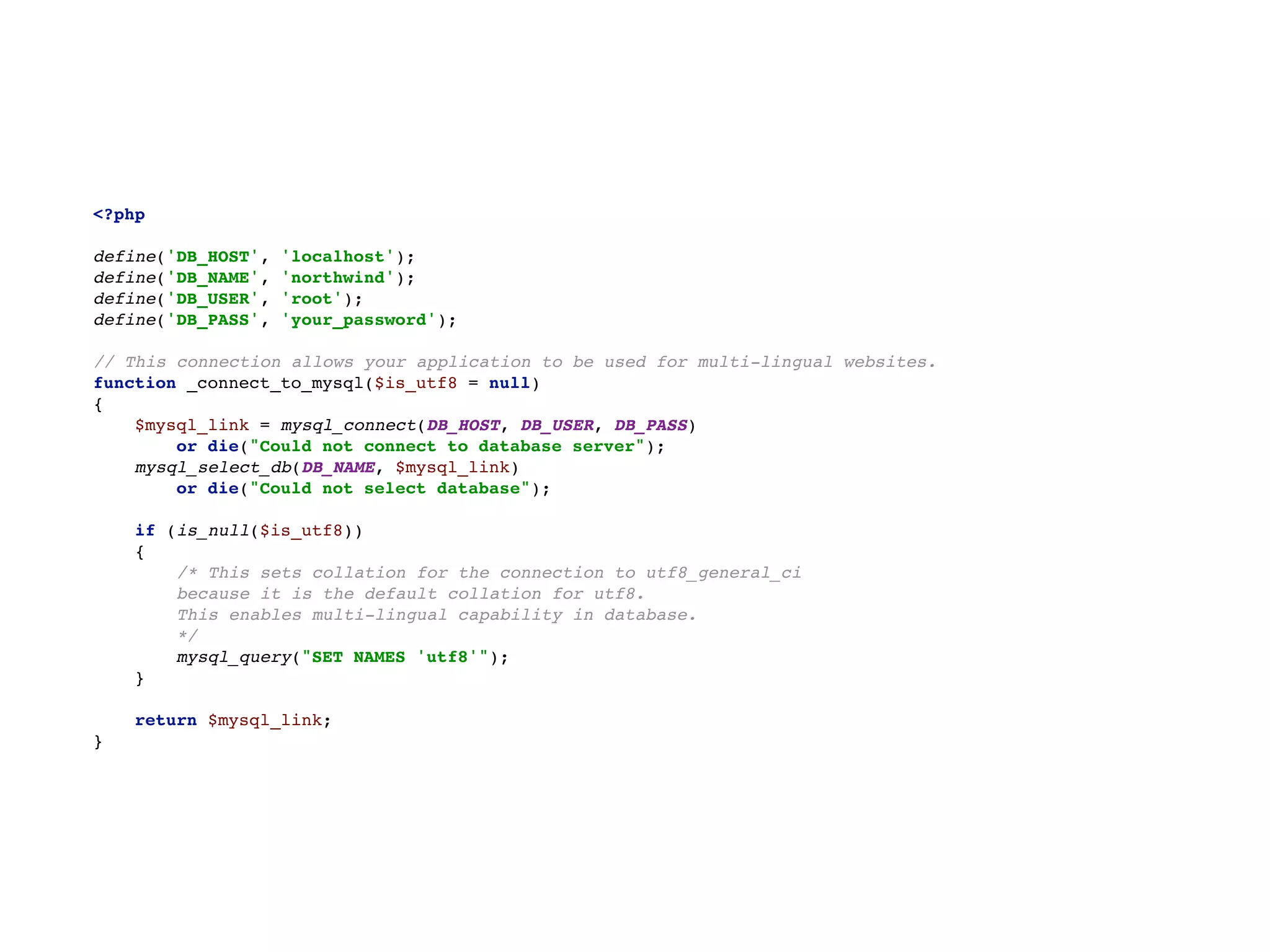
<?php


define('DB_HOST', 'localhost'); 

define('DB_NAME', 'northwind'); 

define('DB_USER', 'root'); 

define('DB_PASS', 'your_password'); 


// This connection allows your application to be used for multi-lingual websites. 

function _connect_to_mysql($is_utf8 = null)

{

$mysql_link = mysql_connect(DB_HOST, DB_USER, DB_PASS)

or die("Could not connect to database server");

mysql_select_db(DB_NAME, $mysql_link)

or die("Could not select database");


if (is_null($is_utf8))

{

/* This sets collation for the connection to utf8_general_ci 

because it is the default collation for utf8. 

This enables multi-lingual capability in database. 

*/

mysql_query("SET NAMES 'utf8'");

} 


return $mysql_link; 

}
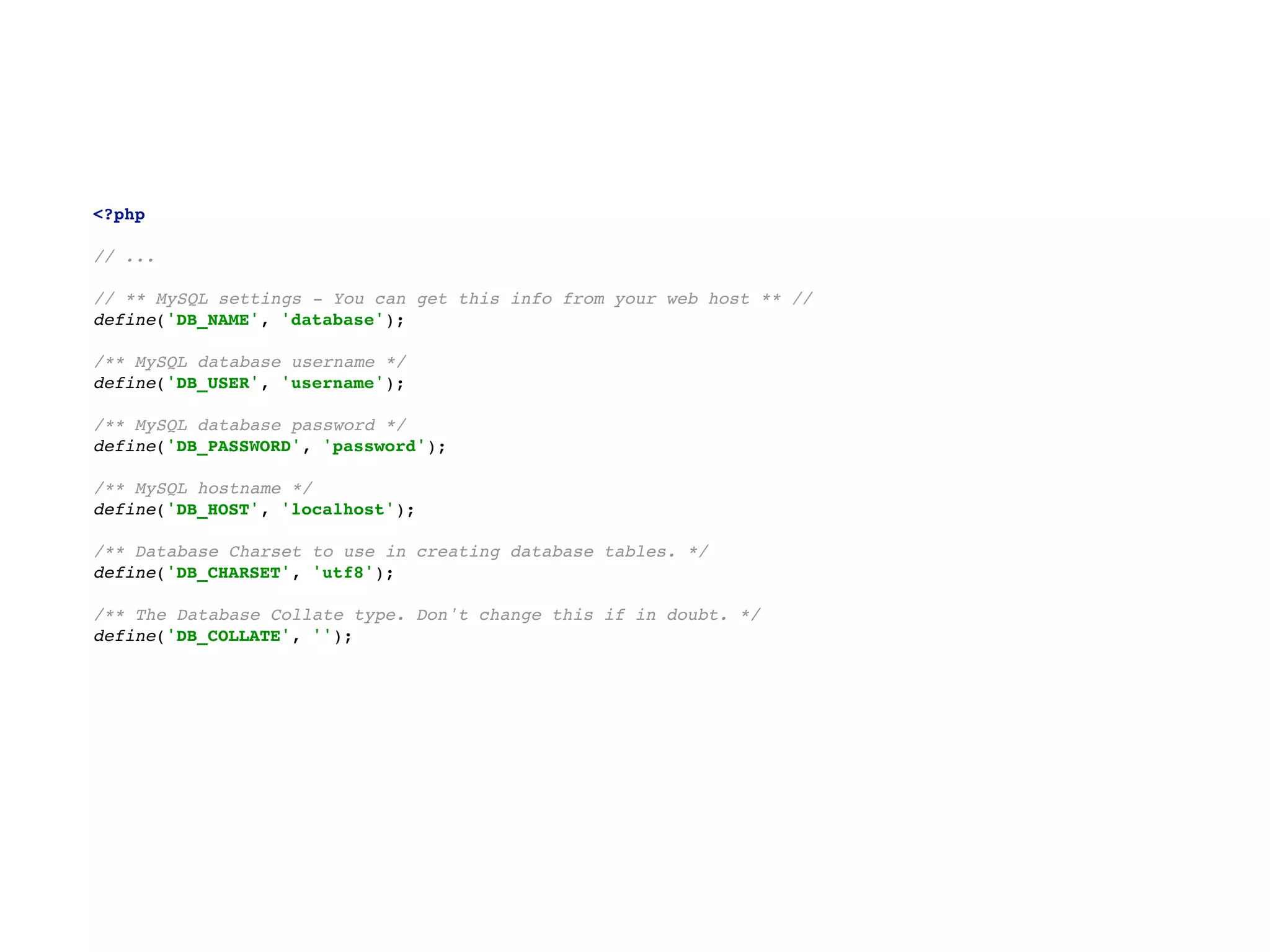
<?php


// ...


// ** MySQL settings - You can get this info from your web host ** //

define('DB_NAME', 'database');


/** MySQL database username */

define('DB_USER', 'username');


/** MySQL database password */

define('DB_PASSWORD', 'password');


/** MySQL hostname */

define('DB_HOST', 'localhost');


/** Database Charset to use in creating database tables. */

define('DB_CHARSET', 'utf8');


/** The Database Collate type. Don't change this if in doubt. */

define('DB_COLLATE', '');
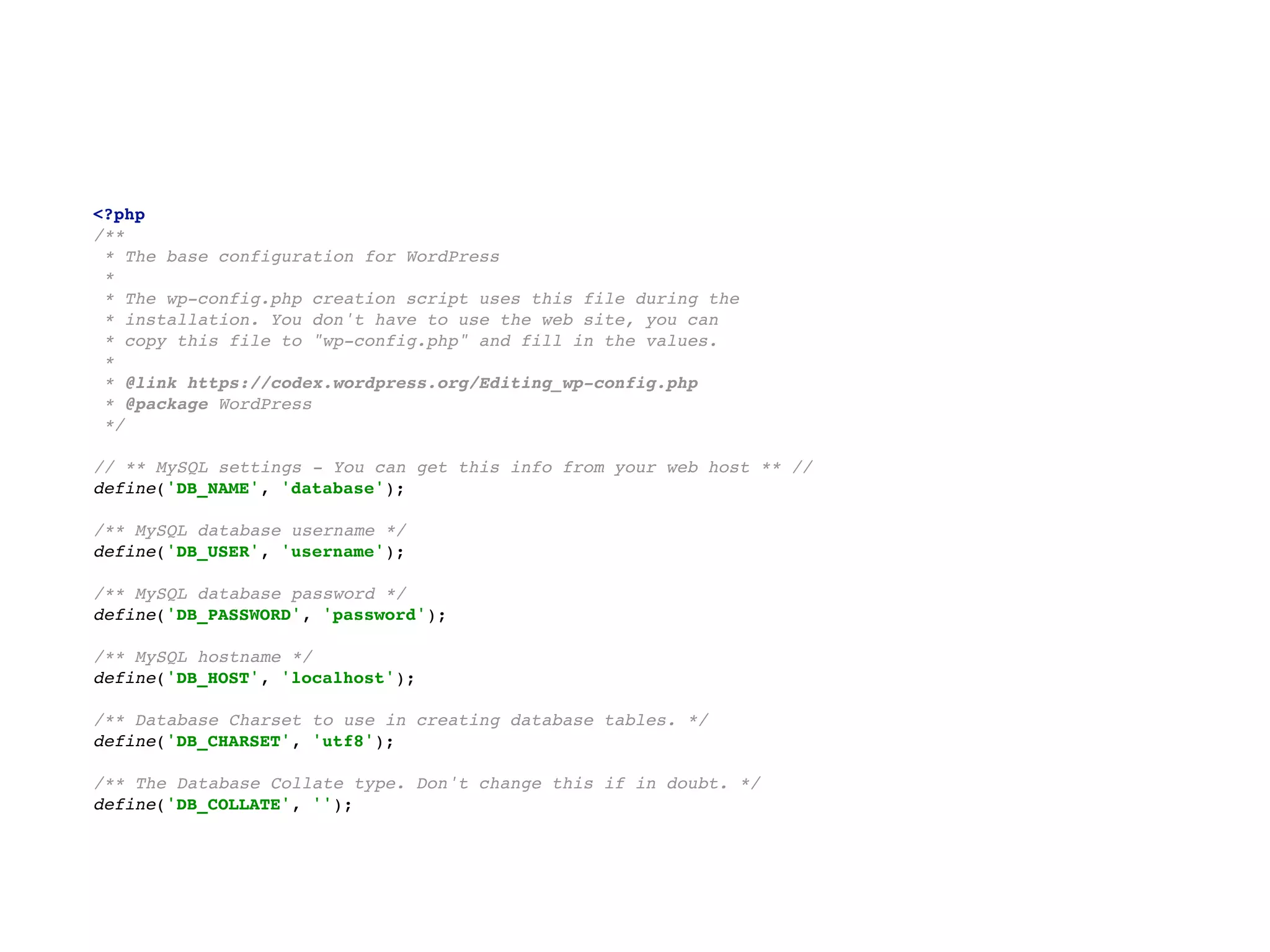
<?php

/**

* The base configuration for WordPress

*

* The wp-config.php creation script uses this file during the

* installation. You don't have to use the web site, you can

* copy this file to "wp-config.php" and fill in the values.

*

* @link https://codex.wordpress.org/Editing_wp-config.php

* @package WordPress

*/


// ** MySQL settings - You can get this info from your web host ** //

define('DB_NAME', 'database');


/** MySQL database username */

define('DB_USER', 'username');


/** MySQL database password */

define('DB_PASSWORD', 'password');


/** MySQL hostname */

define('DB_HOST', 'localhost');


/** Database Charset to use in creating database tables. */

define('DB_CHARSET', 'utf8');


/** The Database Collate type. Don't change this if in doubt. */

define('DB_COLLATE', '');
bash-3.2$ ack DB_NAME
 
wp-includes/load.php
350: $wpdb = new wpdb( DB_USER, DB_PASSWORD, DB_NAME, DB_HOST );
 
wp-content/plugins/xcloner-backup-and-restore/restore/XCloner.php
580: $config_data = str_replace("define('DB_NAME', '",
"define('DB_NAME', ‚".$_REQUEST[mysql_db]."');
#", $config_data)
 
wp-content/plugins/w3-total-cache/lib/W3/Db.php
165: parent::__construct(DB_USER, DB_PASSWORD, DB_NAME, DB_HOST);
How we can improve it?
<?php


use PimpleContainer;


$container = new Container();


$container['db'] = function() {

$host = 'localhost';

$dbName = 'wordpress';

$user = 'root';

$pass = '';


return new PDO("mysql:host={$host};dbname={$dbName}", $user, $pass);

};
<?php


$dice = new DiceDice();


$rule = [

//Mark the class as shared so the same instance is returned each time

'shared' => true,


//The constructor arguments that will be supplied when the instance is created

'constructParams' => [

'mysql:host=127.0.0.1;dbname=mydb',

'username',

'password',

],

];


//Apply the rule to the PDO class

$dice->addRule('PDO', $rule);


//Now any time PDO is requested from Dice, the same instance will be returned

//And will have been constructed with the arguments supplied in 'constructParams'

$pdo = $dice->create('PDO');
<?php


$builder = new DIContainerBuilder();


$builder->addDefinitions([

'foo' => 'hello ',

'bar' => 'world',

]);

$builder->addDefinitions([

'foo' => DIdecorate(function ($previous, InteropContainerContainerInterface $container) {

return $previous . $container->get('bar');

}),

]);

$builder->addDefinitions([

'values' => [

'value 1',

'value 2',

],

]);

$builder->addDefinitions([

// with the same name

'stdClass' => DIobject('stdClass'),

// with name inferred

__NAMESPACE__ . 'ObjectDefinitionClass1' => DIobject(),

// with a different name

'object' => DIobject(__NAMESPACE__ . 'ObjectDefinitionClass1'),

]);


$container = $builder->build();
# Swiftmailer Configuration
swiftmailer:
transport: "%mailer_transport%"
host: "%mailer_host%"
username: "%mailer_user%"
password: "%mailer_password%"
spool: { type: memory }
# KNP Menu configuration
knp_menu:
twig:
template: knp_menu.html.twig
templating: false
default_renderer: twig
# KNP Paginator configuration
knp_paginator:
page_range: 5
default_options:
page_name: page
# LiipImagine configuration
liip_imagine:
filter_sets:
square_200:
quality: 100
filters:
thumbnail: { size: [200,
200], mode: outbound }
# Configuration parameters
parameters:
database_host: 127.0.0.1
database_port: null
database_name: database
database_user: root
database_password: null
mailer_transport: smtp
mailer_host: 127.0.0.1
mailer_user: null
mailer_password: null
secret: 092402938a039b72278b9b05da3f4d4
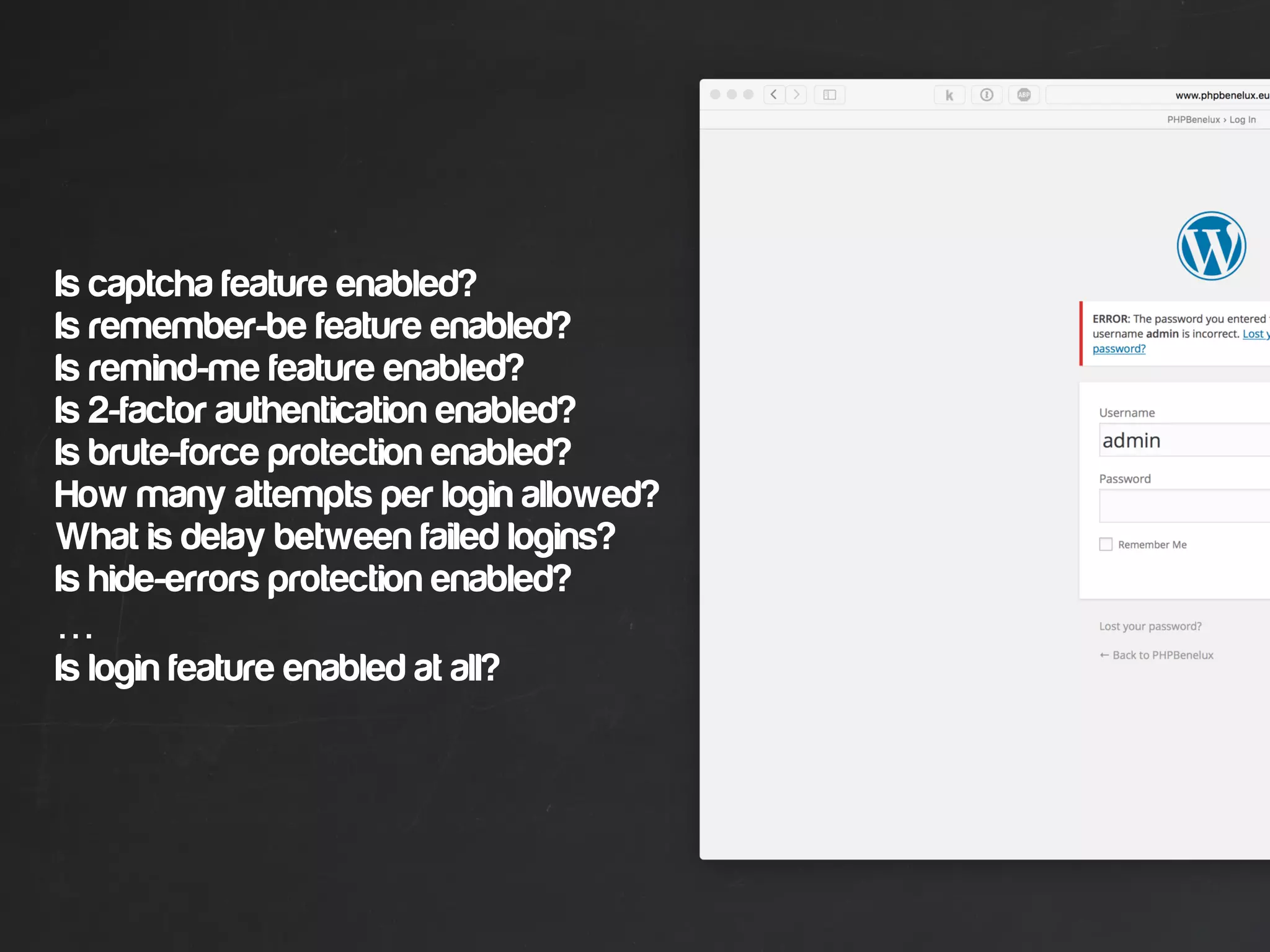
Is captcha feature enabled?
Is remember-be feature enabled?
Is remind-me feature enabled?
Is 2-factor authentication enabled?
Is brute-force protection enabled?
How many attempts per login allowed?
What is delay between failed logins?
Is hide-errors protection enabled?
…
Is login feature enabled at all?
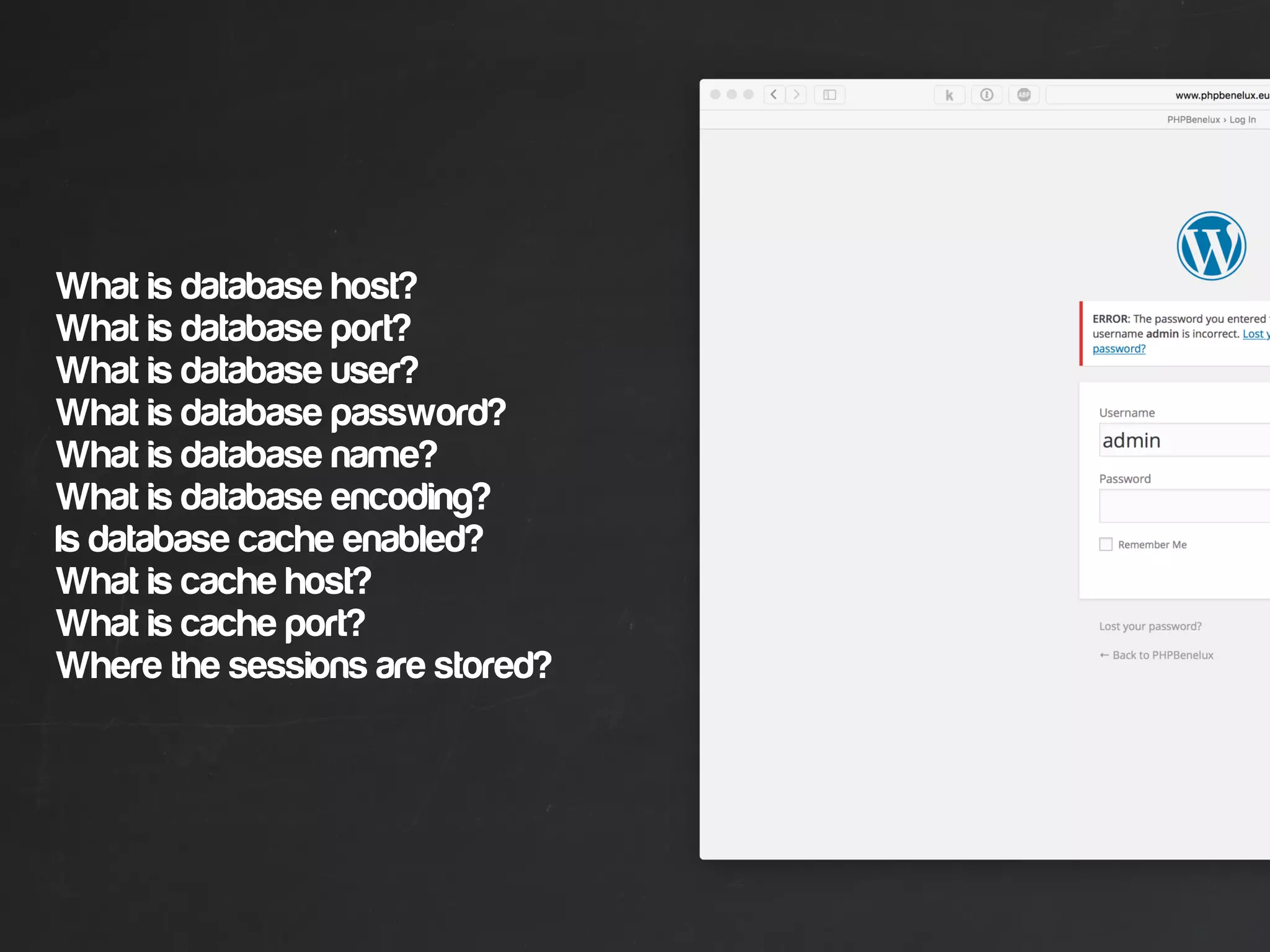
What is database host?
What is database port?
What is database user?
What is database password?
What is database name?
What is database encoding?
Is database cache enabled?
What is cache host?
What is cache port?
Where the sessions are stored?
Standard feature
Single form
Many configuration problems
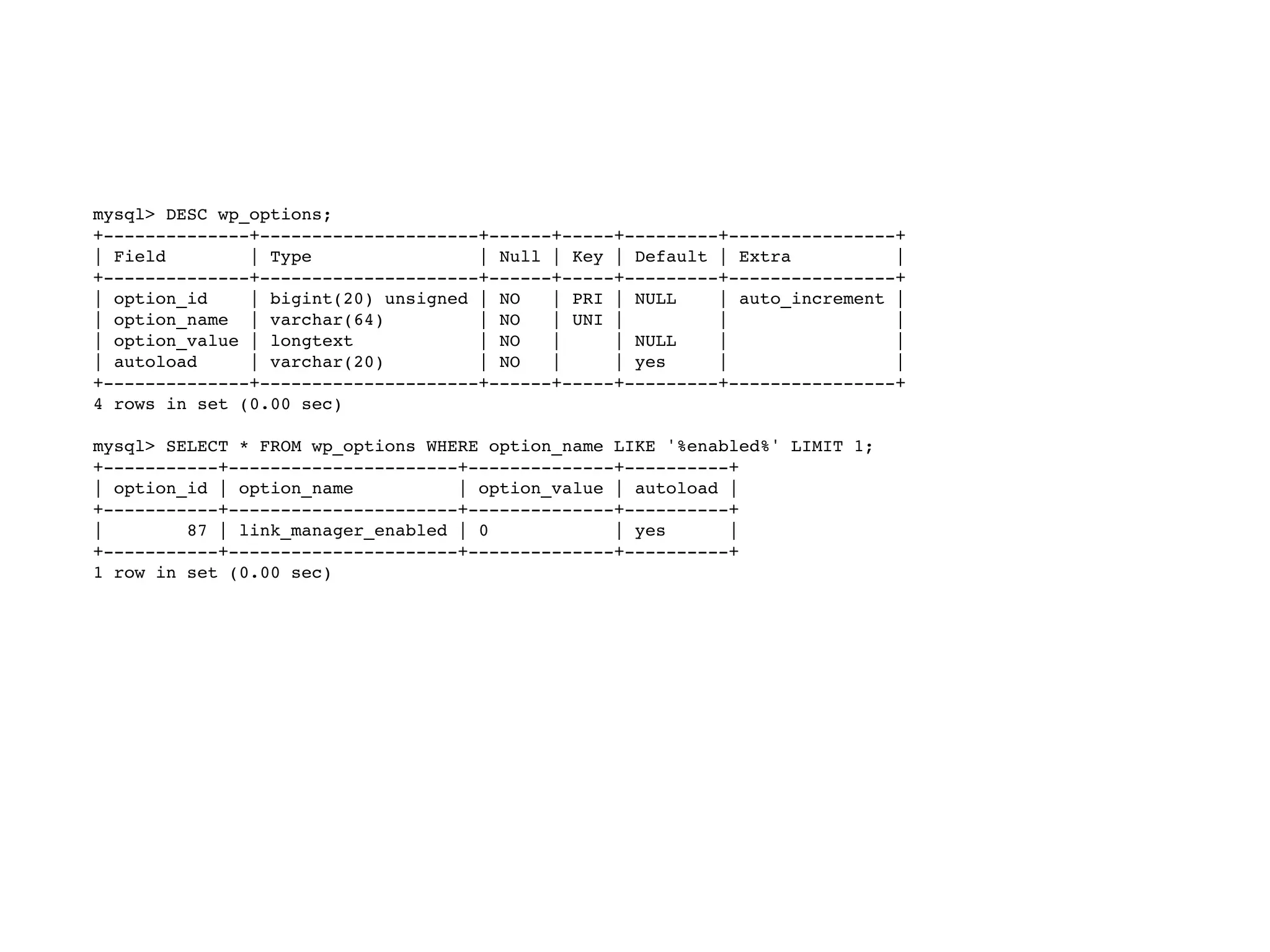
How to update configs?
mysql> DESC wp_options;
+--------------+---------------------+------+-----+---------+----------------+
| Field | Type | Null | Key | Default | Extra |
+--------------+---------------------+------+-----+---------+----------------+
| option_id | bigint(20) unsigned | NO | PRI | NULL | auto_increment |
| option_name | varchar(64) | NO | UNI | | |
| option_value | longtext | NO | | NULL | |
| autoload | varchar(20) | NO | | yes | |
+--------------+---------------------+------+-----+---------+----------------+
4 rows in set (0.00 sec)
mysql> SELECT * FROM wp_options WHERE option_name LIKE '%enabled%' LIMIT 1;
+-----------+----------------------+--------------+----------+
| option_id | option_name | option_value | autoload |
+-----------+----------------------+--------------+----------+
| 87 | link_manager_enabled | 0 | yes |
+-----------+----------------------+--------------+----------+
1 row in set (0.00 sec)
You need to deploy application to
release changes in configuration
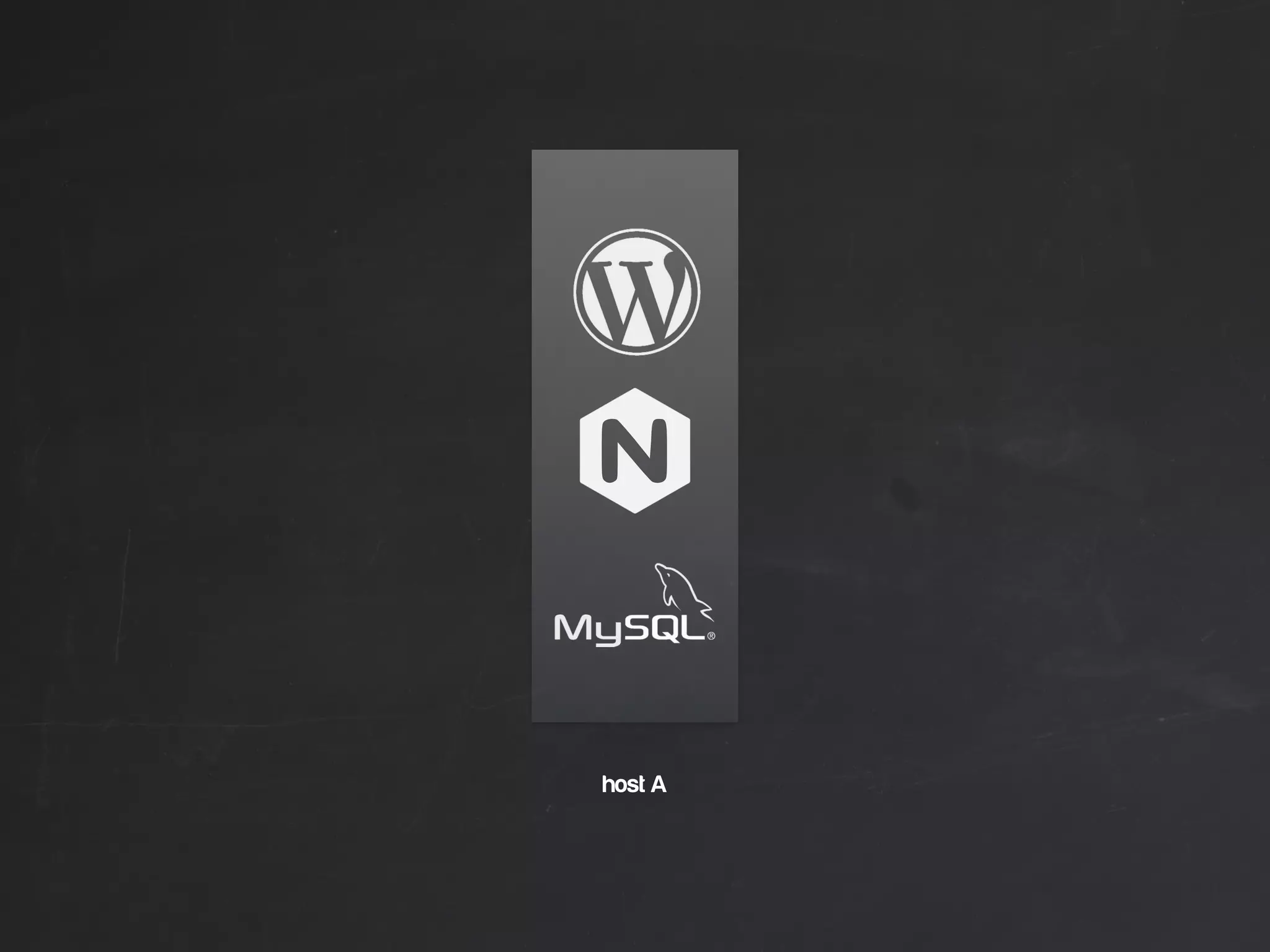
host A
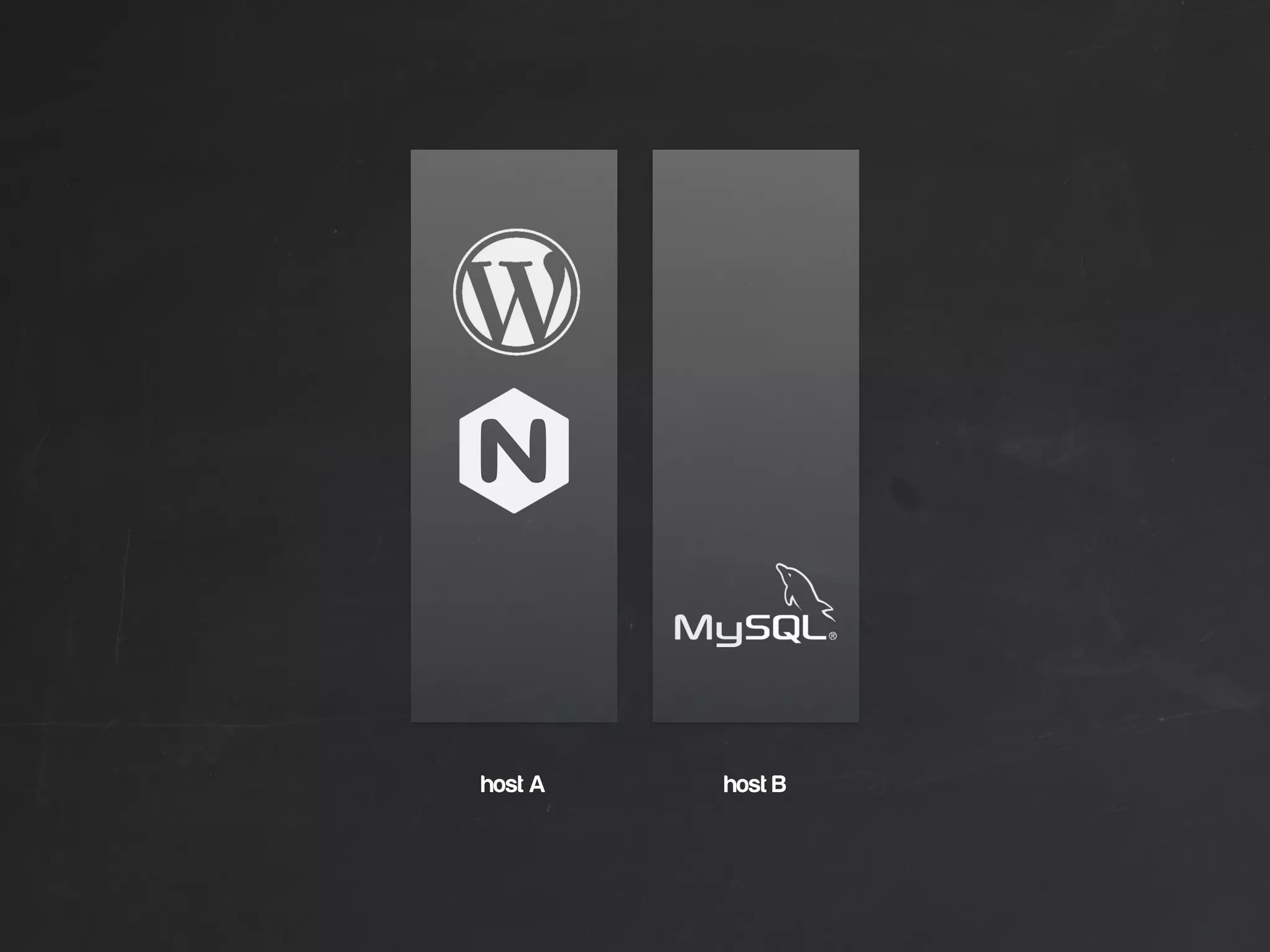
host A host B
Another approach to maintain configs
Decouple your application from
hardcoded configuration details
by
Service discovery and
configuration provisioning tool
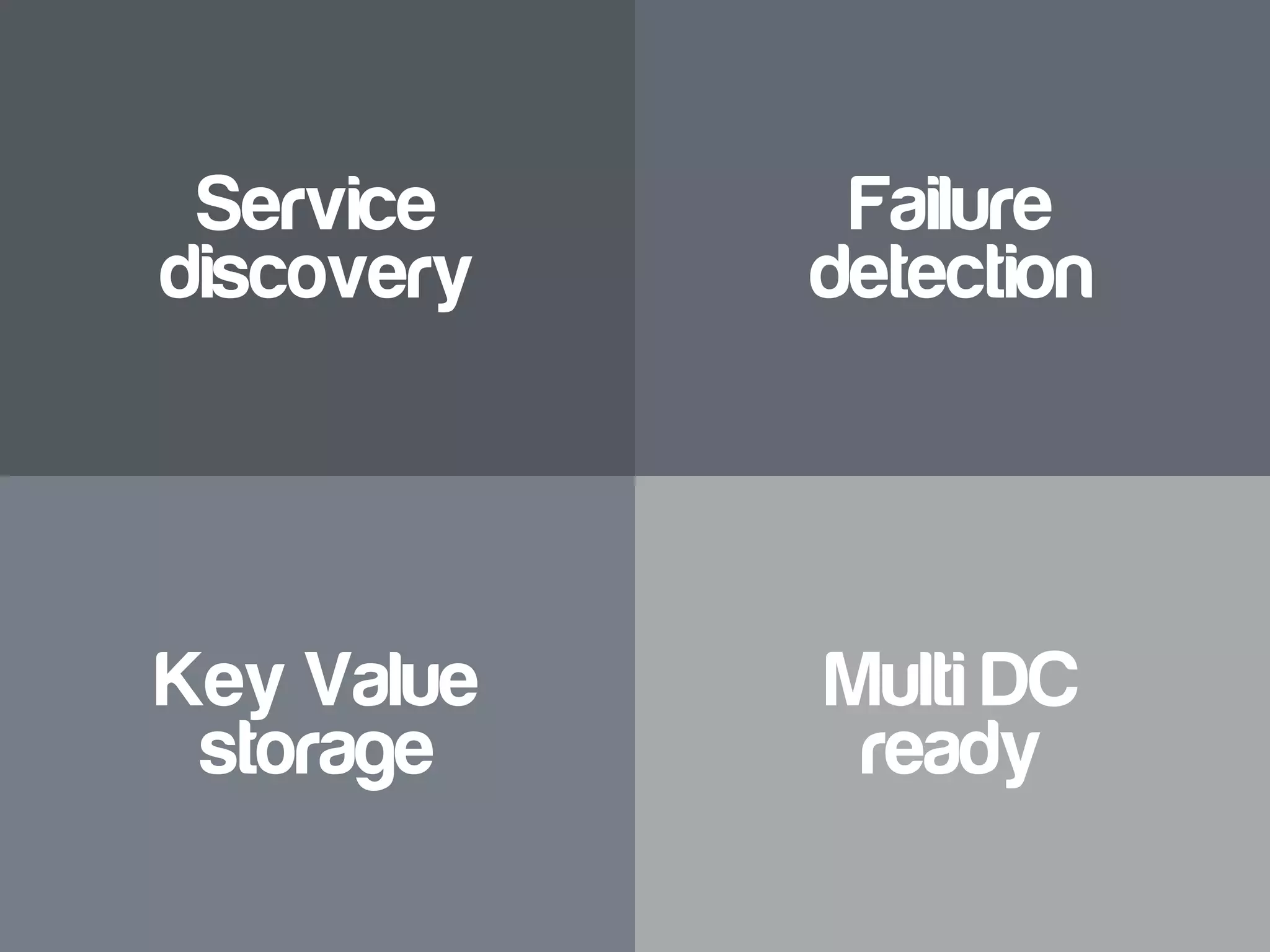
Service
discovery
Failure
detection
Key Value
storage
Multi DC
ready
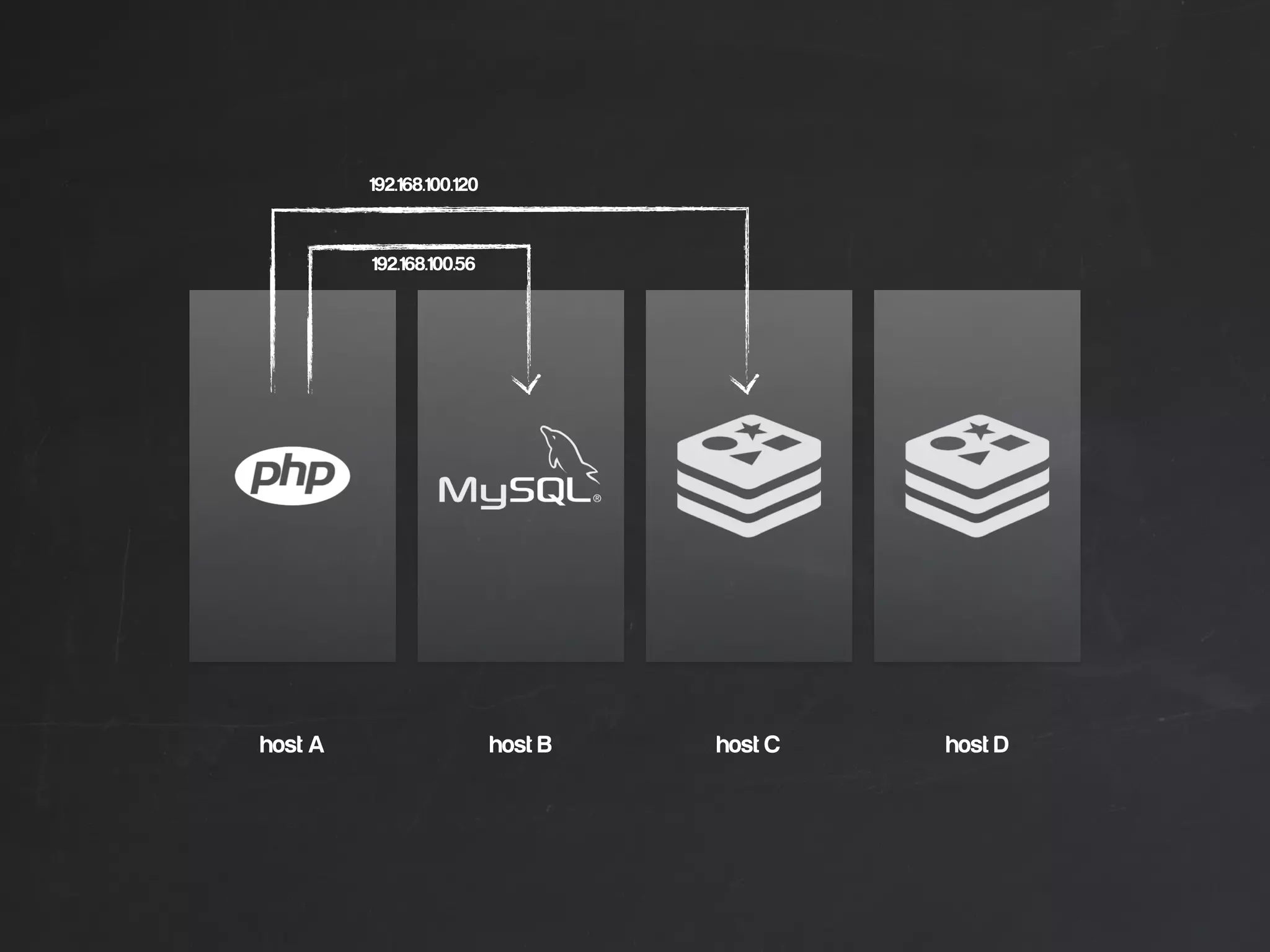
host A host B host C host D
192.168.100.56
192.168.100.120
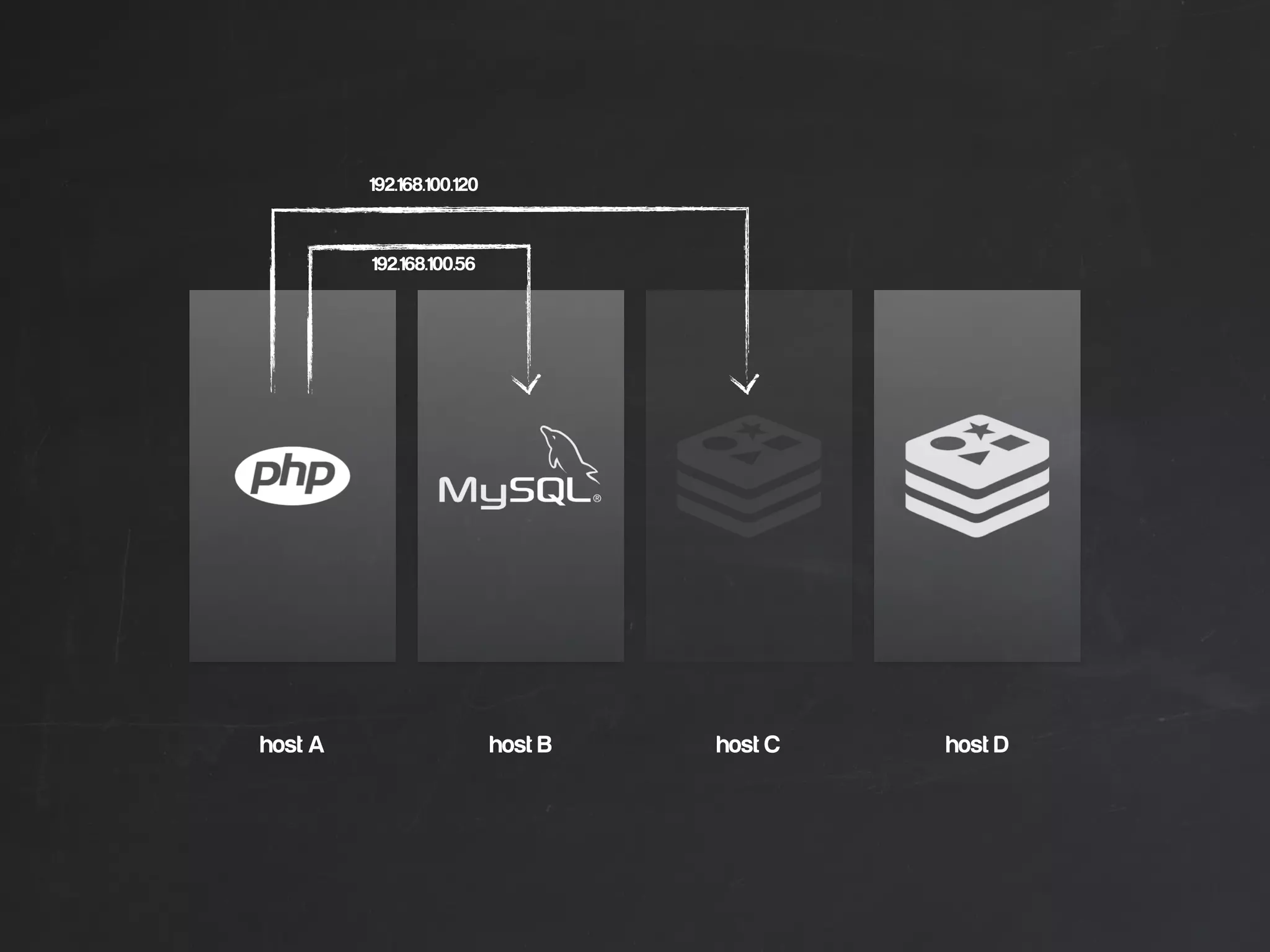
host A host B host C host D
192.168.100.56
192.168.100.120
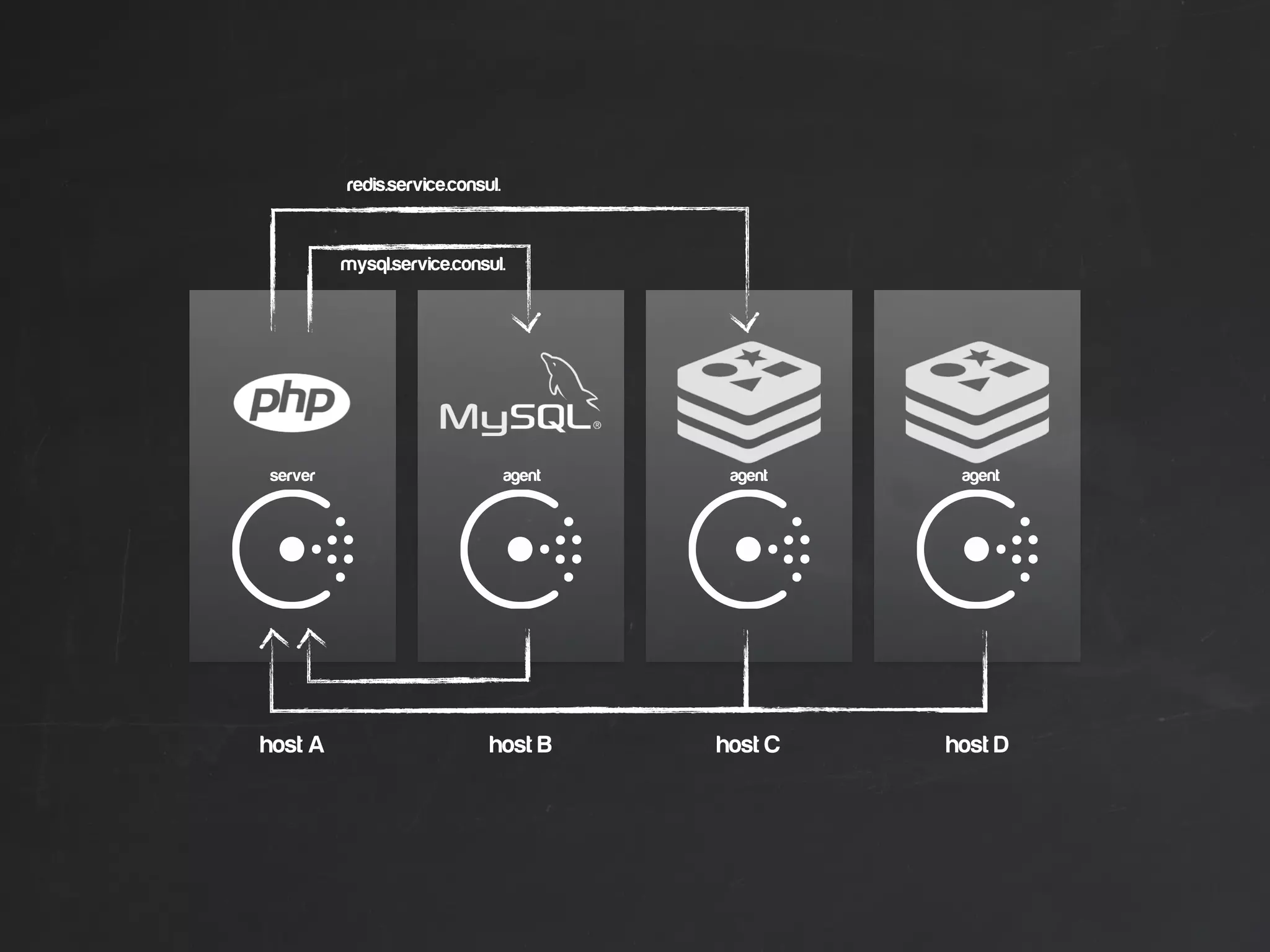
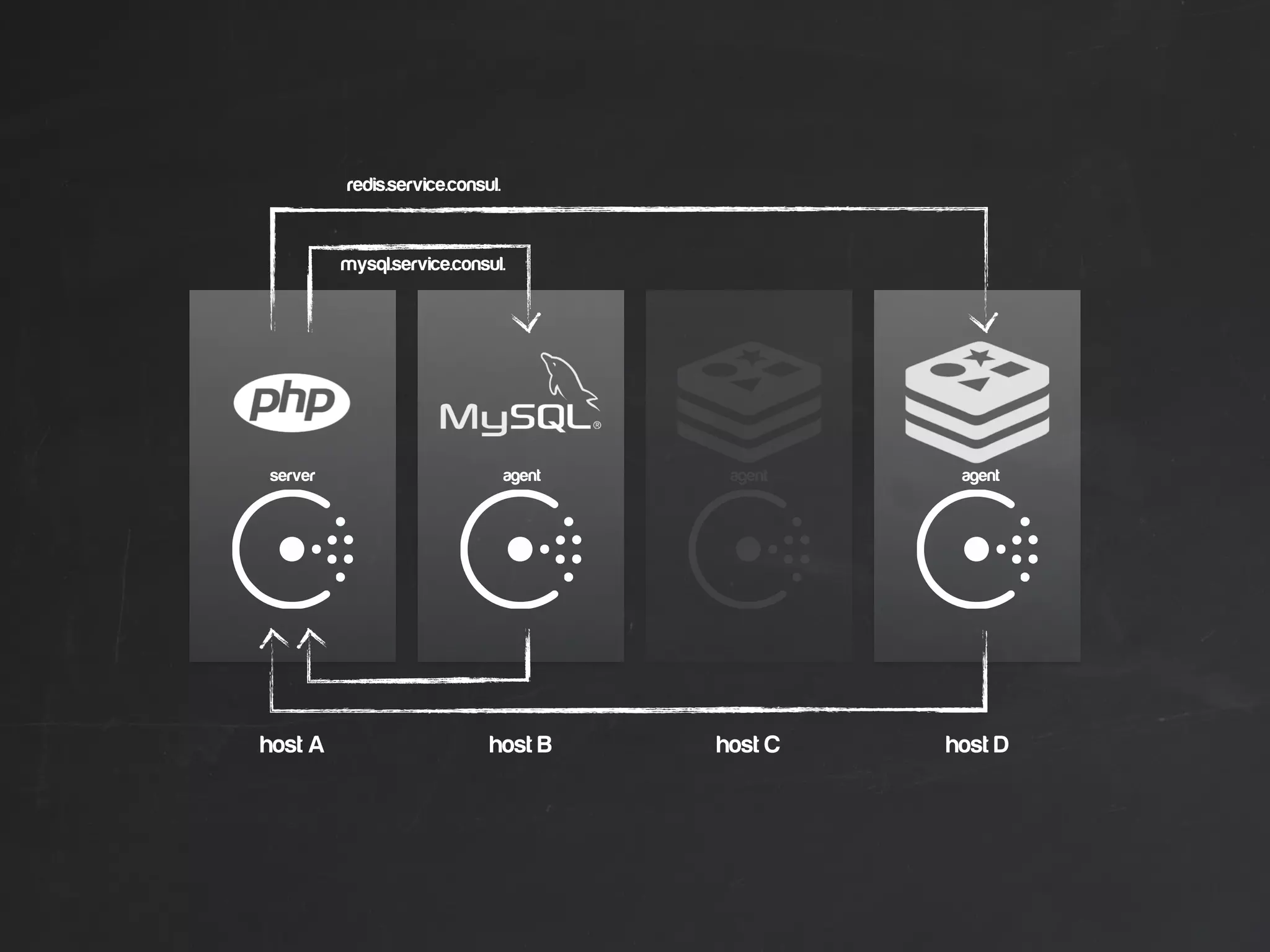
host A host B host C host D
mysql.service.consul.
redis.service.consul.
agentserver agent agent
host A host B host C host D
mysql.service.consul.
redis.service.consul.
server agent agent agent
Managing services
# curl -X PUT -d '{
"service": {
"name": "memcached",
"tags": ["cache"],
"port": 11211,
"check": {
"name": "memcached status",
"script": "echo stats | nc 127.0.0.1 11211",
"interval": "5s"
}
}
}' http://192.168.33.10:8500/v1/catalog/service/memcached
# curl -X GET http://192.168.33.10:8500/v1/catalog/service/memcached
[{„Node":"vagrant-ubuntu-
trusty-64","Address":"192.168.33.10","ServiceID":"memcached","ServiceName":"memcached","ServiceTags
":["cache"],"ServiceAddress":"","ServicePort":11211,"ServiceEnableTagOverride":false,"CreateIndex":
19,"ModifyIndex":22}]
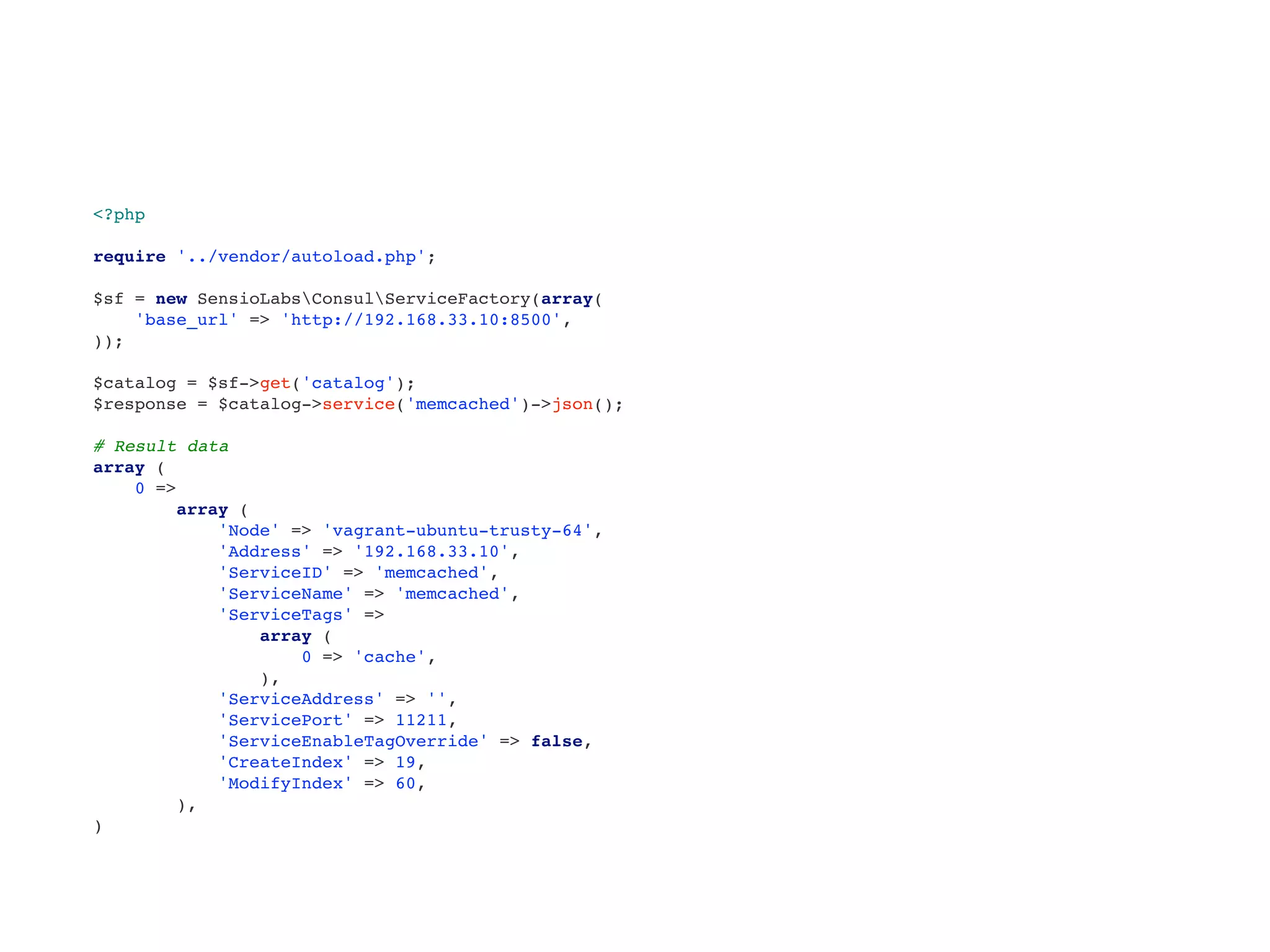
<?php
require '../vendor/autoload.php';
$sf = new SensioLabsConsulServiceFactory(array(
'base_url' => 'http://192.168.33.10:8500',
));
$catalog = $sf->get('catalog');
$response = $catalog->service('memcached')->json();
# Result data
array (
0 =>
array (
'Node' => 'vagrant-ubuntu-trusty-64',
'Address' => '192.168.33.10',
'ServiceID' => 'memcached',
'ServiceName' => 'memcached',
'ServiceTags' =>
array (
0 => 'cache',
),
'ServiceAddress' => '',
'ServicePort' => 11211,
'ServiceEnableTagOverride' => false,
'CreateIndex' => 19,
'ModifyIndex' => 60,
),
)
DNS interface for services and tags
<node>.node[.dc].<domain>
[tag.]<service>.service[.dc].<domain>
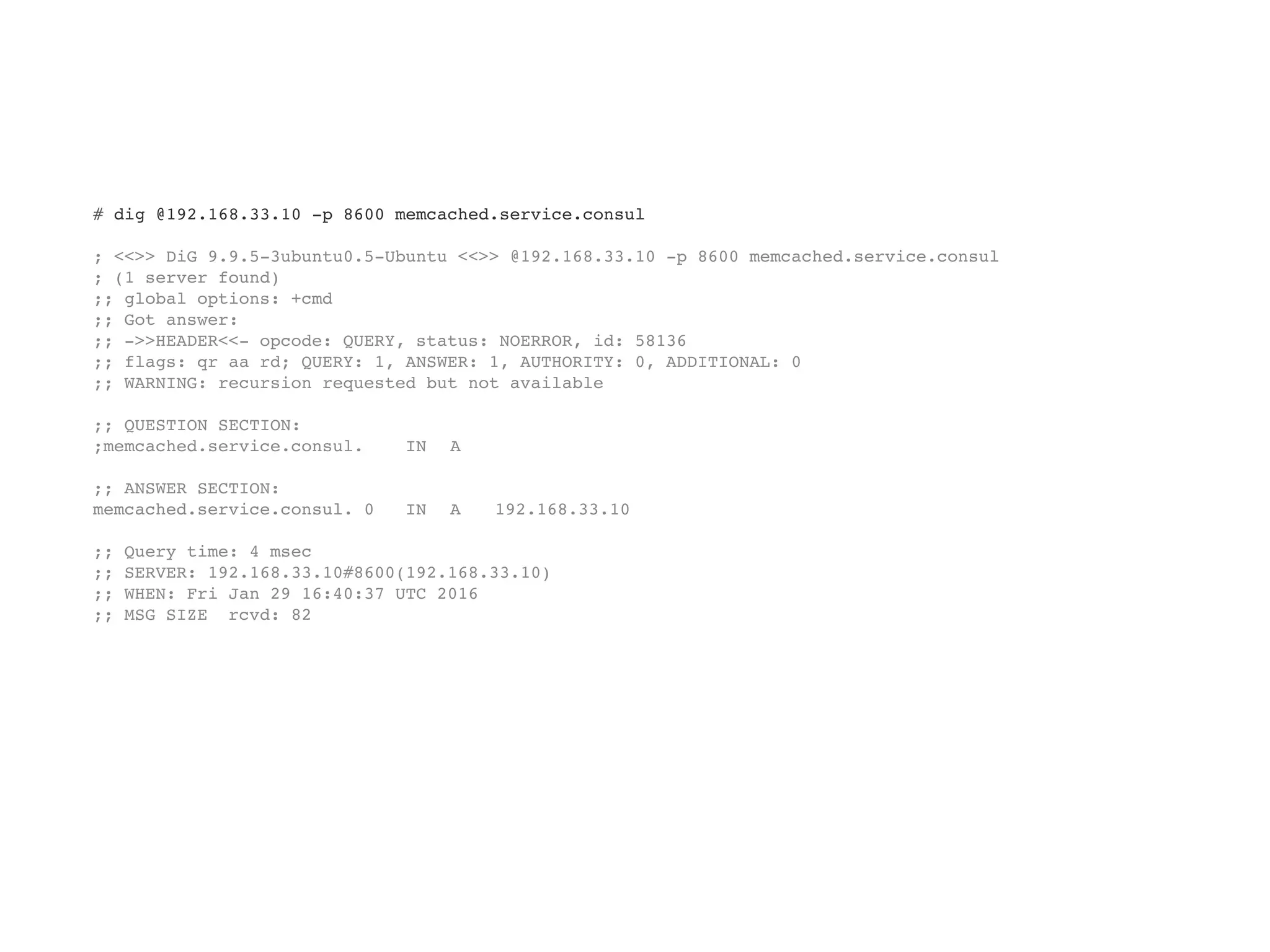
# dig @192.168.33.10 -p 8600 memcached.service.consul
; <<>> DiG 9.9.5-3ubuntu0.5-Ubuntu <<>> @192.168.33.10 -p 8600 memcached.service.consul
; (1 server found)
;; global options: +cmd
;; Got answer:
;; ->>HEADER<<- opcode: QUERY, status: NOERROR, id: 58136
;; flags: qr aa rd; QUERY: 1, ANSWER: 1, AUTHORITY: 0, ADDITIONAL: 0
;; WARNING: recursion requested but not available
;; QUESTION SECTION:
;memcached.service.consul. IN A
;; ANSWER SECTION:
memcached.service.consul. 0 IN A 192.168.33.10
;; Query time: 4 msec
;; SERVER: 192.168.33.10#8600(192.168.33.10)
;; WHEN: Fri Jan 29 16:40:37 UTC 2016
;; MSG SIZE rcvd: 82
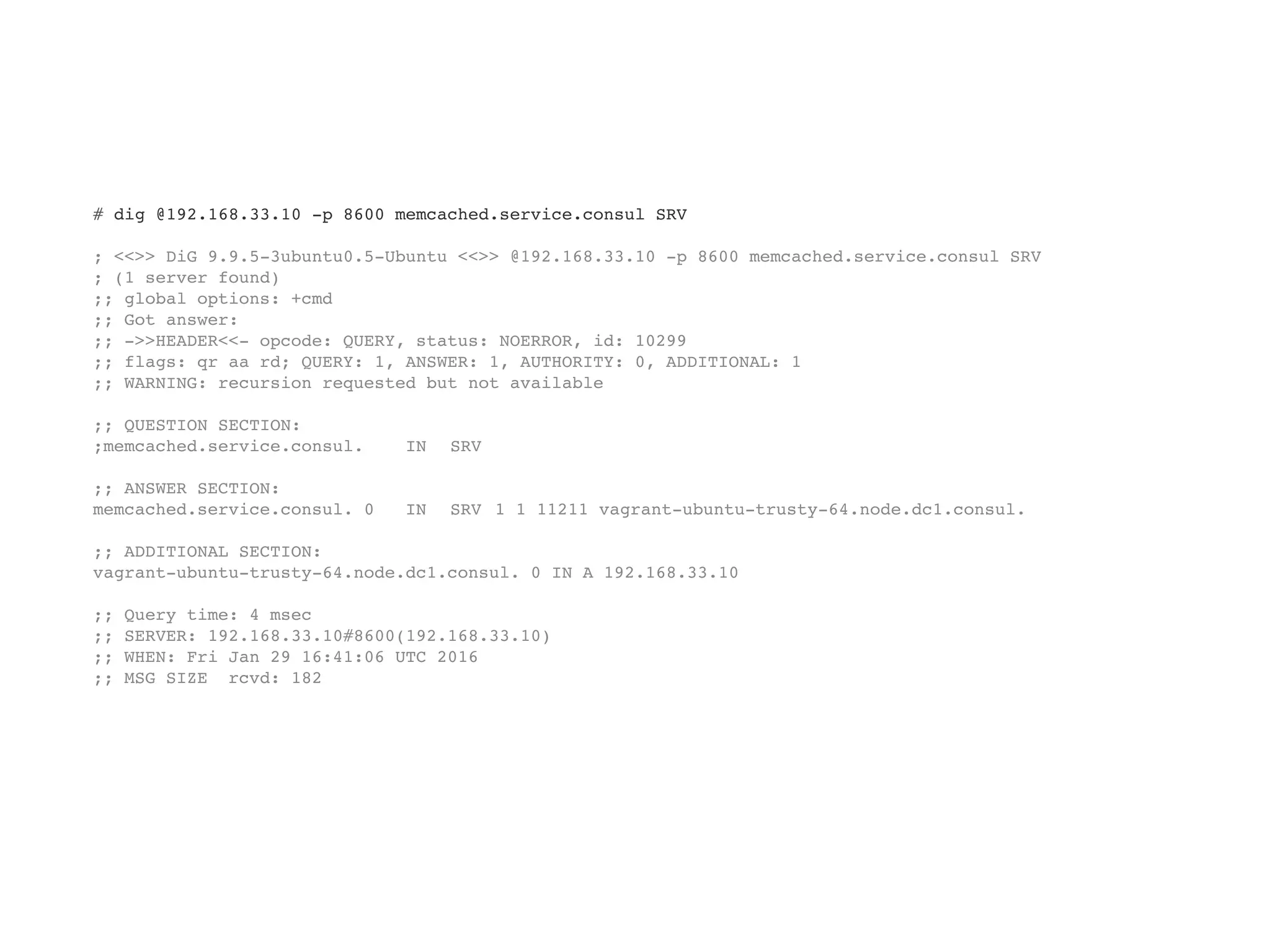
# dig @192.168.33.10 -p 8600 memcached.service.consul SRV
; <<>> DiG 9.9.5-3ubuntu0.5-Ubuntu <<>> @192.168.33.10 -p 8600 memcached.service.consul SRV
; (1 server found)
;; global options: +cmd
;; Got answer:
;; ->>HEADER<<- opcode: QUERY, status: NOERROR, id: 10299
;; flags: qr aa rd; QUERY: 1, ANSWER: 1, AUTHORITY: 0, ADDITIONAL: 1
;; WARNING: recursion requested but not available
;; QUESTION SECTION:
;memcached.service.consul. IN SRV
;; ANSWER SECTION:
memcached.service.consul. 0 IN SRV 1 1 11211 vagrant-ubuntu-trusty-64.node.dc1.consul.
;; ADDITIONAL SECTION:
vagrant-ubuntu-trusty-64.node.dc1.consul. 0 IN A 192.168.33.10
;; Query time: 4 msec
;; SERVER: 192.168.33.10#8600(192.168.33.10)
;; WHEN: Fri Jan 29 16:41:06 UTC 2016
;; MSG SIZE rcvd: 182
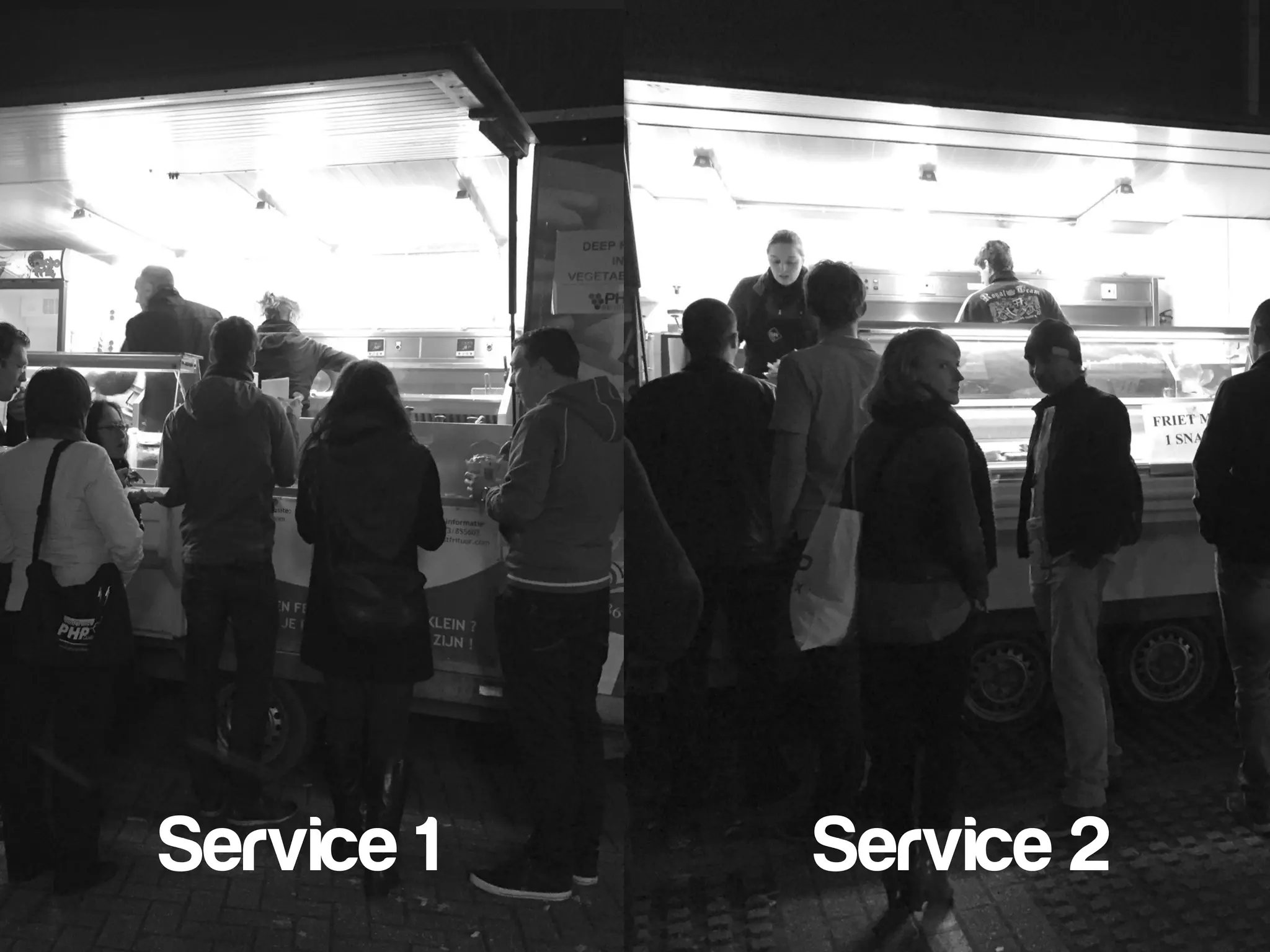
PHP Benelux Fries Example
Service 1 Service 2
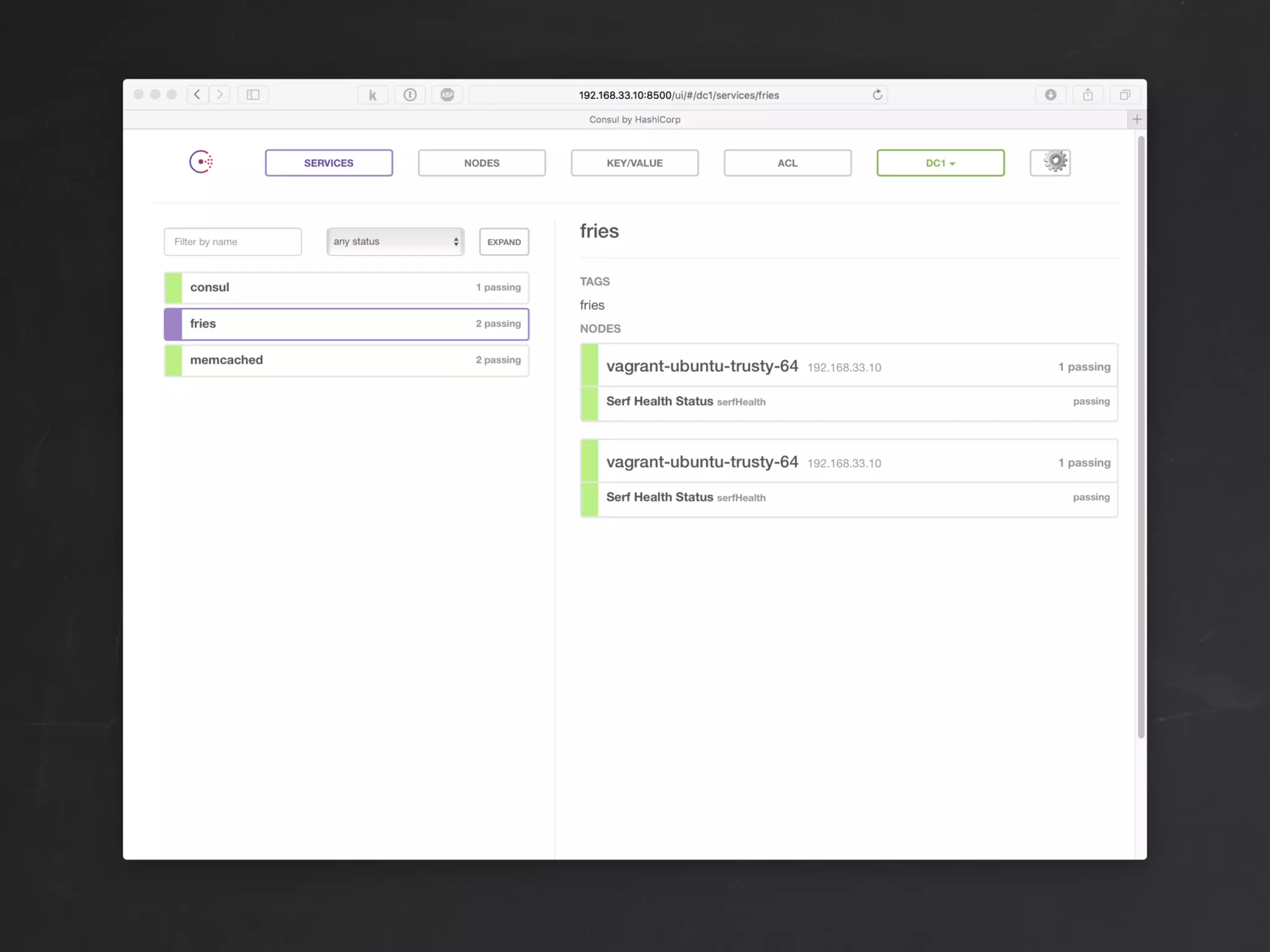
# curl -X PUT -d '{
"Datacenter": "dc1",
"Node": "vagrant-ubuntu-trusty-64",
"Address": "192.168.33.10",
"Service": {
"ID": "fries-1",
"Service": "fries",
"Tags": [
"fries"
],
"Address": "192.168.33.10",
"Port": 1111
}
}' http://192.168.33.10:8500/v1/catalog/register
true
# curl -X PUT -d '{
"Datacenter": "dc1",
"Node": "vagrant-ubuntu-trusty-64",
"Address": "192.168.33.10",
"Service": {
"ID": "fries-2",
"Service": "fries",
"Tags": [
"fries"
],
"Address": "192.168.33.10",
"Port": 2222
}
}' http://192.168.33.10:8500/v1/catalog/register
true
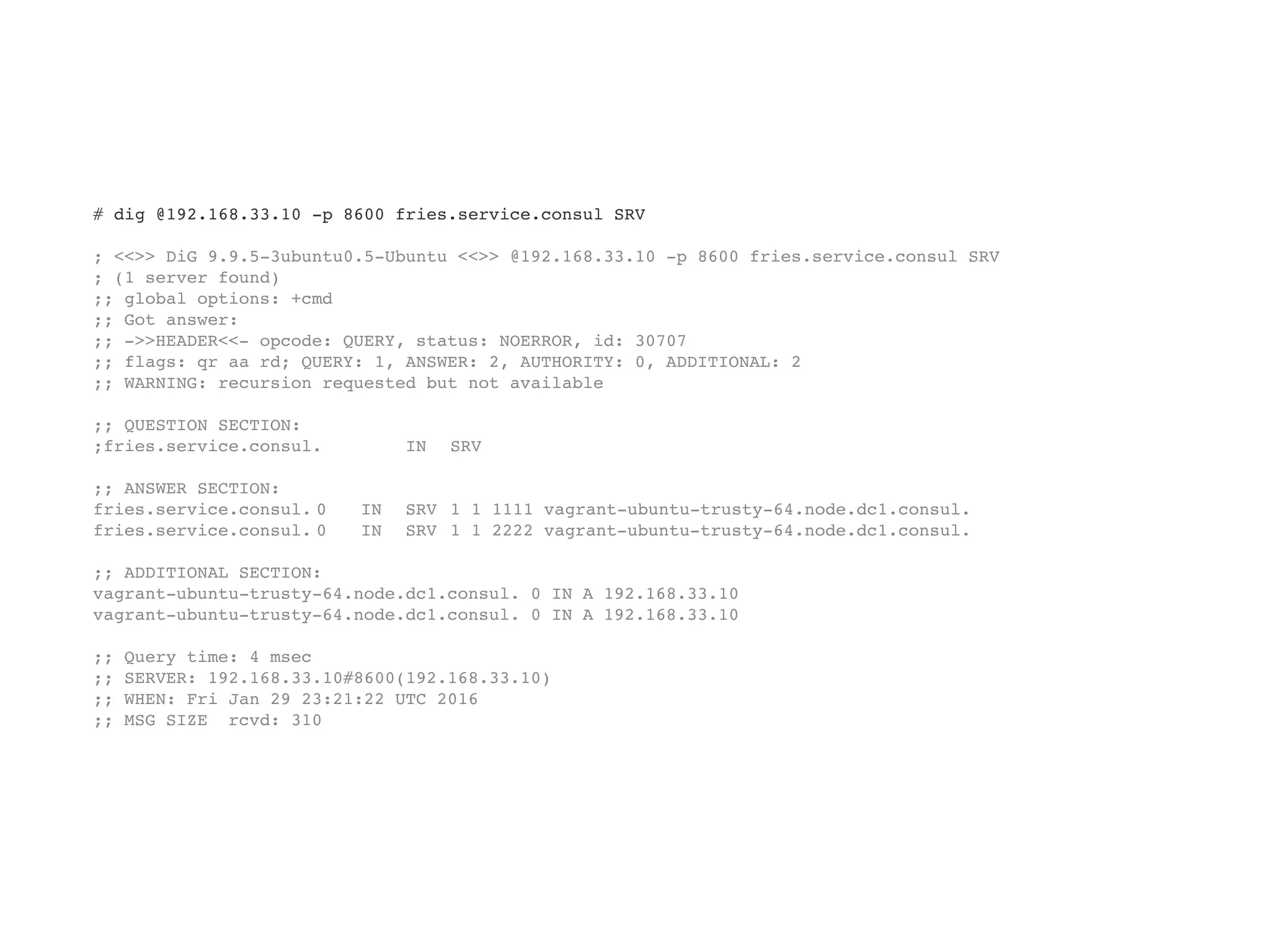
# dig @192.168.33.10 -p 8600 fries.service.consul SRV
; <<>> DiG 9.9.5-3ubuntu0.5-Ubuntu <<>> @192.168.33.10 -p 8600 fries.service.consul SRV
; (1 server found)
;; global options: +cmd
;; Got answer:
;; ->>HEADER<<- opcode: QUERY, status: NOERROR, id: 30707
;; flags: qr aa rd; QUERY: 1, ANSWER: 2, AUTHORITY: 0, ADDITIONAL: 2
;; WARNING: recursion requested but not available
;; QUESTION SECTION:
;fries.service.consul. IN SRV
;; ANSWER SECTION:
fries.service.consul. 0 IN SRV 1 1 1111 vagrant-ubuntu-trusty-64.node.dc1.consul.
fries.service.consul. 0 IN SRV 1 1 2222 vagrant-ubuntu-trusty-64.node.dc1.consul.
;; ADDITIONAL SECTION:
vagrant-ubuntu-trusty-64.node.dc1.consul. 0 IN A 192.168.33.10
;; Query time: 4 msec
;; SERVER: 192.168.33.10#8600(192.168.33.10)
;; WHEN: Fri Jan 29 23:21:22 UTC 2016
;; MSG SIZE rcvd: 310
Storing values
# curl -X GET http://192.168.33.10:8500/v1/kv/foo
[{"LockIndex":0,"Key":"foo","Flags":128,"Value":"YmFy","CreateIndex":123,"ModifyIndex":130}]
# curl -X PUT -d 'bar' http://192.168.33.10:8500/v1/kv/foo
true
# curl -X GET http://192.168.33.10:8500/v1/kv/foo
[{"LockIndex":0,"Key":"foo","Flags":0,"Value":"YmFy","CreateIndex":123,"ModifyIndex":123}]
# curl -X PUT -d 'bar' http://192.168.33.10:8500/v1/kv/foo?flags=128
true
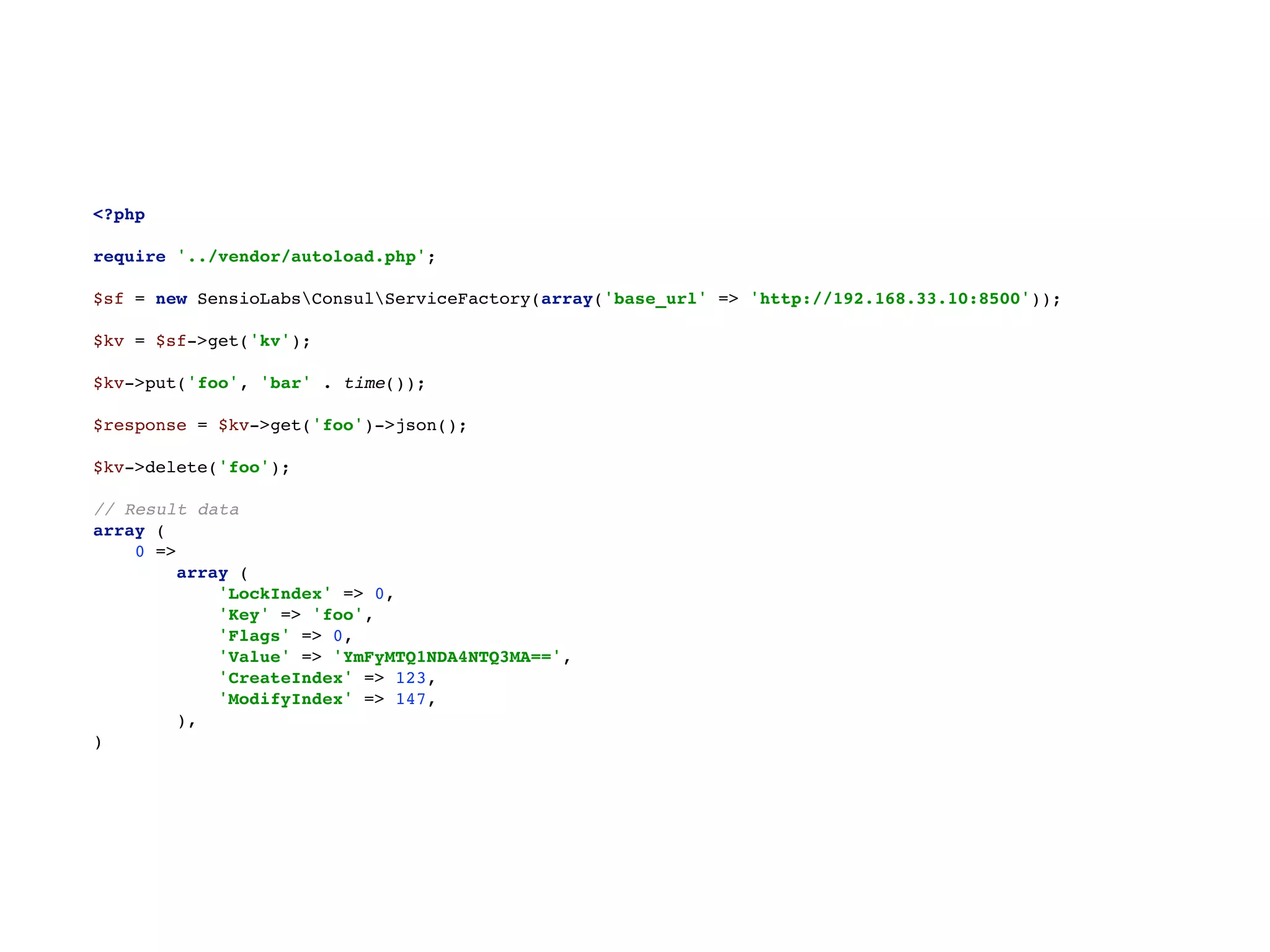
<?php


require '../vendor/autoload.php';


$sf = new SensioLabsConsulServiceFactory(array('base_url' => 'http://192.168.33.10:8500'));


$kv = $sf->get('kv');


$kv->put('foo', 'bar' . time());


$response = $kv->get('foo')->json();


$kv->delete('foo');


// Result data

array (

0 =>

array (

'LockIndex' => 0,

'Key' => 'foo',

'Flags' => 0,

'Value' => 'YmFyMTQ1NDA4NTQ3MA==',

'CreateIndex' => 123,

'ModifyIndex' => 147,

),

)
Distributed locks
<?php


require '../vendor/autoload.php';


$sf = new SensioLabsConsulServiceFactory(array('base_url' => 'http://192.168.33.10:8500'));


$session = $sf->get('session');

$kv = $sf->get('kv');


// Start a session

$sessionId = $session->create()->json()['ID'];


// Lock a key / value with the current session

$lockAcquired = $kv->put('session/a-lock', 'a value', ['acquire' => $sessionId])->json();


if (false === $lockAcquired) {

$session->destroy($sessionId);


echo "The lock is already acquire by another node.n";

exit(1);

}


# YOUR CRITICAL SECTION CODE HERE...


$kv->delete('session/a-lock');

$session->destroy($sessionId);
Useful to avoid dogpile effect
Even more useful with leader election
Possibilities...
Task #1
Replace one search engine to another
Without downtime
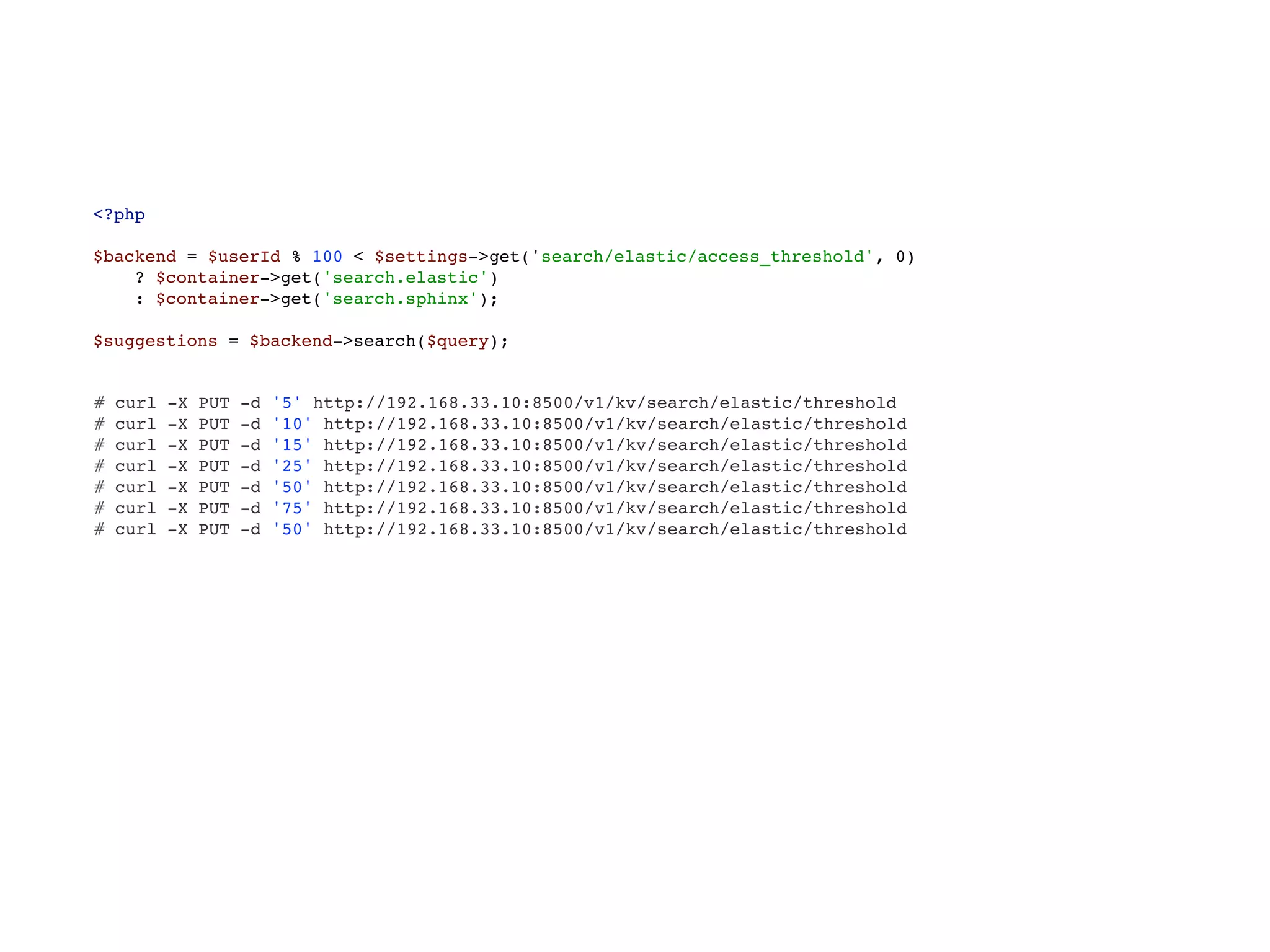
<?php


$backend = $userId % 100 < $settings->get('search/elastic/access_threshold', 0)

? $container->get('search.elastic')

: $container->get('search.sphinx');


$suggestions = $backend->search($query);
# curl -X PUT -d '5' http://192.168.33.10:8500/v1/kv/search/elastic/threshold
# curl -X PUT -d '10' http://192.168.33.10:8500/v1/kv/search/elastic/threshold
# curl -X PUT -d '15' http://192.168.33.10:8500/v1/kv/search/elastic/threshold
# curl -X PUT -d '25' http://192.168.33.10:8500/v1/kv/search/elastic/threshold
# curl -X PUT -d '50' http://192.168.33.10:8500/v1/kv/search/elastic/threshold
# curl -X PUT -d '75' http://192.168.33.10:8500/v1/kv/search/elastic/threshold
# curl -X PUT -d '50' http://192.168.33.10:8500/v1/kv/search/elastic/threshold
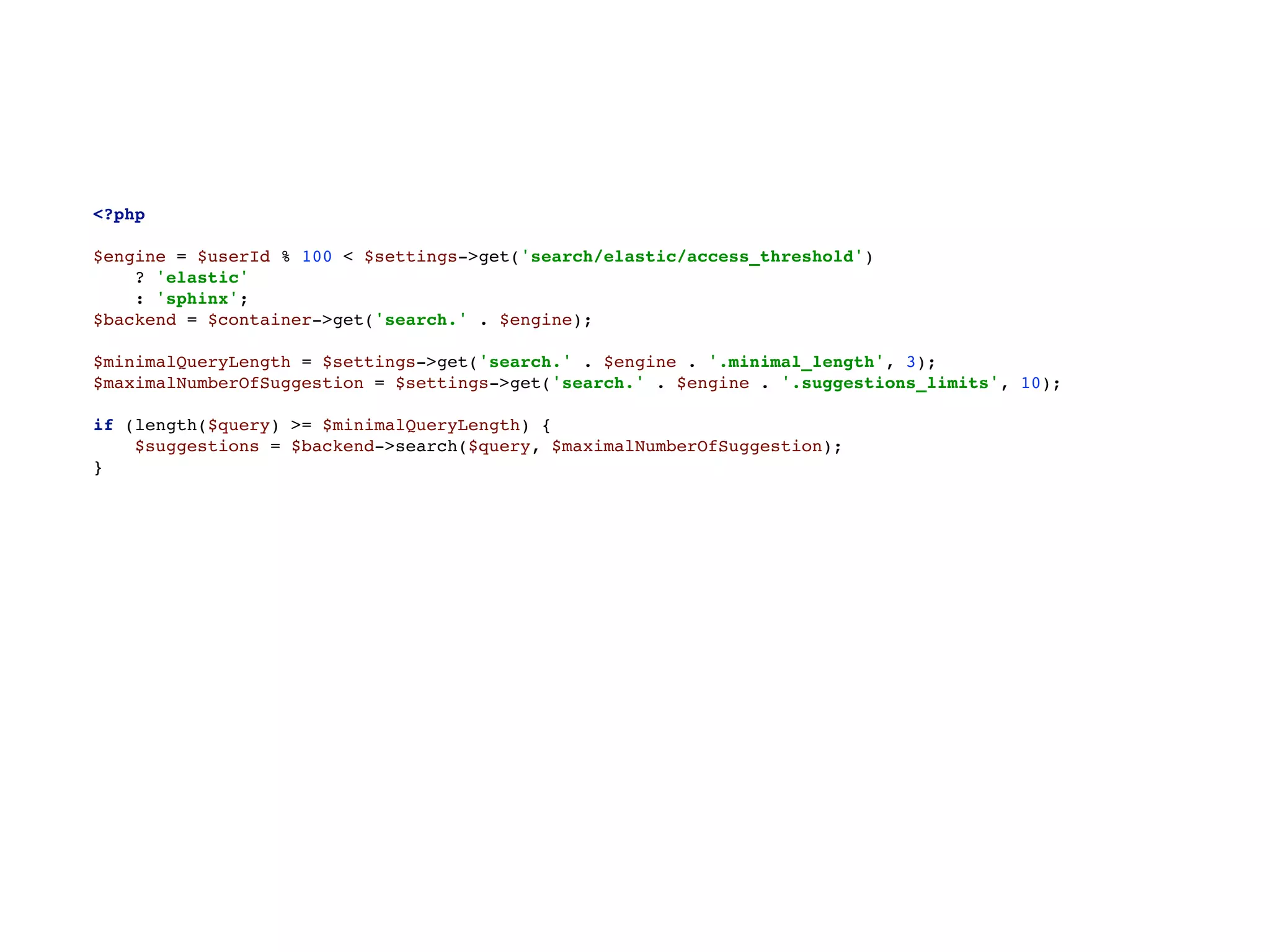
<?php


$engine = $userId % 100 < $settings->get('search/elastic/access_threshold')

? 'elastic'

: 'sphinx';

$backend = $container->get('search.' . $engine);


$minimalQueryLength = $settings->get('search.' . $engine . '.minimal_length', 3);

$maximalNumberOfSuggestion = $settings->get('search.' . $engine . '.suggestions_limits', 10);


if (length($query) >= $minimalQueryLength) {

$suggestions = $backend->search($query, $maximalNumberOfSuggestion);

}
Task #2
Add CPU/memory to the server
In the middle of the night
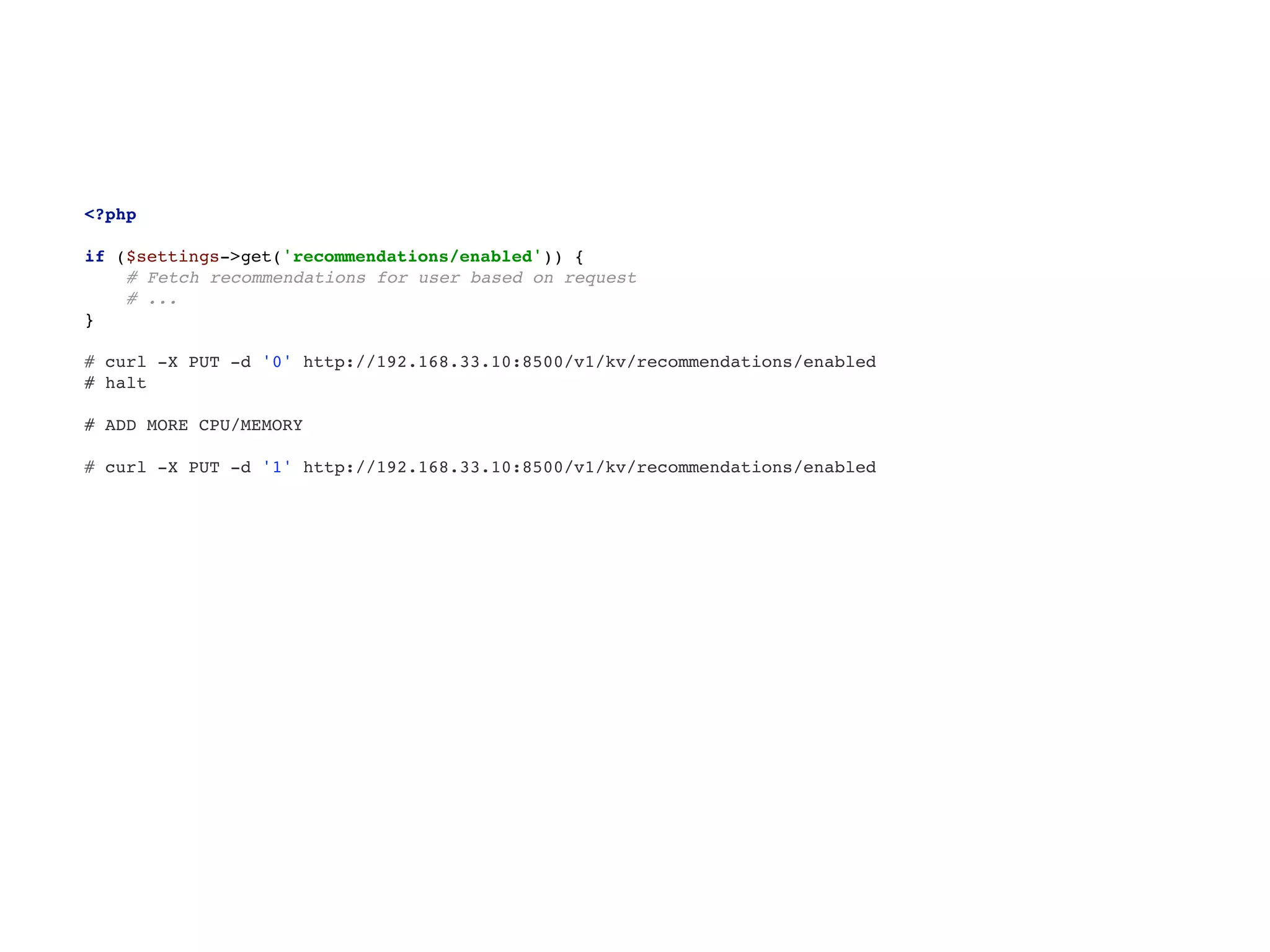
<?php


if ($settings->get('recommendations/enabled')) {

# Fetch recommendations for user based on request

# ...

}
# curl -X PUT -d '0' http://192.168.33.10:8500/v1/kv/recommendations/enabled
# halt
# ADD MORE CPU/MEMORY
# curl -X PUT -d '1' http://192.168.33.10:8500/v1/kv/recommendations/enabled
# curl -X PUT -d '{
> "Datacenter": "dc1",
> "Node": "vagrant-ubuntu-trusty-64",
> "ServiceID": "memcached"
> }' http://192.168.33.10:8500/v1/catalog/deregister
true
# curl -X PUT -d '{
> "Datacenter": "dc1",
> "Node": "vagrant-ubuntu-trusty-64",
> "Address": "192.168.33.10",
> "Service": {
> "ID": "memcached",
> "Service": "memcached",
> "Tags": [
> "cache"
> ],
> "Address": "192.168.33.10",
> "Port": 11211
> }
> }' http://192.168.33.10:8500/v1/catalog/register
true
<?php


require '../vendor/autoload.php';


$sf = new SensioLabsConsulServiceFactory(array(

'base_url' => 'http://192.168.33.10:8500',

));


$catalog = $sf->get('catalog');

$serviceDefinitions = $catalog->service('memcached')->json();


$memcached = new Memcache();


foreach ($serviceDefinitions as $serviceDefinition) {

$memcached->addserver($serviceDefinition['ServiceAddress'], $serviceDefinition['ServicePort']);

}
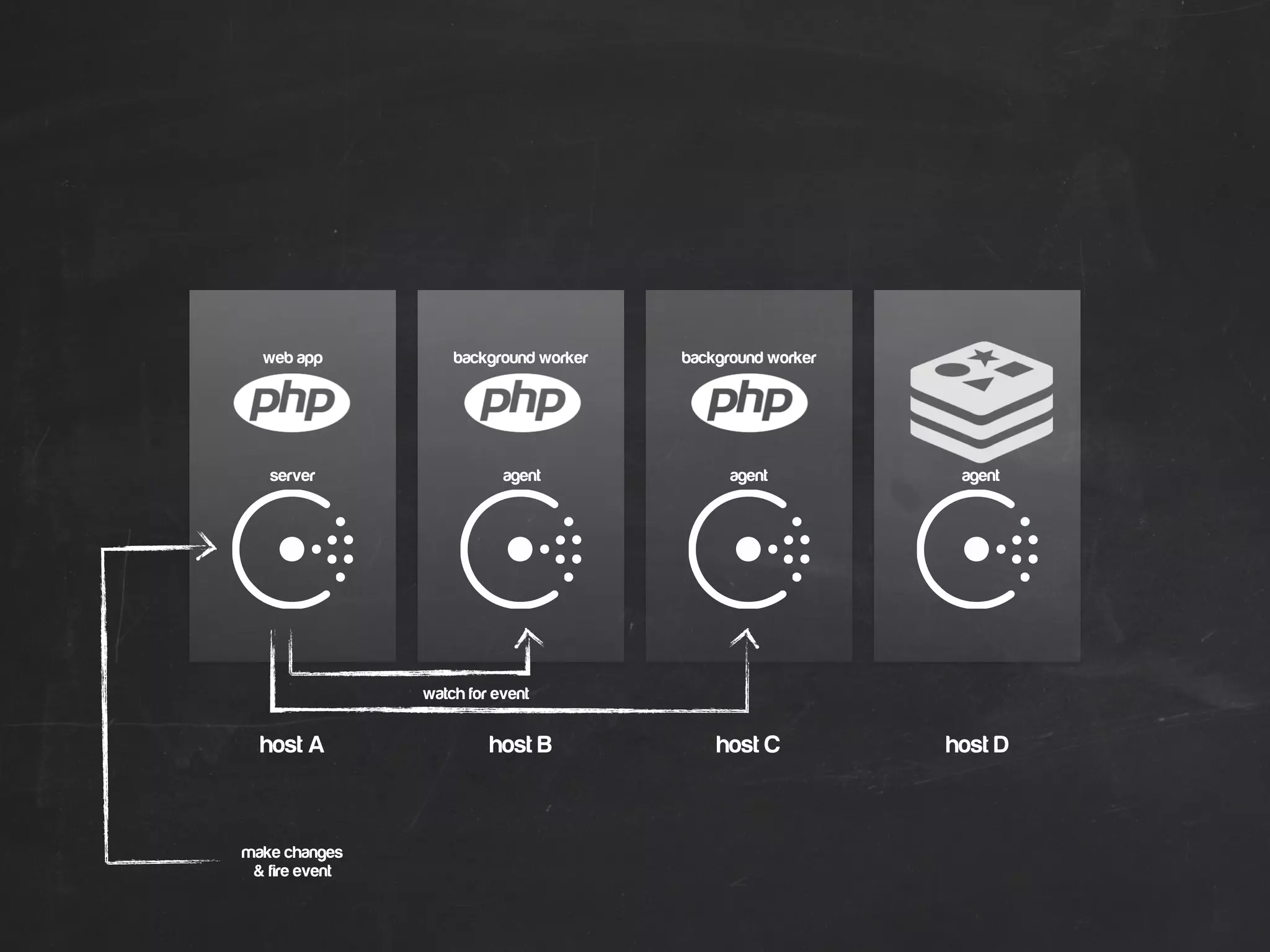
Long running background workers
Watch the Watches. React
host A host B host C host D
agentserver
web app
agent
background worker
agent
background worker
watch for event
make changes
& fire event
API methods
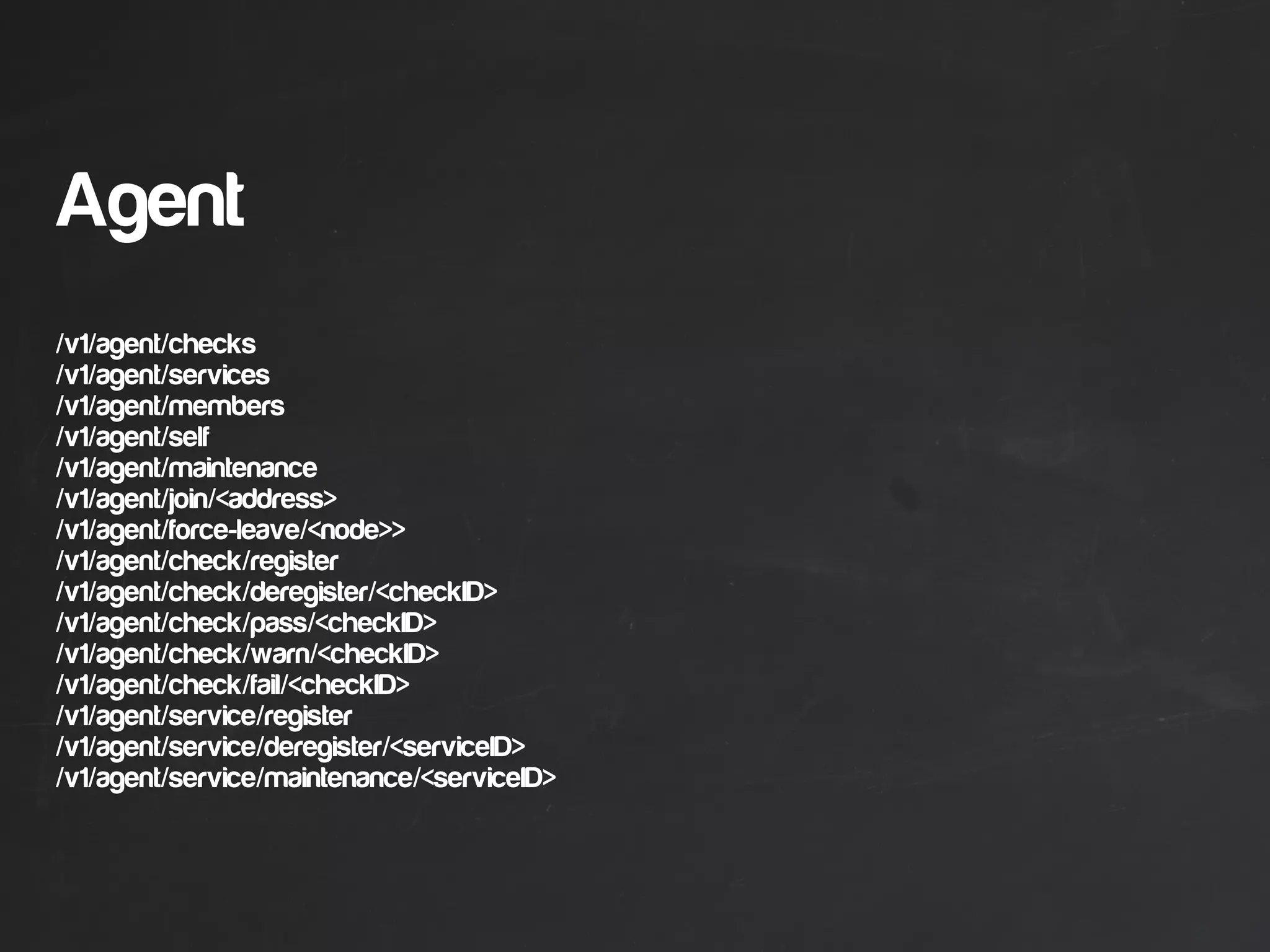
Agent
/v1/agent/checks
/v1/agent/services
/v1/agent/members
/v1/agent/self
/v1/agent/maintenance
/v1/agent/join/<address>
/v1/agent/force-leave/<node>>
/v1/agent/check/register
/v1/agent/check/deregister/<checkID>
/v1/agent/check/pass/<checkID>
/v1/agent/check/warn/<checkID>
/v1/agent/check/fail/<checkID>
/v1/agent/service/register
/v1/agent/service/deregister/<serviceID>
/v1/agent/service/maintenance/<serviceID>
Catalog
/v1/catalog/register
/v1/catalog/deregister
/v1/catalog/datacenters
/v1/catalog/nodes
/v1/catalog/services
/v1/catalog/service/<service>
/v1/catalog/node/<node>
Health Checks
/v1/health/node/<node>
/v1/health/checks/<service>
/v1/health/service/<service>
/v1/health/state/<state>
Network coordinates
/v1/coordinate/datacenters
/v1/coordinate/nodes
Key / Values
/v1/kv/<key>
Events
/v1/event/fire/<name>
/v1/event/list
ACL
/v1/agent/checks
/v1/agent/services
/v1/agent/members
/v1/agent/self
/v1/agent/maintenance
/v1/agent/join/<address>
/v1/agent/force-leave/<node>>
/v1/agent/check/register
/v1/agent/check/deregister/<checkID>
/v1/agent/check/pass/<checkID>
/v1/agent/check/warn/<checkID>
/v1/agent/check/fail/<checkID>
/v1/agent/service/register
/v1/agent/service/deregister/<serviceID>
/v1/agent/service/maintenance/<serviceID>
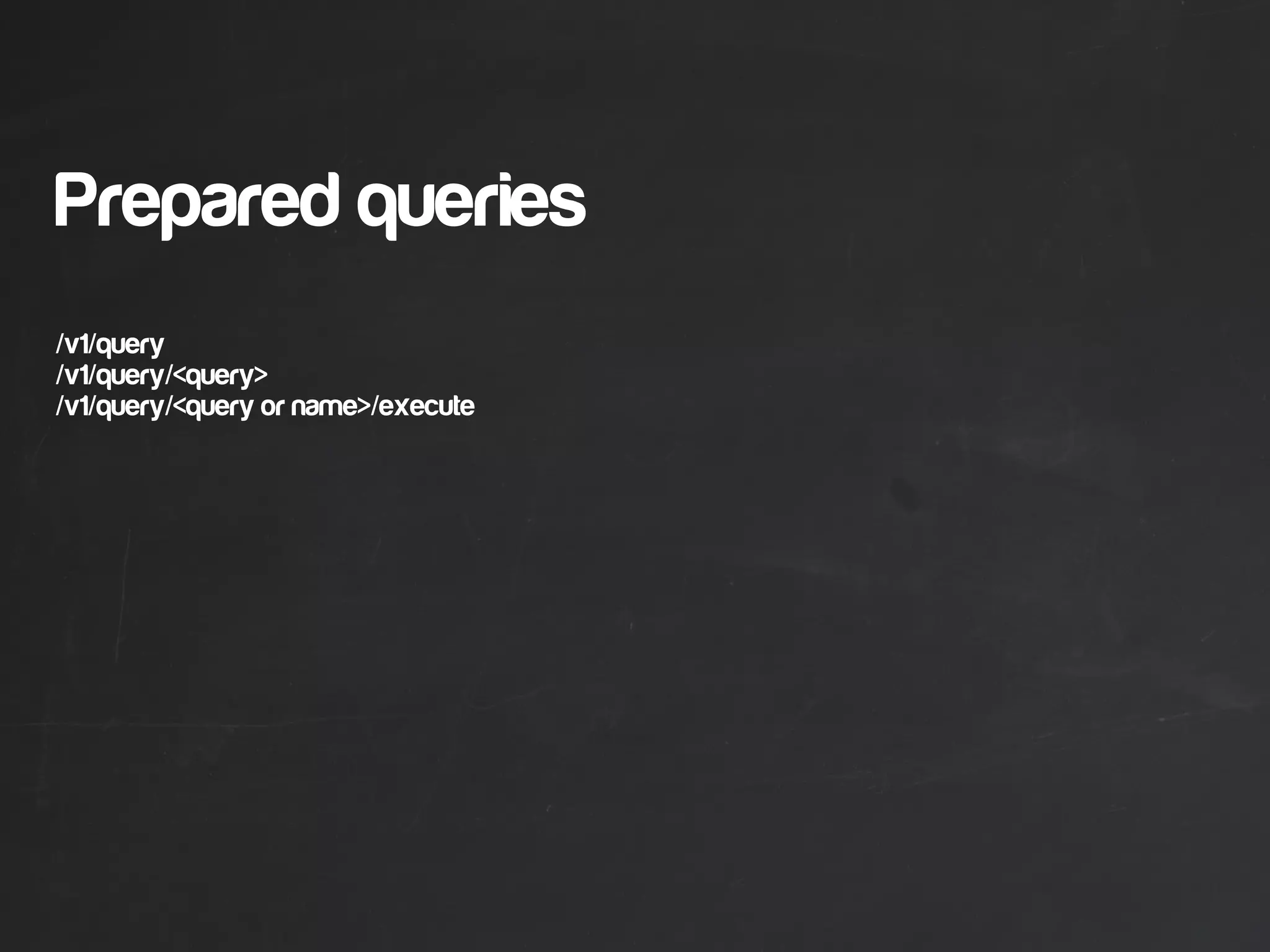
Prepared queries
/v1/query
/v1/query/<query>
/v1/query/<query or name>/execute
Sessions
/v1/session/create
/v1/session/destroy/<session>
/v1/session/info/<session>
/v1/session/node/<node>
/v1/session/list
/v1/session/renew
Server status
/v1/status/leader
/v1/status/peers
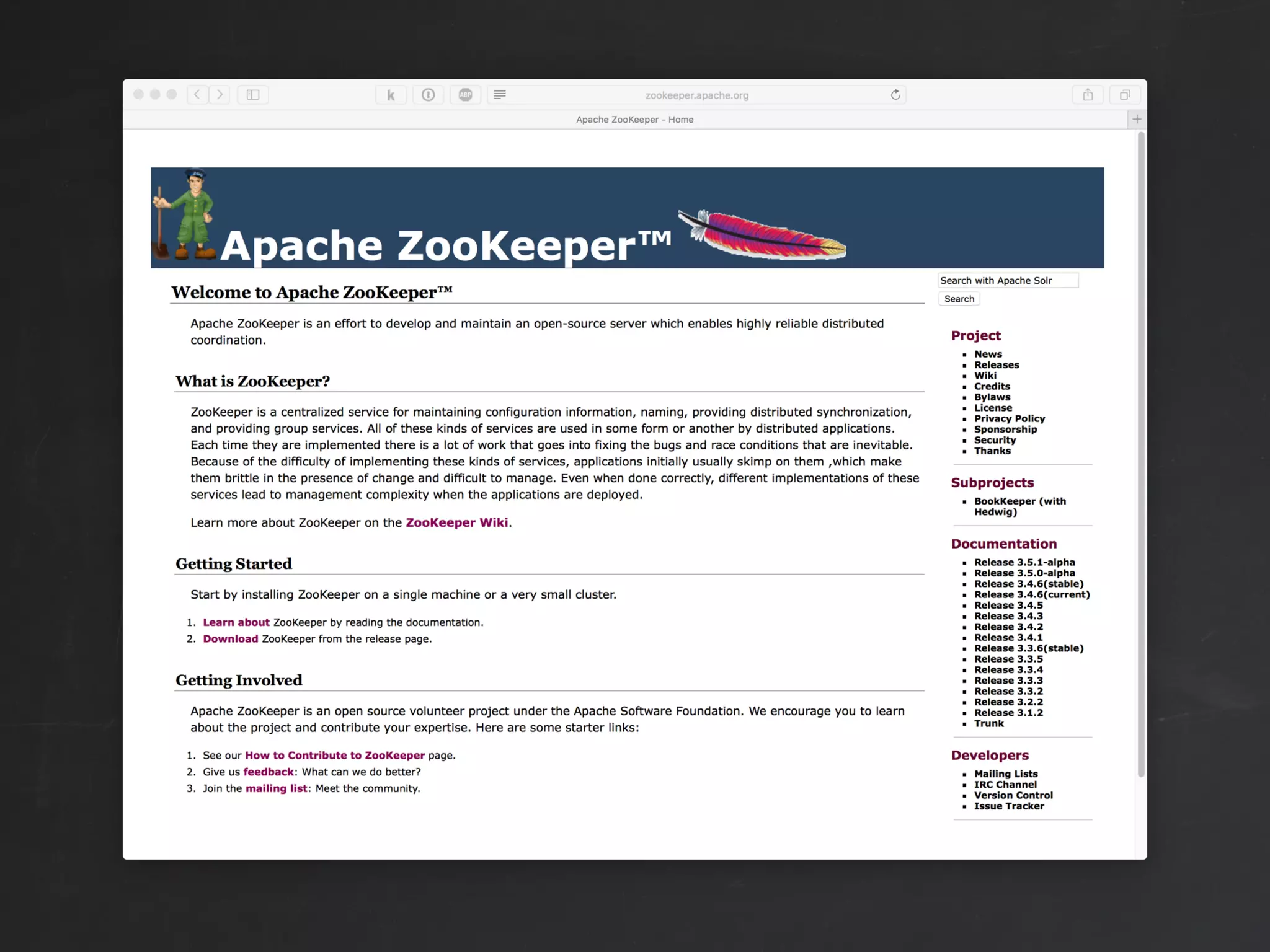
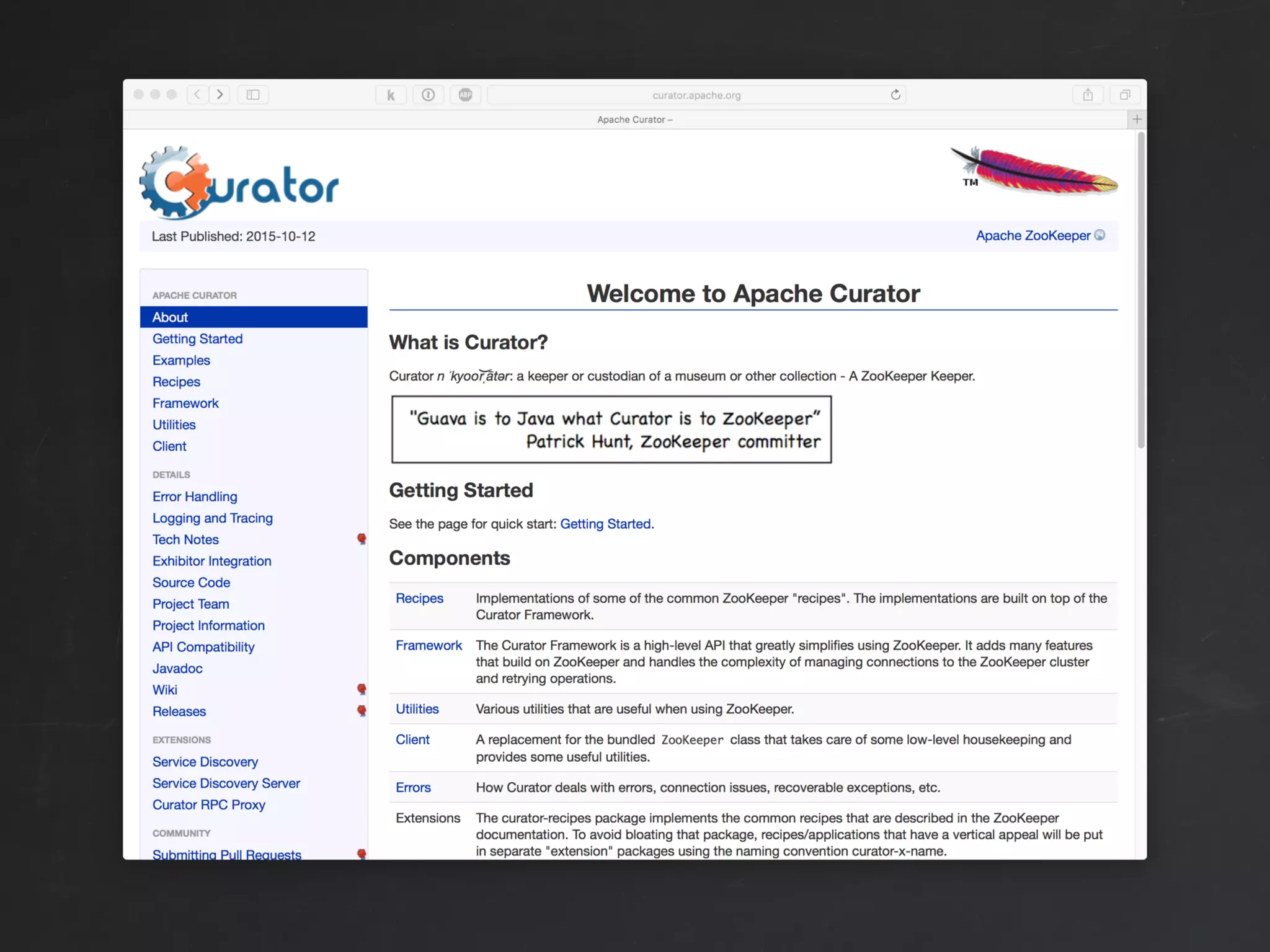
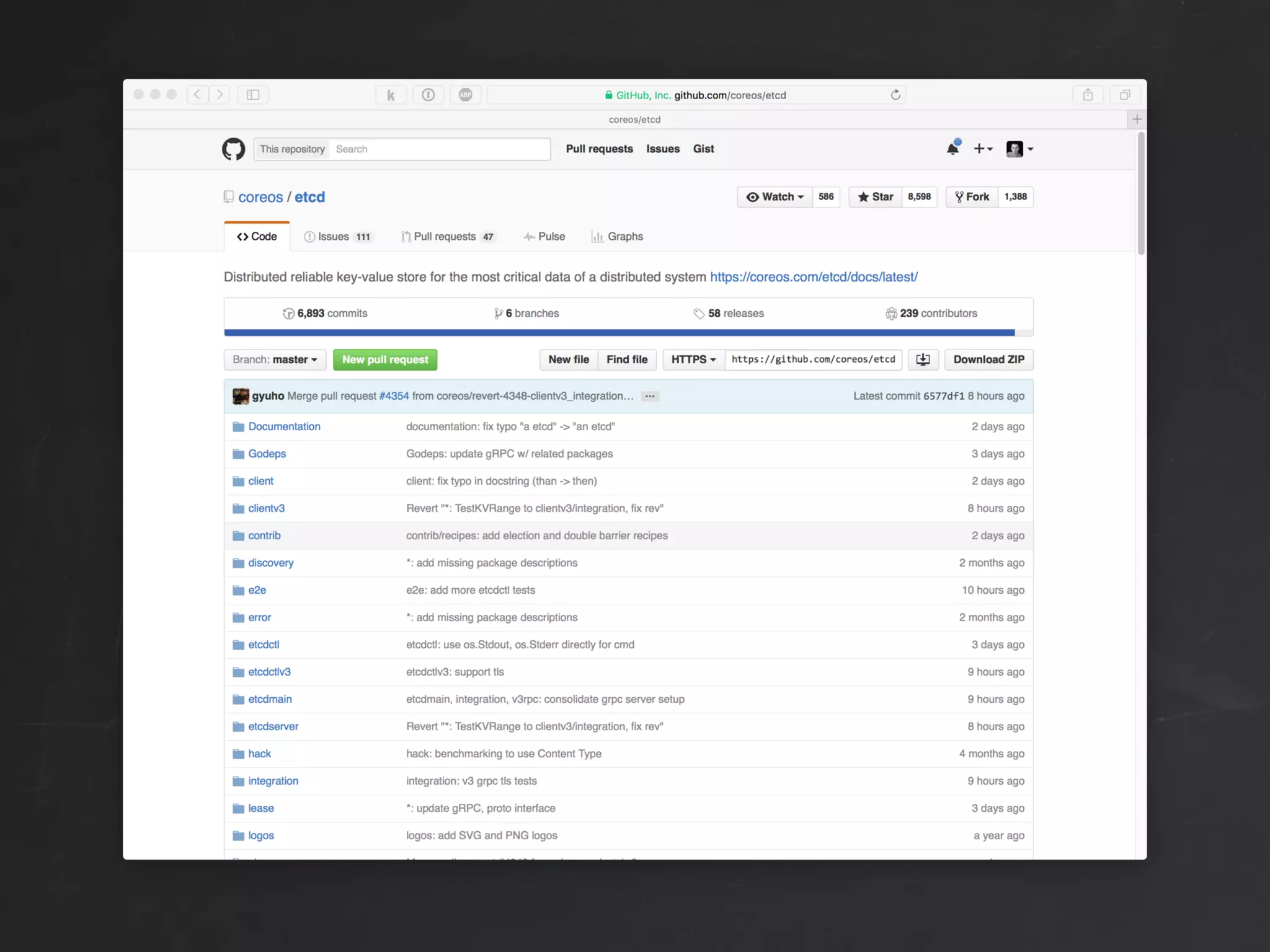
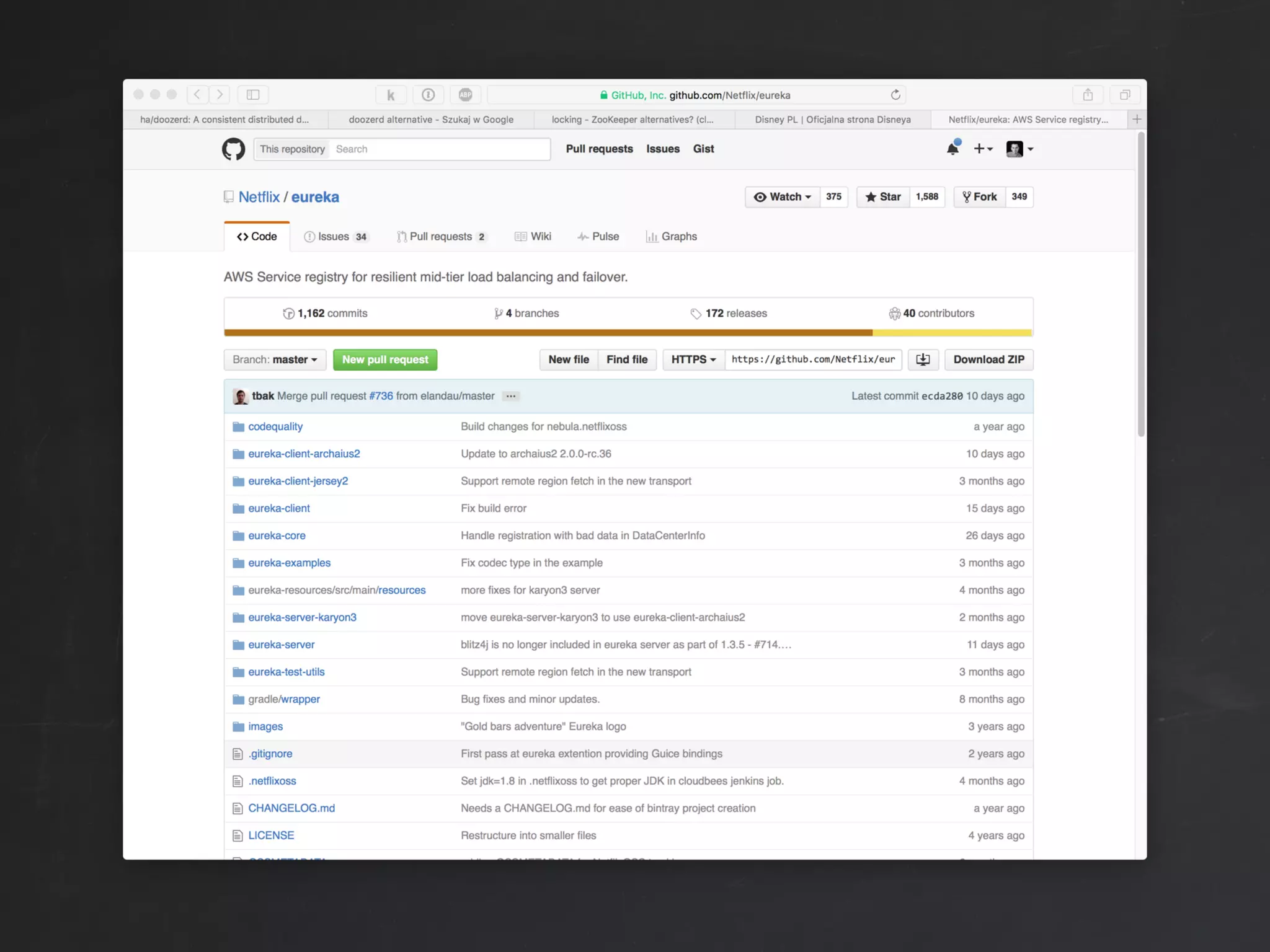
Alternative solutions
Choose one or implement your own
If you need it. Really need it
Thanks! Enjoy config management!
https://joind.in/talk/198e7
mariuszgil srcministry

Service discovery and configuration provisioning

  • 1.
    Service discovery and configurationprovisioning mariuszgil srcministry Mariusz Gil
  • 5.
    What is anapplication? Source code?
  • 6.
    Is it acomplete solution for client?
  • 9.
    How to managethe configuration?
  • 10.
  • 11.
    <?php
  
 define('DB_HOST', 'localhost'); 
 define('DB_NAME','northwind'); 
 define('DB_USER', 'root'); 
 define('DB_PASS', 'your_password'); 
  
 // This connection allows your application to be used for multi-lingual websites. 
 function _connect_to_mysql($is_utf8 = null)
 {
 $mysql_link = mysql_connect(DB_HOST, DB_USER, DB_PASS)
 or die("Could not connect to database server");
 mysql_select_db(DB_NAME, $mysql_link)
 or die("Could not select database");
  
 if (is_null($is_utf8))
 {
 /* This sets collation for the connection to utf8_general_ci 
 because it is the default collation for utf8. 
 This enables multi-lingual capability in database. 
 */
 mysql_query("SET NAMES 'utf8'");
 } 
 
 return $mysql_link; 
 }
  • 12.
    <?php
  
 // ...
  
 // **MySQL settings - You can get this info from your web host ** //
 define('DB_NAME', 'database');
  
 /** MySQL database username */
 define('DB_USER', 'username');
  
 /** MySQL database password */
 define('DB_PASSWORD', 'password');
  
 /** MySQL hostname */
 define('DB_HOST', 'localhost');
  
 /** Database Charset to use in creating database tables. */
 define('DB_CHARSET', 'utf8');
  
 /** The Database Collate type. Don't change this if in doubt. */
 define('DB_COLLATE', '');
  • 13.
    <?php
 /**
 * The baseconfiguration for WordPress
 *
 * The wp-config.php creation script uses this file during the
 * installation. You don't have to use the web site, you can
 * copy this file to "wp-config.php" and fill in the values.
 *
 * @link https://codex.wordpress.org/Editing_wp-config.php
 * @package WordPress
 */
  
 // ** MySQL settings - You can get this info from your web host ** //
 define('DB_NAME', 'database');
  
 /** MySQL database username */
 define('DB_USER', 'username');
  
 /** MySQL database password */
 define('DB_PASSWORD', 'password');
  
 /** MySQL hostname */
 define('DB_HOST', 'localhost');
  
 /** Database Charset to use in creating database tables. */
 define('DB_CHARSET', 'utf8');
  
 /** The Database Collate type. Don't change this if in doubt. */
 define('DB_COLLATE', '');
  • 14.
    bash-3.2$ ack DB_NAME   wp-includes/load.php 350:$wpdb = new wpdb( DB_USER, DB_PASSWORD, DB_NAME, DB_HOST );   wp-content/plugins/xcloner-backup-and-restore/restore/XCloner.php 580: $config_data = str_replace("define('DB_NAME', '", "define('DB_NAME', ‚".$_REQUEST[mysql_db]."'); #", $config_data)   wp-content/plugins/w3-total-cache/lib/W3/Db.php 165: parent::__construct(DB_USER, DB_PASSWORD, DB_NAME, DB_HOST);
  • 15.
    How we canimprove it?
  • 16.
    <?php
 
 use PimpleContainer;
 
 $container =new Container();
 
 $container['db'] = function() {
 $host = 'localhost';
 $dbName = 'wordpress';
 $user = 'root';
 $pass = '';
 
 return new PDO("mysql:host={$host};dbname={$dbName}", $user, $pass);
 };
  • 17.
    <?php
 
 $dice = newDiceDice();
 
 $rule = [
 //Mark the class as shared so the same instance is returned each time
 'shared' => true,
 
 //The constructor arguments that will be supplied when the instance is created
 'constructParams' => [
 'mysql:host=127.0.0.1;dbname=mydb',
 'username',
 'password',
 ],
 ];
 
 //Apply the rule to the PDO class
 $dice->addRule('PDO', $rule);
 
 //Now any time PDO is requested from Dice, the same instance will be returned
 //And will have been constructed with the arguments supplied in 'constructParams'
 $pdo = $dice->create('PDO');
  • 18.
    <?php
 
 $builder = newDIContainerBuilder();
 
 $builder->addDefinitions([
 'foo' => 'hello ',
 'bar' => 'world',
 ]);
 $builder->addDefinitions([
 'foo' => DIdecorate(function ($previous, InteropContainerContainerInterface $container) {
 return $previous . $container->get('bar');
 }),
 ]);
 $builder->addDefinitions([
 'values' => [
 'value 1',
 'value 2',
 ],
 ]);
 $builder->addDefinitions([
 // with the same name
 'stdClass' => DIobject('stdClass'),
 // with name inferred
 __NAMESPACE__ . 'ObjectDefinitionClass1' => DIobject(),
 // with a different name
 'object' => DIobject(__NAMESPACE__ . 'ObjectDefinitionClass1'),
 ]);
 
 $container = $builder->build();
  • 19.
    # Swiftmailer Configuration swiftmailer: transport:"%mailer_transport%" host: "%mailer_host%" username: "%mailer_user%" password: "%mailer_password%" spool: { type: memory } # KNP Menu configuration knp_menu: twig: template: knp_menu.html.twig templating: false default_renderer: twig # KNP Paginator configuration knp_paginator: page_range: 5 default_options: page_name: page # LiipImagine configuration liip_imagine: filter_sets: square_200: quality: 100 filters: thumbnail: { size: [200, 200], mode: outbound } # Configuration parameters parameters: database_host: 127.0.0.1 database_port: null database_name: database database_user: root database_password: null mailer_transport: smtp mailer_host: 127.0.0.1 mailer_user: null mailer_password: null secret: 092402938a039b72278b9b05da3f4d4
  • 22.
    Is captcha featureenabled? Is remember-be feature enabled? Is remind-me feature enabled? Is 2-factor authentication enabled? Is brute-force protection enabled? How many attempts per login allowed? What is delay between failed logins? Is hide-errors protection enabled? … Is login feature enabled at all?
  • 23.
    What is databasehost? What is database port? What is database user? What is database password? What is database name? What is database encoding? Is database cache enabled? What is cache host? What is cache port? Where the sessions are stored?
  • 24.
    Standard feature Single form Manyconfiguration problems
  • 25.
    How to updateconfigs?
  • 26.
    mysql> DESC wp_options; +--------------+---------------------+------+-----+---------+----------------+ |Field | Type | Null | Key | Default | Extra | +--------------+---------------------+------+-----+---------+----------------+ | option_id | bigint(20) unsigned | NO | PRI | NULL | auto_increment | | option_name | varchar(64) | NO | UNI | | | | option_value | longtext | NO | | NULL | | | autoload | varchar(20) | NO | | yes | | +--------------+---------------------+------+-----+---------+----------------+ 4 rows in set (0.00 sec) mysql> SELECT * FROM wp_options WHERE option_name LIKE '%enabled%' LIMIT 1; +-----------+----------------------+--------------+----------+ | option_id | option_name | option_value | autoload | +-----------+----------------------+--------------+----------+ | 87 | link_manager_enabled | 0 | yes | +-----------+----------------------+--------------+----------+ 1 row in set (0.00 sec)
  • 27.
    You need todeploy application to release changes in configuration
  • 28.
  • 29.
  • 30.
    Another approach tomaintain configs
  • 31.
    Decouple your applicationfrom hardcoded configuration details
  • 32.
  • 33.
  • 35.
  • 36.
    host A hostB host C host D 192.168.100.56 192.168.100.120
  • 37.
    host A hostB host C host D 192.168.100.56 192.168.100.120
  • 38.
    host A hostB host C host D mysql.service.consul. redis.service.consul. agentserver agent agent
  • 39.
    host A hostB host C host D mysql.service.consul. redis.service.consul. server agent agent agent
  • 40.
  • 41.
    # curl -XPUT -d '{ "service": { "name": "memcached", "tags": ["cache"], "port": 11211, "check": { "name": "memcached status", "script": "echo stats | nc 127.0.0.1 11211", "interval": "5s" } } }' http://192.168.33.10:8500/v1/catalog/service/memcached # curl -X GET http://192.168.33.10:8500/v1/catalog/service/memcached [{„Node":"vagrant-ubuntu- trusty-64","Address":"192.168.33.10","ServiceID":"memcached","ServiceName":"memcached","ServiceTags ":["cache"],"ServiceAddress":"","ServicePort":11211,"ServiceEnableTagOverride":false,"CreateIndex": 19,"ModifyIndex":22}]
  • 42.
    <?php require '../vendor/autoload.php'; $sf =new SensioLabsConsulServiceFactory(array( 'base_url' => 'http://192.168.33.10:8500', )); $catalog = $sf->get('catalog'); $response = $catalog->service('memcached')->json(); # Result data array ( 0 => array ( 'Node' => 'vagrant-ubuntu-trusty-64', 'Address' => '192.168.33.10', 'ServiceID' => 'memcached', 'ServiceName' => 'memcached', 'ServiceTags' => array ( 0 => 'cache', ), 'ServiceAddress' => '', 'ServicePort' => 11211, 'ServiceEnableTagOverride' => false, 'CreateIndex' => 19, 'ModifyIndex' => 60, ), )
  • 43.
    DNS interface forservices and tags
  • 44.
  • 45.
  • 46.
    # dig @192.168.33.10-p 8600 memcached.service.consul ; <<>> DiG 9.9.5-3ubuntu0.5-Ubuntu <<>> @192.168.33.10 -p 8600 memcached.service.consul ; (1 server found) ;; global options: +cmd ;; Got answer: ;; ->>HEADER<<- opcode: QUERY, status: NOERROR, id: 58136 ;; flags: qr aa rd; QUERY: 1, ANSWER: 1, AUTHORITY: 0, ADDITIONAL: 0 ;; WARNING: recursion requested but not available ;; QUESTION SECTION: ;memcached.service.consul. IN A ;; ANSWER SECTION: memcached.service.consul. 0 IN A 192.168.33.10 ;; Query time: 4 msec ;; SERVER: 192.168.33.10#8600(192.168.33.10) ;; WHEN: Fri Jan 29 16:40:37 UTC 2016 ;; MSG SIZE rcvd: 82
  • 47.
    # dig @192.168.33.10-p 8600 memcached.service.consul SRV ; <<>> DiG 9.9.5-3ubuntu0.5-Ubuntu <<>> @192.168.33.10 -p 8600 memcached.service.consul SRV ; (1 server found) ;; global options: +cmd ;; Got answer: ;; ->>HEADER<<- opcode: QUERY, status: NOERROR, id: 10299 ;; flags: qr aa rd; QUERY: 1, ANSWER: 1, AUTHORITY: 0, ADDITIONAL: 1 ;; WARNING: recursion requested but not available ;; QUESTION SECTION: ;memcached.service.consul. IN SRV ;; ANSWER SECTION: memcached.service.consul. 0 IN SRV 1 1 11211 vagrant-ubuntu-trusty-64.node.dc1.consul. ;; ADDITIONAL SECTION: vagrant-ubuntu-trusty-64.node.dc1.consul. 0 IN A 192.168.33.10 ;; Query time: 4 msec ;; SERVER: 192.168.33.10#8600(192.168.33.10) ;; WHEN: Fri Jan 29 16:41:06 UTC 2016 ;; MSG SIZE rcvd: 182
  • 48.
  • 49.
  • 50.
    # curl -XPUT -d '{ "Datacenter": "dc1", "Node": "vagrant-ubuntu-trusty-64", "Address": "192.168.33.10", "Service": { "ID": "fries-1", "Service": "fries", "Tags": [ "fries" ], "Address": "192.168.33.10", "Port": 1111 } }' http://192.168.33.10:8500/v1/catalog/register true # curl -X PUT -d '{ "Datacenter": "dc1", "Node": "vagrant-ubuntu-trusty-64", "Address": "192.168.33.10", "Service": { "ID": "fries-2", "Service": "fries", "Tags": [ "fries" ], "Address": "192.168.33.10", "Port": 2222 } }' http://192.168.33.10:8500/v1/catalog/register true
  • 51.
    # dig @192.168.33.10-p 8600 fries.service.consul SRV ; <<>> DiG 9.9.5-3ubuntu0.5-Ubuntu <<>> @192.168.33.10 -p 8600 fries.service.consul SRV ; (1 server found) ;; global options: +cmd ;; Got answer: ;; ->>HEADER<<- opcode: QUERY, status: NOERROR, id: 30707 ;; flags: qr aa rd; QUERY: 1, ANSWER: 2, AUTHORITY: 0, ADDITIONAL: 2 ;; WARNING: recursion requested but not available ;; QUESTION SECTION: ;fries.service.consul. IN SRV ;; ANSWER SECTION: fries.service.consul. 0 IN SRV 1 1 1111 vagrant-ubuntu-trusty-64.node.dc1.consul. fries.service.consul. 0 IN SRV 1 1 2222 vagrant-ubuntu-trusty-64.node.dc1.consul. ;; ADDITIONAL SECTION: vagrant-ubuntu-trusty-64.node.dc1.consul. 0 IN A 192.168.33.10 vagrant-ubuntu-trusty-64.node.dc1.consul. 0 IN A 192.168.33.10 ;; Query time: 4 msec ;; SERVER: 192.168.33.10#8600(192.168.33.10) ;; WHEN: Fri Jan 29 23:21:22 UTC 2016 ;; MSG SIZE rcvd: 310
  • 53.
  • 54.
    # curl -XGET http://192.168.33.10:8500/v1/kv/foo [{"LockIndex":0,"Key":"foo","Flags":128,"Value":"YmFy","CreateIndex":123,"ModifyIndex":130}] # curl -X PUT -d 'bar' http://192.168.33.10:8500/v1/kv/foo true # curl -X GET http://192.168.33.10:8500/v1/kv/foo [{"LockIndex":0,"Key":"foo","Flags":0,"Value":"YmFy","CreateIndex":123,"ModifyIndex":123}] # curl -X PUT -d 'bar' http://192.168.33.10:8500/v1/kv/foo?flags=128 true
  • 55.
    <?php
 
 require '../vendor/autoload.php';
 
 $sf =new SensioLabsConsulServiceFactory(array('base_url' => 'http://192.168.33.10:8500'));
 
 $kv = $sf->get('kv');
 
 $kv->put('foo', 'bar' . time());
 
 $response = $kv->get('foo')->json();
 
 $kv->delete('foo');
 
 // Result data
 array (
 0 =>
 array (
 'LockIndex' => 0,
 'Key' => 'foo',
 'Flags' => 0,
 'Value' => 'YmFyMTQ1NDA4NTQ3MA==',
 'CreateIndex' => 123,
 'ModifyIndex' => 147,
 ),
 )
  • 56.
  • 57.
    <?php
 
 require '../vendor/autoload.php';
 
 $sf =new SensioLabsConsulServiceFactory(array('base_url' => 'http://192.168.33.10:8500'));
 
 $session = $sf->get('session');
 $kv = $sf->get('kv');
 
 // Start a session
 $sessionId = $session->create()->json()['ID'];
 
 // Lock a key / value with the current session
 $lockAcquired = $kv->put('session/a-lock', 'a value', ['acquire' => $sessionId])->json();
 
 if (false === $lockAcquired) {
 $session->destroy($sessionId);
 
 echo "The lock is already acquire by another node.n";
 exit(1);
 }
 
 # YOUR CRITICAL SECTION CODE HERE...
 
 $kv->delete('session/a-lock');
 $session->destroy($sessionId);
  • 58.
    Useful to avoiddogpile effect
  • 59.
    Even more usefulwith leader election
  • 60.
  • 63.
    Task #1 Replace onesearch engine to another Without downtime
  • 64.
    <?php
 
 $backend = $userId% 100 < $settings->get('search/elastic/access_threshold', 0)
 ? $container->get('search.elastic')
 : $container->get('search.sphinx');
 
 $suggestions = $backend->search($query); # curl -X PUT -d '5' http://192.168.33.10:8500/v1/kv/search/elastic/threshold # curl -X PUT -d '10' http://192.168.33.10:8500/v1/kv/search/elastic/threshold # curl -X PUT -d '15' http://192.168.33.10:8500/v1/kv/search/elastic/threshold # curl -X PUT -d '25' http://192.168.33.10:8500/v1/kv/search/elastic/threshold # curl -X PUT -d '50' http://192.168.33.10:8500/v1/kv/search/elastic/threshold # curl -X PUT -d '75' http://192.168.33.10:8500/v1/kv/search/elastic/threshold # curl -X PUT -d '50' http://192.168.33.10:8500/v1/kv/search/elastic/threshold
  • 65.
    <?php
 
 $engine = $userId% 100 < $settings->get('search/elastic/access_threshold')
 ? 'elastic'
 : 'sphinx';
 $backend = $container->get('search.' . $engine);
 
 $minimalQueryLength = $settings->get('search.' . $engine . '.minimal_length', 3);
 $maximalNumberOfSuggestion = $settings->get('search.' . $engine . '.suggestions_limits', 10);
 
 if (length($query) >= $minimalQueryLength) {
 $suggestions = $backend->search($query, $maximalNumberOfSuggestion);
 }
  • 66.
    Task #2 Add CPU/memoryto the server In the middle of the night
  • 67.
    <?php
 
 if ($settings->get('recommendations/enabled')) {
 #Fetch recommendations for user based on request
 # ...
 } # curl -X PUT -d '0' http://192.168.33.10:8500/v1/kv/recommendations/enabled # halt # ADD MORE CPU/MEMORY # curl -X PUT -d '1' http://192.168.33.10:8500/v1/kv/recommendations/enabled
  • 68.
    # curl -XPUT -d '{ > "Datacenter": "dc1", > "Node": "vagrant-ubuntu-trusty-64", > "ServiceID": "memcached" > }' http://192.168.33.10:8500/v1/catalog/deregister true # curl -X PUT -d '{ > "Datacenter": "dc1", > "Node": "vagrant-ubuntu-trusty-64", > "Address": "192.168.33.10", > "Service": { > "ID": "memcached", > "Service": "memcached", > "Tags": [ > "cache" > ], > "Address": "192.168.33.10", > "Port": 11211 > } > }' http://192.168.33.10:8500/v1/catalog/register true
  • 69.
    <?php
 
 require '../vendor/autoload.php';
 
 $sf =new SensioLabsConsulServiceFactory(array(
 'base_url' => 'http://192.168.33.10:8500',
 ));
 
 $catalog = $sf->get('catalog');
 $serviceDefinitions = $catalog->service('memcached')->json();
 
 $memcached = new Memcache();
 
 foreach ($serviceDefinitions as $serviceDefinition) {
 $memcached->addserver($serviceDefinition['ServiceAddress'], $serviceDefinition['ServicePort']);
 }
  • 70.
  • 73.
  • 74.
    host A hostB host C host D agentserver web app agent background worker agent background worker watch for event make changes & fire event
  • 75.
  • 76.
  • 77.
  • 78.
  • 79.
  • 80.
  • 81.
  • 82.
  • 83.
  • 84.
  • 85.
  • 86.
  • 91.
    Choose one orimplement your own If you need it. Really need it
  • 92.
    Thanks! Enjoy configmanagement! https://joind.in/talk/198e7 mariuszgil srcministry