separators
separators
with non-hereditary properties
separators
with non-hereditary properties

 Pinar Heggernes, Pim van’t Hof, Dániel Marx, and Yngve Villanger
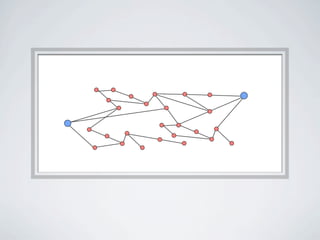
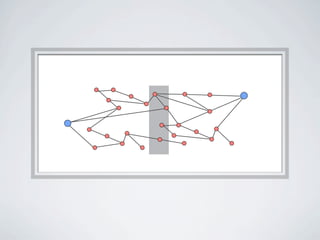
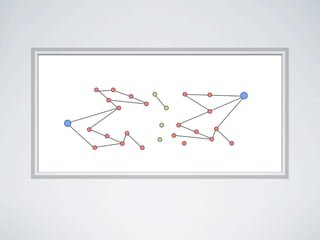
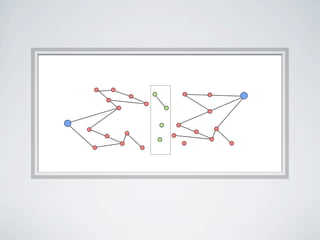
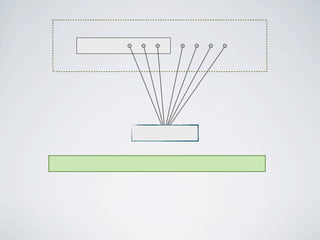
OJ`çååÉÅíÉÇ=pÉé~ê~íçêë
     The Treewidth Reduction Theorem
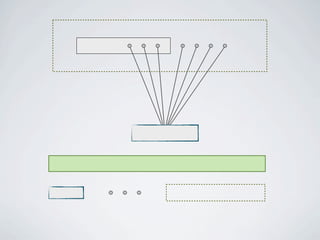
OJ`çååÉÅíÉÇ=pÉé~ê~íçêë
     The Treewidth Reduction Theorem

OJ`çååÉÅíÉÇ=píÉáåÉê=qêÉÉë
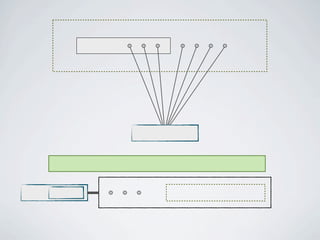
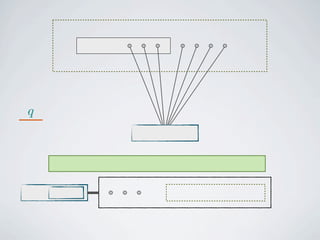
OJ`çååÉÅíÉÇ=pÉé~ê~íçêë
     The Treewidth Reduction Theorem

OJ`çååÉÅíÉÇ=píÉáåÉê=qêÉÉë
      Some Structural Observations
PRELIMINARIES
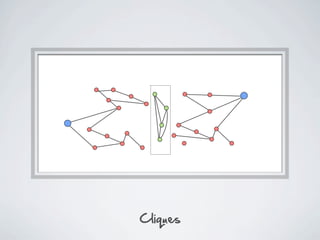
Cliques
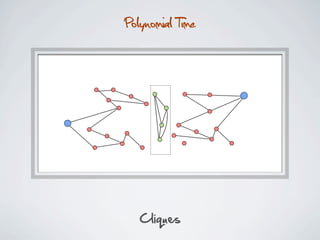
Polynomial Time


   Cliques
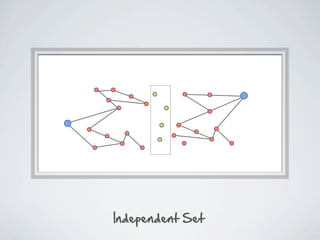
Independent  Set
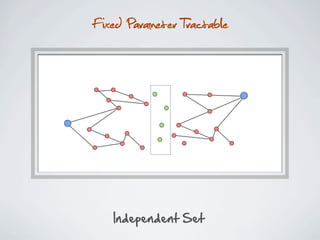
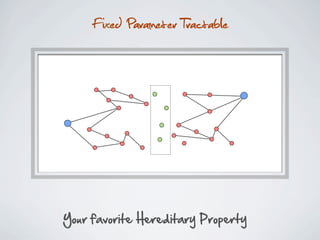
Fixed Parameter Tractable


   Independent  Set
Fixed Parameter Tractable


Your  favorite  Hereditary  Property
Fixed Parameter Tractable


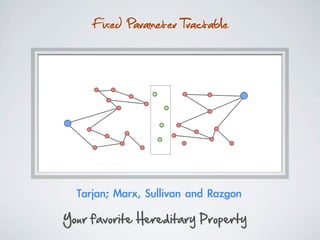
  Tarjan;	 Marx,	 Sullivan	 and	 Razgon
Your  favorite  Hereditary  Property
Tarjan;	 Marx,	 Sullivan	 and	 Razgon
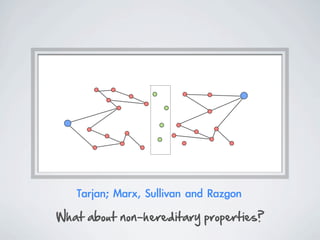
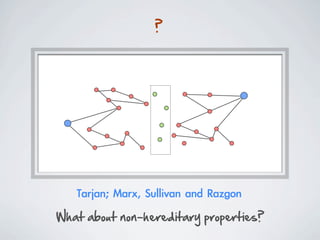
What  about  non-­hereditary  properties?
?


    Tarjan;	 Marx,	 Sullivan	 and	 Razgon
What  about  non-­hereditary  properties?
Connected Separators
2- Connected Separators
c - Connected Separators

 0- Regular Separators
c - Connected Separators

 c -Regular Separators
c - Connected Separators

 c -Regular Separators

1-Diameter Separators
c - Connected Separators

 c -Regular Separators

c -Diameter Separators
2-CONNECTED SEPARATORS
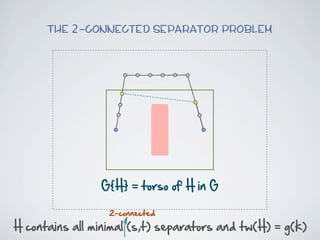
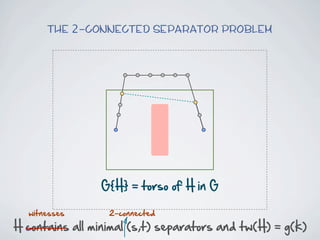
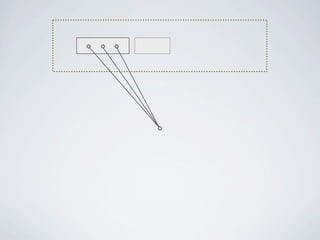
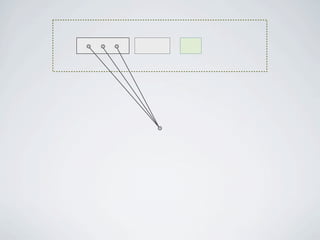
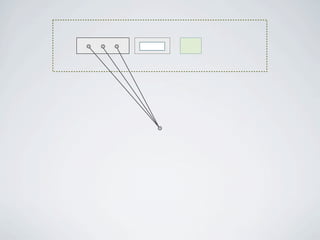
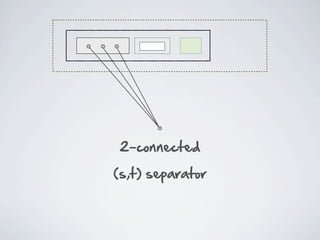
The 2-connected Separator Problem


 A  (s,t)  separator  of  size  at  most  k
that  induces  a  2-­connected  subgraph.
The 2-connected Separator Problem


“Easy”  on  graphs  of  small  treewidth.
   (Due  to  MSO  expressibility.)
The 2-connected Separator Problem


“Easy”  on  graphs  of  small  treewidth.
   (Due  to  MSO  expressibility.)


           General  graphs


  Equivalent  instances  with  small  
              treewidth
The 2-connected Separator Problem


     The  Treewidth  Reduction  
               Theorem


          General  graphs


  Equivalent  instances  with  small  
              treewidth
The 2-connected Separator Problem


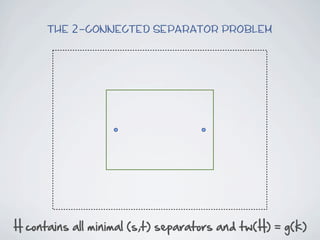
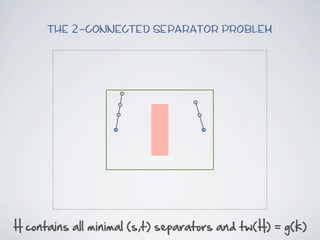
H  contains  all  minimal  (s,t)  separators  and  tw(H)  =  g(k)
The 2-connected Separator Problem


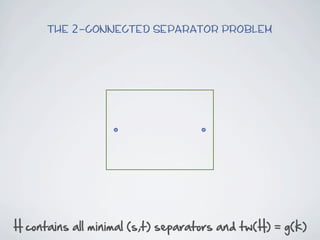
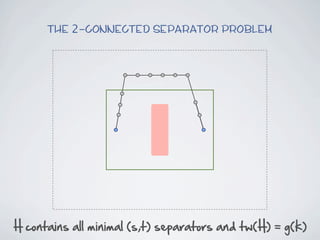
H  contains  all  minimal  (s,t)  separators  and  tw(H)  =  g(k)
The 2-connected Separator Problem


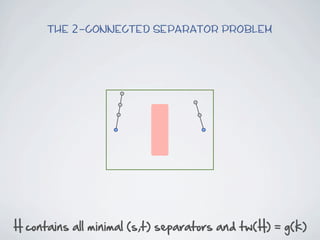
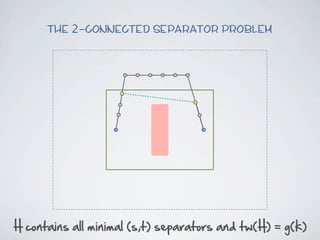
H  contains  all  minimal  (s,t)  separators  and  tw(H)  =  g(k)
The 2-connected Separator Problem


H  contains  all  minimal  (s,t)  separators  and  tw(H)  =  g(k)
The 2-connected Separator Problem


H  contains  all  minimal  (s,t)  separators  and  tw(H)  =  g(k)
The 2-connected Separator Problem


H  contains  all  minimal  (s,t)  separators  and  tw(H)  =  g(k)
The 2-connected Separator Problem


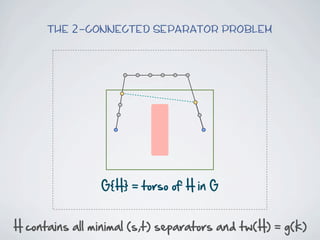
                   G{H}  =  torso  of  H  in  G


H  contains  all  minimal  (s,t)  separators  and  tw(H)  =  g(k)
The 2-connected Separator Problem


                   G{H}  =  torso  of  H  in  G

                     2-­connected
H  contains  all  minimal  (s,t)  separators  and  tw(H)  =  g(k)
The 2-connected Separator Problem


                   G{H}  =  torso  of  H  in  G

   witnesses         2-­connected
H  contains  all  minimal  (s,t)  separators  and  tw(H)  =  g(k)
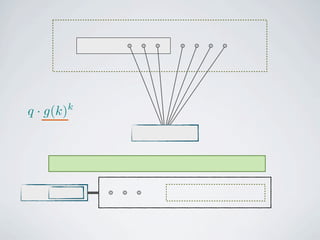
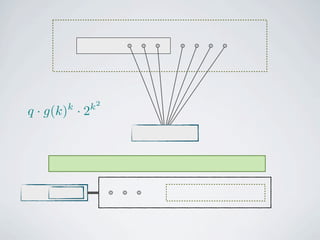
k   k2
q · g(k) · 2
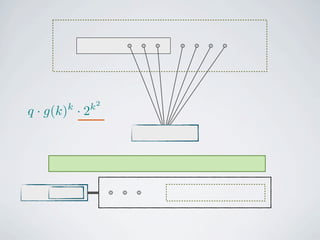
k   k2
q · g(k) · 2
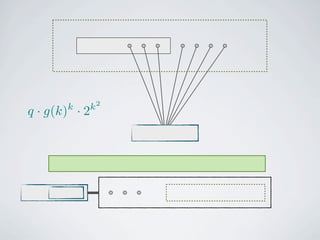
k   k2
q · g(k) · 2
k   k2
q · g(k) · 2
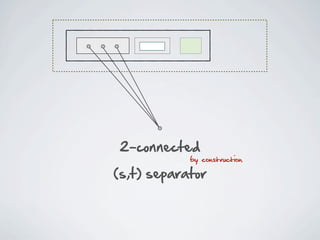
2-­connected

(s,t)  separator
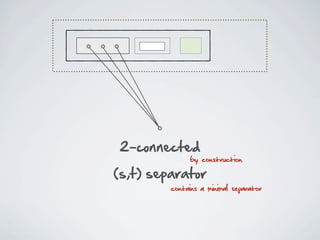
2-­connected
             by construction
(s,t)  separator
2-­connected
                by construction
(s,t)  separator
          contains a minimal separator
`


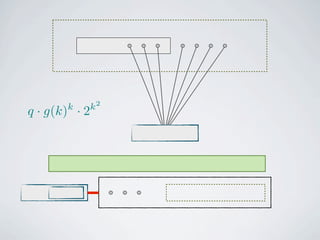
       k   k2
q · g(k) · 2
`


       k   k2
q · g(k) · 2
2-CONNECTED STEINER TREE
The 2-connected Steiner Tree Problem

     Some structural Discoveries

           An Algorithm
The 2-connected Steiner Tree Problem


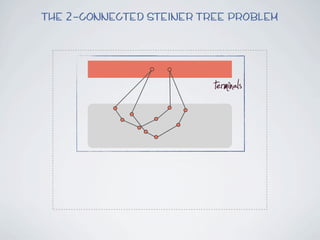
                          terminals
The 2-connected Steiner Tree Problem


                          terminals
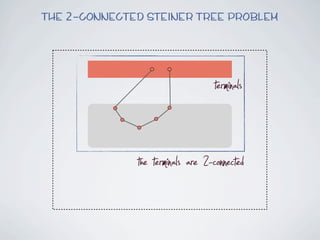
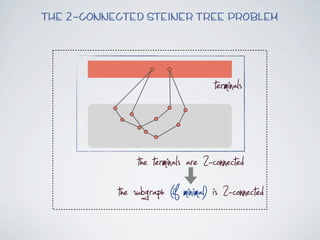
The 2-connected Steiner Tree Problem


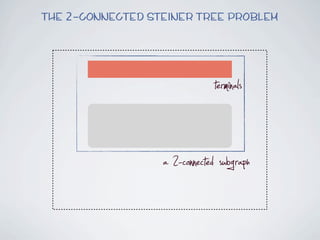
                               terminals

                  a 2-connected subgraph
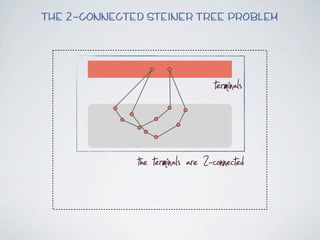
The 2-connected Steiner Tree Problem


                                   terminals

              the terminals are 2-connected
The 2-connected Steiner Tree Problem


                                   terminals

              the terminals are 2-connected
The 2-connected Steiner Tree Problem


                                   terminals

              the terminals are 2-connected
The 2-connected Steiner Tree Problem


                                   terminals

              the terminals are 2-connected
The 2-connected Steiner Tree Problem


                                     terminals

                the terminals are 2-connected
           the subgraph (if minimal) is 2-connected
The 2-connected Steiner Tree Problem


                          terminals
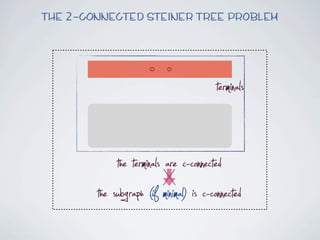
The 2-connected Steiner Tree Problem


                                         terminals

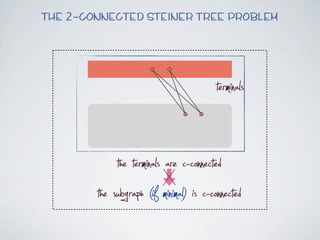
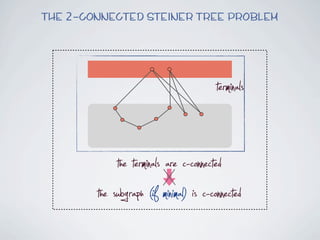
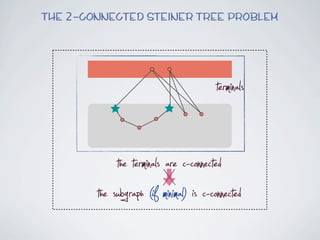
             the terminals are c-connected
        the subgraph (if minimal) is c-connected
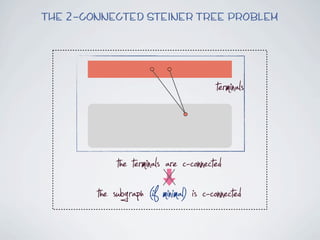
The 2-connected Steiner Tree Problem


                                         terminals

             the terminals are c-connected
        the subgraph (if minimal) is c-connected
The 2-connected Steiner Tree Problem


                                         terminals

             the terminals are c-connected
        the subgraph (if minimal) is c-connected
The 2-connected Steiner Tree Problem


                                         terminals

             the terminals are c-connected
        the subgraph (if minimal) is c-connected
The 2-connected Steiner Tree Problem


                                         terminals

             the terminals are c-connected
        the subgraph (if minimal) is c-connected
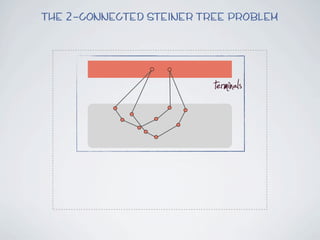
The 2-connected Steiner Tree Problem


                          terminals
The 2-connected Steiner Tree Problem


                          terminals
The 2-connected Steiner Tree Problem


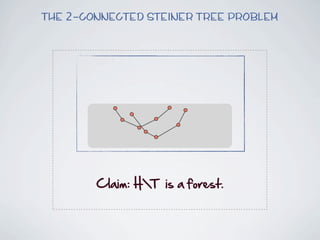
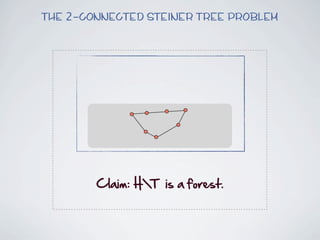
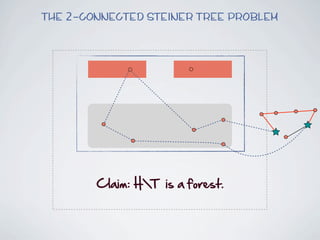
        Claim:  HT    is  a  forest.
The 2-connected Steiner Tree Problem


        Claim:  HT    is  a  forest.
The 2-connected Steiner Tree Problem


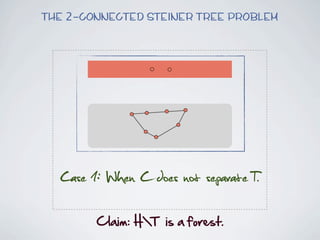
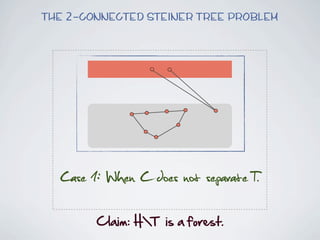
  Case 1: When C does not separate T.

        Claim:  HT    is  a  forest.
The 2-connected Steiner Tree Problem


  Case 1: When C does not separate T.

        Claim:  HT    is  a  forest.
The 2-connected Steiner Tree Problem


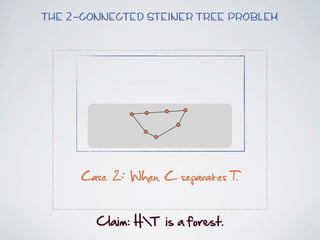
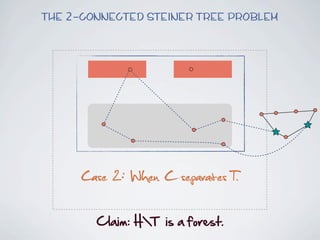
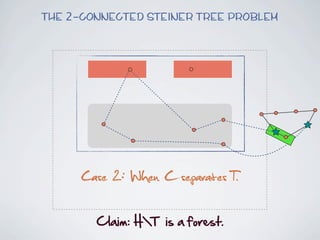
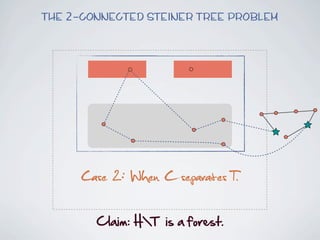
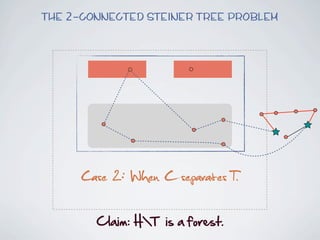
      Case 2: When C separates T.

        Claim:  HT    is  a  forest.
The 2-connected Steiner Tree Problem


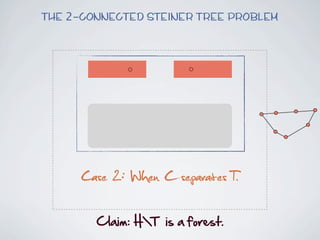
      Case 2: When C separates T.

        Claim:  HT    is  a  forest.
The 2-connected Steiner Tree Problem


      Case 2: When C separates T.

        Claim:  HT    is  a  forest.
The 2-connected Steiner Tree Problem


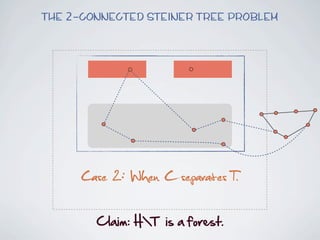
      Case 2: When C separates T.

        Claim:  HT    is  a  forest.
The 2-connected Steiner Tree Problem


      Case 2: When C separates T.

        Claim:  HT    is  a  forest.
The 2-connected Steiner Tree Problem


      Case 2: When C separates T.

        Claim:  HT    is  a  forest.
The 2-connected Steiner Tree Problem


      Case 2: When C separates T.

        Claim:  HT    is  a  forest.
The 2-connected Steiner Tree Problem


        Claim:  HT    is  a  forest.
The 2-connected Steiner Tree Problem


      Guess the structure of H.
The 2-connected Steiner Tree Problem


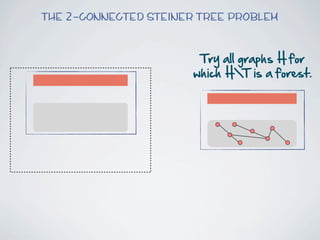
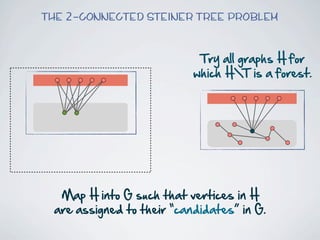
                        Try  all  graphs  H  for  
                       which  HT  is  a  forest.
The 2-connected Steiner Tree Problem


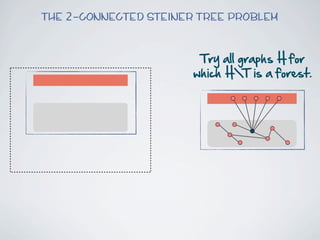
                        Try  all  graphs  H  for  
                       which  HT  is  a  forest.
The 2-connected Steiner Tree Problem


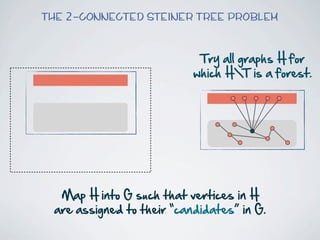
                                Try  all  graphs  H  for  
                               which  HT  is  a  forest.


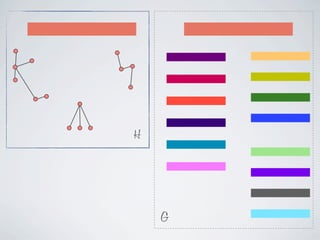
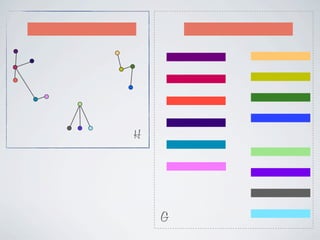
  Map  H  into  G  such  that  vertices  in  H  
 are  assigned  to  their  “candidates”  in  G.
The 2-connected Steiner Tree Problem


                                Try  all  graphs  H  for  
                               which  HT  is  a  forest.


  Map  H  into  G  such  that  vertices  in  H  
 are  assigned  to  their  “candidates”  in  G.
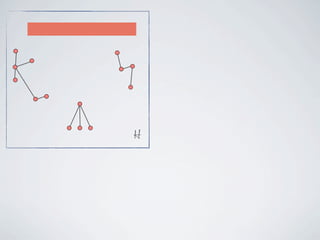
H
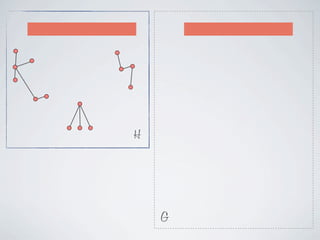
H


    G
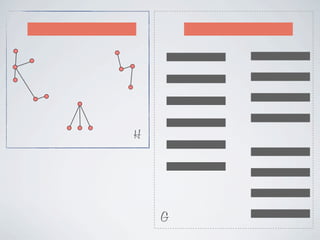
H


    G
H


    G
H


    G
H


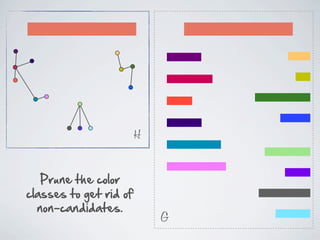
   Prune  the  color
classes  to  get  rid  of
  non-­candidates.
                                G
H


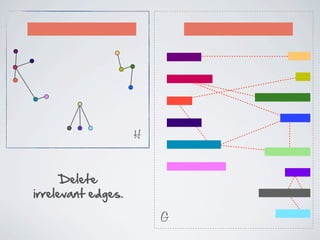
      Delete  
irrelevant  edges.

                         G
H


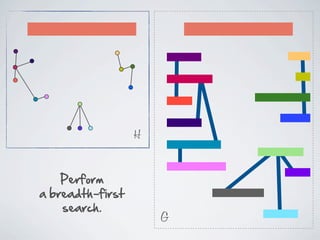
     Perform
a  breadth-­first  
     search.
                          G

Separators with Non-Hereditary Properties