Downloaded 1,497 times









![[email_address] [email_address] Image source: gettyimages.com Find more insights at](https://image.slidesharecdn.com/sensory-branding-1214307643807012-9/75/Sensory-Branding-25-2048.jpg)

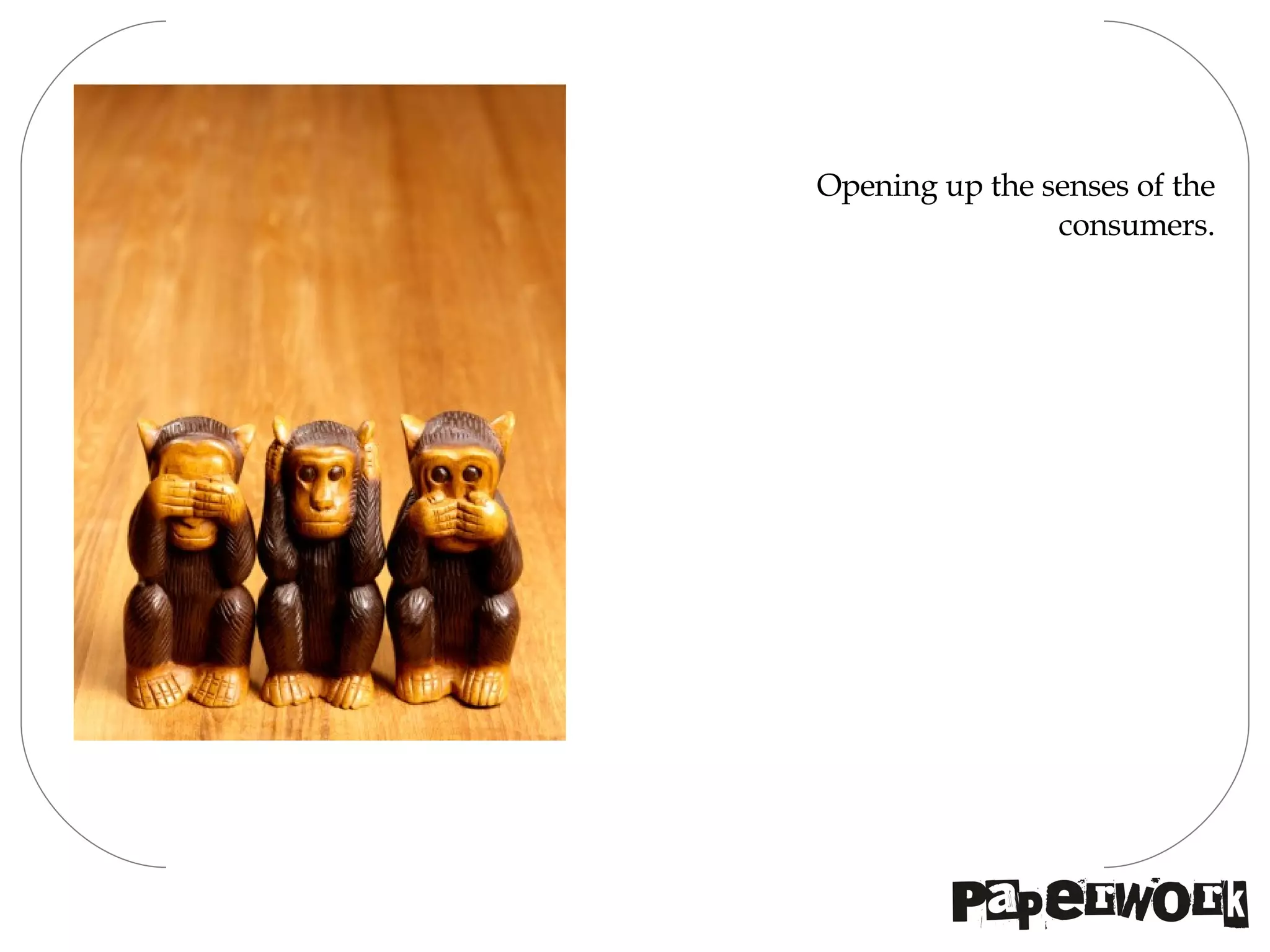
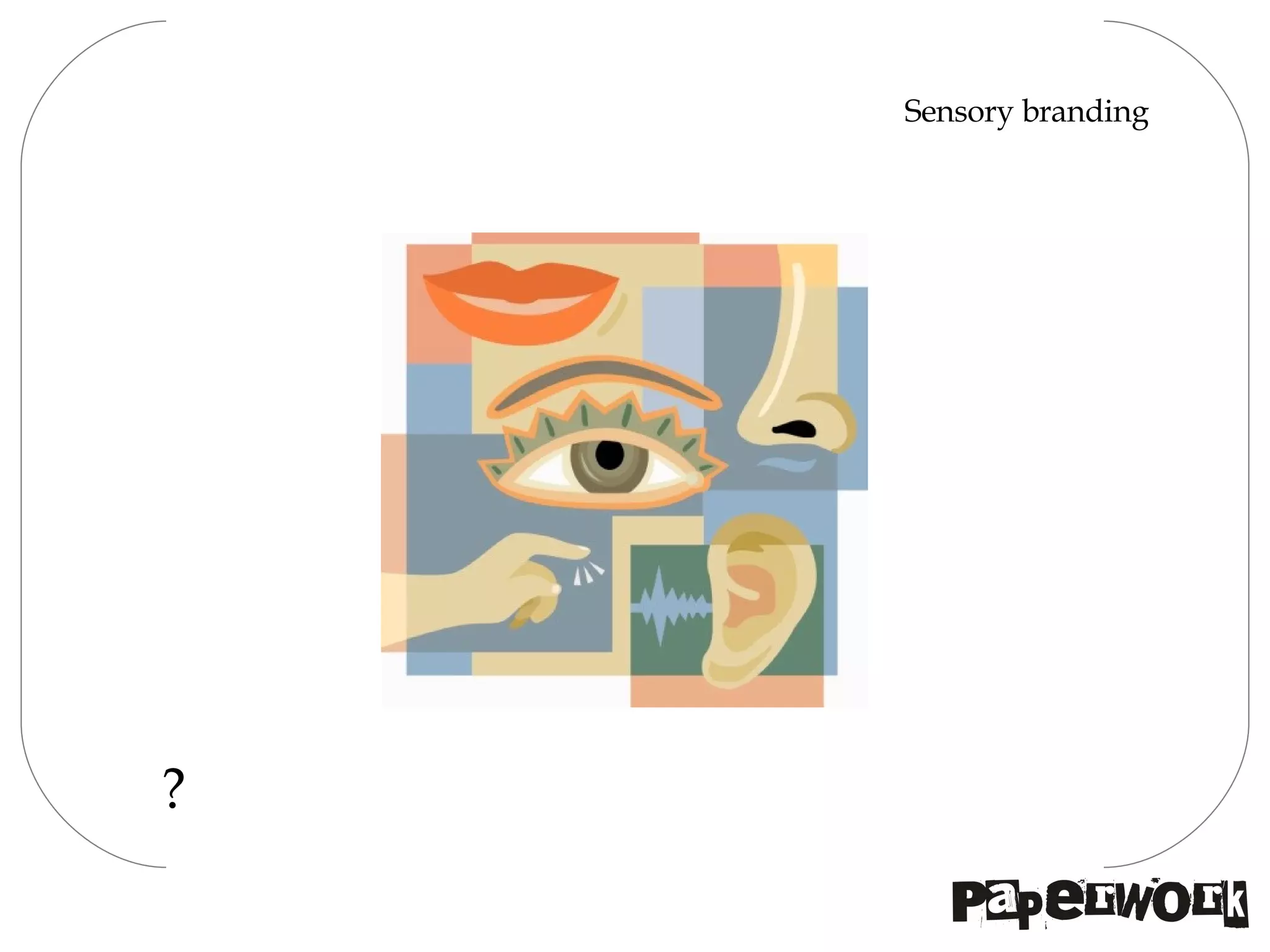
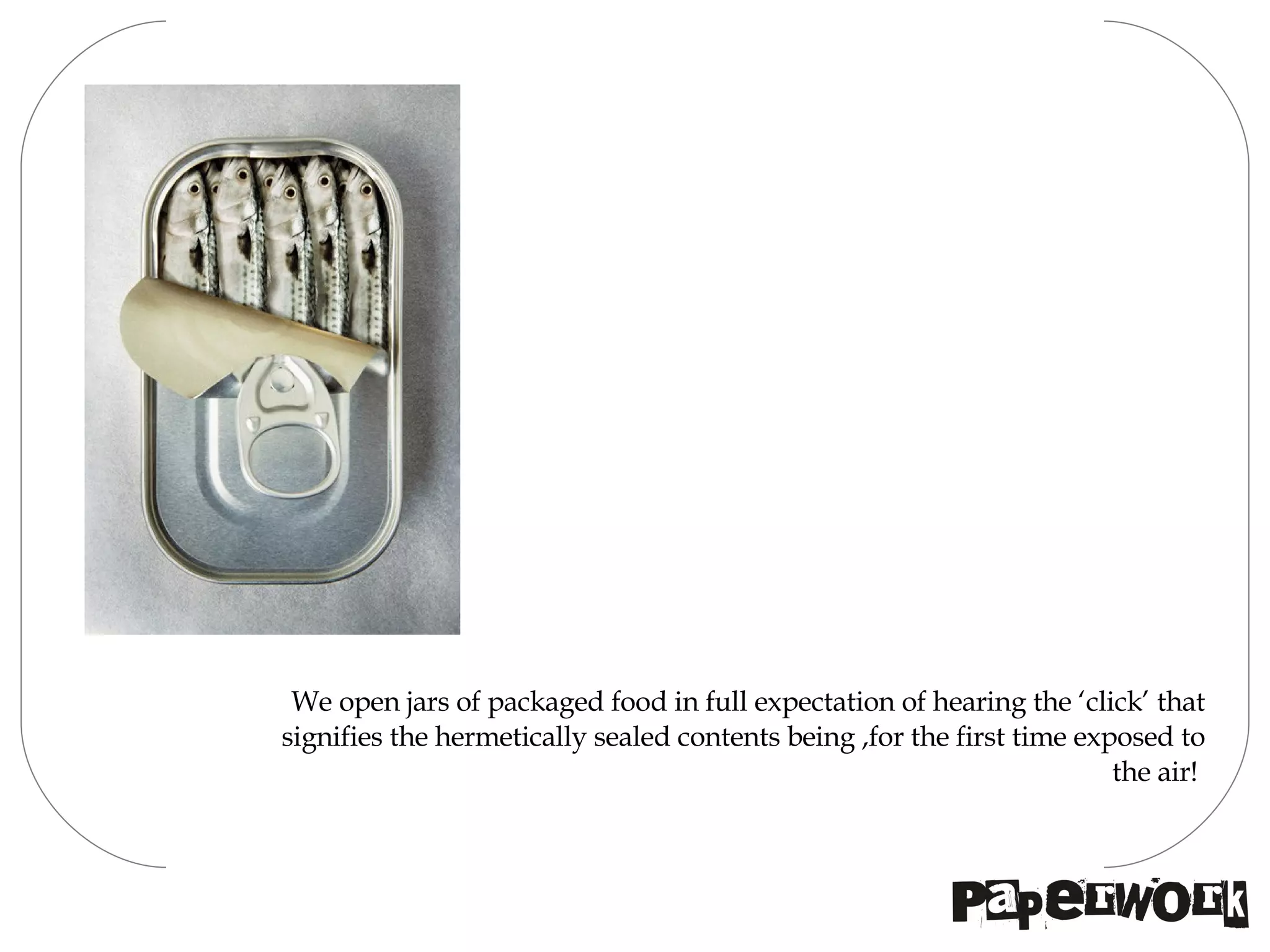
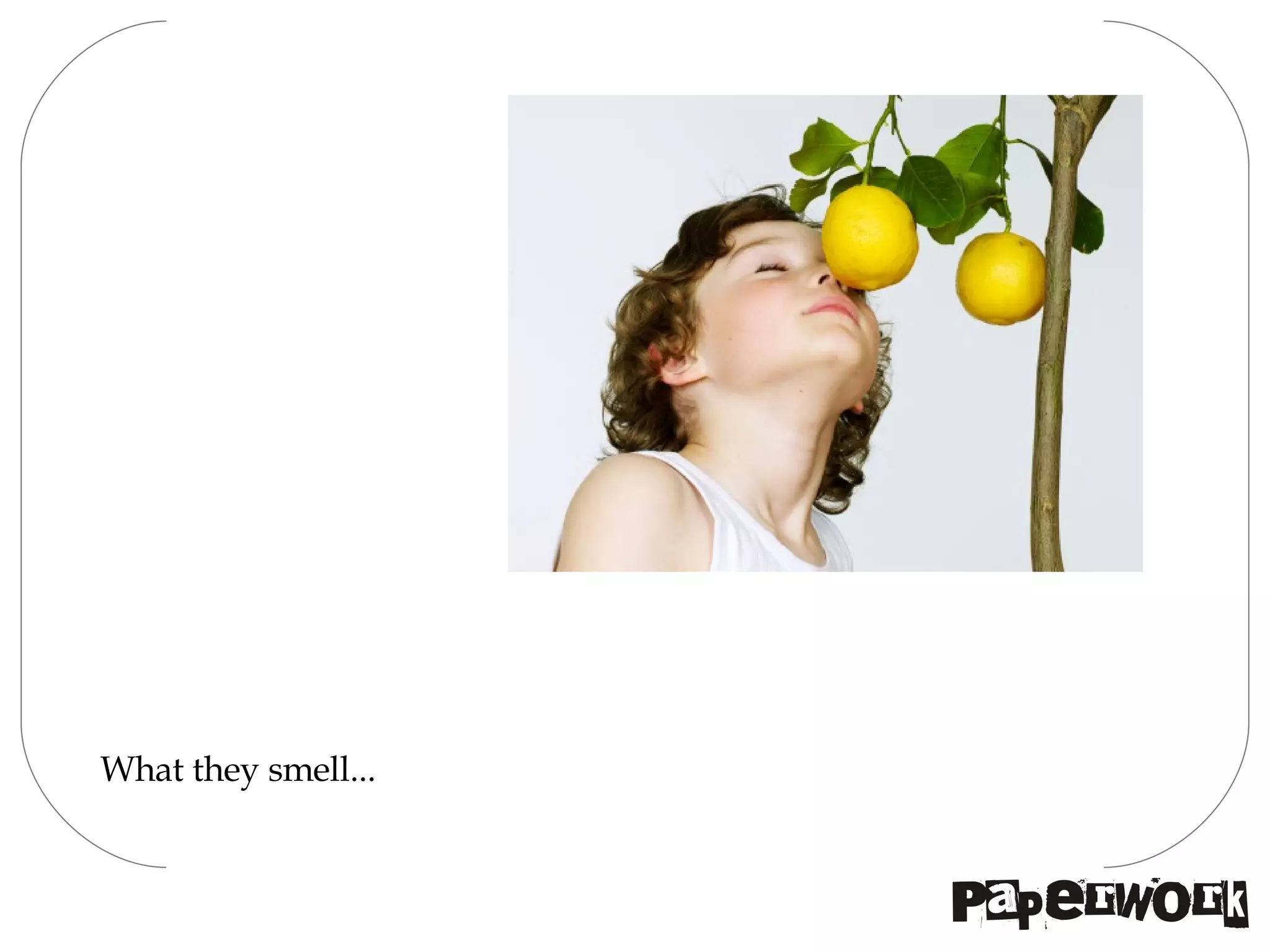
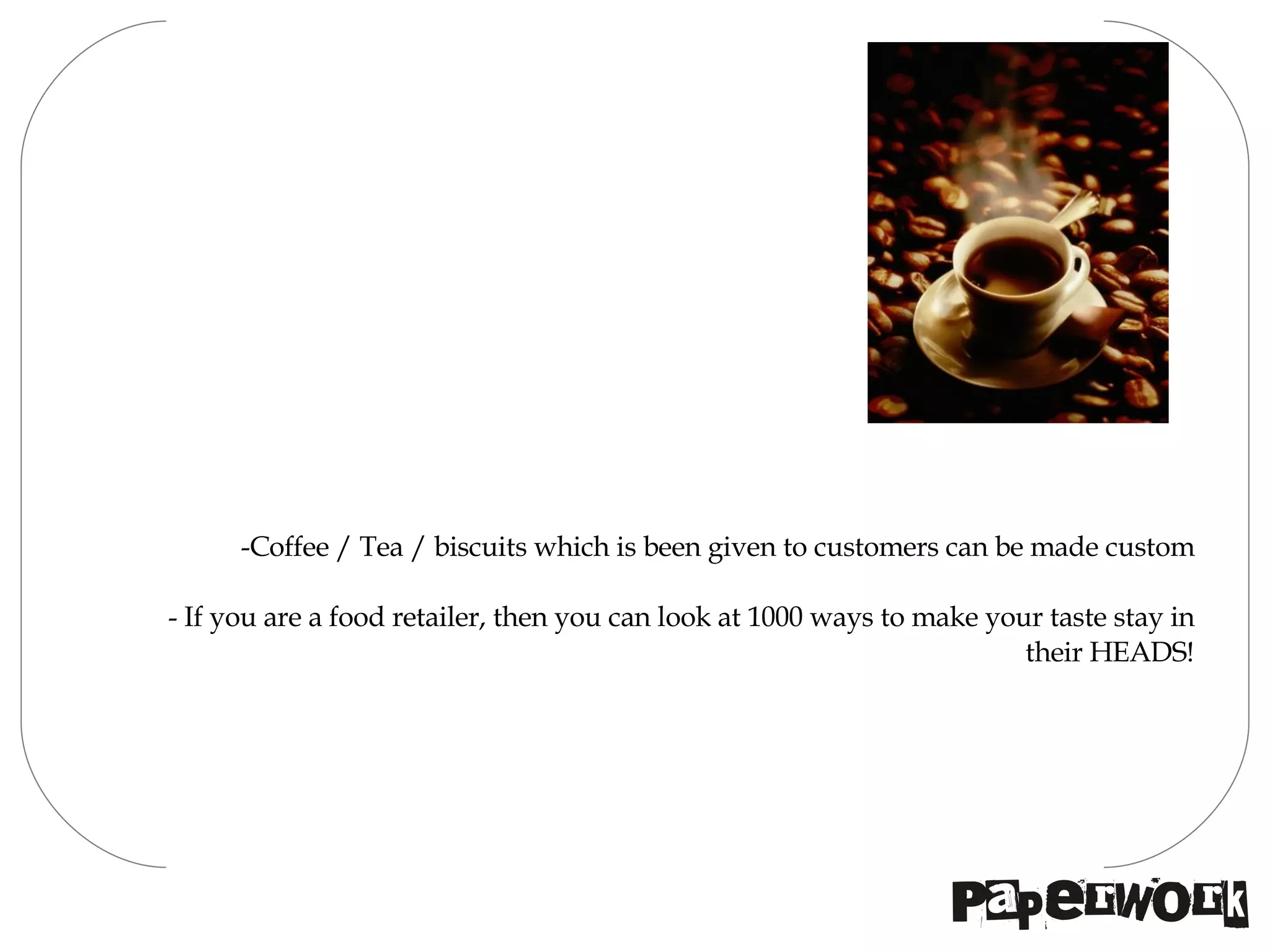
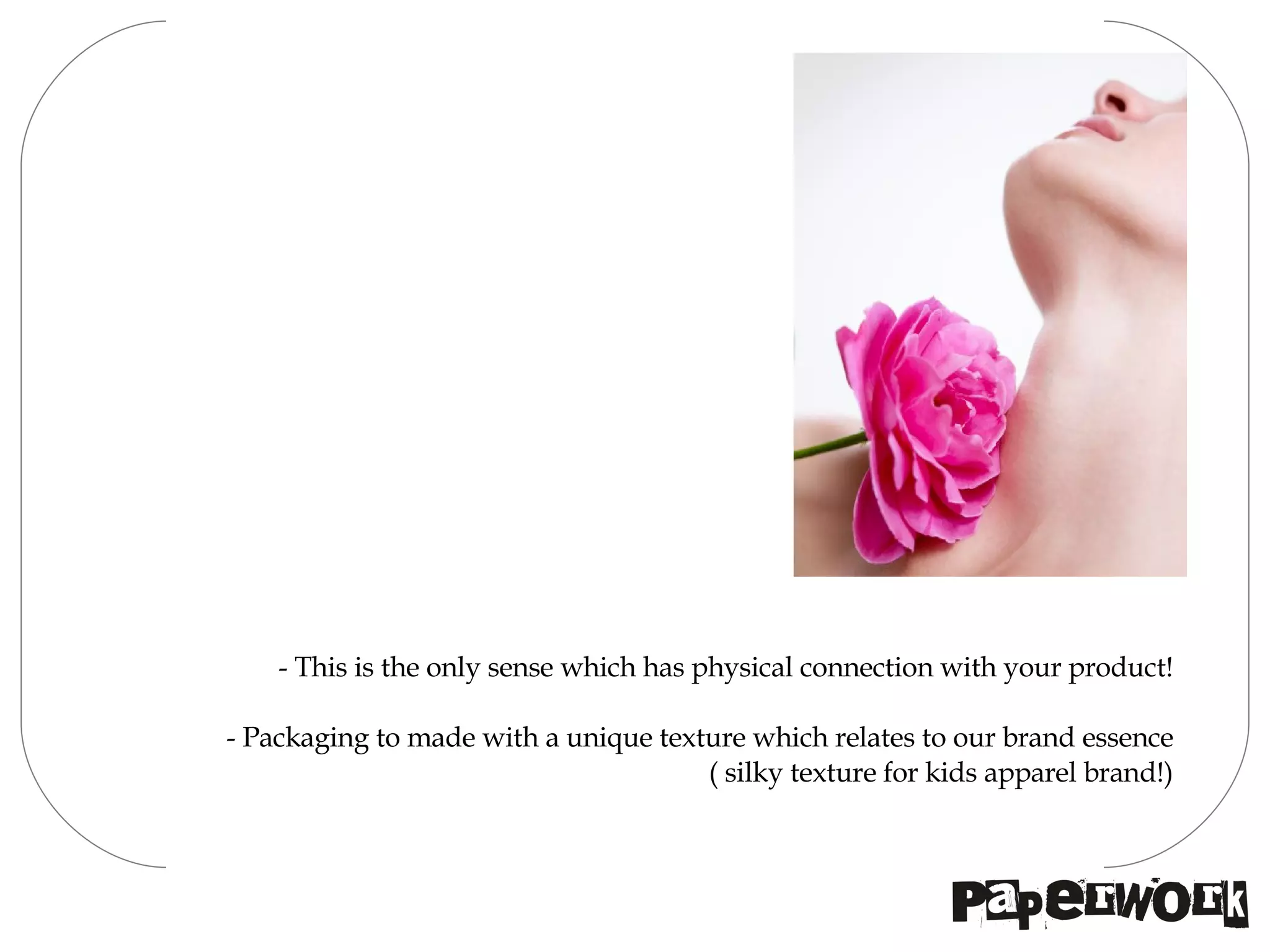
The document discusses the importance of sensory branding by engaging consumers' senses beyond just sight. It provides several examples of companies that have successfully used sensory branding like Kellogg's unique cereal crunch, Victoria's Secret's store fragrances, and Rolls-Royce's new car smell. The document argues that sensory branding can help distinguish brands and influence consumer choice by embedding sensory memories and experiences into their decision making process. It suggests several ways for companies to standardize sensory aspects like ambient lighting, music, fragrances, tastes, textures, and more across all touchpoints to create a consistent brand experience.


