SEMINAR
CONDUCTED BY: SAKSHI SHAH
2ND YEAR BHMS
GUIDED BY: DR. ROHINI THAKARE
AND DR. SACHIN AGRAWAL
TOPIC :
DIFFERENT DIAGNOSTIC
METHODS AND TESTS IN
PATHOLOGY
HB TEST
LABORATORY DIAGNOSIS OF ACUTE
MYOCARDIAL INFRACTION.
FINE NEEDLE ASPIRATION BIOPSY.
WIDAL TEST
GRAM STATINING .
LAB DIAGNOSIS OF MALARIA.
LAB DIAGNOSIS OF DIABETES MELLITUS.
CSF FINDING IN PYOGENIC MENINGITIS.
BTCT
LEPRAMINE TEST
RENAL FUNCTION TEST
VDRL TEST
URINE EXAMINATION
LAB DIAGNOSIS OF ECOLI .
1.
2.
3.
4.
5.
6.
7.
8.
9.
10.
11.
12.
13.
14.
HBTEST
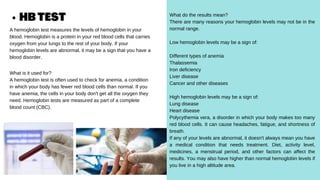
A hemoglobin test measures the levels of hemoglobin in your
blood. Hemoglobin is a protein in your red blood cells that carries
oxygen from your lungs to the rest of your body. If your
hemoglobin levels are abnormal, it may be a sign that you have a
blood disorder.
What is it used for?
A hemoglobin test is often used to check for anemia, a condition
in which your body has fewer red blood cells than normal. If you
have anemia, the cells in your body don't get all the oxygen they
need. Hemoglobin tests are measured as part of a complete
blood count (CBC).
What do the results mean?
There are many reasons your hemoglobin levels may not be in the
normal range.
Low hemoglobin levels may be a sign of:
Different types of anemia
Thalassemia
Iron deficiency
Liver disease
Cancer and other diseases
High hemoglobin levels may be a sign of:
Lung disease
Heart disease
Polycythemia vera, a disorder in which your body makes too many
red blood cells. It can cause headaches, fatigue, and shortness of
breath.
If any of your levels are abnormal, it doesn't always mean you have
a medical condition that needs treatment. Diet, activity level,
medicines, a menstrual period, and other factors can affect the
results. You may also have higher than normal hemoglobin levels if
you live in a high altitude area.
LABORATORYDIAGNOSISOFACUTEMYOCARDIAL
INFRACTION.
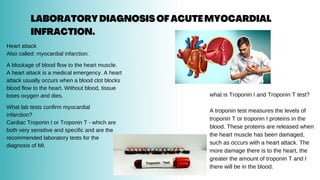
Heart attack
Also called: myocardial infarction.
A blockage of blood flow to the heart muscle.
A heart attack is a medical emergency. A heart
attack usually occurs when a blood clot blocks
blood flow to the heart. Without blood, tissue
loses oxygen and dies.
What lab tests confirm myocardial
infarction?
Cardiac Troponin I or Troponin T - which are
both very sensitive and specific and are the
recommended laboratory tests for the
diagnosis of MI.
what is Troponin I and Troponin T test?
A troponin test measures the levels of
troponin T or troponin I proteins in the
blood. These proteins are released when
the heart muscle has been damaged,
such as occurs with a heart attack. The
more damage there is to the heart, the
greater the amount of troponin T and I
there will be in the blood.
FINE NEEDLE ASPIRATION BIOPSY
what is fine needle aspiration
biopsy?
During a fine needle aspiration
(FNA), a small amount of
breast tissue or fluid is
removed from a suspicious
area with a thin, hollow needle
and checked for cancer cells.
Applications of needle aspiration biopsy
1] palpable mass lesions -
a] lymph node .
b] breast
c]thyroid
d] salivary glands
e]soft tissue masses
f] bones
Non palpable mass lesions in-
a]Abdominal cavity
liver mass.
pancreatic mass
retroperitonel masses
b]Thorasic cavity masses-
lung mass
mediastinum mas
c]Scrotal FNAC
widal test
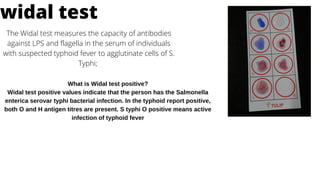
The Widal test measures the capacity of antibodies
against LPS and flagella in the serum of individuals
with suspected typhoid fever to agglutinate cells of S.
Typhi;
What is Widal test positive?
Widal test positive values indicate that the person has the Salmonella
enterica serovar typhi bacterial infection. In the typhoid report positive,
both O and H antigen titres are present. S typhi O positive means active
infection of typhoid fever
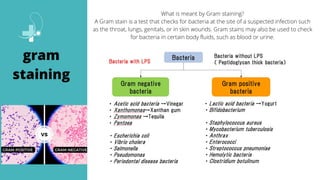
What is meant by Gram staining?
A Gram stain is a test that checks for bacteria at the site of a suspected infection such
as the throat, lungs, genitals, or in skin wounds. Gram stains may also be used to check
for bacteria in certain body fluids, such as blood or urine.
gram
staining
Malaria parasites can be identified by examining under the microscope a drop of the
patient's blood, spread out as a “blood smear” on a microscope slide. Prior to
examination, the specimen is stained (most often with the Giemsa stain) to give the
parasites a distinctive appearance.
lab diagnosis of malaria
malarial diagnosis
.clinical diagnosis
malarial blood smear
fluorescent microscopy
antigen detection
serology
PCR
Quality
Service
VDRL TEST
Venereal disease research laboratory test
Diagnostic test
The VDRL test is a screening test for syphilis. It measures substances (proteins), called
antibodies, which your body may produce if you have come in contact with the bacteria
that cause syphilis. Blood is drawn from a vein (venipuncture), usually from the inside of
the elbow or the back of the hand.
The cause of syphilis is a bacterium called Treponema pallidum. The most common way
syphilis is spread is through contact with an infected person's sore during sexual
activity. The bacteria enter the body through minor cuts or abrasions in the skin or
mucous membranes.
CSF finding of pyogenic meningitis.
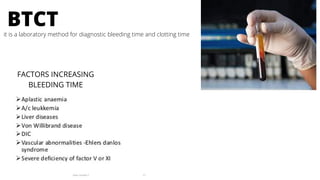
BTCT
it is a laboratory method for diagnostic bleeding time and clotting time
FACTORS INCREASING
BLEEDING TIME
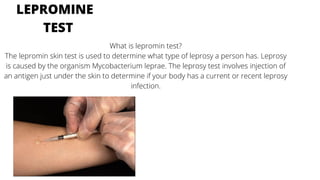
What is lepromin test?
The lepromin skin test is used to determine what type of leprosy a person has. Leprosy
is caused by the organism Mycobacterium leprae. The leprosy test involves injection of
an antigen just under the skin to determine if your body has a current or recent leprosy
infection.
LEPROMINE
TEST
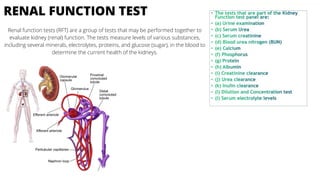
RENAL FUNCTION TEST
Renal function tests (RFT) are a group of tests that may be performed together to
evaluate kidney (renal) function. The tests measure levels of various substances,
including several minerals, electrolytes, proteins, and glucose (sugar), in the blood to
determine the current health of the kidneys.
THANK
YOU

SEMINAR.pdf

  • 1.
    SEMINAR CONDUCTED BY: SAKSHISHAH 2ND YEAR BHMS GUIDED BY: DR. ROHINI THAKARE AND DR. SACHIN AGRAWAL
  • 2.
    TOPIC : DIFFERENT DIAGNOSTIC METHODSAND TESTS IN PATHOLOGY HB TEST LABORATORY DIAGNOSIS OF ACUTE MYOCARDIAL INFRACTION. FINE NEEDLE ASPIRATION BIOPSY. WIDAL TEST GRAM STATINING . LAB DIAGNOSIS OF MALARIA. LAB DIAGNOSIS OF DIABETES MELLITUS. CSF FINDING IN PYOGENIC MENINGITIS. BTCT LEPRAMINE TEST RENAL FUNCTION TEST VDRL TEST URINE EXAMINATION LAB DIAGNOSIS OF ECOLI . 1. 2. 3. 4. 5. 6. 7. 8. 9. 10. 11. 12. 13. 14.
  • 3.
    HBTEST A hemoglobin testmeasures the levels of hemoglobin in your blood. Hemoglobin is a protein in your red blood cells that carries oxygen from your lungs to the rest of your body. If your hemoglobin levels are abnormal, it may be a sign that you have a blood disorder. What is it used for? A hemoglobin test is often used to check for anemia, a condition in which your body has fewer red blood cells than normal. If you have anemia, the cells in your body don't get all the oxygen they need. Hemoglobin tests are measured as part of a complete blood count (CBC). What do the results mean? There are many reasons your hemoglobin levels may not be in the normal range. Low hemoglobin levels may be a sign of: Different types of anemia Thalassemia Iron deficiency Liver disease Cancer and other diseases High hemoglobin levels may be a sign of: Lung disease Heart disease Polycythemia vera, a disorder in which your body makes too many red blood cells. It can cause headaches, fatigue, and shortness of breath. If any of your levels are abnormal, it doesn't always mean you have a medical condition that needs treatment. Diet, activity level, medicines, a menstrual period, and other factors can affect the results. You may also have higher than normal hemoglobin levels if you live in a high altitude area.
  • 4.
    LABORATORYDIAGNOSISOFACUTEMYOCARDIAL INFRACTION. Heart attack Also called:myocardial infarction. A blockage of blood flow to the heart muscle. A heart attack is a medical emergency. A heart attack usually occurs when a blood clot blocks blood flow to the heart. Without blood, tissue loses oxygen and dies. What lab tests confirm myocardial infarction? Cardiac Troponin I or Troponin T - which are both very sensitive and specific and are the recommended laboratory tests for the diagnosis of MI. what is Troponin I and Troponin T test? A troponin test measures the levels of troponin T or troponin I proteins in the blood. These proteins are released when the heart muscle has been damaged, such as occurs with a heart attack. The more damage there is to the heart, the greater the amount of troponin T and I there will be in the blood.
  • 5.
    FINE NEEDLE ASPIRATIONBIOPSY what is fine needle aspiration biopsy? During a fine needle aspiration (FNA), a small amount of breast tissue or fluid is removed from a suspicious area with a thin, hollow needle and checked for cancer cells. Applications of needle aspiration biopsy 1] palpable mass lesions - a] lymph node . b] breast c]thyroid d] salivary glands e]soft tissue masses f] bones
  • 6.
    Non palpable masslesions in- a]Abdominal cavity liver mass. pancreatic mass retroperitonel masses b]Thorasic cavity masses- lung mass mediastinum mas c]Scrotal FNAC
  • 7.
    widal test The Widaltest measures the capacity of antibodies against LPS and flagella in the serum of individuals with suspected typhoid fever to agglutinate cells of S. Typhi; What is Widal test positive? Widal test positive values indicate that the person has the Salmonella enterica serovar typhi bacterial infection. In the typhoid report positive, both O and H antigen titres are present. S typhi O positive means active infection of typhoid fever
  • 8.
    What is meantby Gram staining? A Gram stain is a test that checks for bacteria at the site of a suspected infection such as the throat, lungs, genitals, or in skin wounds. Gram stains may also be used to check for bacteria in certain body fluids, such as blood or urine. gram staining
  • 9.
    Malaria parasites canbe identified by examining under the microscope a drop of the patient's blood, spread out as a “blood smear” on a microscope slide. Prior to examination, the specimen is stained (most often with the Giemsa stain) to give the parasites a distinctive appearance. lab diagnosis of malaria malarial diagnosis .clinical diagnosis malarial blood smear fluorescent microscopy antigen detection serology PCR
  • 10.
    Quality Service VDRL TEST Venereal diseaseresearch laboratory test Diagnostic test The VDRL test is a screening test for syphilis. It measures substances (proteins), called antibodies, which your body may produce if you have come in contact with the bacteria that cause syphilis. Blood is drawn from a vein (venipuncture), usually from the inside of the elbow or the back of the hand. The cause of syphilis is a bacterium called Treponema pallidum. The most common way syphilis is spread is through contact with an infected person's sore during sexual activity. The bacteria enter the body through minor cuts or abrasions in the skin or mucous membranes.
  • 11.
    CSF finding ofpyogenic meningitis.
  • 12.
    BTCT it is alaboratory method for diagnostic bleeding time and clotting time FACTORS INCREASING BLEEDING TIME
  • 13.
    What is lepromintest? The lepromin skin test is used to determine what type of leprosy a person has. Leprosy is caused by the organism Mycobacterium leprae. The leprosy test involves injection of an antigen just under the skin to determine if your body has a current or recent leprosy infection. LEPROMINE TEST
  • 14.
    RENAL FUNCTION TEST Renalfunction tests (RFT) are a group of tests that may be performed together to evaluate kidney (renal) function. The tests measure levels of various substances, including several minerals, electrolytes, proteins, and glucose (sugar), in the blood to determine the current health of the kidneys.
  • 15.