Hany Hachem200600081Educ 264Seminar on health educationsubmitted to Dr. Faysal el KakThe need for health education
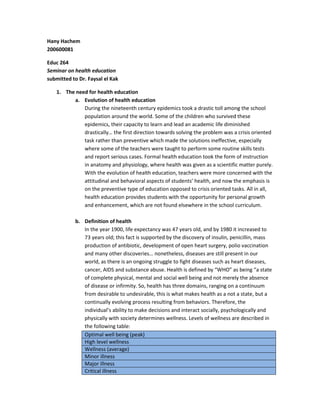
Evolution of health educationDuring the nineteenth century epidemics took a drastic toll among the school population around the world. Some of the children who survived these epidemics, their capacity to learn and lead an academic life diminished drastically… the first direction towards solving the problem was a crisis oriented task rather than preventive which made the solutions ineffective, especially where some of the teachers were taught to perform some routine skills tests and report serious cases. Formal health education took the form of instruction in anatomy and physiology, where health was given as a scientific matter purely. With the evolution of health education, teachers were more concerned with the attitudinal and behavioral aspects of students’ health, and now the emphasis is on the preventive type of education opposed to crisis oriented tasks. All in all, health education provides students with the opportunity for personal growth and enhancement, which are not found elsewhere in the school curriculum.
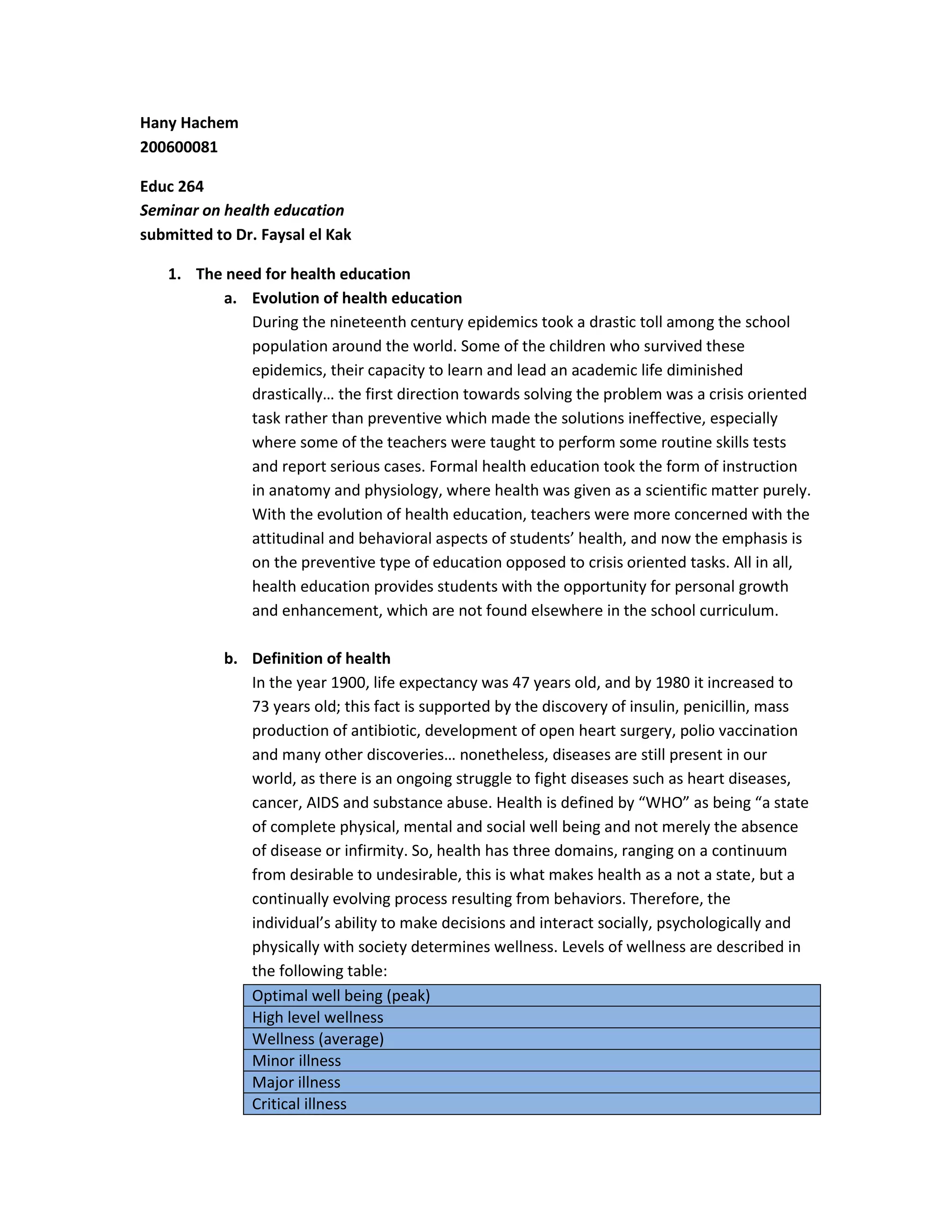
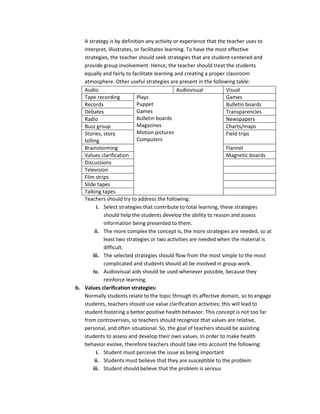
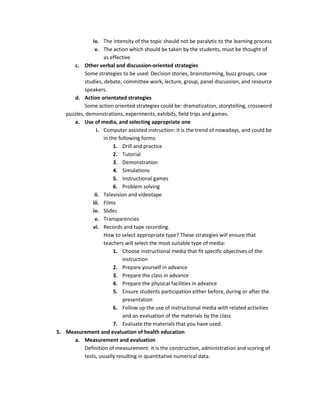
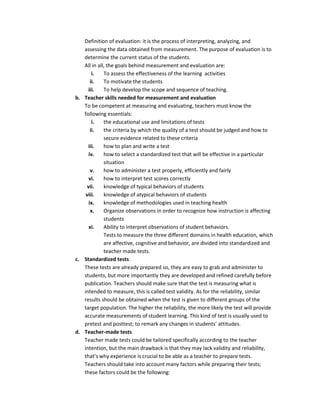
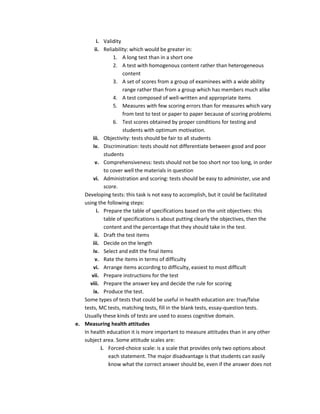
Definition of healthIn the year 1900, life expectancy was 47 years old, and by 1980 it increased to 73 years old; this fact is supported by the discovery of insulin, penicillin, mass production of antibiotic, development of open heart surgery, polio vaccination and many other discoveries… nonetheless, diseases are still present in our world, as there is an ongoing struggle to fight diseases such as heart diseases, cancer, AIDS and substance abuse. Health is defined by “WHO” as being “a state of complete physical, mental and social well being and not merely the absence of disease or infirmity. So, health has three domains, ranging on a continuum from desirable to undesirable, this is what makes health as a not a state, but a continually evolving process resulting from behaviors. Therefore, the individual’s ability to make decisions and interact socially, psychologically and physically with society determines wellness. Levels of wellness are described in the following table:
Optimal well being (peak)High level wellnessWellness (average)Minor illnessMajor illnessCritical illnessDeath
Definition of health education
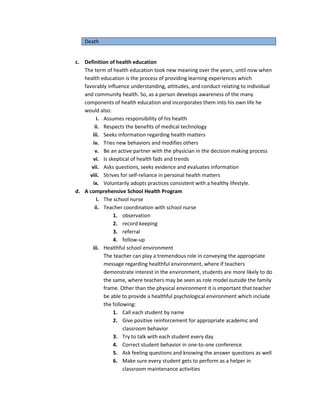
The term of health education took new meaning over the years, until now when health education is the process of providing learning experiences which favorably influence understanding, attitudes, and conduct relating to individual and community health. So, as a person develops awareness of the many components of health education and incorporates them into his own life he would also:
Assumes responsibility of his health
Respects the benefits of medical technology
Seeks information regarding health matters
Tries new behaviors and modifies others
Be an active partner with the physician in the decision making process
Is skeptical of health fads and trends
Asks questions, seeks evidence and evaluates information
Strives for self-reliance in personal health matters
Voluntarily adopts practices consistent with a healthy lifestyle.
A comprehensive School Health Program
The school nurse

Seminar, Health Education

  • 1.
    Hany Hachem200600081Educ 264Seminaron health educationsubmitted to Dr. Faysal el KakThe need for health education
  • 2.
    Evolution of healtheducationDuring the nineteenth century epidemics took a drastic toll among the school population around the world. Some of the children who survived these epidemics, their capacity to learn and lead an academic life diminished drastically… the first direction towards solving the problem was a crisis oriented task rather than preventive which made the solutions ineffective, especially where some of the teachers were taught to perform some routine skills tests and report serious cases. Formal health education took the form of instruction in anatomy and physiology, where health was given as a scientific matter purely. With the evolution of health education, teachers were more concerned with the attitudinal and behavioral aspects of students’ health, and now the emphasis is on the preventive type of education opposed to crisis oriented tasks. All in all, health education provides students with the opportunity for personal growth and enhancement, which are not found elsewhere in the school curriculum.
  • 3.
    Definition of healthInthe year 1900, life expectancy was 47 years old, and by 1980 it increased to 73 years old; this fact is supported by the discovery of insulin, penicillin, mass production of antibiotic, development of open heart surgery, polio vaccination and many other discoveries… nonetheless, diseases are still present in our world, as there is an ongoing struggle to fight diseases such as heart diseases, cancer, AIDS and substance abuse. Health is defined by “WHO” as being “a state of complete physical, mental and social well being and not merely the absence of disease or infirmity. So, health has three domains, ranging on a continuum from desirable to undesirable, this is what makes health as a not a state, but a continually evolving process resulting from behaviors. Therefore, the individual’s ability to make decisions and interact socially, psychologically and physically with society determines wellness. Levels of wellness are described in the following table:
  • 4.
    Optimal well being(peak)High level wellnessWellness (average)Minor illnessMajor illnessCritical illnessDeath
  • 5.
  • 6.
    The term ofhealth education took new meaning over the years, until now when health education is the process of providing learning experiences which favorably influence understanding, attitudes, and conduct relating to individual and community health. So, as a person develops awareness of the many components of health education and incorporates them into his own life he would also:
  • 7.
  • 8.
    Respects the benefitsof medical technology
  • 9.
  • 10.
    Tries new behaviorsand modifies others
  • 11.
    Be an activepartner with the physician in the decision making process
  • 12.
    Is skeptical ofhealth fads and trends
  • 13.
    Asks questions, seeksevidence and evaluates information
  • 14.
    Strives for self-reliancein personal health matters
  • 15.
    Voluntarily adopts practicesconsistent with a healthy lifestyle.
  • 16.
  • 17.