Download to read offline
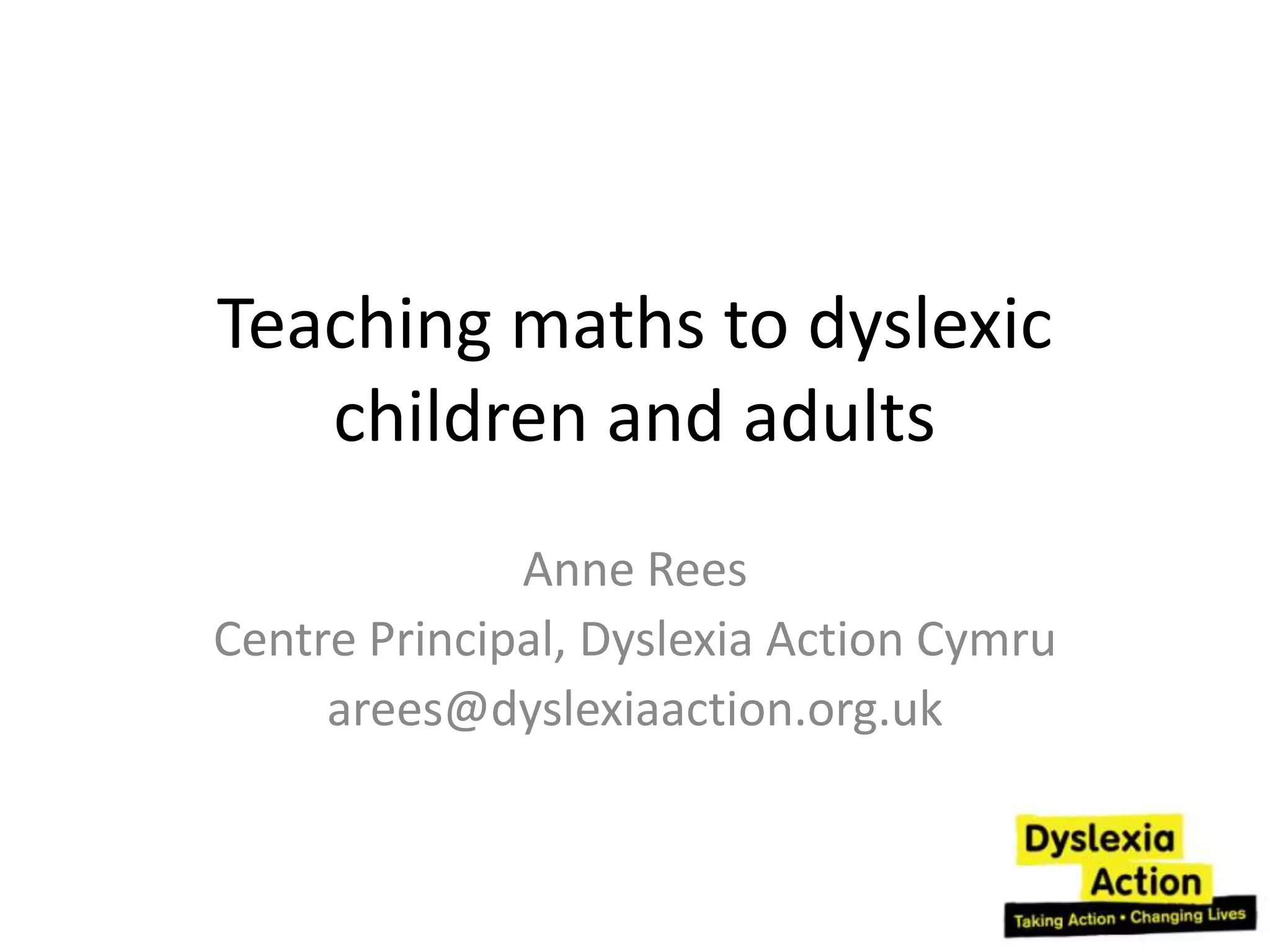
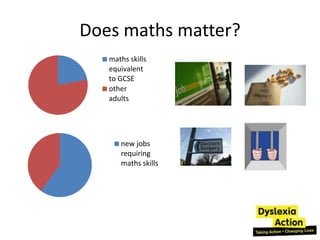
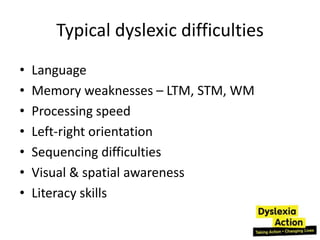
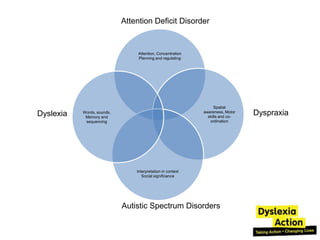
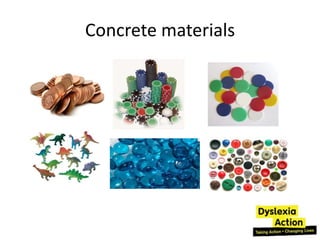
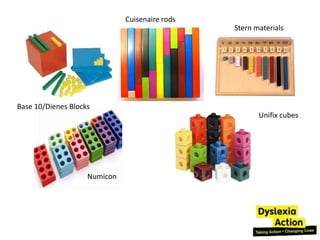

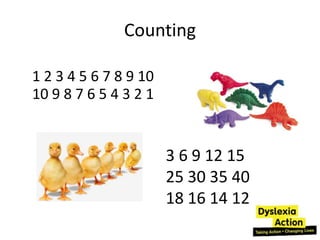
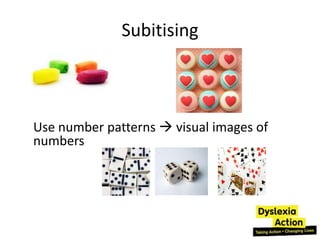
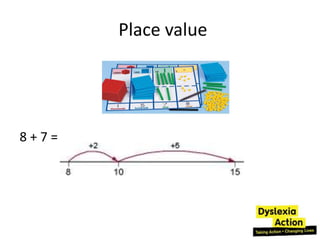
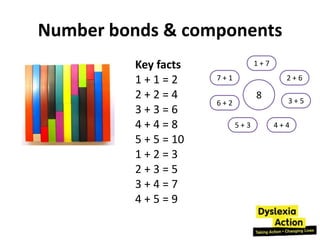
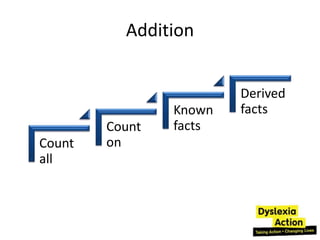
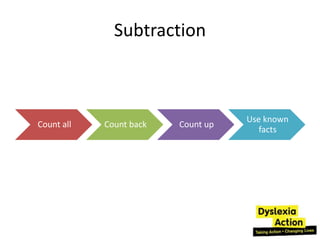
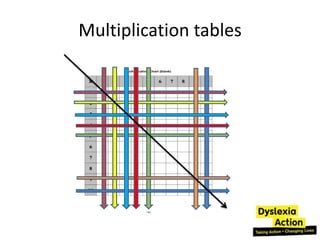
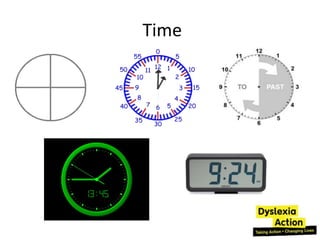
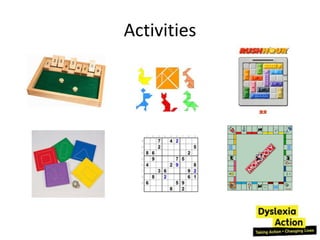
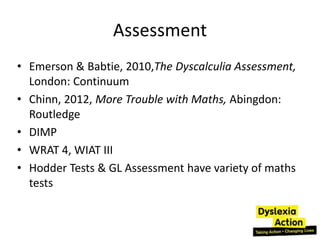
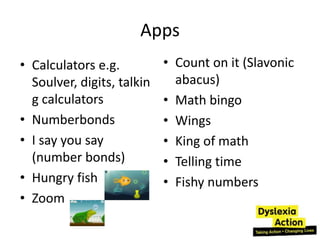

This document discusses teaching math to dyslexic children and adults. It notes that dyslexic students often struggle with math due to weaknesses in language, memory, processing speed, spatial awareness, and other areas. The document recommends using concrete materials, counting activities, number bonds, place value, and estimation to make math more accessible. It also suggests assessing students' math skills and using apps to support learning. The overall message is that dyslexic learners need flexible number skills and to develop number sense through hands-on activities.


