manoj.hrworld@gmail.com
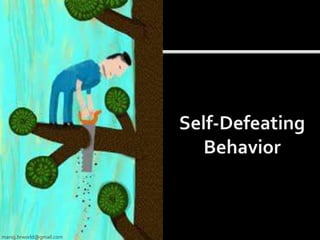
SELF DEFEATING BEHAVIOUR
manoj.hrworld@gmail.com
 A self-defeating behavior is any behavior
leading to a lower reward/cost ratio than is
available through an alternative behavior or
behaviors.
 Self-defeating behaviors include choosing to
suffer, self-handicapping, failure to achieve
potential, fear of success, learned
helplessness, and procrastination.
manoj.hrworld@gmail.com
 For social psychologists, a self-defeating behavior is any
behavior that normally ends up with a result that is
something the person doing the behavior doesn’t want to
happen. If you are trying to accomplish some goal, and
something you do makes it less likely that you will reach that
goal, then that is a self-defeating behavior.
manoj.hrworld@gmail.com
 “I am not good enough, so why bother?”
 “They believe I am not enough, so it must
be true.”
manoj.hrworld@gmail.com
 Social psychologists have divided self-defeating behaviors
into two types.
1. Counterproductive behaviors
2. Trade-offs.
manoj.hrworld@gmail.com
 A counterproductive behavior happens when
people try to get something they want, but the
way they try to get it ends up not being a good
one.
 Counterproductive behaviors usually happen
because the person has a wrong idea either
about himself or herself or about the situation
the person is in. The students have an incorrect
idea about their own abilities; they think they
can succeed, but they can’t.
manoj.hrworld@gmail.com
 The second type of self-defeating behavior is called
trade-offs.
 One example is neglecting to take care of yourself
physically. When people don’t exercise, go to the
dentist, or follow the doctor’s orders, they are
risking their health to either avoid some short-term
pain or discomfort (such as the discomfort of
exercise or the anxiety that the dentist causes).
manoj.hrworld@gmail.com
 Theories suggest that self-defeating behaviors
are a kind of defense mechanism, fooling people
into thinking that they are coping with stress,
pressure, social demands, etc.,
 while others suggest that self-defeating
behaviors help a person to stay within their
comfort zone (e.g., if someone feels a lack of
self-confidence, they may sabotage a job
opportunity to remain at a certain career level).
manoj.hrworld@gmail.com
 Physical/mental neglect
 Self-criticism
 Perfectionism
 Self-pity
 Procrastination
 Comparing yourself to others
manoj.hrworld@gmail.com
 Social withdrawal/alienation
 Risky sexual behaviors
 Refusing help
 Over-spending
 Relationship sabotage
manoj.hrworld@gmail.com
 Over/Under eating
 Self-injurious behaviors
 Drug and alcohol abuse
manoj.hrworld@gmail.com
 Start by identifying the behaviors in your life
that you feel are getting in the way of
reaching your goals. Insight is an integral part
of changing your behavior.
 Get real. Find ways to stop minimizing these
unhealthy behaviors and rationalizing their
presence. Examine how a behavior really
impacts your life.
manoj.hrworld@gmail.com
 Don’t get down on yourself. Being overly critical of
yourself or thinking that you are “weak” creates a worse
self-concept, often leading lower self-esteem and
confidence.
 Make it harder to act impulsively. Do you find that you
over eat when you are stressed? Keep foods that you
tend to binge on out of the house. Do you overspend
when you are sad? Only withdraw enough cash for your
weekly expenses and make access to your debit/credit
cards more difficult.
manoj.hrworld@gmail.com
 Practice mindfulness. Focusing on the present can
help you to more readily identify your emotions and
the behaviors that are getting in the way of your
goals.
 Start to self-reflect. Journaling or keeping a daily log
of healthy habits can be a great way to build
positive patterns of behavior.
manoj.hrworld@gmail.com

Self defeating behaviour

  • 1.
  • 2.
  • 3.
     A self-defeatingbehavior is any behavior leading to a lower reward/cost ratio than is available through an alternative behavior or behaviors.  Self-defeating behaviors include choosing to suffer, self-handicapping, failure to achieve potential, fear of success, learned helplessness, and procrastination. manoj.hrworld@gmail.com
  • 4.
     For socialpsychologists, a self-defeating behavior is any behavior that normally ends up with a result that is something the person doing the behavior doesn’t want to happen. If you are trying to accomplish some goal, and something you do makes it less likely that you will reach that goal, then that is a self-defeating behavior. manoj.hrworld@gmail.com
  • 5.
     “I amnot good enough, so why bother?”  “They believe I am not enough, so it must be true.” manoj.hrworld@gmail.com
  • 6.
     Social psychologistshave divided self-defeating behaviors into two types. 1. Counterproductive behaviors 2. Trade-offs. manoj.hrworld@gmail.com
  • 7.
     A counterproductivebehavior happens when people try to get something they want, but the way they try to get it ends up not being a good one.  Counterproductive behaviors usually happen because the person has a wrong idea either about himself or herself or about the situation the person is in. The students have an incorrect idea about their own abilities; they think they can succeed, but they can’t. manoj.hrworld@gmail.com
  • 8.
     The secondtype of self-defeating behavior is called trade-offs.  One example is neglecting to take care of yourself physically. When people don’t exercise, go to the dentist, or follow the doctor’s orders, they are risking their health to either avoid some short-term pain or discomfort (such as the discomfort of exercise or the anxiety that the dentist causes). manoj.hrworld@gmail.com
  • 9.
     Theories suggestthat self-defeating behaviors are a kind of defense mechanism, fooling people into thinking that they are coping with stress, pressure, social demands, etc.,  while others suggest that self-defeating behaviors help a person to stay within their comfort zone (e.g., if someone feels a lack of self-confidence, they may sabotage a job opportunity to remain at a certain career level). manoj.hrworld@gmail.com
  • 10.
     Physical/mental neglect Self-criticism  Perfectionism  Self-pity  Procrastination  Comparing yourself to others manoj.hrworld@gmail.com
  • 11.
     Social withdrawal/alienation Risky sexual behaviors  Refusing help  Over-spending  Relationship sabotage manoj.hrworld@gmail.com
  • 12.
     Over/Under eating Self-injurious behaviors  Drug and alcohol abuse manoj.hrworld@gmail.com
  • 13.
     Start byidentifying the behaviors in your life that you feel are getting in the way of reaching your goals. Insight is an integral part of changing your behavior.  Get real. Find ways to stop minimizing these unhealthy behaviors and rationalizing their presence. Examine how a behavior really impacts your life. manoj.hrworld@gmail.com
  • 14.
     Don’t getdown on yourself. Being overly critical of yourself or thinking that you are “weak” creates a worse self-concept, often leading lower self-esteem and confidence.  Make it harder to act impulsively. Do you find that you over eat when you are stressed? Keep foods that you tend to binge on out of the house. Do you overspend when you are sad? Only withdraw enough cash for your weekly expenses and make access to your debit/credit cards more difficult. manoj.hrworld@gmail.com
  • 15.
     Practice mindfulness.Focusing on the present can help you to more readily identify your emotions and the behaviors that are getting in the way of your goals.  Start to self-reflect. Journaling or keeping a daily log of healthy habits can be a great way to build positive patterns of behavior. manoj.hrworld@gmail.com
  • 16.
  • 17.
  • 18.