Where to begin? Selecting resources for digitisation BL PAC/RLUK Training Day:  Approaches to Digitisation Maureen Pennock Digital Curator, The British Library February 2011
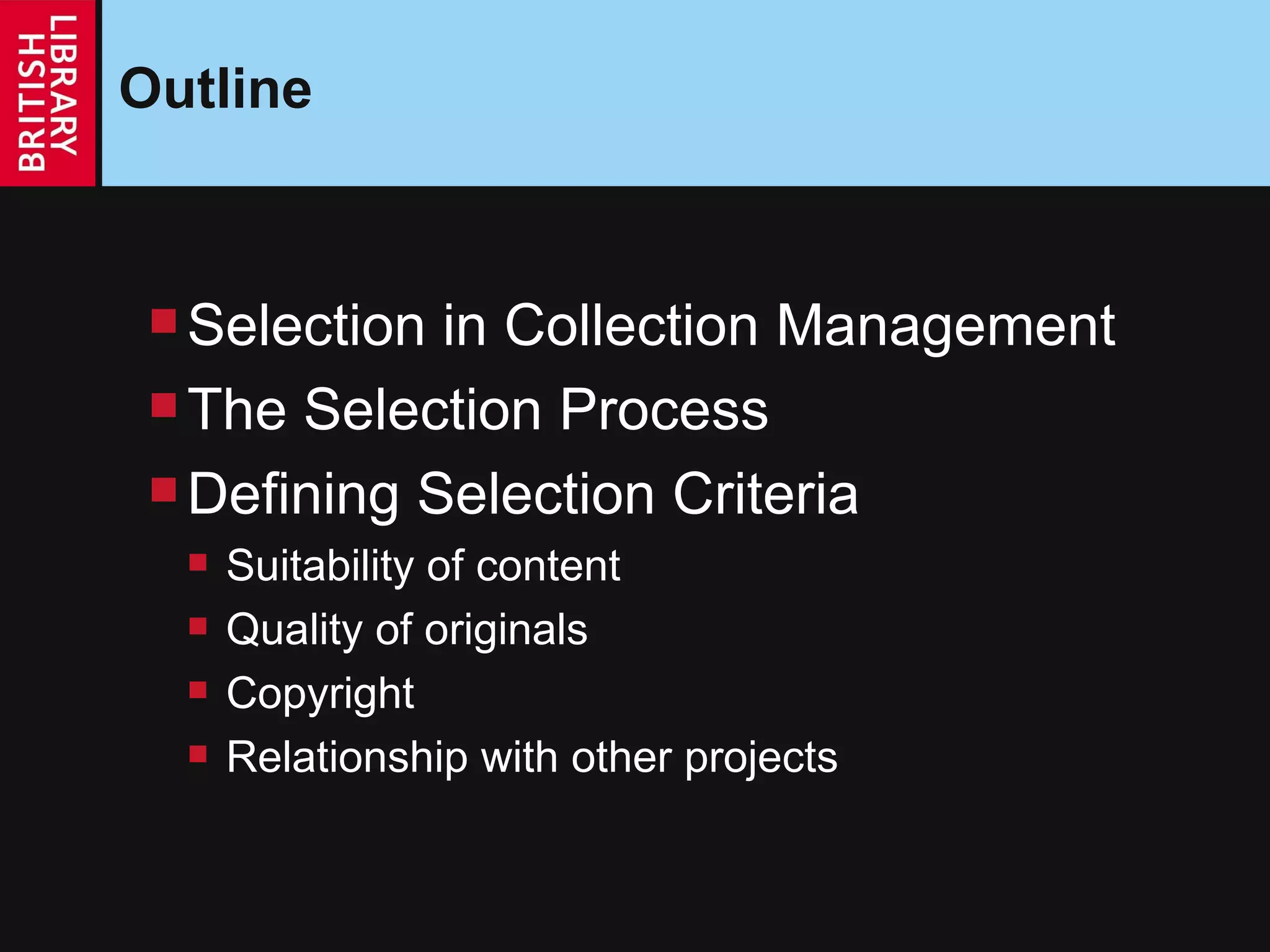
Outline Selection in Collection Management The Selection Process Defining Selection Criteria Suitability of content Quality of originals Copyright Relationship with other projects
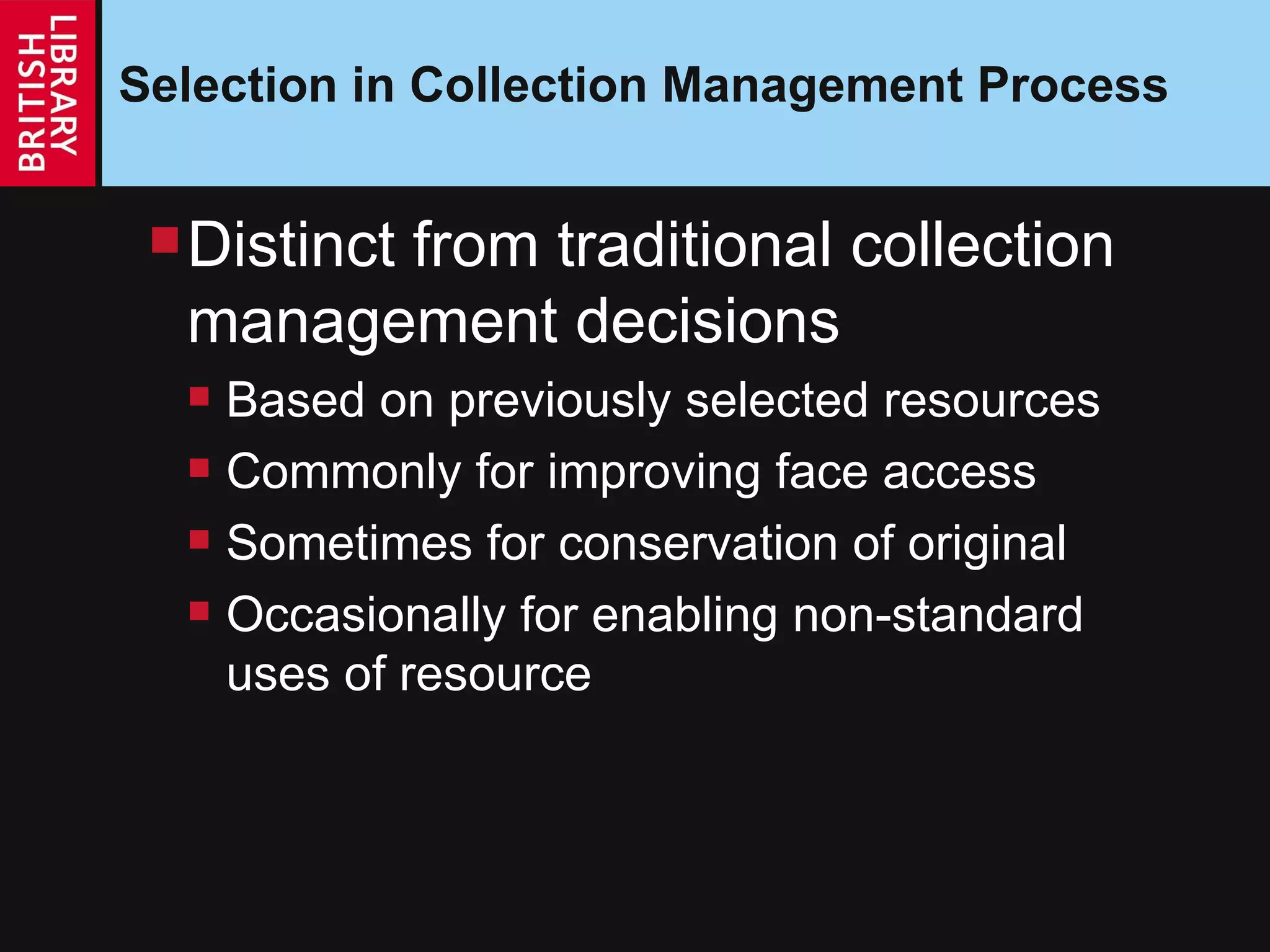
Selection in Collection Management Process Distinct from traditional collection management decisions Based on previously selected resources Commonly for improving face access Sometimes for conservation of original Occasionally for enabling non-standard uses of resource
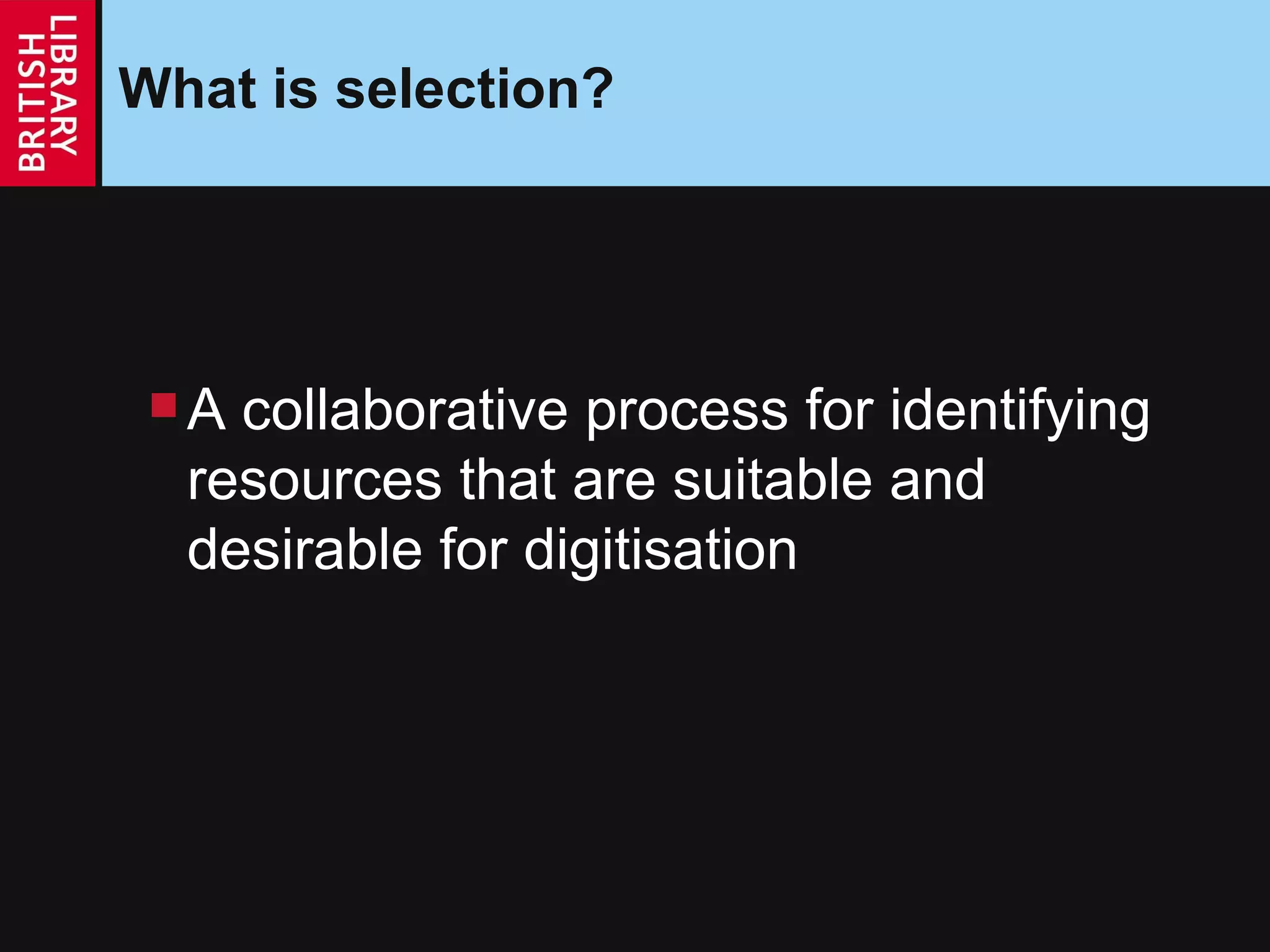
What is selection? A collaborative process for identifying resources that are suitable and desirable for digitisation
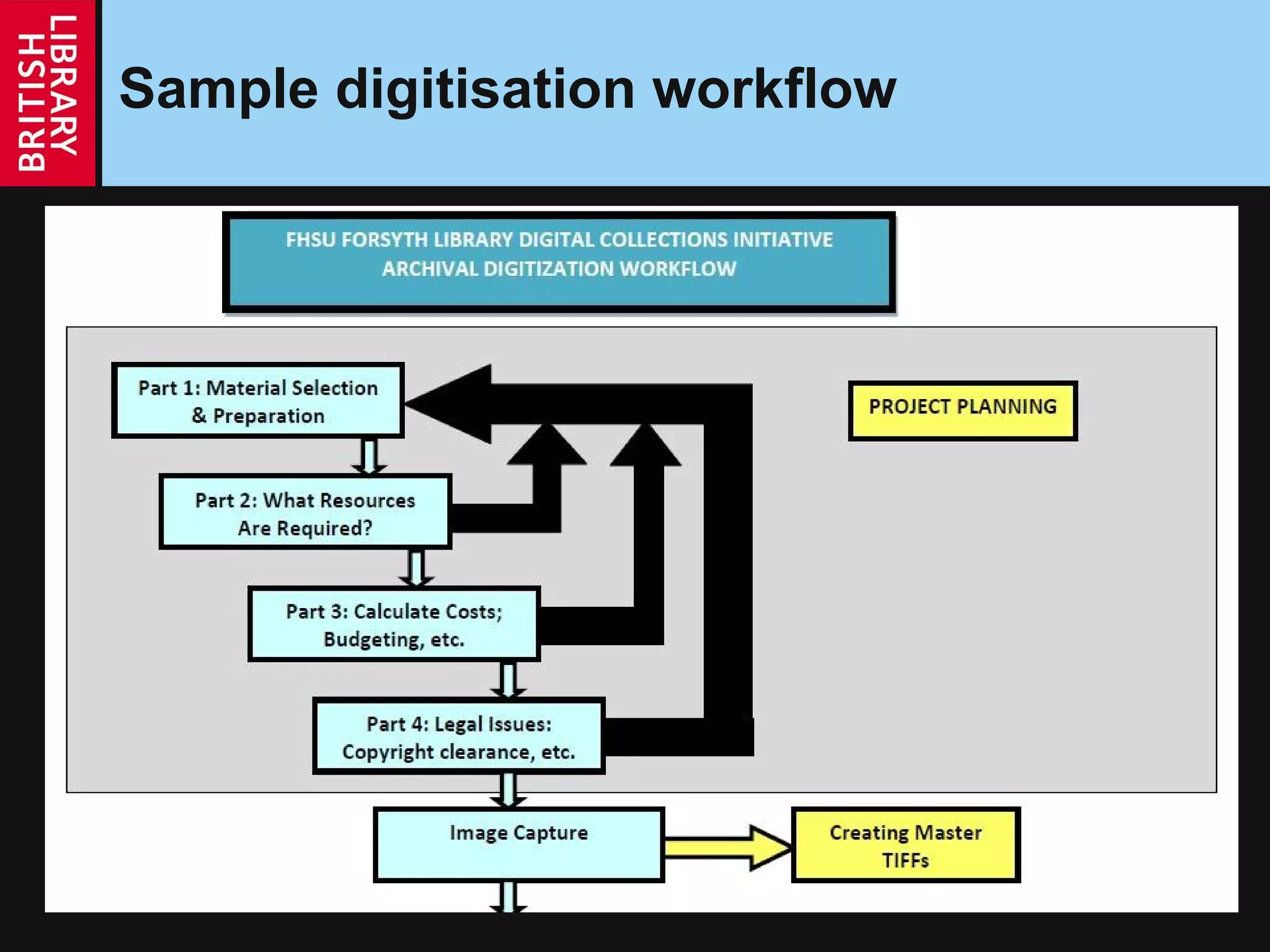
Sample digitisation workflow
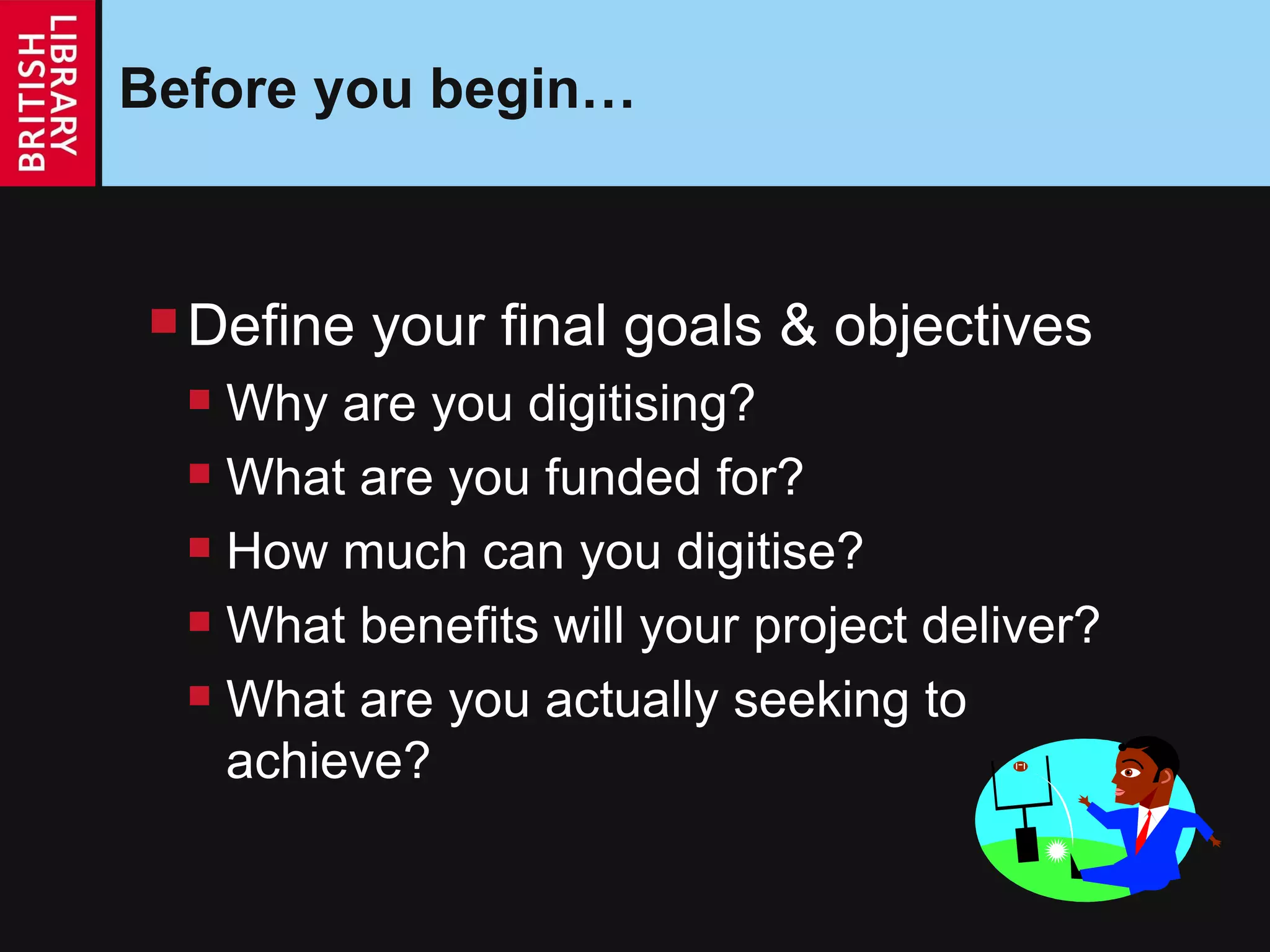
Before you begin… Define your final goals & objectives Why are you digitising? What are you funded for? How much can you digitise? What benefits will your project deliver? What are you actually seeking to achieve?
Collaboration Identify & approach stakeholders Curators Collection managers Other staff Users
Developing selection criteria Scope setting & pre-selection No ‘one-size-fits-all’ approach Needs to consider a number of  issues Practical Strategic How they meet your goals & user needs Issues must be prioritised An Assessment Process
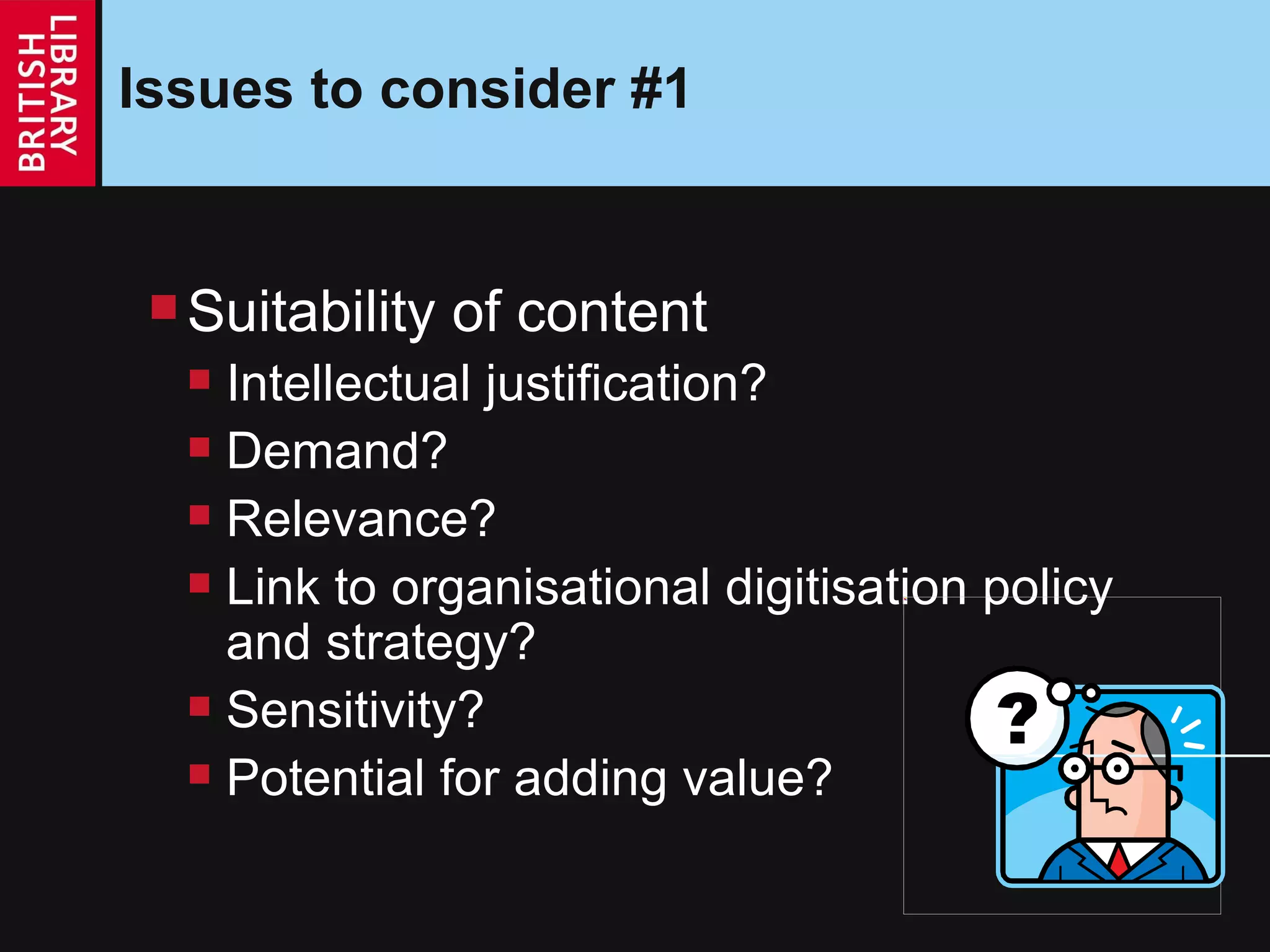
Issues to consider #1 Suitability of content Intellectual justification? Demand? Relevance? Link to organisational digitisation policy and strategy? Sensitivity? Potential for adding value?
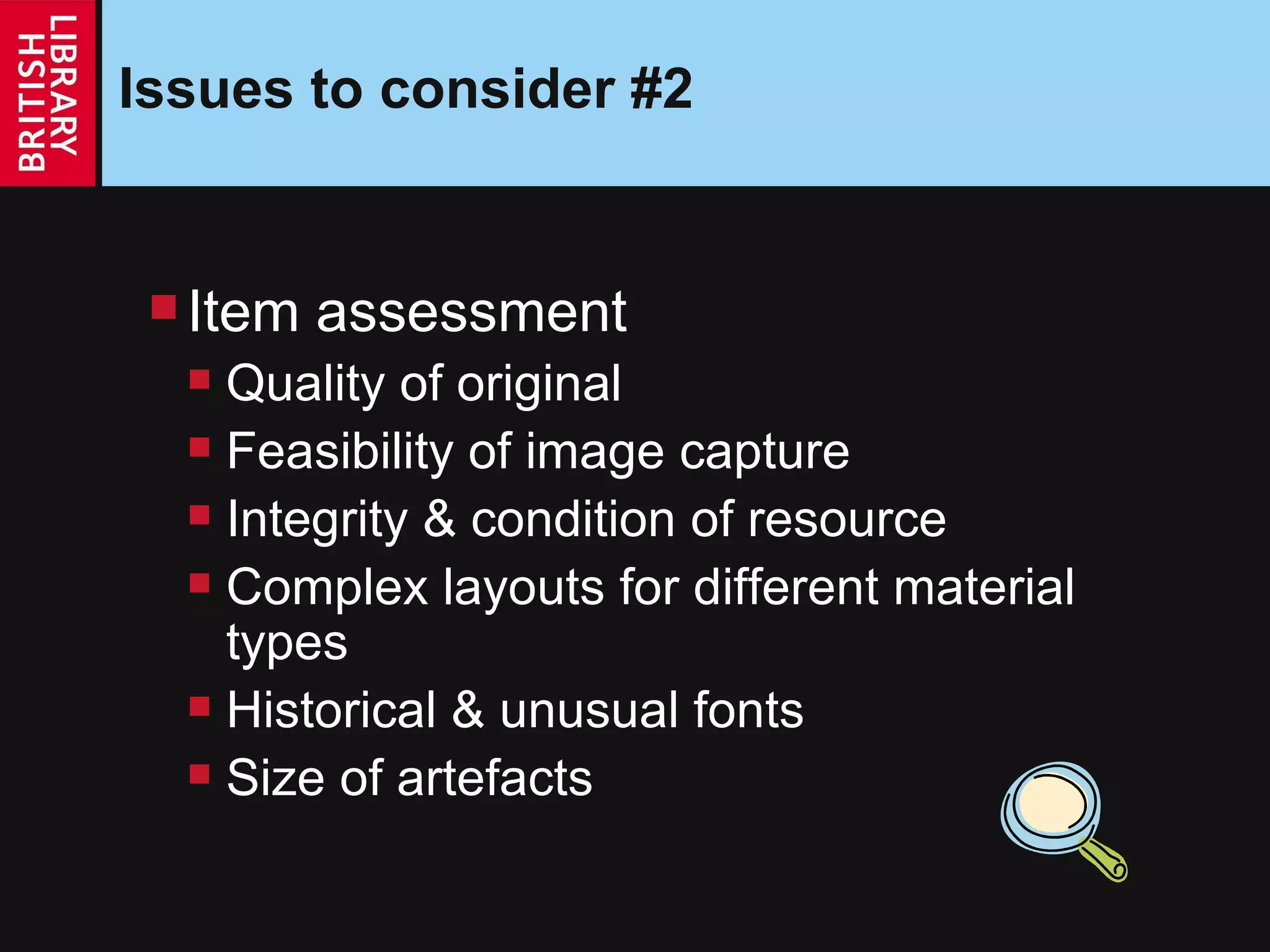
Issues to consider #2 Item assessment Quality of original  Feasibility of image capture Integrity & condition of resource Complex layouts for different material types Historical & unusual fonts Size of artefacts
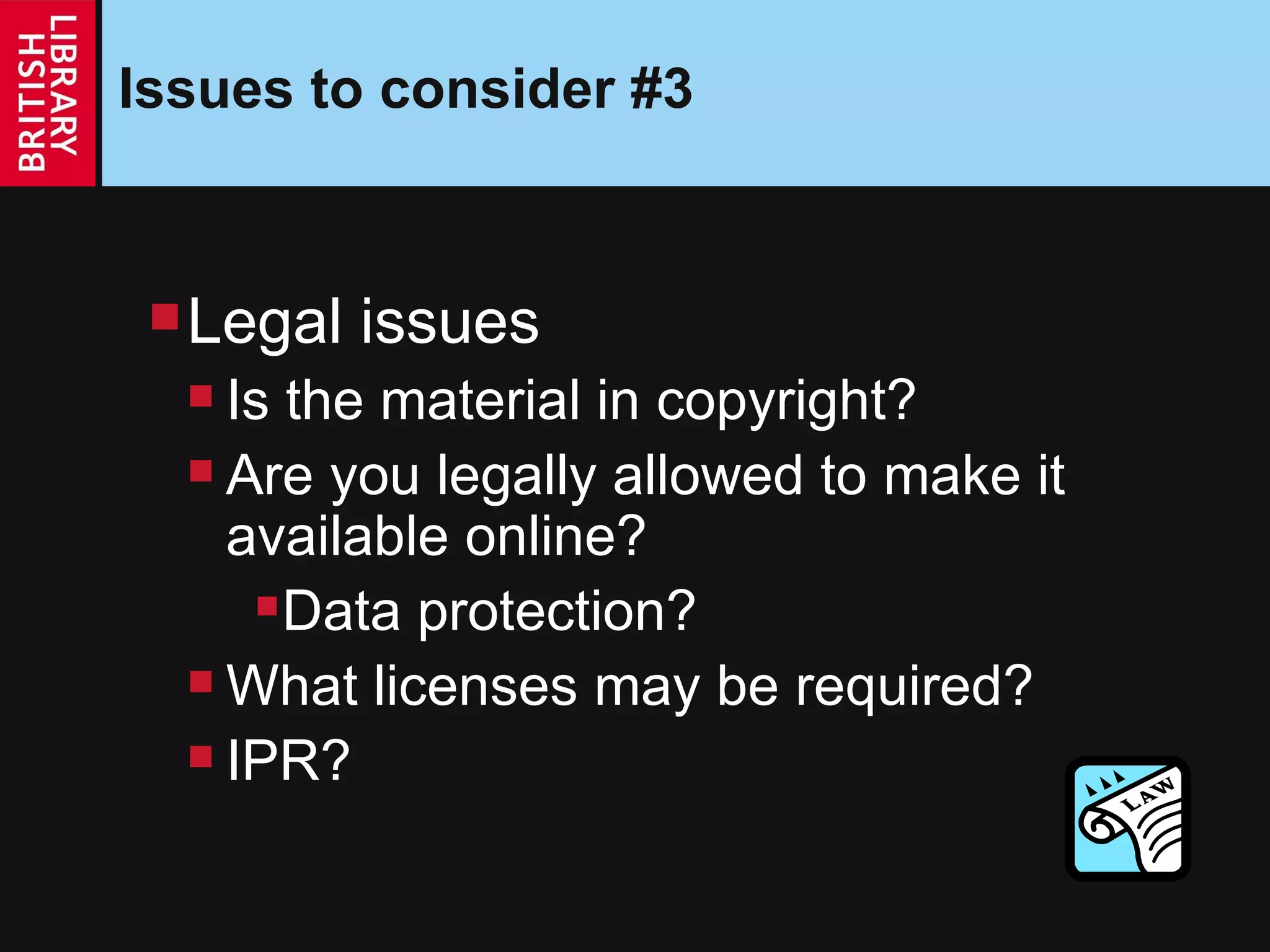
Issues to consider #3 Legal issues Is the material in copyright? Are you legally allowed to make it available online? Data protection? What licenses may be required? IPR?
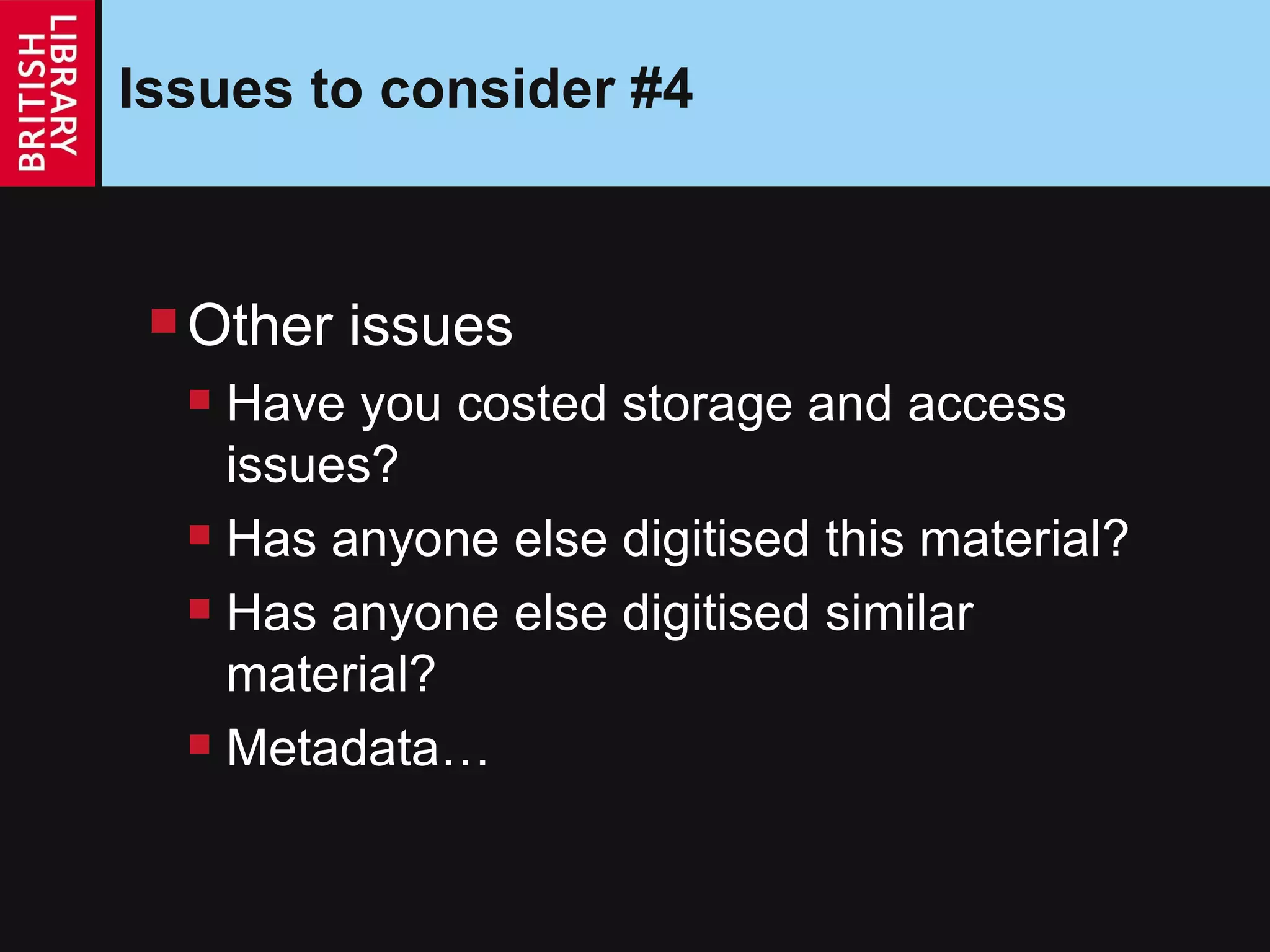
Issues to consider #4 Other issues Have you costed storage and access issues? Has anyone else digitised this material? Has anyone else digitised similar material? Metadata…
Develop a checklist Identify the criteria most relevant to you Weight/Prioritise them  Decide level of assessment (collection v item) Assess your shortlist against checklist Refine your shortlist against the score Determine the final selection Document the selection process
Don’t underestimate the process! It may take more time than you think It needs to consider many issues It is subjective It can be controversial It can require compromise There is NO commonly agreed framework
Further reading NPO Booklet:  Managing the Digitisation of Library, Archive & Museum Materials   -  http://goo.gl/g4rvo JISC Digital Media guidance:  Selection Procedures for Digitisation   - http://goo.gl/LIyun
Thank you! [email_address] @digicurator

Selection for Digitisation

  • 1.
    Where to begin?Selecting resources for digitisation BL PAC/RLUK Training Day: Approaches to Digitisation Maureen Pennock Digital Curator, The British Library February 2011
  • 2.
    Outline Selection inCollection Management The Selection Process Defining Selection Criteria Suitability of content Quality of originals Copyright Relationship with other projects
  • 3.
    Selection in CollectionManagement Process Distinct from traditional collection management decisions Based on previously selected resources Commonly for improving face access Sometimes for conservation of original Occasionally for enabling non-standard uses of resource
  • 4.
    What is selection?A collaborative process for identifying resources that are suitable and desirable for digitisation
  • 5.
  • 6.
    Before you begin…Define your final goals & objectives Why are you digitising? What are you funded for? How much can you digitise? What benefits will your project deliver? What are you actually seeking to achieve?
  • 7.
    Collaboration Identify &approach stakeholders Curators Collection managers Other staff Users
  • 8.
    Developing selection criteriaScope setting & pre-selection No ‘one-size-fits-all’ approach Needs to consider a number of issues Practical Strategic How they meet your goals & user needs Issues must be prioritised An Assessment Process
  • 9.
    Issues to consider#1 Suitability of content Intellectual justification? Demand? Relevance? Link to organisational digitisation policy and strategy? Sensitivity? Potential for adding value?
  • 10.
    Issues to consider#2 Item assessment Quality of original Feasibility of image capture Integrity & condition of resource Complex layouts for different material types Historical & unusual fonts Size of artefacts
  • 11.
    Issues to consider#3 Legal issues Is the material in copyright? Are you legally allowed to make it available online? Data protection? What licenses may be required? IPR?
  • 12.
    Issues to consider#4 Other issues Have you costed storage and access issues? Has anyone else digitised this material? Has anyone else digitised similar material? Metadata…
  • 13.
    Develop a checklistIdentify the criteria most relevant to you Weight/Prioritise them Decide level of assessment (collection v item) Assess your shortlist against checklist Refine your shortlist against the score Determine the final selection Document the selection process
  • 14.
    Don’t underestimate theprocess! It may take more time than you think It needs to consider many issues It is subjective It can be controversial It can require compromise There is NO commonly agreed framework
  • 15.
    Further reading NPOBooklet: Managing the Digitisation of Library, Archive & Museum Materials - http://goo.gl/g4rvo JISC Digital Media guidance: Selection Procedures for Digitisation - http://goo.gl/LIyun
  • 16.