Cristin Stokes, RD, LN
MUS Wellness
Spring 2014
Objectives
 Are foods labeled "organic" more nutritious? Which
sweeteners are best? Should gluten be avoided? Can
coconut oil promote weight loss? When it comes to
nutrition, labels and marketing often lead to confusion
rather than clarity. Focus up by joining Cristin Stokes,
RD, Nutrition Specialist with the MUS Wellness
Program, in examining the validity of popular
nutrition claims and current trends. Cooking demo
with taste samples included!
Good or Bad? Eat it or Leave it?
What’s the deal with…?
 Gluten
 Carbohydrates
 Sweeteners
 Organic foods
 Coconut oil
 Supplements
 Intermittent fasting
Gluten
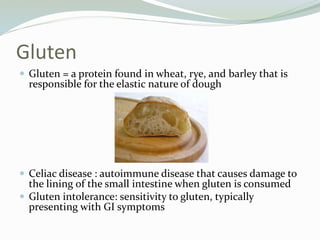
 Gluten = a protein found in wheat, rye, and barley that is
responsible for the elastic nature of dough
 Celiac disease : autoimmune disease that causes damage to
the lining of the small intestine when gluten is consumed
 Gluten intolerance: sensitivity to gluten, typically
presenting with GI symptoms
Gluten
 Research
 Gluten/whey protein/placebo study
 Theories
 Attention to diet
 Lower carbs/less junk
 Bottom line: No need to avoid gluten unless you have
CD or are gluten intolerant
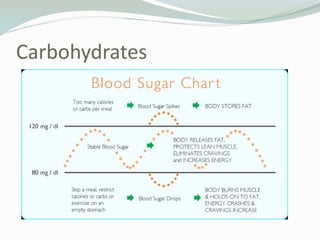
Carbohydrates
Carbohydrates
 Source matters
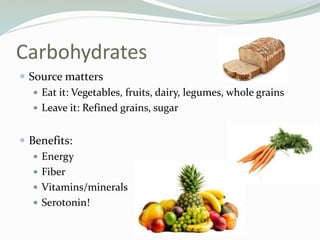
 Eat it: Vegetables, fruits, dairy, legumes, whole grains
 Leave it: Refined grains, sugar
 Benefits:
 Energy
 Fiber
 Vitamins/minerals
 Serotonin!
Carbohydrates
 Recommended % of diet
 If tracking: 45-65%
 Higher-end if training or exercising more
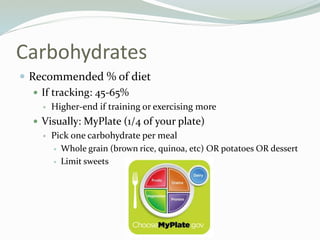
 Visually: MyPlate (1/4 of your plate)
 Pick one carbohydrate per meal
 Whole grain (brown rice, quinoa, etc) OR potatoes OR dessert
 Limit sweets
Sweeteners
 Granulated sugars
 Refined white
 Brown
 Turbinado – “raw”
 Evaporated cane juice
 Liquid
 Honey
 Maple Syrup
 HFCS
 Agave
 Molasses
 Brown rice syrup
Sweeteners
 Artificial sugars
 Aspartame
 Stevia
 Ace-K
 Splenda
 Saccharine
 Sugar alcohols
 -itol
 Focus up:
 Minor differences exist in type
of sugar (i.e. fructose,
glucose) and effect on blood
sugar
 Sugar has little to no
nutritional value beyond
calories
 Minimize all kinds
 Artificial sugars may be
helpful for diabetics; research
regarding weight loss mixed
Organics
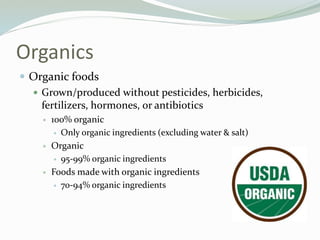
 Organic foods
 Grown/produced without pesticides, herbicides,
fertilizers, hormones, or antibiotics
 100% organic
 Only organic ingredients (excluding water & salt)
 Organic
 95-99% organic ingredients
 Foods made with organic ingredients
 70-94% organic ingredients
Organics
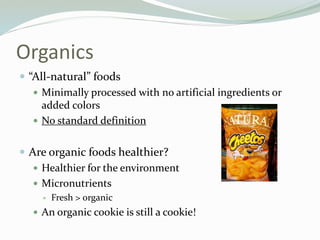
 “All-natural” foods
 Minimally processed with no artificial ingredients or
added colors
 No standard definition
 Are organic foods healthier?
 Healthier for the environment
 Micronutrients
 Fresh > organic
 An organic cookie is still a cookie!
Organics
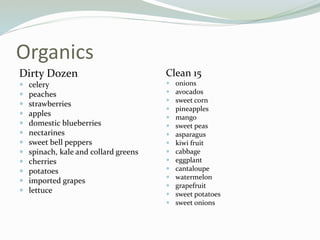
Dirty Dozen
 celery
 peaches
 strawberries
 apples
 domestic blueberries
 nectarines
 sweet bell peppers
 spinach, kale and collard greens
 cherries
 potatoes
 imported grapes
 lettuce
Clean 15
 onions
 avocados
 sweet corn
 pineapples
 mango
 sweet peas
 asparagus
 kiwi fruit
 cabbage
 eggplant
 cantaloupe
 watermelon
 grapefruit
 sweet potatoes
 sweet onions
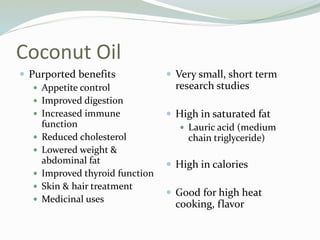
Coconut Oil
 Purported benefits
 Appetite control
 Improved digestion
 Increased immune
function
 Reduced cholesterol
 Lowered weight &
abdominal fat
 Improved thyroid function
 Skin & hair treatment
 Medicinal uses
 Very small, short term
research studies
 High in saturated fat
 Lauric acid (medium
chain triglyceride)
 High in calories
 Good for high heat
cooking, flavor
Supplements
 Billion dollar industry ($32 billion in 2013)
 Multivitamins = most commonly used supplement in the
developed world
 No heart-health benefits or reduced risk of cancer (2014)
 Research trials largely disappointing
 Fish oil
 SELECT trial
 Beta-carotene, vitamin E
 Avoid mega or super doses
 Fat-soluble vitamins: A, D, E, K
 Folic acid
 Recommendation: vitamin D, multivitamin?
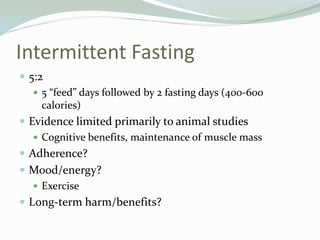
Intermittent Fasting
 5:2
 5 “feed” days followed by 2 fasting days (400-600
calories)
 Evidence limited primarily to animal studies
 Cognitive benefits, maintenance of muscle mass
 Adherence?
 Mood/energy?
 Exercise
 Long-term harm/benefits?
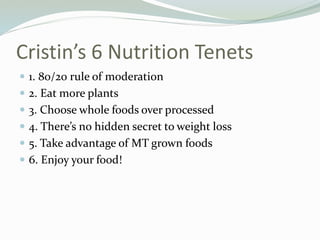
Cristin’s 6 Nutrition Tenets
 1. 80/20 rule of moderation
 2. Eat more plants
 3. Choose whole foods over processed
 4. There’s no hidden secret to weight loss
 5. Take advantage of MT grown foods
 6. Enjoy your food!
 www.montanamovesandmeals.com
 www.wellness.mus.edu
 www.facebook.com/MUSWellness
 Pinterest
 Twitter
 @montanameals
 @montanamoves
Connect with us!
Questions?

Seeing Nutrition Clearly: Examination of current hot topics & trends

  • 1.
    Cristin Stokes, RD,LN MUS Wellness Spring 2014
  • 2.
    Objectives  Are foodslabeled "organic" more nutritious? Which sweeteners are best? Should gluten be avoided? Can coconut oil promote weight loss? When it comes to nutrition, labels and marketing often lead to confusion rather than clarity. Focus up by joining Cristin Stokes, RD, Nutrition Specialist with the MUS Wellness Program, in examining the validity of popular nutrition claims and current trends. Cooking demo with taste samples included!
  • 3.
    Good or Bad?Eat it or Leave it?
  • 4.
    What’s the dealwith…?  Gluten  Carbohydrates  Sweeteners  Organic foods  Coconut oil  Supplements  Intermittent fasting
  • 5.
    Gluten  Gluten =a protein found in wheat, rye, and barley that is responsible for the elastic nature of dough  Celiac disease : autoimmune disease that causes damage to the lining of the small intestine when gluten is consumed  Gluten intolerance: sensitivity to gluten, typically presenting with GI symptoms
  • 6.
    Gluten  Research  Gluten/wheyprotein/placebo study  Theories  Attention to diet  Lower carbs/less junk  Bottom line: No need to avoid gluten unless you have CD or are gluten intolerant
  • 7.
  • 8.
    Carbohydrates  Source matters Eat it: Vegetables, fruits, dairy, legumes, whole grains  Leave it: Refined grains, sugar  Benefits:  Energy  Fiber  Vitamins/minerals  Serotonin!
  • 9.
    Carbohydrates  Recommended %of diet  If tracking: 45-65%  Higher-end if training or exercising more  Visually: MyPlate (1/4 of your plate)  Pick one carbohydrate per meal  Whole grain (brown rice, quinoa, etc) OR potatoes OR dessert  Limit sweets
  • 10.
    Sweeteners  Granulated sugars Refined white  Brown  Turbinado – “raw”  Evaporated cane juice  Liquid  Honey  Maple Syrup  HFCS  Agave  Molasses  Brown rice syrup
  • 11.
    Sweeteners  Artificial sugars Aspartame  Stevia  Ace-K  Splenda  Saccharine  Sugar alcohols  -itol  Focus up:  Minor differences exist in type of sugar (i.e. fructose, glucose) and effect on blood sugar  Sugar has little to no nutritional value beyond calories  Minimize all kinds  Artificial sugars may be helpful for diabetics; research regarding weight loss mixed
  • 12.
    Organics  Organic foods Grown/produced without pesticides, herbicides, fertilizers, hormones, or antibiotics  100% organic  Only organic ingredients (excluding water & salt)  Organic  95-99% organic ingredients  Foods made with organic ingredients  70-94% organic ingredients
  • 13.
    Organics  “All-natural” foods Minimally processed with no artificial ingredients or added colors  No standard definition  Are organic foods healthier?  Healthier for the environment  Micronutrients  Fresh > organic  An organic cookie is still a cookie!
  • 14.
    Organics Dirty Dozen  celery peaches  strawberries  apples  domestic blueberries  nectarines  sweet bell peppers  spinach, kale and collard greens  cherries  potatoes  imported grapes  lettuce Clean 15  onions  avocados  sweet corn  pineapples  mango  sweet peas  asparagus  kiwi fruit  cabbage  eggplant  cantaloupe  watermelon  grapefruit  sweet potatoes  sweet onions
  • 15.
    Coconut Oil  Purportedbenefits  Appetite control  Improved digestion  Increased immune function  Reduced cholesterol  Lowered weight & abdominal fat  Improved thyroid function  Skin & hair treatment  Medicinal uses  Very small, short term research studies  High in saturated fat  Lauric acid (medium chain triglyceride)  High in calories  Good for high heat cooking, flavor
  • 16.
    Supplements  Billion dollarindustry ($32 billion in 2013)  Multivitamins = most commonly used supplement in the developed world  No heart-health benefits or reduced risk of cancer (2014)  Research trials largely disappointing  Fish oil  SELECT trial  Beta-carotene, vitamin E  Avoid mega or super doses  Fat-soluble vitamins: A, D, E, K  Folic acid  Recommendation: vitamin D, multivitamin?
  • 17.
    Intermittent Fasting  5:2 5 “feed” days followed by 2 fasting days (400-600 calories)  Evidence limited primarily to animal studies  Cognitive benefits, maintenance of muscle mass  Adherence?  Mood/energy?  Exercise  Long-term harm/benefits?
  • 18.
    Cristin’s 6 NutritionTenets  1. 80/20 rule of moderation  2. Eat more plants  3. Choose whole foods over processed  4. There’s no hidden secret to weight loss  5. Take advantage of MT grown foods  6. Enjoy your food!
  • 19.
     www.montanamovesandmeals.com  www.wellness.mus.edu www.facebook.com/MUSWellness  Pinterest  Twitter  @montanameals  @montanamoves Connect with us!
  • 20.